
Gratuitous Grebes!
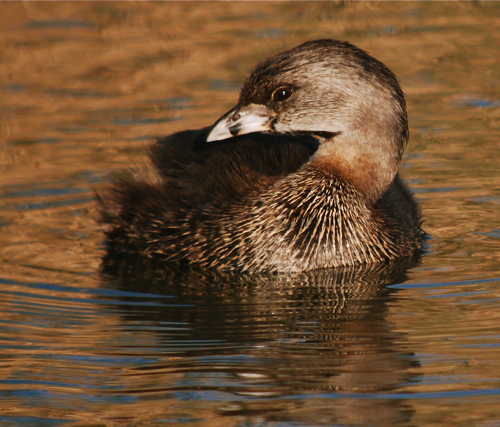 One thing I love about visiting southern states is that some of the birds I see in Minnesota are so much more camera friendly. Pied-billed grebes are shifty in Minnesota, they don't trust anyone staring at them for too long or they submerge and resurface further away. While in Corpus Christi, my buddy Clay took me to a place with a ton of great waterfowl and some rather obliging grebes. The above bird is an adult pied-billed grebe.
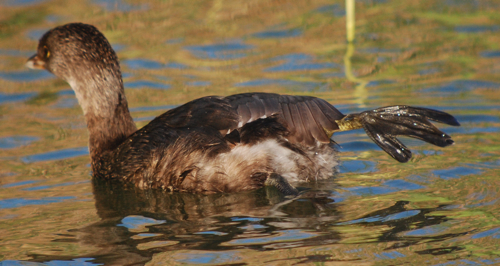
They even showed me their grebe toes. How do you like them apples, not webbed like a duck at all. Let's get a closer look:
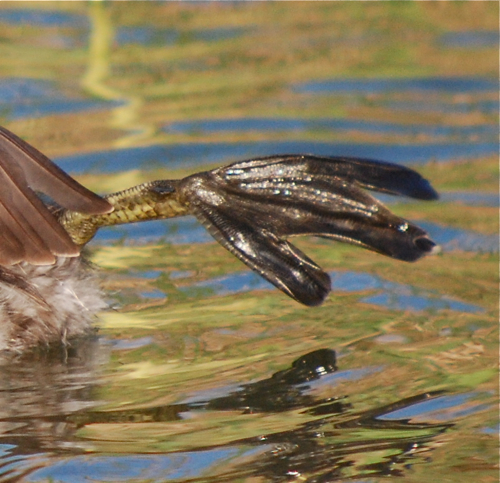
Look at that crazy foot...wonder if this will lead to a slew of foot fetish comments getting clogged in the blog spam filter? The feet of the grebe are far back on the body and the lobed toes do aid it as it swims underwater. They really can't walk on land very well. Ask yourself if you have ever seen one on land?
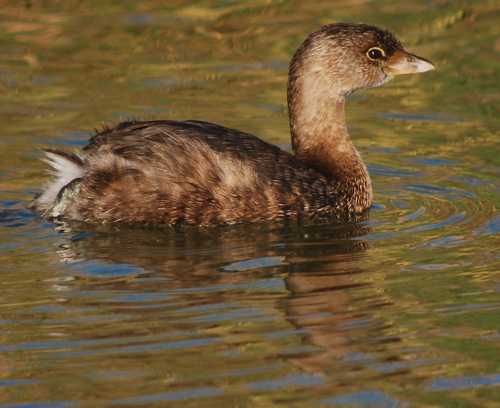
Here's a first year pied-billed grebe--it barely has any pie on its bill.
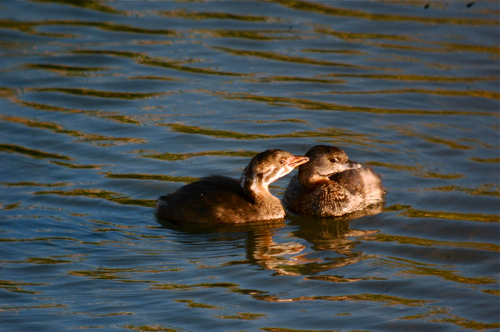
This grebe was so young that it still had the stripes on its face and was begging for food aggressively from its parent.
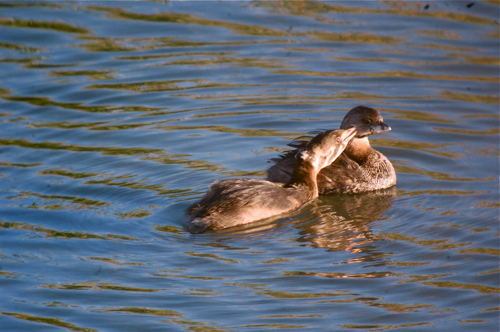
The adult bird was trying to preen its feathers, but the younger bird pecked and pecked while peeping in a high pitched tone incessantly. Periodically the adult would nonchalantly reach down, grab a minnow and hand it to the begging young and then go back to preening. I wonder how the adults teach the young to get their own food when the young are this aggressive when they are about the same size as the adult. Perhaps the adults just flee in terror of the incessant begging?
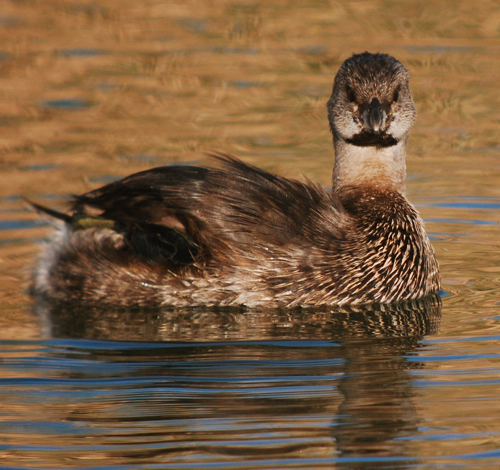
Anyway, it was fun to spend time with brown birds with freaky toes.