
Pine Siskins and Bonfires and Bees
Just a reminder: The next Birds and Beers is this Tuesday, November 18, 2008 at 6pm at Merlin's Rest.
 This weekend was kind of a blur, I'm still trying to catch up. This early winter weather is just perfect for a one last hurrah before the hardcore cold temperatures force us inside. Non Birding Bill got Mr. Neil to host a bonfire gathering.
 We had a great bonfire going and we burned some unusable beehive frames which made for some spectacular pyrotechnic effects with the old wood. Speaking of frames, we still have some frames full of honey to extract and a big fancy extractor. I thought that maybe we could do some extracting at the bonfire gathering--lots of friends over, "Hey, don't you want to be a junior beekeeper and extract some honey?" We could all take turns, running the crank. Alas, much like all the beekeeping equipment out there, NO INSTRUCTIONS (beekeeping equipment manufacturers--that sucks and makes me not like your products and is off putting to new beekeepers).
So, little was extracted and we now have a fancy extractor that we are not real clear on how to use. Lorraine has gone to the cheesecloth method for some of our frames.
 This morning we woke up to a dusting of snow and LOTS of finches at the feeders--the long tube feeder almost had all 20 perches were full. Non Birding Bill and I headed out to our remaining hives we are going to over winter--Kitty and Kelli. We were going to screw in the metal entrance reducers so the girls would have less area to defend and to also keep mice from moving inside.
 When we arrived, we found paw prints which looked remarkably like skunk at the entrance of both hives. This snow fell in the early morning hours. That jerk skunk had just been there a mere few hours before NBB and myself. Skunks knock at the entrance of a hive. This makes the bees angry and they come out to attack, the skunk eats them, apparently unfazed by the stinging. We have carpet tacking around the entrances to prevent this (when the skunks come knocking, they get pricked by the nails), but it's gotten strewn around this past bee season. So NBB and I rearranged it to give that skunk a few good pricks if it comes back. Hanz (the guy who does yard maintenance) built our bees a wicked bad electric fence to keep bears out, Lorraine is going to ask him to add one more line of electricity, closer to the ground and closer to skunk height to encourage the b@stard to look for food elsewhere.
NBB and I put our ears to both hives and heard contented buzzing from within each hive. Love that!
Early plans for next season--six hives! We'll divide Kelli into 2 hives (cause she's gonna swarm and if we divide her, we can control the swarm), 3 new hives, and Kitty...well, that's our angriest hive and we're just gonna let her do whatever she wants to do. If she wants to swarm, then she can swarm. I'm not gonna argue that hive.
 There was a constant flow of goldfinches all morning. None of them were banded, so it was just a steady stream of hundreds visiting. The day before, I had noticed a couple of pine siskins and the more I watched the goldfinches...
 ...the more I would see streaky pine siskins mingle in among the flock. Which is right on target according to the Winter Finch Forecast: "A conifer seed specialist in winter, most siskins should leave the province this fall because the spruce cone crop is poor in the boreal forest. It is uncertain whether the huge white pine seed crop will keep some siskins in central and northern Ontario this winter."
 I put some fine ground sunflower hearts and thistle on the tree stump. Goldfinches flew in for it, as did juncos and (of course) pine siskins. In the above photo, you can see some of that yellow edging on the wing feathers of the siskins. If you have goldfinches in your yard and you've never noticed a pine siskin before, take a closer look at your finches. Pine siskins can be easily mistaken for goldfinches in winter plumage. But look at the breast. If it's clear, it's a goldfinch, if it's super streaky, it's a pine siskin.
 Once two or three siskins were on the stump, more moved in. It wasn't too long before the siskins outnumbered the goldfinches! I didn't get a photo of it, but we did have one crazy pine siskin going to the no melt peanut butter suet. I'd never seen a siskin on suet before, I thought they were strick seed eaters.
All Over The Place Post
 Here is a yellowlegs that WildBird on the Fly and I observed at one of my favorite digiscoping spots, Estero Llano Grande. She and I went there a couple of times and I tried to get some lifers and do some digiscoping. I discovered that I need to focus on one thing at a time. If I'm after a lifer, I should concentrate on that, if I want to take pictures of birds, I should focus on that. If I try to do both, I don't know where to focus my attention and I miss good shots and I totally miss birds.
 Estero has several different trails and the boardwalk around the ponds is usually a good place for shore birds, like the above solitary sandpiper (who is actually living up to its name, it's by itself).
 We some colorful birds too like this little blue herons,
 black-necked stilts--love those guys,
 least grebes (check out that crazy yellow eye),
 and a young male vermilion flycatcher.
 We even did our good deed for the day by rescuing a dragonfly (although, after reading Born Again Bird Watcher's post, maybe we should have left it). Amy notice this dragonfly on its back in the water. I couldn't reach with my arm, but used my scope's tripod to fish it out. We took a few photos and then set it down on the board walk to finish drying out.
 I generally do not take field guides with me. It helps you focus on the bird in front of you rather than spending too much time with your nose in a book. It kind of forces you to pay attention to field marks. Like the above shorebird. It was tiny, kinda brownish, and the legs were a different color than the bill--that's a least sandpiper.
The other reason why I don't bring a guide is that someone on field trips always has a book, I know many birds and what I don't know, I can usually digiscope and id later, or I'm almost always out with someone who knows the area better than I do and will confirm id for me. Well that bit me in the butt.
 We got to a spot with some kingbirds and I wasn't sure what type we were seeing, but I figured I would digiscope it and then look it up later. I have it narrowed down to either a tropical kingbird or a Couch's kingbird. I thougt I would go over to BNA and see if I could work out the difference. Here's what Cornell had to say:
"Couch’s is most similar to the Tropical Kingbird and these species are often difficult to distinguish in the field by appearance alone. In the field, adult Couch’s is slightly larger, with a proportionally shorter bill,"
Hmmm, that would be difficult, the bird's bill is facing right at the camera, can't really tell proportions. Let's try the next one:
"and more olive-green back than adult Tropical, but the back fades to grayish during the breeding season making this character unreliable."
Well, again, the bird is facing me so I can't really see the back.
"The plumages of juveniles are inseparable in the field, and only extreme specimens can be identified in the hand (Traylor 1979)."
Wow, that sounds like I'm totally hosed on the id. Wait, there's a little more to read,
"Vocalizations however, may be used to separate these species reliably in the field. The slowly repeated pit (or kip) and pitweeeer of Couch’s are easily distinguish-able from the rapidly repeated, metallic-sounding pit calls of Tropical Kingbird. The dawn songs are also distinctive. Although T. couchii is probably more vocal than T. melancholicus, silent birds cannot therefore be positively identified as the latter."
Yeah, I totally did not pay attention to the calls and did not take any video. I will have to chalk this bird up to some sort of Tyrannus.
 There were some great birds being reported around Estero and they had a great little kiosk in there from ebird called Trail Tracker. You can use it to find out which birds are being reported and where they are being seen. The observations also become part of eBird and includes photos, audio, video and life history information for the birds seen. I tried to use it to find some cool birds being reported like a rose-throated becard (didn't see it) and a paraque (looked at it, but didn't see it, but Round Robin got shots of it).
Skywatch Friday, In Transit From Texas
It's Skywatch Friday again! If you have a blog with a photo of sky, you can link your post up to Skywatch Friday and share the beauty. I thought I'd share one of my "in transit" days.
 I never cease to be amazed at the ability to change time and temperature with our ability of global travel. I marvel at my Monday this week. I woke up in south Texas, in Harlingen, near the border. I'm surrounded by warm weather and exotic species.
 Not just blue jays here, no, crazy birds like green jays (above), curlews and kiskadees. When I boarded my plane in the morning, it was sunny, windy, and temperatures were in the 80s.
 The view of the sky from the plane was an intense palette of blue and white. The sky, so clear and so blue, pushing down on a thin layer of clouds.
 Take in that blue for a moment.
 The clouds had some fluff but were mostly thin. It's so strange and such a privilege to get to see clouds from above. I try to concentrate on them as opposed to my fear of flying (or rather, crashing) in a plane.
 As the clouds gave way, I could see some of Minnesota below, my final destination. The land had been dusted with snow. How strange to start a morning with humidity and 80 degree temps and then end the afternoon in 30 degrees with snow. I never get tired at the wonder of travel and where you can find yourself in a day.
Venting My Bunny
I love my pet rabbit Cinnamon, I really do. I miss her when I travel and she is home with Non Birding Bill. But she is driving me up a wall!
I'm still catching up from Texas, I still have Rio Grande Valley birds and critters to talk about and I'm also in the middle of National Novel Writing Month (you try to write a novel or 50,000 words in the month of November). Both Birdfreak and I are giving it go...because you know, we don't write enough as it is. I was off to a good start, but lost momentum in Harlingen. I've been trying to catch up and was really on a roll yesterday--I typed 7086 words! I'm still behind for the month for a total of 11,587 but I'll keep going.
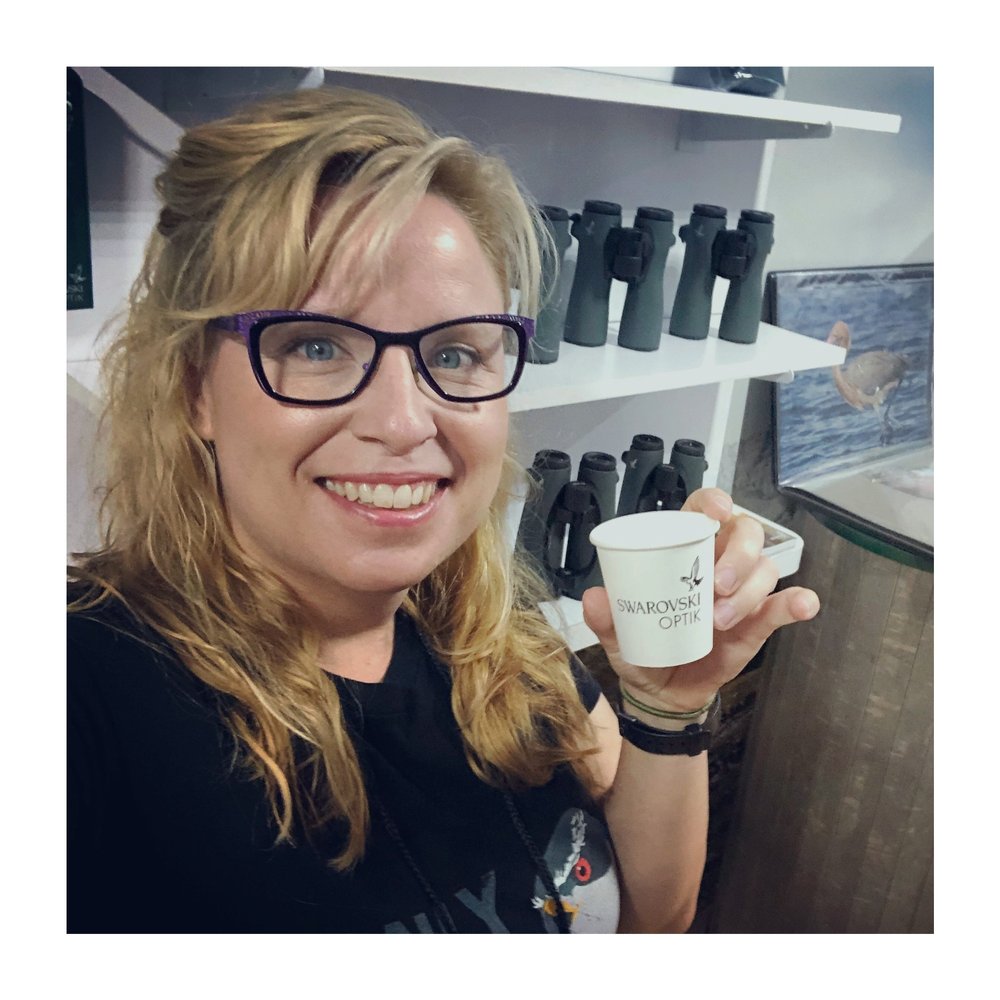
 Cinnamon is not helping! Here she is right after I have yelled at her for nibbling my Swarovski back back. After a gave her a firm "no" and resumed typing (I have a very certain tone of voice that I use that Cinnamon understands is the I-Mean-Business-Tone). She waited and moment and then she started licking the backpack. You can't tell me rabbits aren't smart.
 She has also taken to just sitting on my bag, and trying to root around inside. I think she either can smell that I have had apples in there or that I have some fruity gum (I don't give her chewing gum, but I'm sure that smells edible to her). She seems to go through phases. We have a large closet that we have converted into a "bunny room" with a Cottontail Cottage, toys, food, etc that is blocked by toddler gate when she cannot come out, usually when NBB and I are away. Sometimes she goes through a mellow phase and she sleeps under our bed or hangs out in her little hidey holes around the apartment and I know I can leave and not worry about her getting into mischief while I run errands.
 But she also goes through phases of mischief obsession and is hell bent on doing the opposite of whatever we say. Last night, she kept hopping on the futon with me as I was typing, I kept putting her back down. NBB left a box of cookies on the couch and though she was insisting that wasn't her main purpose for hopping up time after time...
 ...if I did not pay attention, she would open the box to get at the sugary goodness on the inside. She is also going for the kitchen constantly. She's not allowed in there because she gets in the trash and I'm worried that she might find a bottle of cleaner or inappropriate bunny food. But as soon as a door closes in our apartment, she runs right for the kitchen. NBB headed out last night to help his friend Ari with his computer. Door closed, Cinnamon made a mad dash.
"Oy!" I shouted at her in that tone, "Get out of the kitchen."
She hopped out, waited for me to resume typing and went right back in. I yelled again, she did not leave. I set my lap top on the coffee table and she came tearing out of the kitchen (uh-oh, it's serious if mom puts down her laptop). From there it was an endless parade of chasing her out of the kitchen, chasing her away from chewing/licking my backpack, removing her when she hopped on my keyboard, taking her off the futon when she hopped up to steal cookies--BUTThead! I started an auction for one naughty bunny on FaceBook.
By the time NBB returned, Cinnamon was dozing on top of her Cottontail Cottage--the amount of mischief was just exhausting. He didn't believe that this peacefully sleeping bunny could be so naughty.
The Heart Breaking Aplomado Falcon
 One of the fun parts of visiting the Rio Grande Valley is the chance to see an aplomado falcon. One of the best places to look is Laguna Atascosa NWR. Two years ago I got the chance to chase one down (it practically took half the bird festival to help me get it). The aplomado falcon in this area is a reintroduced species, their populations have been affected by pesticide use and the Peregrine Fund has been releasing captive raised birds in an effort to reestablish the population. They eat mostly small birds and insects.
 On Sunday morning, as I was driving into Laguna Atascosa, I noticed a car pulled over ahead of me, I slowed to find out what they were looking at. It was an aplomado falcon perched on a fence post about 30 feet from the road. As I slowed, the bird took off, but then perched again on the fence further down the road. Both the car in front and I approached slowly. It was painful. I had all my digiscoping equipment next to me in my rental vehicle, but I knew if I got out to set it up, the falcon would fly off. I so wanted to get an awesome photo for the blog, but rather than spoil the perfect view, I decided to just enjoy the bird in front of me. When I reached the visitor center at Laguna, I took photos of their stuffed bird for the blog entry. It was a kick ass look.
 As I birded some more around Laguna, another aplomado falcon flew over my vehicle and landed in a far away palmetto. Such a pretty bird, but gone in a flash. While I was out, I ran into Sam Crow and Hugh Powell who do Round Robin Blog for Cornell. Hugh showed me his photo of the aplomado, they had come across the bird on the fence earlier (I now wonder if they were in the vehicle in front of me). They got a good shot and it was painful for me to see. You can view the apolomado photo over at Round Robin.
Birding Ends Racism?
I've been debating about whether or not to post this video, but I'm going back to my number one rule for the blog: Would I personally find this interesting? The answer is yes:
What's interesting is that if you are a birder and watch this, you might be thinking to yourself, "Well, there really aren't that many minorities in birding anyway. What's up with that?"
Something that desperately needs to be fixed.
Non Birding Bill sent me another bird related video which I think is hilarious (and you will too if you are a fan of David Attenborough). It's a bit profanity laden, so if you are at work or check the blog with your kids, just keep that in mind. Headphones or viewing this alone would probably be best. Follow this link to Macho Video's Nature Hater.
Birds and Beers
The next Birds and Beers is Tuesday, November 18, 2008 at 6pm at Merlin's Rest.
Birds and Beers is an informal gathering of birders of all abilities--if you're interested in birds, you're invited. You can meet other birders--maybe find a carpool buddy, ask about where to find target birds, share cool research projects you might be working on, ask a bird feeding question, share life lists, share some digiscoping tips, promote your blog--the sky is the limit. It's low key and it's fun.
 Our Texas version of Birds and Beers turned into a blogging meeting. We had some of the guys from Round Robin, Born Again Bird Watcher, Flying Mullet, WildBird on the Fly (pictured above), birdspot, The Birder's Library, and Clay Taylor (also pictured above and who is working on a blog, but not quite ready to debut it).
 In this photo we have a brother of a blogger on the left, The Birder's Library in the middle, and Amy on the right who is friends with Flying Mullet (who blogs some great birding down in her neck of the woods in Florida). Amy does not have a blog. We were trying to talk her into starting a birding gossip blog. The rest of us could feeder gossip and she could post it without it ever being traced to us. Due to the uninteresting birder gossip and her lack of interest, it was not started.
 Above is Born Again Birder looking sinister next to a smiling bird spot. I told John to look a little more friendly (as I know him to be) and got this:
 He looks a little less serial killerish, but birdspot's eyes are closed. Doh! Incidentally, Born Again Bird Watcher did a much better job of chronicling the Texas Birds and Beers, be sure to check out his photos. We had a great time laughing at the Lone Star and then we learned that birdspot is an award winning bird caller. Here is a video so you can hear her do a dead on rock pigeon:
Talented! I have to admit, birdspot and I must be connected on some weird level. We both have cool glasses and not the usual birder fashion sense. We are both on Twitter and she will often write a tweet that I was just thinking about. Before either of us knew each other I was doing Birds and Beers and was doing Birds and Beer (she writes Twitter updates about birds she sees when she's having a beer) Also, we both ordered the same beverage at Birds and Beers: single malt Scotch with water on the side. Freaky! Although, I am not the artistic talent she is.
South Padre Island Birding
 Amy, Clay, and I had great looks at other birds besides the osprey starting a nest. We started the morning at the jetty where many fishermen gather, as do birders. We saw so many dolphins, it could have qualified as a starling flock. But we were not after marine mammals, we wanted to scan the birds.
 Now, here's an interesting trio. Three different birds, can you tell what they are? I'll save identifying them until the end of the post in case you would like to try and figure out the id yourself. These were three common birds loafing on the beach. Warning, clues will to the id are ahead, so if you want to try and figure out the id, grab you field guide before going any further.
 While we were watching the birds on shore, Amy noticed a hitchhiker on my scope--why it was a honeybee. How fitting that she decided to hang on my scope. She was slow and lethargic. I was not sure if she was just at the end of her foraging life or chilled from the cool winds. If you look at the wear on her wings, I think she's old and at the end of her life.
 Clay was very excited to see caspian terns (the tern on the right). They are big and flashy terns, with a noticeable red bill. We see them in Minnesota during migration. They are so large that even Non Birding Bill has commented on them when we saw some flying over nearby Lake of the Isles. This tern was next to a royal tern (the tern on the left), a slightly smaller tern compared to the Caspian. And if you ever are feeling bad about your bird id skills, take heart in knowing that even John J. Audubon himself had trouble telling these two species apart! According to Birds of North America Online:
"In his monumental Birds of America, Audubon depicted neither Caspian nor Royal, but instead what he called a Cayenne Tern, Sterna cayana — mostly Royal, but with some ad-mixture of Caspian features."
 As we continued on, we found both brown pelicans and American white pelicans. I've seen both, but never together. I knew American white pelicans were huge, but it never occurred to me that they are twice the size of brown pelicans--crazy.
 We headed over to the convention center where we found a fun little water feature. You might hear and read that moving water is the best way to attract birds to your yard, that is put to good use in many of the parks and more birdier areas you can visit in the Rio Grande Valley.
 At one point, this little water feature had about a dozen orange-crowned warblers coming in for a bathe. They moved so quickly and were so spread out, I couldn't get more than three or four in my view finder at one time. I got a small video of the bathing warblers, it's best viewed at YouTube and if you click on the "watch in high quality" option.
 And in keeping with my goal of showing that not every photo comes out great, I'm posting a rather out of focus shot of a black-throated green warbler. There were a couple who flew in to join the orange-crowned warblers, but they were too quick for me.
 Just as I got the scope focused on the black-throated, the little terd hopped behind a rock to bathe. Grrr. Curse you, black-throated green warbler, and everything you stand for! I did manage to get the back of the bird's head in focus. Well, it's a start. No one ever said that digiscoping warblers was ever easy.
And now for the id of the three birds: royal tern, Caspian tern, and laughing gull. How did you do?
The Secret Life Of The Burrowing Owl
This short called The Secret Life Of The Burrowing Owl looks intriguing. Has anyone else seen any promos for this? I can't help but be interested by any company called Titmouse Shorts.