Here's a video from Mr. Neil's feeders yesterday. You can see goldfinches in winter plumage, common redpolls, and pine siskins. The most fun is the sound of the hundreds of finches in the trees waiting to come down to the feeders. I love the up slurred, "shreeeee" of the siskins! They are all over the Finch Flocker!
To The Bee Cave, Bee Boy!
DON'T FORGET: There is still time to get your entries in for the Swarovski Guest Blogging Contest. A chance for you to have a blog entry posted here for the day (and getting some of my readers a taste of your writing) and a cool prize while I'm birding in Guatemala!
 Well, the weather has been above freezing and all of us just happened to be in town for a moment so Mr. Neil, Non Birding Bill, Fabulous Lorraine and myself decided that it was time to do a winter bee inspection to determine how many bees and supplies to order for this spring.
 Since we would be digging about inside the hive to check the food stores the hives had left, we decided to go with our bee suits on. With his hat and bee suit, NBB almost looked more like seaman from the movie The Life Aquatic than a member of a team of award winning beekeepers.
 We have two hives that we are over wintering. Above is the Kelli hive. She is three deep brood boxes, wrapped in insulation, with two moisture boards (stuff they use in your bathroom walls to absorb moisture), and some newspaper. You worry more about your hives getting wet in winter than you do the cold. The bees can take the cold, but moisture in a hive just messes everything up. Kitty is two boxes without insulation and just newspaper for moisture. We were running a couple of experiments: for overwintering, do we want to do three boxes instead of two and do we want to use insulation or not. There are arguments for both. It's possible for bees to survive with only two boxes--fewer places to go and therefore the cluster won't be at risk of being too far from food. Insulation on the hive could fool the bees into thinking it's warmer outside than it really is and they fly out too soon and die.
Before we opened them, I put my ear up to each hive to see if I could hear them buzzing. I could! Kitty was not as loud as Kelli, but both hives were totally alive and had survived the harsh January temperatures so far! After we opened the Kelli hive, I held up my camera to the open frames so you could hear a hive buzzing in winter (you can see the green Kitty hive in the background):
We didn't dig too deep in Kelli, she was loud, just glancing at the top frames, she had plenty of food, and if we have learned anything, it's that the more you leave your bees alone to just bee, the better off they are.
 We did make sure that bother bottom and top entrances were open for good ventilation. She was incredibly dry. Even her news paper was bone dry. The moisture board was working well and there weren't too many dead bees at the entrance and we could see a couple come in and out. The three box system, with insulation, and the moisture boards appeared to be working very, very well.
 Kitty was a different story. She was alive, but her cluster was very small. If you look between NBB and Mr. Neil in the above photo, you can see part of it. Mr. Neil is holding a spray bottle, he sprayed some homemade bee nectar around them and we made sure that the frames closest to them were full of food, so if the cluster ran out of food where they were, they would not need to go far.
The cluster of bees stays together to stay warm. If it gets so cold that they cannot move far and they have eaten all the nearby food, they may starve before they can move to where there is food in the hive. As we moved the frames around, the hive was incredibly wet.
 Even the newspaper on top was wet. There were thousands of dead bees on the inside. We took out a bunch of the dead wet bees. We have some concerns about this hive. Her cluster is small. If the rest of the winter is mild, she should survive. If we get some more subzero days, we're afraid that the remaining cluster of bees is so small it won't be able to stay warm enough. There's not much more we can do at this point.
 So, I think two things to take from this are: 1. That white moisture absorbing material used for bathroom walls helps to keep a wintering hive dry. 2. That a two brood box hive probably could survive, but I don't know if we would do it again without insulation. We want to have six hives going this summer and we think what is going to happen is that we will split the healthy Kelli hive into two hives and that Kitty will most likely die and we will need to restart her.
Some good, some bad with the hive inspection, but it was fun to get a taste of our beekeeping operation. I really do miss it. I love birding and I love travel, but I think beekeeping is one of the coolest things you can ever try in life. It's more fun than I ever realized.
After we were finished we had to put the hives back together and put the bricks back on to make sure a strong winter wind didn't knock their covers off...and I can never resist working a Father Ted reference:
Varied Thrush In The Twin Cities
There's so much birdy goodness on right now, I'm too distracted to blog. I am currently surrounded by an explosion of winter finches which I started calling Redpollapalooza and another reader calls Siskagogo. I'll have more photos of that later.
As a matter of fact...I have started this particular blog entry about five times, but keep getting distracted by the winter finch activity. Focus, Sharon, focus!
 We have had an unusual bird show up near where I volunteer at The Raptor Center. A neighborhood full of crab apples and cherries that several flocks of robins have been feeding on. Mixed in with those robins is a bird called a varied thrush.
 This is a bird that is typically found in Pacific Northwest--it's a common bird for Born Again Bird Watcher (it's on the homepage of his redesigned site). But every winter there are reports of them popping up all over the US. It seems we always have at east one in Minnesota, and since this one was so close to where I live, I took a jaunt out to see it.
 When I first arrived the trees were full of birds like the cedar waxwing above. We also found redpolls and pine siskins and after waiting about a half hour, the varied thrush showed up.
 While waiting, I got to meet Michael who started the Facebook Twin Cities Birding Group. He seems like a cool guy and certainly has the best groomed facial hair of any birder I have ever met (sorry, Kenn).
We did have a great moment with a UPS guy while watching the thrush. He pulled up to ask what we were looking at. I let him see the thrush through my scope--he was impressed. He then asked how much longer we were going to watch because he had to turn his truck in front of us and it might scare the bird. We told him that we appreciated that he asked, but we realized he had a job to do and could go ahead. He moved slowly in his turn and the thrush shifted its position in the tree, but stayed.
Thank you, random UPS man, for being so thoughtful to birders!
There Will Be A February Birds and Beers!
Hey, great news for all you Birds and Beers fans. The regulars are going to host one in my absence!
The next Birds and Beers is Thursday, February 19, 2009 at 6:30 pm at Merlin's Rest!
Birds and Beers is an informal gathering of birders of all abilities--if you're interested in birds, you're invited. You can meet other birders--maybe find a carpool buddy, ask about where to find target birds, share cool research projects you might be working on, ask a bird feeding question, share life lists, share some digiscoping tips, promote your blog--the sky is the limit. It's low key and it's fun.
Curt from National Camera Exchange in Golden Valley organized it (a great place to get cameras and optics). What a great staff who are happy to help me keep Birds and Beers going while I'm in Guatemala! Thanks, Curt, you rock!
Redpolls Hittin' The Twin Cities Metro Area
 While I was in Florida, common redpolls were being reported in the Twin Cities metro area. Last winter they were showing up in good numbers up at Sax Zim Bog and Mr. Neil even had one at his feeders.
 There have been a few hanging out at Carpenter Nature Center. When we were trying to band birds last Friday, we saw a flock of about nine birds. We were almost completely skunked, we only trapped one lone junco and it was a retrap. We would see a redpoll fly into the traps, but one was too light to trip the door closed, so we got completely nooged on banding any redpolls.
 I just love the little redpoll goatee--combined with the little red spot on the head that resembles a beret, they look like their about to break out a set of bongos in a 1960's looking coffee shop at any moment. I went back to check what the Winter Finch Forecast had been for redpolls:
"The Common Redpoll is a white birch seed specialist in the boreal forest in winter. White birch crops are poor in the northern two-thirds of the boreal forest, but seed abundance increases southward. In central Ontario, such as Algonquin Park, crops on white and yellow birches range from fair to good. It is uncertain whether the birch crop is large enough to stop the southward movement in central Ontario about latitude 45 degrees. Some redpolls, including a few Hoarys, may get south to Lake Ontario if birch seed supplies run low."
I guess the birch seed supply ran low.
 We even got to see some redpolls at Warner Nature Center during Non Birding Bill's Winter Survival Birthday party. His non birding friends also found them cool when pointed out. What was interesting was that unlike all the common redpolls in the photos of this blog entry (which were all taken at Carpenter Nature Center), the redpolls at Warner stayed below the feeders. They only ate on the ground. I wondered if that flock had come from such a remote region that they did not know how to use a bird feeder.
After our time banding was over, I headed to a nearby spot where the St. Croix River meets with the Mississippi River. It has been a bit warmer and the water usually opens up when that happens. You can sometimes see some fun ducks. As I scanned, I only saw some bald eagles jockeying for position for some food on the ice. Suddenly, some friends drove up behind me, shouting. I had them reenact what they did:
Thanks to Jed and Linda who were the great to reference the blog post about my amusement of people who point out eagles when I'm after some small bird that does not seem as exciting. But I did actually look out and the eagles were doing something kind of interesting:
 They were eating a Canada goose. There, are you happy? I took a photo of a bald eagle. lol
 I joined Jed and Linda a little further down the Mississippi River to search for waterfowl and we found some coyotes on patrol across the river. There was a third, but it was further back in the woods. We got to watch the two above poop and since they were in the boundaries of the Mississippi National River and Recreation Area, I guess we know who pooped in this park.
Monday Morning Redpoll
Warner Nature Center Winter Survival Party
First a small announcement on Birds and Beers. I will not be able to host one in February, my travel schedule is just not conducive to it this month, I'm really sorry, I miss you guys! If you want to have one without me, please do, but the next one I will host will be in March.
I have to tell you about a really cool party we had at Warner Nature Center. One of the naturalists, Kirk Mona has shown up to Birds and Beers a few times and he told me about some of their programming. One is a winter survival party that they usually do for kids. I thought that sounded like loads of fun for Non Birding Bill--his birthday is in early February. I asked Kirk if they did adults and he said yes, and so NBB's Winter Survival Birthday Party was planned.
 Kirk showed us the many ways to start a fire. He said we could use the old bow method, but this is agonizingly long. A few tried it and we all cheered whenever someone managed to make an ember or a puff of smoke.
 One of the big highlights was an enormous quinzhee that the nature center had made on their lake. A quinzhee is a shelter made out of a pile of settled snow. After the snow settles, it can be dug out. The above photo is actually two quinnzhees connected with a tunnel.
 Of course, we all had to go inside. This a view from inside the quinzhee and through the tunnel to the other side.
 We split up and went into either side, but of course we had to try out the tunnel. It was crazy to see the ice right under foot. It was an adult snow fort, I'm surprised and nasty snowball fight did not ensue.
 There were little carved out areas in the walls for sleeping or to be used as benches. There were a few nooks too for candles, apparently some groups have slept inside the structure this year. It was surprisingly warm inside, although the ice on the floor from the lake was quite chilly. If you sat or knelt directly on the floor, you felt it quickly.
 Kirk guided us through the construction. The snow needs to be piled and then needs to settle for a few days before you can dig it out. There were also sticks in the walls and ceiling to give you a guide as to how deep you need to dig out the inside. This one was so large, my five foot body could stand erect in the center of the dome. It was a most awesome snow fort!
 After fun in the quinzhee, we got to try out our fire startin' skills. Kirk taught the types of wood to look for, how to make kindling, the proper way to cut the wood, and how to pile it all together. We sent forth into the woods to gather our material.
 We divided into 2 teams. One group tried to start the fire the way Kirk had demonstrated to the group. NBB's team wanted to try his magnesium flint knife. He got lot of sparks, but ultimately, they ended up using matches to get the fire going.
 We stood around one of the small fires, sang to NBB, and he stomped out the fire. It was a very manly, wintry outdoor party. We really lucked out with the weather. It was pushing forty degrees for most of the afternoon, so it was very pleasant. After all the work, we headed back indoors, I brought cupcakes and the fixin's for s'mores.
I have to say that Kirk really did an outstanding job of keeping the party educational and entertaining. Everyone had a great time--and these were mostly theater people attending, not your typical outdoor types and they still had fun. If you're looking for a unique party or event, give Warner Nature Center a call. If you don't live anywhere near here, give your local nature center a call. Many nature centers have birthday programs that can be easily tailored to adults.
Swarovski Guest Blogging Contest

I'm going to Guatemala in a couple of weeks and I'm told that between the rigorous itinerary and the uncertainty of Internet access, I need some help covering the blog. So what do you do when you are the sole writer of a blog and you need some time off? I've used a guest blogger, like the trusty Non Birding Bill and, before she had her own blog, Julie Zickefoose covered for me while I was in Arkansas looking for a certain woodpecker for two weeks. Julie now has her own blog and well NBB only has so much interest in covering for me, so I came up with a plan.
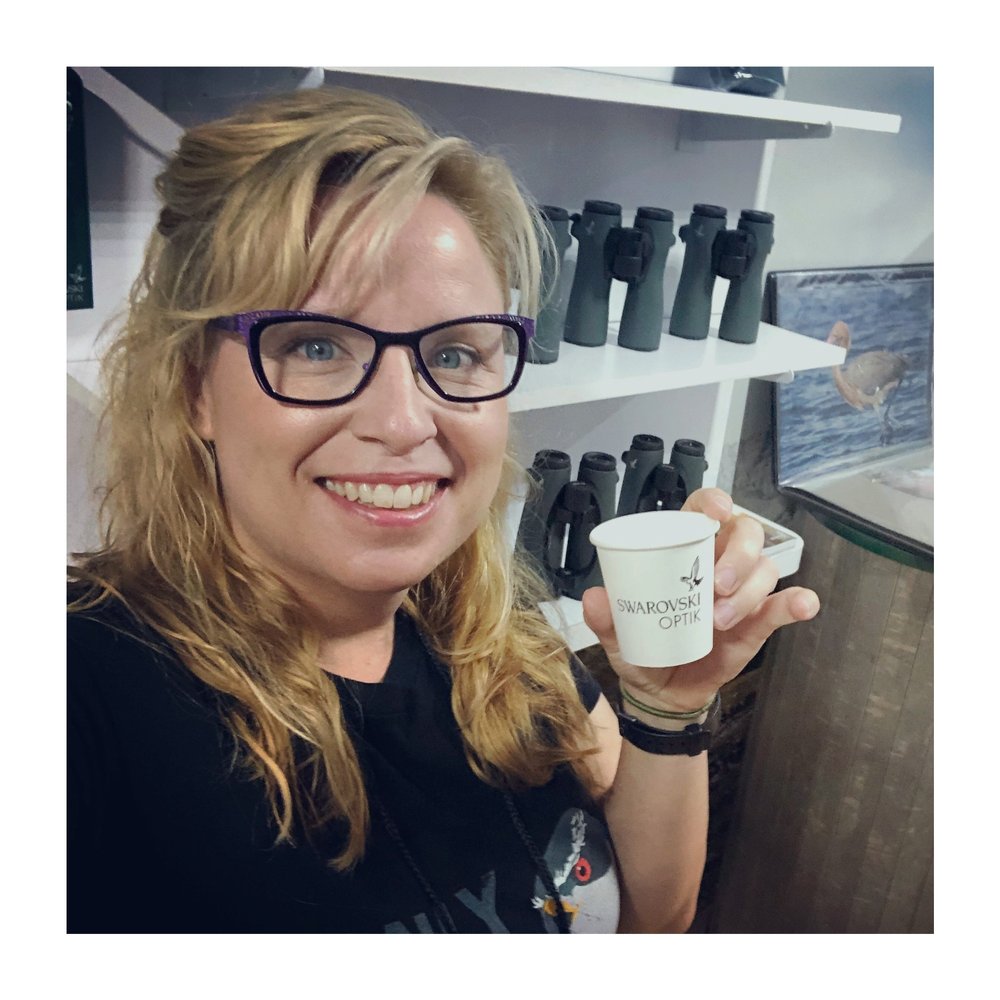
I talked with Swarovski Optik and asked if they would help me host a guest blogger contest. So I bring you the Swarovski Guest Blogging Contest--you could be a writer for my blog! If you already have a blog and would like to get a larger readership, this is an opportunity to show off your content to my readers. If you're not sure you can do a blog but have an adventure to share, I have a great audience willing to read it.
You can submit a blog entry for my blog. Non Birding Bill and I will read through them and select 10. We will post one blog entry a day while I'm gone (it will be ten days starting on February 18). If your blog entry is one of the ten published, you win...
 ...a Swarovski Cleaning Kit ( $39.95 value) for your optics. At the end of the 10 days, there will be a poll up for the ten entries for readers to vote on. Whichever entry gets the most votes wins...
 A pair of Swarovski Crystal Pocket Binoculars (a $900 value)!!!! They're pocket binos, but made with Swarovski glass and coatings so they're awesome and they're covered in swag. I love these! These are hand down the snazziest pocket binoculars you have ever seen. I got to play with these in Cape Cod last year and fell in love!
Rules:
1. ANYONE CAN ENTER: If you already have a blog you can enter. If you have never blogged at all, you can still enter. If you do already have a blog and your entry gets selected, I will link back to your site with your entry.
2. BLOG ENTRY MUST FIT THEME OF THIS BLOG: I'm not going to say that you have to write about wild birds for the contest, but do keep in mind what the themes for my blog are - mostly wild bird related (watching, feeding, rehabbing, banding) with some pet rabbits, other wildlife, and honey bees. NBB and I will choose blog entries that are not only great, but fit in the overall theme of this blog. Our decision is final.
3. Content must be emailed to birdchick at gmail dot com by Monday, February 16th at 5 p.m. CST. It can include text, photos (web appropriate size) and links to videos. We may not proof read so if you your entry has typos, chances are good it'll go up that way. Make it look good before we get it. You, obviously, agree to let us post your material in the blog by sending it to us.
4. The email entry with your blog submission MUST include your full name and mailing address. These will not be published in the blog entry, but we need them for the prizes. Also, be sure to include how you would like to be credited in the blog entry. Do you prefer that we put up your actual name or your user name and a link to your website.
5. Content must be original--your own content that you wrote. If you have a blog and you want to recycle and old blog entry from your own blog, that is your choice. If it is discovered that you use someone else's content without credit or pass off someone else's photos as your own, not only will you be disqualified, but it will be blogged. One entry per person.
Pelagic Birding Off The Florida Coast
NOTE: I just noticed on the Space Coast Birding and Wildlife Festival that they have some items that attendees left behind. If you attended the festival, check it out.
 My final day at the Space Coast Bird Festival in Florida involved a 12 hour pelagic birding trip with the Explorer Fishing Charters. Above is a photo of our boat heading out to sea with a large flock of gulls following us (because we were chumming the water). Pelagic bird trips involve taking a boat out into the ocean to try and see birds that only come to land for breeding. You watch for birds with crazy names like petrels, jaegers, fulmars. Pelagic birding isn't for everyone--and yet for many people, it' the only way to get certain birds on your list. Even if you're not prone to seasickness, watching birds through your binoculars on a bobbing boat can make you barf. It's also a challenge for me because I can't really digiscope from the boat and we have to rely on what ever my little point and shoot can do all on its own.
 The other challenge to pelagic is that there is a lot of gross stuff around. You need to attract birds to the boat and a great way to do that is to dribble some fish oil behind the boat. If you do feel yourself getting sick on a pelagic trip, it's best to go to the back of the boat and blow chow there. If you do it in front or from the side, people behind you could get some residual spray. But it you go in back, you barf can contribute to the chum, but if you're back there with the oil and the fish, it might make you vomit some more.
 Also, along with the fish oil, the crew chops up chunks of fish to toss out. Once you get a large flock of common gulls following you, it attracts the attention of other birds. There are several thing you can do to ward off from seasickness. One, the day before don't go out drinking lot alcohol. Have a good dinner--you may think having an empty stomach will make so you have nothing to hurl, but you need a good dinner so you body can function at it' best. The night before take a Dramamine or Bonine. About an hour before you're on the boat, take another Dramamine or Bonine--you need it in your system before you're on the boat for the med to work. If you take it on the boat, chances are good you could just barf it back up. There are also patches, ginger chews, ginger ales that you can use too.
 I myself like to tempt fate on a pelagic. I was going to get a shot of me holding one of the frozen fish, when one of the crew put one in his mouth and dared me to do the same. He said not to swallow any ice on the fish and I would be fine--so I went for it. I actually take Bonine, it makes me less drowsy. I do have some motion sickness issues - I can't read in a car or I get nauseous. But I'm fortunate in that the few times I found myself getting woozy on a pelagic, I notice that if I focus on the horizon for a minute, it goes away.
 We got some fun birds mixed in with the gulls. Above is a young northern gannet. I love these guys, especially when they dive for food. I have a dream of someday visiting their nesting colony in Newfoundland. I tried to find video of them diving (there's great footage on the Life of Birds). But I found one homemade video here (you may need to hit mute if you're at work, there's a fun little song along with it) and there here is a video of a crew watching sardines. About a minute and twenty-five seconds into it, you see the gannets from underwater--I didn't realize how much they swim once they dive in!
 We also saw sandwich terns - note how this tern has a black bill (with a yellow tip) and not orange like some of the others you may have seen in the blog.
 I was hoping for some jaegers and we got them. We saw quite a few pomarine jaegers. These are predatory birds that only come to land to nest up in the Arctic and spend the rest of the time out at see. On their breeding territories, they eat mostly lemmings, but when out to sea they will follow ships for scraps and steal fish from birds like black-legged kittiwakes.
 Part of the fun of a pelagic trip is seeing other species besides birds, like the sea turtle above. We did see one leatherback and some Man O' Wars, so it wasn't all about the birds. Unlike birding in the landfill, it was a little more challenging pointing out critters on the ocean--there weren't too many landmarks. The Man O' Wars look almost like blue plastic bags floating on the surface--"Hey see what looks like a blue plastic bag at about 2 o'clock? That's a jellyfish!"
 We had a big pod of dolphins, both bottle nose and spotted come check out boat out. I'm sure they were interested in the bit of fish trailing out boat. It was fun to watch groups of about seven line up side by side and swim along with out boat.
 They came in quite close to the boat, you could almost see them smiling.
 As we started the day, it was still chilly. As the boat got closer and closer to the Gulf Stream to look for birds, it got a bit warmer and some of us shed our layers. Most people kept them on. The front of the boat was very crowded and being short I headed towards the upper deck to get a view of the birds. We were lucky in that the seas were quiet and we didn't have too much rocking, blowing, or waves crashing.
 But periodically, waves would splash up--especially if the captain was turning to get a the group a better look at a bird. Notice how wet Leica Rep Jeff Bouton got. He loved it, it's a chance to demonstrate how Leica bins can take a water beating and appeals to his adventurous spirit. Jeff also brought his young son, Austin along for the ride. Austin was my savior at a couple of points when he would head down inside to get me coffee. I paid him in donuts. It was and awesome partnership. If you read WildBird Magazine, Jeff has a column about his birding adventures with young Austin.
As it got warmer, I too shed some layers, one being my earmuffs, which were more for keeping my hat on. Now that I have short hair, I don't have the long ponytail to help hold the hat in place. Two minutes later, the wind blew my hat and gave it to the ocean.
 I was a tad bummed, it was a hat from the Rio Grande Valley bird fest--black with an embroidered green jay. I have twenty other hats, so it wasn't that big of a loss, but I felt terrible about accidentally littering the ocean. Before I knew what was going on, the boat turned around...the captain was going back for my hat!
 We went around, both Bouton from Leica and a shipmate tried to fish it out with long hooks. They missed, the captain circled again for the hat. I was shocked at the effort that was being put forth for my hat. I didn't ask for them to go back, they just did.
 On the second turn, the got my hat! I was stunned. I think I now have an official lucky hat. It was dripping wet when they handed it to me...
 Here's the crewman who fished out my hat. I put it on right way for a photo. I told the captain, "I can't believe you went back for my hat." He said that I looked so sad when it flew off that he had no choice. Bouton told me that he has lost several hats on pelagics and no captain has ever fished one out for him.
Pete Dunne asked, "Hey, Sharon, are you going to blog about the carbon footprint left from going back for your hat?"
I asked, "Would you rather that I littered the ocean there, Pete?"
*On a side note, I just noticed that Pete Dunne has an entry on wikipedia--who knew??? Birder making strides in the mainstream.
 After a full day on the ocean of great sea birds and no vomiting, the group headed back with a large parade of laughing gulls following us.
 The brown pelicans started following us in too. I love this shot, it looks like the pelican is standing right on the water's surface.
 As we got closer, the captain announced that we had to stop chumming the water. We couldn't go into harbor with hundreds of birds following us, no matter how cool those gannets are. They were a great crew and worked really hard to get us better looks at the fast moving birds on the water. We were all exhausted from the adventure at sea, but it was a great time. To me, any day that involves a boat on open water seems like an adventure.
Laughing Gulls
Heads up: I'm going to Guatemala at the end of February. Mike from 10,000 Birds and Patrick from Hawk Owl's Nest should be there too. Since it sounds like internet access might be iffy while I'm there, Swarovski is going to help me hold a guest blog contest! More details are coming but if you are a blogger who would like to introduce some of your material to my readers or if you have read my blog and thought, "Hey, I can do this, I'd like to give that whole blogging thing a try," this contest will be for you. Details will be up tomorrow (Friday).
I'm wrapping up all my coverage of the Space Coast Birding and Wildlife Festival. I think I have about 2 or 3 more things to blog about. It was an action packed festival, I was there for a full seven days. Even if you can't do a full festival schedule, just doing 2 days gives you a lot of bang for your buck. Right now, I'm compiling all my photos for our pelagic birding trip (birding by boat to look for seabirds)!
Here's a video of some laughing gulls that were following out boat out to sea. The crew was tossing out chum and what amazes me is that even as we're bookin' it out, and the gulls are pumping their wings to keep up--they still manage to catch fish chunks thrown at them: