June Birding Quandary

I'm in kind of a quandary about what to do with my June.  I was not planning on going to the fabulous Potholes and Prairie Bird Festival this year--it's a great festival, but work was taking me in a different direction in June.  Then I heard through the grapevine that some bird bloggers are planning a trek to North Dakota including Hasty Brook, Birding Bev, Kat Doc, and Wrennaisence on top of Julie Zickefoose and Bill Thompson who are normally there too.  I thought that maybe I would head out that way for some fun birds and fun people.  I love birding in North Dakota--listening to Baird's sparrows and Sprague's pipits while you're surrounded by chestnut-collared longspurs is the BOMB! Then, someone brought to my attention that Bernd Heinrich is going to be in Grand Marais, MN this June for the Boreal Bird Festival!  I LOVE Bernd Heinrich book and not only is he a speaker but you can sign up for a two day course with the author who gave us such works as Mind of the Raven, One Man's Owl and  Ravens in Winter.

So, I'm really torn.  You can get good boreal birds in Grand Marais boreal forest so it's not a matter of birds. I need to decide--Bird Bloggers or Bernd? I don't have the time and money to do both.

Here are blog entries for the Potholes and Prairies Bird Festival.

Birding In Fog

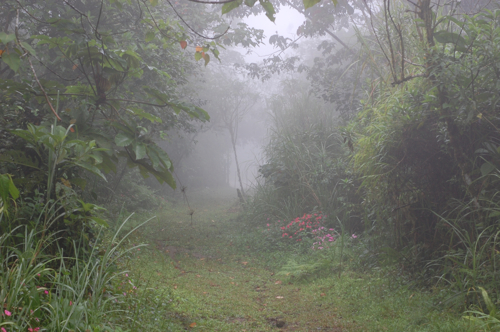
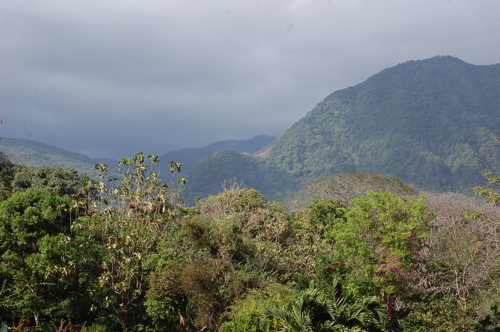
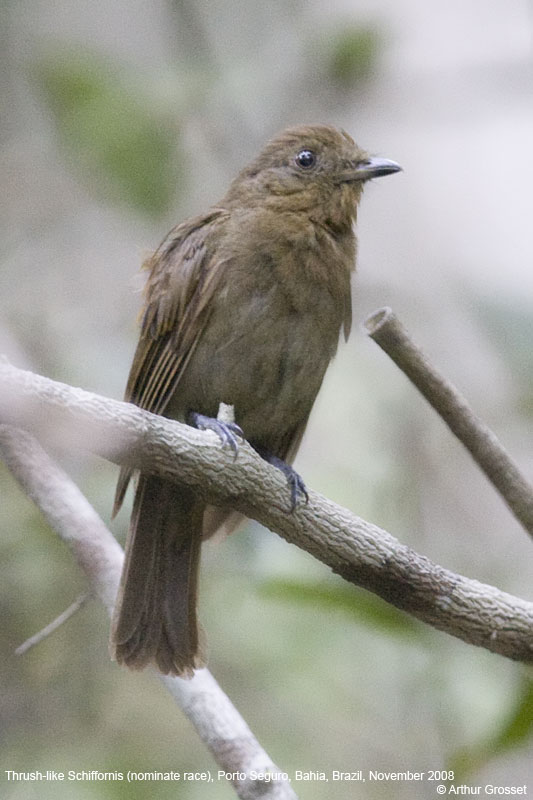
Believe it or not, it can be a tad humid in Panama leading to a great deal of fog in the upper elevations early in the morning. It was like walking in a strange dreamland and were surrounded by strange sounds. One of them was a bird that excited our guide Tino (the Human iPod) and he said, "Thrush like schiffornis" and casually walked toward the sound strumming air guitar and whistling back at the bird. He whistled, the bird called back and after a few moments at medium sized ball of brown streaked above our heads across the trail and that was it.

Now this bird is something of a mystery. It goes by many names in the guides because ornithologists appear to not know exactly how to categorize it. You mind find it in a guide as thrush-like mourner or thrush like manakin or thrush-like schiffornis. So, if you haven't gathered, it has characteristics of a thrush, it's kind of a manakin, well maybe not so let's just call it by its latin name schiffornis who knows.  You would think a spectacular mystery bird like this would be something to behold.  Here's a photo of one.  It's worthy of some Non Birding Bill brown bird ridicule.

I giggled later in the day when I read my Panama bird guide about the schiffornis--it said that the only looks you are going to get is of the bird flying away unless you are lucky enough to snare one in a banding net. Ah well, those brown birds, always the heart breakers.

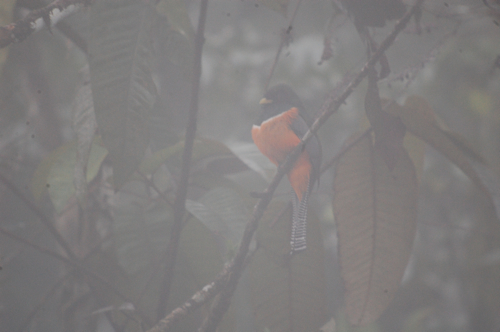
One of our targets was the orange-bellied trogon which was very cooperative despite the fog. That bright belly was a beacon in the haze.

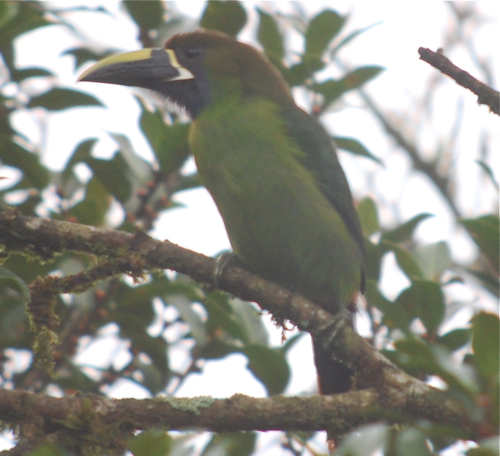
Another most awesome bird that we got to see was a toucanet or more specific a blue-throated toucanet.  Alas, the clouds steal thunder from how mind bendingly beautiful a small green toucan can be. It was awesome to see this little dude (there were actually three) doing their thing and plucking fruit from the trees...and for the record, the little green guys show no interest in helping you find Fruit Loops or Guinness.

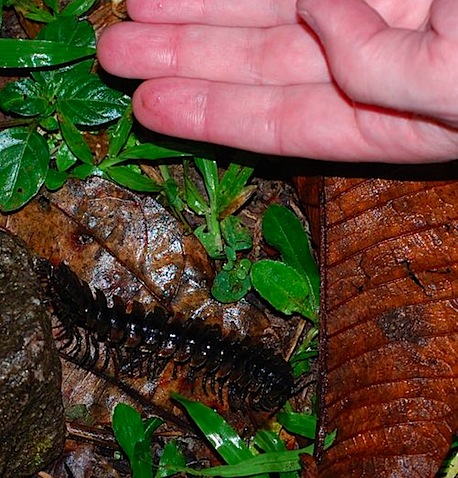
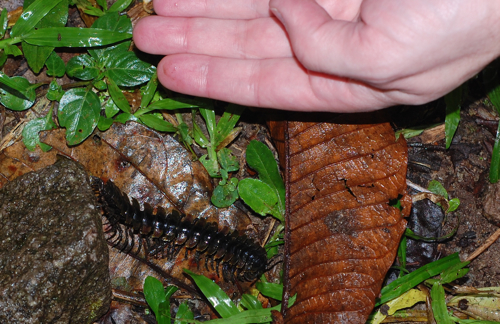
And while we were watching some great birds we got to see some interesting bugs. I have no idea what this is, some sort of millipede? I asked someone in our field trip group if they would put their hand next to it for a size comparison because it was huge.  He hesitated...I guess I can't blame him, who knows what creepy defense mechanisms Central American bugs have?

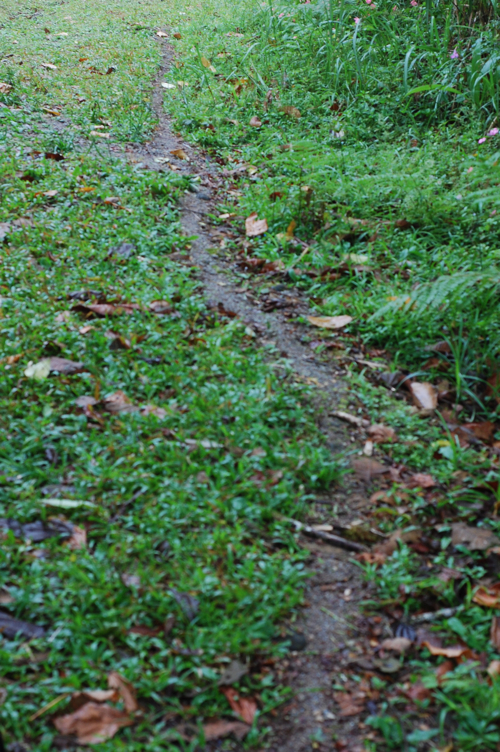
Oh and speaking of bugs--check out this trail.  Any guesses as to what made this trail?  If you said leaf cutter ants, you'd be correct.  I have lots of video of those dudes.  Not only do they cut up pieces of leaves for their little farms, but they clear the path for their trail by removing debris to make it easier for the ones carrying the leaves. There was something ominous to me about see the cleared and well worn trails unused.  Where were the ants and what were they plotting?

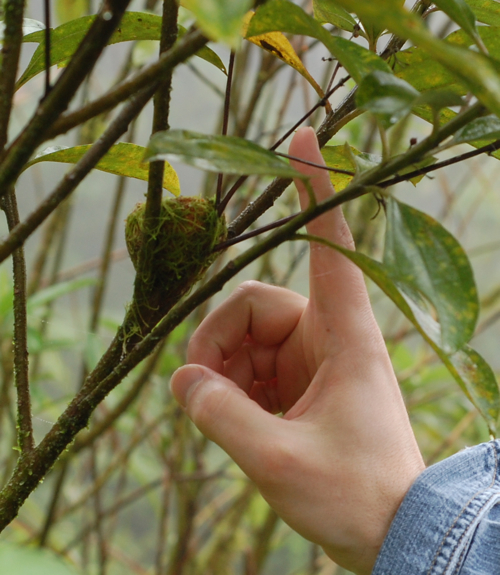
Here was a wonderful discovery in the mist--a hummingbird nest.  This time my friend was happy to use their hand for size comparison--no worries at a hummingbird nest as there might be next to an unknown millipede.  The nest had at least one egg in it.  We're not sure of the species, the female didn't fly in while we were there and we didn't hang around so as not to keep the female away from incubating the egg.

So even if fog, there are interesting things to see in Panama.

Hidden Tropical Screech Owl

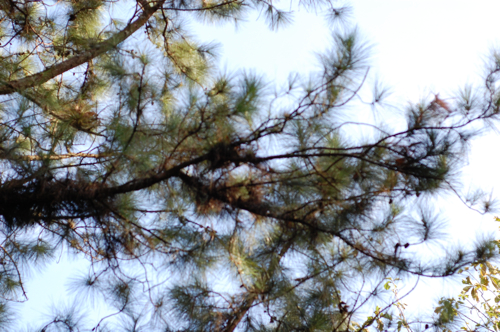
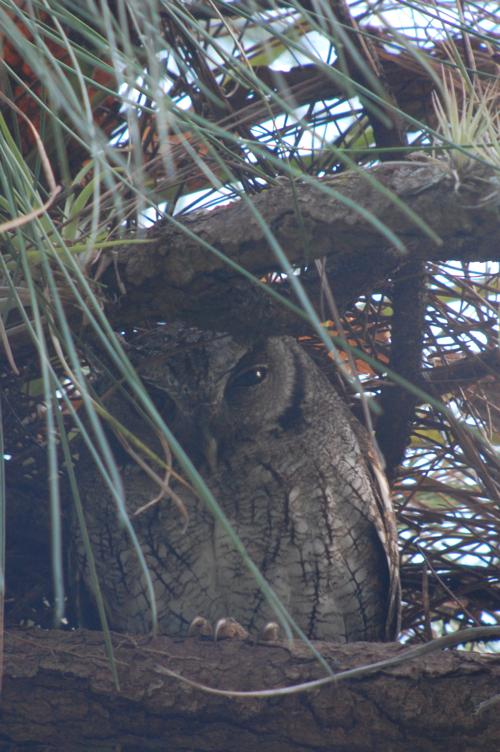
There's a tropical screech owl hidden in this photo:

Do you see it? I think if you look hard, you can make out the small owl's tail.  See it?  Okay, here's a hint:

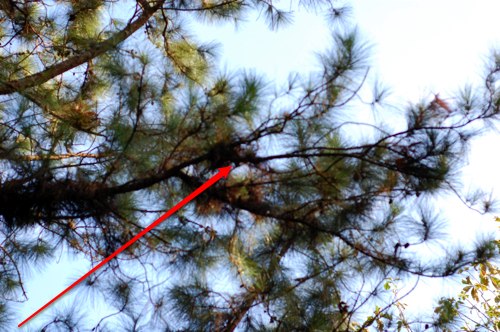
Here's a digiscoped image of the little owl. We so would not have seen this little guy had it not been for Tino!

And there the arrow is pointing to the wee owl's tail next to the bromeliad.

Baby Three-toed Sloth Scratching Its Face

I have no patience.  I had this idea that I would go through my Panama trip chronologically using my words, photos and even some edited HD video.  But I'm too excited about this baby sloth! I blogged way too early about sloth in Panama.  I didn't think my look at a sloth was going to get much better than the one I saw my first full day there, but sloth ended up being a daily occurrence.  So, here is a snippet of a sloth video that I'm working on.  It's a female three-toed sloth with a baby crawling over her belly and trying to scratch its face that we got on one of our field trips with Canopy Tower.

Warning: may cause your head to implode with its utter cuteness. This may rival my Baby Porcupine Eating a Banana with Hiccups video:

[youtube]http://www.youtube.com/watch?v=4rOWot9pTuE[/youtube]

If you're wondering about the sound in the background--a cicada that sounds like a buzz saw.

Migratory Birds In Panama

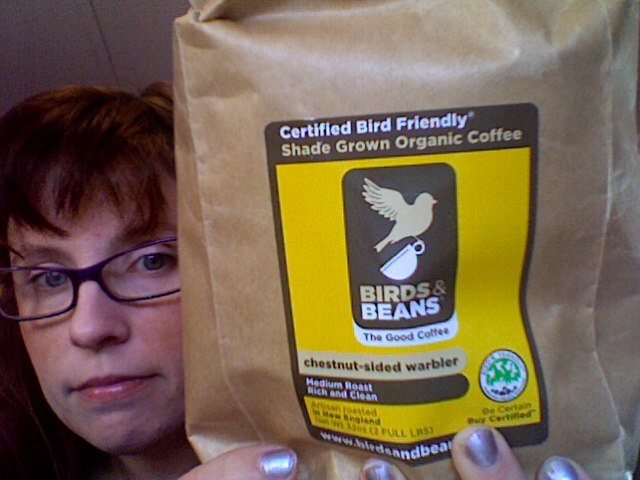
I'm very excited, I just got a 2 pound package of shade grown coffee that I ordered in the mail:

I've always been a fan of shade-grown coffee on paper, but generally found the taste of most of them lacking--and I'm not a coffee snob, I'll drink gas station coffee. But generally the flavor of most shade-grown coffee (to me) is enough to make me give up drinking coffee.  Every now and then someone will send me a sample and I don't mention it because...it tastes bad.  But I've been given samples of the above and now I actually order it.  It's from a line of shade-grown coffee from Birds and Beans called the Chestnut-sided Warbler Blend and I really, really like it (I even like it better than Dunkin Donuts coffee, it's like a fuller, richer blend of that coffee).  You can order it from Birds and Beans, but I ordered mine from the ladies at Wild Birds Unlimited in Saratogo Springs, NY because they're one of the few places that carry it, I like them and want them to stay in business but you can also order it from Birds and Beans too.

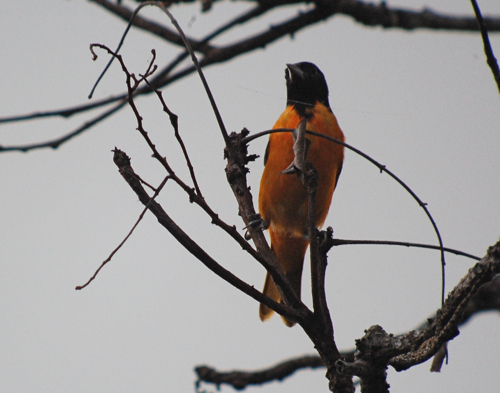
And why would I bring shade-grown coffee up in the middle of blogging about Panama? Well, while in Panama, I saw several familiar birds like this Baltimore oriole--it's fun to see birds on their migratory habitat in winter. Walking around in Panama, seeing the abundance of fruits and insects, I understood why they risked a long and dangerous journey to spend the winter here rather than the snowy US.

I especially appreciated it as I sat on top of Canopy Tower and read a Snow Emergency Email Alert from the City of Minneapolis. While my home was being covered in yet another blank canvas, the mountains were covered in lush green. How fun to be the one reading about snowmaggedon Tweets and not writing them. But above is the type of habitat our migratory friends need to survive the winter. Coffee plants were originally meant to be grown in the shade but were developed over the years to grow in full sun, meaning our morning cup of joe comes at the expense of habitat our summer birds need to survive the winter in Central and South America.

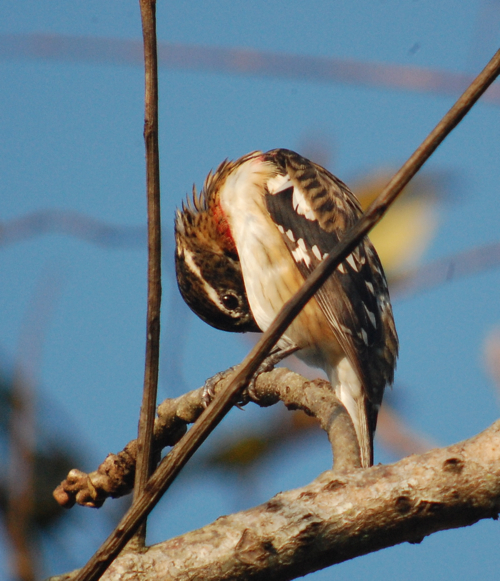
There's been a movement in the last decade to revert to coffee's original plant and grow it in the shade so we can still drink coffee but not at the expense of birds like orioles, tanagers, grosbeaks (like the preening immature male rose-breasted grosbeak that I saw in Panama above), vireos and warblers. There are several types on the market but it can be a challenge to find on that is truly shade grown (some growers try to get away with one or two trees on the plantation and calling it shade grown) and actually tastes good.  Birds and Beans straddles both by being tasty and having the Smithsonian Certification (so we know it is truly shade grown). I especially like the Chestnut-sided Warbler flavor--a medium roast and it seems appropriate to drink it while blogging about Panama because the most common warbler I saw there was the chestnut-sided (alas, no photos from me but I was happy to see them and enjoy their company as they flitted among the leaves).

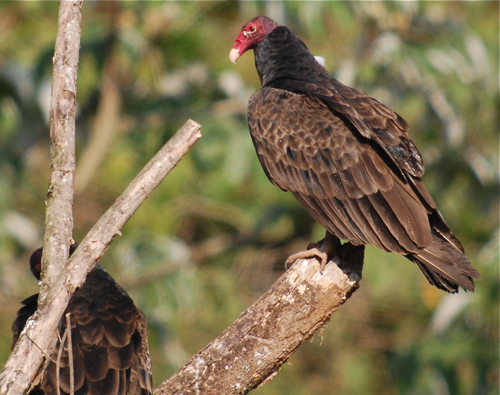
Songbirds weren't the only migrants I saw in Central America--there were a TON of turkey vultures, quite possibly the most common bird I saw...do you hear that Hasty Brook? Tons of turkey vultures.  This is an actual migrant turkey vulture.  Carlos--my most awesome guide at Canopy Tower (more on that magical place coming) told me that resident turkey vultures have a white patch on the backs of their heads.  This one with a full read head came from somewhere in North America.  I wondered if it was a Minnesota bird.  I'm working with Carlos on leading a trip to Panama and I am a bit torn.  I'd love to go back this time next year, but they have quite the fall migration of raptors and vultures that you can watch right from the tops of the tower.  Here are a few photos.  If there's a good migration going on, I would have no desire to ever go out on other trips to look for birds.

People have been emailing asking about dates and cost of a Panama trip.  I haven't worked out all the details with Carlos yet, but as soon as I do, I'll post it here and on the Facebook Page so everyone get save pennies and budget.

Turkey Vulture Crash & Golden Eagle Attacks Deer

I'm catching up on emails and blogs since I came home--have you seen Julie Zickefoose's new blog redesign? It's fabu! In the world of Holy Crap links, my buddy Amber told me about a helicopter pilot that was supposed to some filming during the Super Bowl and had a turkey vulture crash through his window and land in his lap. The pilot landed safely (and surprisingly didn't get barfed on) and the vulture flew away before animal control could take it to be checked by vet!

And on an Illinois listserv is a a photo series and story of a golden eagle attacking a white-tailed deer! Golden eagles eat dead here in winter and we've had some reports of young eagle especially attacking young deer. There's no way a golden is going to fly off with a deer but attacking and following a weak deer is not out of the realm of possibility. That would be food for a few days.

Also, I put out a request for birds before I left on my blog and on my Facebook page. People gave me a list of birds or mammals they wanted me to try and document while I was in Central America. I got quite a few, but not all. You can check it out here

Canopy Lodge Field Trips

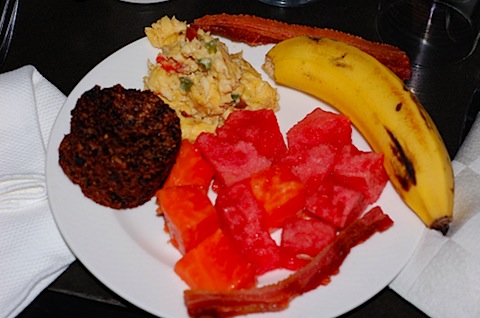
canopy Lodge Breakfast.jpg I look out my apartment window this morning at the new snow cover taking note of the new parking restrictions in my neighborhood (no parking on the even side of the streets until April 1 or some significant snow melt happens). Sigh, not so long ago, I was in Panama, starting my morning with fresh bananas, papaya and watermelon (there was also fresh pineapple but I can't eat that). A little bacon, some eggs, a weird banana bran muffin and a tangy little picante sauce.

The breakfast area at Canopy Lodge was in a buffet style and tables were set up in various sizes to accommodate the various travelers. Some were traveling solo like myself but there was also a birding tour group there too from Field Guides led by John Rowlette. During siesta and after dinner, John and I would find ourselves sitting together taking advantage of the wireless in the library. One night as John and I arrived with our MacBooks in hand someone said, "Watch out, here come the computer nerds!"

"Nerd, eh," I said, "that's big talk coming from a birder."

tanager fight.jpg

And while you ate breakfast outdoors, you could watch the feeders--I have a TON of photos from the feeders between using the Wingscapes Camera or my digiscoping like the above photo of clay-colored robins and a female crimson-backed tanager grabbing onto a blue-gray tanager. You'll be seeing a lot of feeder photos.

I found a group of people who I naturally gravitated to at mealtimes and on field trips. One was a man my age named John, a non birder who was on a month long journey of several stops in Panama. The other was a couple from Amsterdam named Ellen and Emile who were general birders like myself. After initial conversation and birding pleasantries, we revealed our occupations. The man my age turned out to be a writer and film critic and the couple from Amsterdam owned a publishing house. We laughed that 2 writers managed to find the one table in a foreign country with a publisher.

panama 2.jpg

After breakfast, we'd head out on field trips. If you were in the foothills, the atmosphere was sunny and you could get great photos and watch the clouds play at the tops of the mountains.

cloud forest.jpg

Or your field trips were in the tops of the mountains and you were birding among the clouds. It may not have made for the best photos, but it was almost as though you were birding in a dream with mist momentarily revealing birds with bright colors and then shrouding them suddenly in cloudy mystery. Though overall it was very humid, the temperatures were quite comfortable and I was surprised that I wasn't sweating like crazy.

canopy lodge honeycreeper.jpg

My first time out with Tino the Human iPod we walked a road in the foothills near the lodge in bright sun. That's where we got our first sloth of the trip (and certainly not the last) and I saw some familiar birds like the above red-legged honeycreeper. A bird seen throughout Central America but who cares, it's cool, it's blue, it's always a pleasure to see.

garden gem.jpg

Hummingbirds were all over the place and I had an easier time of getting photos of them perched in trees than at feeders. This hummingbird is called a garden emerald and I think the describes it perfectly--it looks like an emerald and can be found in a garden.

amazon kingfisher.jpg

We got an Amazon kingfisher right away and I chuckled a bit to myself. Right before I left town, an Amazon kingfisher showed up in Laredo, Texas and many of my birding friends were hightailing it out there to get the bird on their US list. I got one, not on my US list, but that's okay. No matter how you slice it, the bird is a huge green kingfisher--what's not to love?

woodpecker.jpg

This was one of my favorite birds we saw--a lineated woodpecker. These are about the size of a pileated woodpecker (the bird that got me into birding). We saw quite a few of these and I was excited to get a photo.

yellow something euphonia.jpg

Here's a yellow-crowned euphonia which were different than the ones coming to the lodge's feeders. I couldn't believe my luck at getting photos of birds this time in Central America--it was very challenging for photos on my first trip to Central America last year with the shade and the birds hiding in the leaves, this time it was much easier. I've been with all sorts of bird guides and I lead trips myself. I know that when I go out of the US that guiding practices may be different depending on how young the tourism industry is in that country. The guides with Canopy Tower and Canopy Lodge were some of the most professional, accommodating and helpful (while still being respectful of the birds) that I ever birded with. They whistled in birds, sometimes used iPods and even laster pointers to help everyone see the birds. There were also little differences too:

tody motmot.jpg

One of the target and prized birds to see is the very secretive tody motmot. Tino came to a spot where he had seen them before, had all of us bunch up next to him and watch a particular thicket. He whistled the motmot's song and then whispered, "There it is." I didn't even see it fly in and I was watching hard but Tino pointed it out. We trained our binoculars on it. As I was getting my good look of this secret and small motmot, Tino set up his scope and my scope on the bird so everyone could get a look and I could get the above photo. I didn't ask Tino to set up my scope, but more than once he would do it unasked. Even more impressive, my scope was different from his. You could tell that he's accustomed to training all sorts of scopes on good birds. It was the look of a lifetime at a very cool bird. I mentioned earlier that Tino played the guitar as well as being a musical wiz with bird calls, but he appears to be a true Rennaisance Man. He's quite the artist, he has quite the sketchbook of art work and his tody motmot illustration is framed at the lodge. He is definitely one of the highlights of the country.

Canopy Lodge Guide

Here's a preview for a coming blog entry about going out with Tino one of the guides from Canopy Lodge. Raul the owner told me that Tino is known as the "human iPod" for his ability to mimic the many bird calls of Panama--it's no exaggeration.  Here's is a few minutes of Tino in action. [youtube]http://www.youtube.com/watch?v=fbVGjh7T6Ug[/youtube]

He whistled the entire time we were out. He would whistle, hear the bird answer back and say something like, "Ant thrush!" As he would walk to the bird's location, he would nonchalantly play air guitar. I asked him if he played and he held up his hand. His fingers showed the well worn callouses of a dedicated musician. It made sense that Tino played guitar. A person with that ability to remember and mimic bird calls must have some sort of musical talent.

Teenage Birder Explains Birding

This is a video by Stephen Rutt who is taking a media class and chose to use his hobby of birding to make a documentary about the definitions of a birder vs twitcher.  Very cool effort and fun video of some British species: [youtube]http://www.youtube.com/watch?v=ySRkIFsPp24[/youtube]

Very cool, Stephen!