Judging Jr. Duck Stamp Entries

Tuesday was one of the coolest days of my life as a birder and park ranger!  I was one of the judges for the Minnesota Jr. Duck Stamp competition.  This wasn't the final judging for the Jr. Duck Stamp, our Best In Show entry is entered into the final round and I think it stands an excellent chance of winning.  Here's a snippet of walking through the Kindergarten and 3rd grade entries: [youtube]http://www.youtube.com/watch?v=E-8NyhLJ5Ts[/youtube]

What an honor to be part of the panel and to take a look at all the hard work kids from Kindergarten to 12th grade created.  The other judges included artists like Joe Hautman and wildlife folks like Peg Callahan of the Wildlife Science Center.

Kindergarten thru 3rd grade was fantastic, so much potential with artwork and such interesting interpretation of key waterfowl field marks.  At first glance, some of the pictures looked wildly inaccurate, like a bufflehead with a rainbow of colors on its head.  But then you realized that the young artist was trying to communicate the iridescence that can be seen when the sun hits the male's plumage in the right way.  Other pictures had a story you could tell was working its way through a kids brain.  One of my favorites had what looked like a female wood duck flying through the woods and then you noticed a cavity drawn in a tree with two sinister red eyes looking out--what was that all about?  What did that kid imagine was staring out from that cavity?  Was the wood duck flying through a haunted wood?  I don't know, but I loved it.

Our mission was to judge the different age groups: Kindergarten through 3rd grade, 4th thru 6th grade, 7th thru 9th grade and then 1oth thru 12th.  For one group, they would give us 10 poker chips and we placed a chip on the picture we wanted to stay in (no picture could have more than one chip) and we'd get to narrow down our favorites--leaving 50.  After that, all of use would get five chipa, narrowing it down further.  This would go on until we narrowed it down to five illustrations.  We could also use field guides to confirm id.  Since I have six different field guides on my iTouch, I kept that with me.

Then we five judges would be shown the final five images one at a time.  We were given numbers and we had to hold up the number we'd like to score each image.  If we had any ties, we'd have to re-score.  We only had a few ties and they were solved quickly.

The challenge I had was picking through photos that actually fell into the rules of the competition and weren't just a creative interpretation.  As much as I loved the cubism seen in the black duck it, I had to keep in mind, which of the finalists showed habitat?  It was nerve wracking.  Since the judging was public, we did have some spectators.  Peg and I couldn't help but notice that one little girl was doing some serious hand wringing while we studied the pictures.  We had to turn our backs so as not to be influenced by all her hopes, fortunately she placed well in the competition.

After we picked our favorite pictures, we had to decide on a Best in Show from all the first place winners and that one is entered in the National Jr. Duck Stamp contest.  I don't know if Best in Show has been announced on the website, so I don't want to post it yet.  But the person who won best in show was there and got to witness the judging.  All of the finalists will be up at the Science Museum on April 23 and there will be all different kinds of programs going on.  I'll be doing a program on tools birds have for surviving in a marsh habitat but there will be artists giving tips on creating waterfowl art.  I did get a video of the winner of the K-3rd grade division:

[youtube]http://www.youtube.com/watch?v=lhWWzCBiwSM[/youtube]

Don't you just want to eat him with a spoon?
Judging The Jr. Duck Stamp

Tuesday morning I'm heading over to the Burnsville Civic Center as a judge for the Junior Duck Stamp Contest.  I had grand schemes of Twittering during the event, but I was reading over my rules as a judge and there will be no Twittering!  Check them out:

  • Must have cell phones off throughout the judging process
  • Only the designated state coordinator & volunteers may touch the art work at anytime
  • No food or drink in the area for the judging
  • Maintain quiet while judging is taking place
  • There should be no comments about the art work; no pointing to a particular piece, no naming of the artist, etc. throughout the judging process
  • The public is welcomed to attend. In previous years we have had students, parents, teachers, & grandparents attend. They are invited to the judging floor to look at the art prior to the judging of each grade category.
  • When judges are not judging, they should be in the breakout room or sitting in designated area

From there all the judges are given poker chips and we look at the art and place poker chips next to artwork we want to keep in the show and whittle the group down and then do some scoring.  I'm so excited to this tomorrow.  I'm excited to be a judge (in a park ranger capacity), I'm excited to see what kids have come up with, I'm excited to just be part of the process.

This is open to the public, but I realize it's on a Tuesday and most people have to work.  But if you have some free time, do come to the Burnsville Civic Center to check it out.  There will be a second event with the winners at the Science Museum on April 23.

Mississippi Flooding In St Paul, MN

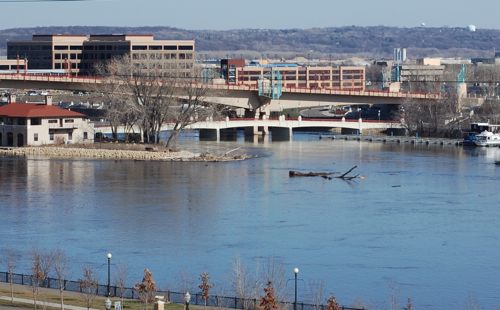
It's an oddly exciting day at the National Park I work for (Mississippi National River and Recreation Area)--the river is flooding and it's odd to be excited by the flood and watch what the water will do.  Since our visitor center is based in the Science Museum lobbby, we're right on the Mississippi River in St. Paul, MN.  We have an awesome view. That's a giant tree working it's way down towards Raspberry Island (which is mostly submerged at this point).
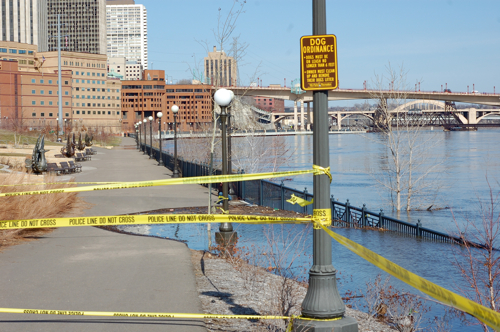
St. Paul has closed Sheperd Rd. from behind the museum all the way to Hwy 61 in preparation for the flood.  One of the officers I spoke with said parts were already under water.  I spent a majority of Sunday afternoon roving and interpreting the flooding--what ranger wouldn't rather be outdoors on a sunny day?  The river is in flood stage at 14 feet and when I was at the river it was at 16.4 feet.  It's expected to crest on Wednesday at 19.5 feet!
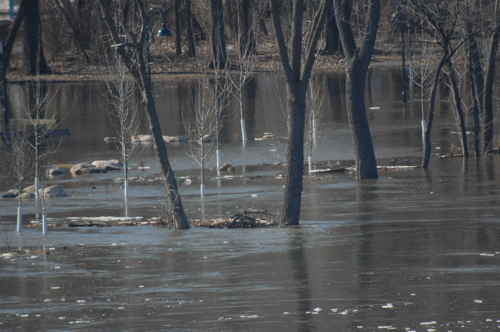

Across the way, Harriet Island was flooding.  The police were trying to clear people off of it, but would have a better shot at herding cats.  As soon as they would get one group to move on, 12 more people would walk in from the other side.  Once church let out, the Harried flooded with people and the police seemed to give up.  I have a feeling that tonight some serious barricades will go up and Harriet Island will be off limits for real tomorrow.

The Padleford boats are still docked at Harriet but barges have been placed in front of them to prevent debris from damaging them.  If you watched the water up against the barges you could really get an idea of how strong the current was flowing.  Here's a video I digiscoped:

[youtube]http://www.youtube.com/watch?v=LJ-E8oOzQOA[/youtube]

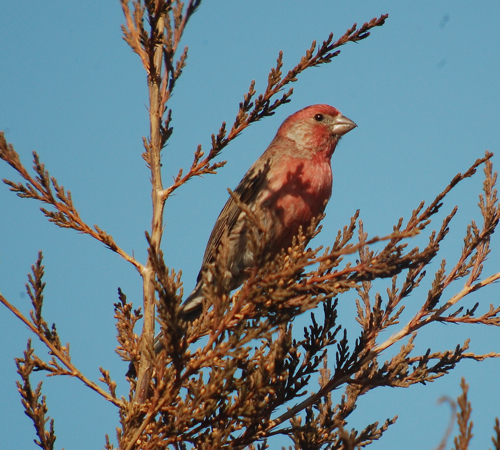
Did you hear the house finch singing on territory in the background?  Here he is:

He was duking it out with another male for space in this tree outside the museum--prime real estate in downtown St. Paul and relatively safe from flooding...I wonder if the river will affect some of our early nesters like wood ducks, mallards and Canada geese?

If you want to watch some of the flooding, there's a great view from the Science Museum and be sure to visit us at the Mississippi River Visitor Center in the lobby.  To watch the predictions for the crest, check out NOAA's website.

Recent Red-winged Blackbirds

This week has been fun for watching returning migrants.  One morning there's the usual winter birds and then the next morning you hear a robin on territory (had our first one singing outside of the apartment today).  I went to Carver Park this morning before work and a flock of red-winged blackbird males were lurking in a cedar tree working on their song. [youtube]http://www.youtube.com/watch?v=qRUs_yli-jY[/youtube]

Random Tree Sparrow

This is a random photo I got an American Tree Sparrow on Friday.

I wonder how much longer I will see these guys and how soon they will be replace by incoming field sparrows?

Red-wings

Ah, Spring, you did just what I thought you would do.  You pushed it all the way to the edge with your warmth, even giving me 60 degree days. Yesterday, I biked to a meeting and got a slight tan for my folly of a lack of sunscreen.  Each day on the bike trail gave a new migrant.  Monday it was just juncos practicing their territory song.  Tuesday a few groggy red-winged blackbirds showed up (like the bird above), Wednesday you gave me bluebirds around my beehives--all so wonderful.  And today, you give us back the cold.  Even the red-winged blackbirds seemed to be singing, "I came back for this?!?"
I was out today with my buddy who runs Avian Images and after the warm temperatures of earlier this week, we were hoping for a warm day at Wood Lake Nature Center.  We didn't get it. But it was still nice to see red-winged blackbirds here, a sure sign of spring--much better than the confusing robins that we see all winter.

Surprises In The Hives

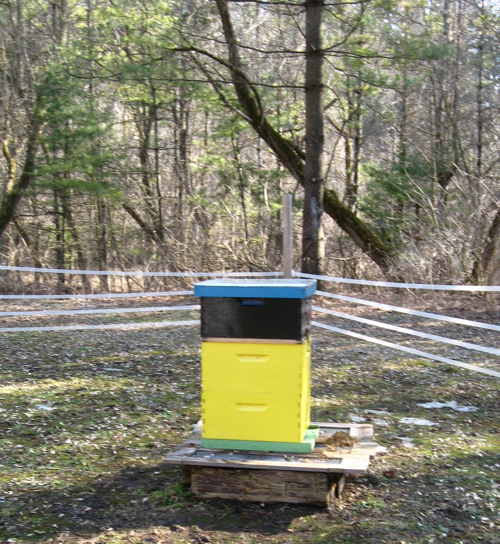
This blog post is not only an update for those curious about the going's on, but also to serve as notes for how we prep the hives this fall.  What's nice about a blog is that is kind of a nice notebook.  Also, Mr. Neil would like an update on our bees while he is traveling the world. After last year when our bees were okay in February and then dying in March, moisture appeared to be part of the problem, so we tried a variety of solutions.  One being Mr. Neil's groundskeeper named Hans went out and cleared snow away from the bottom entrances.  We also had him go ahead and remove the insulation, last year was a colder winter and we left it on longer.  But the bees had been quite active and it's been so warm (it hit 60 degrees yesterday) that Hans took it off last week.  We didn't put the insulation on until late last fall, they should be able to take it if we dip down into the twenties again.

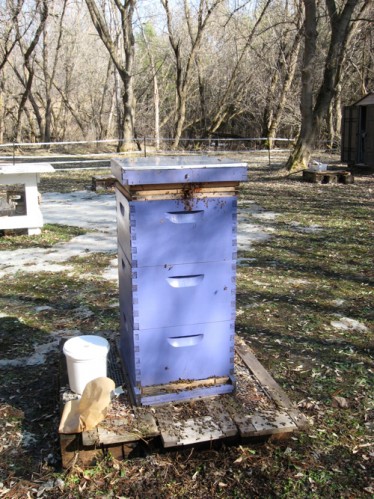
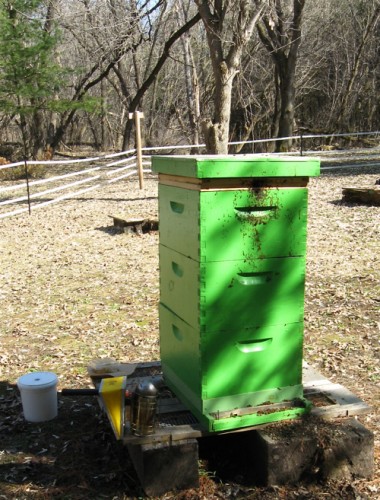
The green hive was three deep brood boxes this winter which is what I was taught we should do at the University of Minnesota's beekeeping short course.  She's been fairly noisy all winter.  The bees had taken advantage of the warm days and pooped up a storm (they don't poop in the hive so hold it up all winter and then let her rip on warm spring days).  We used a wooden entrance reducer on her--to control the flow of air from below and prevent mice from entering the hive.  She also had a piece of board on top, above the ceiling to absorb moisture during the winter.  It appeared to have worked, there was a little moisture on the board, a little mold, but none on the ceiling or top of the brood box itself.

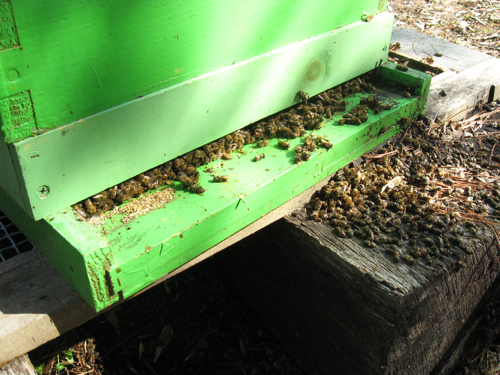
This hive also has a slatted rack which is supposed to discourage swarming. Also a beekeeper told me that it's somehow supposed to aid in ventilation.  I'm not sure, I think it's one of those things where a beekeeper noticed less moisture in the hive when they have had it in there.  I took out the entrance reducer and used my hive tool to clear out some of the dead bees at the bottom to help with air flow and give the girls more room to work.  The bodies were wet,  I cleared out the bee pieces until a few live workers flew out from the bottom.  There was a nice, noisy active cluster of bees at the top of the hive.  I placed a feeder pail of nectar on top and added a pollen patty to help get them trough the next couple of weeks.  I tweaked all the pollen patties this time with a little actual honey from our stores.  I also brought each hive a piece of comb honey, more for my own benefit than anything else, kind of like a hive warming present.

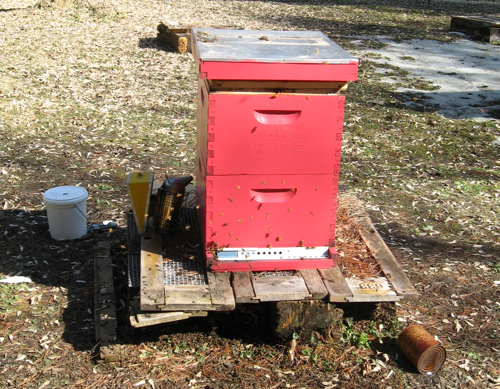
This was a hive I did not expect to survive the winter.  She swarmed late in the summer last and I let her do it-- no heroic measures to stop it, even though I thought it a bad move on her part.  She went into the winter with just two brood boxes of food and a very small cluster.  Some beekeepers do keep their hives down to a 2 box system in winter--even our neck of the woods so she had a chance.  She was one of the most active hives I visited yesterday.  The green hive had the most workers moving in and out of the entrance, this one had the second largest highway going.  I even took some video down by her opening at the metal entrance reducer.  If you watch at the bottom left at the beginning you might notice a worker removing a dead body:

[youtube]http://www.youtube.com/watch?v=ExVV-pN1cNA[/youtube]

Impressive activity!  I left on her entrance reducer because the bees seemed to be getting out at the bottom and top easily.  Mice are still somewhat of an issue but the reducer will probably come off in early April if the weather holds.

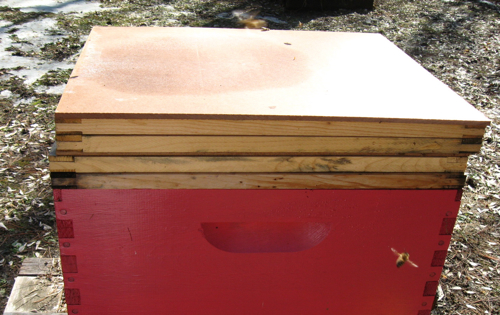
This hive does not have a slatted rack on the bottom but has four inner covers on the top and the moisture board.  If you look at the board on top--it has a wet spot.  I'd say it did it's job rather well.  The ceilings were dry inside this hive which I think aided in her survival.

The purple hive was a wee bit quieter but still active.  She went into the winter with three deep brood boxes, moisture board, double ceilings but no slatted bottom.

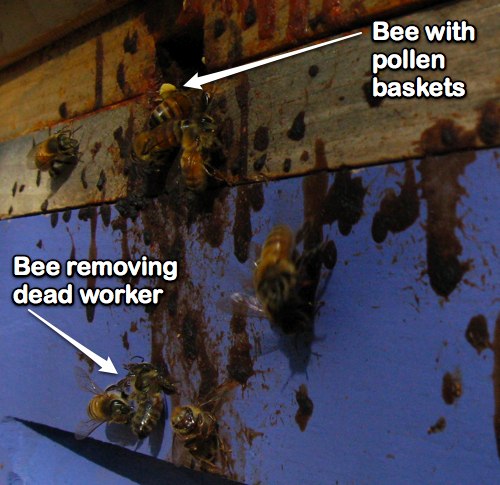
The workers were not coming out of the bottom, but using the top hole to poop, remove some dead bees and if you look closely you can see a forager returning with some yellow pollen baskets!

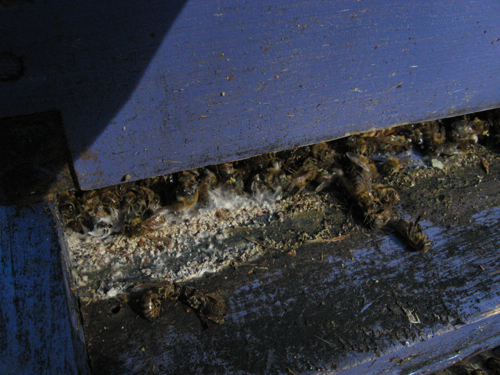
When I removed the entrance reducer, some of the dead, wet bees at the entrance had grown some fungus.  It was just at the entrance and scraped out piles of dead bees from the bottom until a few live ones flew out.  There was a good ball of bees at the top and they were very excited about the feeder pail and pollen patty.
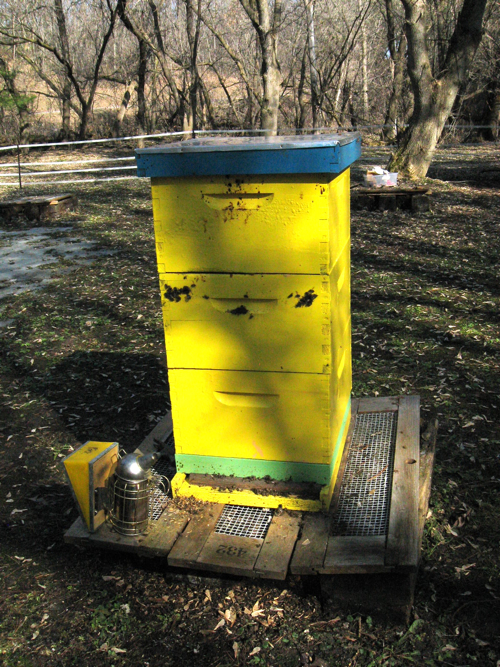
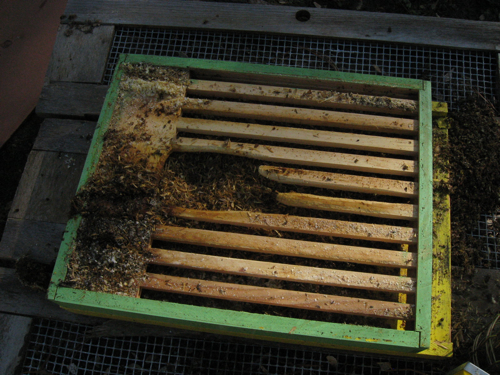
I wasn't sure what to expect of this hive.  She'd been fairly quiet all winter.  You had to really press your ear up to the insulation to hear anything.  Her exit hole at the top of the hive was smaller than the others (barely enough room for one bee to come out and no one ever seemed to come out of the bottom.  She had three deep brood boxes, a wooden entrance reducer, a slotted bottom and a moisture board.  Bees took turns coming in and out of the top entrance.  I opened the top and she was very lively.  I put up the feeder pail and pollen patty.  You can see a video here (and see a worker come in with loaded pollen baskets while the others nom the feeder pail and nom nom nom the pollen patty.

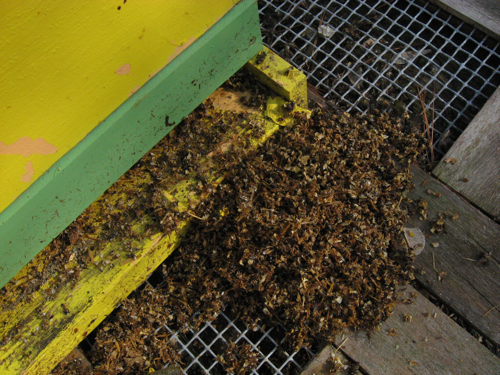
After I removed the entrance reducer and started to scrape out debris, I couldn't help but notice that there were very few bee parts and an awful lot of wood shavings.  This did not look good.  I had a suspicion of what was going down--a mouse had moved into the hive for the winter.  Bastard!  The bees had a good harmonious hum going and this was a three deep box.  I wondered if maybe the mouse had kept to the bottom while the bees were on top?  Was this hive through or could it be saved? I had no choice, I had to open her up.

The mouse did not chew up from the base, it looked like it squeeze right through the tiny hole left by the wooden entrance reducer.  Then chewed through the slatted bottom and made its nest there.  The mouse worked it's way into the bottom brood box and ate quite a bit of the honey and wax, however it did not appear to have gone up into the top two brood boxes and there was still some food left there.

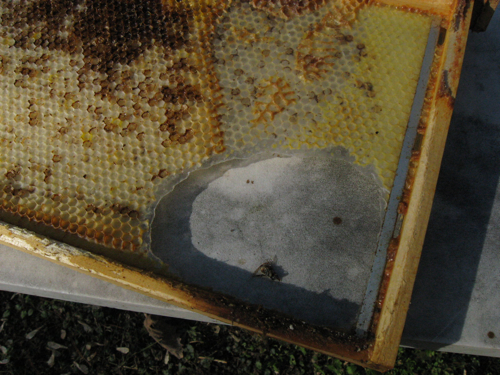
The mouse had chewed into the wax foundation of some of the bottom frames (hope it got a good tummy ache).  Looking at photos of other mice in beehive stories, this is typically where the mouse builds the nest.  Did this mouse get interrupted?  I scraped out the bottom board and found no mouse--not even a propolis covered mouse mummy.

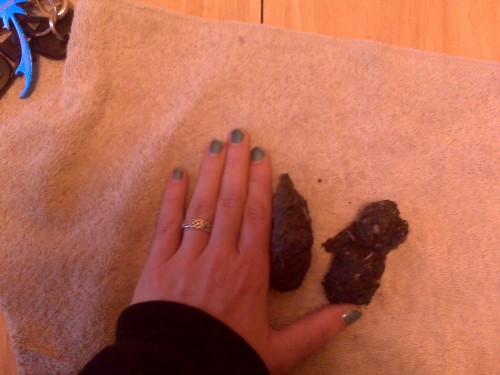
I did find a couple of ginormous owl pellets near the hives.  Perhaps the local great horned owl took care of the mouse for me?  Maybe I'll find it's skull when I dissect these?

The hive otherwise seemed healthy.  I replaced the base board, and removed the bottom box, making this a two brood box hive like the red hive.  I put a third and empty box over the feeder pail and pollen patty.  I'll be curious to see how this hive does over the next two weeks.

I always knew mice were a possibility and we've had them try and get in the hives before when we find their telltale tracks in the snow leading to the entrances.  Usually a well placed snap trap does the trick but this time we didn't see any tracks.  The good news is that all four hives are still going and appear to be ready for this summer's honey production.  We'll feed all four for as long as they seem to need it.

Bees Are Getting Pollen

We're getting 60 degrees around here and I took a moment to check on our hives.  It's looking to be a much happier scenario this year than last year when we had only two colonies.  We had one that was weak that we thought would die and one that was huge and sounded healthy.  By February, all seemed fine.  By the end of March, both were about dead. Thanks to the help of Hans and a lucky streak in the weather, we're in a much better situation this year with our four hives.  I'll post more later this morning, but here's a teaser from yesterday.  I gave the girls some feeder pails and many foragers were out and about already returning with big baskets of pollen.  I wondered where they were getting pollen?  Trees I suppose.  The only flowers I saw blooming were snow bells but I don't think there are enough of those out there to justify the bulbous baskets on my girls' legs.  Here's a short video of happy bees on a snowy day:

[youtube]http://www.youtube.com/watch?v=mHjgZb1wEE4[/youtube]

Black Penguins, White Puffin & Hybrids

Last week, the interwebs were stoked over the photos of the "Shaft of King Penguins." This week a mostly white puffin has been photographed.  I know many of the headlines read that the black penguin was a one in a zillion color morph but they seemed to ignore a smaller black Adelie penguin that Noah Stryker took and posted in his blog in 2008. Meanwhile, Minnesota Bird Nerd has some interesting posts up about a possible chickadee/titmouse hybrid (not unlike the hybrid someone guest blogged here last year).  He also has another post up about a possible junco/white-throated sparrow hybrid as well.  And if you enjoy MN Bird Nerd's blog and banding, be sure to head out to Lowry Nature Center this Saturday.  He and Mark will be publicly banding birds--should be pretty good bird wise with the temperatures changing and warmer weather.  Maybe we'll get a fox sparrow?  I have to give a program at the St Paul Library on Saturday afternoon, but plan on being at Lowry in the morning for some good birding times.