
Birdchick Blog
Birds and Beers Excitement! #birding
Holy cow! Amidst all of my travel in May and June, a Birds and Beers opportunity has come together and I'm really excited about it! The next Birds and Beers is June 29, 2011 (next Wednesday). This time we’ve been invited to Lift Bridge Beer Company in Stillwater–we can sample some local beers! Take the afternoon off, do some birding along the St. Croix or just come for the birding company after work. Make connections, see old friends and welcome new ones! But wait, there's more!

This brewery is really excited about the Minnesota Breeding Bird Atlas Project. If you come and enter in data to the database, you can enter your name for a free growler of beer to take home. This is notes on any bird you know of breeding in Minnesota. Know of a coot nest (like the bird above)? How about a cardinal nesting in your back yard? Or an owl nest in a nearby park. Anything, this is important info that MN Audubon needs for the project. You can help birds and maybe win some beer. Everybody wins!
Thanks to Lift Bridge Beer Company in Stillwater for coordinating this event for birders and birds!
To get the latest updates on Birds and Beers, "Like" it on Facebook. Here's the official Facebook Event. I can't be in every state drinking every day and if you would like to host your own Birds and Beers in your community, that is okay by me. Here's how.
Birds and Beers is an informal gathering of birders of all abilities–if you’re interested in birds, you’re invited. You can meet other birders–maybe find a carpool buddy, ask about where to find target birds, share cool research projects you might be working on, ask a bird feeding question, share life lists, share some digiscoping tips, promote your blog–the sky is the limit. It’s low key and it’s fun.
Sharon on the Heron Rookery for MPR
Hello all, NBB here. This is a quick note to let you know that Sharon has an article up about the response to the destruction of the Heron Rookery on the MPR website. Check it out.
American Woodcock Not Hiding So Well
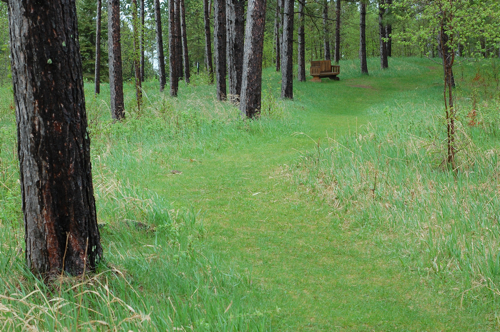 While on one of the birding trips for the Detroit Lakes Festival of Birds, we visited Tamarac National Wildlife Refuge. There had been a woodcock nesting right off a trail near the Nature Center. As we walked towards it, the female appeared to have moved to right on the trail. The refuge staff suspected that her eggs had hatched. They are precocial when hatched meaning they can run around. She was probably moving them from the nest, heard us coming and froze tucking the young beneath her. Can you make her out in the above photo?

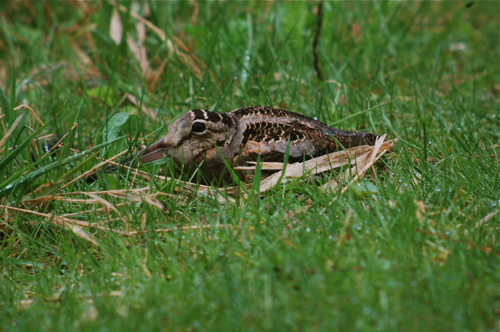
There she lurks, most likely thinking, "Haha, humans, you can't see me, I am invisible!" We didn't get too close and after everyone had a chance to see her, we went back the way we came from. I always wonder how may owls I walk past, now I have to wonder how many woodcocks and their chicks escape my notice.
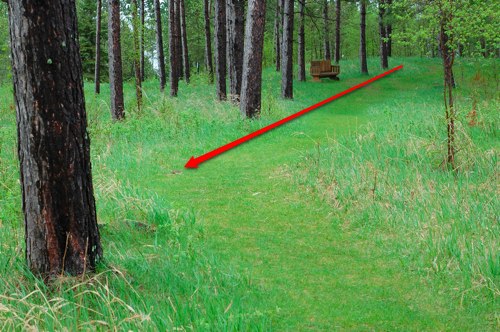
Here's the first photo with an arrow pointing to the woodcock:
Heron Rookery Visible From Marshall Terrace Park
When I last posted about the great blue herons renesting on the Mississippi River, I said that the rookery was not easily viewable from shore. Tony Hertzel from the Minnesota Ornithologists Union sent a not mentioning Marshall Terrace Park. I had driven by there and also viewed it from the river and it didn't look viewable. However, I drove back to the park and explored it. There's a paved trail behind the baseball diamond that takes you to a stairway down to the river and gives you an eye level view of one of the islands on the rookery:
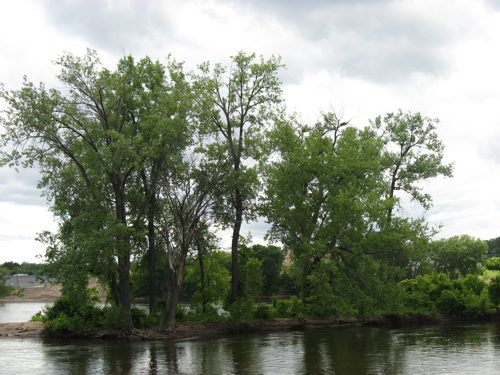
I didn't have my scope with me and took this with my point and shoot camera. If you look in the bare branches, you can see one of the nests at the top. This island also has a little colony of nesting spotted sandpipers, so if you go watch for these little shorebirds bobbing their butts along the shore of the island.
Maria Baca from the Star Tribune wrote a really nice follow up about the rookery and there's even a photo of a heron on a nest!
One note about this park. They have some badass ground hogs:
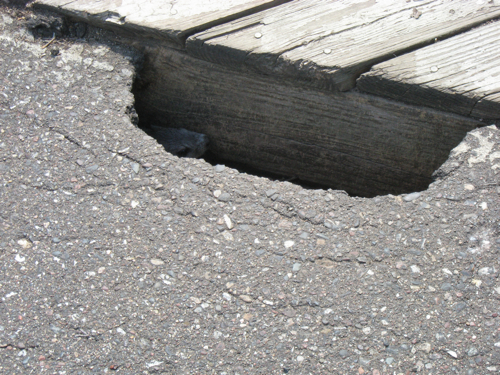
I found a family of them living in a hole dug out of asphalt...I would give them a wide berth if you encounter them on the trail.
Cliff Swallow Nesting Area
If you ever have a chance to visit the great state of Utah, I highly recommend checking out Bear River Migratory Bird Refuge. This place is awesome, there's an easy birding drive to take and you can use your car as a blind to get great looks at western birds. You can also use the drive to get photos of grebes, ducks, pelicans and...

...swallows.

Lots and lots of swallows. If you are birding in a place with all sorts of swallows aka birds who fly around with beaks wide open eating only insects, take note. It usually means that there are a lot of insects for them to eat.

And lots of insects there are--mostly in the form of non biting midges. This was swarm that took over my rental car's windshield when I paused to get some photos. Most of the bugs you encounter are non biting...there are a few who do, but when you see clouds along the road, they are generally non biting midges. Don't let this photo frighten you from visiting this place. The midges for the most part will leave you alone and the birding is beautiful. You can also stay in your car the entire time if you really want to avoid them, but I like to step out.

I had to chuckle, as I would try to get photos of birds around the refuge, midges kept getting in the shot. All the black dots in the above photo of the marsh wren? Midges! Though there are oodles of midges and they can be a source of food for all sorts of insect eating birds, especially swallows, there is a challenge. You can have all the food you want, but if you want to raise chicks, you need a safe place to do it.

This is the outside of the visitor center of Bear River Migratory Bird Refuge--all of the birds in the photo are cliff swallows and they have built mud nests in every corner they can find since it's one of the few building around that offers shelter for their nests and safety from ground predators.

Here's a cliff swallow sitting on a partially completed nest. If you have kids and they give you any guff one day, just say, "Hey, at least I didn't make your bedroom out of mud and my own saliva. How'd you like to grow up in that?" The nests are jammed packed but there's still plenty of insects to allow for more nesting.

Then I found this little structure near the auto tour. I'm not sure if this originally was meant as a shelter for people and taken over by swallows or if this was built specifically for them. Either way, what a cool idea to build a shelter for cliff swallows to use. If I had a cabin on a lake, I'd totally make one for these insect eating birds. Might even discourage them from nesting around light fixtures or other areas you'd rather not have them nesting on.

It was hypnotic to watch the little cliff swallows come and go from the little mud cups. These are highly social bird and have no problem nesting side by side...so long as there is plenty of food.
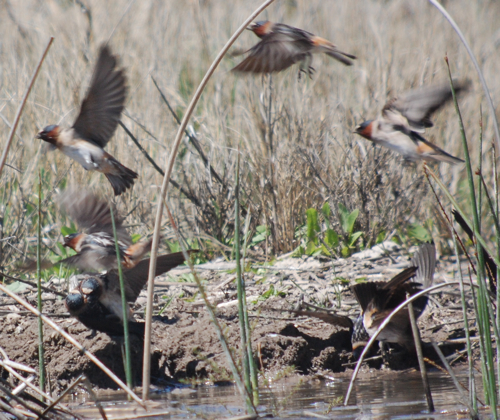
As I went around the refuge, I would find muddy patches with packs of swallows gathering mud for nest construction. Some birds, like those in the lower left hand corner got so into the spirit of things, they mated right there.

It cracks me up to watch cliff swallows on the ground when they gather mud. They keep their wings up in the air. It's almost as if it's a reminder that they don't normally perch on the ground and they need to be back in the air stat. Although, I wonder if the behavior evolved to prevent them from getting mud on the tips of their long wings?

Even though this was in Utah, cliff swallows are all over the United States, so if you wanted to experiment with making a cliff swallow nesting shelter, you could give it a go. I don't think they are in particular trouble habitat wise, so it's not like you need to do it like purple martins, but if you enjoy them, I'm sure they'd appreciate it. We have quite a few it the Twin Cities. When we do canoe paddles on the river, just about every bridge is loaded with cliff swallow nests. They look different from barn swallows, they don't have the deeply forked tail and they have that blond unibrow look to their face.
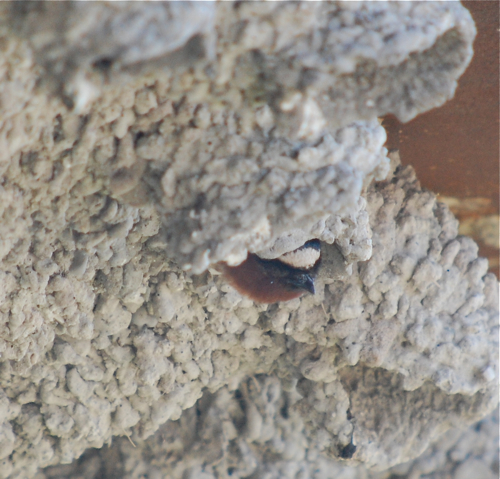 Cute little swallows.
Birdchick Podcast #39
Crazy rare birds showing up and making news: a Cassin's sparrow is in Ohio and a willow ptarmigan is outside a nuclear power plant in Ontario. Lead poisoning is still killing reintroduced California Condors in the Grand Canyon.
This Friday is the first day to buy the new Duck Stamp for the year. Purchasing stamps doesn't mean that you support hunting. It means you are giving money and over 98% of the money from the stamp purchase goes to habitat acquisition for National Wildlife Refuges and they essentially get you access to any NWR without paying a fee. It's not just ducks who benefit from this, several species of birds, plants and mammals benefit from this. Just because hunters are forced to purchase one doesn't mean birders are making a good statement by not purchasing one.
It's a Dalek Squirrel Feeder. Why can't we have one these in North America???
Some pelicans cleaned up from last year's BP Oil Spill are breeding this year.
eBird has updated their list entry system. Are you submitting your bird observations to eBird?
Cinnamon
I regret to inform those who knew her, but today was Cinnamon's last day. I disapprove.
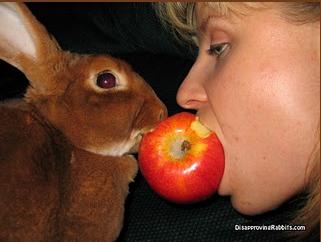
How do yo say goodbye to a creature who shared a hotel room with me when I got stranded in a blizzard in Nebraska? A rabbit who helped launch my freelance career? A rabbit who brought me over a decade of laughter on a daily basis?
If you have a pet hug them tight. I know many people have enjoyed Disapproving Rabbits and at this point, I don't know where it's going to go. If you feel compelled to do anything, please donate to your local animal shelter or rabbit society. Had it not been for someone dropping off this delightful ball of velvety fur to the St Paul Humane Society all those years ago, life would have been a bit more boring for us.
Here's one of my favorite memories of her:
[youtube]http://www.youtube.com/watch?v=4Y7TV0gEri8&feature=relmfu[/youtube]
[youtube]http://www.youtube.com/watch?v=keYEQlCy61o&feature=relmfu[/youtube]
Heron Rookery Reloaded Post Tornado
Who knew this story would have such legs?!
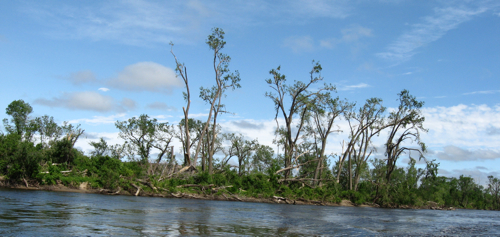
As reported last month, the great blue heron rookery at North Mississippi Regional Park was completely obliterated by a tornado that went through north Minneapolis. I worked with some of my fellow National Park Rangers at MNRRA, the MN DNR and the Animal Humane Society to help gather what few live chicks and injured adults were remaining on the island. We all pretty much guessed that it was late enough in the season that the herons would not rebuild. All last week, I received several emails about herons building new nests in two different locations with my the boundaries of my National Park!
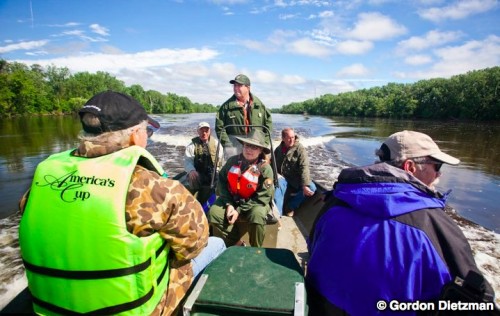
I organized a boat trip with my fellow park rangers, Carrol Henderson from the MN DNR, Bill Hudson and Brad Kopp from WCCO and Jim Williams from the Star Tribune to investigate. I was excited, I was able to get our park's head honcho Superintendent Paul Labovitz to be my river chauffeur for the morning! We passed the mangled rookery and even made a stop.
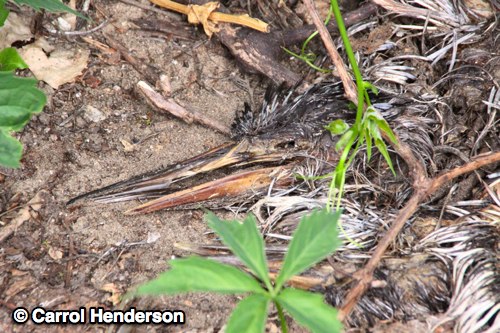
I was amazed at how few carcasses were left on the tornado ravaged island, we found very few compared to what was there a couple of days after the tornado. I'm sure turkey vultures and crows took advantage of the food source and based on some of the damaged feathers found around the few remaining bones, some mammalian predators ate them too, possibly raccoon or fox.
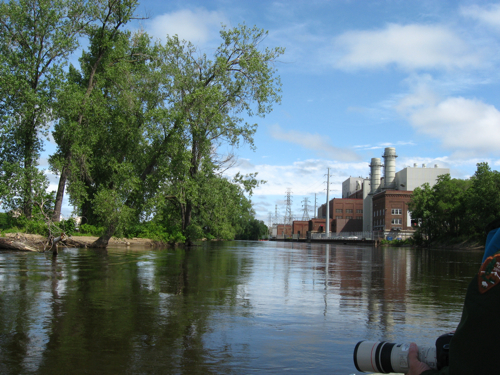
One of the reports of the herons rebuilding centered on islands just off of the Riverside Power Plant north of downtown Minneapolis. Even the power plant staff sent emails asking if they needed to do anything to help keep the herons safe--how cool is that?
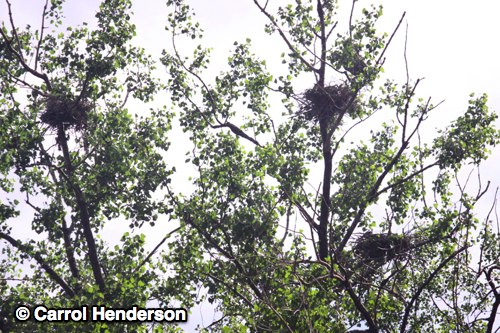
There are two small islands here and we found about two dozen nests. There could be more, but it's hard to count them among the leaves. They rebuilt quickly. Park Ranger Gordon (who took some of the photos in this post) looked at me and said, "You know, those birds were flying around with sticks when we went to the island two weeks ago. I didn't think they would seriously re-nest." I agreed.
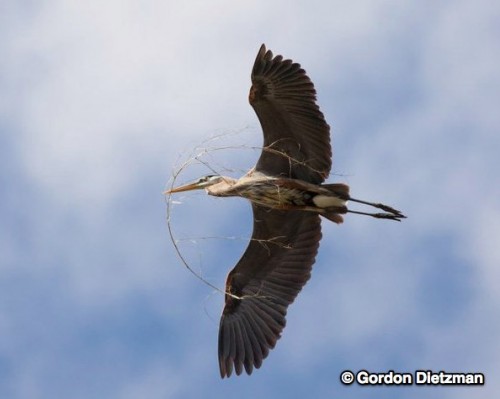
More herons came in with sticks while we circled the islands. I've observed herons adding sticks to nests with chicks during nesting season. I figured that they look like flimsy nests to begin with and additions are regularly added. When we saw the herons with sticks right after their nests were destroyed, I thought it was just an attempt, not serious nesting behavior--kind of like their hormones were telling them, "this is what you need to be doing now." But we watched more than one bird fly in with sticks while we checked the new rookery. I wondered if we would see any birds incubating.
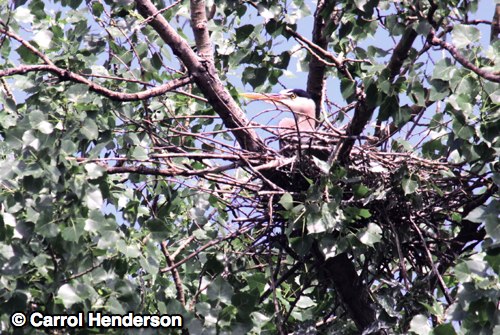
Sure enough, herons were incubating on this island! Wow! I was not expecting that. I'll be curious to see when the chicks fledge. It should be a three month process, but if we have a warm fall, these birds just might be successful.
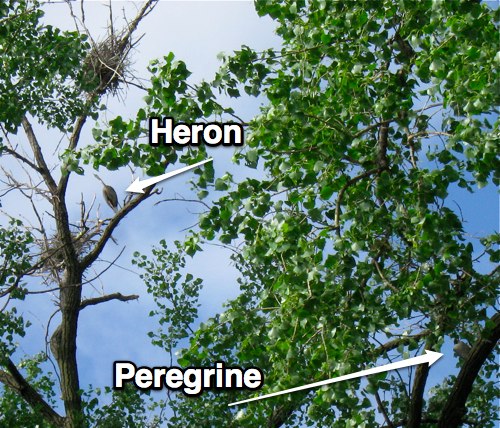
As we cruised under the trees on the boat, Paul asked, "What's that bird on the branch, it looks like a lump." Carrol, Gordon, Jim and I all about jumped out of our seats--it was an adult peregrine falcon perched below all of the heron nest.
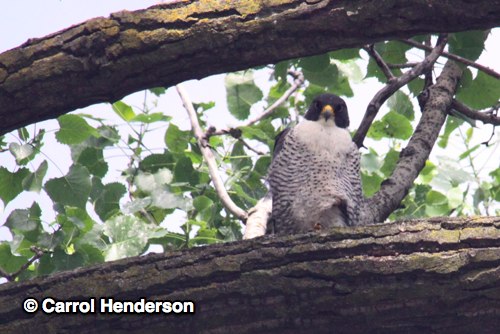
There's a peregrine falcon nest box right on the Riverside Power Plant. I thought our chances of seeing a peregrine falcon was very good, but I didn't expect one to be hanging out in the midst of a heron rookery. Great blue herons are not one of the preferred foods of this falcon. I don't think the herons see it as a serious threat. I had to give our park's superintendent some serious props for locating the falcon while all the birders in the boat missed it.
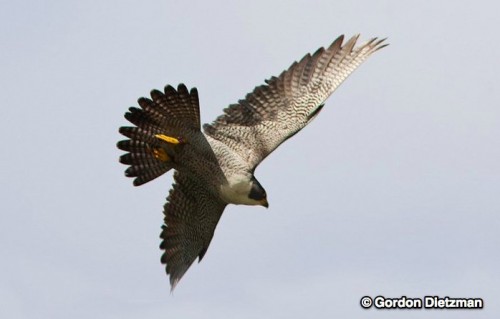
The falcon eventually flew over to its nest box but wow, what a bonus to see a peregrine mixed in with herons! This made me happy on so many levels--I love bird resiliency and I especially love when they do not read the same books and articles that I do and do their own thing. I'm also excited because we planned some canoe trips to view the old rookery this summer and I thought those would be bummer trips with me saying, "Well, we used to have a rookery here, but..."
This new little rookery is on that paddle route, so we'll be able to take people by the old tornado damaged island and the new one.
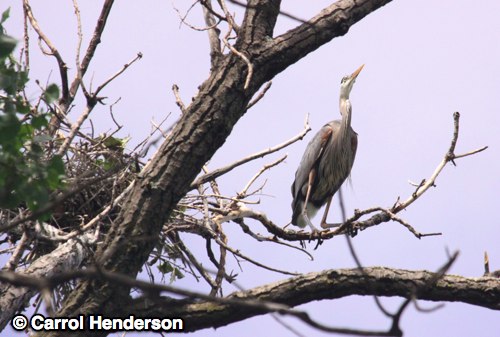
The one big bummer about this new rookery is that it is not easily viewable from either shore of the Mississippi River. Because of barge companies and power plant security, you can't view it like you could from North Mississippi Regional Park. However, not all of the herons relocated to this rookery. Some when to Coon Rapids Dam which is totally viewable from the eastern shore of the Mississippi River!
UPDATE! THIS ROOKERY IS VERY VISIBLE FROM THE EAST SIDE OF THE RIVER! YAY!
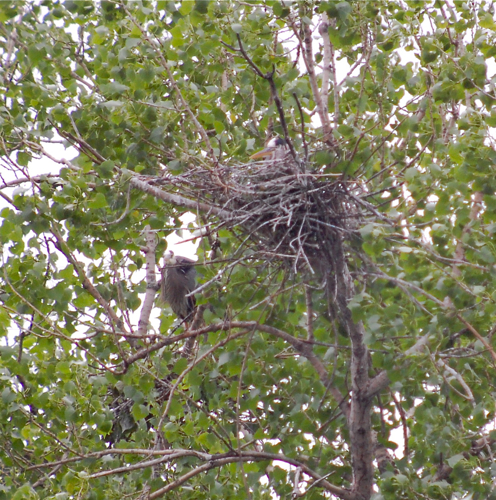
There's been a rookery there for years. What's interesting is that staff told me last year that the number of birds using the rookery was shrinking, the speculation being that the herons were using the old North Mississippi Regional Park rookery. But now, some have gone back to re-nest after the tornado. Most of the nests were covered up, but there were quite a few on the outer edges where birds could be seen incubating. If I really tried to focus my scope, I would make out nests deep in the leaves with chicks about five to six weeks old. You could certainly hear older heron chicks calling. A few years ago, I found a great horned owl nesting in this rookery, and no heron would nest next to it. I think the owls may have partaken of some heron chicks and that may have contributed to some leaving this rookery. Hopefully no owl will visit the nests on the outer edges of the this summer. At the very least, the owl nesting season should be over at this point.
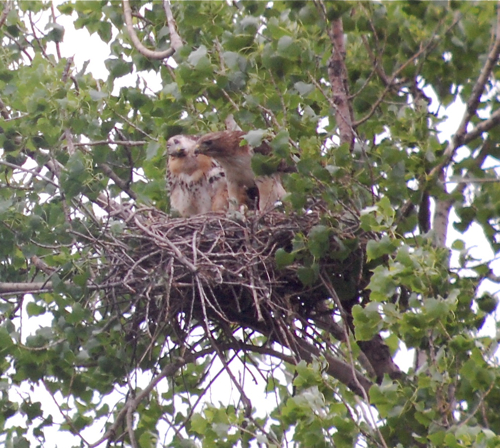
I did find a red-tailed hawk with two large chicks among the newer heron nests, another bonus raptor for the day! Herons aren't high on the red-tail's preferred prey list, so I don't think it will be an issue for the herons.
So, all in all a very hopeful outcome to a devastating loss. Bill and Brad did a very nice piece on the rookery, I was grateful they were interested in a follow up story. The resiliency of birds never ceases to amaze me. I'll post Jim's story when it comes up.
Horicon Marsh Bird Festival Warblers & Songbirds
I did a bunch of traveling in May and haven't really had a chance to sit and breathe and really focus on the wonderful birding to be had. It started with the Horicon Marsh Bird Festival in Wisconsin. This is a smaller festival and forgoes some of the traditional things like name badges and packets for participants. It doesn't matter, this festival is run by local bird club and they truly love this marsh and know you will love it too.

Here's the view from the driveway to the visitor center of this vast wetland--you can't help but feel your birdy senses tingling when you approach that view. You can enjoy the marsh via car, hiking and canoe, but I spent most of my three days along Dike Rd which offered excellent views and digiscoping opportunities and the birds seemed to change by the hour during migration. What you got at 10am may not be what you would get 2 hours later.

Since this area was a bit further south of me, I was able to run into migrants that had not reached the Twin Cities yet like the above rose-breasted grosbeak. This was one of my last morning of birding, we were walking along Northern Road--a great place for spring warblers a little patch of trees among near the marsh.

Here's a very cooperative black-and-white warbler we found during our field trips. If you've never seen one of these, they are a weird little warbler. It has the warbler shape, but it's colored like a female downy woodpecker and creeps on the trunks of trees like a nuthatch or brown creeper. What it lacks in color, it makes up for in interesting character. We had a great warbler time until we found the following vexing warbler on Dike Road:

Ugh, I would expect this sort of dull warbler in the fall, but the spring?? We consulted several guides trying to figure this out and went into my default mode of digiscoping as many shots as I could to consult field guides later. There was a male Cape May warbler nearby and I wondered if this was a first year female who had not gone into her breeding plumage yet.


I posted it on my Facebook wall and many more knowledgeable folks than I dull looking warblers said, "Pine warbler!" Even Kenn Kaufman said, "Incidentally, on p. 418 of my new KFG to Advanced Birding, there's an illustration of a bird very much like the one in your photo." It's so handy having access to such knowledgeable folks on Facebook. That new edition of Kenn's book is a very handy guide for someone who feels good about their yard birds and is ready to graduate to learning the difference between shorebirds, warblers, gulls and flycatchers.

Since the leaves weren't quite on the trees yet, it made finding the blindingly red scarlet tanager less of a challenge. I love these birds and since I have such a great Swarovski Spotting Scope, I love to give people a chance to see this bird. There was one woman who was hanging around in back and she tried looking through the scope but didn't see the bird. As some of our group was moving along with another field trip leader, I made it my mission to get it for her. I can tell when someone actually sees a bird in the scope and when someone tries to politely fake it (they don't want to be a burden to the rest of the group) but I told her to stick to me like glue and as soon as I left my eyepiece to get in there. When I got the tanager in again, I should "Move, move, move," like a football coach, she jockeyed into position, there was a pause and then an unadulterated, "OH!"
I knew she had it then. That's one of the things I really enjoy on field trips is hanging with the people who have trouble with a bird, even one that might be common for most and giving them a really good look.
More on Horicon later.
Chickadee Nest Location Unintentionally Hilarious #birding
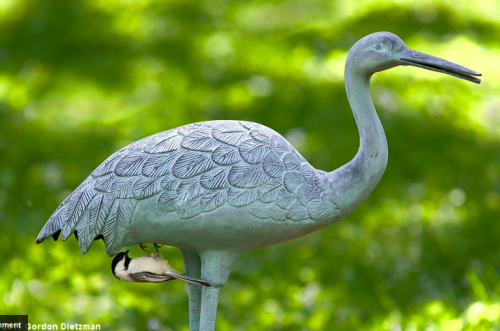 My coworker and fellow Park Ranger Gordon Dietzman posted this photo of a black-capped chickadee nesting in a crane statue in his yard. Oh dear...
Digiscoped Images
Fresh Tweets
Would you like to hire me as a speaker for your event?
Email sharon@birdchick.com