
Birdchick Blog
Attempted Murder care of NBB
 Although, I think these are actually ravens. Still makes me larf.
I Whip My Caterpillar Back & Forth
We did a check of our bees on Sunday (they are all slacking off this summer). Under the roof of one of our hives was this caterpillar:

This isn't just a cute looking inch worm posture, this was a threatening posture. This is one of the most badass caterpillars I have ever come across. It's not unusual for us to find other bugs inside an active hive. Lots of spiders, daddy longlegs, ants and caterpillars work their way up to the shelter of the roof of the hive. As long as they stay out of the honeybees' way, no one gets killed and mummified in propolis. But when I find buts, especially caterpillars, I usually move them out. This particular caterpillar did not want to go gently. Check out this video I took of it (you will hear both me and Non Birding Bill in the background):
[youtube]http://www.youtube.com/watch?v=5glrrpWFzhY&[/youtube]
What the frickity frak was that all about?? It's a defense posture. Something comes up to try and eat the caterpillar and it goes all Tom Cruise crazy and the potential predator thinks, "Yeah, maybe not." We've seen caterpillars have some pretty interesting displays. Back when I ranched some black swallowtails we made a video of their defense--they whip out horns of stinkiness:
[youtube]http://www.youtube.com/watch?v=vj1jNu3aEDc[/youtube]
I think the caterpillar we found in the beehive is from the subfamily Hypeninae--although any bug experts can feel free to correct me, I'm not CaterpillarChick. But reading in my Caterpillars of Eastern North America Guide, it comes the closest. Also in the Remarks section for Green Cloverworm it reads, " Like other hypenines the caterpillars hurl themselves from their perch when disturbed, by rapidly contracting and twisting their bodies in a fashion reminiscent of tightly wound rubber band."
Ah, Nature, you never cease to entertain and educate me.
Post Tornado Heron ReNesting Has Chicks!
Well the big theme story in the blog this summer was the tornado ravaged great blue herons. Their rookery was blown away in May and some birds attempted to re-nest at Coon Rapids Dam and Marshall Terrace Park. I headed out last week to Marshall Terrace to see if chicks were visible. I had heard from people boating on the river that the chicks are calling from the nest.
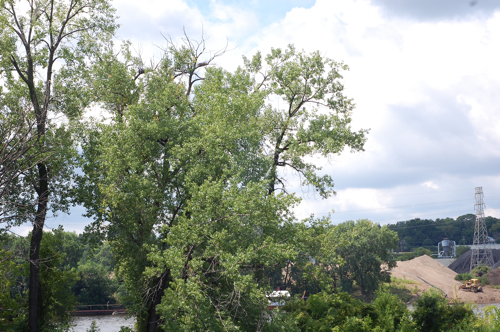
When I arrived at the park and walked to the river trail, I was sad to see that the nests built on the island right across from the park were all abandoned. However, I could clearly hear heron chick begging calls. Just north of the park is the Riverside Power Plant and there is another island in front of it that some herons were also using. It's harder to see that island but if you take the stairs all the way down to the river and have binoculars or a scope, you can see some nests.
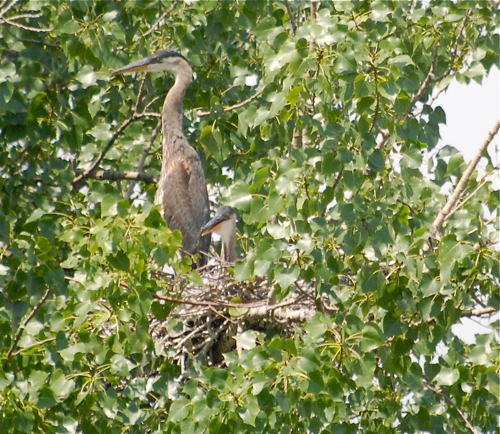
I scanned the trees with my scope and found quite a few young heron chicks and a few adults flying in to feed them! Yay! Now if the adults can get them squared away on foraging and migration before all the water freezes up, they'll have as good a shot as any other young heron hatched this summer. There's still time. This makes me happier than the herons from wildlife rehab being released--the adults attempted a second nesting on their own and it worked!
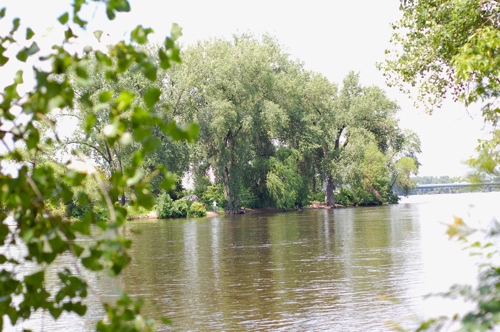
I also noticed something very interesting about the island with the active heron nests. It's hard to see in this photo, but there were campers on this island. So, of course, I digiscoped them.
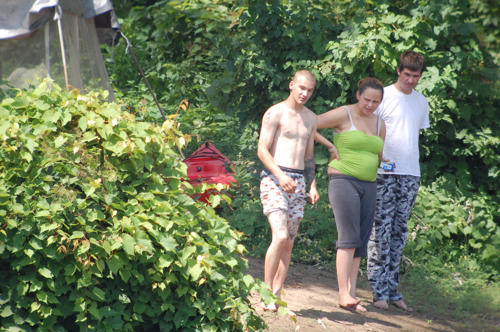
Looks like they kayaked in and pitched a tent. Interesting because there's not really any place you can legally camp on the Mississippi River through the Twin Cities. Can't say that I blame them for camping there, lovely spot in the urban Twin Cities landscape, but ew right below a heron rookery? The stink from the droppings and the non stop heron begging would be enough to keep me away--regardless of the legality. I'm fairly certain this island is owned by Xcel Energy. It's interesting to note how relaxed some rules have become post 9/11. The Head of Navigation is on one side of this island and a power plant for a major metro area is on the other. Usually, security is forces people away from those areas fairly quickly. The campers were not the only visitors to the island.

A half dozen people on paddle boards landed on the island. A couple of them noticed the little stinky fish smelling poop factory above them. They weren't there to camp, but to rest and grab a drink from their coolers.
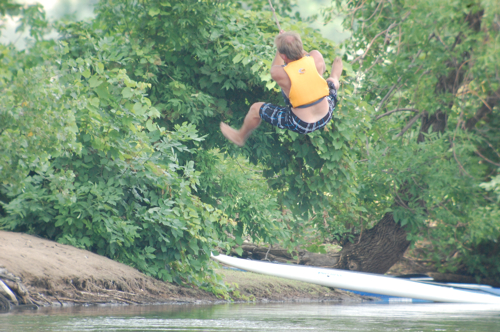
And use the rope swing on the island. The herons don't seem to mind and I'm sure people landed on their old island. If you are going to nest in an urban landscape, you have to learn to deal with the humans, that's the way it is. The nests are high enough that the humans wouldn't be a threat and if someone were foolish enough to climb up to a nest, they'd learn the hard way what a messy business it is getting face to face with a heron chick--they can vomit up fish when scared just like a pelican. Nasty, nasty stuff.
All in all, it's just really great for me to see that herons are re-nesting and testing out new areas on the river. I'll be curious to see what they do next year.
Grebes of Bear River Migratory Bird Refuge
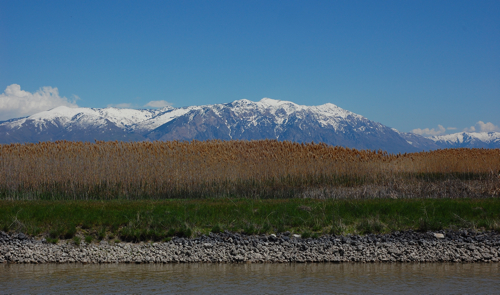 Going through spring photos and I've found a ton from Utah. I love Bear River Migratory Bird Refuge and try to make some time for it every time I'm in Utah--great birding by car and opportunities for digiscoping. Plus the scenery is fantastic!
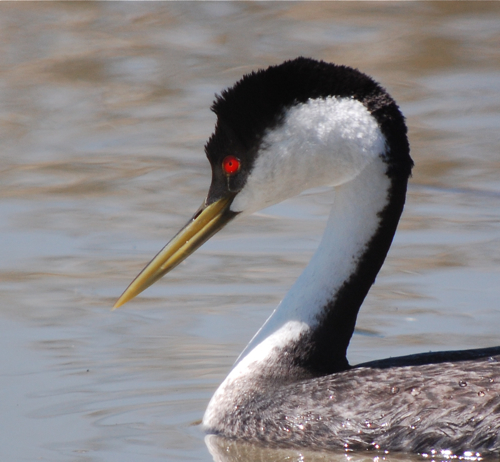
Grebes are the type of bird that make me wish I could paint or draw well. Take the above western grebe, it is naturally graceful and elegant, it is as if that bird were designed by Erte.
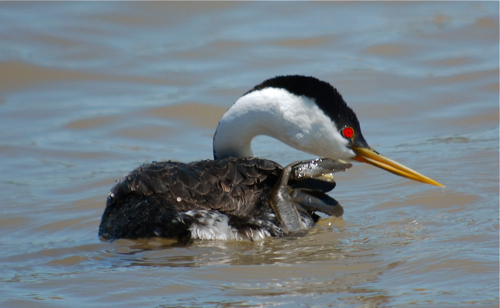
Okay, maybe grebe's lobed toes keep them from being 100% cool and elegant, but they mostly keep that goofiness under water.
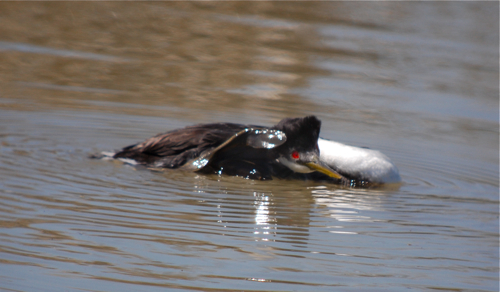
It must be really hard to scratch an itch in just the right way with those toes, but that's the price you pay to be a badass swimmer and fisher I suppose.
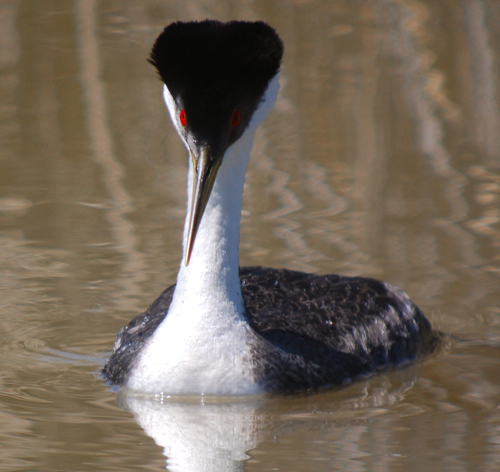
But this shot just makes me wish I would paint it and really spend time admiring the shape and curves of the bird. I love digiscoping but in some ways, you get the shots of the birds so quickly, it's not the same.
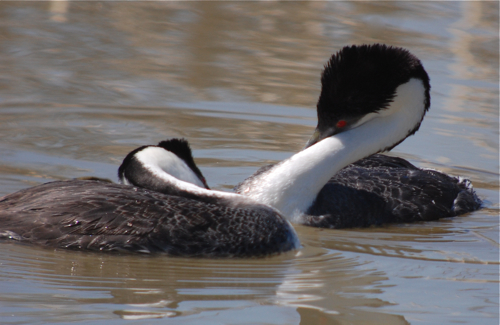
Even when they preen the look so cool and elegant. When they start dancing, I wonder if the other species of waterfowl on lakes see them as the cheerleader and football player at prom--show offs, just because they're pretty and can dance they think they are so cool.
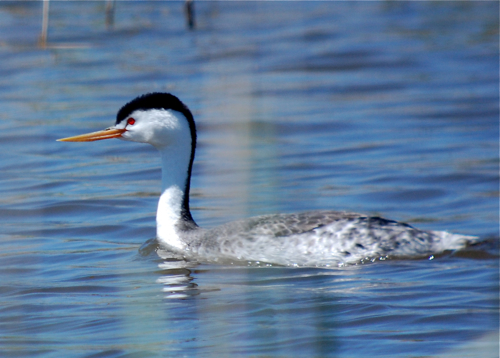
One of the cool things about Bear River Migratory Bird Refuge is that you also get a chance to see the similar Clark's grebe, they are little smaller, a little lighter in color, have an orange beak and the black on the head is above the eye. They are a cool looking grebe, but not quite as stunning to me as the western. Attenborough has a great segment on the Clark's grebe dance, check it out.
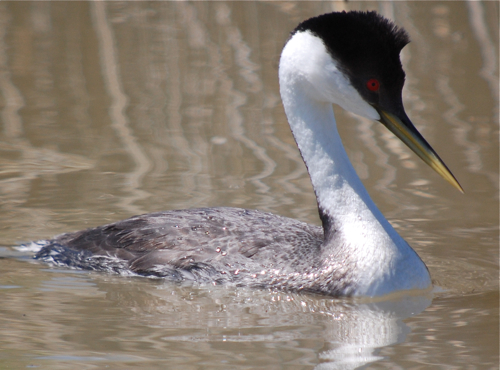
These are just a couple of the many awesome birds at Bear River, but I have so many photos, I need to start putting them up.
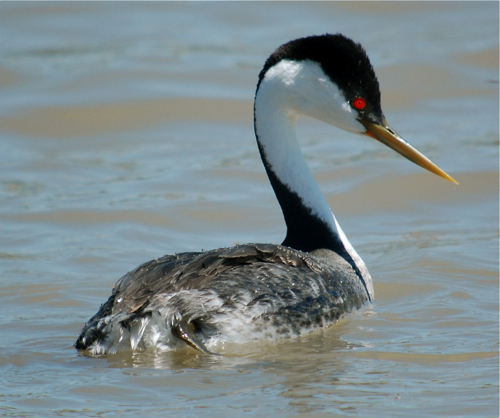
When digiscoping this area, you can either use a window mount to attach your car window, or use your car as a blind by standing behind it. If you move slowly though, the birds seem to tolerate you. If they swim away, with a little patience, they'll come a bit closer.
Leftover Horicon Marsh Photos
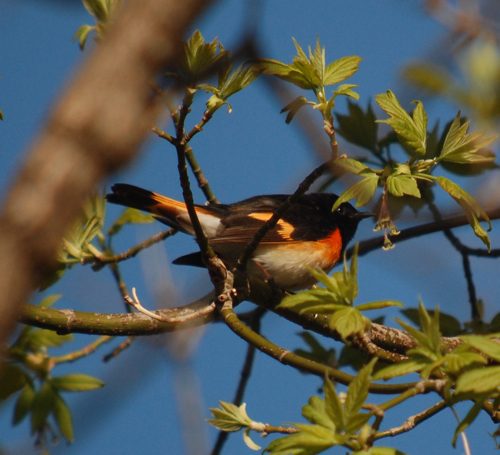 Hey, remember in May when I went to Horicon Marsh? It's funny, I've always been the sort of blogger who puts stuff up as she goes, never one with a backlog of material but as the Internet has changed to interacting with people via Facebook and Twitter, I don't blog as much and now I have a glut of back posts and photos. Last week on one of my bird surveys, I found a yellow-throated vireo, then a Tennessee warbler and even a yellow-rumped...a pang hit me--an early mixed flock? Fall warbler migration! Noooooo! Perhaps it was the long, slow cold spring (I wore gloves in June) but it seems like it was only two weeks ago that I was watching warblers like the above American redstart pop in through new leaves.
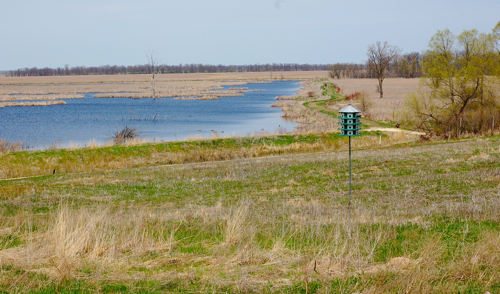
Horicon Marsh is an awesome place. And if you are looking for a great place to stay and relax when not birding, I highly recommend the Audubon Inn in nearby Mayville, WI. It's a lovely old huge hotel in the theme of John James Audubon--even some of the windows in the hotel have his paintings etched in them. The rooms are lovely, the floors full of cozy common areas with books, buy my absolute favorite part with the hotel bar--the food was excellent and it made for some great people watching. It was a great place to get to know the local townsfolk and fun to watch their interactions and it had Internet access.
Below are some of the birds that I managed to digiscope while out an about Horicon Marsh:
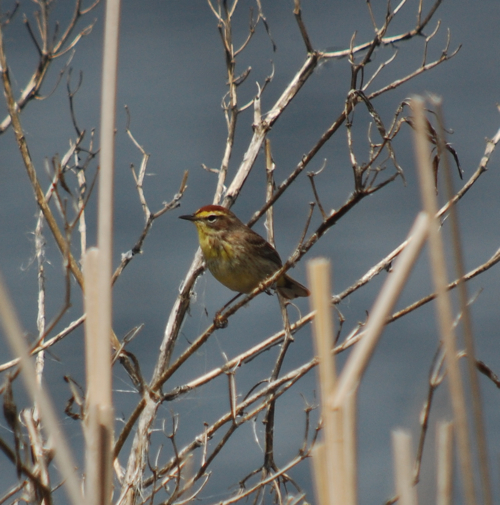
Palm warbler.
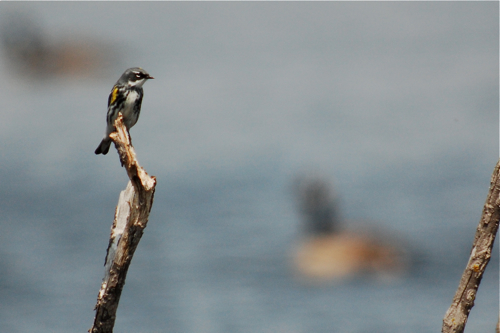
Yellow-rumped warbler.
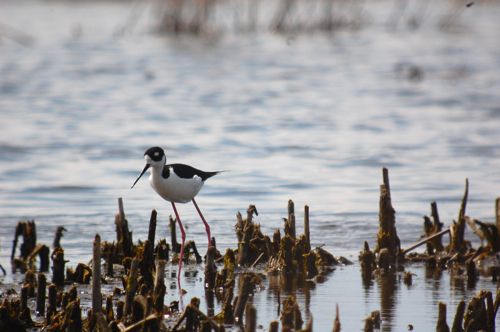
Black-necked stilt (part of a pair).
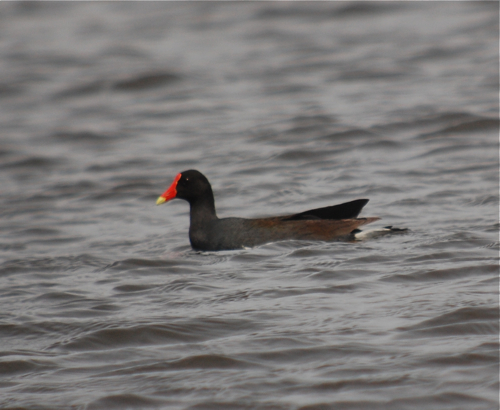
Common moorehen.
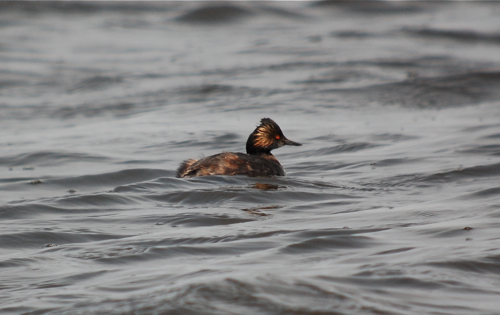
Eared grebe.
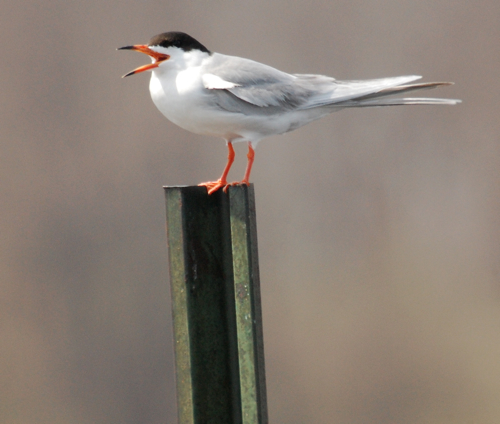
Forster's tern.
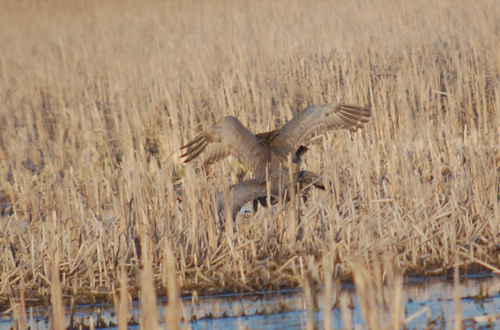
Sandhill cranes...caught in the middle of the cloacal kiss.
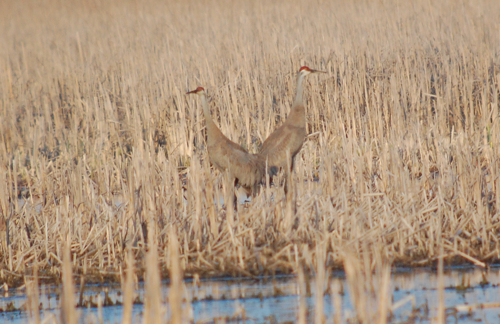
Sandhill cranes trying to pretend that I didn't just catch them in the middle of something.
Odd Field Sparrow
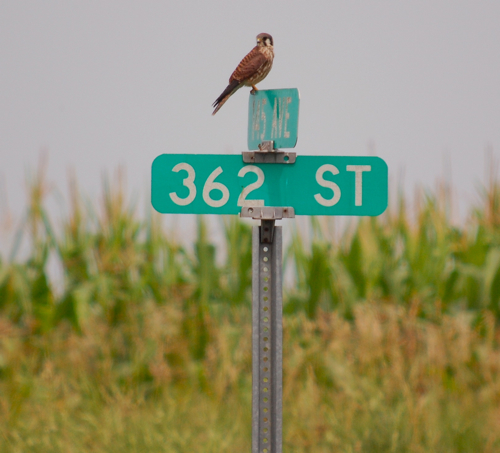
I have a sparrow that has been driving me nuts on my surveys the last week. I tried turning it in to every other bird but have finally landed on a field sparrow. The bird perches on a bush that is not part of my survey property, so I can't just walk out. Plus, I'm supposed to be monitoring other birds and can only do so much with a non survey species. Yesterday, I tried playing a field sparrow call to get the bird to fly over. It didn't but a neighboring field sparrow did. Then, I tried playing a clay-colored sparrow call and the bird flew over--and it doesn't sound like a clay-colored at all. So, is this a young field sparrow working on his sound? A really hoarse field sparrow that has been singing like crazy all summer? Or is a hybrid field sparrow/clay-colored sparrow. They have been known to occur. Here's a video of a hybrid singing.
I may have to drive down to the survey area on my own time and see if I can get a photo. The few times the bird has flown by and not hidden itself in foliage, it looked like a field sparrow. Anyway, here are a few videos of the bird singing:
[youtube]http://www.youtube.com/watch?v=cCAuHpFuLPQ[/youtube]
[youtube]http://www.youtube.com/watch?v=Mdl8zHt6CaY[/youtube]
Final two rescued herons released
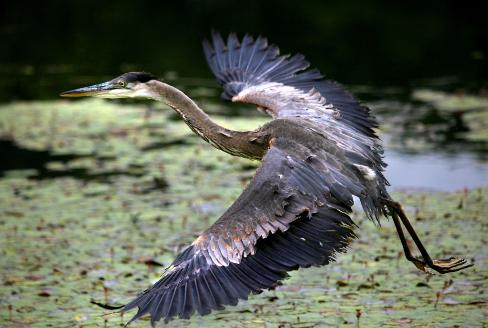
Photo by Brian Peterson.
Hello all, NBB here.
The StarTribune has a story about the final two heron chicks that were rescued after a tornado destroyed their rookery on the Mississippi River. Sharon's been involved with this story as one of the first people to investigate the damage, to being part of the rescue team, to helping release the birds.
The Strib talks about the rehabilitation process for the birds:
The nine chicks had spent much of their three-month respite in a 20-yard-by-5-yard kennel, on property in Inver Grove Heights that belongs to Vance Grannis. Their kennel, originally built for rehabilitating swans, also held a pool stocked with fish, giving the birds a vital chance to practice hunting. They also could spread their wings and fly, though not far. The nine young were lucky. They came in healthy, if a bit stressed. The center's staff and volunteers worked hard to keep them that way until they were old enough to care for themselves.
Check out the Strib site for more on the release, and some great pictures of the birds.
Fledging Flickers
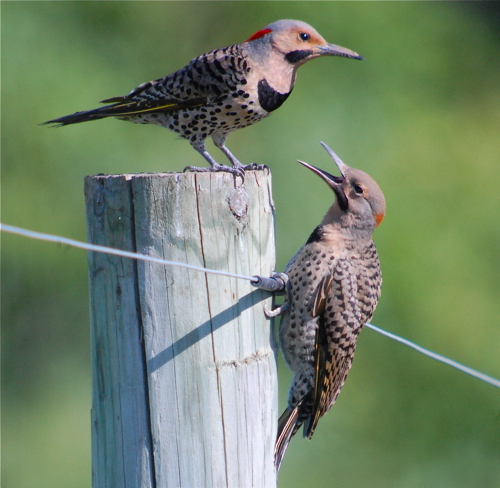 I saw some flickers learning the ways of the world on my bird surveys the other day. Even though that baby looks full grown, he's still hoping to be fed by the adults. Old habits die hard.
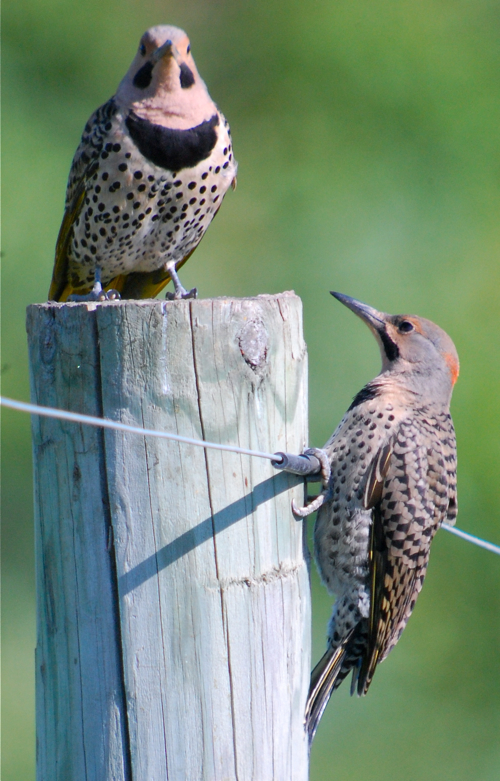
This appears to be a little bit of some father son bonding (they are both male, they both have a mustache).
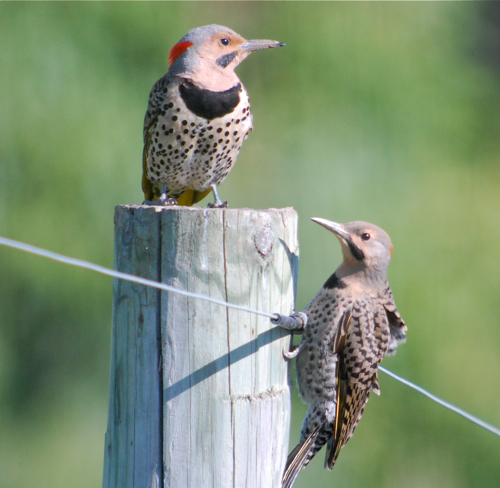
The adult male didn't feed the younger one, but flew off, presumable to teach the younger bird where to forage for food on its own.
Young Herons From Tornado Released!
If you've been following this blog this summer, you are aware of the tornado that hit Minneapolis in May and destroyed a heron rookery and the recovery and rebuilding.
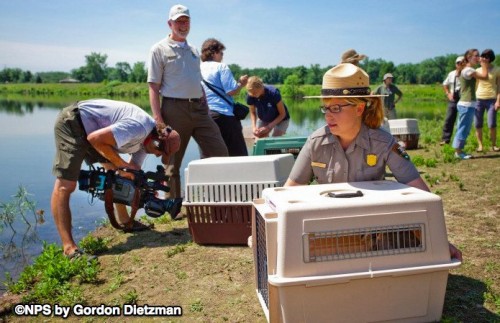
I got a call from the Wildlife Rehabilitation Center that last week and they planned to release 7 of the 9 great blue heron chicks recovered after the tornado last Monday. They invited a couple of us from my park (the Mississippi National River and Recreation Area to be there) and I got to release one of the herons and my fellow Park Ranger Gordon took photos.
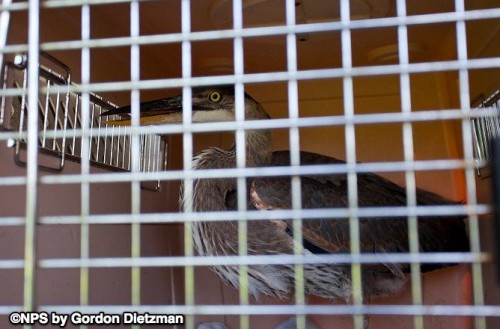
This was the great blue heron in my box. The herons have come a long way from when they were first admitted to the WRC. Videos on YouTube showed their progress--here's one of the chicks honing its fishing skills.
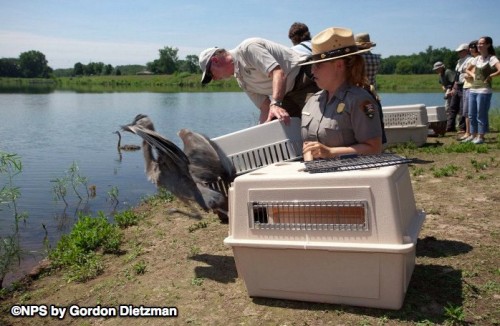
The birds were released at Cenaiko Lake at Coon Rapids Dam Regional Park--a perfect spot since the lake is managed and stocked for trout fishing. It's also not too far from the Coon Rapids Dam heron rookery, so they will be able to watch the local adults to see where they go to forage and learn from them. Perhaps one of the adults renesting in the park is a parent of one of the released chicks? There won't be any magical family reunion, if these are any of their chicks, too much time has passed for the adults to regard these chicks as anything other than a competitor for food and territory.
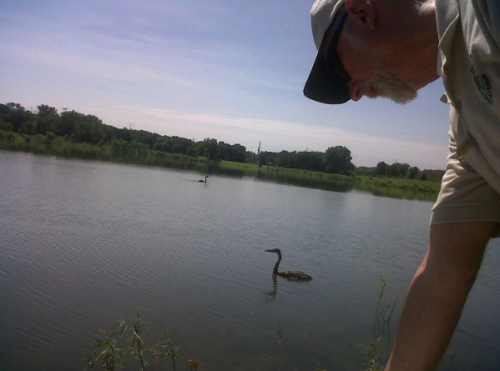
I took this shot with my phone. My heron was one of two that hung out in the water for several minutes after release. I'm sure some if it had to do with the confusion of a new situation for them but the day we released the herons was the first day of that nasty heatwave that ravaged the midwest last week--yuck. I think they just wanted to cool off.
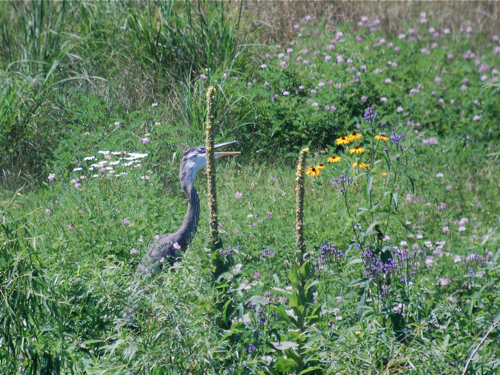
The heron from my box eventually flew to the edge of the lake where it was promptly bapped by some red-winged blackbirds who didn't take kindly to it being in their territory. It then found an edge where it could gather its thoughts in peace and heat. It started panting and I could understand why. I was in my full on Park Ranger uniform and I have to tell you that the poly-wool blend the government makes us wear retains heat like nobody's business. I was only out in the heat in under 30 minutes and I'm certain I lost 5 pounds in sweat. My clothes were soaked through when I got to the car. Eventually the heron flew to a shadier spot close to the water, ready to fish.
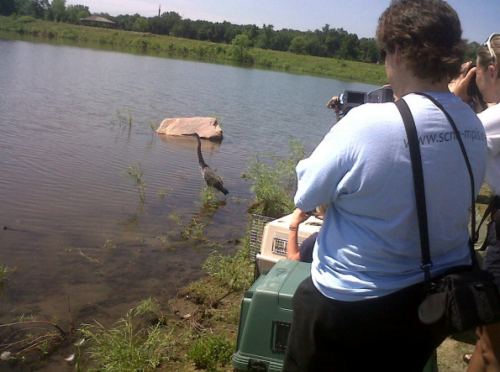
And so this is a happier ending to the Minneapolis tornado for the herons. Though many nests were lost, the herons rebuilt and a handful of chicks have been returned to the wild. These chicks have aa good of a chance as any raised completely in the wild and I hope that they will figure out the best fishing spots and have a chance to migrate south and return next year.
Here's some of the media coverage of the release from KARE 11 , MPR and KSTP. (Mom, you'll be interested in the first 2 links).
And I leave you with a funny video of the herons from the WRC not long before their release. One of the chicks decides to take on a monster sunfish. With that sort of can do spirit, I'm sure the will do fine:
[youtube]http://www.youtube.com/watch?v=c-7KEwkF-kU&NR=1[/youtube]
Digiscoped Images
Fresh Tweets
Would you like to hire me as a speaker for your event?
Email sharon@birdchick.com