
Birdchick Blog
Flicker Shenanigans With A Kestrel
I was out and about doing bird surveys yesterday and I got to watch an interesting interaction between a small falcon and a large woodpecker.
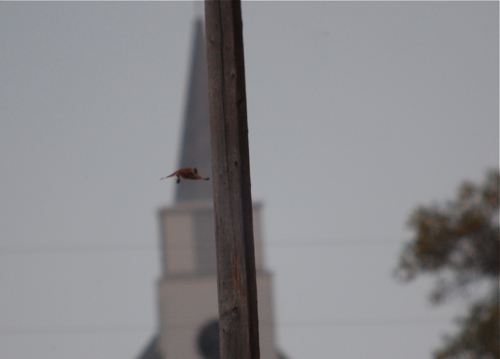
Here's an American kestrel, minding her own business, hovering and looking for mice with leaky bladders or whatever to eat.
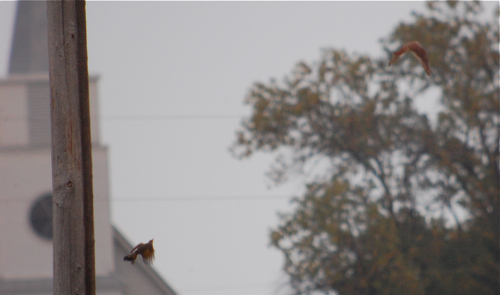
There were lots of northern flickers moving through during my survey. Most tried to avoid predators. Multiple visits to Hawk Ridge during the hawk migration has taught me that at the end of the day, flickers have a body built for food that many hawks like to eat. I guess this flicker was feeling his Wheaties and went in to hassle the hovering kestrel, vengeance for fallen and eaten brethren?
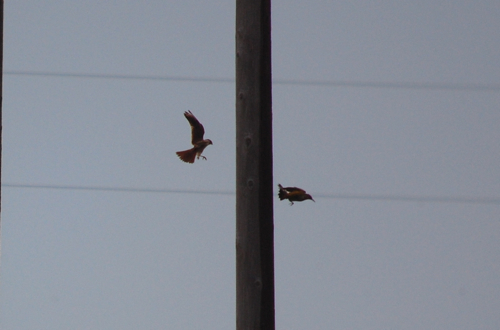
After getting properly buzzed, the kestrel did an about face and went for the flicker. Both are about the same size and I think if the kestrel had been a Cooper's hawk that the flicker wouldn't have engaged in any mobbing shenanigans.
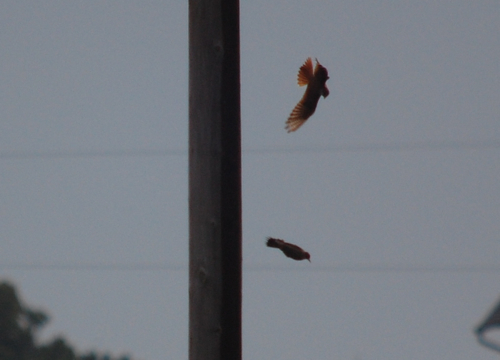
Again, these aren't the best shots in the world, I digiscoped them at 400 meters. But had fun watching the behavior. The birds chased each other for at least five minutes (could have been longer, but I had to move on to my next survey point), sometimes the flicker was chasing the kestrel and at other times, she was chasing the woodpecker. Periodically, both would perch on the same wire--sizing the other up?

Barred Owl On The Bike Trail
On Saturday Non Birding Bill and I were taking advantage of the beautiful weather and the Twin Cities bike trail system. We passed into a neighborhood and hear blue jays, cardinals and nuthatches going bonkers. I took a quick glance but figured since NBB was with me, I might as well ignore whatever was being mobbed by birds. Then I heard NBB say, "Got it! Owl!" I stopped, pulled over and saw NBB behind me pointing to a tree. "Great horned?"
"No," he said, "I think it's barred owl."
It sure was. We finished our circuit and on the way back found the owl in the same spot but it was no longer being mobbed. When we heard the blue jays earlier, they some sounded young and I wondered if the adults were using the owl as a chance to teach mobbing behavior. Did the young ones lose interest when the owl didn't do anything?
When we got home, I debated about biking back to get a scope. I have a system for packing up my Swarovski scope and camera, but the owl was in a residential neighborhood and I don't like to take my scope in those areas if I don't have to. Plus, my thighs were putting up a bit of a protest. I decided to go for it and figured the worse case scenario would be that the owl was gone and I'd get a little more exercise on a gorgeous summer day.

As I suspected, the owl was still there. This is a well used neighborhood for bike riders, joggers and walkers. This owl was used to roosting over people and not a lot was going to make it flush.

I aimed my scope, taking special care to never aim it at any windows or house and getting shots of the owl. What a cutie--I even got to hear it call a few times.

The head feathers of the owl looked like it hadn't quite filled out with the rest of the body and there seemed to be hints of down. Is this a young barred owl? I took a quick look under the tree and found a pellet. Just as a grabbed it, the person who lived in the home came out. I hoped that I wouldn't have too much explaining to do and she smiled and asked, "Is the owl here?"
Whew--I wasn't assumed a bicycle perv but assumed to be a birder--yay! She was really nice and told me that they had seen the owls all summer and that the babies even hung out on the porch rails when learning to fly. Her young daughter came out and said, "The sat on the porch on my birthday!"
What an awesome birthday treat!
We talked bird a little bit and then I headed home suddenly aware that I was in my bike clothes, sweaty and stinky. I can only imagine what my mother would say about doing sweaty stinky bird chat with strangers.

Relaxed owl toes! What a bonus for biking--a random barred owl. I love the variety of nesting predators we have in my general neighborhood. Birding truly can be done anywhere, even in an urban area.
Common Nighthawk Medical Exam
Nighthawks are migrating like crazy through the Twin Cities right now. I've seen them when we've been grilling this week and on Saturday we were on the St Croix River with some friends and a steady stream passed over the boat all afternoon and well into the night (I'm not ready to face fall migration). Injuries are inevitable during migration and here's a video of a common nighthawk medical exam at the Wildlife Rehabilitation Center of Minnesota this week--watch how big that mouth gets with the bird starts fussing during the exam:
[youtube]http://www.youtube.com/watch?v=qpBWTZmkoSQ&feature=uploademail[/youtube]
Singing Wood Thrush LOL
So the other day I posted a short video showing a hermit thrush singing from the folks over at Music of Nature. I noticed that they also have a wood thrush video on their YouTube channel too (this is another bird that is a moral imperative to listen to): [youtube]http://www.youtube.com/watch?v=jrmxlez2cAg[/youtube]
This video cracked me up. Did you notice how many times the bird sang a phrase and then flew? I was actually surprised that the videographer got the bird perched for more than one phrase--but noted how the bird was always obscured by a branch or leaves. It reminded me of when I was a kid and my parents moved to a new home and we had one of these singing in the yard. You didn't have access to all the bird id CDs and apps back then like you do today.
So one Saturday morning my mom and I spent an hour trying to track this bird down in the tops of the trees. After each song phrase it fluttered to another leafy branch, hiding in obscurity. The longer it took, the more I fantasized this would be something cool and so beautiful it HAS to hide, maybe even a painted bunting. I remember feeling like such a chump that that it was brown and fairly colorless. How could something so brown have a song so pretty?
Now I know better and it's one of my favorite songs and sometimes I get to hear it out around the beehives. But all that searching we did to see it makes me appreciate all the work the videographer went through to give us such a wonderful glimpse to a secretive singer.
Attempted Murder care of NBB
 Although, I think these are actually ravens. Still makes me larf.
I Whip My Caterpillar Back & Forth
We did a check of our bees on Sunday (they are all slacking off this summer). Under the roof of one of our hives was this caterpillar:

This isn't just a cute looking inch worm posture, this was a threatening posture. This is one of the most badass caterpillars I have ever come across. It's not unusual for us to find other bugs inside an active hive. Lots of spiders, daddy longlegs, ants and caterpillars work their way up to the shelter of the roof of the hive. As long as they stay out of the honeybees' way, no one gets killed and mummified in propolis. But when I find buts, especially caterpillars, I usually move them out. This particular caterpillar did not want to go gently. Check out this video I took of it (you will hear both me and Non Birding Bill in the background):
[youtube]http://www.youtube.com/watch?v=5glrrpWFzhY&[/youtube]
What the frickity frak was that all about?? It's a defense posture. Something comes up to try and eat the caterpillar and it goes all Tom Cruise crazy and the potential predator thinks, "Yeah, maybe not." We've seen caterpillars have some pretty interesting displays. Back when I ranched some black swallowtails we made a video of their defense--they whip out horns of stinkiness:
[youtube]http://www.youtube.com/watch?v=vj1jNu3aEDc[/youtube]
I think the caterpillar we found in the beehive is from the subfamily Hypeninae--although any bug experts can feel free to correct me, I'm not CaterpillarChick. But reading in my Caterpillars of Eastern North America Guide, it comes the closest. Also in the Remarks section for Green Cloverworm it reads, " Like other hypenines the caterpillars hurl themselves from their perch when disturbed, by rapidly contracting and twisting their bodies in a fashion reminiscent of tightly wound rubber band."
Ah, Nature, you never cease to entertain and educate me.
Post Tornado Heron ReNesting Has Chicks!
Well the big theme story in the blog this summer was the tornado ravaged great blue herons. Their rookery was blown away in May and some birds attempted to re-nest at Coon Rapids Dam and Marshall Terrace Park. I headed out last week to Marshall Terrace to see if chicks were visible. I had heard from people boating on the river that the chicks are calling from the nest.
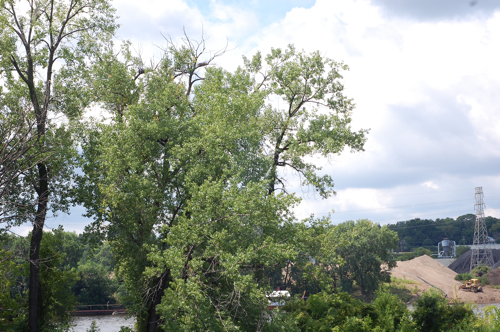
When I arrived at the park and walked to the river trail, I was sad to see that the nests built on the island right across from the park were all abandoned. However, I could clearly hear heron chick begging calls. Just north of the park is the Riverside Power Plant and there is another island in front of it that some herons were also using. It's harder to see that island but if you take the stairs all the way down to the river and have binoculars or a scope, you can see some nests.
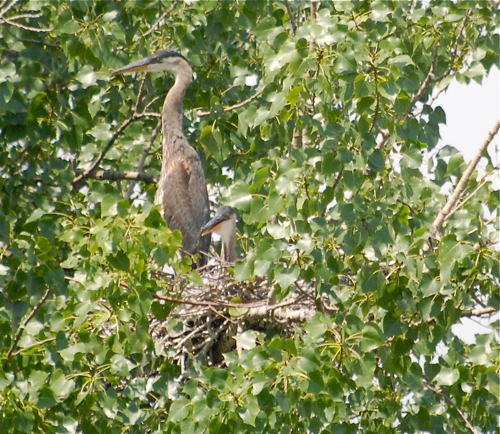
I scanned the trees with my scope and found quite a few young heron chicks and a few adults flying in to feed them! Yay! Now if the adults can get them squared away on foraging and migration before all the water freezes up, they'll have as good a shot as any other young heron hatched this summer. There's still time. This makes me happier than the herons from wildlife rehab being released--the adults attempted a second nesting on their own and it worked!
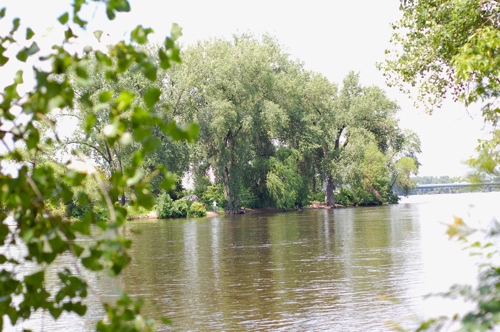
I also noticed something very interesting about the island with the active heron nests. It's hard to see in this photo, but there were campers on this island. So, of course, I digiscoped them.
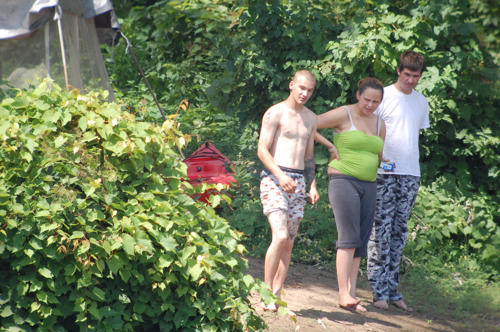
Looks like they kayaked in and pitched a tent. Interesting because there's not really any place you can legally camp on the Mississippi River through the Twin Cities. Can't say that I blame them for camping there, lovely spot in the urban Twin Cities landscape, but ew right below a heron rookery? The stink from the droppings and the non stop heron begging would be enough to keep me away--regardless of the legality. I'm fairly certain this island is owned by Xcel Energy. It's interesting to note how relaxed some rules have become post 9/11. The Head of Navigation is on one side of this island and a power plant for a major metro area is on the other. Usually, security is forces people away from those areas fairly quickly. The campers were not the only visitors to the island.
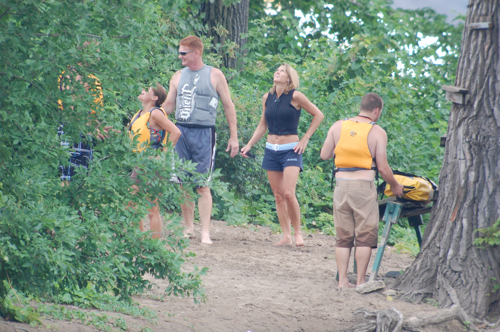
A half dozen people on paddle boards landed on the island. A couple of them noticed the little stinky fish smelling poop factory above them. They weren't there to camp, but to rest and grab a drink from their coolers.

And use the rope swing on the island. The herons don't seem to mind and I'm sure people landed on their old island. If you are going to nest in an urban landscape, you have to learn to deal with the humans, that's the way it is. The nests are high enough that the humans wouldn't be a threat and if someone were foolish enough to climb up to a nest, they'd learn the hard way what a messy business it is getting face to face with a heron chick--they can vomit up fish when scared just like a pelican. Nasty, nasty stuff.
All in all, it's just really great for me to see that herons are re-nesting and testing out new areas on the river. I'll be curious to see what they do next year.
Grebes of Bear River Migratory Bird Refuge
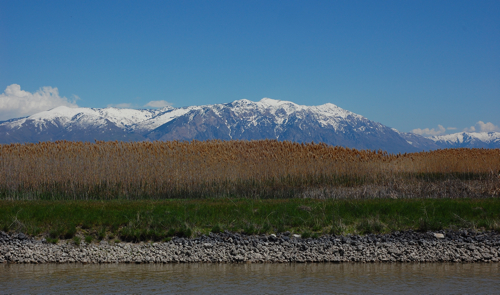 Going through spring photos and I've found a ton from Utah. I love Bear River Migratory Bird Refuge and try to make some time for it every time I'm in Utah--great birding by car and opportunities for digiscoping. Plus the scenery is fantastic!
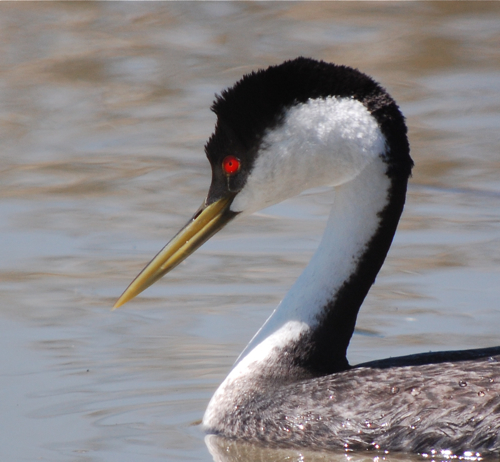
Grebes are the type of bird that make me wish I could paint or draw well. Take the above western grebe, it is naturally graceful and elegant, it is as if that bird were designed by Erte.
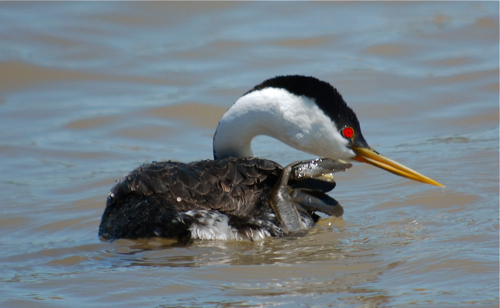
Okay, maybe grebe's lobed toes keep them from being 100% cool and elegant, but they mostly keep that goofiness under water.
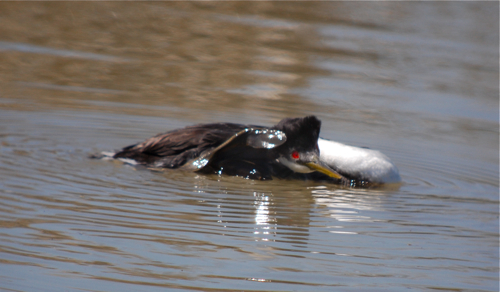
It must be really hard to scratch an itch in just the right way with those toes, but that's the price you pay to be a badass swimmer and fisher I suppose.
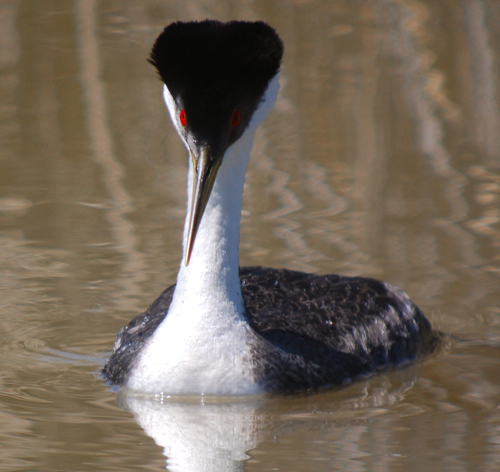
But this shot just makes me wish I would paint it and really spend time admiring the shape and curves of the bird. I love digiscoping but in some ways, you get the shots of the birds so quickly, it's not the same.
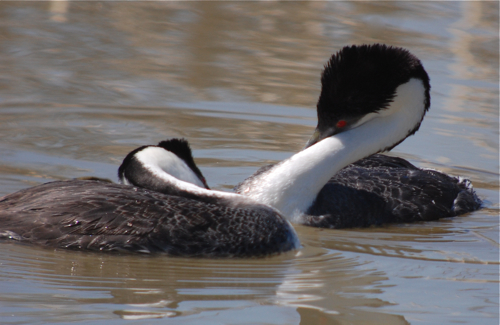
Even when they preen the look so cool and elegant. When they start dancing, I wonder if the other species of waterfowl on lakes see them as the cheerleader and football player at prom--show offs, just because they're pretty and can dance they think they are so cool.
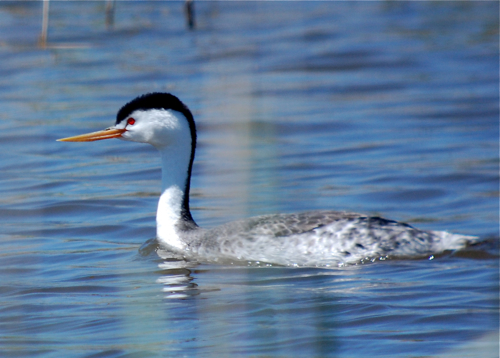
One of the cool things about Bear River Migratory Bird Refuge is that you also get a chance to see the similar Clark's grebe, they are little smaller, a little lighter in color, have an orange beak and the black on the head is above the eye. They are a cool looking grebe, but not quite as stunning to me as the western. Attenborough has a great segment on the Clark's grebe dance, check it out.
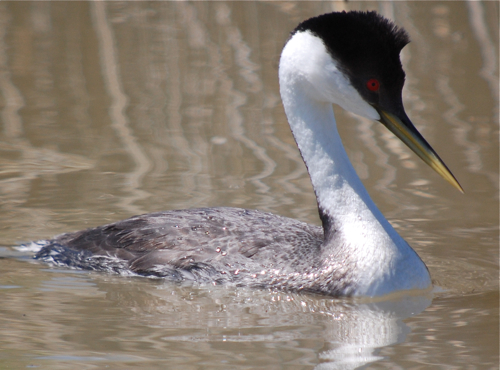
These are just a couple of the many awesome birds at Bear River, but I have so many photos, I need to start putting them up.
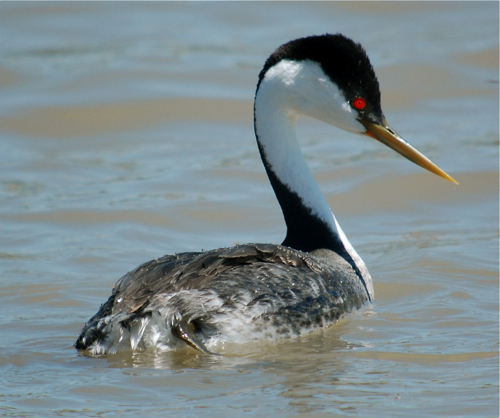
When digiscoping this area, you can either use a window mount to attach your car window, or use your car as a blind by standing behind it. If you move slowly though, the birds seem to tolerate you. If they swim away, with a little patience, they'll come a bit closer.
Leftover Horicon Marsh Photos
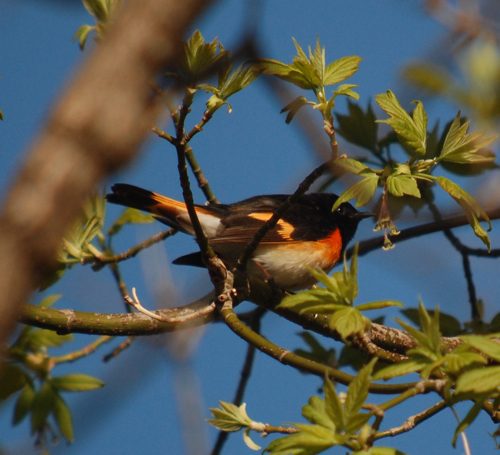 Hey, remember in May when I went to Horicon Marsh? It's funny, I've always been the sort of blogger who puts stuff up as she goes, never one with a backlog of material but as the Internet has changed to interacting with people via Facebook and Twitter, I don't blog as much and now I have a glut of back posts and photos. Last week on one of my bird surveys, I found a yellow-throated vireo, then a Tennessee warbler and even a yellow-rumped...a pang hit me--an early mixed flock? Fall warbler migration! Noooooo! Perhaps it was the long, slow cold spring (I wore gloves in June) but it seems like it was only two weeks ago that I was watching warblers like the above American redstart pop in through new leaves.
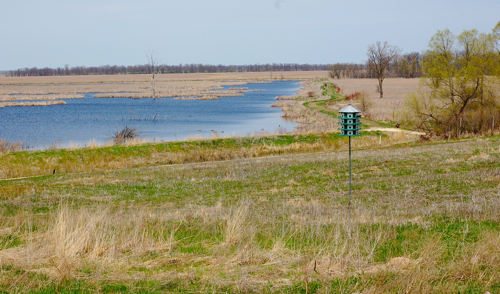
Horicon Marsh is an awesome place. And if you are looking for a great place to stay and relax when not birding, I highly recommend the Audubon Inn in nearby Mayville, WI. It's a lovely old huge hotel in the theme of John James Audubon--even some of the windows in the hotel have his paintings etched in them. The rooms are lovely, the floors full of cozy common areas with books, buy my absolute favorite part with the hotel bar--the food was excellent and it made for some great people watching. It was a great place to get to know the local townsfolk and fun to watch their interactions and it had Internet access.
Below are some of the birds that I managed to digiscope while out an about Horicon Marsh:
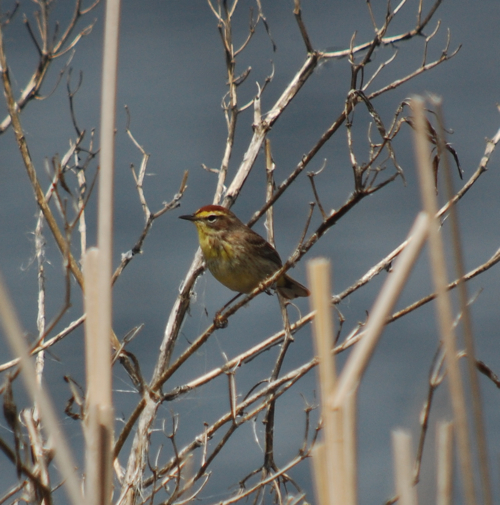
Palm warbler.
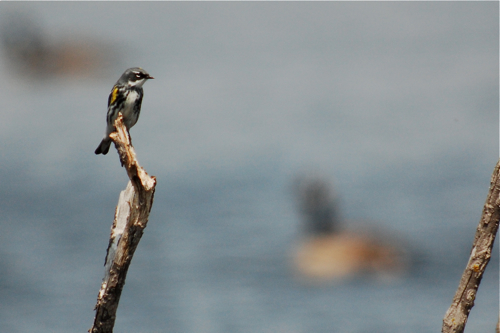
Yellow-rumped warbler.
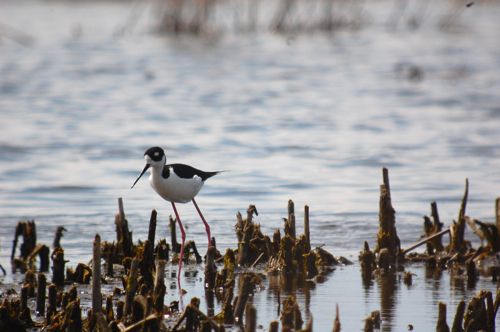
Black-necked stilt (part of a pair).
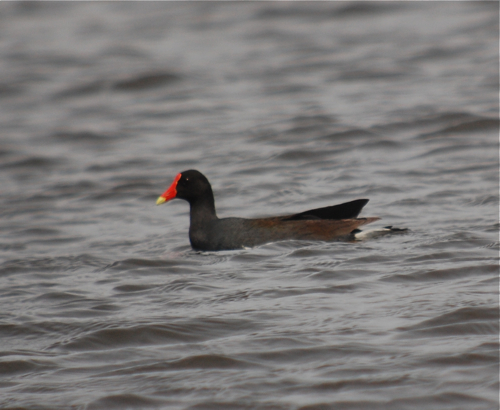
Common moorehen.
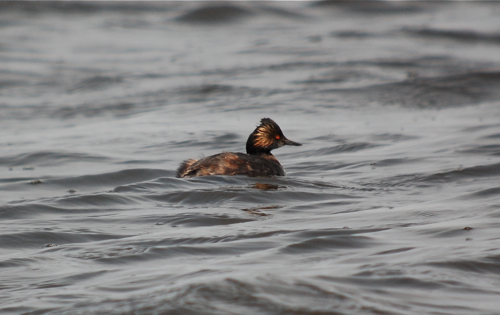
Eared grebe.
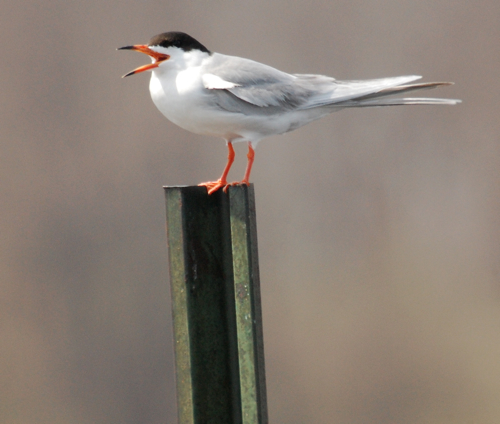
Forster's tern.
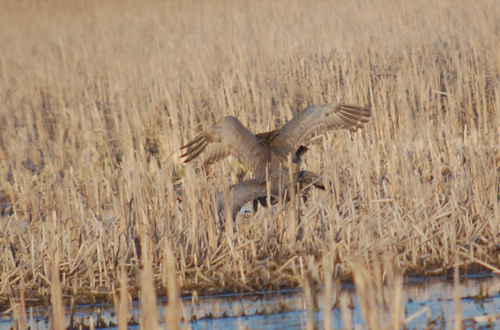
Sandhill cranes...caught in the middle of the cloacal kiss.
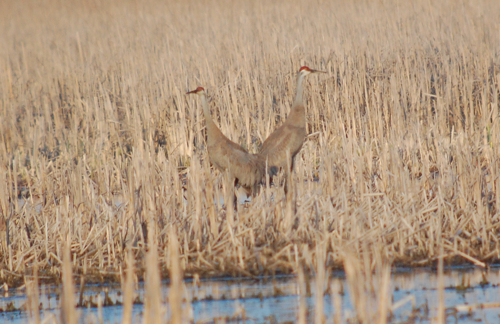
Sandhill cranes trying to pretend that I didn't just catch them in the middle of something.
Digiscoped Images
Fresh Tweets
Would you like to hire me as a speaker for your event?
Email sharon@birdchick.com