Altimira Oriole At Black Oil Sunflower Feeder

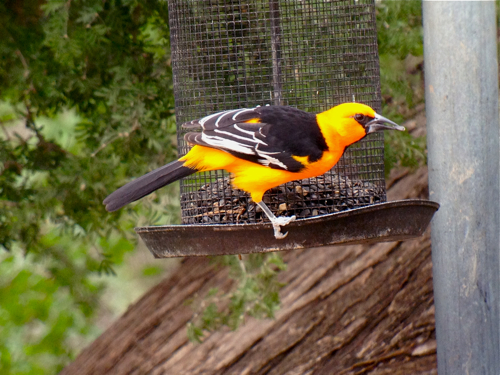
Orioles are not birds that one typically associate with being seed eaters but this Altimira oriole at Bentsen Rio Grande State Park certainly seemed to dig them.  Most of us think of orioles as nectar, fruit and jelly feeder birds but I've seen them sample seed and suet when Baltimore orioles arrive up in Minnesota and Wisconsin in early spring during a cold snap.  This bird had ample access to a suet log (at least until a chachalaca took over the feeder).

I didn't think orioles had a beak strong enough to crack open sunflower shells but I suspect that this bird found a few hulled sunflowers left behind by started red-winged blackbirds.  Interesting feeding behavior to witness.

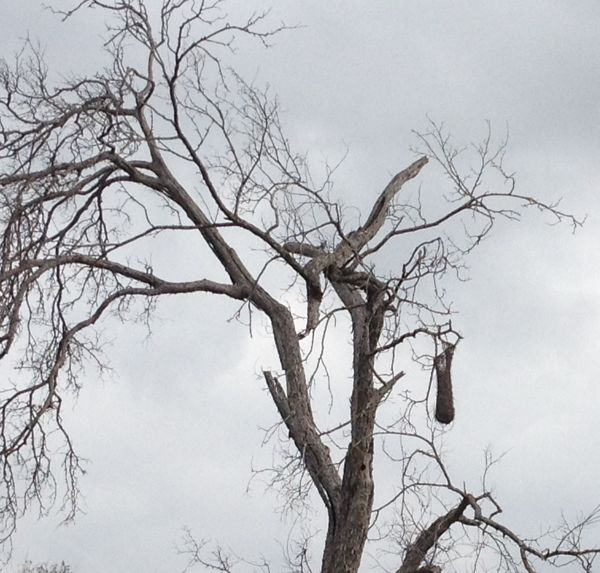
Speaking of Altimira orioles, does anyone else think their nests resemble a certain anatomical feature on a 70ish year old man?


Drive By Cooting

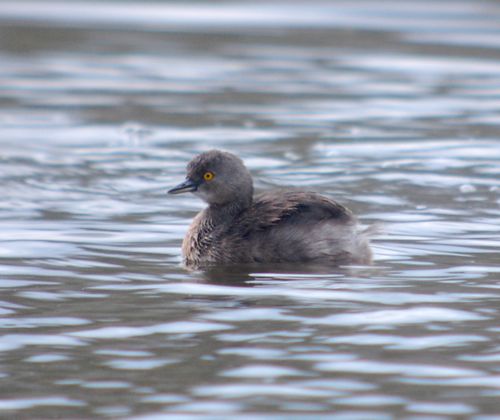
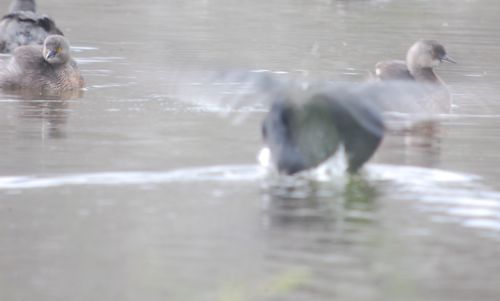
During my South Texas break, we stopped at Santa Ana NWR for a bit.  It ended up being too mosquito-ish for my taste and we didn't last long there but got some great looks at least grebe.  These always look like they just heard the most shocking news ever...or that they are swimming around with some juicy gossip.  Saw-whet owls have the same look to them.

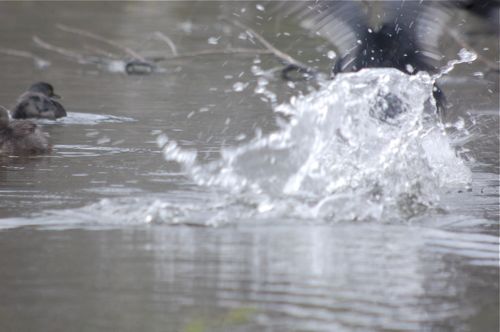
Suddenly, an American coot just took off full bear towards the least grebe I was watching.  Note the other grebe up in the left hand corner watching with excitment.

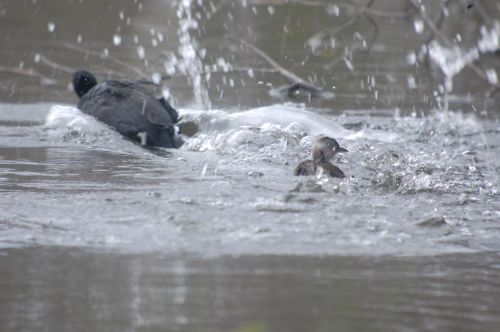
BOOM! The coot nailed the grebe!

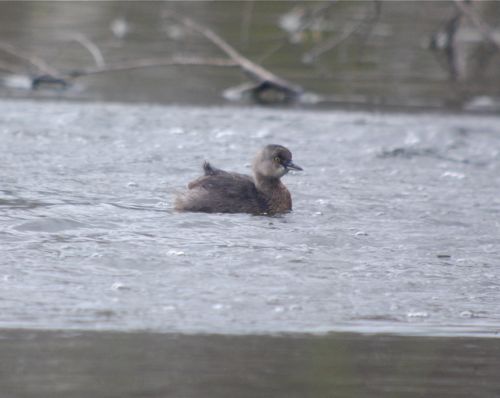
I'm guessing the grebe managed to dodge the coot with a quick submerge but I was surprised it resurfaced so quickly.

I love it.  The least grebe looks as if it's thinking, "WTF was that all about?"


Birdchick Podcast #94: Scott's Wild Bird Food Fined For Selling Contaminated Birdseed

Whoa! Scott's Wild Bird Food was fined $4.5 MILLION for 2 incidents that go back to 2008.  One is for selling bird seed contaminated with pesticides that their own staff ornithologist warned was toxic to birds and wildlife, the other was for selling lawn and garden products with falsified U.S. Environmental Protection Agency pesticide registration numbers. This got my attention because the nature blogosphere was taking the National Wildlife Federation to task for partnering up with Scott's as a sponsor. The NWF works to promote protecting the environment and protecting wildlife and you know, creating that whole Certified Backyard Habitat...partnering up with a major pesticide producer is a dangerous business.  As a result of public outcry, NWF announced they were ending their partnership with Scott's.

In other news, are you ready for the Great Backyard Bird Count?  Mark your February 17 - 20 on your calendars!

Woman get's kinglet caught in her hair.

Slow mo video of a goose flying upside down.

WildBird Magazine has a really great contest going.  All you have to do is make them chuckle with your most amusing birding adventure...

The murmuration video we were talking about.  Watch how the starlings use those crazy aerial moves to evade an aerial predator:

A Peregrine Falcon repeatedly divebombs a flock of starlings coming home to roost. Shot at dusk from the racetrack roof of the old FIAT factory in Torino Italy. Starlings roost in the center atrium of the building at night.

Bentsen Rio Grande State Park Birds via iPhone

South Texas, as always was SO much fun.  Even if you choose to do some casual birding you can still hit all the specialties.  I took a mini break down there over the weekend to hang with a girlfriend and since we had both been there, each day we slept in and let our bodies wake us rather than our alarm clocks and enjoyed the local Mexican restaurants and headed to our favorite parks.

I always have a soft spot for Bentsen Rio Grande State Park. It's the first south Texas park I ever visited in the Rio Grande Valley and where I got most of my Texas specialties like the above green jay (you can get them at most of the parks, but like actors who portray The Doctor, you never forget your first).  Sitting in the balmy 60 - 70 degree weather with my scope and bins really made the tension melt from my bones.

Though walking and biking are fantastic ways to enjoy this Texas park, the bird feeders really deliver. The birds went crazy for this log filled with peanut butter. There was even a clay-colored thrush (or clay-colored robin as some field guides call it). These sometimes zip over the border from Mexico but I haven't seen one since Panama.  Not that I really note that, but I guess I got a new bird for my US list without even trying.

I really clicked with using my iPhone 4s for digiscoping rather than my Nikon D40.  I'm hopeful that by the time spring arrives, I will no longer go out with that camera and only go out with my iPhone...we'll see.  Hand holding has been okay but not as nice as having an adapter.  But since I was having such luck in Texas, I tried taking video at the feeders...I was hand holding but it turned out okay.  Ignore what the people are saying during the oriole part.  They were sitting next to us and talking about a different bird than what you see in the video.

http://youtu.be/A1j4Rvcz0pE

I loved those great kiskadees.  They were "peanut butter catching" at the feeder like they would for aerial insects.  As a matter of fact, because the kiskadees were so fast, they people next to us thought they were grabbing flies attracted to the feeder.  But check out these stills I grabbed from the video:

That's a beakful of peanut butter!

Even the plain chachalacas got in on the peanut butter action...I don't think I saw a single woodpecker come to that feeder.

Besides all of these there were warblers checking it out as well (warblers in January, what a gift to this Minnesota girl). We didn't see them, but many reported that bobcats come to hunt around the feeders too...needless to say, we didn't see squirrels.

Thank you, Bentsen State Park, for a lovely afternoon.


Flat Stanley In Texas

So, I was checking out photos of Flat Stanley other people have put in at the Flat Stanley Project and people totally photoshopped him in on some photos.  That's cheating.  I could have done that with my nephew's Flatty S--he could have been in Israel and birding with me in a minefield but I didn't have him when I went there and that is so not the point of a Flat Stanley.

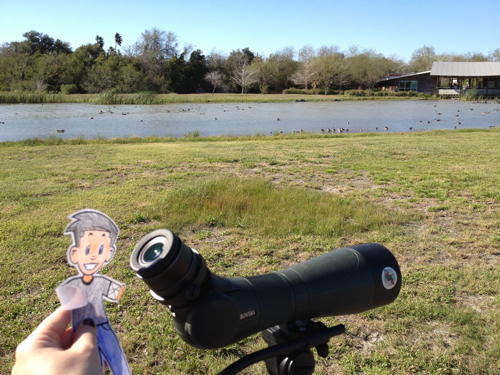
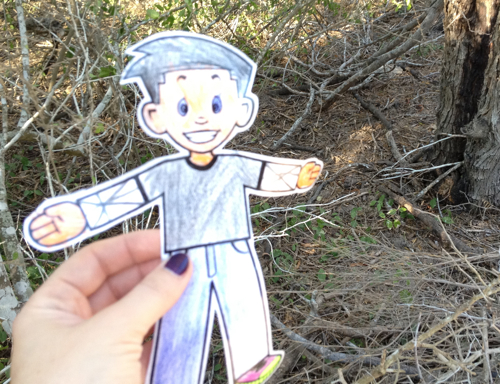
But I did take him to Texas and to the happiest birding place on Earth--Estero Llano Grande. Here I had Flatty S ( I couldn't help but give him a good rap name) looking through my scope.

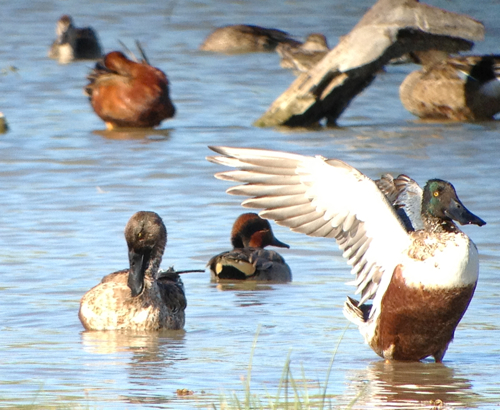
He enjoyed all the different ducks including shovelers, green-winged teal and cinnamon teal. But we weren't the only ones interested in the waterfowl at Estero.

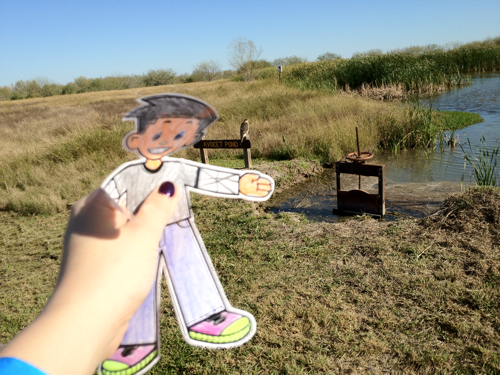
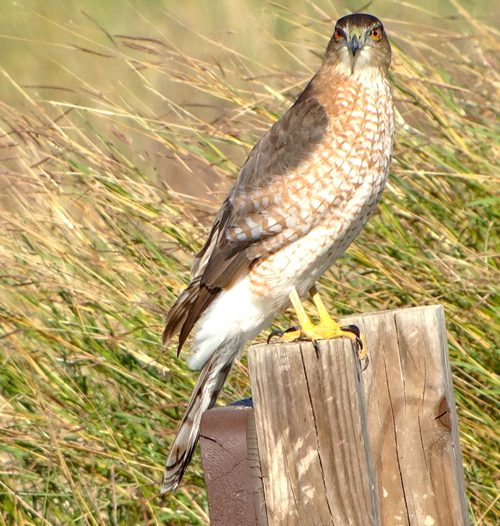
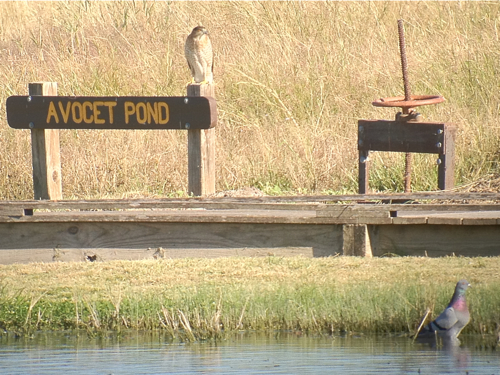
We found a Cooper's hawk very interested in the ducks--see Flat Stanley is pointing to it.  This was one relaxed hawk, I can't believe how close it was to the trail and that it let us walk past without getting spooked.  I tried digiscoping it with my phone.

The Cooper's hawk looked and Flat Stanley as though it was thinking, "Can I eat that?"  But the hawk did not eat Flatty S.  It stuck around for quite some time, even others walked past without phasing the bird.

The hawk sat there for so long even a pigeon flew into bathe...then suddenly had that awkward moment when you realize that a predator has joined you in the bath.

These were awesome birds but I wanted to show Flat Stanley a real Texas specialty, something he couldn't see anywhere else so we went to look for for the common pauraque.

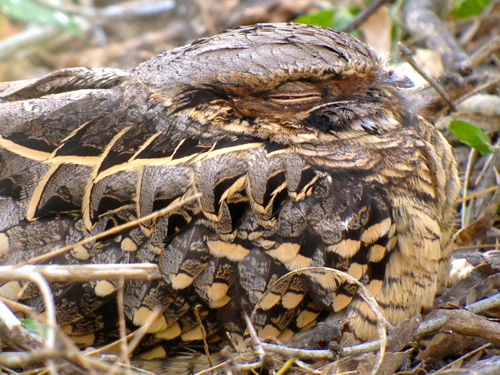
Here my buddy Flatty S is pointing the mysterious nightjar the common pauraque.  Can you make it out at the trunk of the tree?  No worries, I took a photo with my iPhone through my scope:

Here's the hiding pauraque up close.  I had to chuckle, as I was taking photos with Flat Stanley on of Estero's volunteers said, "I have to ask...what's with the little guy?" I explained Flat Stanley and what I was doing, then he gave me a hard look..."You're not going to put it up against the pauraques are you?"

Feeling a little sassy I said, "I'm not THAT stupid." I know he meant well and he had no idea what kind of birder I was.  The pauraques were close to the path and though their defense is to stay still and hidden, some people would take advantage of that and might try to get closer than they should.

So, I've sent Flatty S back home.  Wonder if my nephew will catch the birding bug?


Flat Stanley Misadventures

One of my nephews has sent me a Flat Stanley.  Having the mind of a 13 year old, I'm tempted mostly to take inappropriate photos of him:

I mean, come on, if you have a friend who has a zombie arm and tombstone in their backyard, of course you are going to put Flat Stanley in it and send a letter home that he was lost in a freak snow zombie attack.  But most of my photos have involved Flat Stanley and compromising photos with bottles of Jameson and I can't really send those back to his school so I've tried to take Flat Stanley birding:

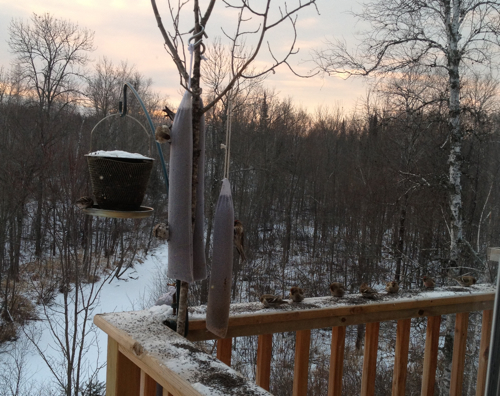
I set him out at a bird feeder with some seed and immediately he had fun with juncos.  I think he'll be fine so long as a Cooper's hawk doesn't shows up.


Boreal Birding & Digiscoping with an iPhone

I think I had the most fun at Sax Zim Bog last weekend since the great owl irruption of 2004/2005. An informal gathering of birders headed up and we started at Hasty Brook. I've known Lynne for some time and I've always wanted to visit. What a treat to start it off with her deck full of common redpolls. I wish we could have spent more time there, she's so lucky to have such a beautiful view to watch birds and animals go by--and incredibly sweet.  Our group birded the crap out of the little daylight we have up here in winter and when we went back to her place, her husband was heating up a huge kettle of wild rice soup.

As much as I miss the birds who sing in the summer, I truly do appreciate living in Minnesota where a few hours drive north gives me a different set of habitat and birds. Redpolls are in abundance this winter in northern MN, which was actually predicted in the Winter Finch Forecast.

Huge flocks of redpolls would descend onto the roads to chow down on either spilled grain or salt mixed with snow. When they would take off, you could actually hear their woosh of wings.

We had a bonus in the car with us when we went, a guide for the bog by the name of Erik Bruhnke came along with us--for fun. He's a young kid trying to earn a living in birding--it was fun to go out in the field with someone so young and excited about birds. There are a lot of great guides up at the bog but the area is so popular they book up quickly, so if you're ever looking for one, Erik is an enthusiastic and knowledgeable guide. Some in our group had been to the bog several times before and had an idea of where to go, but having someone along who birds the area on a regular basis really helped get all the bog specialties that are being seen.

I used the day to compare digiscoping with my iPhone 4s vs my Nikon D40.  I don't have an adapter yet for the phone so photos like the one above of evening and pine grosbeaks are taken by hand holding the iPhone up to my scope.  Not bad at all!  I've been playing with the camera app that comes with the phone but there's the Camera+ app, I like it because it has image stabilization and the ability to go into burst mode and take a crap ton of pictures all at once.  It's handy if you are doing this without an adapter.

One thing I did learn about my iPhone is that it's not ideal for cold weather digiscoping.  My fingers got so cold that the touch screen function ceased recognizing when something had been touched (it was about 10 degrees Fahrenheit when I took the above photo).  I do have a pair of gloves that is supposed to work with the touch screen, but I have a screen protector and it doesn't work with the gloves.  Also cold fingers can lead to shivering which also doesn't help image stabilization.

Can I say what a treat it was to get some quality time with evening grosbeaks (the above photo was taken with the D40, not the iPhone).  I haven't been around a good sized flock for a few years so it was fun to spend time with these birds who look like like a goldfinch on steroids...though Non Birding Bill thinks they look more like Ed Asner.  We're so lucky that the people who live on Blue Spruce Road just north of 133 in Meadowlands place feeders at the end of their driveway so people can enjoy a bunch of boreal feeder birds.

It's a great little spot to practice digiscoping.  Lots of great colorful winter birds to get shots of like the pine grosbeak.  They seem very used to the traffic.

White-winged crossbills were all over around the bog too.  This one was part of a flock that was in the road.  As we watched it, we picked up a tail of other cars. It's kind of a strange thing to bird around the bog.  You want to get all the specialties and there are plenty of maps to be found of it on the Internet describing where to go, but at the same time if you see someone pulled over, you tend to pull over too to see if they have something you don't.

This is especially true when it's dusk and close to great gray owl time.  One road had a recent report of great grays and around dusk there were almost 2 dozen vehicles slowly cruising back and forth, creeping along and watching, waiting for the elusive giant.  I watched but I'm so spoiled when it comes to great gray owls.  I remember driving and finding 50 in a day.

Fortunately a great gray owl was spotted and the birding paparazzi excitedly moved in to watch it.

It was far, lightly snowing and dusk but thanks to the timer on my Nikon D40 I was able to get an ok shot of it in the low light conditions.

All in all it was a great day of seeing some northern specialties (like the above rough-legged hawk).  If you haven't birded the bog and live within driving distance, grab some friends and head on up.  It's a doable day trip from the Twin Cities.  We left the the northern suburbs at 5:30am and stayed til dusk then stopped for dinner.  I got back to NBB by 9:30pm.

If you'd like to learn more, come to Birds and Beers on Monday.  Lots of people will be happy to share tips (and maybe you'll find a birding buddy to go up).  Also there is a Sax Zim Bog Bird Festival in Feburary which I haven't been to but I know lots of people who have gone and had a great time.  Bird festivals a great way to get to know an area you haven't birded before.