What Happens When North America's Rarest Warbler Shows Up At A Bird Festival

There really aren't many more life birds I can get in the Eastern US. Sure, there are some birds I saw when I was a kid that I'd like to see again, but for the most part, I can count on one hand the species I need to get from this part of the US. One of those is the Kirtland's warbler, which is a possibility at the Biggest Week In North American Birding, but I wasn't going to hold my breath. Wednesday morning, still in a sleepy haze, desperately hoping the caffeine from my coffee would finally jump start my metabolism, I made my way to the quieter east end of the Magee Marsh boardwalk. I noticed a small cluster of people up ahead, one of them turned around and I recognized Mike Watson from BIRDQUEST and he asked, "Hey, Shaz, didn't you need a Kirtland's warbler? It's right here."

To which I replied something to the effect of, "Get the frak out of town!"

I dashed over and after some jockeying for position, Mike got me on it.  He wisely said, "Here, hand me your scope, just get you bins on it."

With a rare bird like this that is endangered and a lifer, I wanted to get a great look at it before I attempted digiscoping.

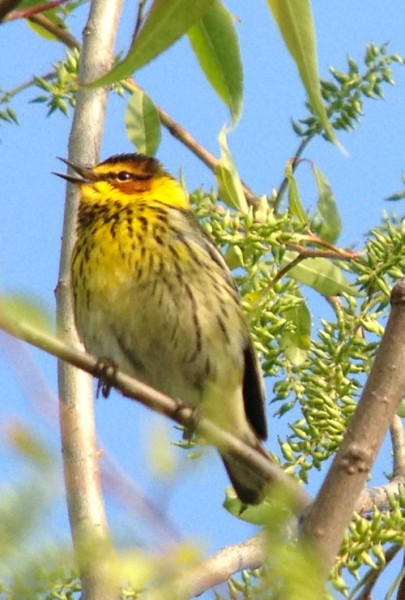
The above photo of the Kirtland's warbler is by Mike Watson and that's the bird he showed me and pretty much what I saw in my Swarovski ELs.  There it is, folks, North America's rares warbler. There were only about 15 of us on it and immediately the stories were buzzing. The bird was found by a couple visiting the marsh for the first time and one of them said, "Huh, is this a magnolia warbler?"

Bobby Harrison happened to be there, took a look and said something to the effect of, "Holy crap, no, that's a Kirtland's."

This is one of the few festivals where Twitter is being used as much as walkie talkies to spread the word about birds seen on the board walk. People can either follow the @BiggestWeek feed or the hash tag #BiggestWeek for bird updates. Within minutes of tweeting, birders were sprinting towards us.  Alas, the Kirtland's flew across the canal and Mike and I tried to follow it but couldn't keep our bins on it.  I started getting the sinking feeling of, "Danger, Will Robinson," as the crowds formed on either side of me on the boardwalk.  I'm claustrophobic in crowds and I need to see an exit strategy to feel safe...I was not getting it. Sarding birding was happening and that's not my style.

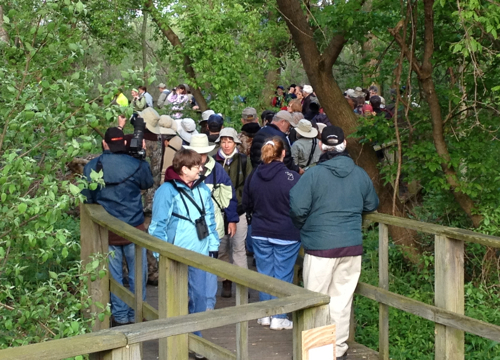
Like a salmon going up stream to spawn, I darted and dodged my way to a boardwalk intersection and climbed up on the wooden railing, watching the hoard assemble.  This isn't even half the crowd, this is just what was visible from my vantage point. The crowd anxiously awaited another glimpse of this target bird and then over the walkie talkie came the report that the warbler was heard out in the field.

And as quickly as the birders assembled, they herded towards the new report. Birders were fast walking/running to get to the field.

As people were texted, tweeted, emailed, facebooked and called, more cars arrived to get on the bird.

The group spread out, desperate to hear the song of the Kirtland's. Would it be found again? I was happy I got to see it, but it's not that much fun to be the person to say, "Oh, yeah, Kirtland's, I got that like 15 minutes ago," while 400 people kink their necks for a glimpse.

I decided to go back to the boardwalk and digiscope other birds. I just lining up on a really sweet mourning warbler when my buddy Clay called and said, "Get your butt back out here, you can totally digiscope this thing, we're on it!"

And I went back to the field (I have to say, this is one of the few bird festivals where I've lost weight from darting back and forth so much on the boardwalk).

The hoard of birders marks the spot! I had to giggle when I came out and watched the crowd, it really was like a swarm of bees, especially the way the crowd moved and clustered together once they were back on the Kirtland's warbler.  I immediately found my buddy Clay and started scanning the trees.  In the center of the crowd was the American Birding Association president Jeff Gordon, using his booming voice to call out instructions to find the bird. Around him you could hear excited squeals of, "I got him!" or still desperate, "Where is he, where is heeeeee?" It seemed so appropriate to have our country's club president leading the way on this rare bird.

Clay and I tried to train our scopes on the Kirtland's and had people line up behind us and we'd dodge to the side while they would jump in for a glimpse.  As other people shared their scopes, I took the opportunity to digiscope the warbler. And as great as I am getting at using my iPhone for digiscoping birds, I didn't want to play around and went straight to my SLR to get photos.  That my best and fastest technique and the bird was high and far, I wanted all the power I could get my fingers on to get a souvenir shot of this awesome life bird.

Not bad considering how far away the bird was.  I can't believe I freaking digiscoped a Kirtland's warbler surrounded by 500 people.

The rest of the day was spent regaling each other with how we finally got on the bird. Word soon spread that while we were out in the field, another Kirtland's was heard.  Jeff Gordon and others speculated that there may have been more than one.

Mike and I ran into each other and we compared photos of our birds, since he got a photo of the one close and low on the boardwalk and I got my photo with the one high out on the trees.  Here's a comparison:

My photo is on the left and Mike's photo is on the right.  The streaking appears to be slightly different, especially on the lower streak. Kinda looks like there was more than one male Kirtland's at the festival.

Again, I'm not one for huge crowds, but it was a blast being in the center of that melee and feeling the energy and excitement. It was a full on twitch as British birders would call it.

And I would like everyone to take notice that I avoided using the eye roll inducing phrase, "Birders flocked to the Kirtland's warbler." News media, please take note. That sort of headline is dead and used to death.
Woodcocks At Biggest Week

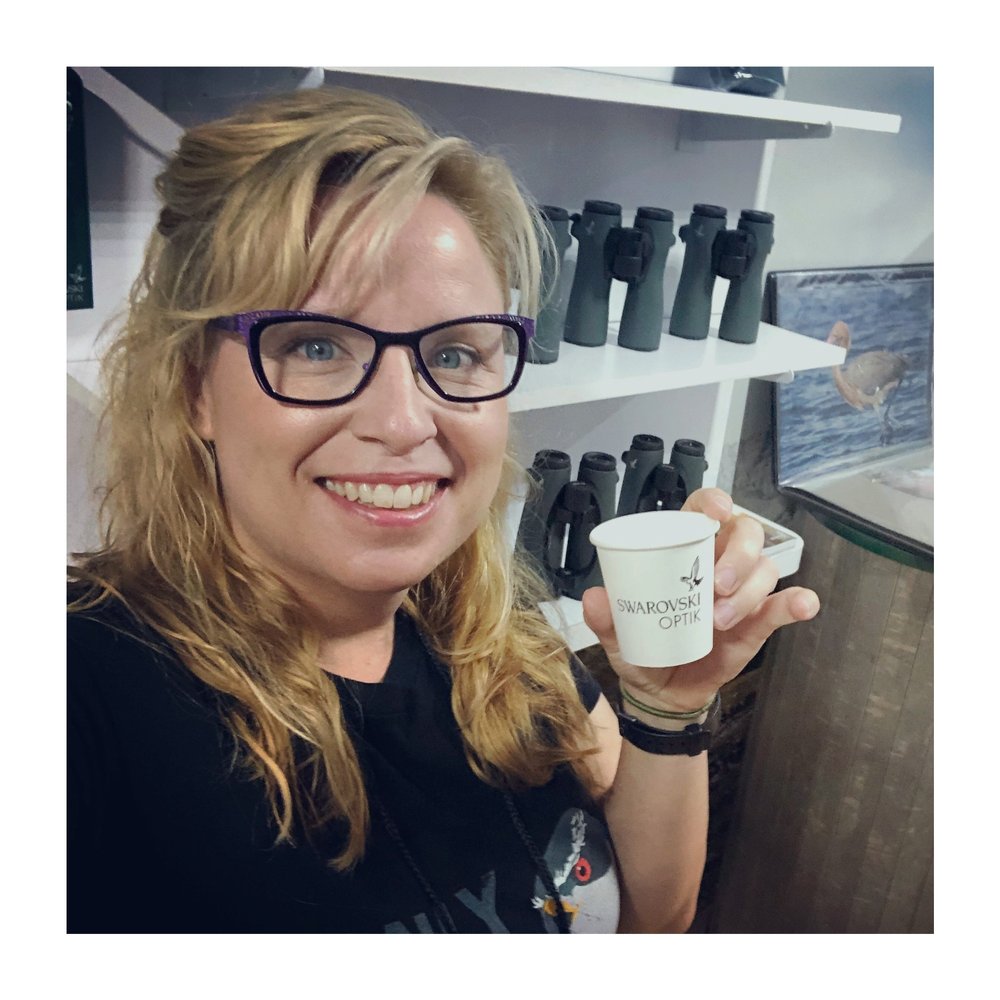
Part of the fun of birding at the Biggest Week is I get to see my friend Dale Forbes.  I met him a few years ago in Kazakhstan and since then he's moved on to working full time for Swarovski Optik as a products manager.  This is Dale's first time in North America...so you can imagine he's about to explode getting tons of colorful life birds. Jeff and Liz Gordon are also here pimping the American Birding Association and they tipped us off to some hot all woodcock action over at Maumee Bay State Park.  We hightailed it over there after one of my programs so Dale could get the full on woodcock lekking experience.

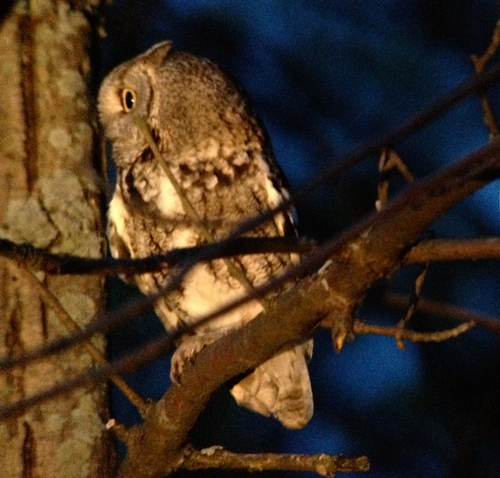
Before we started, we could hear an eastern screech-owl trilling outside their cabin. I of course had to experiment getting a shot of said owl with my iPhone.  Considering the only light was a flashlight, this wasn't too bad.

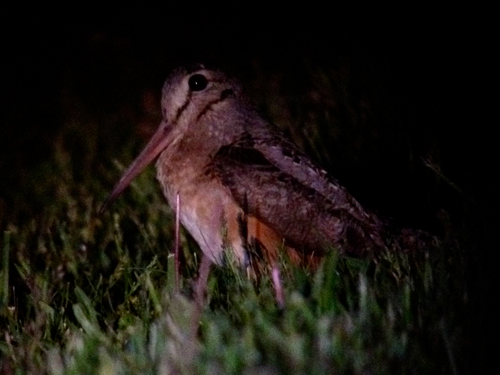
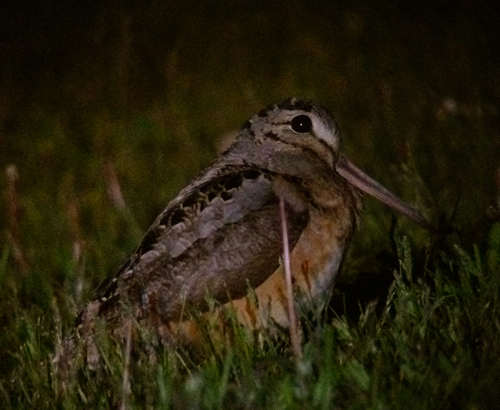
Dale got the full woodcock treatment.  The bird skydanced and timberdoodled several times.  He even landed so close at one point that there was no way for me to digiscope him--but what a thrill, we even heard the little crazy inhale sound before they explode out their peent.  Most of the time though he was in a position to not only get shots like the above with my iPhone and scope but also video:

http://youtu.be/vup4FGTGoAM

Jeff also got a video of the woodcock and the sound quality is much better, though he was using an actual camera with video and not an iPhone...it now kind of makes me want to investigate mics that are available for the iPhone.

Woodcocks are all over, one has been found foraging near the boardwalk and appears to have a nest hidden in the leaves.  Some of us have tried to scope her but she's so well hidden, almost all you see is that eye.

So it's not just all about the warblers here at Biggest Week.


Biggest Week In American Birding

So if you've been following my Twitter feed, you know I'm at something referred to as the Biggest Week, it's a big ole' honkin' bird festival in northern Ohio at Magee Marsh.  It bills itself as the "Warbler Capital Of The World."

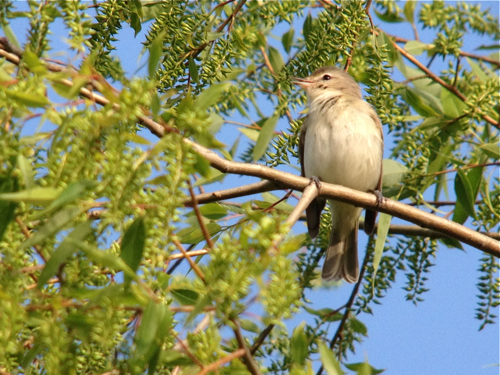
I have seen quite a few warblers, but not enough yet to call it the warbler capital of the word...yet.  Warbling Vireo Capital Of The World is my current title for it--these dudes are all over the place.  That's one in the above photo.  I think the winds haven't been in our favor so far, so we're not getting the numbers of warblers dripping low off the trees that Ohio birders speak of with reverence, but I'm sure it's coming soon.

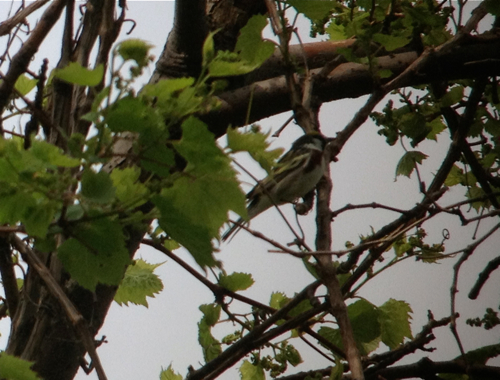
It's a cool festival though, there are warblers all around. The first bird I got when I stepped out of my rental vehicle was a chestnut-sided warbler (the bird above). It's not the best photo, I got that with my iPhone and spotting scope.  As a matter of fact, all of the photos in this post were done with my iPhone.  I thought I would challenge myself to only go out with my iPhone for a few days to see what I could do digiscoping wise if I left my SLR in my hotel room.  Some of the results are okay, but some have really surprised me.

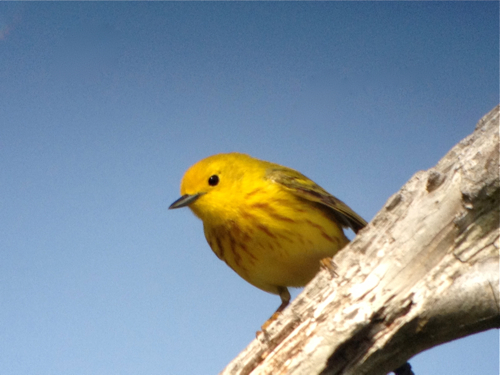
Here's a yellow warbler, they're all over the Magee Marsh Boardwalk.

Here's my favorite warbler photo so far of a Cape May warbler and yes, I got this shot with my iPhone and Swarovksi spotting scope.  Am I ready to leave my SLR home for good?

I have to admit, I was worried this festival was going to overwhelm me.  You mostly bird watch from a boardwalk through Magee Marsh and with hundreds of people that can be some sardine birding. I think being short gives me a natural aversion to crowds--I can't see over tall people and I really don't like standing in a place where I cannot see an exit strategy.  The west side of the boardwalk is jam packed with birders--some people really enjoy that. Not me.

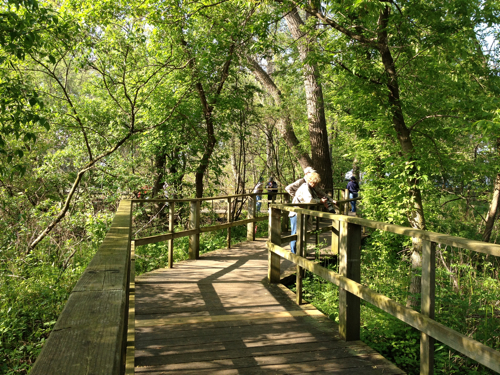
However, if you are like me and would like some space, the east side of the board walk is for you.  There will be some clusters of birders but you can still get past and there are a ton of bird because warblers move around.  So many birders from all over are here, it's fun to run into people I know only via Twitter or old friends from festivals past. The camaraderie is 50% of the fun.

Yellowlegs Video

Here's another video I played around with yesterday trying to stabilize my iPhone 4s up against my Swarovski spotting scope.  This was taken with the 25 - 50 zoom eyepiece (I find for video I get little to no vignetting).  I did some minor adjustments in iMove, mostly a little cropping to take out vignetting in the upper right hand corner). http://youtu.be/dx0x1thf6zo


Birdchick Podcast #110: Swearing Parrots & Bird Harassment

  I have 2 Birds and Beers next week, one in Ohio at the Biggest Week in North American Birding and one in Point Pelee, Canada.

Feral parrots in Australia are swearing...and teaching it to wild birds.

These 2 stories seem like something we could reasonably fix and save millions of birds:

The Washington Office of the Bureau of Land Management is urging all states to use partnerships and available funds to discover, then cap, fill, or pull pipes that are used for mining claims or other activities to prevent birds from going inside to use them as roosting or nesting holes. The sides are so smooth the bird get stuck and die inside the pipes. Western bird clubs, can you unite to help cap these things?

TV towers kill millions of birds every years, the steady burning lights draw them in and they collide with the guy wires. If we change steady-burning lights on the 4,500 towers greater than 490 feet tall - about six percent of the total - could reduce mortality by about 45 percent and save 2.5 million birds.

2 pilots are on trial for harassing birds by flying to low. Their lawyer argues, "Can birds be harassed?"

Bird Man of Devon fills out with 21,600 Bird Ornaments.


iPhone Video With A Spotting Scope

Here's an experimental video of a a red-bellied woodpecker (and some red-winged blackbirds) I took using my iPhone 4s and my Swarovski Spotting Scope.  I'm using my 25 - 50 zoom eyepiece on this one and I did do a wee bit of cropping to take out a small amount of vignetting. http://youtu.be/qwh6nhE9FdY

Naturalist ADD In Spring

I signed on for a book project last December thinking that this is Minnesota and an early April deadline will be a great way for me to occupy my time. Then warm temperatures came early, leaves started bursting and survey work rolled in sooner than expected. Before I knew it, my body was chained to my book and computer and I could only glare enviously at friends posts on Facebook and Twitter as they were enjoying birds.

Sure, I had some of my field work, but trying not to throw up from the back of a float plane while counting eagle nests is not the same as a bird walk through the woods. Although, I did get a kick out of a great horned owl that took over one of my park's eagle nests--that's a ballsy move, but that's a great horned owl for you.

But finally, through a scheduling snafu, I ended up with two days off in a row and in the middle of all of that, we got word that our three new beehives would arrive. Time to relish spring and not just go through the motions of spring chores.

I was worried with all the warm weather that I might have missed my chance to see wildflowers but on bee installation day the surrounding woods was carpeted with rue anemone and I found myself in a quandary--what do I focus on for the day? Wildflowers? Birds? Bees? I tried my best to do all three. What a bonus to have a day off and get so much spring all at once.

Here's a transition of winter to spring. A pine siskin and a female goldfinch. One bird that came down to feed for the winter and the other gradually shifting into a bit brighter yellow plumage for the coming breeding season.

Up in the northern US we don't have the warbler extravaganza those south of us have going on but we do have the early ones like the yellow-rumped warblers.

But even as there are birds overhead, there are secretive and unique beauties down below. There's a patch of wild ginger near the hives and they hide there flowers below their two leaves.

What an amazing tiny flower, so hidden on the woods floor.

Our bees that survived the winter are thriving in the early spring. Bees with big fat pollen baskets strapped to their back legs returning. And the pollen is in several different colors. I think most are coming back with dandelion pollen but others are foraging on flowering fruit trees. One of the hives was so full, we went ahead an put on a honey super. Lilac are just starting and I'm kind of hoping we'll get honey that has a bit of that flower.  That happened a few years ago and I think it was my favorite.

We did our annual bee installation and put in three new hives, so combined with the three that survived the winter, we now have a total of six hives. As we were doing the installation, someone came by with a high speed camera and got footage of Neil dumping the bees into the hive. I love how the video almost makes Neil look like he's not moving while bees glitter all around him.  Here it is:

[vimeo]http://vimeo.com/40830178[/vimeo]

So all in all some great time off. And for my mom, here are a few more wildflower photos from around the hive:

Trout lily.

Trillium.

Dutchman's breeches.


Birdchick Podcast #109: Ivory-bill In Texas, Meanwhile Teenagers Find Actual Rare Bird

Another whooping crane has been shot but this time not in Indiana, this time in South Dakota.  There's a $10,000 Reward. There's a hilarious story out of east Texas about a guy in a trailer park who found an ivory-billed woodpecker. Two stations covered it with footage they recorded. One got footage of a red-headed woodpecker, the other started with a red-headed woodpecker and then got footage of a pileated.

One station tried to hide their footage, the other did a follow up that maybe the bird wasn't an ivory-bill after all.

Meanwhile, a pair of teenagers found an actual rare bird, an elaenia.  Will we ever find out what species tho?


Incredible Bluebird Video

We installed our new bees for the year over the weekend and a man named Matt Kuchta came out to film them in this really fancy pants slow mo camera.  I have to admit, that when I arrived and Mr. Neil was beaming at me with, "We have a photographer coming!" I thought, "Really, I didn't wash my hair, I'm not wearing clothing for it...beesuits are forgiving to one's figure..." But he was actually there to film the bees. However, he showed me this incredible video he had of a male bluebird attacking his window. Birds can see their reflection in windows and can interpret their reflection as a potential rival  I've written about it on my FAQ and at 10,000 Birds. Once they start fighting, it's very hard to dissuade them. Matt has tried bird netting, which prevents the bluebird from making contact with the window, but they still waste the energy making the attempt. He's now covering the windows on the outside with tin foil to break the male bluebird of the habit of coming around in looking for his rival.

As he was doing all of this, he also has a high speed Memrecam GX-8 Camera and got some footage of the bluebird attacking his window:

[vimeo]http://vimeo.com/40834510[/vimeo]

Two things struck me with this video. First, the bluebird brings out its toes just like a raptor would--kind of brings down his landing gear. Which makes sense, you don't want to attack with your beak, your opponent could attack with his beak and damage your eyes. And insectivores have softer beaks, not really much there.

Second...his cloaca is really swollen and you can see a bit of a cloacal protuberance.