Birdchick Podcast #142: Fasten Your Seat Belts, It's Gonna Be a Bumpy Night

So. Much. News. Non Birding Bill and I are about to head to Biggest Week in Birding, will we run into you?  We'll both be there the first weekend and just me the second.  If you see us on the boardwalk, please say "hi."

Screen Shot 2013-05-01 at 9.41.15 PM

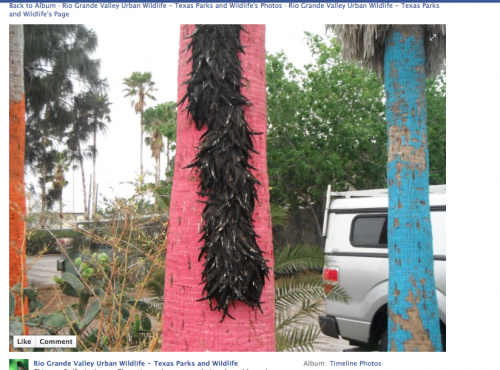
CRAZY migration fallout happened in Texas at South Padre Island. The above is not a weird shaggy vine on a painted palm tree...those are all chimney swifts.  Here's another photo. Check out this photo of a hoard of dickcissel and a lone indigo bunting or this one of orioles.

The Jr Duck Stamp was just a mess this year. From the Associated Press having to print a correction to the prize being revoked from the 6 year old.

Dude fights off grizzly bear with his spotting scope.

Cool photo gallery of hummingbird nests. You must look.

Crazy, beautiful red-winged blackbird with some pigment issues.

15 products to prevent birds from hitting windows.

A TED talk on duck homosexual necrophilia. I know, right?

The house where Alfred Hitchcock wrote "The Birds" is up for sale.

1001 Secrets Every Birder Should Know Book Release Party

1001-Secrets-Every-Bird-Watcher-Should-Know-EVITE  

For those in the Twin Cities area next week, we are having a book launch for my newest book 1001 Secrets Every Birder Should Know on May 7 from 7 pm - 8:30 pm. And I'm super excited because it will be at Glam Doll Donuts!

Screen Shot 2013-05-01 at 2.51.02 PM

These ladies make super tasty donuts! From the Showgirl (maple icing and bacon), the Calendar Girl (salted caramel and chocolate) to the Bombshell (my favorite, spicy Mexican chocolate and cayenne pecans and the surprisingly savory Girl Next Door (provolone and muenster) they will wow you with donutty flavor. Don't worry, they have regular donuts too.

But I'm happy to celebrate the release of my book and show off an awesome new donut place in my neighborhood. I'll be happy to answer any crazy bird question that you have. The book has been getting some great attention so far, even from All Things Considered!

We'll have some books on hand to sell, but if you already bought one and would like it signed, feel free to bring it. You can also bring copies of other books too if you have them (Disapproving Rabbits and City Birds/Country Birds).

I'll also be doing a signing at Biggest Week in Birding if anyone is going to be there in Ohio at Black Swamp Bird Observatory on Saturday, May 11 from 1pm - 2pm (with Kenn Kaufman and The Stokes). I have to say how weird that is to be in that position.  Was it really only 10 years ago I was working in a wild bird store, selling their books and now I'm signing books along next to them...how did I get here?

I hope you can come...if for no other reason than to share a donut with me. Maybe afterwards we'll raid one of the many bars on that street for an impromptu Birds and Beers?


Hot Caracara Action!

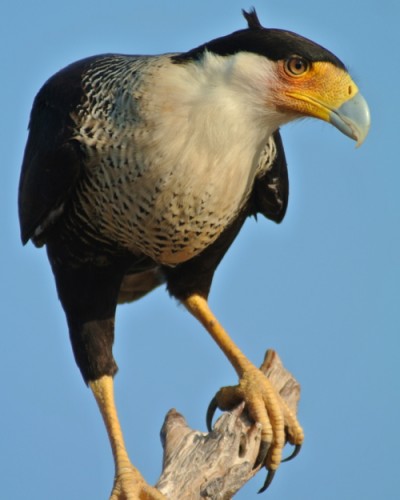
crested caracara While in the Rio Grande Valley, my friend Marci asked if there were any birds I needed. I don't really have any lifers to get there but I said, "I'd like some quality time with a caracara."

She smiled slyly and said, "I think I know a way to do that."

I've seen crested caracaras in Texas and Florida, but generally as they fly by or perch momentarily.  I've had opportunity to get ok photos of them at Laguna Atascosa but not on a great, sunny day.

caracaras

Marci hooked me up with a place called Martin Ranch also known as Martin Refuge on their website. I blogged a little about about this place on 10,000 Birds, it's a ranch specifically set up for photographers. They have water features to bring migrant songbirds, seed feeders and meat feeders. I know baiting is an issue for people and there's a forum to discuss at on my post at 10,000 Birds, this post is more to show all the different birds that came in during my session at a photography blind. I don't really see this meat feeding station as being too different from a seed or suet feeder, only instead of seed, mealworms and beef liver fat the birds are offered taxidermy leftovers, roadkill and chicken parts from the grocery store.

photo blinds

For a fee, you can visit this ranch and set yourself up in their photo blinds. There are different blinds at different angles so you can sit some place with the sun behind you throughout the day.

photography blind

There are comfy lawn chairs set up inside the blind and curtains to hide your movement from the birds. Our blind easily held three people but a fourth could have been added.  All would have had plenty of space to photograph birds.

attentive caracara

I have a digiscoping set up and this place is primarily used by traditional sorts of photographers. I was able to get photos, but the birds were often too close with my set up to get full body shots with my Nikon V1 and Swarovski ATX scope and I didn't really have the option to switch lenses. But I got some great shots of the birds and a chance to see things like the somewhat gross looking crop bulge that pops out of their feathers after eating.

crested caracara profile

But getting head shots of crested caracaras was just fine and dandy with me! And at the end of the day, I'm a wildlife watcher first and photographer second, it was so fun to just have a session to watch gratuitous caracara action, listen to there gutteral calls, chase each other and just chowing down--it was amazeballs!

he's got a little captain in him

My iPhone 4s has a wider field of view with the scope than my camera, so I was able to get some full body shots with that. I love this bird, it looks like it has a "little captain in him." Another fun thing that we got to see were some of the facial skin changes. When a crested caracara is not stressed, it has colorful facial skin, note the above reddish faced adult.

Threatened Caracara

Check out this younger bird with the grayer face--that means it feels threatened and the skin color can change in only a few seconds. Another bird was about to take this bird's hunk of meat.

one legged caracara

There were at least 3 different caracaras that flew in missing their entire foot or several toes. I wonder if someone on a nearby ranch has some leg hold traps to get mammals and get these carrion eating by mistake. Again, I admire bird resilience. I'm sure this ranch's feeding station helps the flying wounded. What was interesting to watch was one of the one-footed bird's ability to sneak in to the flock of caracaras and steal a hunk of meat right from under a two-footed bird. I suppose it's that sort of aggressiveness that helps a bird that just lost its foot to keep going.

hungry caracara

I think this is my favorite shot of the day. This is one of the one-footed caracaras chowing down on some chicken and managing fairly well to grasp some meat and to eat.

Harris Hawk

Of course other species of meat eating birds came in to the feed pile. Here's a Harris's hawk. Only one came in and it seemed a bit on guard. The caracaras readily flew down as soon as the meat was out.  The Harris's hawk watched the scene a long time before finally landing and tucking into some chicken.

turkey vulture

A couple of turkey vultures flew in and landed on the perching tree.  They never came down.  I'm not sure if it was all the caracaras that kept them at bay or the sound of camera shutters clicking madly, but they were far to wary to come in to the meat.

black vulture

Black vultures, however, jumped right into the fray and even chased off a few caracaras. Very interesting considering they are so much smaller than the turkey vultures, but every species has its own style when approaching a food source.

pyrrhuloxia

OK, this bird didn't come into the meet, but to the water and the seed feeder. When I first got into the photography blind and all the birds came in at once, I went into nature sensory overload and my brain went a little nuts.  I didn't know what to focus on first, the running monolog in my head was, "Caracaras, adults, juveniles, ACK, pyrrhuloxia, caracars, no turkey vulture, ack, black vulture, ack, caracaras, in perfect light, ah cool caracara sound, oh no pyrrhuloxia is back, must digiscope for big year, ack, vultures, ack ack ack, Harris's hawk, ack, caracara, ack."

Though I would replace all the "acks" with other four letter words one mutters when excited.

As if all of that weren't exciting enough, Marci's husband Terry was next to me and got super excited. I'm not sure actual words were coming out of his mouth as opposed to sounds humans make when incredibly stoked.  I've done this and I've heard many a birder do it. I looked in the direction Terry's eyes were focused on...which was right in front of the blind and saw:

rattlesnake

A really LONG rattle snake--that thing was HUGE. We tried to alert the photographers in the blind next to us and then all the cameras went bonkers. This snake was almost as long as me, so I'm guessing it was about four and a half feet long and clearly had been feeding well. The caracaras noted it but didn't seemed too perturbed by it. I think the snake sensed our excitement and turned around to go up the bank.

rattle

It was far too close for me to digiscope but I did manage to get a shot of its rattly tail. Wow, last August in Arizona was my first ever rattlesnake and now like a nemesis bird that I've finally seen, I'm seeing another right away.  That's 2 rattlesnakes in less than a year...it did make me a little nervous later on when I had to duck out of the blind to find an obliging bush to pee in...I searched a little more thoroughly before I began
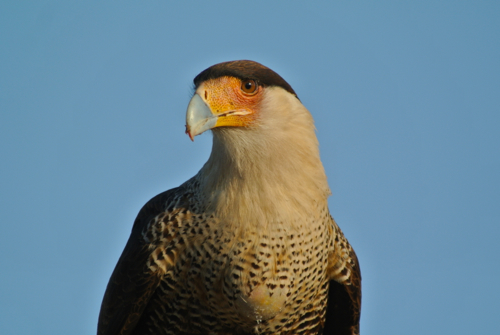
Caracara head It's not cheap to use a photography blind, but you are getting something that you don't get in the wild: the chance to sit fairly comfortably with a reasonable guarantee to see a certain species in good light and perched in ways for you to get dramatic and interesting photos. It's also an opportunity to watch birds that are comfortable engage in behaviors you wouldn't see when you surprise them in the field.  I had a blast and I would do it again.  If getting photos of birds is your thing, I would highly recommend checking out Martin Refuge.

Here's a video I made of some of the action--you can even hear a little caracara calling:

http://www.youtube.com/watch?v=U2bOZMaa8vM&feature=youtu.be


Wondering on Whimbrels

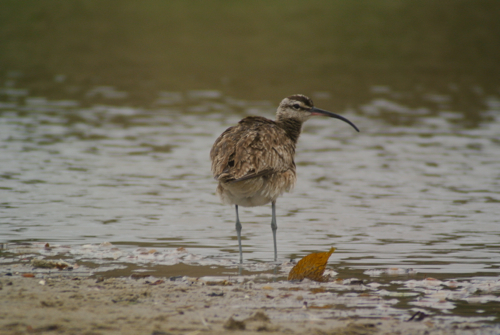
Last week I was in Los Angeles, California and while there I had some whimbrels hanging out with me on the beach (incidentally, that is now bird 138 for my Digiscoping Big Year challenge to help build a Visitor Center for Sax Zim Bog). Whimbrel


These are always cool birds to see--gotta love that beak. But whimbrels have an incredible migration so it's fun to not only enjoy these crazy looking birds but also imagine where this bird has been and what it may have seen.

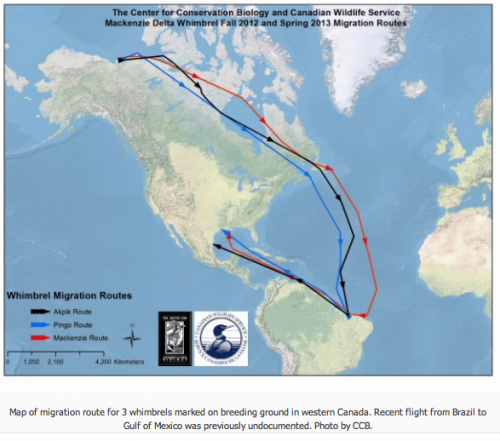
The Center for Conservation Biology has done some amazing tracking work on these birds--we really didn't know all that much about their migratory route and thanks to transmittors, we know these birds are tough. We've learned that a whimbrel flew into Hurricane Irene and survived...only to be gunned down by lax shooting laws in the Caribbean.
Now that we have an idea of how they get from their breeding ground to their wintering grounds in South America, we need to learn what route they take to get back.  Looks like it's going to be a loop, that they don't go the same way that they came.

According to the website the birds were, "originally captured and marked on the breeding grounds along the Mackenzie River in far western Canada in June of 2012, the birds took a bold fall migration route flying 2,800 miles (4,500 kilometers) to the east coast of Canada in mid-July to stage for 2 weeks before embarking on a marathon 4,300-mile (6,900-kilometer) flight out over the open ocean to the northern coast of South America. All three birds have spent just over 7 months in the extensive tidal system of the Gulf of Maranhao before initiating their migration north."

Screen Shot 2013-04-29 at 8.04.14 AM

The whimbrels left their wintering grounds near Sao Luis, Brazil between April 9 - 13, 2013 and flew nonstop for 95 to 100 hours averaging 40 mph before reaching the Gulf of Mexico. They flew that. Non stop. Wow, maybe all the hassles I deal with in airports are not so bad. Where will these particular birds go? Straight up the continent? Or to the west coast where I saw the whimbrel in the above photo?

So if you ever see a whimbrel, enjoy the crazy madcap design, but also keeping in mind what that bird can fly through...and how many countries it can visit.

Alamo Inn B & B in the Rio Grande Valley--just for birders!

I typically stay away from places that have the phrase "bed and breakfast" in the title. As a birder, I don't have the schedule to truly appreciate all the extra amenities. Yeah, I'm sure you make fabulous scones but your 7:30am start time doesn't always jive with my field trip that leaves at 5:30 am. Also, I'm sure the fellow guests are lovely, but I basically want to eat and run. But I've heard of the Alamo Inn B & B and Outdoor Store and how this popular place caters specifically birders. I was intrigued. Really? A B & B for birders? How does that work?

birder breakfast

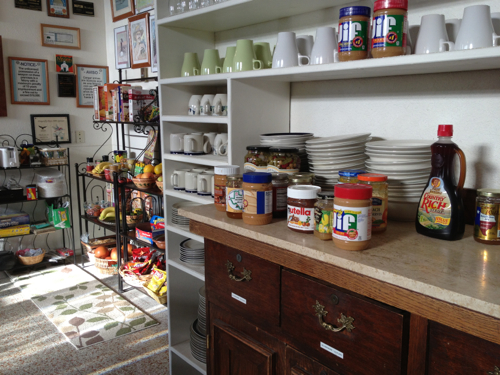
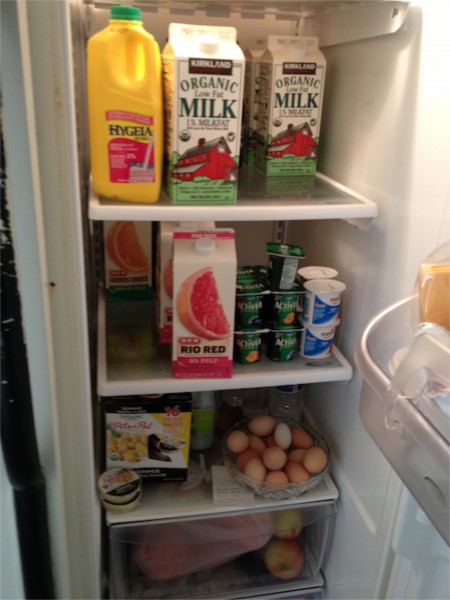
This is for sure a birder's bead and breakfast! All sorts of portable food is ready to go from breads, spreads (bonus points for Nutella), fruit, even portable apple sauce and  chips. I was a particular fan of some of the fresh fruit--like the small sweet mangos--yum.

fridge

Besides the usual coffee and tea there all sorts of juices, almond milk, soy,  yogurt, single serving humus, lunch meat and even eggs.  The eggs are from the owners hens and hard boiled so you can eat them on the spot or take them with you. You are only charge for the food that you take and the prices are very reasonable.

assigned cooler

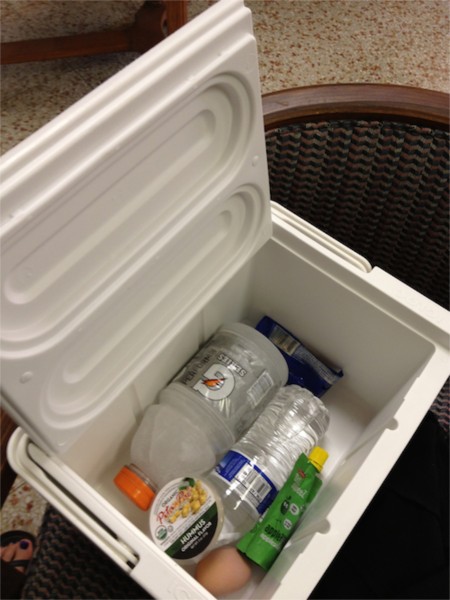
You can even be assigned a cooler to take some of these goodies with you on the road.  This is incredibly smart for birding in the Rio Grande Valley because you never know where your birding day will take you.  Your stomach may tell you that it's time to go hit Fat Daddy's barbecue, but you may be on to some hot shorebird action at Estero Llano Grande and you don't want to disappear and miss a single peep. You can keep the cooler with you and you can even take some frozen water bottles with you to keep your items cool and have a supply of cold water to drink later in the day.  It's genius!

alamo B and B

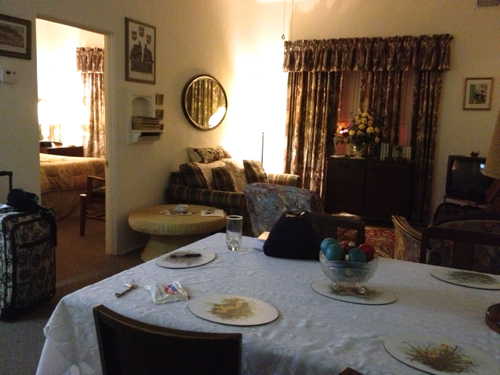
The rooms have a very homey feel, so even if you are going to "crash for the night" you can crash in the comforts of home. Its the little touches of table clothes and books that are there for you to read that get you comfy.  The rooms have good couches as well as beds, so if you are going out with your birding buddies, it can accomodate them as well. Don't worry, there's a tv and wifi so if you find that after a hard day of birding you like to unwind with a little technology, you can.

I met an amiable set of folks from California birding the valley for the first time. Two men and one woman--all friends and finding the Inn to their liking.  I even found a fellow Minnesota birder and friend Alex Cruz staying at the Alamo Inn--it's almost like that bar Cheers from the 80s tv show. All had done a bit of googling and found the Alamo Inn had rave reviews from fellow birders and their rates were comparable to the local hotels.

emergency vests

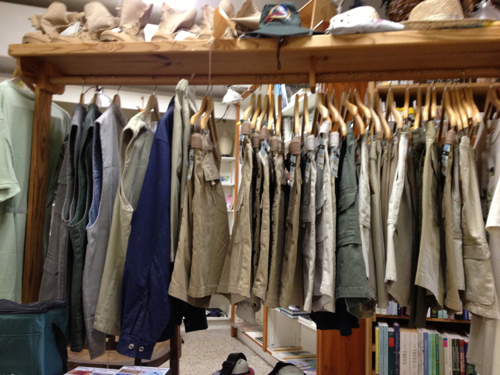
I had to chuckle, the Alamo Inn does have a birding store with field guides, bird finding guides, binoculars...and birding clothes. It drives me nuts, but birders love to wear their vests and if you forgot to pack your vest, you can purchase one on the spot if you need too.  There are even shorts! This place has just about everything to cater to a birder visiting the valley.

The owner, Keith Hackland, is a true birder so he knows what we need and how to make our visit to the valley special. He has various check lists and directions readily available. He does offer guiding services if his schedule permits but is happy to make suggestions based on what he knows is being seen in the area recently. The inn itself is in an old historic building on the corner of old Main Street in Alamo, TX. Deceiving on the outside but snug and comfy on the inside. Keith and his family live nearby in apartments and I got the added bonus of seeing a lesser nighthawk hunting over their roof.

palm trees

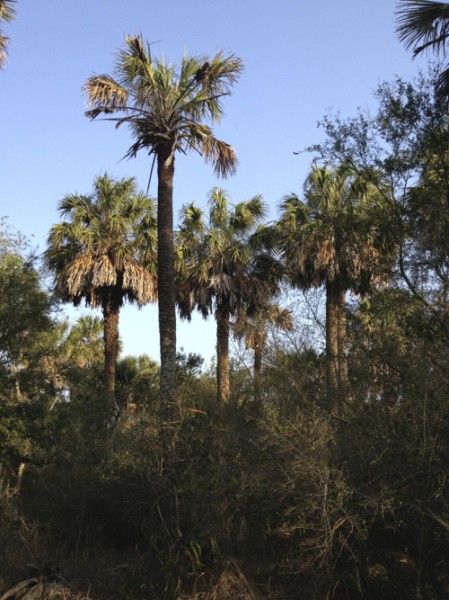
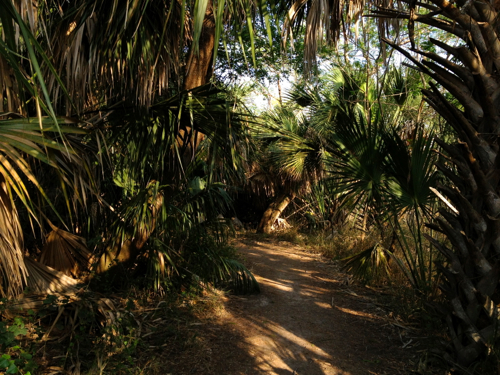
It's centrally located to Harlingen and McAllen, TX. Several popular birding destinations are less than 30 minutes from the Inn, one of the closest being Sabal Palm Sanctuary. If you tire of watching all the nest cams out there, check out their live feeder cam that gets green jays. I hadn't been to Sabal Palm for a few years and made a visit on this last trip to Texas. I forgot how much I loved the habitat of an old growth palm forest. It smelled of primeval and baked in heat. It was a bit windy on my visit which kept the mosquitos down and the warmth had a very pleasant degree.

forced rellent

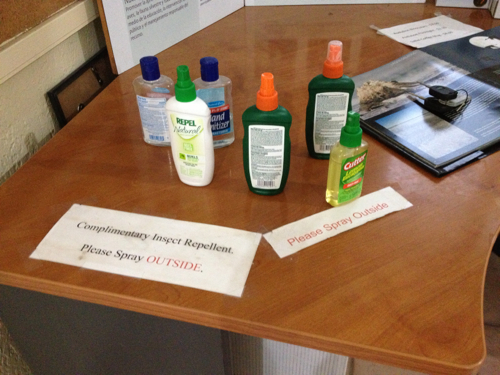
Speaking of mosquitoes, you know they are going to be bad when you stop in to pay your entrance fee and you see an assortment of complimentary repellants set out for you to wear. The skeeters are aggressive here, don't leave the visitor center without some coverage.

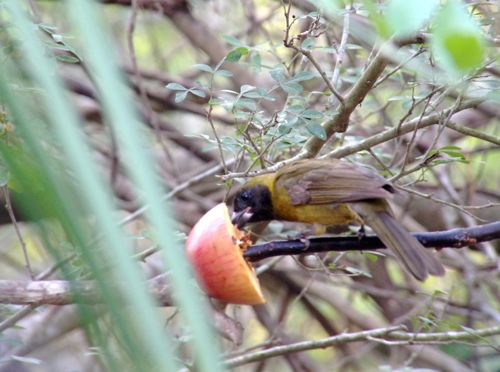
Crimson-collared grosbeak

While I was visiting, Sabal Palm was hosting a rare bird, a female crimson-collared grosbeak. I got her right off the bat thanks to a group of birders staked out at the feeder watching for it. They were kind enough to point it out...one of them turned out to be a fan of the podcast and especially Non Birding Bill. Ha!

Screen Shot 2013-04-26 at 9.49.03 AM

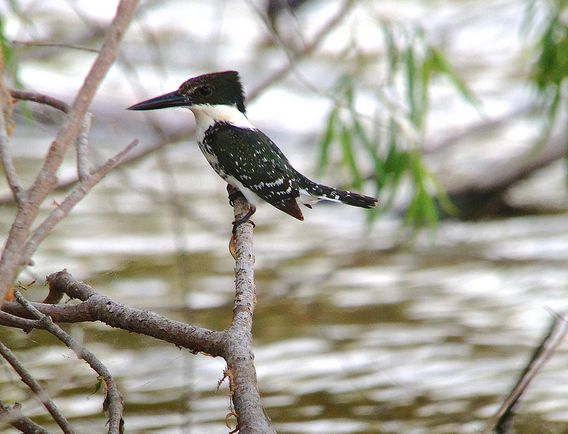
Along with the lovely trails, there's a photo blind that excellent viewing in the morning. If sit there long enough, you're sure to get a view of the tiny green kingfisher, one of the Rio Grande Valley specialty birds. This bird even landed right below one of the blind windows, far too close to digiscope, but what a treat to be only four feet away from it.

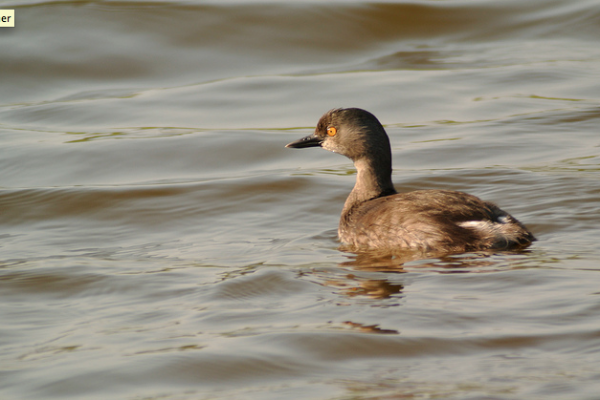
Screen Shot 2013-04-26 at 9.49.14 AM During the spring, fall and winter, the water can be chock full of ducks. Most had headed north during my visit in early April, but there were still plenty of least grebes hanging out.

boardwalk

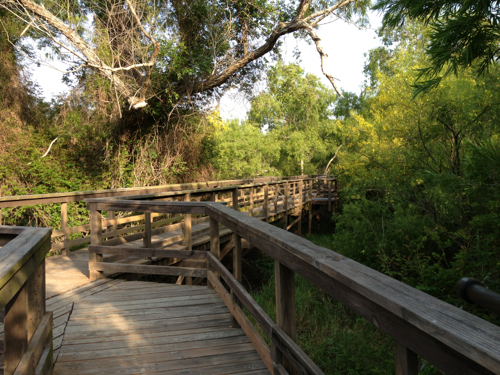
The boardwalks over the marshes can give you glimpses of teal, rails, herons, warblers and kiskadees.  They are worth the walk (just don't do it without repellent).

old growth palm forest


A Birder's Opinion of Google Maps

I'm no stranger to birder directions, they can be hard to follow. I think many of us rejoiced with personal navigators in the hopes that it would make finding parks chock full of birds much easier. Google maps has been around for a few years and has plenty of time to get the kinks worked out, right? Nope.

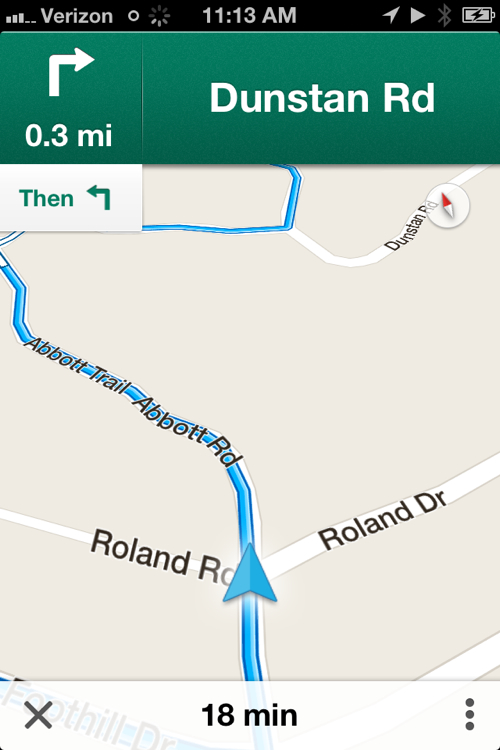
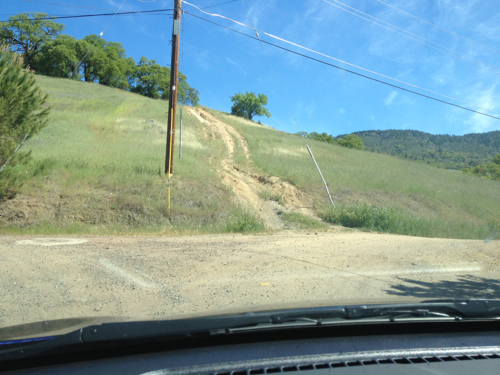
I don't rely on only my navigator, I usually double check a map or two before I head out. Here's a great example why as I tried to get to a mountain retreat in Lucerne, California this past weekend. Here is how the Google Maps app on my iPhone told me to get to Precious Forest:

Google Maps


Here's what the reality of what Abbott Rd intersected with Roland Dr actually looked like:

Google Maps Fail

That's not even a minimum maintenance road, that's a two track!

I had this happen too when I was in the Rio Grande Valley too. I would type in things like "Quinta Mazatlan World Birding Center" and Google would insist that it would know what I wanted and could get me there but land me about six miles away. Though these are well known birding areas, they are in smaller towns that simply do not getting the vetting that areas in larger metropolitan areas.

It's a good reminder to double check locations before you go out and not rely only on Google Maps.


Cool Outdoor Check List For Kids!

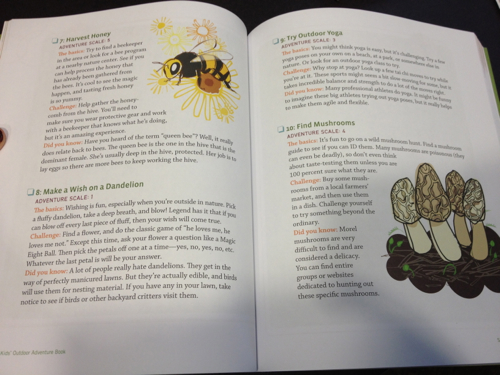
I've met Ken Keffer and Stacy Tornio along the bird festival circuit and they're great people. Stacey is editor of Birds & Blooms Magazine and Ken is a "vagabond naturalist who also writes for Birds & Blooms. I recently worked on a project with Ken and we were sharing that we both have a book coming out. Kids Outdoor Adventure

Ken and Stacey have come up with a really cool book. It's essentially an outdoor bucket list for kids. It's also tied in with a really cool website called Destination Nature full of more projects and videos to go along with the book. There are 448 fun activities for any time of year for families to try.

stacey torino


The book has great ideas for kids to try (especially for a parent who would like to get them outdoors and doesn't know where to start) and each activity is rated on an "Adventure Scale." Making a wish on a dandelion is a low key, easy activity so it gets a 1. Harvesting honey is a bit more risky so it gets a 5. Some of the activities involve travel, ie collecting seashells on the beach but others can be done right in a backyard--even an urban one. I think what will make this book fun is that there are a lot of outdoor activities that parents may want to try try themselves. They can use their kids to live out some of the things they haven't had a chance to do yet. Use your kids as your own personal field trip leader!

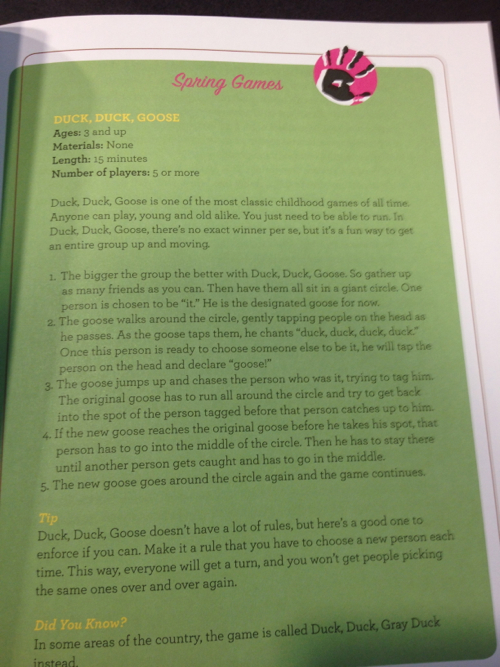
duck duck goose

The book is divided into the four seasons and includes some games too and how to mix them up for the outdoors. Yes, Minnesota people, they did include the note that some regions prefer the game Duck, Duck, Gray Duck.

So if you are looking for a way to encourage your indoor kids to play outdoors, try giving them this book, the structure of checking off adventures is appealing and maybe you'll find some adventure too.


Why Are There So Many Robins In Minnesota

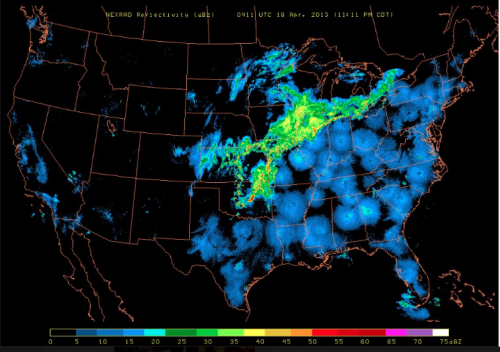
Screen Shot 2013-04-18 at 7.49.00 AM I've been posting this super cool link all over on the place on the social medias, but if you aren't in to that, I want to make sure you see it. Above is a screen grab of this video that shows birds migrating in the eastern US and getting blocked by a storm system.  All those blue spheres that appear and disappear? Those are millions of migrating songbirds: warblers, orioles, hummingbirds, vireos, nighthawks, tanagers, grosbeaks, flycatchers, etc., that got up to fly north and then landed. Millions of songbirds pouring in to North American after coming up from Central and South America.

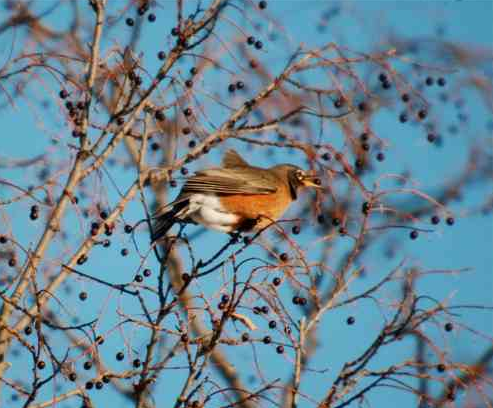
And it kind of shows what is happening with all the robins in the Twin Cities.  The snow won't leave us here in Minnesota, and there's even worse weather up north.  We have robins that spend the entire winter in Minnesota--they can take cold and snow and are resourceful at finding food. Then there are robins who go further south, and they are returning.  Most of these birds want to go further north, but can't because the flight conditions are too dangerous.  So, they are biding their time, waiting here; it's a bird traffic jam.  We see bare trees, but robins will find food—berries and seeds that are not their favorite but will sustain them, like sumac and crabapple. It's like eating ramen noodles during the lean budget times (how many of us subsisted on that in college?).

People will find dead robins; migration is dangerous and birds die for all sorts of reasons—starvation can be one, but they're in far more danger of guy wires on cell towers, windows of homes, office buildings and cats.

Screen Shot 2013-04-18 at 10.05.12 AM

It's not end times; this is something robins have had to deal with for centuries. The strong will survive, the weak will not. You can try putting out things like water, live mealworms, raisins, apple halves, grapes, and peanut suet doughs, but not all robins recognize bird feeders as food source the way chickadees do.

But don't worry, most of the robins will be ok. Use this as a reminder of the importance of planting native trees in your yard and consider planting crabapples, serviceberry, winterberry or cranberry. This won't happen every winter, but when it does, you'll have a valuable food source to help the birds out in your yard.

Screen Shot 2013-04-18 at 10.07.02 AM


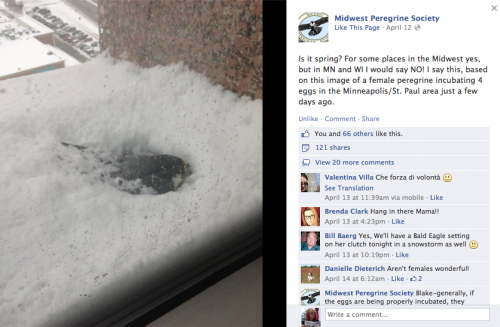
I think this photo from the Midwest Peregrine Society's Facebook page showing the female peregrine falcon at the Colonnade Building in Minneapolis incubating last week about says it all.  Birds are resilient. Birds are hardy. Birds do what they have to do to survive. They are built for it, their feathers and metabolism allow them to endure this sort of hardship. Many of us watch birds flying in the wild and envy their freedom and their lifestyle of basic daily survival. We usually do this on a sunny day. Birds don't deal with taxes, boring meetings or a dunderhead of a boss. But birds do have their own challenges to endure and like the Game of Thrones saying, "You either win or you die."

That is the price they pay for their unencumbered lifestyle in the wild.

The bird abides, I take comfort in that.

Birdchick Podcast #141: California Condor

A California Condor section of sorts. Raptor Center is asking for a little extra help this spring after an influx of injured owls that have been admitted.

Holy cow! Thousands of misdirected grebes saved by volunteers in Utah.

We gotta pay more attention to pesticides.

A very bitter blog from Birdist about state birds.

A study  by the National Park Service and the US Geological Survey found that feral cats are directly responsible for killing endangered petrels.

My Perfect Birding Day

Yesterday went kerflooey. Someone close to me was in the Boston Marathon and I knew she had finished... but didn't know where she was. Her phone would go directly to voicemail. Was it off? Was it tucked away in a locker? Was she caught in pandemonium? Was she injured or worse? Was she at the scene helping? Watching the news, trying desperately to ID her based on glimpses of people in running clothes. Then finally getting a text that she and her family were safe. In the grand scheme of things it wasn't a long time, but the adrenal fatigue that followed put me in a fog the rest of the day. In the midst of this I got a call to do a bird segment on WCCO on how the snow is affecting migratory birds... I love the reporter in that segment (DeRusha is a cool dude, you should follow him on Twitter) and I hope I did my best, but I worried I was not my usual upbeat self. flocks

I think this is a good post for the time. I find comfort in birds and I need that right now (like a lot of us when senseless violence happens). No matter how bad things get for me, I always find comfort in birds. They are one of maybe two things I can do that when I'm in the middle of doing it, I can block out everything else going on. And while I was in South Texas, I had for me what is a perfect birding moment.

incoming

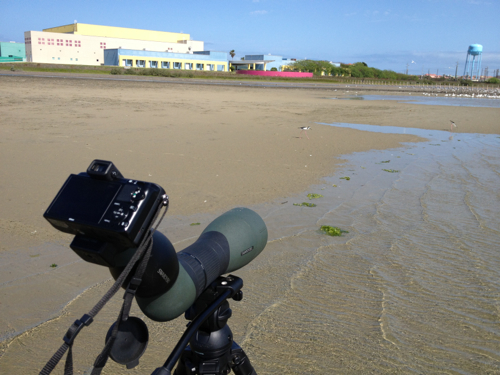
We headed to the stretch of beach next to the Convention Center and I was ready to get my digiscoping mojo on. I try to play it cool around birds, I try gradually work towards them and not flush them. The advantage to having a spotting scope is that you can be a good distance away from birds and still get great views. I've noticed this with some of my friends who are in to bird photography, I can be twice the distance away that they can be. But as I was keeping my distance, a teenager at the other end started walking towards the birds, she walked through them, most flushed but a few stayed, apparently used to lumbering humans in their midst. She left and all the birds landed. I decided to see how close I could without flushing them.

American Avocets

I used some snoozing American avocets. I would take a few steps closer and if any opened their eyes, I stopped walking. I tried not being threatening in my approach, I didn't stare directly at any bird while I walked, I tried not to keep my scope aimed at any one bird for too long. I moved slowly and fluidly, not dashing around like a cat stalking prey.

digiscoping

Eventually, I found a perfect spot.  My toes in the warm Gulf water, with a mixed flock of terns, gulls and shorebirds in front of me and the heat and light of the sun behind.  I was also excited to finally discover a use for the hook in the center on my tripod legs--perfect for keeping sandals out of the water! You can see the flock of avocets from the previous photo off to the right.

american avocet

As I stayed and had my fun, the birds continued to sleep and go about their own business.  Even a few of the avocets began to feed and paid me no mind.

birds behind me

Herons and shorebirds soon started working the shallows behind me. And that is a perfect birding moment! Great looking birds completely surrounding me while I have my toes in the water, friends nearby, a few empty media cards and a full battery in my camera. I got to spend time just watching the birds and digiscoping them. This was what I was hoping for from South Padre Island!

royal terns food pass

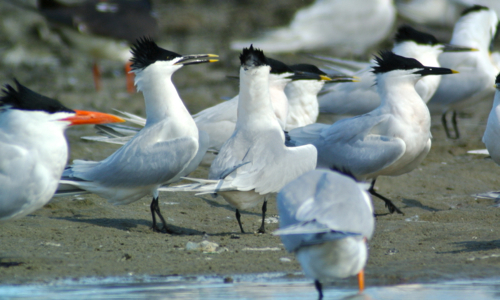
I got to eavesdrop on a royal tern date that I think went incredibly well. He was hanging out and presenting his fish and she approached and took it from him.

DSC_1551

"Wait...she took it???"

I was reading up on this on Birds of North America Online. Courtship rituals include: "food item may finally be offered to female, who retracts neck and carpal joints and sleeks plumage (while keeping crest raised), thus assuming more relaxed, submissive posture. If female accepts and swallows food, both then fly off or preen."

I saw her take the food, but I did not see her swallow, but they both flew off, hopefully to preen or more...

sandwich terns Sandwich terns were posturing like crazy as they established their pair bonds. Some of the photos I have of sandwich terns at South Padre Island are better than the photos I got for my Digiscoping Big Year, but I don't want to trade those out because I got them at a nude beach.

least tern

I almost missed these little guys because I was busy watching the big terns.  This is a least tern and they're about nine inches long. To give you perspective, an American robin is about ten inches long. These are tiny dudes compared to the at least 20 inch royal terns surrounding them.

hungover

As much fun as I was having with the terns, my main goal in approaching this flock was getting shots of black skimmers. I love these birds. This bird was roosting flat, which is something you see the young do in the nest (they just quite don't know what to do with that ginormous beak). Though with this photo, the bird looks like it just woke up from a hard bender and is a little hungover, "Ugh, why did I drink so much? Uh oh, and who is that sleeping next to me??"

Black Skimmer

Here's a better shot where you can see that magnificent beak.  I love these guys, with their longer lower mandible and striking black and white plumage. They're another one of those birds that I would see in my Peterson Guide as a kid and imagine what it must be like to see such a weird looking bird in person. If you've never had a chance to see a skimmer in action, here's some BBC footage (and bonus, it's narrated by the 10th Doctor):

http://www.youtube.com/watch?v=jSBushrzP0E

Isn't that cool?

approaching stilts When I'm digiscoping in one spot, it's amazing how close some shorebirds will get... sometime even too close to digiscope. Black-necked stilts were zipping back and forth while I focused on terns. You can see a couple above.

stilt

Working this group of birds, it's fascinating to see all the different shapes that bird species take in order to use the Gulf as a food resource. You saw how the skimmers use it above. Terns will crash into the water and black-necked stilts like the above bird have long spindly legs and a beak to match to look for tasty invertebrate morsels. And though all of these birds are elegant patterns of black, white and gray you still get crazy accents of color in the form of bright orange mandibles or bubble gum pink legs.

toes

I could have stayed planted in that spot for hours. The longer I was there, the more I felt tension and stress leave my body. My hope is that my buddy Clay and I might be able to do a digiscoping workshop here in South Padre Island during the Rio Grande Valley Bird Festival this fall.

sanderling

And we can digiscope the crap out of South Padre Island among the sanderlings.