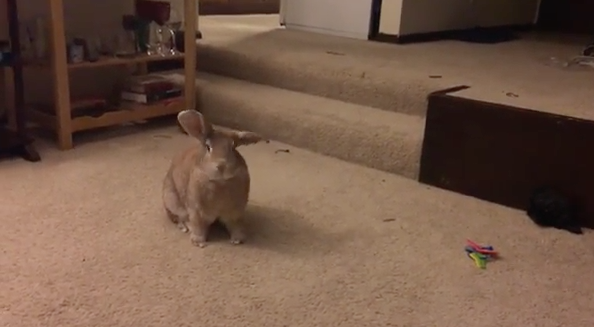
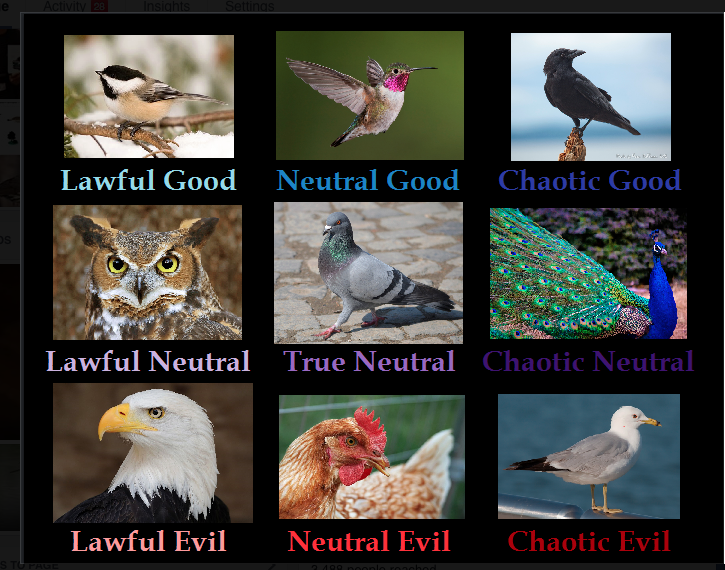
We have a pet rabbit named Dougal. When he's really happy he hops in all different directions. We call this "popcorning" but the rabbit industry insists on calling it "bunny binkies." I just can't call it that. Regardless, if your rabbit does this, they are happy:
Hermit thrush was foraging around my beehives.
Hermit Thrush Foraging Technique
Patch birding has really made birding fun for me in a way I didn't expect. I've always enjoyed keeping an eBird tally of what I see around our beehives, but I'm really digging keeping track of the park near our new apartment as well as keeping track of what shows up around our apartment itself...but I'm still not a lister.
I got a hermit thrush around our beehives and while I was watching it, I noticed it was kind of shaking its feet. I took some video with my iPhone through my scope and made a mental note to look "hermit thrush foot quivering" up later on the Internet and see if this is a thing with hermit thrushes. Sure enough with my first Google search, Cornell did not fail me. According to Birds of North America Online:
"Foot Quivering: Interpreted by Dilger and also Brown et al. as a ritualized ambivalent intention movement of simultaneous, conflicting drives to attack and to retreat; but also may serve as foraging technique used to locate insects under leaf litter. Brackbill and Kilham cite observations of foot-quivering while foraging, with no indication of the birds being disturbed and Skutch reported a similar observation of Russet Nightingale-Thrush in the non-breeding season and outside of its breeding range."
I love the first part describing it as something the hermit thrush does because it's not sure if it should attack or retreat. "I'm just gonna kick the ground, man."
I don't think this particular bird was disturbed by my presence and that just coming in from migration the bird was most likely looking for some tasty invertebrates in leaf litter. Either way, here's the footage and maybe you might see thrushes doing this in your neighborhood.
Birdchick Podcast #187
Audubon asks..."Why do birds masturbate?" It doesn't really answer the question.
National Geographic not only publishes field guides but also books about
Nectar and pollen eating rainbow lorikeets now eat meat...how long til they eat us?
Humiliated cats wear scrunchies to prevent them from killing native birds.
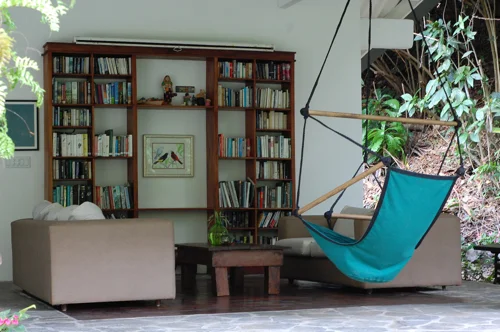
The outdoor library at Canopy Lodge in Panama. Doesn't that look relaxing?
My Kind Of Birding
I have been party to a lot of discussion online and in meetings about what women birders doing. Part of this is because women are 50% (at least) of the birding population in the US and hard to find in Europe. My thinking is that generally women enjoy birds differently than men but some of my female birding friends are hardcore listers and bristle at the notion that women aren't as competitive as men, most of the women I know are very casual as far as their interest in listing goes. There seems to be a mixture of enjoyment from photography, art, socialization and balancing life and birding.
I think over the years, I have discovered that there are things I enjoy about birding and things I do not. Competitive listing (apart form an informal apartment list I keep in my fridge) is not for me. I think it's because I see the impossibility of trying to see every single species on Earth, not only the logisitics and money involved with travel but also how species are discovered or lumped and split I don't want to take a once in a lifetime trip to New Zealand, get every bird there and then five years later learn some species was split into five based on DNA and chip notes and there are three birds I still need. I don't want that to ruin the fact that I went to freakin' New Zealand.
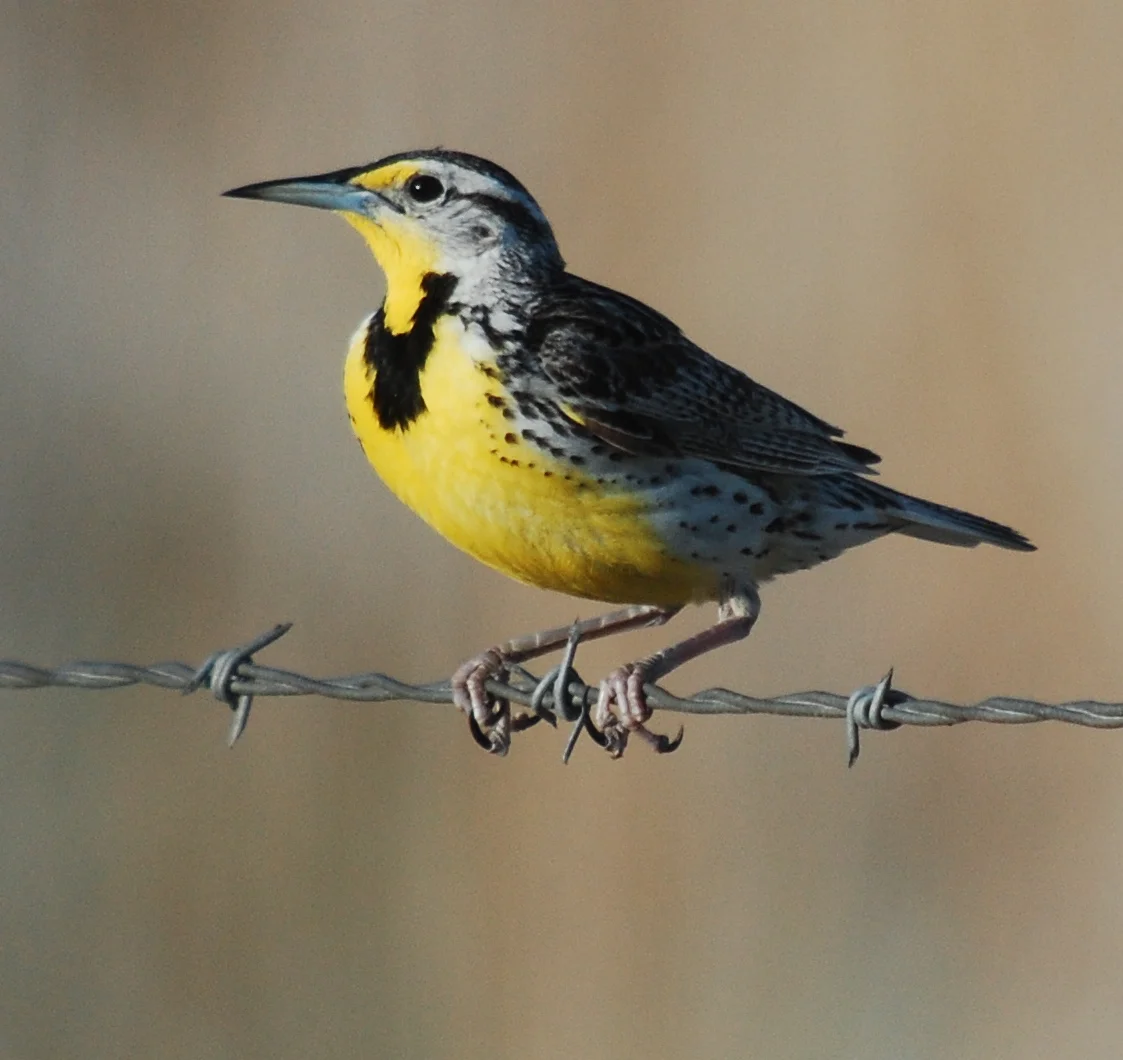
Learning to separate flight calls of western and eastern meadowlarks was a cool revelation. Westerns make a "chup" call and easterns make "bink" type call.
One form of birding (and listing, I suppose) that I've discovered I love is patch birding. I think it's from doing so many point counts for work. Monitoring one place over several weeks at various times of the day and discovering shifts in seasonal movement or how resident birds act throughout the day is very satisfying to me. It doesn't matter that I don't get a new species, but if I get a new to me behavior or learn distinguish new calls, it's incredibly very rewarding--like the day I realized the difference in sound between a western meadowlark flight call vs an eastern meadowlark flight call.
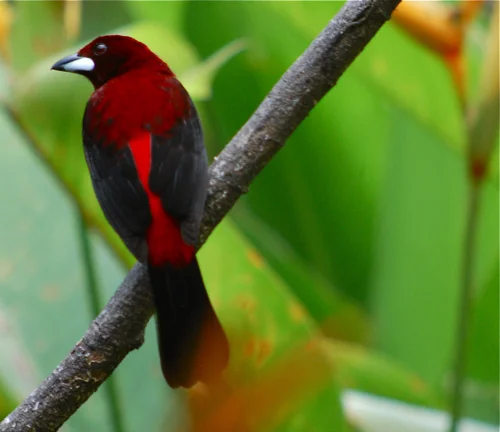
Crimson-backed tanager taken from the porch of Canopy Lodge in Panama--that is a bird worth traveling for.
Even if I'm not doing surveys for work, I love every opportunity I have for birding a new area either in the US or around the world. I don't necessarily enjoy it when a tourism board wants me up early for ten days in a row, but I also realize that when life hands you opportunity, grasp it with both hands and sleep later.
I enjoy scanning a field guide and seeing what are iconic birds of an area and what bird looks really cool to me and target for that--like a shoebill or toucan or the above crimson-backed tanager--is that not a dynamite bird worth a plane ticket or what? Best part was that this was one of the first birds that I got when I visited Panama a few years ago. I had a late flight and slept in a bit the next morning to find a little coffee, bacon and papaya waiting for me on the deck. I sat on the comfy outdoor chairs and soaked in the rainbow of colors at the feeders. I ticked off several iconic birds: honey greepers, tanagers, saltators all over some coffee and bacon. That is my kind of birding.
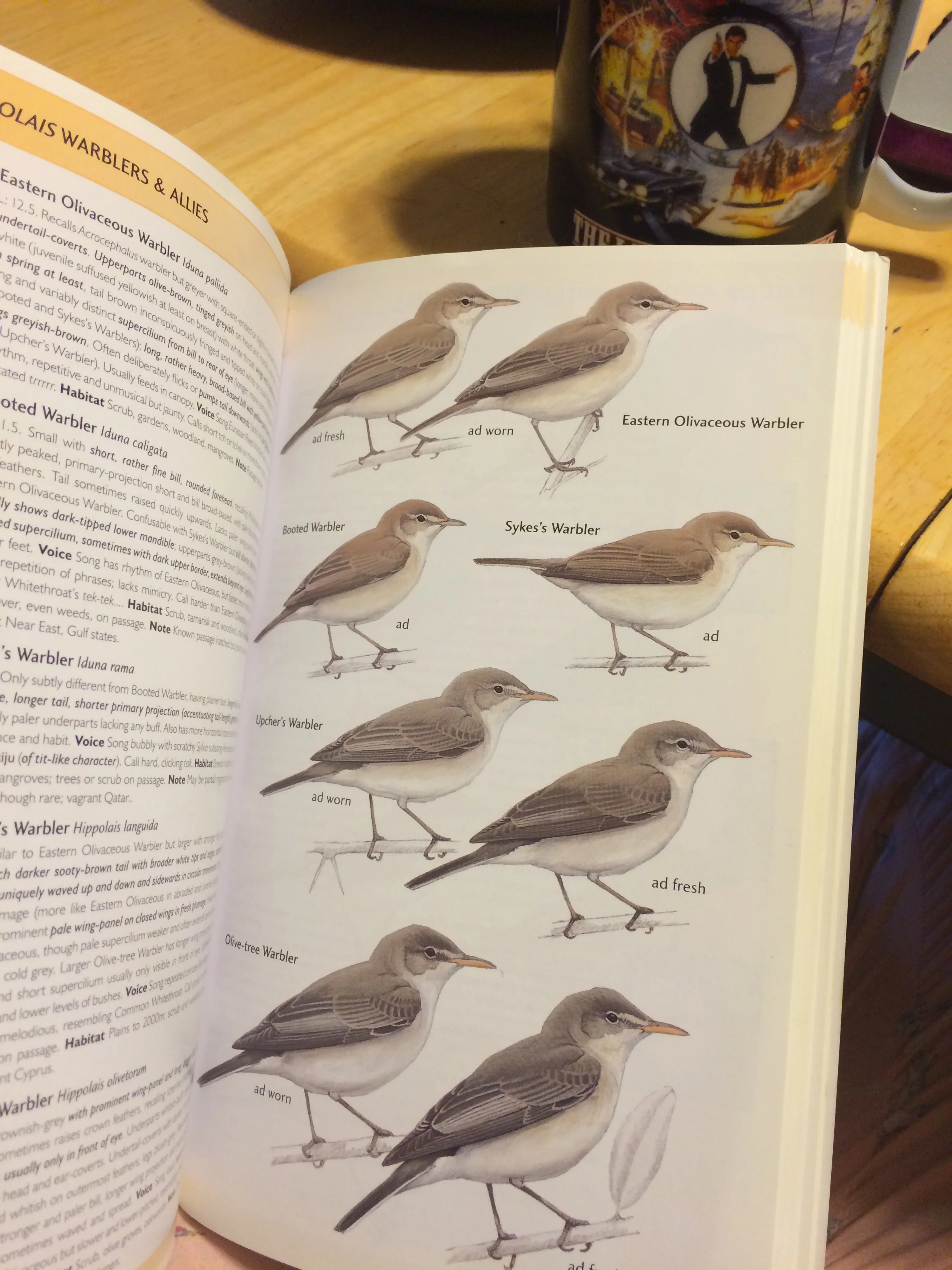
I swear, there are four different species of warbler on this page.
What I do not enjoy is hunting down every single possible bird in an area for the sake of having a larger list, especially if all the birds look the same (like the above warblers). Not that I'm dissing brown and gray birds--Non Birding Bill can attest to how much I love them. But I don't want to spend over an hour playing calls, pishing or whatever to get some skulky species that looks like five other birds while there are scenic vistas to enjoy and less skulky and more charismatic birds out there. Also, if a bird is being that skulky, we're stressing it at that point, let's leave it alone.
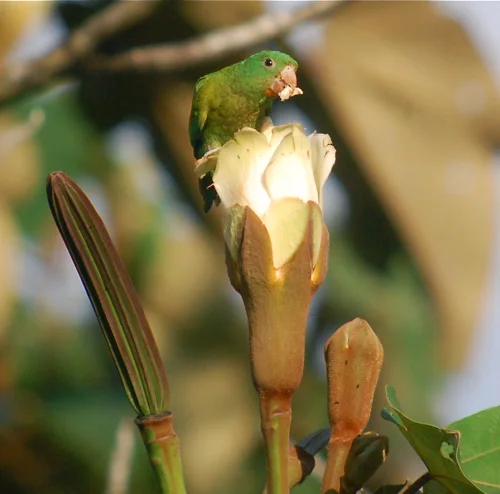
Orange-chinned parakeet chewing up a flower in Panama.
Another thing I enjoy is playing around with digiscoping. A bird in lovely evening light like an organge-chinned parakeet nomming down on a flower is just too cool. A fun souvenir from travel.
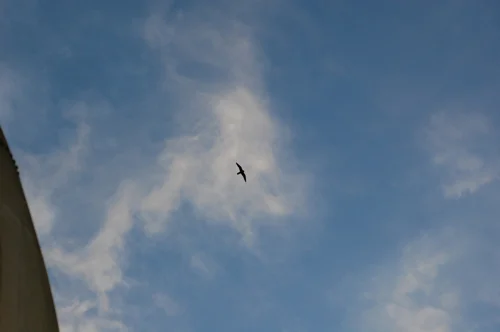
Bat falcon soaring over Canopy Tower in Panama as the sun sets.
I also enjoy quiet moments like standing barefoot on the top of Canopy Tower listening to tinamous and collared forest-falcons call as a bat falcon hawks for insects overhead while I sip a gin and tonic (I know, I know I normally drink whiskey but in warm weather I do enjoy a little bit of gin).
And as much as I enjoy some of the trips I take to see a showcase of their birding offerings, I don't relish 4:30 - 5am start times for ten days. A few is ok, but man oh man, do I enjoy a day where I can sleep in til 7am and still see some cool stuff.
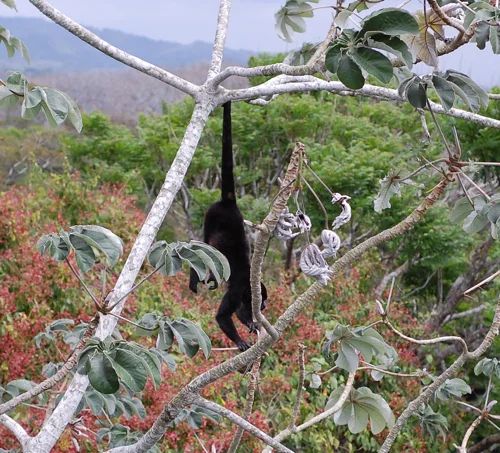
Howler monkey in the trees just outside of Canopy Tower.
Does this sound appealing and like your kind of birding? Consider coming with me to Panama this fall. We'll catch the fall raptor migration, we'll drink, we'll get up at reasonable hours, we'll laugh, take some great pictures of cool birds with our smartphone so we can text them to friends who are at their desks and even work in time for a few naps. You will come back from this birding adventure vacation without feeling like you need another vacation.
Canopy Lodge and Tower are two of the best birding destinations I have ever been to. As soon as you land, the guides take care of transportation and our meals as well as our birding needs. We will have a blast and a trip of a lifetime.
A new digiscoping adapter I've been playing with since seeing it in Florida called the Digidapter.
Digidapter For Digiscoping
I've had the opportunity to play around with some newer digiscoping adapters both for smartphones and for SLRs. When not using my iPhone 5s to take pictures and video, I've been using my Nikon V1, which is a very good camera and generally I use with the Swarovski TLS APO adapter.
The Digidapter is designed so you can set your camera on it and then the hood will fit over the eyepiece. Currently, this adapter will work on Swarovski, Zeiss, Leica, Kowa and Celestron. The owner is able to custom make adapters, but those will probably be a different price than what's on the website.
What I thought was cool about this Digidapter is that it fits a number of cameras--perhaps even a few point and shoots. But the really cool part is that the biggest beef I have with "universal" adpaters is that they tend to be futzy--you have to make constant adjustments. You screw the bottom of your camera to the Digidapter and then make adjustments to how it lines up with your scope eyepiece. The cool part is that the two red nuts on the adapter are adjustable and help you keep track of where to place your camera after you take it off the adapter. Once you know where your camera fits on the adapter, you slide those to the front of the camera and tighten and viola--you always know where the camera needs to go on the adapter.
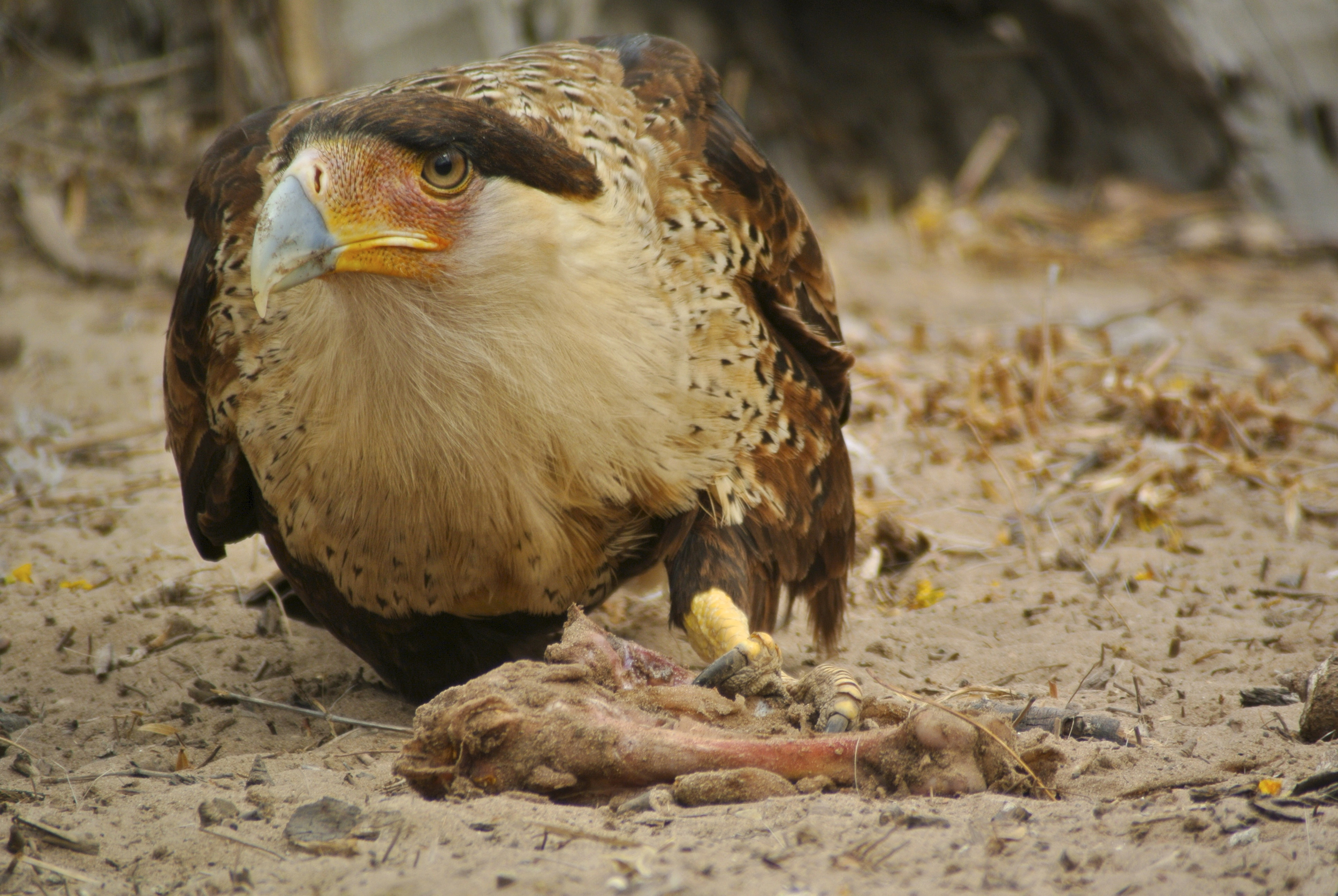
One of my favorite photos I've gotten of a bird--a crested caracara taken with the Nikon V1, TLS APO and Swarovski ATX 85 mm scope.
If there's one downside to the Nikon V1 is that sometimes there's too much zoom with it on the scope. Which if birds are far away is great. But if you want to get birds at a feeder outside the window, you can sometimes be too close to get a full frame body shot. So I thought I would try using the V1 with the Digadapter.
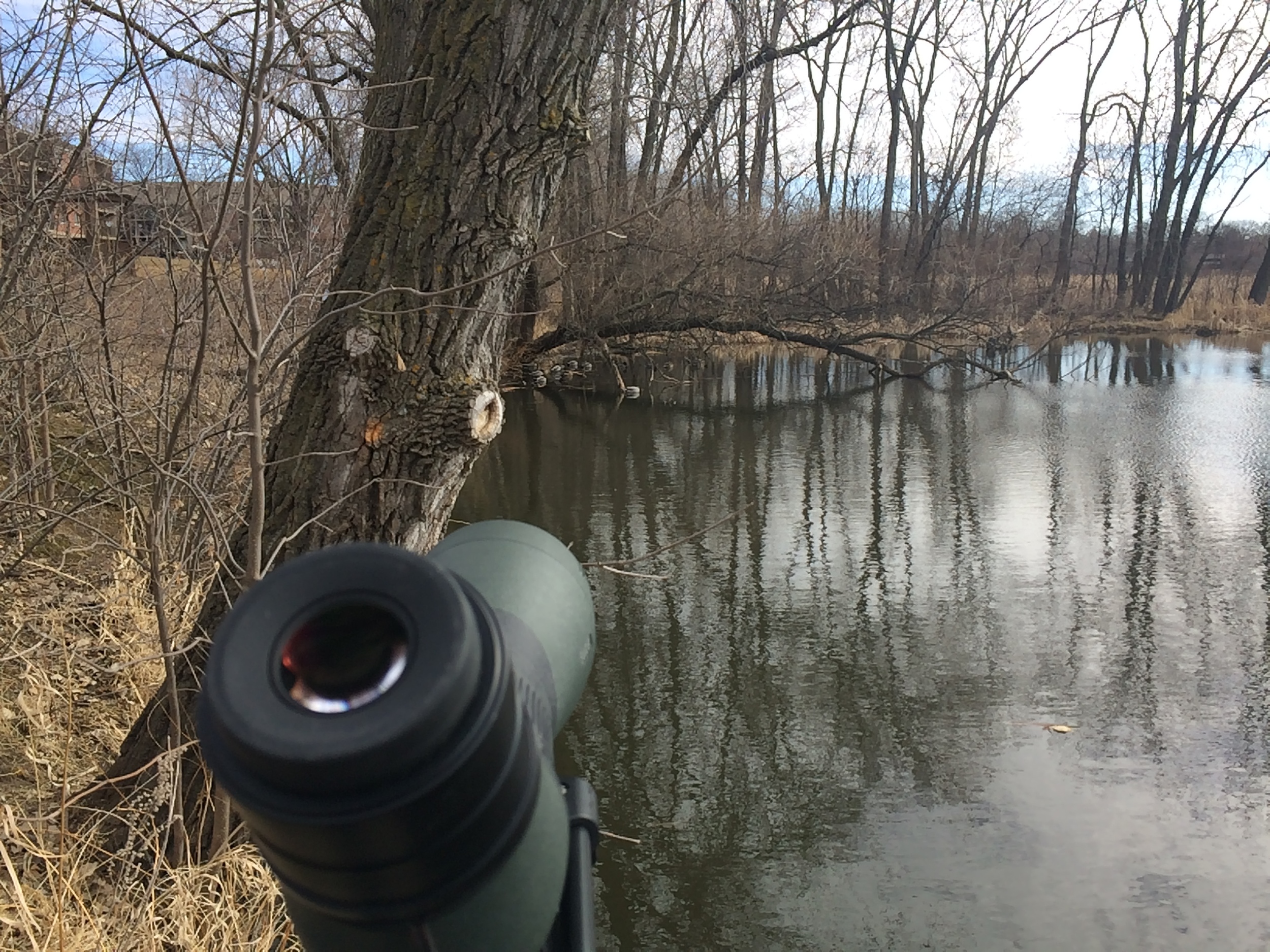
I took some digiscoping adapters to my local patch for some testing (much to the chagrin of the local Duck Lady who was irritated that I declined her offer for duck food and pissed when I said, these ducks have plenty of natural food). All the waterfowl posted in this entry were under the downed snag.
I've been trying to test out these adapters at feeders to give you an idea of field of view in the camera but we keep getting cold snaps and some of my go to nature centers for photos have now covered their windows with stickers to prevent widow strikes which makes bird photography next to impossible. So I found some obliging sleeping ducks in my neighborhood.
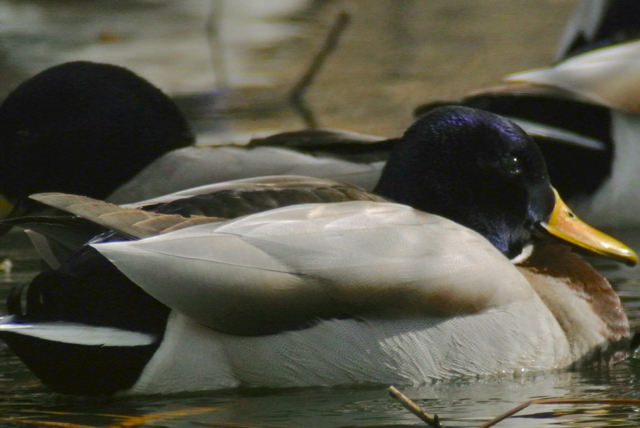
Mallard digiscoped with Swarovski ATX 95mm spotting scope, TLS APO adapter and Nikon V1.
Above is an upcropped image of a mallard taken with Swarovski ATX 95mm spotting scope, TLS APO adapter and Nikon V1. You can see that it's a challenge to get the whole bird in. I normally solve this by keeping my distance with birds and that strategy generally works out. But sometimes, like in the case of being in a blind that's not an option--isn't it always something with photography?
This is my Nikon V1 with the TLS APO adapter. I nice light-weight system.
Above is my current system. I like it because it's relatively easy to carry in the field. To use it, I had to remove the zoom lens that came with the camera body, purchase and an adapter that would allow the body to work--funny thing, if you use a non-Nikon lens on this camera body, it won't shoot. You get an error message that says there's no lens...even though there is one. You have to spend about $120 bucks on a Nikon adapter with electronics that tells the camera body there is indeed a lens attached. You also have purchase a smaller cheater adapter that lets you actually attach another lens to it. Well played, Nikon, well played. If I'm not going to buy lenses from you, you're still gonna get some of my money.
Anyhoo, the TLS APO adapter from Swarovski has a lens inside it that is optimized to work with your scopes eyepiece. I also like that the sleeve of the adapter that fits over the scopes eyepiece also acts as a protector for the lens on the inside. I've generally liked this system and once used to working with it, you can get some really nice detailed shots (like the above caracara).
Mallard digiscoped with Swarvoski ATX 95mm spotting scope, Digadapter and Nikon V1.
Above is an uncropped photo of a different mallard that was slightly to the left of the first mallard (it got chased off by a rival as I was switching lenses. This is with my Nikon's original zoom lens, Digidapter and Swarovski ATX 95mm spotting scope. A wider field of view than with the TLS APO adapter. But I love it's lightweight and how easily it slides on and off of my scope's eyepiece.
This is what the Digidapter looks like attached to my spotting scope.
I think I need a different Nikon lens for this system, it's a little too close to the glass on my eyepiece than I'm completely comfortable with. There is an extender I can purchase too which takes it a little further from the eyepiece. It's a little chunkier than I'm used to, but for an adapter that works with lots of scopes and cameras, it's very good and slides on and off of the scope eyepiece easily. It's solid and made of aluminum so is fairly light weigh.
Birdchick Podcast #186 World Girl Birders
Hey gang, there is still space left on the relaxed Panama birding tour. Come with me, we will see cool bird and sloth and end the day with booze and bat falcons and tinamous.
There is now a World Girl Birders page you can join on Facebook.
Interesting story advocating feeding ducks fruits and vegetables instead of bread.
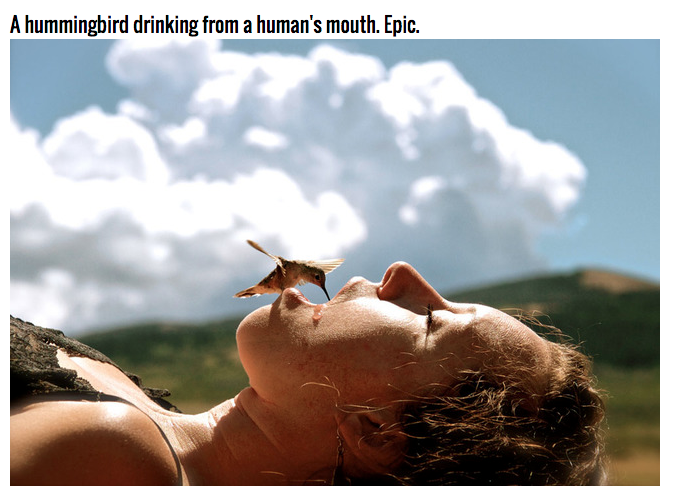
This is the worst hummingbird feeder every. Really, don't do this.
One of the best thing you can do is plant at least one native plant in your yard. Are you up for that this summer? Here are some tips.
Crows bringing gifts to a kid sparks others to share their crow sharing stories.
Birdchick Podcast #185 #TheDress #WeaselPecker and Panama
Hey! I'm going to Panama, want to come with me?
How does the whole "The Dress" debate apply to birding...think about all the times you saw someone (or maybe you yourself) grossly misidentify a bird...
Here are Non Birding Bill's suggestions of eye mind benders--it's the color dogs and chess set that freak me out.
Another controversy...did a weasel actually hitch a ride on a green woodpecker? I'm Team #WeaselPecker
This lucky kid has a bartering system with crows...are we watching the origin story of a future evil genius?
Here's the video from Dr. J. Drew Lanham...funny but also very sad. Want to be part of the solution? Check out Outdoor Afro.
Birdchick Podcast #184 Sibley Guide Replacements, Famous Birders and Art Ducko
Buy Christana Staal's art. AKA Drawing 10,000 Birds.
Hey remember the whole brew ha ha over the first printing of the second edition Sibley? Well, the publisher is now offering people who purchased that copy a chance to replace it with a color corrected one according to The Birder's Library.
Are more celebrities getting into birding? Actor John Stamos and singer John Mayer drop some interesting info on the social medias.
I was honored to be included the list of people Audubon asked how we got into birding. And I giggled about some of the edits they made to my article. On another Audubon related note, the magazine had an article about an avian ecologist who tested about an anti-bird killing collar on their outdoor cat and it kinda works. Not sure what shocks me more: an avian ecologist admitting that they let their cat run loose and know it kills birds or that the collar actually kinda works.
What it means when you see certain birds.
Dungoens and Dragons birds.
World Digiscopers Meeting and great life advice from Justin Carr
I get copied on emails to my buddy Clay at Swarovski from time to time. Over the year I kept seeing emails from some guy named Robert Wilson about organizing a digiscopers meeting a chance for pole to come learn about digiscoping but a also a chance for those of us who have been digiscoping for years and sharing our work online to get a chance to meet.
And somehow...it happened.
Viera Wetlands aka Rich Grissom Memorial Wetlands in Melbourne, FL. A great place for photographing birds and alligators and perfect for a digiscoping get together.
As I put this blog together I realize I was a complete dork and didn't get pictures of the people who attended, I simply practiced the technique and learned quite a bit from the others. But it was a totally international affair and people came from Europe and Neil Fifer even flew in from his home in Hong Kong.
What I enjoyed most about it was the chance to listen and watch other people's techniques in the field and try it out with my equipment. And just hang out with guys like Danny Digiscoping--he and I are two peas in a pod. We like to play and get people excited about digiscoping. We aren't trying to be the best, but we want to inspire others to try it and let them shine as the best. Do check out his site, he offers lots of great tips.
American Bittern digiscoped with Nikon V1, TLS APO adapter and Swarovski ATX 85mm spotting scope.
One really cool aspect was a day long competition. All of use were partnered up with someone and our team could only submit a total of 10 entries and we were given 8 categories. To prevent someone like me from submitting nothing but birds our categories were:
Birds
Non Birds
In The Air
Man-made/Weather or Landscapes
Macro
Video no editing
Video - a story told in less than two minutes
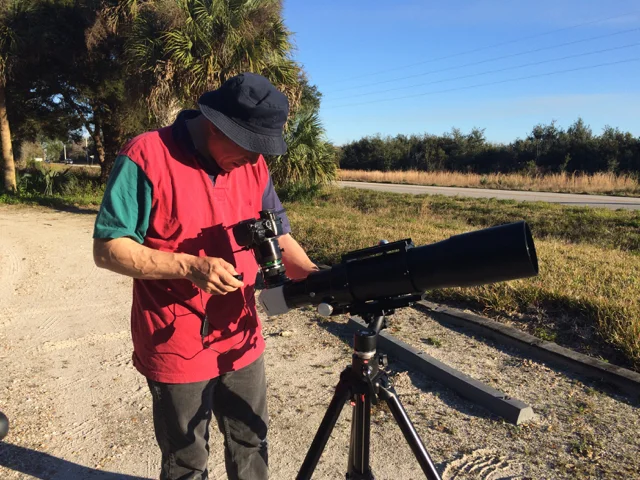
Robert Hunt, my digiscoping partner. That's right, he's using a telescope for digiscoping.
My partner was a complete stranger to me and rather than using a spotting scope like I do...he goes out with a telescope. That's him with his telescope above. It's not my style of digiscoping, but he does astronomy programs in Florida, that's his equipment and he wants to see what he can do with it, He can do some amazing things, but his set up takes longer. The bittern photo above was one of bout 250 that I took while he was still setting up his gear. However, once Rob is set up and going, he can do fun stuff like this.
Sun spots digiscoped by Robert Hunt.
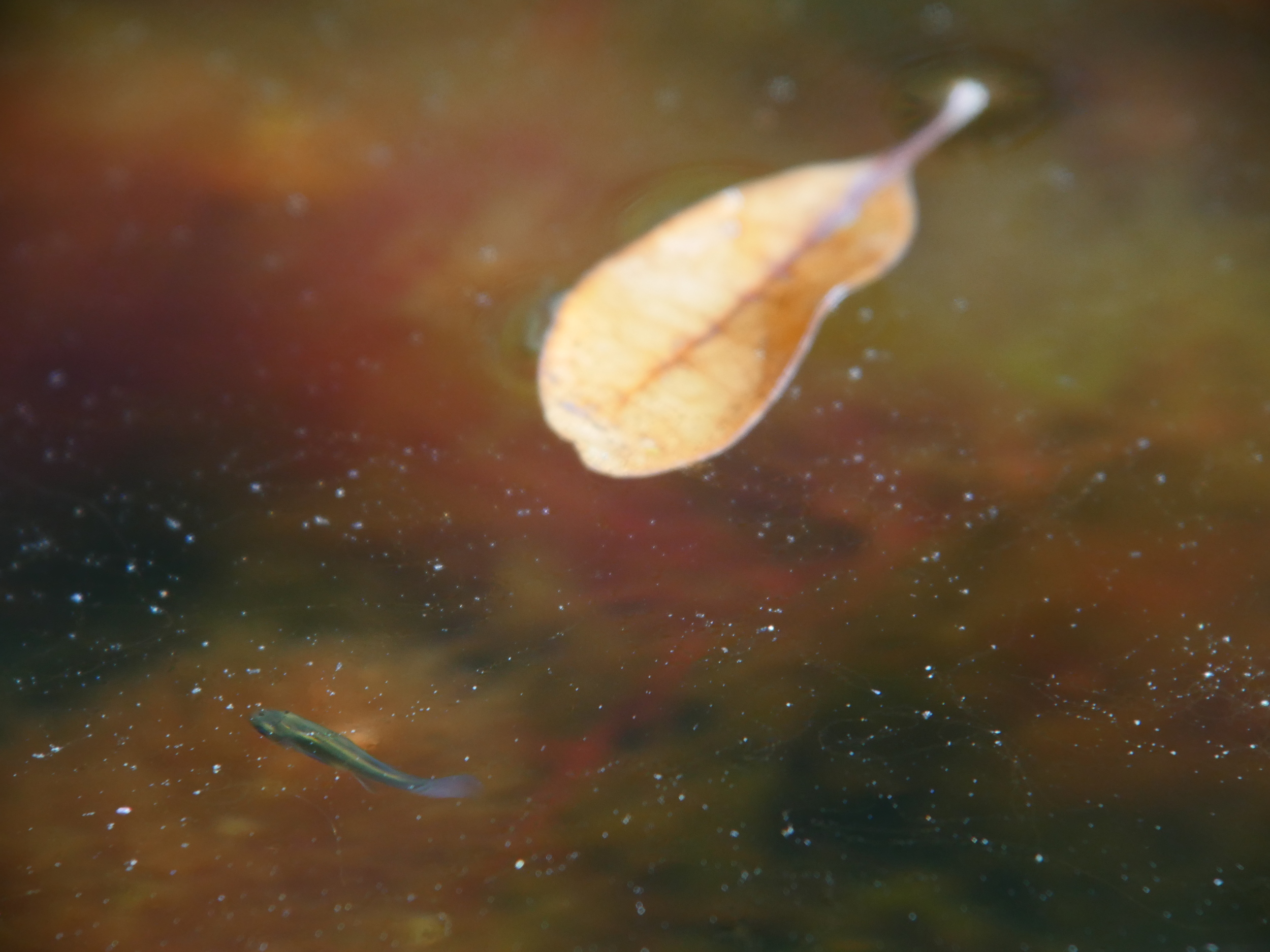
The dude digiscoped the sun...and sun spots. But that wasn't even the coolest thing he did. He digiscoped fish. You heard me correctly, he digiscoped frickin' fish:
Fish (a very tiny one, like a guppie) digiscoped by Robert Hunt.
One advantage that Rob has was the ability to switch out lenses for different types of subjects. Though that may not be my style or interest for birds, for versatility...and building upper body strength, it worked for him. I tried it with my iPhone.
My attempt to digiscope a guppie with an iPhone 5s, Swarovski iPhone adapter and Swarovski ATX 85mm spotting scope.
Not quite the artistic shot that Robert got, but good enough to make me consider attempting it again when I'm around fish...or when I'm bored. I think that's what of the main things I learned from digiscoper Justin Carr. He's a Brit who has an uncanny knack of getting flight shots of birds. When first speaking to him, he was referring to others as the best of the best, but I think he gave me some of the best photography advice ever:
"I was bored and there weren't really any birds so I tried to digiscope a common swift."
Here's a link to his shot...yeah, so he was bored and just, you know, digiscoped a swift. This is one of the most difficult birds to shoot and he got that.
So from now on when I'm bored, I'm going to try the hardest thing that I can in that moment. That's not exactly bad life advice.
Speaking of astronomy, Rob got me interested in that so I've been playing around with digiscoping the moon in the time lapse feature on my iPhone. Here's a bit that I got the other night while doing bird surveys in Texas. Digiscoped with the Swarovski ATX 65mm and iPhone 5s:
Not bad. Thanks for the inspiration, Rob.
A double-crested cormorant with a chill photobombing great blue heron behind it. I was eavesdropping and listening to Tara Tanaka give photography tips while I took this. She has inspired me to find more art in my digiscoping.
One of the things I was really looking forward to was meeting Tara Tanaka. She's an award winning photographer and does it with digiscoping. Her set up is a bit more complicated than mine, but man does she get some incredible shots. Check out this rabbit nose bump. I took the time while working on the above photo just listen to her talk as other digiscopers asked her questions. She's slow and methodical in her approach--like a little blue heron. I'm more of a trip-colored heron, excited to see if new possibilities and technology can work, running around and frantically squawking.
Most of the digiscopers there were hot for the Panasonic GH4 with a Digidapter attaching it to their scope. I've been playing with this new adapter and though it only works with Zeiss, Kowa, Leica, Swarovski and Celestron scopes its a good sturdy adapter that works with multiple cameras with a pancake lens. I highly recommend it and when I get some time, I'll go into more depth. One thing that I really like is that it has an easy set mechanisim so you always know where to place your camera on the adapter so it will fit with your scope. Check out the webpage and if you get one, tell the Birdchick sent you--see if it gets you anything special along with your purchase.
Tri-colored heron flying at sunset. One of the things that I love with the iPhone is that it thinks for you and helps you digiscope some beautiful shots at dawn and dusk without having to make any adjustment.
The GH4 is a heck of a camera and there was even discussion that the video quality is so good it's super easy to just take fantastic stills from it and if you do that, is that too easy, is it still photography? As I was drooling over the camera, Clay told me that he got one and we can play around with it on our next round of the web series. He didn't think it was the camera for me. And that may be true--I don't like to deal with bells and whistles. Whereas Tara is the sort of person who likes to control every bit of the situation to get the shot she is looking for--controlling ISOs, exposure, metering, I'm the sort who likes the iPhone because it does so much of the thinking for me...good grief, I sound like Ilsa when she tells Rick in Casablanca, "You have to do thinking for all of us." Maybe I should rename my iPhone Bogart.
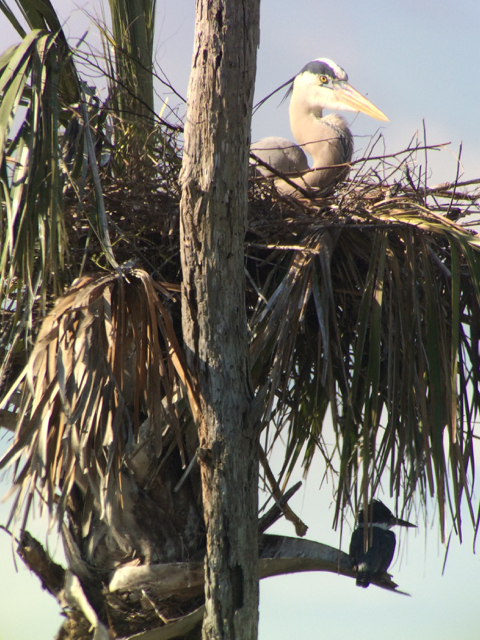
Not the greatest photo ever but most of the time I'm more interested in capturing something interesting rather than making it the perfect photo--like this belted kingfisher lurking under a great blue heron nest.
Tara assures me with some time, practice and patience I could do all this. I'm not so sure. I am certainly set in my ways when it comes to digiscoping, but at the same time maybe I need to challenge myself more to keep myself interested?
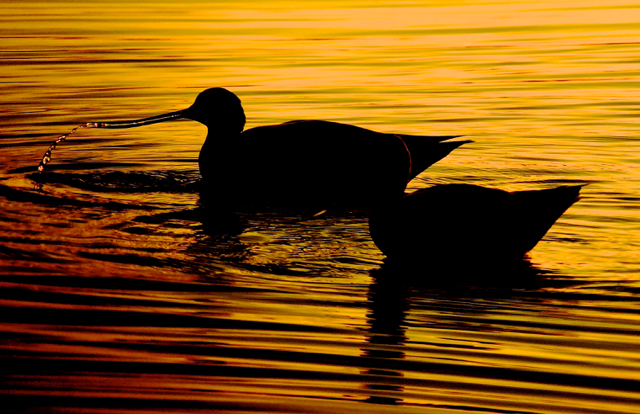
Avocets digiscoped at sunset.
We shall see, Tara.
So of course I had to make a video and iMovie templates make throwing together a quick trailer remarkably easy. Here's the 90 second trailer I came up with for the Digiscoper's meeting based on video that I took in one day for the contest:
If you'd like to see the winning images from the Digiscoping contest, here's the album. Do check it out. One of my favorite images was one that Justin Carr got of a flying butterfly...are you kidding me, Justin? That's nuts.
Birdchick Podcast #183 Birder Humor
I just can't stop giggling at this from a Tumblr.
Remarkable semi-palmated sandpiper journey.
Western seabirds taking a beating this winter from goop to possible starvation.
How women can pee standing up starting on page 18 of this PDF.