Is Putin in a flock of birds?
Have you heard about the Every Kid In A Park initiative? Starting September 1, all fourth graders are entitled to a free national park pass.
Remember the girl who got "gifts" from crows, her neighbors want to sue.
Birdchick Blog
Is Putin in a flock of birds?
Have you heard about the Every Kid In A Park initiative? Starting September 1, all fourth graders are entitled to a free national park pass.
Remember the girl who got "gifts" from crows, her neighbors want to sue.
What? We podcasted last week? So we did. On our sunroof with chimney swifts and jets flying over.
I apologize for the sound quality. But because there really isn't much in the way of birding podcasts out there, here you go.
Kites use underwear for nest.
Eagle flies off with osprey chick on nest cam.
I think we talked about the threat to the Migratory Bird Treaty Act but don't worry, that amendment has already been shut down. But I'm pretty sure I talked about his article.
A Clark's nutcracker perched on the rim of a tiny piece of the Grand Canyon in dawn's early light.
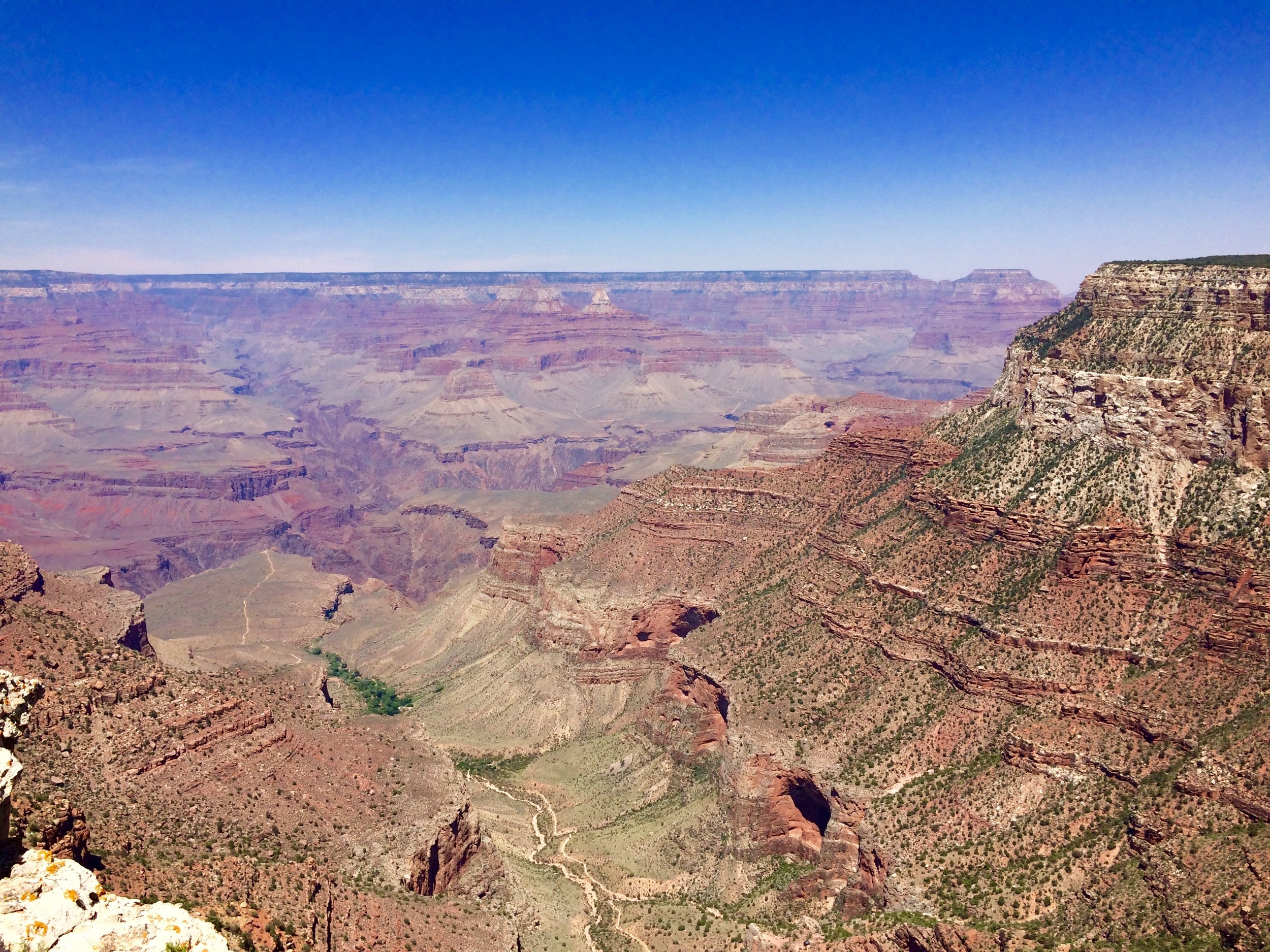
I recently returned from some training at the Grand Canyon and two things made an impression:
1. Nothing can really prepare you for the Grand Canyon. Sure, maybe you saw the Brady Bunch episodes filmed in the canyon or perhaps a trip in a commercial jet has taken you over it, but standing there on the rim and staring down into the gaping maw of ancient rock that goes a mile deep and you suddenly realize, "Oh hey, that's fault line"...it kind of bowls you over.
The South Rim of the Grand Canyon. I love how insignificant I feel looking into this crazy deep hole in the ground.
I think my friend BirdSpot put it best, "This place cannot be oversold."
2. How do more people not die at the Grand Canyon every year? They get about 5 million visitors and average only 12 deaths a year. That's pretty incredible given some of the dangerous terrain and quite frankly, the average person's ability to do something stupid like texting and walking, going off trail because that one ledge would be a really cool selfie on Instagram or just tripping over your laces.
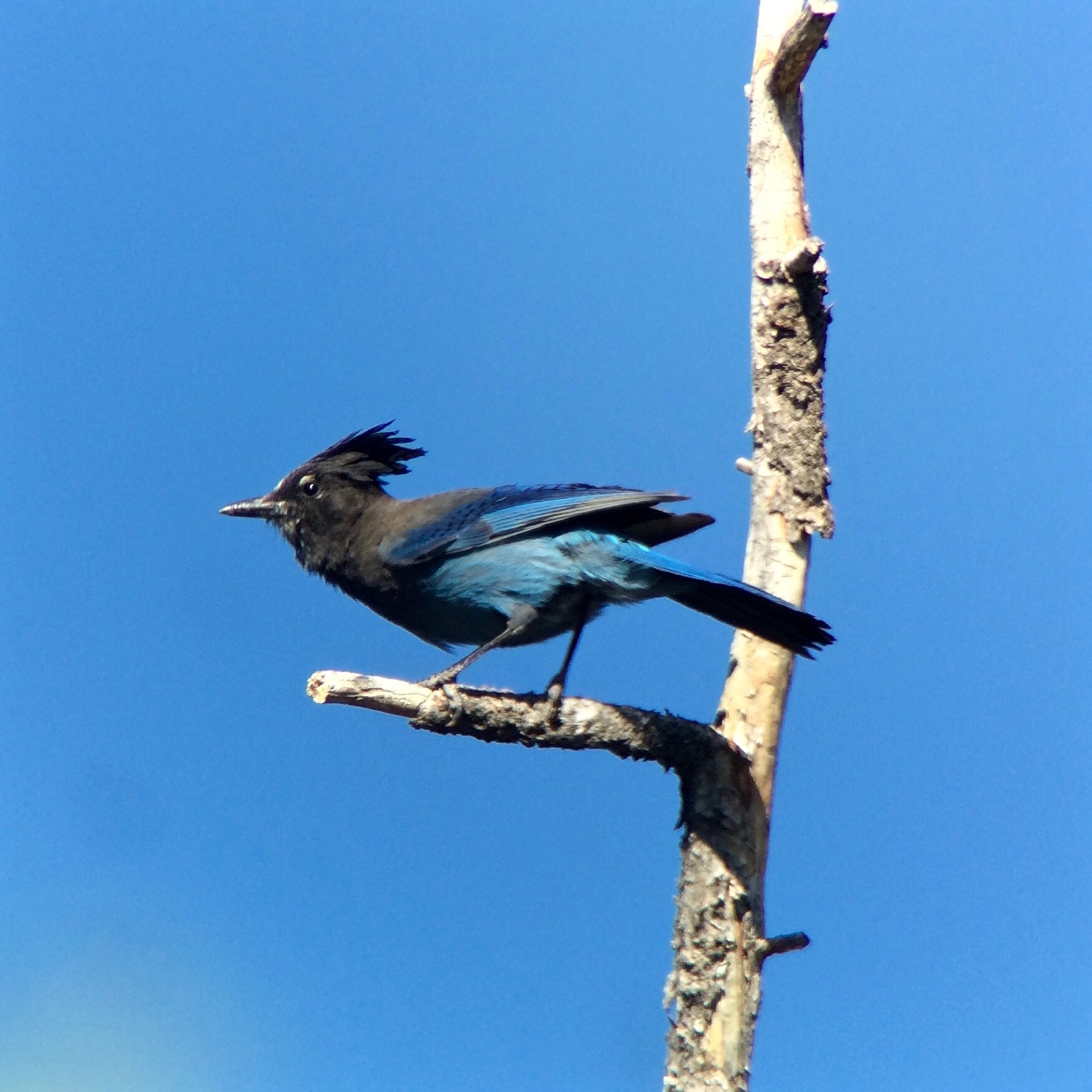
Stellar's Jays were all over the South Rim.
I was primarily there to get some training in and though it was several days long we had time in the morning and evening to explore and even two whole days off in the middle. Our training facility offered bikes for us to use to explore the area. I was up early every morning because I was used to a different time zone and I thought it would be fun to bike around the rim before my classes. I got a hard less in that high elevation turned what would be perfectly reasonable hills in Minnesota into thigh and lung torture at 6000 feet in Arizona.
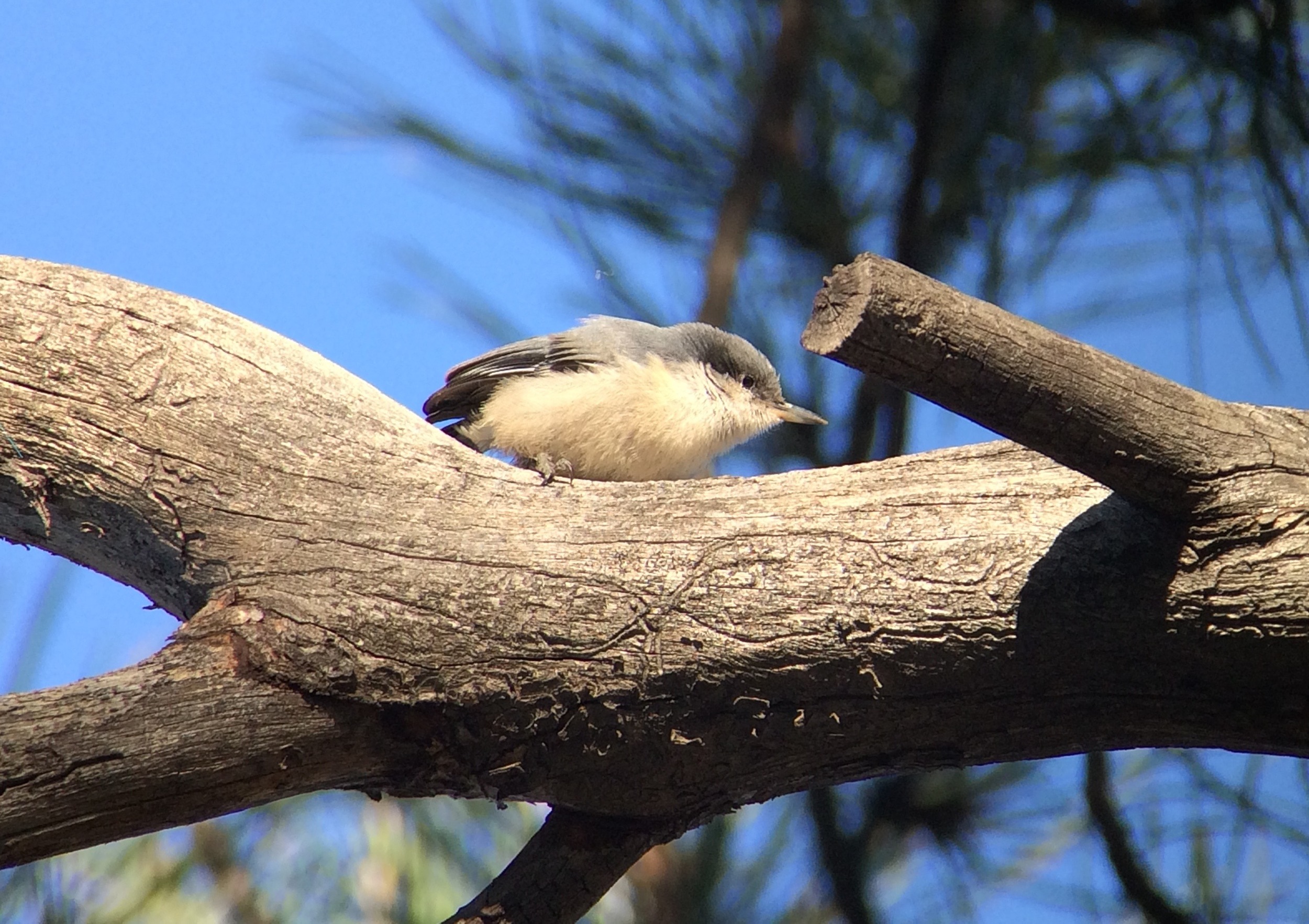
One of the dozens of pygmy nuthatches that surrounded my room at the Grand Canyon.
I opted instead to go birding around my dorm in the morning and opened it up to others who might interested. There were some great birds to be had including oodles of pygmy nuthatches, ash-throated flycatchers (one even nested on the training center's dorms), mountain chickadees, black-throated gray warblers, white-throated swift--basically a host of cool southwestern birds that a northern girl like myself doesn't get to indulge in very often.
There were also large herds of elk and mule deer. I don't trust any animal with a hoof and it was incredibly unnerving to walking out of your room at night and find yourself within ten feet of the butt end of an elk. I did my best to give them a wide berth but they really liked coming close to people.
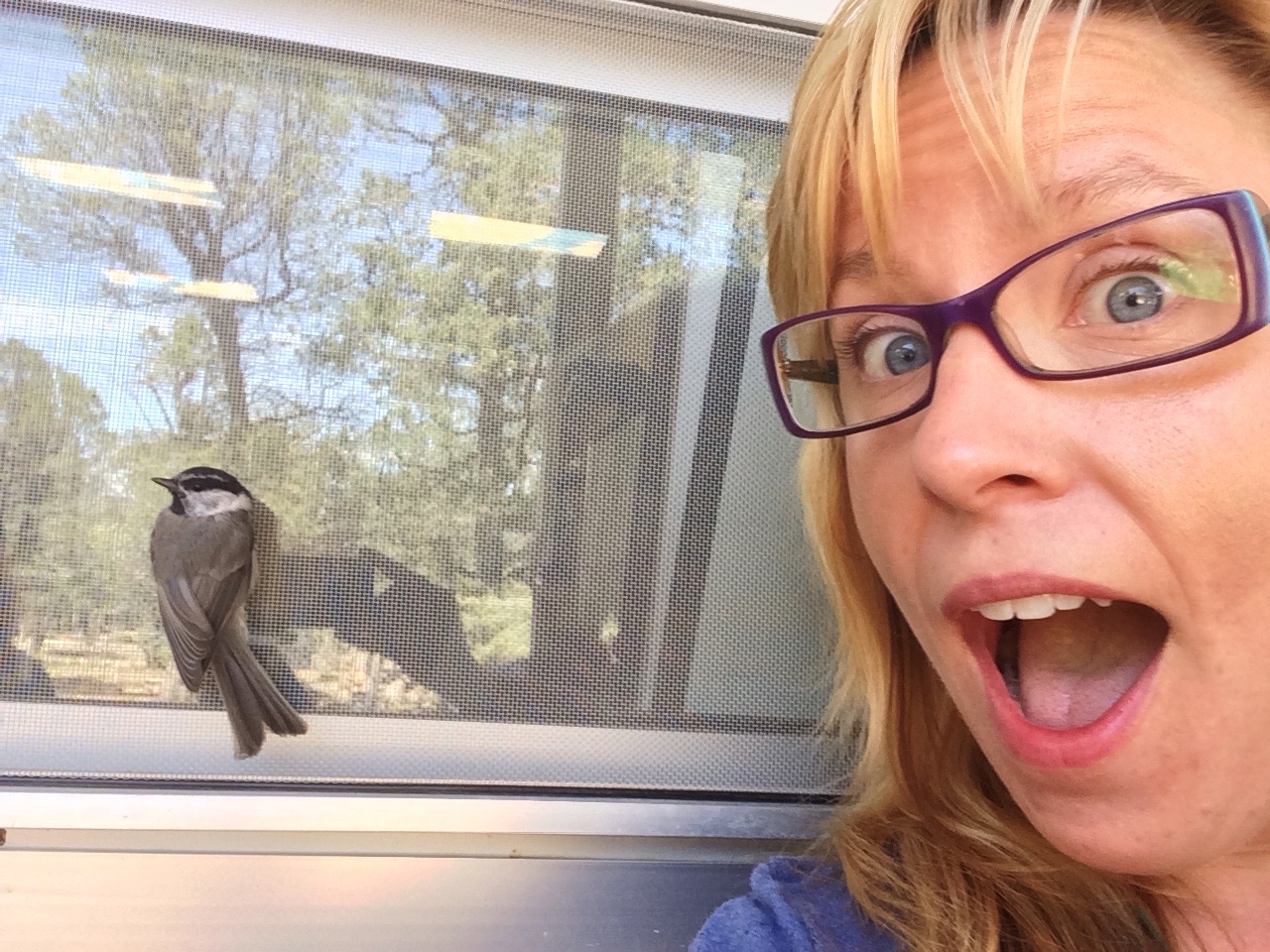
This was a young mountain chickadee that was trying to glean insects with its family from the overhang and screens around our building. Being young and naive it let me grab a quick selfie before it flew away.
For my day off I found a spot using the BirdsEye app that reportedly had painted redstart, nutcrackers, western bluebirds, western wood-peewee and other southwest specialties. It was a different part of the canyon to explore and thought it sounded like a fun spot. Due to the heat and daylight hours I thought I'd start at 6am and offered it up to others in my class to come along.
Now comes the weird part. This was a training for people who work in the National Park Service. I was the only birder. Oh sure, there were one or two who knew local and specialties species of their parks but going birding outside of their parks? Crazy!
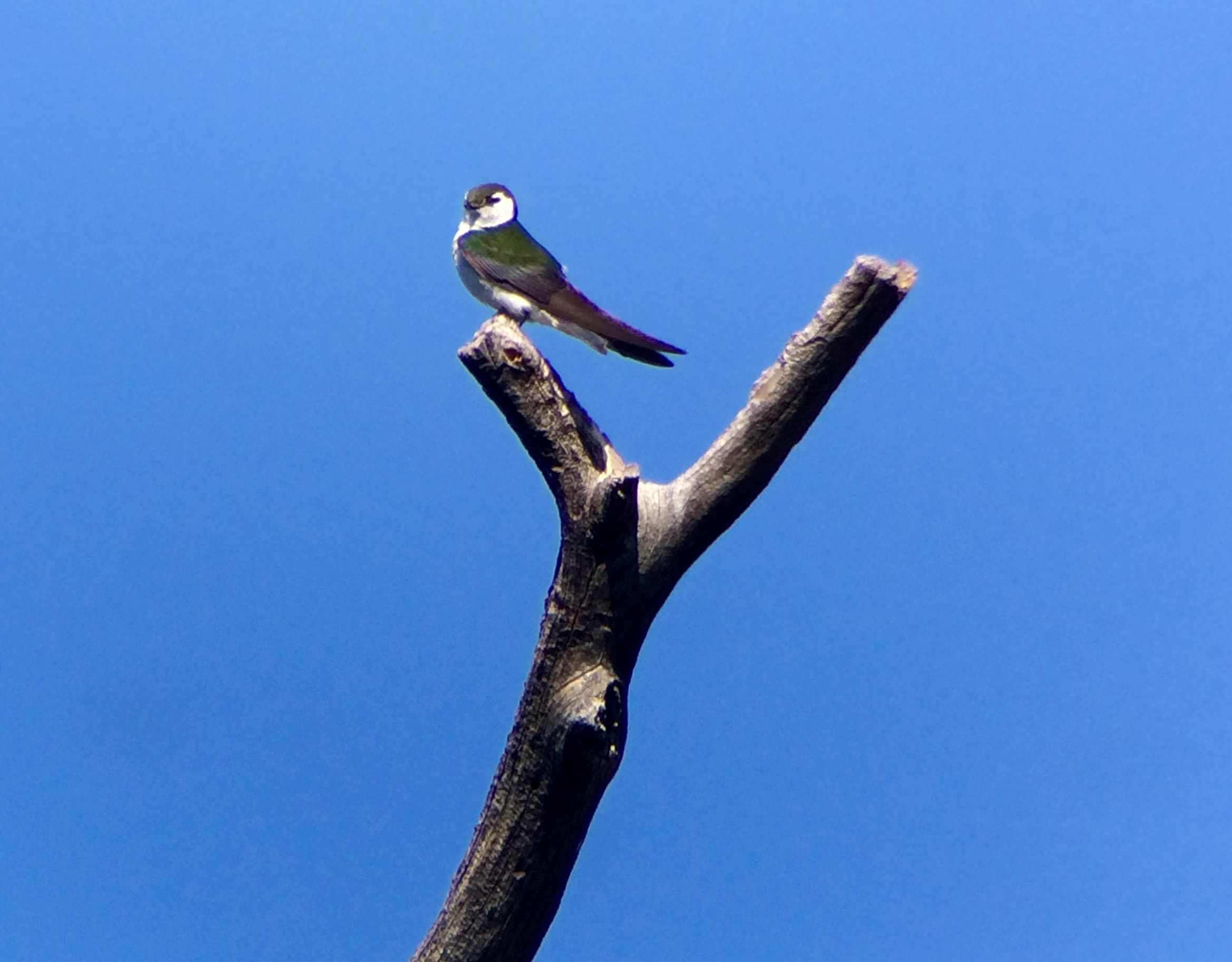
Violet-green swallows were all over around our dorms and the canyon. Oh how frustrated I was this time last year that I didn't have time to fly to a spot to video one for our web series.
It gets better. We had the option on our two days off of getting a permit to go hiking into the bottom of the Grand Canyon. While I was there it was in the 90s--granted that's a dry heat but it's still hot. That was just at the rim. Down in the canyon it was actually 120 degrees. So to safely hike in there the group was going to get up at 3am and hike the switchbacks down into the canyon, spend the night (did I mention it's a 120 degrees) get up at 3am and hike back up. Yeah, they were going to go down first and then go up second. That basically sounded like tourture to me. Couple that with the fact they were leaving at 3am and my bird walk started at 6am...I was the reasonable one. How often does birding seem like the more reasonable thing to do?
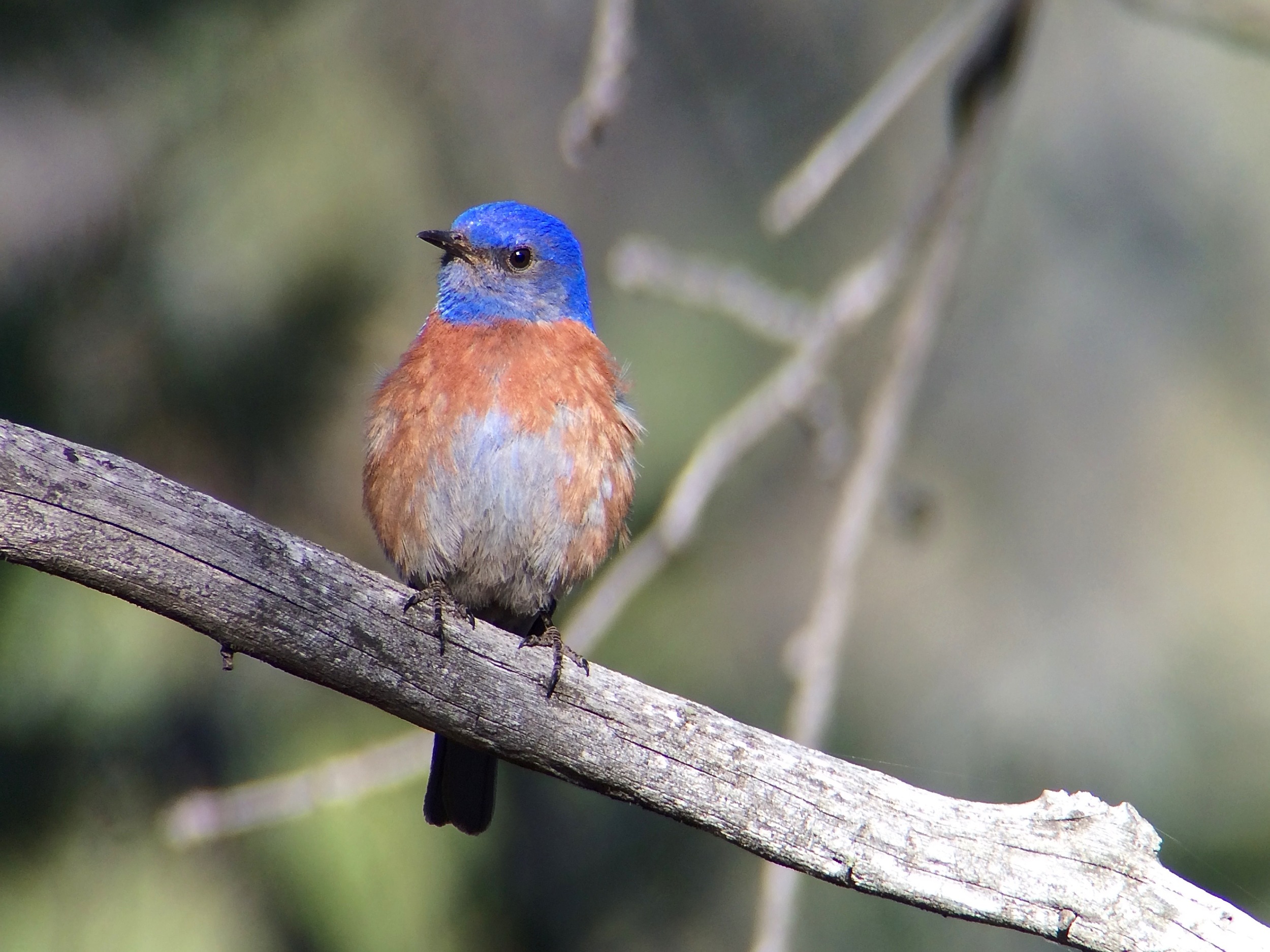
Western bluebird posting outside of our dorms during one of our morning bird walks.
We followed the driving directions in the app and found a nice shady spot among junipers and ponderosa pine for some light birding. We didn't get the painted redstart but we had most of the other birds that were on the eBird report and a singing hermit thrush. Two other intrepid rangers joined me and what they didn't know about birds, they made up for in residual knowledge about wildflowers and trees.
Fellow park rangers Erik Ditlzer and Charlie Kolb aren't just tree huggers but tree sniffers. Charlie told us to smell the ponderosas because they could smell like vanilla or butterscotch. This one smelled like vanilla to me.
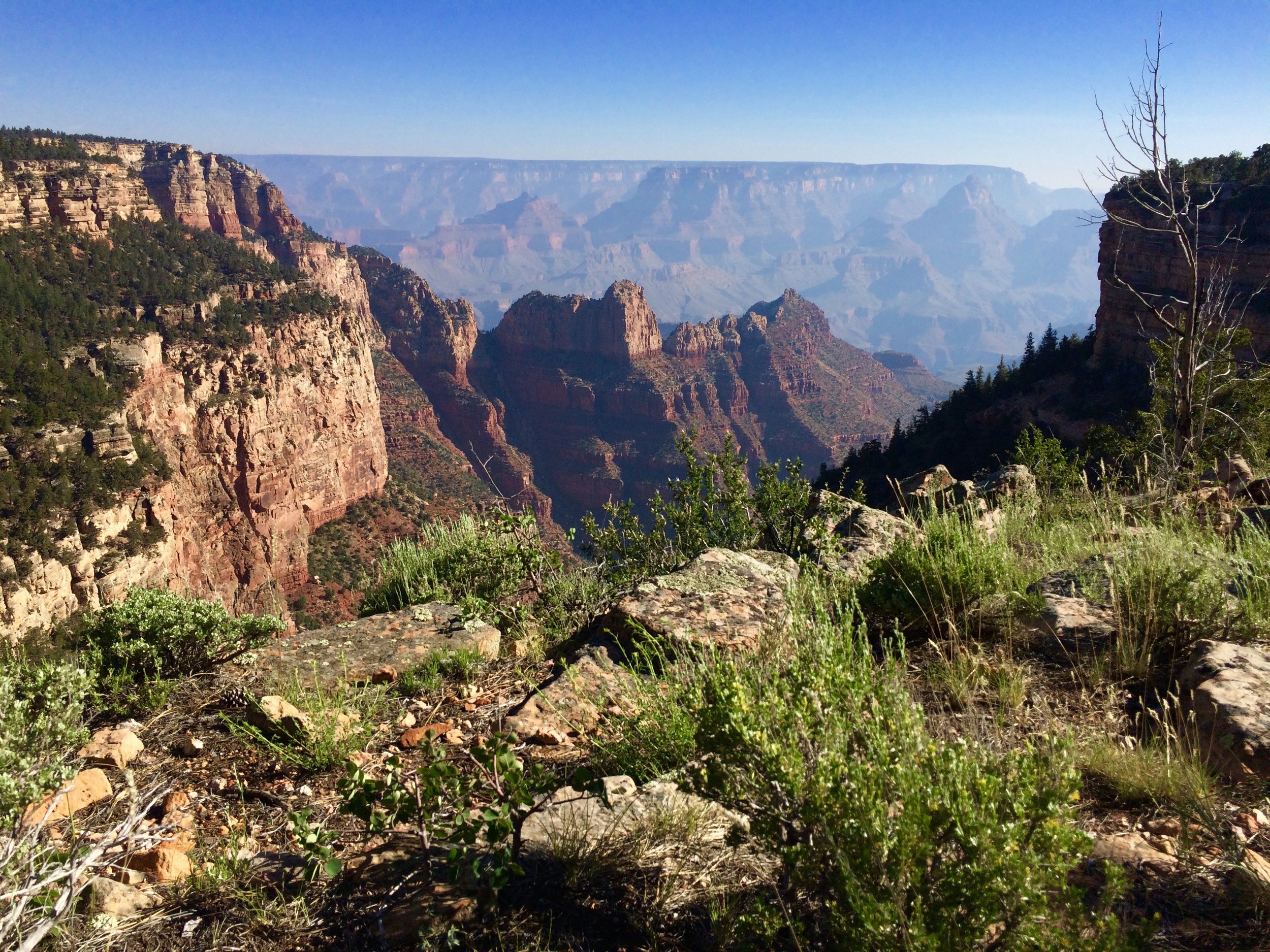
But the best part was when we hiked in and came to another opening of the South Rim and had a terrific view of the Grand Canyon...alone. We got to sit and meditate on the grandeur without being surrounded by tourists. There really is no ugly view of the Grand Canyon. Sure, it changes color throughout the day but it is spectacular no matter where you are. But what a treat to sit for an hour or so with friends to talk and not talk and not have people maneuvering about you with selfie sticks. I think it was one of my favorite moments of the trip.
A remote view we found of the canyon where there were no tourists courtesy of the BirdsEye app.
My main goal in coming to Grand Canyon was to see a California condor. I didn't want to just see one perched, I wanted to see one fly. California condors were part of that trifecta of endangered birds I learned about the in the late 1970s and early 1980s: bald eagles, peregrine falcons and California condors were all about to disappear. Bald eagles and peregrines have made quite the comeback, but not condors. There are several factors like the condor's ability to lay one egg a year that contribute to their slow return to the wild. Also it's arguable that this is a species that's on its way out even without humans mucking up the environment. They were meant to forage on the carcasses of megafauna like giant sloth or mammoth not deer or elk. Will this be a species that will forever need human stewardship to stay around?
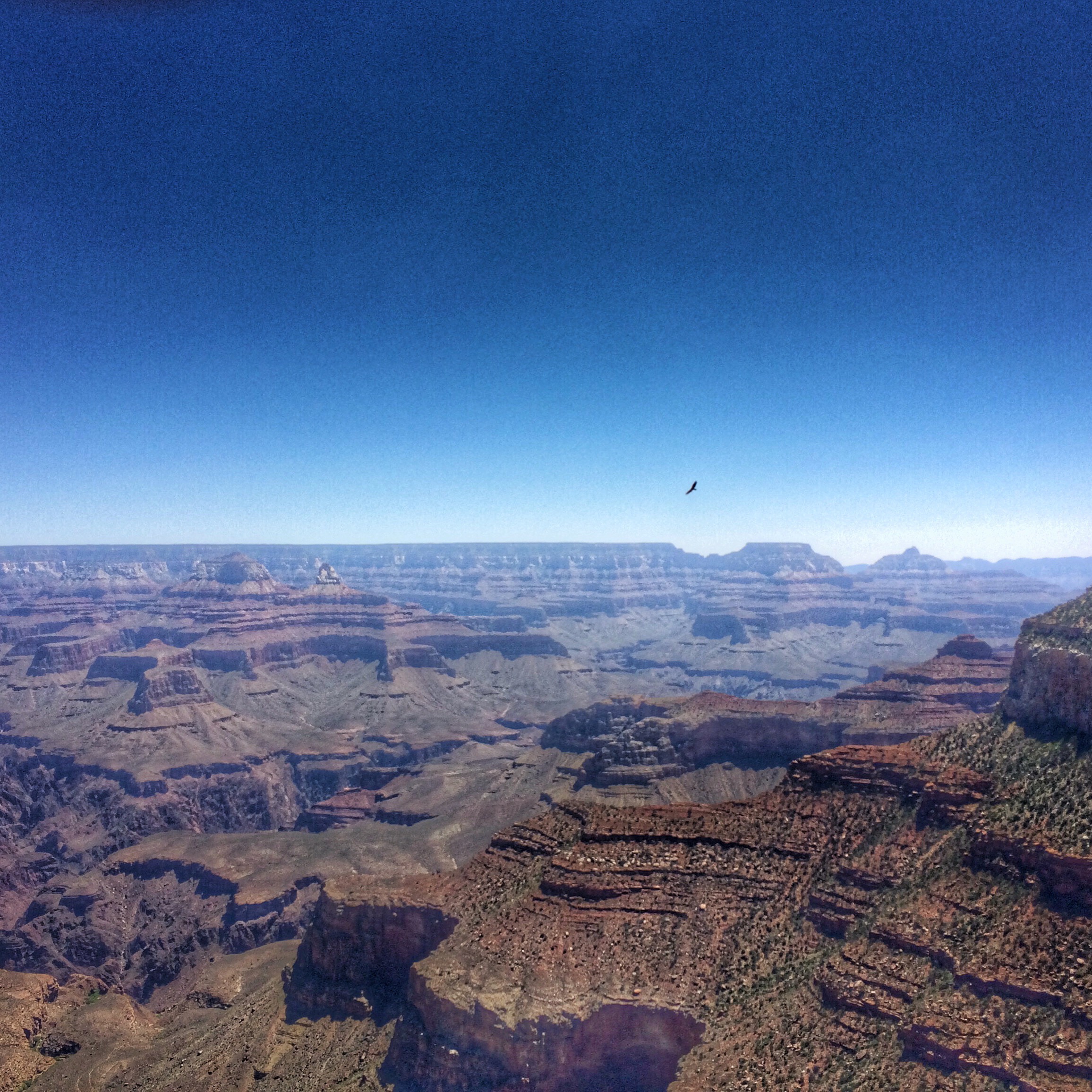
That canyon has a lot of birds soaring about...many of them turkey vultures. Here's a great photo showing the difference between a soaring condor and soaring turkey vulture.
The Grand Canyon with a bird soaring over! No, it's not a condor, it's a turkey vulture.
I've seen condors in captive settings and I've even been in a clinic when one was sedated for examination and got to touch it. But I wondered how something that huge flies. It's kind of like seeing a giant bustard fly, you can't imagine it until you actually see it.
As my fellow park service employees found out about my interest in birds they all wanted to know what I wanted to see. When they learned it was a condor they were all eager to help. I loved how everyone had a vested interest in helping me find a condor--isn't that just like a park ranger, make sure the visitor gets the experience they want. I wasn't too worried. Sure I wanted to see one right away, but I knew I had ten days to find a condor, it had to happen. There are roughly 72-ish birds using the area, one had to fly over at some point. The first few times we went to the canyon as part of our training, I tried to play it cool...but of course I had my scope with me. I got a fast education of just how many turkey vultures and common ravens roam the skies.
Everyone was pointing to large soaring birds asking if I had seen them. "Yes, I saw the turkey vulture." Or to be technical, one day I did say, "Yes I see the turkey vulture...oh wait...oh crap, that's a zone-tailed hawk which flies like a turkey vulture--bonus!"
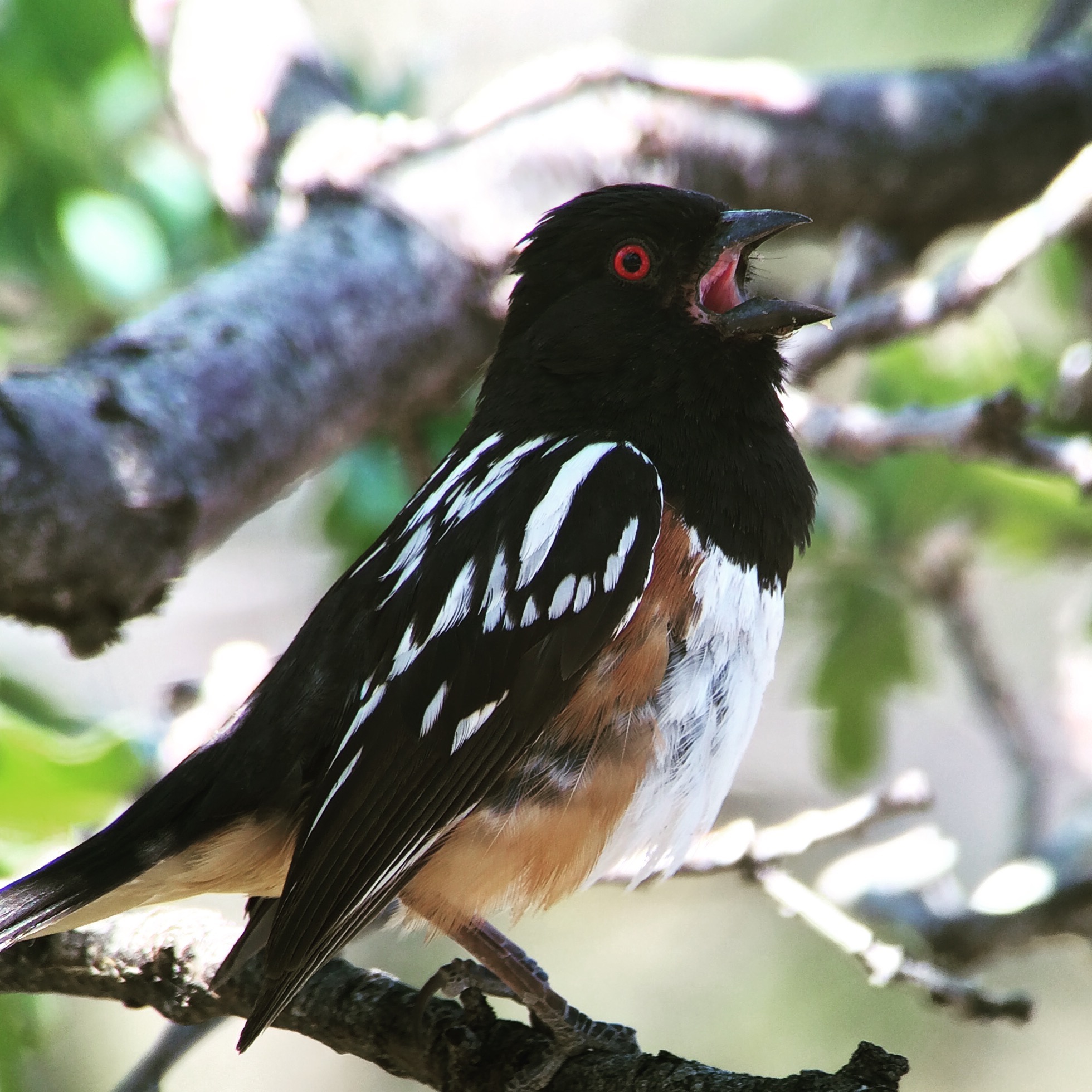
Spotted towhee singing around Bright Angel trailhead.
My Saturday birding companions were also on the lookout to find me a condor. Other colleagues who hiked the canyon or did other things on our day off me throughout the day asking if I found the condor or even better alerting me to condor-ish things they saw in various locations soaring around the canyon. It was really, really sweet.
After a fun morning of Saturday birding, we then headed for Bright Angel Trail Head where condors were reported regularly on the BirdsEye app. As soon as we arrived on the trail, all three of us looked up and saw a bird, one said, "Uh...Sharon..."
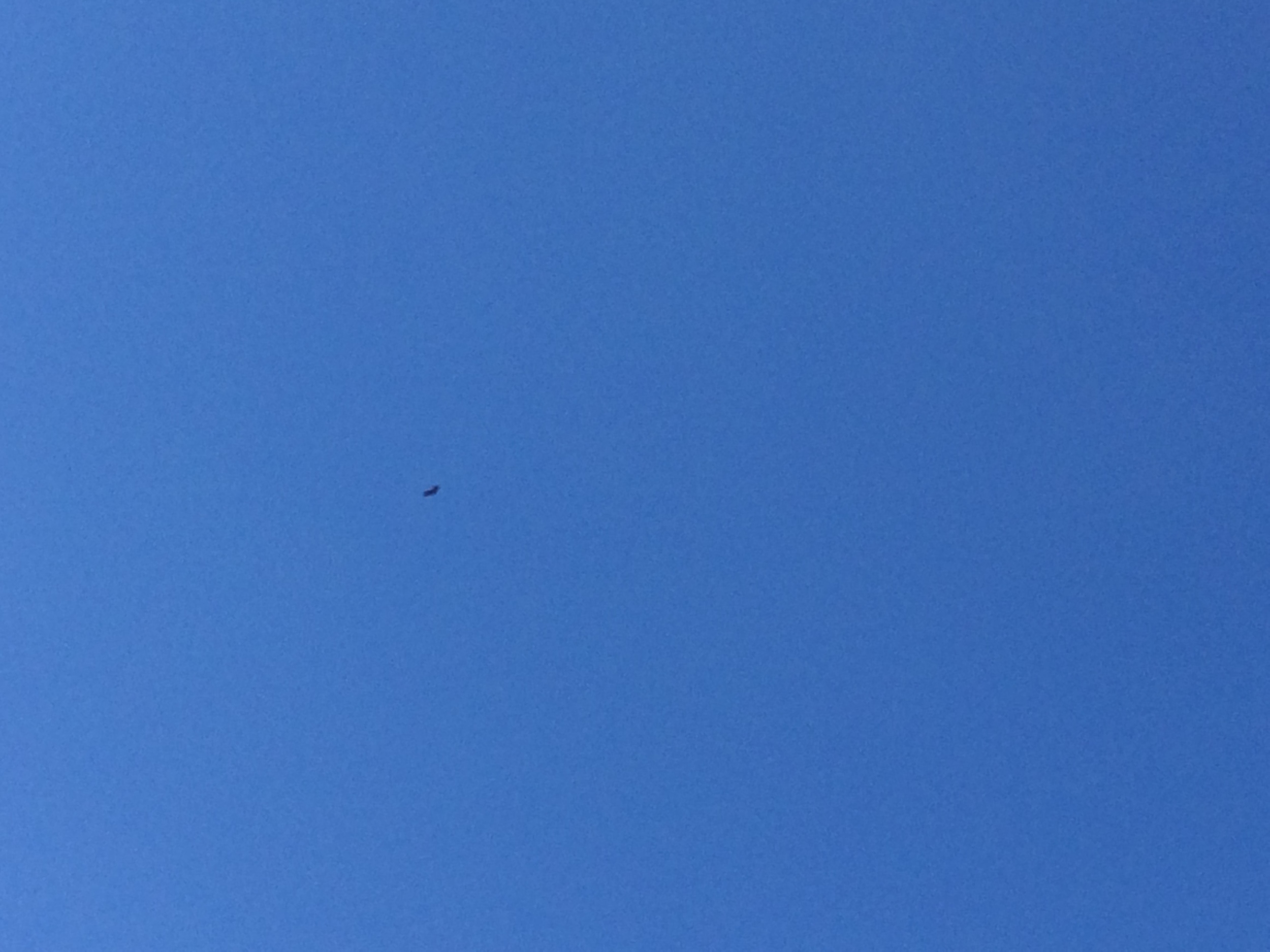
If you look close you can make out that the black speck is a California condor.
Yep, there it was, an adult California condor soaring overhead, high in the sky but easily identifiable without optics. Of course I tried to digiscoping it, but a bird in clear blue sky high overhead is next to impossible to find with a scope and I decided, "Screw it, just enjoy it" and put up my binoculars and savored my condor. The thick wing shape, the bulky body, the proportions nothing like a vulture or eagle...so old world looking. Spectacular. I did snap a phone of a dark speck in a luscious blue sky as a souvenir. How could I not?
I had a second view of a bird high overhead the following week. And delighted in saying casually to my colleagues, "Has anyone not seen a condor yet, there's one right over our heads."
Again too high to get a great photo but man how cool to see something like that airborne. I've condors in captivity and even got to touch one in a clinic situation, but see something that huge, flying around in the wild was truly something special. I don't know if this is a species that will be able to survive without human intervention, but I like that that a bird that huge has a place like the Grand Canyon to move around in.
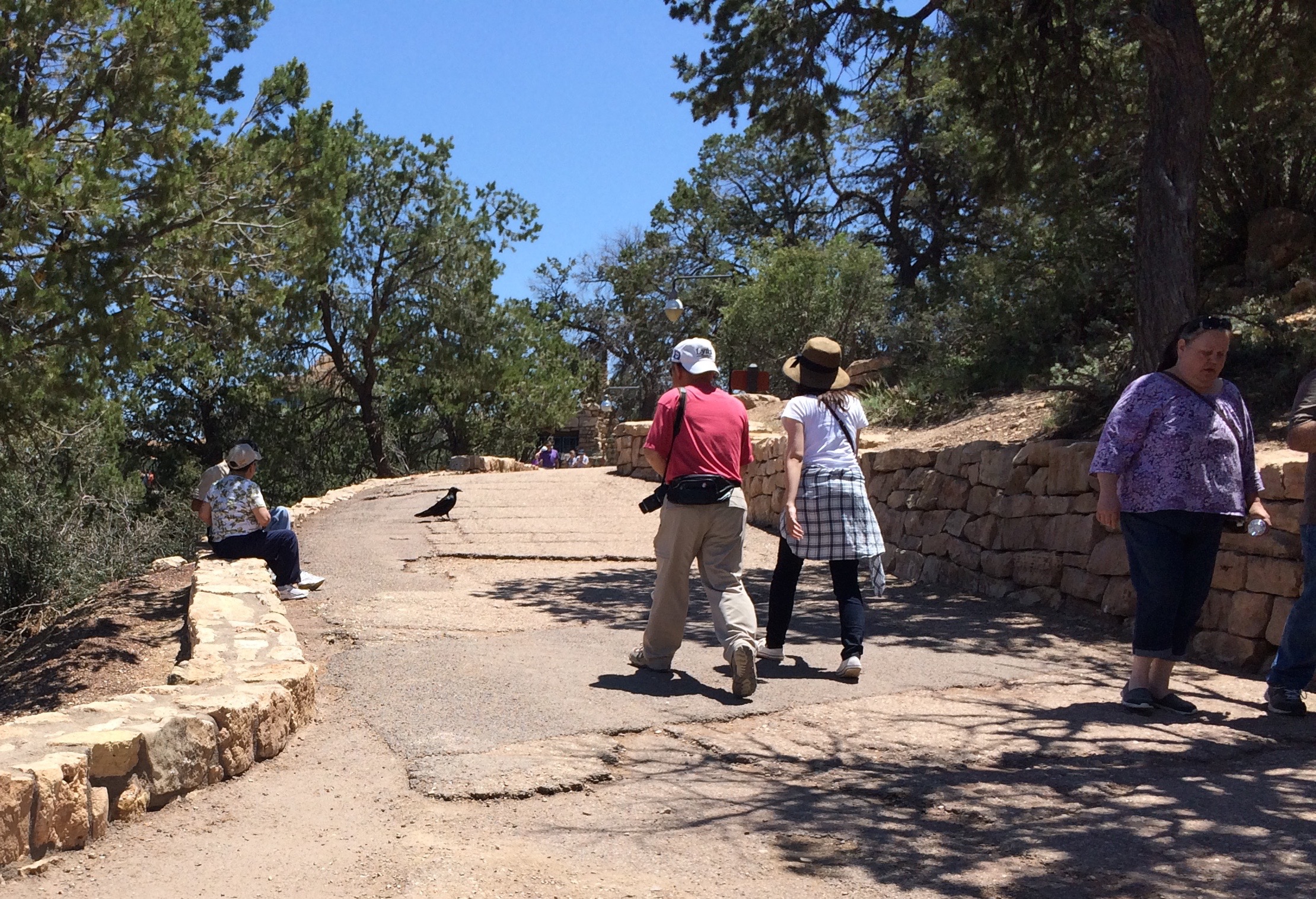
Common raven scavenging the park's trails near the concession stands.
I did get a kick out of the ravens around the trails near concessions stands at the Grand Canyon. Unlike crows, ravens can soar on thermals like hawks. The ravens here soar around the rim and keep a vigilant eye on tourists who drop food and then immediately land in the sea of human bodies to grab a fallen Cheeto. Brazen and huge, what a delightful bird.
Dark-eyed juncos were all over but these were the southwestern race of red-backed juncos.
I also got so see some fun regional birds like the red-back race of dark-eyed junco. Remember when we used to have, like, species of junco and then they got lumped and a bunch of birders lot their minds? Good times.
I also got to see...and not digiscope the local white-breasted nuthatches who look and sound a bit difference than the nuthatches we have where I live. World on the street is that the American Ornithologists' Union might split the white-breasted nuthatch into six different species. Maybe that will make up for the junco lumping of long ago?
Taking in the view near the Tower off of Desert View Drive.
The canyon has something for everyone: views, fossils, birds, archeology, geology, hiking...ok, it maybe lacking in good wifi so maybe it doesn't have something for someone like Non Birding Bill but man, it truly lives up to the reputation of being a spectacular place.
I hope everyone has a chance to visit it at least once in their lives...and that they don't die in doing so.
Travel and colds...moreso travel got the better of us but we found ourselves with a few free moments and tried to podcast...we may not have everything linked in this entry. You just might have to Google it...oh the horror, the horror.
Interesting article on how birds respond to each other when someone else gives a warning call.
Oh and here's Air BnB--a great resource for traveling and finding places to stay.
Non Birding Bill has been raving about a photography app called Hydra. When you click to take a photo the app takes up to 60 images and then merges them into a single high-quality picture. He said it would be great for birding. Heres' what I got:
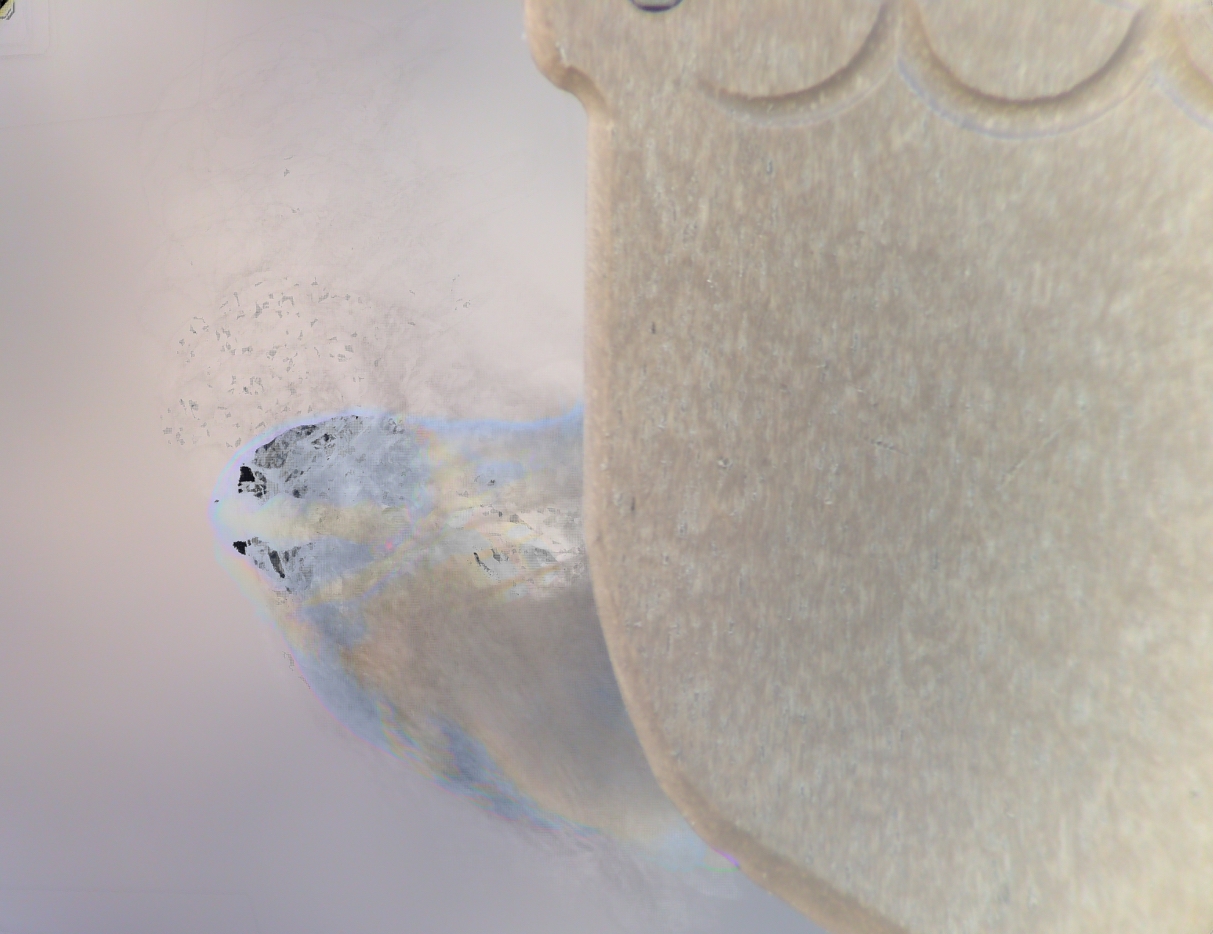
I think this is supposed to be a hairy woodpecker.
So, Hydra, great for selfies...not so much for birds who constantly move.
White-crowned sparrow digiscoped with the camera app that comes with the iPhone 5s and Swarovski ATX 65mm scope.
I thought maybe if I found a bird that was perched and not actively feeding like the above white-crowned sparrow might give me better results. Above is a photo taken with the camera app on the iPhone. Below is Hydra.
White-crowned sparrow digiscoped with Hydra app on iPhone 5s and Swarovski ATX 65mm scope.
Maybe if you are into some surreal photos of birds this might be the app for you.
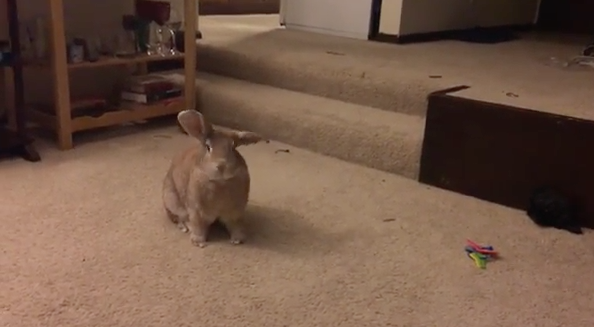
We have a pet rabbit named Dougal. When he's really happy he hops in all different directions. We call this "popcorning" but the rabbit industry insists on calling it "bunny binkies." I just can't call it that. Regardless, if your rabbit does this, they are happy:
Hermit thrush was foraging around my beehives.
Patch birding has really made birding fun for me in a way I didn't expect. I've always enjoyed keeping an eBird tally of what I see around our beehives, but I'm really digging keeping track of the park near our new apartment as well as keeping track of what shows up around our apartment itself...but I'm still not a lister.
I got a hermit thrush around our beehives and while I was watching it, I noticed it was kind of shaking its feet. I took some video with my iPhone through my scope and made a mental note to look "hermit thrush foot quivering" up later on the Internet and see if this is a thing with hermit thrushes. Sure enough with my first Google search, Cornell did not fail me. According to Birds of North America Online:
"Foot Quivering: Interpreted by Dilger and also Brown et al. as a ritualized ambivalent intention movement of simultaneous, conflicting drives to attack and to retreat; but also may serve as foraging technique used to locate insects under leaf litter. Brackbill and Kilham cite observations of foot-quivering while foraging, with no indication of the birds being disturbed and Skutch reported a similar observation of Russet Nightingale-Thrush in the non-breeding season and outside of its breeding range."
I love the first part describing it as something the hermit thrush does because it's not sure if it should attack or retreat. "I'm just gonna kick the ground, man."
I don't think this particular bird was disturbed by my presence and that just coming in from migration the bird was most likely looking for some tasty invertebrates in leaf litter. Either way, here's the footage and maybe you might see thrushes doing this in your neighborhood.
Audubon asks..."Why do birds masturbate?" It doesn't really answer the question.
National Geographic not only publishes field guides but also books about
Nectar and pollen eating rainbow lorikeets now eat meat...how long til they eat us?
Humiliated cats wear scrunchies to prevent them from killing native birds.
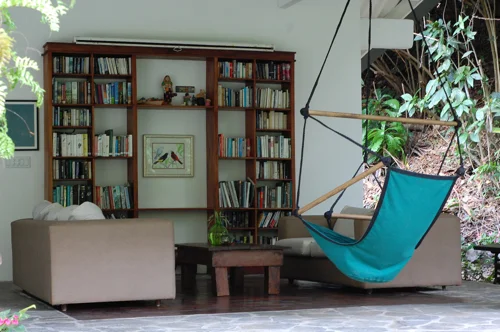
The outdoor library at Canopy Lodge in Panama. Doesn't that look relaxing?
I have been party to a lot of discussion online and in meetings about what women birders doing. Part of this is because women are 50% (at least) of the birding population in the US and hard to find in Europe. My thinking is that generally women enjoy birds differently than men but some of my female birding friends are hardcore listers and bristle at the notion that women aren't as competitive as men, most of the women I know are very casual as far as their interest in listing goes. There seems to be a mixture of enjoyment from photography, art, socialization and balancing life and birding.
I think over the years, I have discovered that there are things I enjoy about birding and things I do not. Competitive listing (apart form an informal apartment list I keep in my fridge) is not for me. I think it's because I see the impossibility of trying to see every single species on Earth, not only the logisitics and money involved with travel but also how species are discovered or lumped and split I don't want to take a once in a lifetime trip to New Zealand, get every bird there and then five years later learn some species was split into five based on DNA and chip notes and there are three birds I still need. I don't want that to ruin the fact that I went to freakin' New Zealand.
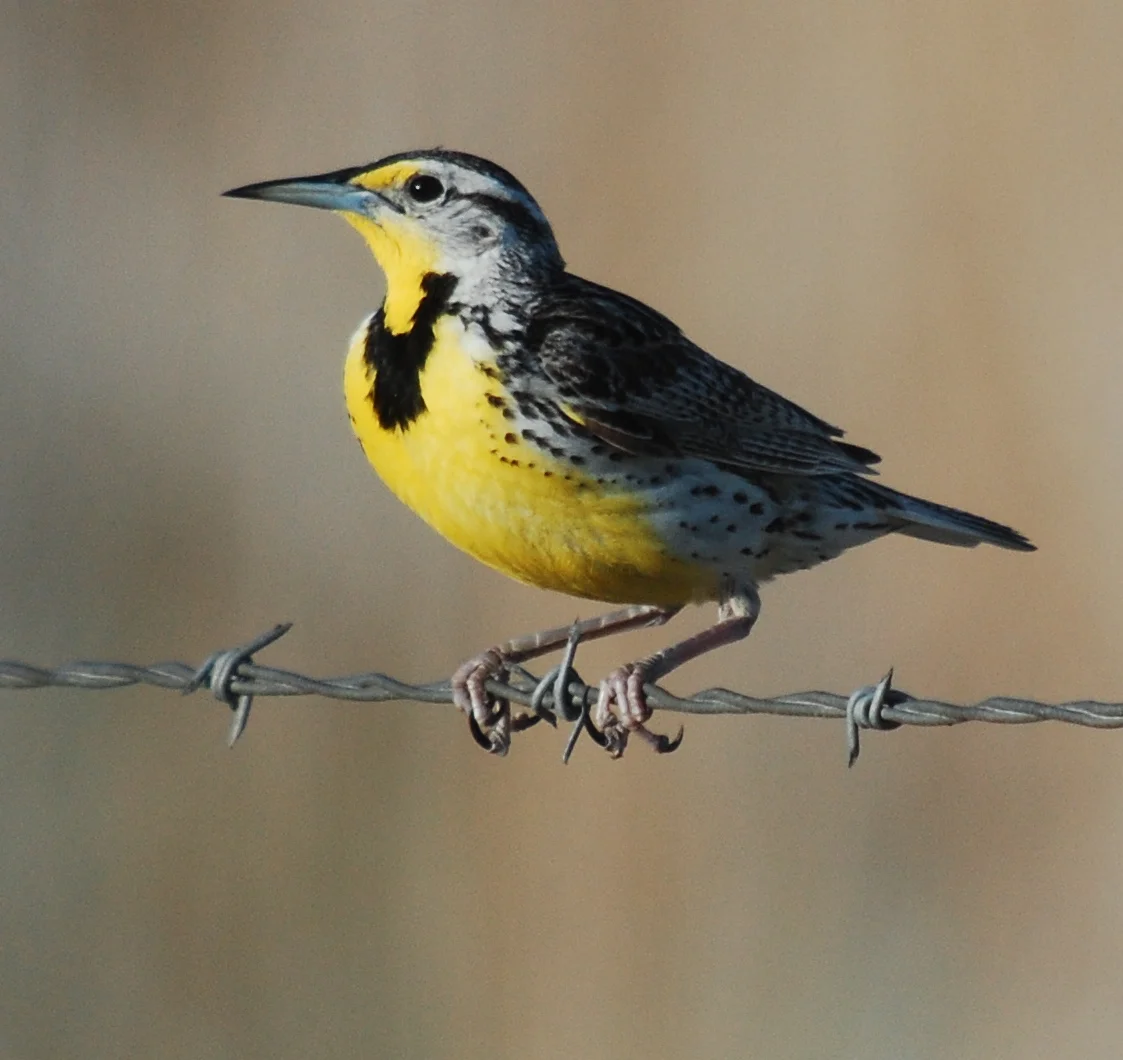
Learning to separate flight calls of western and eastern meadowlarks was a cool revelation. Westerns make a "chup" call and easterns make "bink" type call.
One form of birding (and listing, I suppose) that I've discovered I love is patch birding. I think it's from doing so many point counts for work. Monitoring one place over several weeks at various times of the day and discovering shifts in seasonal movement or how resident birds act throughout the day is very satisfying to me. It doesn't matter that I don't get a new species, but if I get a new to me behavior or learn distinguish new calls, it's incredibly very rewarding--like the day I realized the difference in sound between a western meadowlark flight call vs an eastern meadowlark flight call.
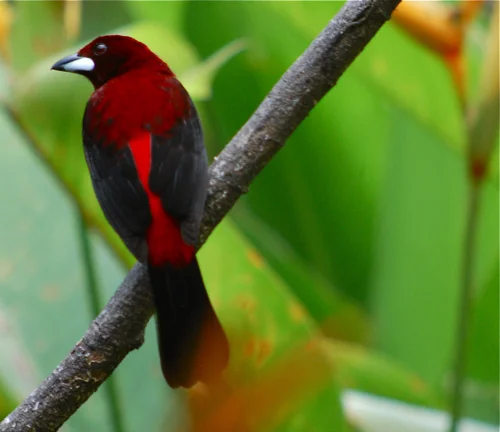
Crimson-backed tanager taken from the porch of Canopy Lodge in Panama--that is a bird worth traveling for.
Even if I'm not doing surveys for work, I love every opportunity I have for birding a new area either in the US or around the world. I don't necessarily enjoy it when a tourism board wants me up early for ten days in a row, but I also realize that when life hands you opportunity, grasp it with both hands and sleep later.
I enjoy scanning a field guide and seeing what are iconic birds of an area and what bird looks really cool to me and target for that--like a shoebill or toucan or the above crimson-backed tanager--is that not a dynamite bird worth a plane ticket or what? Best part was that this was one of the first birds that I got when I visited Panama a few years ago. I had a late flight and slept in a bit the next morning to find a little coffee, bacon and papaya waiting for me on the deck. I sat on the comfy outdoor chairs and soaked in the rainbow of colors at the feeders. I ticked off several iconic birds: honey greepers, tanagers, saltators all over some coffee and bacon. That is my kind of birding.
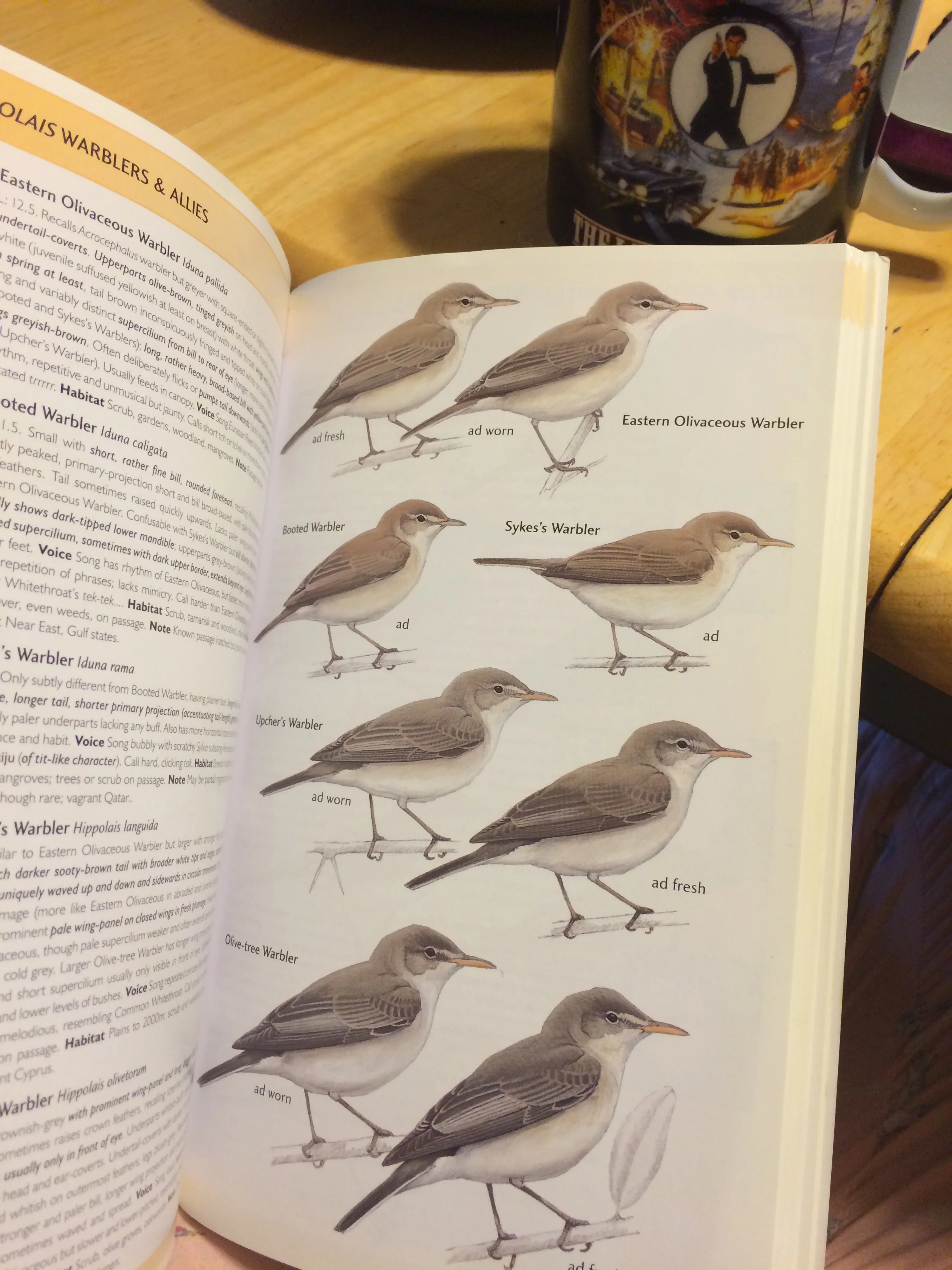
I swear, there are four different species of warbler on this page.
What I do not enjoy is hunting down every single possible bird in an area for the sake of having a larger list, especially if all the birds look the same (like the above warblers). Not that I'm dissing brown and gray birds--Non Birding Bill can attest to how much I love them. But I don't want to spend over an hour playing calls, pishing or whatever to get some skulky species that looks like five other birds while there are scenic vistas to enjoy and less skulky and more charismatic birds out there. Also, if a bird is being that skulky, we're stressing it at that point, let's leave it alone.
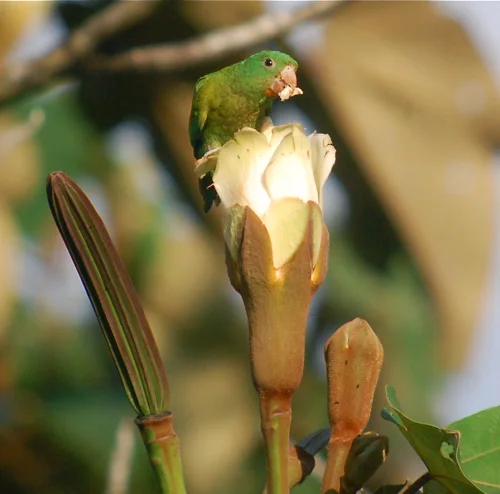
Orange-chinned parakeet chewing up a flower in Panama.
Another thing I enjoy is playing around with digiscoping. A bird in lovely evening light like an organge-chinned parakeet nomming down on a flower is just too cool. A fun souvenir from travel.
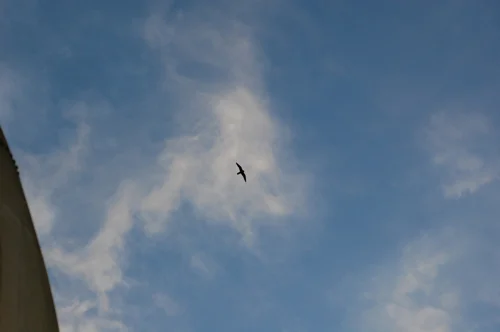
Bat falcon soaring over Canopy Tower in Panama as the sun sets.
I also enjoy quiet moments like standing barefoot on the top of Canopy Tower listening to tinamous and collared forest-falcons call as a bat falcon hawks for insects overhead while I sip a gin and tonic (I know, I know I normally drink whiskey but in warm weather I do enjoy a little bit of gin).
And as much as I enjoy some of the trips I take to see a showcase of their birding offerings, I don't relish 4:30 - 5am start times for ten days. A few is ok, but man oh man, do I enjoy a day where I can sleep in til 7am and still see some cool stuff.
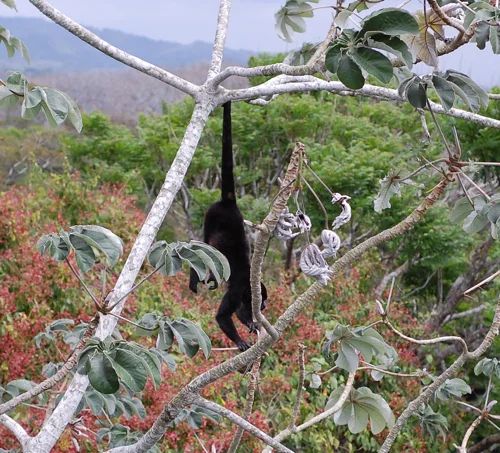
Howler monkey in the trees just outside of Canopy Tower.
Does this sound appealing and like your kind of birding? Consider coming with me to Panama this fall. We'll catch the fall raptor migration, we'll drink, we'll get up at reasonable hours, we'll laugh, take some great pictures of cool birds with our smartphone so we can text them to friends who are at their desks and even work in time for a few naps. You will come back from this birding adventure vacation without feeling like you need another vacation.
Canopy Lodge and Tower are two of the best birding destinations I have ever been to. As soon as you land, the guides take care of transportation and our meals as well as our birding needs. We will have a blast and a trip of a lifetime.
A new digiscoping adapter I've been playing with since seeing it in Florida called the Digidapter.
I've had the opportunity to play around with some newer digiscoping adapters both for smartphones and for SLRs. When not using my iPhone 5s to take pictures and video, I've been using my Nikon V1, which is a very good camera and generally I use with the Swarovski TLS APO adapter.
The Digidapter is designed so you can set your camera on it and then the hood will fit over the eyepiece. Currently, this adapter will work on Swarovski, Zeiss, Leica, Kowa and Celestron. The owner is able to custom make adapters, but those will probably be a different price than what's on the website.
What I thought was cool about this Digidapter is that it fits a number of cameras--perhaps even a few point and shoots. But the really cool part is that the biggest beef I have with "universal" adpaters is that they tend to be futzy--you have to make constant adjustments. You screw the bottom of your camera to the Digidapter and then make adjustments to how it lines up with your scope eyepiece. The cool part is that the two red nuts on the adapter are adjustable and help you keep track of where to place your camera after you take it off the adapter. Once you know where your camera fits on the adapter, you slide those to the front of the camera and tighten and viola--you always know where the camera needs to go on the adapter.
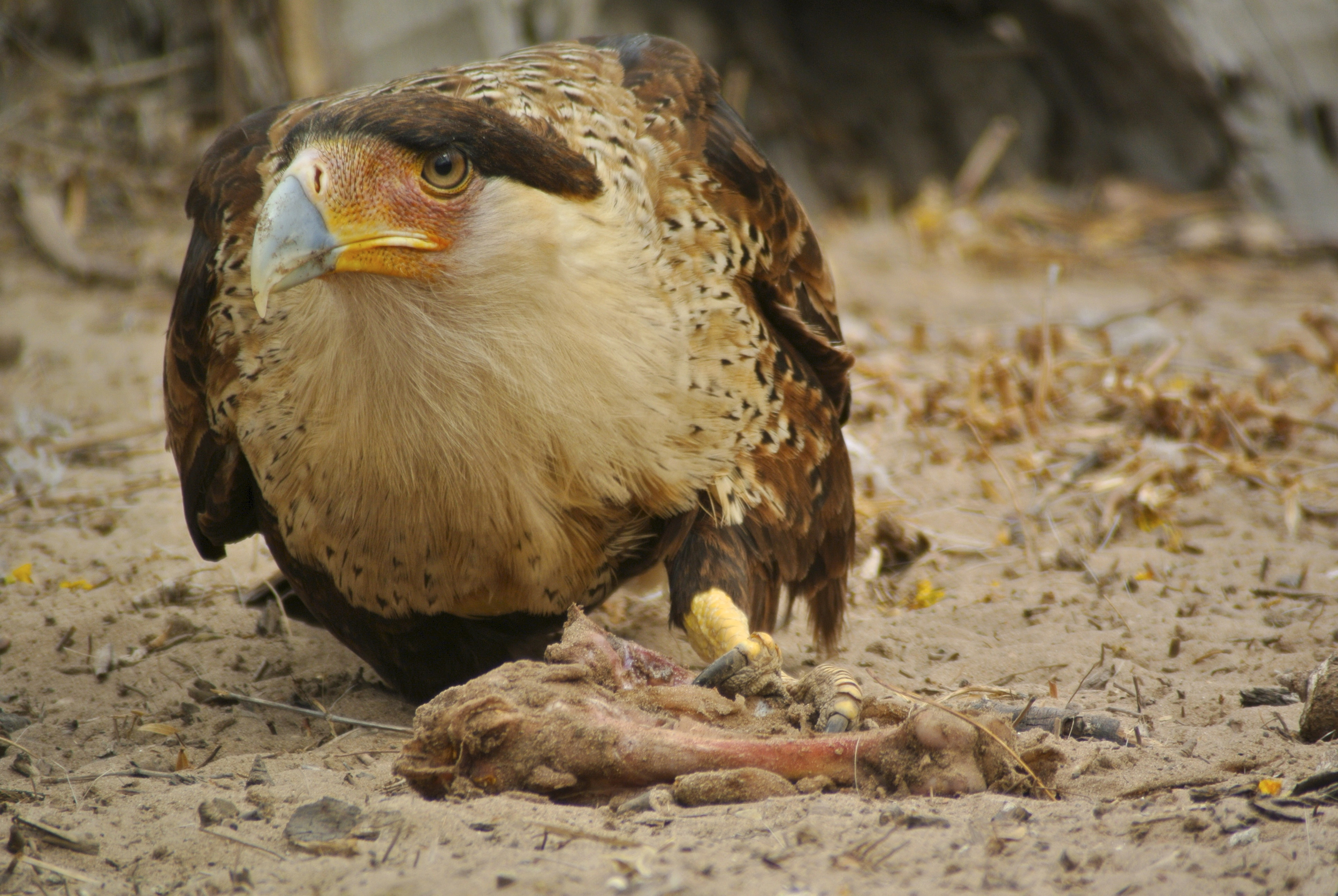
One of my favorite photos I've gotten of a bird--a crested caracara taken with the Nikon V1, TLS APO and Swarovski ATX 85 mm scope.
If there's one downside to the Nikon V1 is that sometimes there's too much zoom with it on the scope. Which if birds are far away is great. But if you want to get birds at a feeder outside the window, you can sometimes be too close to get a full frame body shot. So I thought I would try using the V1 with the Digadapter.
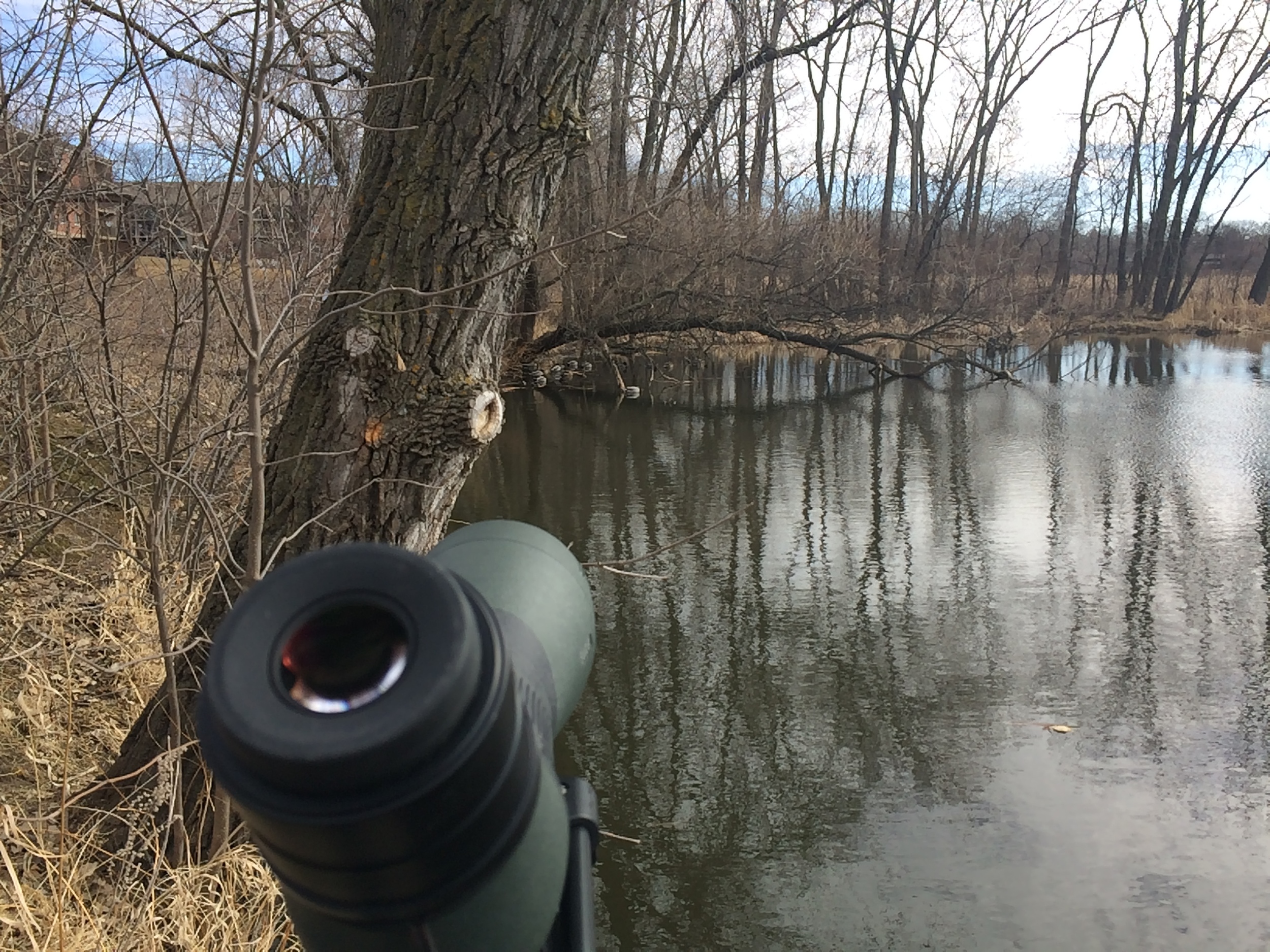
I took some digiscoping adapters to my local patch for some testing (much to the chagrin of the local Duck Lady who was irritated that I declined her offer for duck food and pissed when I said, these ducks have plenty of natural food). All the waterfowl posted in this entry were under the downed snag.
I've been trying to test out these adapters at feeders to give you an idea of field of view in the camera but we keep getting cold snaps and some of my go to nature centers for photos have now covered their windows with stickers to prevent widow strikes which makes bird photography next to impossible. So I found some obliging sleeping ducks in my neighborhood.
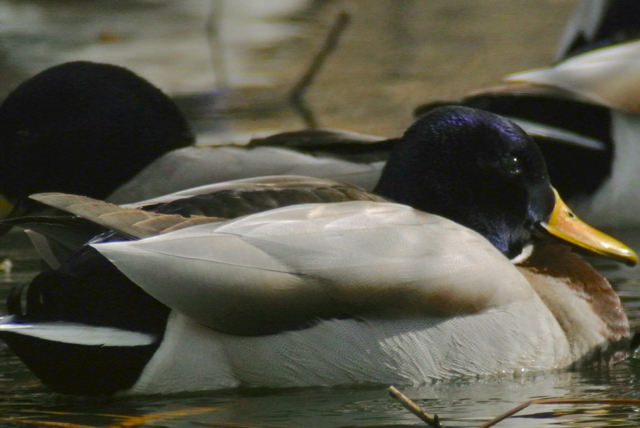
Mallard digiscoped with Swarovski ATX 95mm spotting scope, TLS APO adapter and Nikon V1.
Above is an upcropped image of a mallard taken with Swarovski ATX 95mm spotting scope, TLS APO adapter and Nikon V1. You can see that it's a challenge to get the whole bird in. I normally solve this by keeping my distance with birds and that strategy generally works out. But sometimes, like in the case of being in a blind that's not an option--isn't it always something with photography?
This is my Nikon V1 with the TLS APO adapter. I nice light-weight system.
Above is my current system. I like it because it's relatively easy to carry in the field. To use it, I had to remove the zoom lens that came with the camera body, purchase and an adapter that would allow the body to work--funny thing, if you use a non-Nikon lens on this camera body, it won't shoot. You get an error message that says there's no lens...even though there is one. You have to spend about $120 bucks on a Nikon adapter with electronics that tells the camera body there is indeed a lens attached. You also have purchase a smaller cheater adapter that lets you actually attach another lens to it. Well played, Nikon, well played. If I'm not going to buy lenses from you, you're still gonna get some of my money.
Anyhoo, the TLS APO adapter from Swarovski has a lens inside it that is optimized to work with your scopes eyepiece. I also like that the sleeve of the adapter that fits over the scopes eyepiece also acts as a protector for the lens on the inside. I've generally liked this system and once used to working with it, you can get some really nice detailed shots (like the above caracara).
Mallard digiscoped with Swarvoski ATX 95mm spotting scope, Digadapter and Nikon V1.
Above is an uncropped photo of a different mallard that was slightly to the left of the first mallard (it got chased off by a rival as I was switching lenses. This is with my Nikon's original zoom lens, Digidapter and Swarovski ATX 95mm spotting scope. A wider field of view than with the TLS APO adapter. But I love it's lightweight and how easily it slides on and off of my scope's eyepiece.
This is what the Digidapter looks like attached to my spotting scope.
I think I need a different Nikon lens for this system, it's a little too close to the glass on my eyepiece than I'm completely comfortable with. There is an extender I can purchase too which takes it a little further from the eyepiece. It's a little chunkier than I'm used to, but for an adapter that works with lots of scopes and cameras, it's very good and slides on and off of the scope eyepiece easily. It's solid and made of aluminum so is fairly light weigh.