
Birdchick Blog
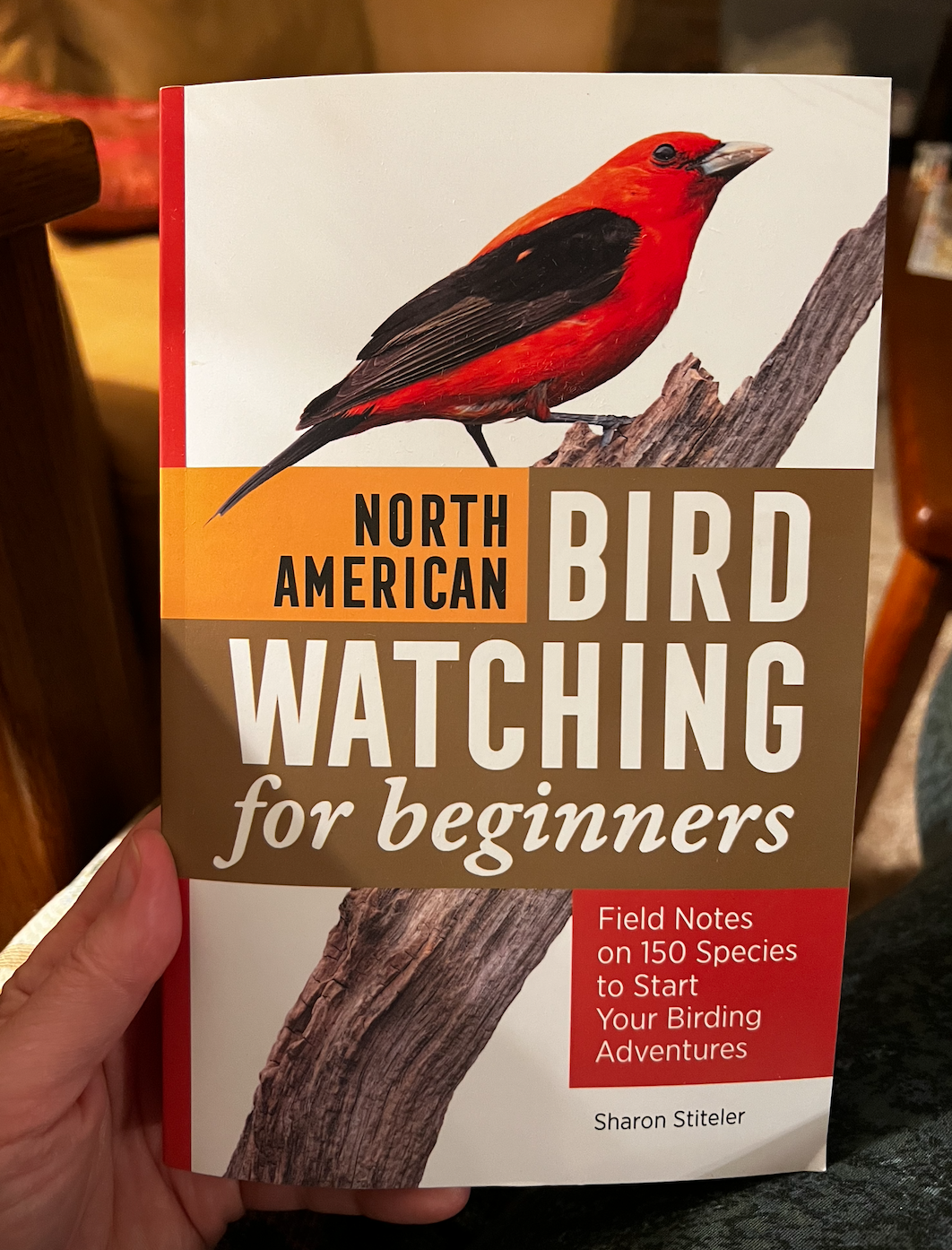
My Latest Book: North American Birdwatching for Beginners
Last fall I got an offer to write a book. The money solved a financial problem for me and I agreed to it. I wasn’t sure that the world needed another beginner bird book, but it needed to be written, the process intrigued me, and I’d had a serious case of writer’s block during the pandemic and was finally crawling out of that hole.
I like deadlines, they give me focus. But like any writer, there comes a point when you realize you had some ideas for part of the book and no ideas for the other. And first drafts are for vomiting it all out on paper, no matter how messy it is and a good editor will help you fix that in subsequent drafts. So I wrote the Canada goose profile for a book and thought, “I’m sure the editor will make me fix this later, I’m tired and want to turn this in.”
They did not.

And I put this on Twitter.
When you write a book and it comes out, publishers want you to promote it. I’m in the process of starting a new job and moving to Alaska…all with a book coming out. So I put up a flip tweet about a flip comment I made about geese and it went VIRAL AF. Yay me for efficient marketing at a time when I have too much going on.
So the short of it is, I wrote a beginning birding book. If the above made you giggle and you think a non birder in your life would like to learn more about birds you can order North American Birdwatch for Beginners.
Because this book is coming out as I’m moving, I don’t have autographed copies now. Since shipping books to Alaska and shipping them to you might make them more expensive than they need to be, I may look into getting stickers that I can personalize to send out. I won’t have a good answer for this until mid-May.
Surprise Roommate In Central America
A video to give you an idea of what it's like birding in Honduras.
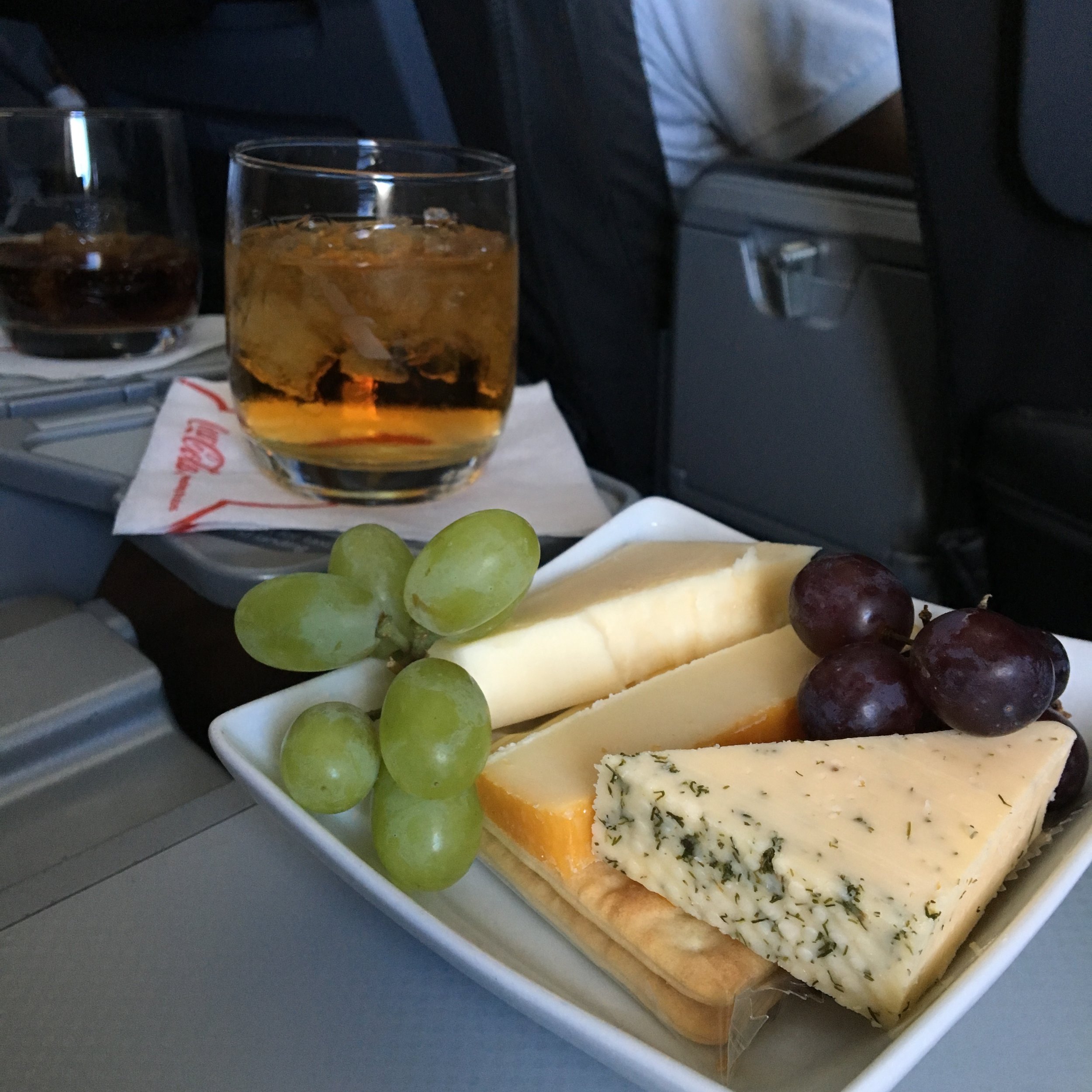
First class on an International Flight doesn't play any games when it comes to food or booze. Thank you, American Airlines.
After a rough autumn, I decided to go through my photos and find things I haven't written about and some of the great things happened in 2016 Turns out, I never wrote on the blog about how much fun I had on my trip to Honduras with Wildside Nature Tours. I also think that I needed some time away from Honduras to digest what I saw. Honduras is heartbreakingly beautiful. Amidst all the rugged wildness, ancient culture and eye searing color, it's also a developing nation and life is very different than it is in the United States. So while there was overwhelming beauty and adventure to be had, there was also immense poverty.

The greeter at Panacam Lodge in Honduras, a blue-diademed motmot (also known as Lesson's motmot on eBird).
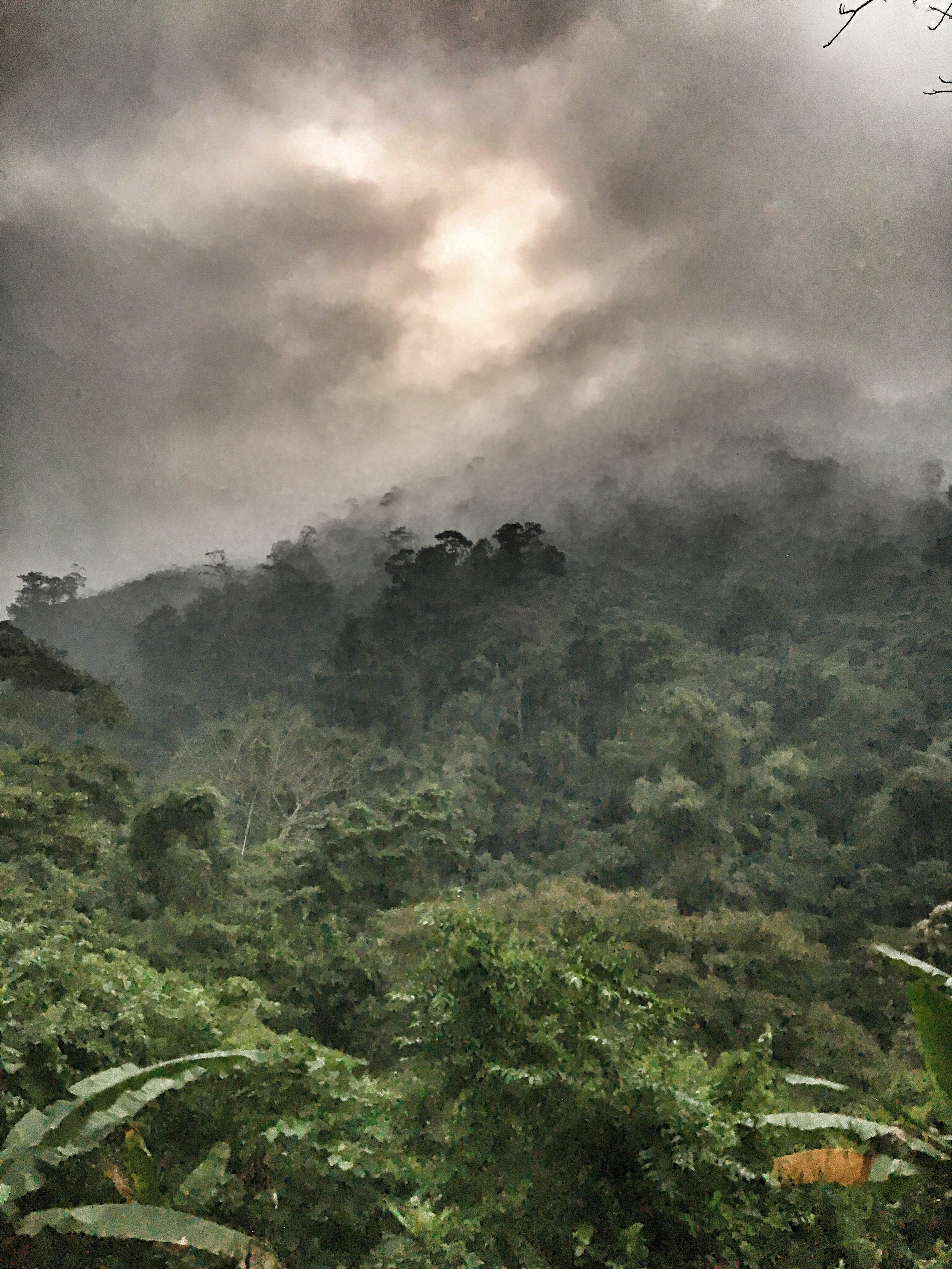
The view behind my bungalow when I arrived at Panacam Lodge.
We ended up staying at two different places in Honduras. The first two nights we were at Panacam Lodge which was foggy with mystery when we arrived. You just knew cool-ass wildlife was hidden, tucked away in the greenery.

Hmmmm, evidence that I had a roommate or two sharing my bungalow.
I wanted to do a little unpacking and freshening up before our group met for dinner. As I took things out of my suitcase, I noted a spot where there was some kind of excrement. It was large, almost as large as a mouse but not quite. I looked up from where the pile was and just where the plaster met the wood in the ceiling I saw a crevice and some movement, definitely insect and probably a bit larger than what I'm used to.
When you travel, especially to countries where it's warm and humid--critters in your room are going to happen. Even if you paid for a single occupancy room on your tour, I guarantee you will have had some sort of roommate that's neither bipedal nor necessarily a mammal. I'm generally so tired at the end of the day that I can't care about what is in the room with me. There was a time I inadvertently spent the night with a bat at Canopy Tower in Panama--not the worst thing I've ever woken up next to and those are the sorts of things that add character to your travel stories. I opted to continue unpacking and ignore whatever movement was coming from the crevice in the top of my room.
Then I made the mistake of looking up once more.
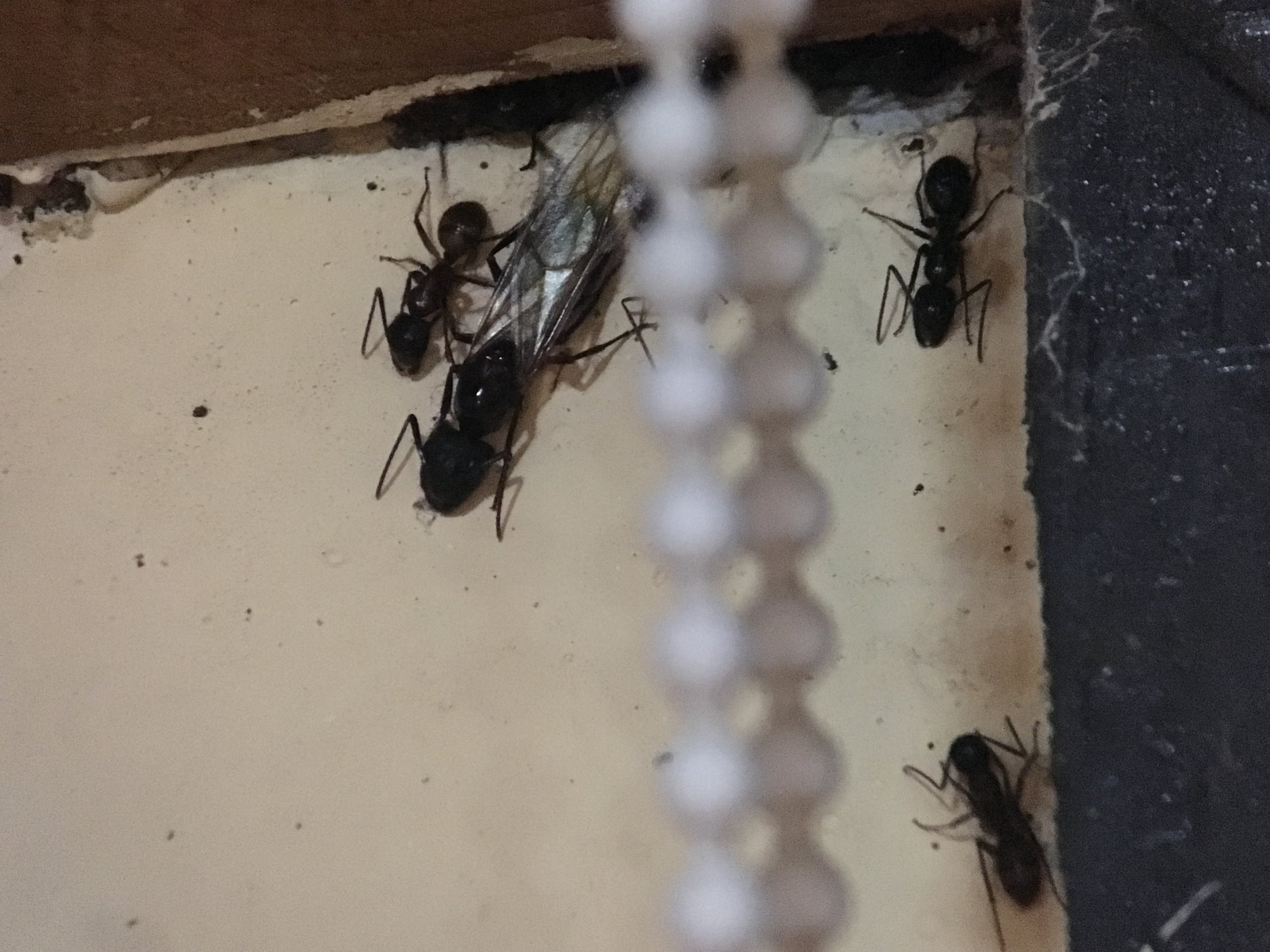
FYI the Spanish for ant is hormigas!
Very large ants were now emerging from the crevice. Now when I say large, I mean about the size of a multivitamin that you take in the morning and wash down with a giant swig of juice so it doesn't get lodged in your throat. Even more alarming was that some had wings. I had a queen hatch happening in my room! This wasn't going to be just a few ants. This was going to be an "Antenning." I can put up with a few bugs, but I really didn't want to wake up at 2am and be covered in about 500 winged ants fluttering around looking for any crevice available to start a new colony. I considered the possibility of leaving doors and windows open, but considering that was even more insect life outside that would be more than happy to come in, I ruled that out. Also, a hatch would no doubt attract bats and I don't need to sleep with one again.
I put everything back in my suitcase and closed it up. I took some pictures of the ants and I went to the front desk with my haphazard Spanish to see about getting another room. I showed them the picture of the ants and tried to explain and got reassuring faces smiling and saying, "Sí, hormigas!"
Mercifully, Elmer Escoto our guide was walking by and heard my voice, "Amiga, what's going on?"
I showed him my phone and he said, "Oh no, you are about to have a lot of ants."
I asked about the possibility of switching rooms but the lodge was packed. "Amiga, go to dinner and I will make sure this is taken care of for you, ok," he said and I dutifully obeyed.
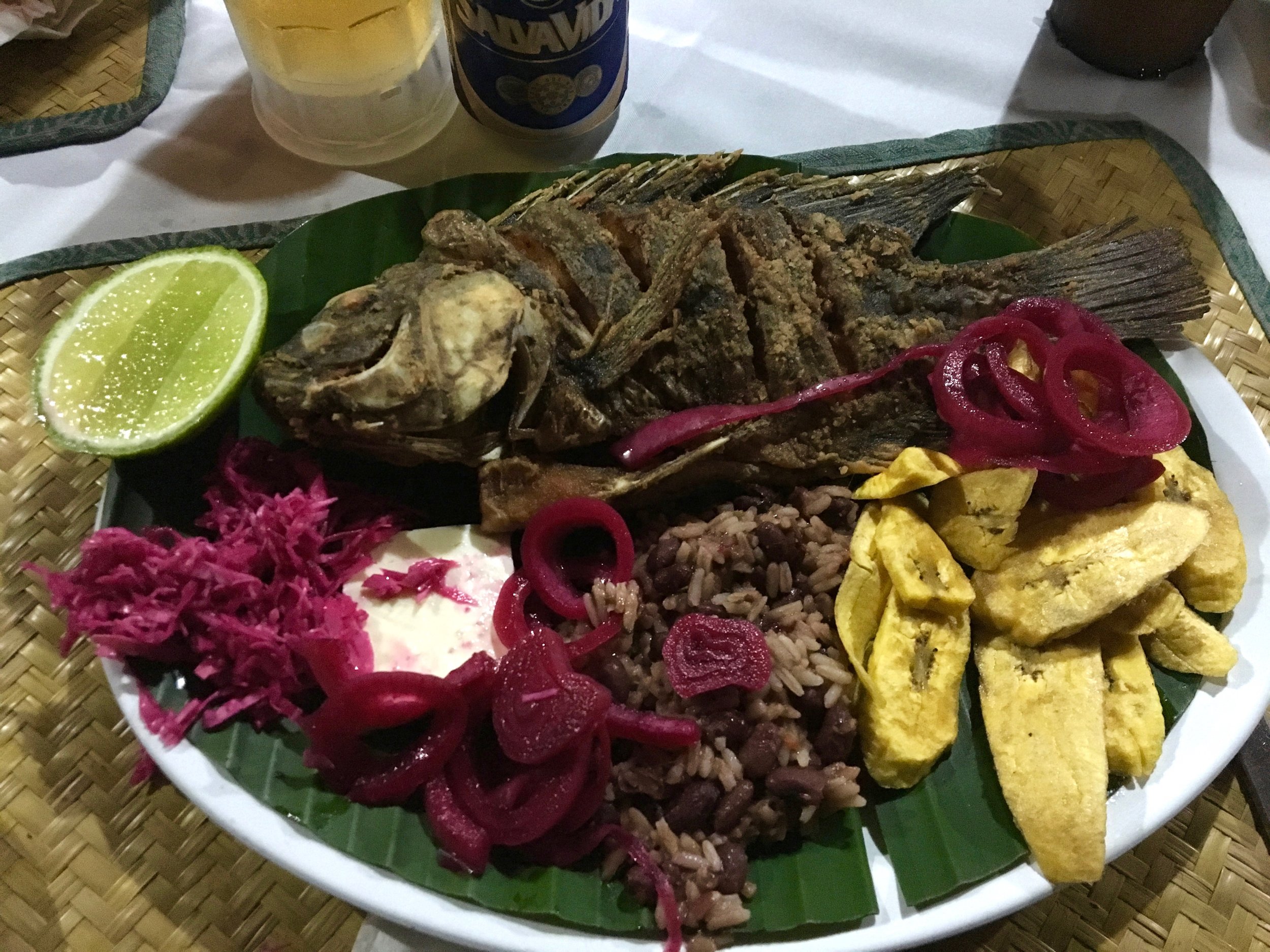
Every fish dish I had in Honduras was fresh and tasty and served with plantains.
I'm an adventurous eater, especially when away from home so if there's an entire fish body that's been fried on the menu, I'm going to eat it. Elmer eventually joined our group and assured me the lodge was taking care of things. The fish practically melted in my mouth and paired well with the pickled onions. And any day plantains are involved with a meal is a great day. We dined, we discussed the the following day's itinerary and the bird possibilities ahead.
I went back to my room and heady notes of insecticide punctuated the air to my bungalow. The crevice showed no signs of life. My floor, however, looked like a battlefield out of Game of Thrones with about 500 dead and dying ants. I giggled and decided on a new rule for my room--unless you are laying on the bed, shoes must be worn at all times. I fell asleep safe in the knowledge that I would not be covered in in flying ant queens and let the days travel fatigue carry me away.
My alarm went off the next morning and there were even more dead and dying ants on the floor. I quickly dressed for our morning breakfast-birding and figured that the staff would sweep up the ant carcasses while I was out and I would return to an ant-free room.

Squirrel cuckoo on the grounds of Panacam Lodge
Ivory-billed woodcreeper hitching up a wooden post at Panacam Lodge in Honduras. The bird was gleaning insects attracted to the lights. Disregard my narration.
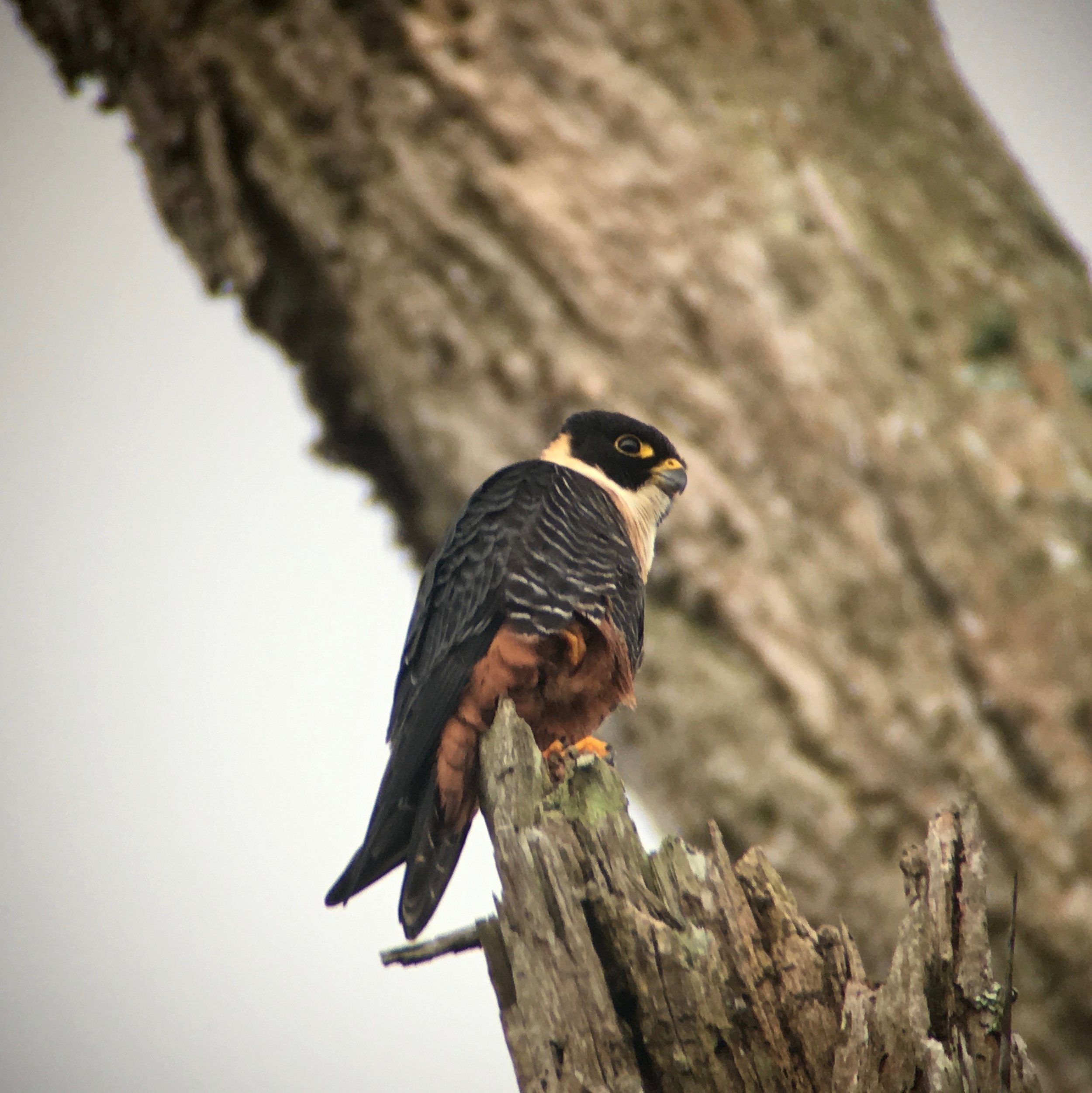
The adorable bat falcon.
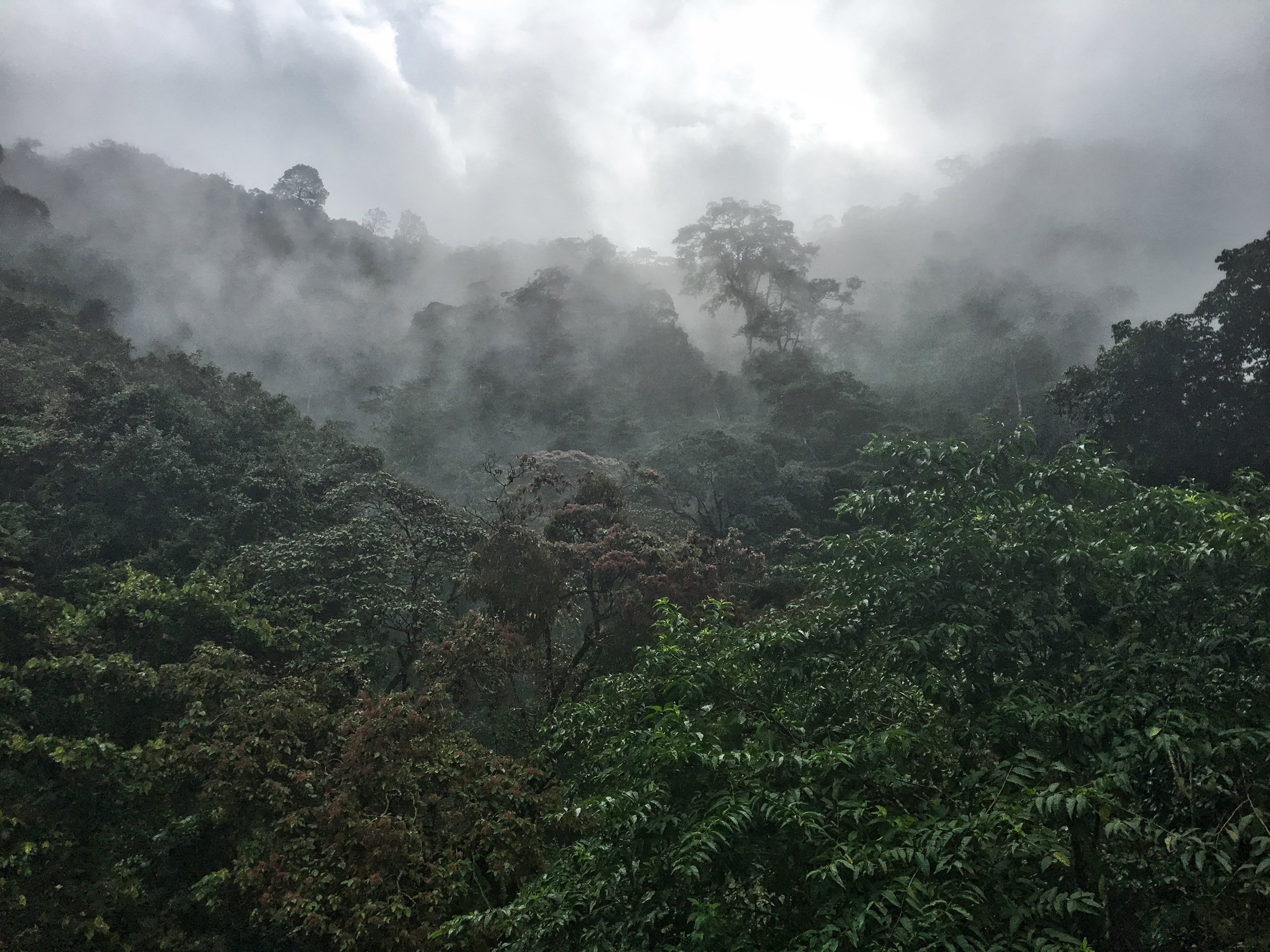
The view from the top of the Panacam Lodge tower.
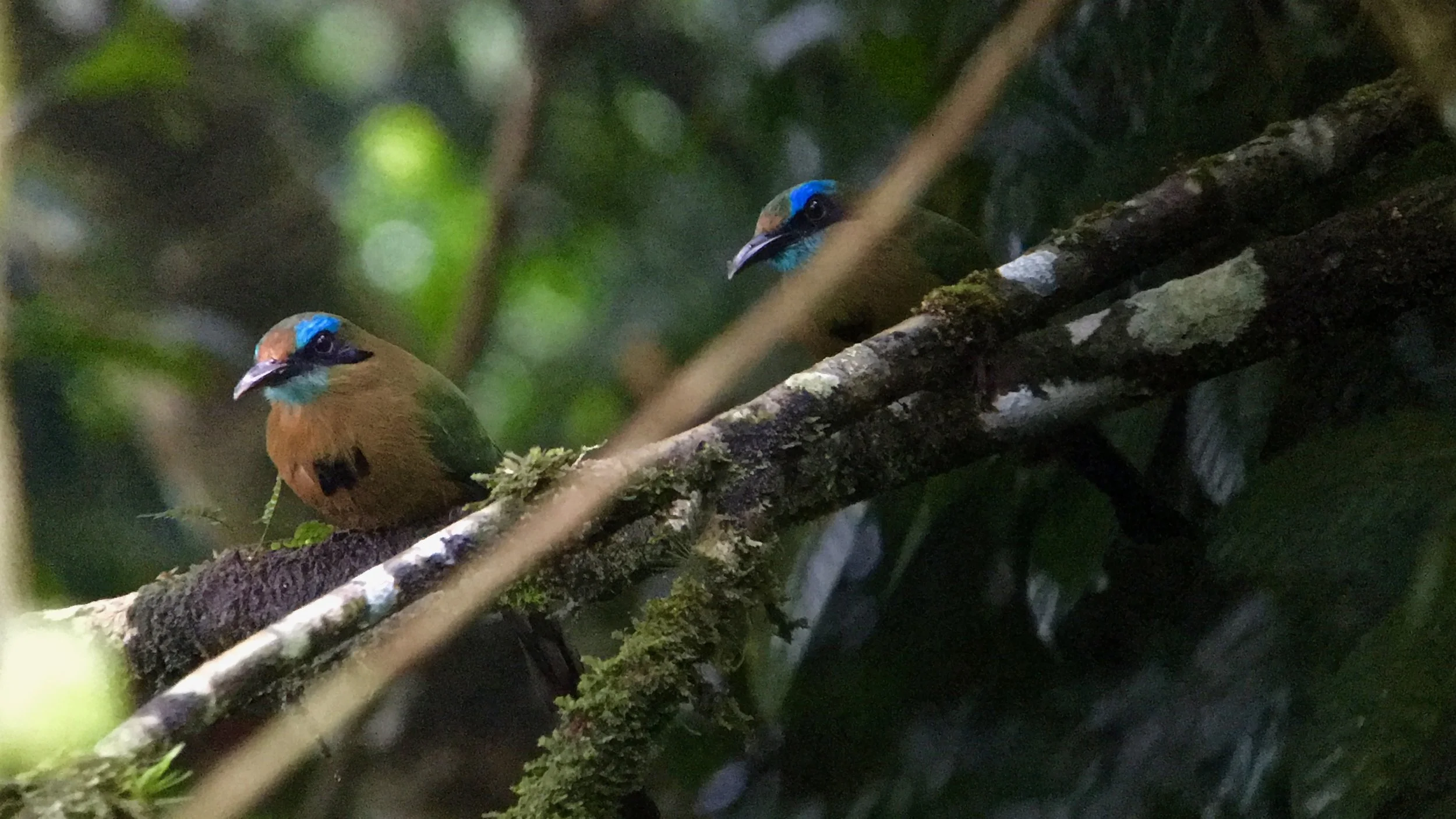
A pair of keel-billed motmots tucked in the darkness of fog and forest viewed from the top of the Panacam Lodge tower.
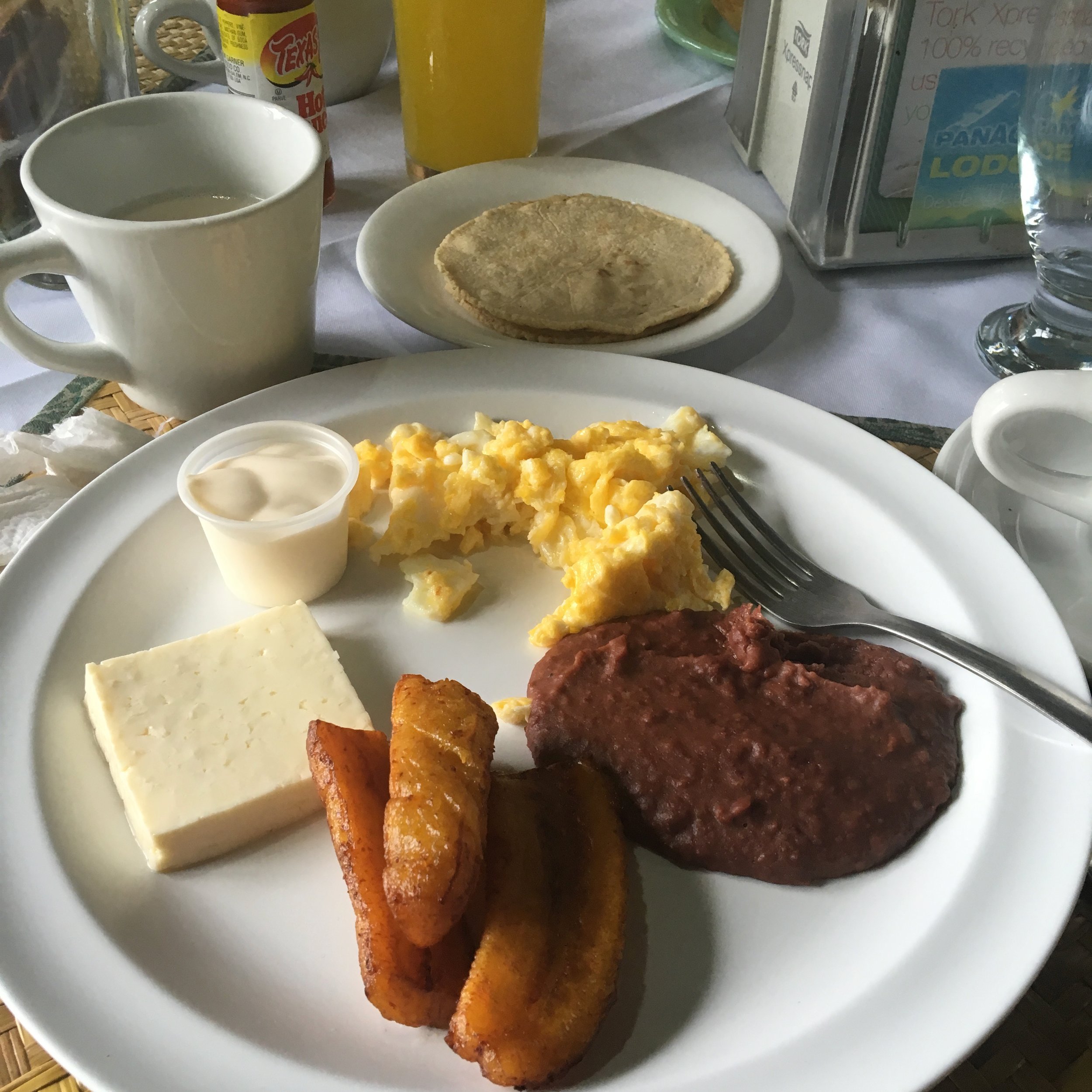
A simple breakfast to start the day at Panacam Lodge. I swear I could live on nothing but cheese and plantains in Honduras.
We got in some woodcreeper and motmot action then had some breakfast. Everyone was curious about my ant situation and mercifully I was the only one who had an ant hatch. We birded areas off of Panacam grounds and I'll write more about that in another post. But just birding around the trails of the Lodge was very fun. Here's an eBird list of what was around the lodge. The bat falcon above was just outside the lodge grounds and ended up in an eBird incidental report.
When we did come back from birding other areas I was anxious to see what my room was like. Clearly the staff had worked hard to sweep up the ants...but more were still stumbling out of the crevice. I spent the night with fewer dead and dying ants and the next day we headed to Pico Bonito Lodge. When I was escorted to my bungalow at that lodge, I instantly heard a "chirp chirp chirp chirp" sound. Nervous, I looked at the staff and they said, "It's a house gecko, all the rooms have them."
I was ecstatic. If I had a house gecko, they would eat any ants about to hatch. They were a preferable roommate.
Panacam is a lovely lodge and close to many birding locations--including a spot for resplendent quetzals. The ant incident is just part of the joy of nature travel to remote areas. The staff did the best they could to keep me comfortable during the incident. And as I said, it's fun story to whip out at dinner parties when people ask me about my travels.
Ants aside or the "antsident" as Non Birding Bill calls it, if you are ever interested in traveling with me, especially if you're interested in digiscoping, laughing and relaxing as well as birding check out my tours page.
Random Rough-legged Hawk
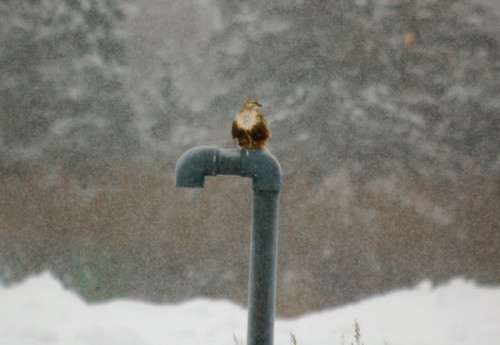 Rough-legged hawk in the snow. This is a bird being seen in the New Brighton area of the Twin Cities. I found it hunting an open area along with 2 red-tailed hawks--buteos getting along. Apparently it's been around awhile. I see it's sunny today, I may go back out and get some sunny photos.
Rockstar Storytellers
[vimeo]http://vimeo.com/19361448[/vimeo] These are a couple of snippets from the Rockstar Storyteller show I did in January 2011. That's my neighbor Zoe reading along with me. This is a piece about a woman who used to call the bird store I worked for who claimed she could psychically communicate with birds.
Turkeys Chasing A Laser Pointer
What more do you need to know? [youtube]http://www.youtube.com/watch?v=4_czuaykWPw[/youtube]
Metaphor For Marriage?
Below is a relative approximation of me getting out of bed to go birding while Non Birding Bill is still sleeping. I'm the gentoo penguin and bill would be the seal: [youtube]http://www.youtube.com/watch?v=cdPGXClOE5g&feature=player_embedded[/youtube]
Twin Cities Snow Shoeing

I have accepted the snow and have taken to snowshoeing. Partly because my park got a whole bunch of snowshoes this winter and I'm doing some programs one on January 21 and the other on February 19. I need to practice because I have a tendency to walk with my toes out, which inevitably leads to me stepping my shoes and tumbling ass over tea kettle into the snow. I was out with a bunch of rangers at the Minnesota Valley National Wildlife Refuge last week and it was so cool. We found just about every textbook thing you could find on a snowshoe hike: coyote tracks, otter tracks, rodent tracks that end with feather prints and...

...even a fresh antler shed! That's a couple of my fellow rangers in the photo. The antler had six points on it. That's pretty incredible when you consider how deeply this refuge is embedded in the urban Twin Cities. This shed was so fresh, it hadn't been chewed by any mice yet and it still had a bit of blood on the spot where the antler was attached. Too cool! I think it wasn't even an hour old.

After the snowshoe, I hung out at the feeders at the Minnesota Valley National Wildlife Refuge. Check out all the spots of red, the cardinal activity was off the charts. There were even more in the above photo, but at least three were cropped out.

I find comfort in watching the steady stream of activity at bird feeders. Little things like blue jays filling their crops so full with peanuts that you can see the overflow in their open beaks.

I was surprised to see a white-throated sparrow hanging out at the feeders, but for whatever reason, this bird didn't go further south. It's got a good food supply and cover at the refuge. If it can dodge the local sharp-shinned hawk, it just might make it. Here are some other birds visible in the falling snow around the refuge:

Female cardinal (with a female house finch down at the bottom).

Male house finch.
I Need A Cleansing Cardinal
After all the talk of the dead bird reports, I need to savor the birds right in front of me. So, here is a random cardinal photo I took during our snowshoe outing yesterday:

Bird Die Offs
There are more bird die offs being reported--now in other countries. I have mixed feelings about this. On the one hand, I'm irritated that every dead flock is being reported with added commentary (like CNN's Anderson Cooper interviewing Kirk Cameron about the birds kills) asking if this is a sign of the "end times." On the other hand, I'm happy that flocks of dead birds are reported and that people know this happens. Let me be clear about one thing: THIS IS NOT THE END TIMES. This happens A LOT. We just don't hear about it. To give you some perspective, millions of birds (of several species) are killed by windows, cell phone towers, wires, free roaming cats and vehicles every year. The numbers may not be seen, the dead birds are often eaten in the night by opportune scavengers.
According to Bird Conservation Network: at least 100,000,000 birds are killed and even more are injured every year across North America by collisions with windows.
An estimated 5,000 to 10,000 birds, mostly lapland longspurs were killed on the night of January 22, 1998, at a 420 foot tall communications tower in western Kansas--cause for serious concern and panic...especially since this sort of thing happens a lot and few people hear of it.
According to US Fish and Wildlife: At least 4 million and as many as 50 million birds are killed annually in tower collisions, the US Fish and Wildlife Service estimates. Here is a GREAT document from US Fish and Wildlife about birds and collision injuries.
From my perspective, incredibly common birds like red-winged blackbirds, grackles and starlings that have a tendency to move around in tight knit flocks of hundreds of birds getting wiped out by colliding into power lines, vehicles, each other via panic from fireworks is a concern but not a panic.
Cause for panic is BP trying to say that the Gulf of Mexico is fine and only 2000 birds were killed. There were more, they are not easily recovered in the water and we have yet to see how wintering ducks are going to fare (not to mention how many birds their response teams killed by driving over their nesting colonies). Will there be enough food for years to come. I'm still far more concerned with the BP big picture than I am with the Arkansas Aflockalypse.
If you doubt that millions of birds are killed every year, here's a great example. On September 11 of last year, they put up the Tribute of Light for the fallen Twin Towers and thousands of birds were trapped in it. New York is on a major migratory bird route. The winds were right for fall migration and birds were on the move. With the tower lights on, they were attracted and couldn't leave. The lights had to be turned off several times to get the birds to leave rather than spending the night trapped in the lights, exhausting their energy resources and possibly killing them. This is just one night in one spot. That to me is cause for panic. Thousands of birds of several different species. Many of these birds are the insect eating kind, not the "pest kind" like blackbirds who raid fields. Here's a video of the event:
[youtube]http://www.youtube.com/watch?v=EZAQSw0qCAI&feature=player_embedded#![/youtube]
So, listen to those news reports, don't freak out that the end is near but do find ways that you can help solve these collision problems in your neighborhood and city.
Aflockalypse Now?
Good grief! First we had the story of the 3000 - 5000 dead birds in a one mile area in Arkansas...and now we have another report of 500 birds dead on Louisiana. What the heck could be going on? Flockmaggedon?? Here's my take: I agree that the New Year's Eve incident in Arkansas was probably the result of fireworks startling a sleeping flock and that birds either ran into each other or into houses and trees resulting in collision trauma. The reports say that the collision injuries were in the front of the birds--as if they flew hard into something. If the trauma was caused from their fall from the sky, then the necropsy would show the trauma on different sides of each bird, as each bird would fall and hit at different angles. So, barring that the red-winged blackbirds, grackles, cowbirds and starlings flew into an invisible alien spaceship, I think the fireworks theory is plausible.
Let's take a look at some images of blackbird flocks. I went into Google and searched for "blackbird flock" and "starling flock." They're flocks can look similar:
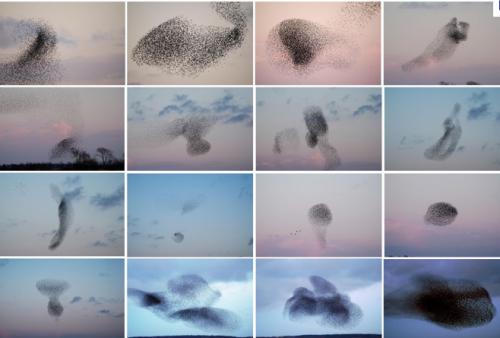
I did not take any of these photos. These are all flocks of blackbirds. This gives you an idea of what those roosting flocks can look like. If you've never seen a winter roost starling flock or a blackbird flock, it is a strange presence in the sky. It reminds me a bit of the eeriness of an Aurora Borealis. Here's another flock photo:
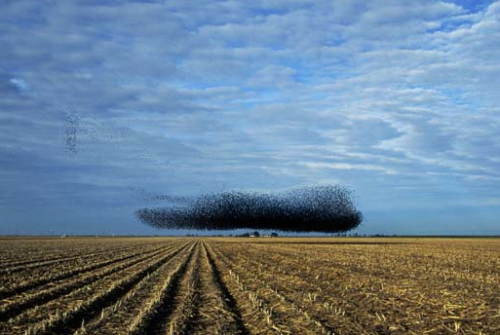
Again, I did not take this photo, but I found via Google Image Search. Look at how tightly packed those birds are. That is a group out during the day, in the wide open. They can move and swirl and function more as a whole without flying into each other in the daylight. At night, in a full blown panic, that many birds will run into each other. If they were roosting, they were probably low to the ground to begin with. If fireworks were going off overhead, they sure as heck would not fly up, they would try to fly below it. In the dark and in a panic, they'd run into each other, trees, poles and buildings.
Now, here is a photo of the dead blackbirds in Louisiana:
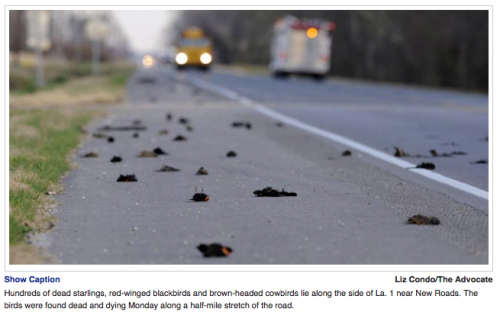
This photo is from The Advocate. Keep in mind how tight those blackbird flights can be. Now, note the blurred vehicles in the above photo. See the bus? I wonder if semis also come down this road. I think a flock of blackbirds flew hard into a large vehicle and died. It's happened before. I remember reading about a case in the 1990s. It doesn't even have to have happened at night. It could have happened at dawn or dusk. The startling factor for the blackbirds may not have been fireworks, but a Cooper's hawk. This probably would have gone unreported had it not been for the Arkansas story.
Mysterious things happen to large flocks of birds,they don't get quite the media play as this story did. Here's a story you may have missed about several hundred turkey vultures found floating just off the Florida coast near the Keys from last November. It's sad that we lost a lot of blackbirds. Is it cause for concern and should we try to find out the reason? Yes! Should we panic for the coming apocalypse? No.
And I end this with a starling flock video: crazy stuff:
[youtube]http://www.youtube.com/watch?v=XH-groCeKbE[/youtube]
Last night on Facebook people were posting vague links other possible die offs, but I could find no news organizations reporting on them.
Digiscoped Images
Fresh Tweets
Would you like to hire me as a speaker for your event?
Email sharon@birdchick.com