Birdchick Blog
Che Guevera's Cave and Ant Hatches

Cueva de los Portales in La Guira National Park
One of the places I was most excited about visiting in Cuba was Cueva de los Portales in La Guira National Park. This was the headquarters of the Western Army and the hideout of Che Guevara during the Cuban Missile Crisis in 1962. I was curious to see something that I'd read about so much in school. This is also the spot to get Cuban solitaire. I have fallen head over heals in love with the solitaire family, their songs are haunting. I can send you to Xeno Canto so you listen to them, but computer speakers are a poor comparison to the real thing. If you do go there, put in your headphones at least. The true solitaire song in the wild echoes off the sides of mountains and sounds other wordly. So far Brown-backed solitaire is my favorite bird song ever, but I was very curious to hear how the Cuban solitaire sounds different.
The Cuban solitaire did not disappoint. As we explored this beautiful cave and heard the patter of rain and the chittering of bats that haunting song bounced off of the cave walls. I could have sat and listened for the entire day.

Inside Che Guevara's cave which was also loaded with bats and swallows.
The cave is definitely worth exploring, but if you go in with cameras (or spotting scopes and binoculars) you will be charged a "camera fee." Make sure to have Cuban Convertible Pesos handy.
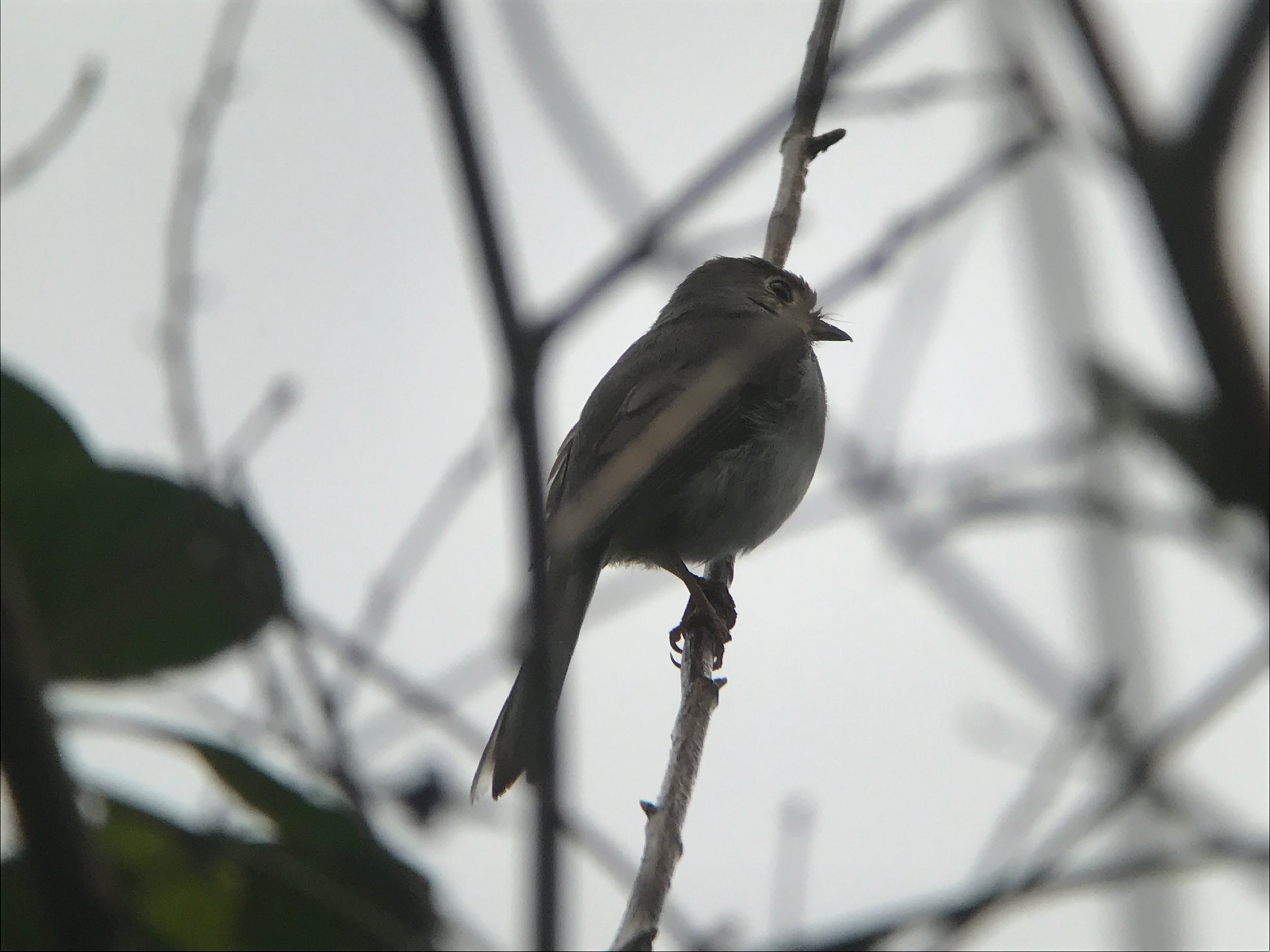
The Cuban solitaire was not easy to see, but I was more interested in listening to it.

American kestrels are very pale in Cuba.

La Guira National Park is a good spot to see yellow-headed warbler too.
If you travel into Central America enough, it is inevitable you will experience an ant hatch...in your hotel. Previously, I wrote about experiencing an ant hatch that happened in my room at Panacam Lodge in Honduras (this is not a knock against that lodge, this is just part of life in the tropics). Hotel Islazul Mirador (also called Hotel Islazul San Diego de los Banos) was our base for this stretch of our trip because it was near the cave. Most of the occupants at the hotel appeared to be residents enjoying some weekend fun. Two of the men on our trip took a stroll outside the hotel and within a few blocks met a local teacher who gave them a tour of the town. He had started a personal library for the town from books he collected from foreigners. Incidentally, if you wanted to take something to Cuba for the people, I highly recommend bringing along copies of your favorite books to read in Spanish and leaving them behind.
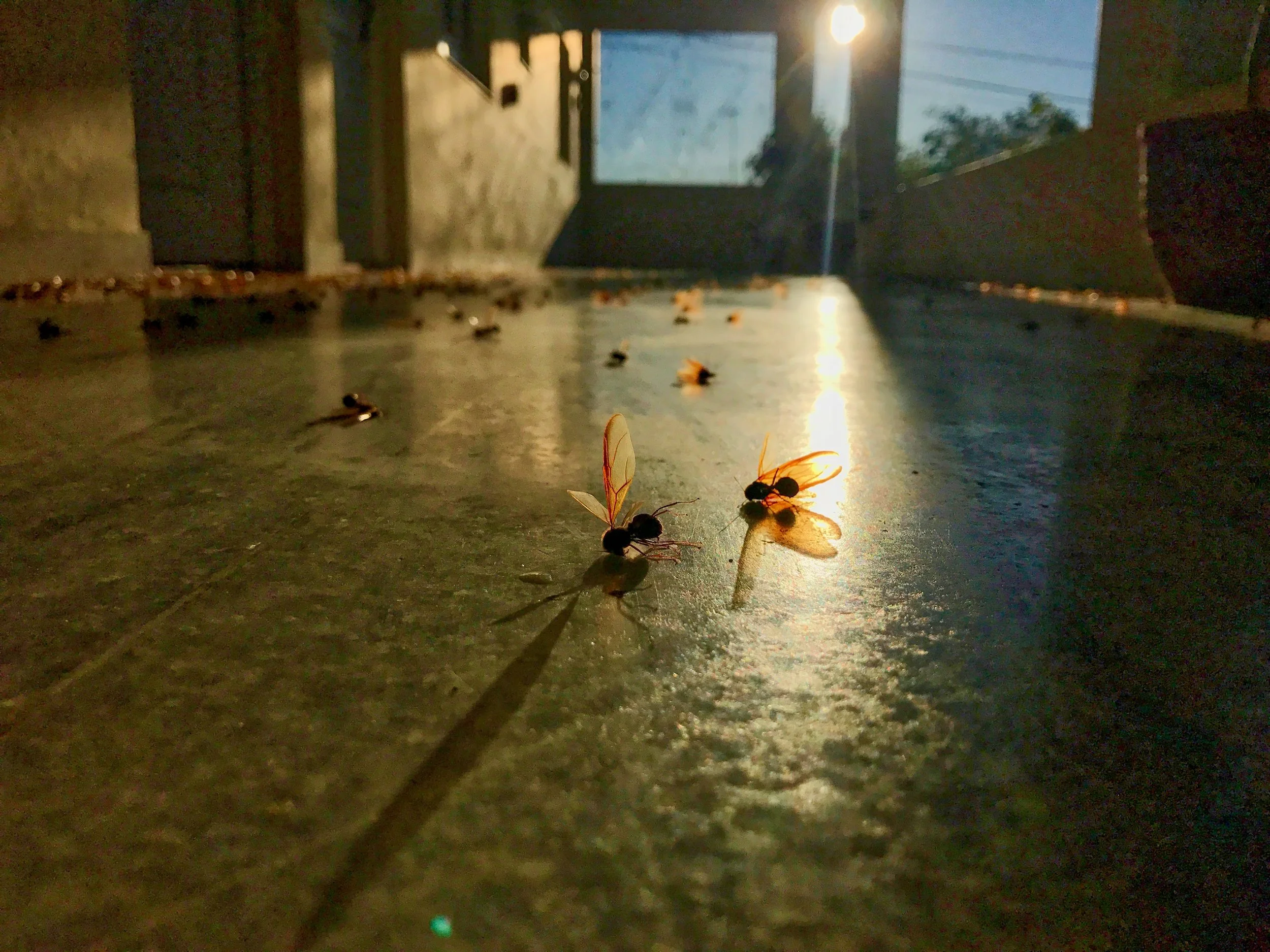
I shared a room with my friend Sue and the morning routine was that I would wake up first and as I moved around, Sue would gradually wake up. One morning I woke and went into our bathroom. As I was gradually gaining consciousness, I heard a clicking sound. I looked down and noticed a large insect crawling under the door into the bathroom. Then a second. When both were inside, they fluttered their wings and made the clicking sound..."Oh no," I suddenly realized: ant hatch.

Winged ants crawling around the bathroom.
I brain sprang into action, I didn't have ants on me so the hatch must have just started. I needed to close up our suitcases so we wouldn't have them in our clothes. I needed to wake Sue but not panic her. I stepped out of the bathroom and noted a few more ants on the floor.
"Sue," I said in steady but firm voice. "Sue, you need to get up and close your suitcases. I need to turn on the lights."
I flipped on the lights to see where the ants were coming out. I looked for any kind of gap along the ceiling and walls. I couldn't see ants. Sue was getting out of bed and thought our room was flooding in her half awake state. I was trying to carefully explain the hatch because I wasn't sure how she would feel about thousands of large, winged ants crawling all over us. There were some more winged ants on the floor and then I noticed the clicking sound was louder just outside our room door. I realized with some relief that it wasn't in the room, but outside. When I turned on the bathroom lights, that must have gotten their attention and the ants were crawling from under our room door and a gap from our shutters. What a relief that it wasn't inside!
I turned off the lights in our room and decided to take a peak outside.
The light just outside our room was out so we didn't have that many ants outside of our door. However, walking down the corridor you could see that our neighbors' rooms were all covered in dying ants that were attracted to their lights. It had been raining most of the day before. When the rains stopped, queens hatched to go on their mating flights with males. After the mating the wings on the queen fall off and she goes to start a new colony. But all of these ants got distracted by the lights and spent all their energy around it, exhausting themselves. As morning was approaching they were dying and their wings were falling off.
I wondered about people coming out of their room barefoot to have coffee, only to step in and slide through ant guts. I went back to my room to finish prepping for the day's adventures grateful to not be dealing with ants in our room.

When I headed down to breakfast the sun was bright and the dead ants looked quite beautiful in the light. While we were eating, the hotel staff went through and swept them away. I looked down at the pool and it was a different story. A layer of drowned ants covered the surface. The pool boy would have his work cut out for him this morning.

Jellied papaya...with cheese.
One of the specialties our cultural guide Claudia told us to try at the hotel was jellied papaya. If you think papaya is ok but could do with more sugar then this is right up your ally! It was far too sweet for me but it was an interesting flavor. Make sure to give it a try.
Las Terrazas Birding
After some fun times and barely birding in Old Havana, we met up with our main guide in Cuba, Hiram Gonzalez (pronounced "ear rahm" not they way we say Hiram in the US). Hiram is quite possibly one of the last people to see an ivory-billed woodpecker alive in Cuba. He's an ornithologist who specializes in endangered species on the island. If Zapata wren is your goal--he's the one you want to know to see one.

He's also one of the most colorful guides I've ever gone with. How often do you go out with a guide who points to your endemic lifer with his half finished cigarette? He speaks very good English with a heavy accent. It took me a minute to figure out that "janky bird" was giant kingbird. At night, he'd join us at the bar and school us in birds and the better rums. But he was always so excited to show us his birds which I'm sure he'd seen more times than I've seen a cardinal. Ever time he would exclaim, while wildly flailing his cigarette, "Look AT dat!!!"

Male Cuban martin.
We headed towards Las Terrazas to a plantation to get some of those Cuban endemics we'd been reading about so much. On the way we stopped for gas and got a lifer: Cuban martin. We had martins zooming over the roof of our hotel. Even though it was April, I wasn't sure if there still might be some male purple martins on the island and it's impossible to tell male purple martins from male Cuban martins. But at the gas station there was no doubt.
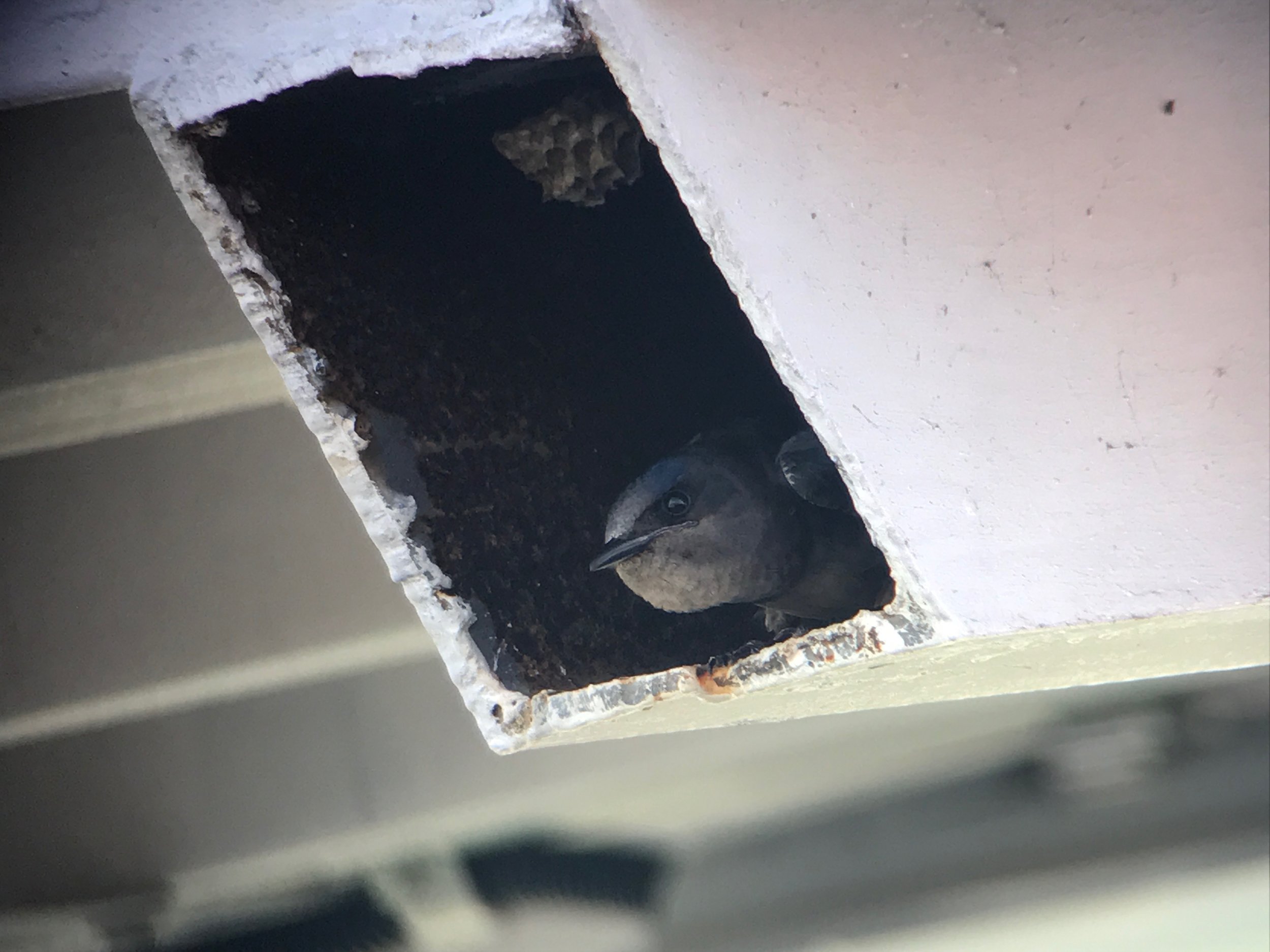
Female Cuban martin in a nest cavity, check out the wasp nest above her head.
Unlike purple martins, Cuban martins nest in holes in buildings--not the houses and colonies people in the United States have trained martins to use. These martins were using any hole or gap in the gas station. Cuba is know for several species that are endemic--spend their entire lives on the island. But martins fly away in winter and only breed here so their considered a breeding endemic. Kind of the way golden-winged warblers would be considered a breeding endemic to the North America.
We continued our journey and at the first stop in Las Terrazas, it was the "holy-shit-new-birds-everywhere" sensory overload time. That lovely point where you are afraid to focus on just one bird because you might not see the other new bird right behind you ever again. Many of the endemics we saw on the first stop ended up being birds we would see almost every day like Cuban trogon, Cuban tody and Cuban green woodpecker...getting actual photographs of them was another story.
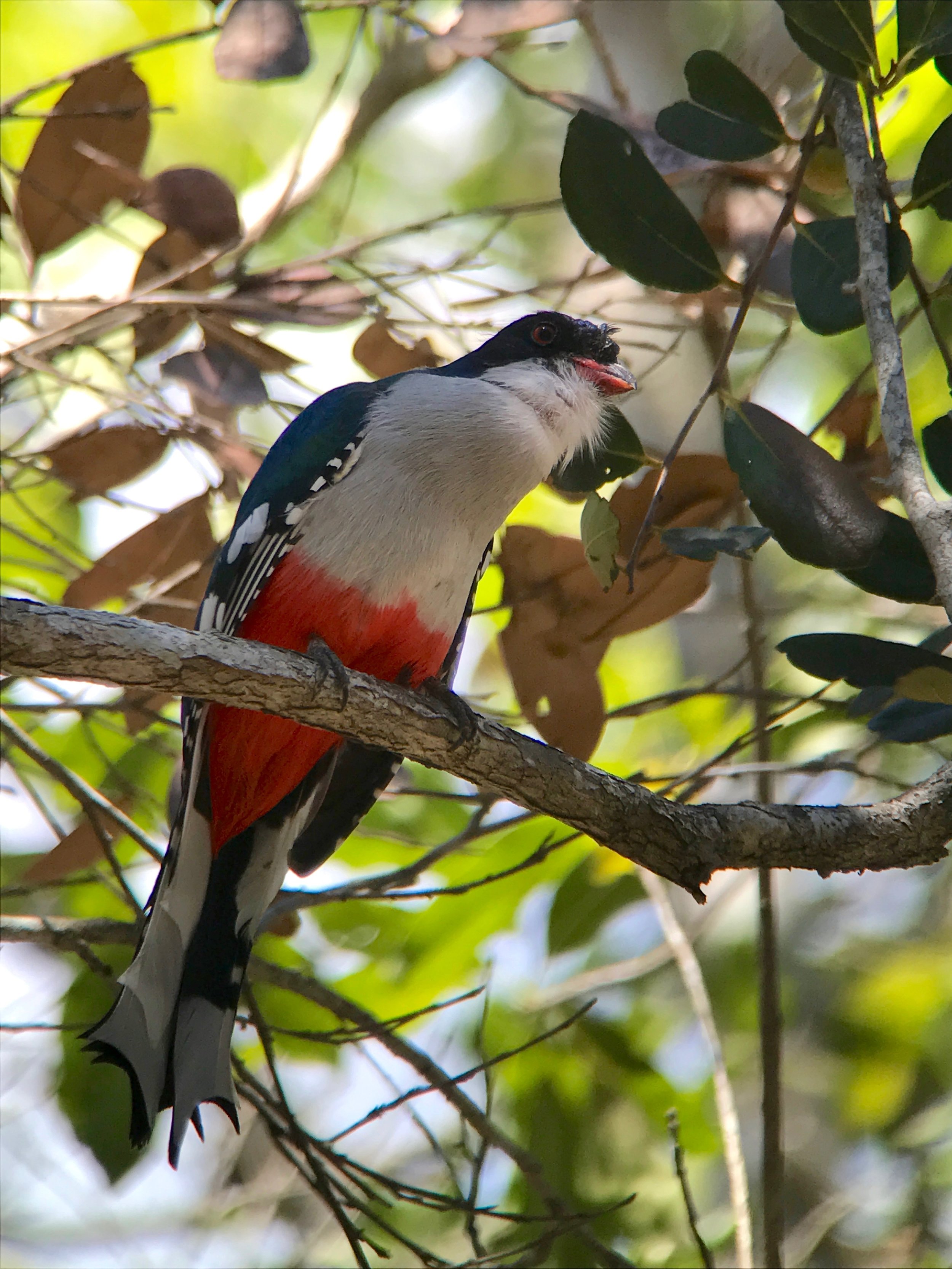
Our very first bird was the Cuban national bird, the Tocororo or Cuban trogon. As we were watching Cuban oriole and Cuban green woodpecker flew over--to a nest.

Cuban green woodpecker.

The farm to see grassquits!
Clouds and mist moved in as well giving things a mysterious air. After our initial stop we headed to a nearby plantation where they were setting up to feed their chickens. However, domestic fowl are not the only birds to see. This is the spot to get cracker jack looks at grassquits.

Cuban grassquit.
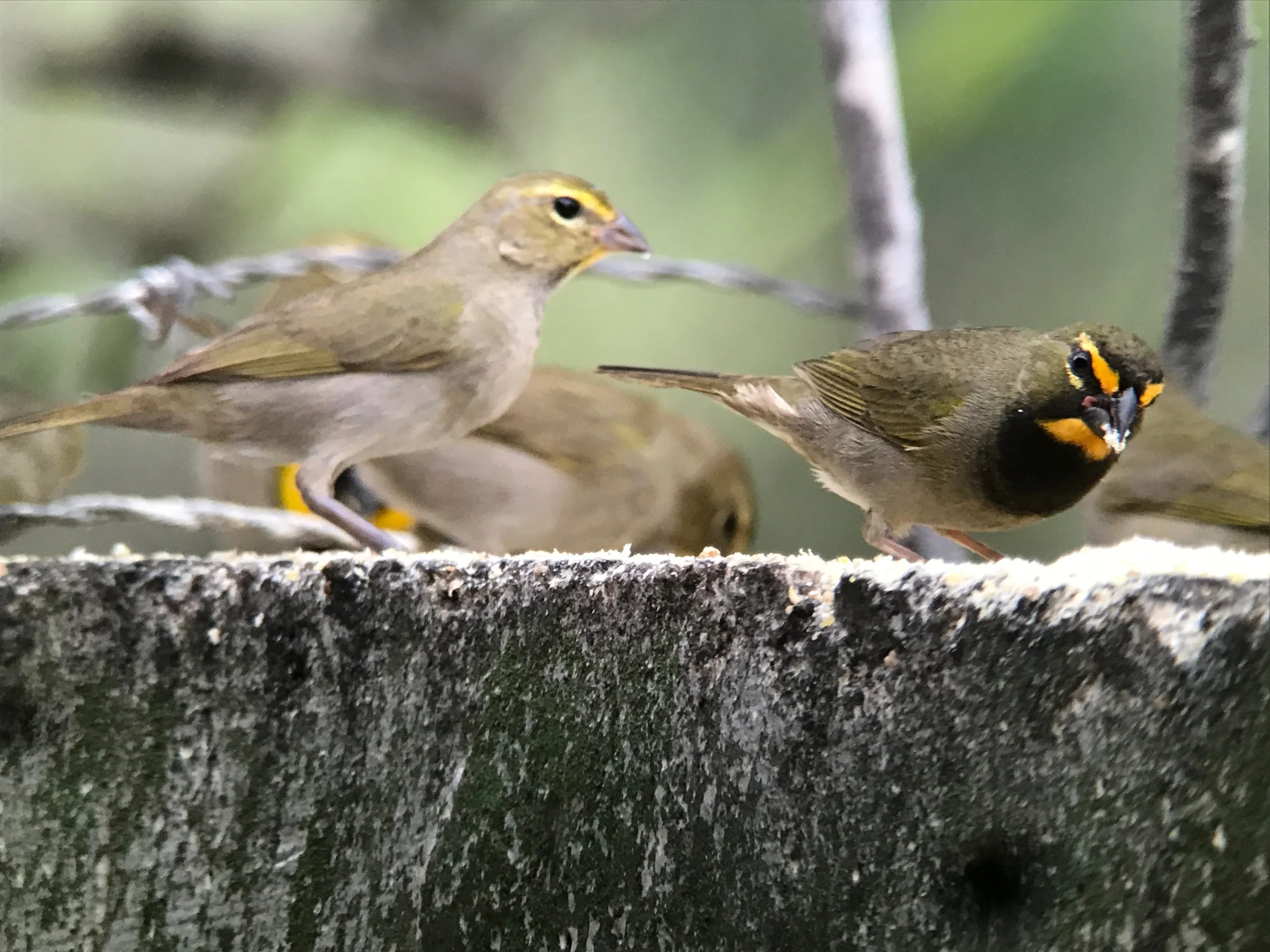
I could show you images of grassquits but it's far more fun to watch video of them happing around. There were far more yellow-faced grassquits than Cuban grassquits but we got ample looks at both. These are now considered to be part of the tanager family and are related to Darwin finches.

I tried to get a picture of Flat Michelle with the grassquits, but they were having none of it.

So a local farmer was happy to oblige instead.
Digiscoped Images
Fresh Tweets
Would you like to hire me as a speaker for your event?
Email sharon@birdchick.com