
Birdchick Blog
Heron Rookery Visit
Here's a follow up to yesterday's story about the Minneapolis tornado that destroyed the great blue heron rookery at North Mississippi Regional Park. Thanks to a lot of phone calls, my park the Mississippi National River and Recreation Area, CO Todd from MN DNR and some vet techs with heron experience from the Animal Humane Society, we made it out to the heron rookery. I was so excited that as we were making phone calls to coordinate this, people were willing to loan boats and equipment, especially since money is tight when it comes to government funded employees.
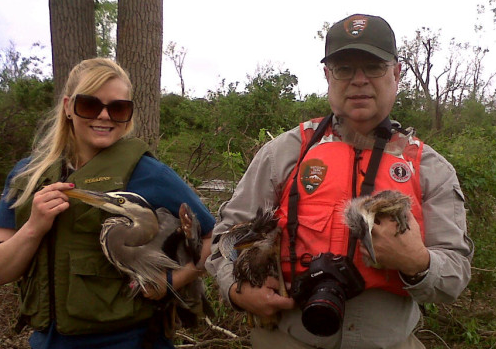
This is Nicole and fellow Park Ranger Gordon holding birds we recovered. I was especially excited to have along Laura and Nicole from AHS, they had heron grabbing experience, which made a huge difference. Apart from minor scratches from vegetation, no human was injured.
A group who knew enough about herons to avoid adults retrieved 7 live heron chicks last night. We recovered 2 more chicks and 3 adults this morning. Most were taken to the Wildlife Rehabilitation Center in Roseville, MN (apart from 2 who had injuries so severe, they were euthanized right away). If you have any spare cash, please donate it to the WRC--even if it's only $5. This is their busy time of year and getting an unexpected drop of 9 baby herons who need lots of fish to get the adult weight of 7 pounds is expensive. Any extra spare change you have is greatly appreciated by those folks.
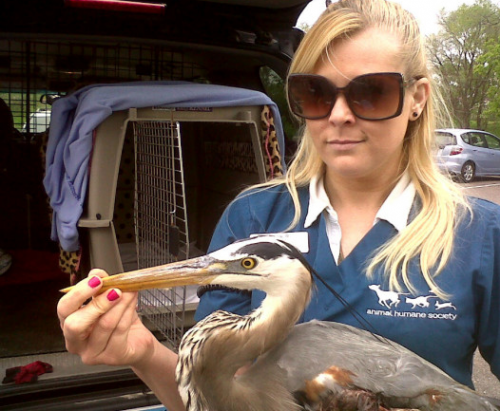
We couldn't save them all, most of the chicks were dead, but we did what we could and helped those we could reach. If you figure conservatively that there were 180 nests (though I suspect there were over 200), with each nest holding 2-3 chicks and every single nest came down, we lost over 300 healthy chicks. We found maybe 50 dead chicks on this island, but from the way the trees fell, I'm sure most of them ended up in the river. We found very few dead and injured adults. I think the herons saw the tornado and took off for safer skies, leaving the chicks behind. The few who stayed were the ones who were killed or injured. So, sadly we lost almost an entire generation fro the summer from this one rookery, but most adults survived to breed again next year and there are several rookeries for them to use around the Twin Cities. Herons build flimsy nests and have evolved to deal with natural disaster. It is a sad day for the park to loose this colony, but we know in the long run, they will survive and continue to breed.
I spent the rest of the afternoon talking to the media. I'll post links as they show up on the web. Also, Ranger Gordon uploaded photos from today on our park's Facebook Page. Check them out!
Star Tribune story by Jim Williams
Star Tribune story by Maria Elena Baca
WCCO's coverage of the heron rookery
MPR coverage of the heron rookery
KSTP coverage of the heron rookery
Pioneer Press coverage of the heron rookery
National Park Traveler coverage of the loss of our rookery
WRC coverage of the heron rookery
Minneapolis Heron Rookery Destroyed By Tornado
This was so not how I planned to spend my Monday. Warning, not a pleasant post ahead. I returned from Detroit Lakes Festival of Birds yesterday and on my way home, Non Birding Bill called to warn me of a possible tornado in north Minneapolis--an area I would drive through on my way to our apartment, but far from our our building. I mostly avoided the storm and drove through the tail end of it. We checked Facebook and called friends to make sure people were accounted for and were relieved to find them alive. This morning, I started my day off finishing errands and planning bird festival blog entries, some bike riding and our next podcast. Then the emails started to come in asking what I new about the North Mississippi Regional Park Heron Rookery.
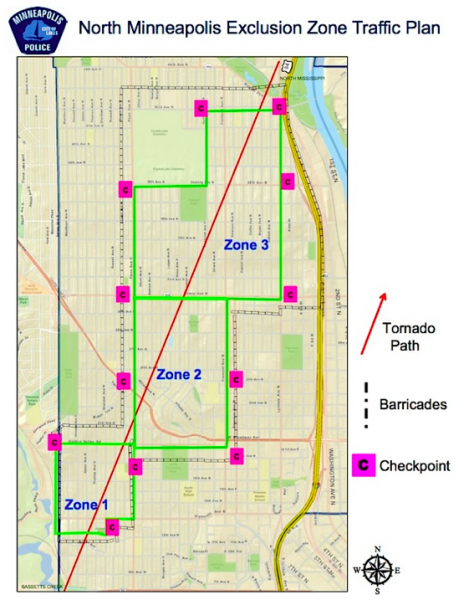 A quick check of the Minneapolis Police traffic plan confirmed my fear. The tornado's path hit the park. I called my boss from the Mississippi National River and Recreation Area and said, "I know it's my day off, but do you mind if I put on my uniform and go check out the situation?" If areas were blocked off, I knew I'd have a better chance of getting in and not be perceived as a looter if I had my official badge and uniform on. He said to go for it.

Reports from friends in the area said that herons were circling non stop around the park. As I was driving to the exit for North Mississippi Regional Park, I saw herons circling outside of the park fence (this photo was not taken as I was driving, it was taken at the park). I also noticed trees down around the fence and tornado debris around the highway. My stomach sank. I made my way around the blocked exit, entered the visitor center for the park and the employees faces confirmed my fears. They said the rookery was gone and they were devastated.

I've blogged about this rookery a lot. I even took someone from MPR out to it. We use it regularly for programs for my park and people who use the trails love to check it out in the summer. It's a testament to birds adapting to an urban area.

This is what it looked like this morning. There are no words. Every single nest was gone, it looked like the tornado went right through the island. Even the few trees that managed to stay up in the face of the tornado had lost nests. Herons were circling the island, some looking for purchase, others flew in with sticks in a half-hearted attempt to rebuild. Everything was gone.

Most of the walking trails around the park were downed. There was some access on the biking trail but I had to do some climbing to get around.

There was at least one dead heron on the trail at North Miss, but how many more were under the trees?

When I arrived at a point on the bank of the Mississippi River where I could view the island that once hosted the rookery, I found an injured heron. I was unprepared. I've handled all sorts of birds with bird banding and with picking up injured raptors for The Raptor Center. Herons are difficult and dangerous. They don't know that you are trying to help them, all they know is that they try to eat the weak and injured when they find it. They will fight with that spear like beak and that long neck gives them an advantage. I know of one rehabber who lost an eye grabbing a heron and others who have been stabbed in various appendages. I had no protective goggles or anything to put the heron in. It was also close to the river. I stayed and waited a moment assessing the situation:

The heron flew to a log on the river and compound fracture on its leg was evident. Sigh. I was really surprised at how few injured herons I could see. These are long, lanky, slow moving birds. The ones that were flying had a few feathers missing but otherwise appeared okay. How did they survive the tornado?

Some herons perched in the remaining branches and they appeared to be okay. It's almost as if what happened hasn't clearly processed in their brains. They know the nests should be there, they should either be brooding eggs and chicks or bringing in food, but the nests are gone and so they perched in the trees and waited.

A few more were down among the vegetation on the island. As I was there taking photos, park visitors came by wanting to help and grieving over the lost rookery. I advised all of them to wait for park personnel to get to the herons and warned them how dangerous they can be. I sympathized with the park and staff. However, while there some guys in a boat came by taking photos of the island and of us.

Then these guys in hipster hats got on the island and started heading towards the herons, no gloves, no protective eye wear, nothing. I yelled to them to stay away and they seemed surprised someone could see them and backed off. I appreciate that people want to help, but injured herons are incredibly dangerous. My park is working on a solution to reach them right now. The river is still high and again these are dangerous birds, we need planning and skills.

The big question people want to know is what will the herons do now? Will they renest? I don't think that they will, they have a brief time for nesting in Minnesota. Nest building can take about 3 days if they really work, but can take a week or more. Incubation is about 27 days and the young fledge (fly and leave the nest) at about 54 - 57 days. It takes a few weeks for young herons to become independent from the adults. So, we're looking at about a three month process meaning the chicks would fledge in late August--that's a little late, especially since the rookery is gone.

I think these guys will get the summer off to feed themselves. There may be a few young herons who might attempt a renesting at Coon Rapids Dam a few miles north on the river, but I think the season is scrapped for most of them. On the upside, herons build flimsy nests and this is something they have evolved to handle natural disasters. The heron population in the Twin Cities is very stable, they will handle this and restart next year. At the same time, it's hard to see the devastation and it's incredibly hard to watch the injured.

I couldn't help but notice all the birds on the ground. This American redstart practically walked through my legs. Warbling vireos, orioles and other warblers were down low, feeding off of the insects tucked around the branches of the downed trees. I couldn't help but wonder how something that weighs about as much as a dust bunny could survive a tornado? Did they just roll under some shrubbery when the wind blew?

As I was about to leave, a park patron walked up carrying a bawling fawn. He said it was found in the open on the trail alone and crying out (it kind of sounded like a goat). I was working my way towards getting him to put the fawn back where he found it (fawns normally hide while the does are out feeding and it's not unusual to find one unattended) but he said that he found a dead doe near the fawn which didn't sound optimistic for the young deer. I ended up taking it to the Wildlife Rehabilitation Center.

So, all in all this was a crap Monday. I apologize that the podcast didn't happen today and it won't happen tomorrow. I spent the day trying to coordinate an effort to get to the heron rookery island with people experienced with herons and to see if we can get the injured adults. Plus, I'm in a morose mood, I can't imagine the podcast being fun to listen to.
One final sad note about the Minneapolis tornado. There's a report that Rob MacIntyre of the Raptor Resource Project (the folks who bring us the Decorah Eagle Cam) died while helping his neighbors clear debris.
This tornado was sad on many levels.
North Miss. Heron Rookery is gone.
Sharon's asked me to post a quick note while she's on the scene. After our recent tornado(es) in Minneapolis, the North Miss. Heron Rookery is gone. Also, they have no phone service in the area. More later.
 Cooper's hawk and its eternal question: Can I eat that?
Deer Eats A Baby Bird
Yikes, this video may not be for the squeamish. It's not bloody but there's no doubt what this deer does. They're not just herbivores. [youtube]http://www.youtube.com/watch?v=sQOQdBLHrLk&feature=player_embedded[/youtube]
Thank you, Matt, for sending this...I think.
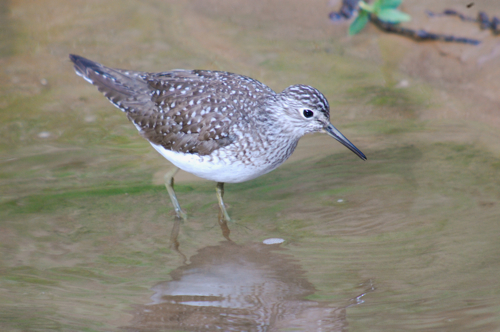 Solitary sandpiper lurking around Mr. Neil's creek.
Sweet #Birding Camps For Kids
The American Birding Association still has space left for kids on their cool camps this summer...if they'd allow adults who act like kids, I'd LOVE to go on one of these. Check 'em out and if you know a kids who would love to do this, try to help get them there: Project Puffin Hog Island Audubon Camp: Coastal Maine Bird Studies for Teens Jun 19-24, 2011 Audubon's venerable camp in coastal Maine, now co-sponsored with ABA, includes field identification, bird song recognition, conservation practices, and the opportunity to observe Audubon's seabird conservation field research.
ABA Young Birder Camp Colorado June 25-July 2, 2011 This repeat of last year's wildly successful camp will feature Jennie Duberstein, Bill Schmoker, and Liz Gordon as new counselors and incredible field trips from mountains to plains with Colorado experts like Birding editor Ted Floyd and Winging It editor Bill Maynard.
ABA Young Birder Camp Lower Rio Grande Valley July 9-16, 2011 This year's traveling camp takes us to the Texas tropics with field trips from Zapata to South Padre Island, all along the Rio Grande. Known to birders (and butterfliers) worldwide, "the Valley" offers incredible species diversity with camp programs and field trips hosted by some of the best known regional experts.
Victor Emanuel Nature Tours' Camp Tejano Jul 8-20, 2011 This ABA co-sponsored camp offers a unique summer program centered on the wildlife-rich ecosystems of the Texas Hill Country, Big Bend National Park and the Davis Mountains.
Seattle Audubon Society's Cascades Bird Banding Camp Aug 15-19, 2011 This co-sponsored camp will focus on the basics of net placement, extraction & handling, aging & sexing, with special emphasis on molt to age birds.
Visit the ABA site for camp contact details.
Oh Snap!
 I think this is something Non Birding Bill and I will address on the next podcast but check out this photo that Paul Baicich sent out to a listserv intended for promoting the Duck Stamp to birders. He wrote that it was seen in northwest Ohio during the "Biggest Week in American Birding" along State Route 2, west of Ottawa NWR and a few miles from Magee Marsh WA.
Baby Owls Branching Out
I'm in the midst of my busies month. If I'm not at the National Park Service engaged in ranger work, I'm on the road at a bird festival, birding the crap out of whatever state I'm in. It's a horrific schedule but it's loads of fun. And at the end of the month of May, I get a weekend off to celebrate my wedding anniversary with Non Birding Bill (we'll be on year lucky 13--boy, why did I think it would be a good idea to get married in May?). A friend of mine who is new to birding asked if I'd like to go out next week. My first answer was that I was too busy. But then I saw on Tuesday that it was supposed to be 80 degrees and I just couldn't say no. So we did some birding near my apartment. It's warbler season and they are dripping off the trees. The few days I was home, I had a golden-winged warbler outside my bedroom window ever morning!
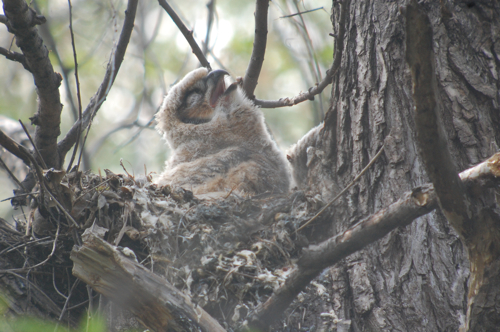
I showed him the owl nest and boy the two young owls were panting like crazy. Birds don't sweat like humans and pant like dogs when their hot. The young owls still have some of their thick down that protects them in snow storms when they hatch earlier. Doesn't it look like it's saying, "Oh man, I'm so hot, ugh."

I didn't see either adult and figured that since the young were so large, they were tucked in a nearby conifer for shade from the warm sun. As I looked at the nest from this angle, I realized how trashed it is. Check out these photos from an earlier entry when the female was still incubating. Note how the nest material was all the way to to the stick. In the above photo, it's well below that now. I thought to myself that these owls have to be in the brancher phase. That's when they are still downy but their feet are very strong and they begin to venture out of the nest. The young birds can even be blown out of the tree, yet their feet are strong enough to enable them to climb back up.
It looks like they have some feather development on their wings and back. I got confirmation on this a few days later from another nearby resident who has been watching the nest and he confirmed that babies had crawled out and were on branches 10 feet from the nest. Our little guys grow up so fast.
Year of the Sora
Someone asked on Twitter if this was the year of the sora because the seem to be EVERYWHERE.
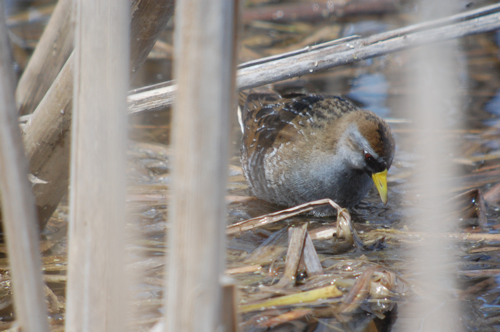
This is a sora that was very cooperative at the Minnesota Valley National Wildlife Refuge. I took this before I left for Horicon. I was walking by the Bass Ponds and I could hear several soras when I noticed this bird out and about in the open, not skulking among the vegetation like most soras do.

Here is where the sora was in relation to my scope. Here's what the sora sounds like. Here are some more calls on the Cornell All About Birds page.

Horicon Marsh was loaded with them too. I didn't get any photos of the little water chicken, but I heard them every stop I made that had any sore of marsh. Right now I'm in Utah for the Great Salt Lake Bird Festival. When I arrived, I went straight from the airport for some birding at Bear River Migratory Bird Refuge and it was sora city there as well. I don't remember hearing so many soras all the time--I'll take it. Must mean they found some great breeding habitat and great places to over winter the last few years.
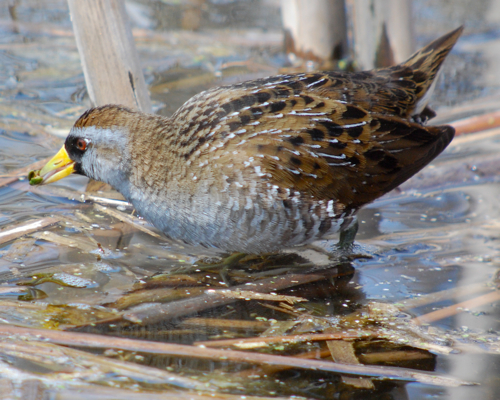
They eat vegetation and invertebrates. This bird was too fast for me to capture it, but I watched it down a few small snails including shell. I wondered if this was a female, snail shells provide calcium for egg laying.

Those these birds are timid, the curve of the beak always gives them a contented look.

Keep your eyes and ears open for these mysterious little water chickens.
Digiscoped Images
Fresh Tweets
Would you like to hire me as a speaker for your event?
Email sharon@birdchick.com