
Young Finches Learning The Ropes At The Feeders
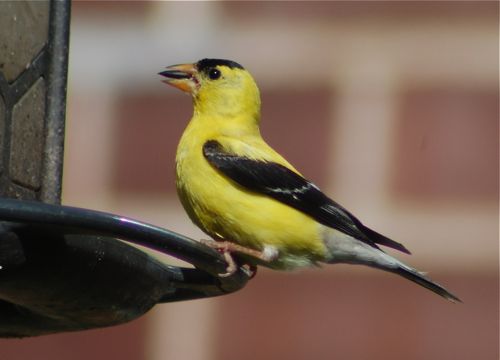 As signs of fall migration make themselves achingly apparent, many of the goldfinches in my area are still holding on strong to breeding plumage. As I was digiscoping this male yesterday, I noticed differences in the bird calls around me. No indigo bunting singing on territory or red-eyed vireo--that was first this month. There were contact calls of warblers. I did hear a scarlet tanager giving the old "chick-burr" behind me and noted that while the tanager was here, all the orioles were gone. I know most people in my neck of the woods have lamented our cold summer. Wearing a jacket in August is crazy, even by Minnesota standards, but I have loved it. Although, as much as I enjoy cool nights and several days without turning on the air conditioner, I look at all my friends who cannot get a tomato to turn red in their gardens this summer and wonder how this affects the seed crops and insects fall migrants need to head south. I also wonder if this means an exceptionally long winter as well.
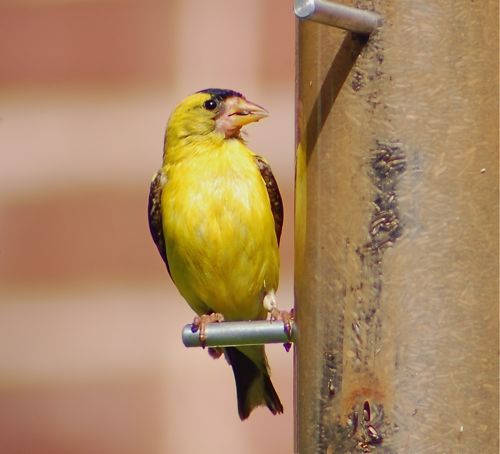
I did notice this male goldfinch on the long tube with kind of a reverse goatee. He's bald around his beak. I seem to recall seeing this before in a goldfinch either last year or two years ago. I wonder if it's an odd molt or some sort of mites (not unlike the bald cardinals we see this time of year). This particular male had at least one recently fledged chick following him around to the feeders begging to be fed.
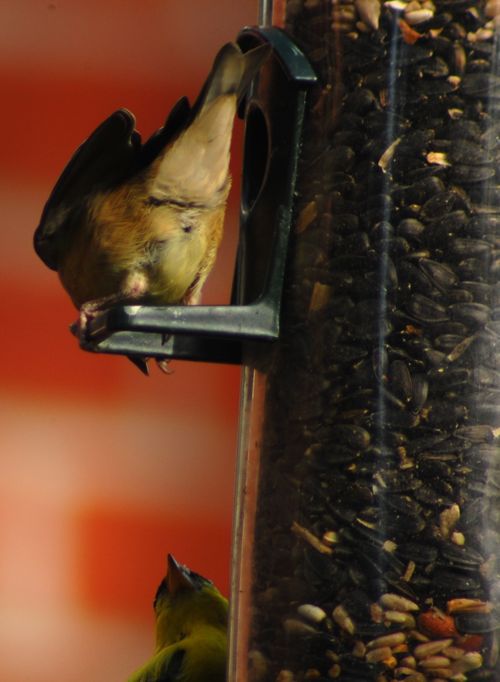
The adult male is on the bottom of the sunflower tube feeder and the begging chick is on the upper perch. The adult would dutifully demonstrate how to get seed out of the port, while the younger bird above continued to beg. Eventually, the young bird left the adult alone and tried pecking around the feeder. It ignored the gaping opening of the feeding port, and pecked at the plexiglass tube. It could see the seed and couldn't understand why it couldn't get at the food.

Eventually, the adult male flew to a different feeder and what does the young finch do? Continue to ignore the open port with food and hang upside down towards where the adult had been feeding and unsuccessfully pecking at the tube around the port. Not the brightest bulb on the tree.
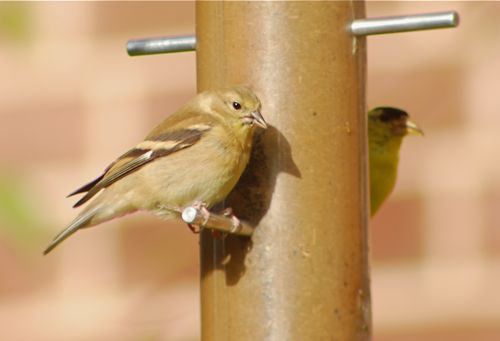
The young finch followed the adult male over to the Nyjer feeder and begrudgingly began to eat the seed out of that port. All the while, continuing to flutter its wings in a food begging behavior.
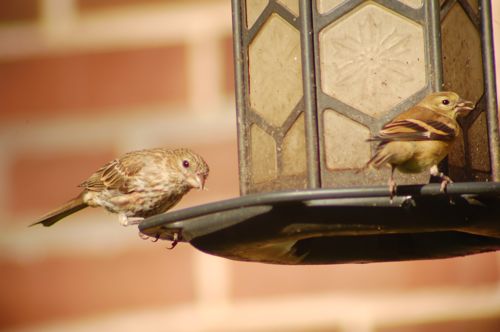
The young bird finally left the Nyjer feeder and flew over to a black oil sunflower feeder. Soon afterwards, it was joined by a young house finch (who had just a hint of pink show up along his flanks). Both birds fed in peace, but periodically the larger house finch would lunge toward the goldfinch if it got too close. I wonder if these will be the last of the fledglings I will see for the year?