
Found this on YouTube. Some parents take their kids out to feed bread to geese, this guy takes his kids out to feed fish to bald eagles. It must have been taken in Alaska: [youtube]http://www.youtube.com/watch?v=UZJKmPa42PM&feature=related[/youtube]
kaz-prairie-0941
Birding Korgalzhyn State Nature Reserve
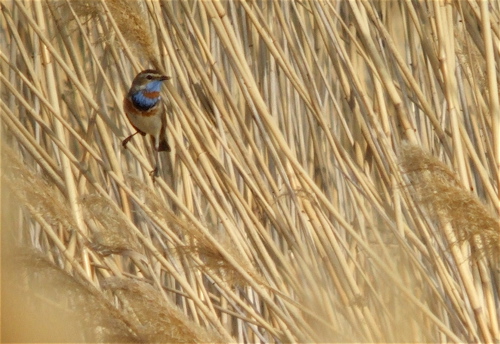
Below is one of my favorite shots from Kazakhstan. It makes me wish I could paint. I would love to spend an entire day lost in creating this shot of a brown bird, with a stunning sky blue and rust patch on his throat, surrounded by golden reeds:
It's a bluethroat, these are actually possible to see in Alaska during the breeding season, then they head to Asia for the winter. However, it is a common bird in Europe and Asia. I love it, in my neck of the woods I have a common yellowthroat in the reeds, over there, it's a bluethroat. Although, it's not a warbler, it's actually in the family turdidae...same as American robin.
kaz-prairie-106
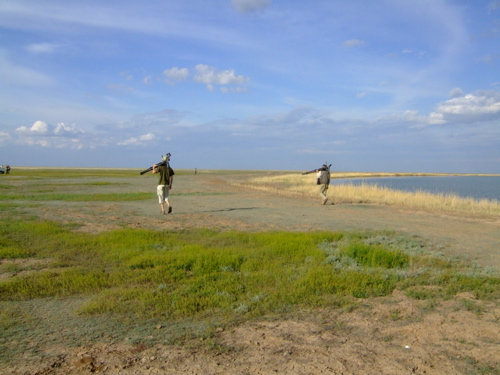
We birded our way through Korgalzhyn State Nature Reserve on our way to our evening accommodations. I hope you're not tired of the long range shots of Kazakhstan. Our information about the country said that there are fewer than six people per square mile...when you are out of the major cities, you could feel it. What a treat to be out in the middle of nowhere and at times not hear the sound of human or machinery.
kazakhstan-cattle-drive1
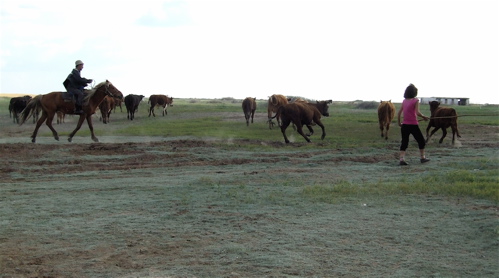
When we did encounter locals while we were birding, it was almost always Kazak cowboys--sometimes it was a joint effort of husband and wife and at other times, a lone cowboy on a horse with his trusty canine companion beside him.
kaz-research-station-02
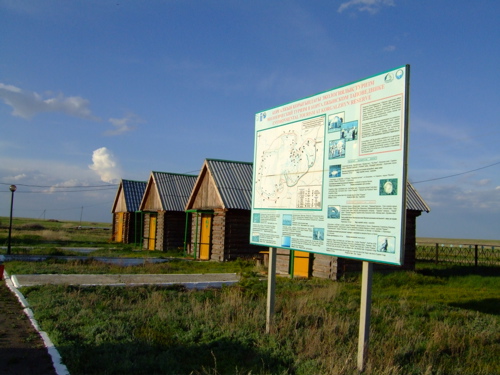
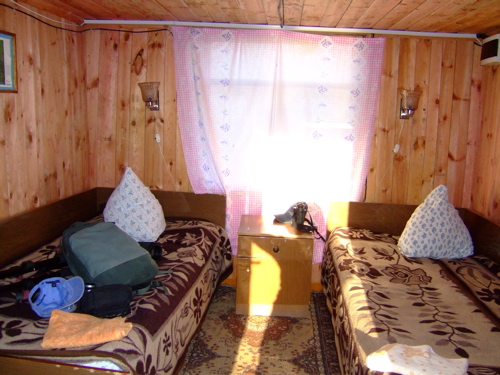
One of the items that was noticeable in my itinerary for Kazakhstan was the note that we would be going to Korgalzhyn State Nature Reserve and "small huts provide simple accommodation. We recommend a sleeping bag for this overnight stay." The photo included with the brochure showed the small huts surrounded by snow. I was fortunate that our visit was late enough in the spring that they snow had melted.
luz-accomodations1
The huts were indeed simple accommodations that included two beds, a night stand, and a tv (it barely got one channel and was intended for searching out severe weather reports)--the shower was outdoors and the toilet was an outhouse (more on using the adventures of going outdoors later).
Before I left, I wondered how I could pack my sleeping bag--it's huge and easily takes up half a large suitcase. Fortunately, Mr. Neil (being a well experienced traveller) loaned me a tiny yet oh so warm silk sleeping bag. I was grateful for the toasty sleeping bag, the sleeping quarters were sparse and meant for researchers working the nature reserve and the extra warmth was much appreciated as the temps felt like they got down into the 40 degree Fahrenheit range.
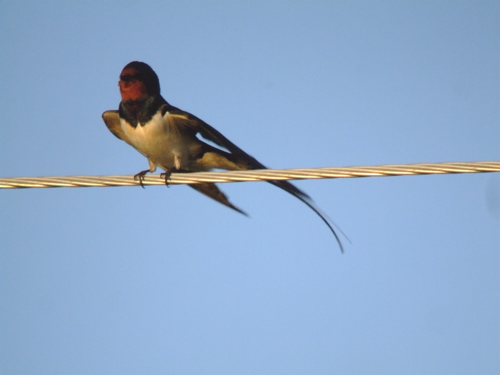
barn-swallow1
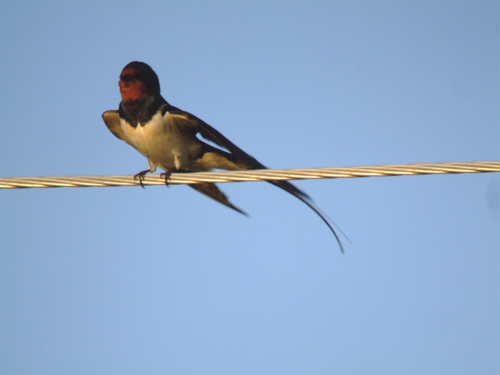
Check it out, one of the most common birds in the world--the barn swallow! I think even though this is the same species as the one I see in North American, it seemed to have a longer tail--must be a regional difference. We had already done a full day's birding on our way to the research station with the huts. The plan was to spend the night, try out some new Swarovski equipment in the morning and then head off to see the sociable lapwing. It was a delight around the research station for anyone remotely into photography--we arrived last in the afternoon and the light was perfect. We were cut loose from the formal part of the tour and given time to explore the area while our evening meal was prepared for us. An excited group of birders at a remote research station, surrounded by new birds in perfect light while food and beer was being gathered for us when the sun went down--how could it not be more perfect than that?
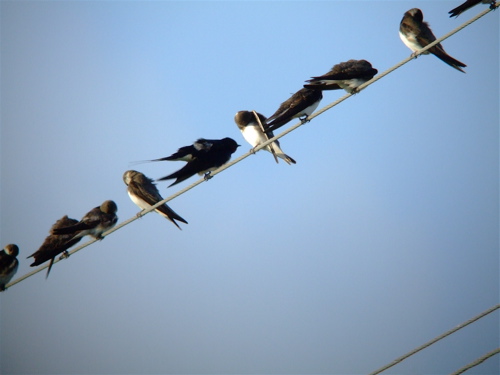
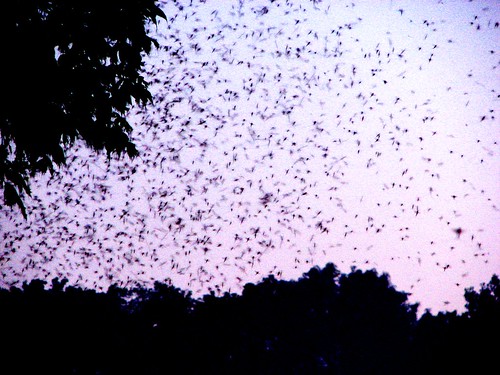
There were some bugs. None of my photos do the bugs justice. I even got a video of my buddy Clay walking up through the grass to kicking them up, but YouTube just does not have the quality to convey the quantity. Here's a link to a photo of a hatch of mayflies...this sort of conveys it. They didn't really bite, but every time we took a step in the grass, a swarm flew up and they just kind of floated and would hang near your hears, or accidentally get inhaled into your nose. Corey and I both remarked at how miserable our respective spouses would be having all these bugs all over the place.
a-swallows
It also explained why there were so many swallows around the research station.
oriental-turtledove1
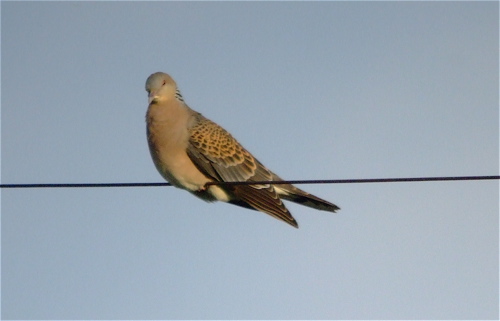
But the birding was just grand! I think the above is now one of my all time favorite does. It's called an Oriental turtle dove and the coloration reminded me of a kestrel--heck the birds have pointed wings, so when flying they look very much like a kestrel.

eurasian-tree-sparrow1
I was very excited to see one of these--this is a Eurasian tree sparrow. There's actually a small introduced population of these birds in St. Louis, MO. But it's more fun to see a bird in its natural habitat. Quite a few hung around the research station, very similar in habit to the house sparrow.
As I was walking along, I heard a very familiar sound...it took a moment to register...what was that sound...I know I should know it...then it hit me:
merlin1
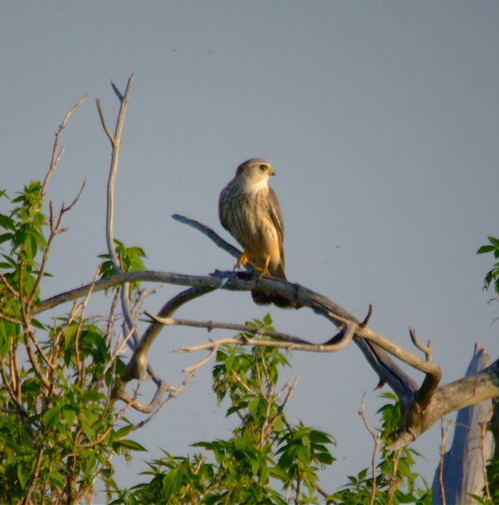
It was a merlin--just like the one's we see in Minnesota. Merlins can have different color variations, some are dark and some are light. In the US, usually the prairie merlins are lighter in color. Well, here we were in the short-grass prairie area of the Steppes and this was hands down one of the lightest merlins I had ever seen in my life. Merlins are a falcon like a kestrel or a peregrine. One of the things that all falcons of the world have in common is a malar stripe. That stripe that goes vertically down under each eye. Click on the photo links to some falcons: peregrine, kestrel, hobby, lanner--note that they all have that stripe? Merlins have a lighter malar stripe in general, but this bird was so pale, he looked like he had no stripe at all.

a-magpie
Speaking of familiar birds, we also saw several magpies. Here we call them black-billed magpies, there they are just magpies--both have the same latin name: Pica pica. Yes, I choose you.

tree-pipit1
Quite a few of the birds were out and about eating the insects we were kicking up. Above is a tree pipit that would fly off the wire and go for them.
spotted-flycatcher1
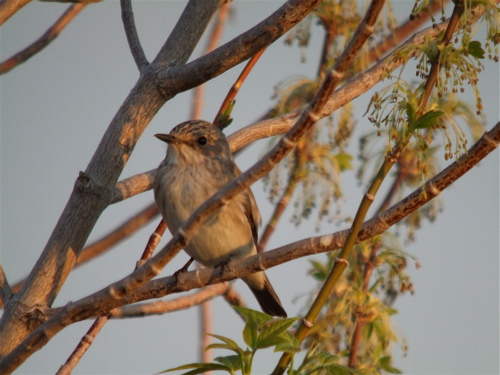
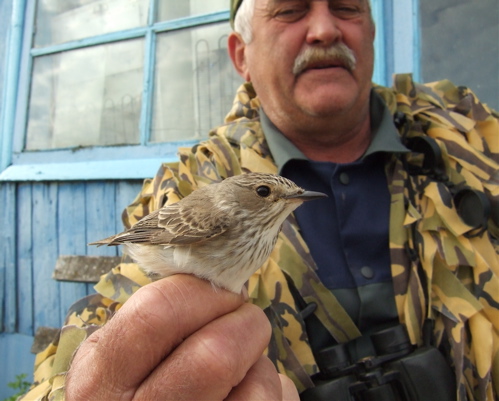
Here is a spotted flycatcher that was also going after the insects. This bird was actually perched near a bird banding station. Some nets were out, but they were closed and tied up--easy for the birds to see and difficult or them to become trapped. The flimsy insects did get caught in them and the flycatcher took full advantage of the situation, flying down get the bugs trapped in the nets. This bird was not the brightest bulb on the tree...the next morning, one of the researchers unfurled the nets and withing moments...
kazakhstan-bird-banding
The spotted flycatcher was caught in the nets and banded (or ringed as they call it over there).
kazakhstan-beer
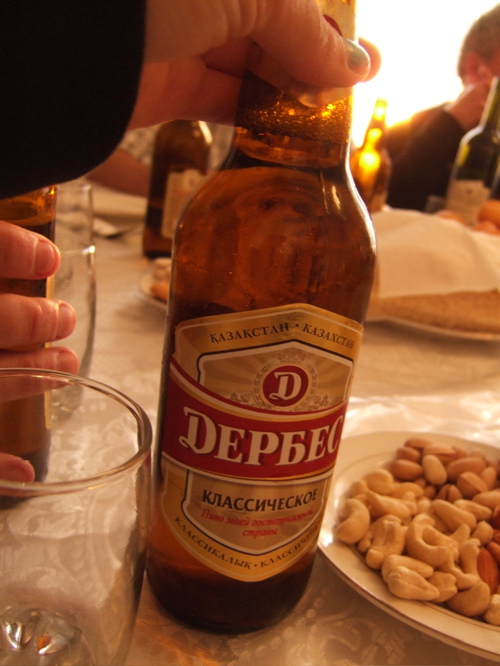
As the light became too dim to photograph, all of us made our way back to the station for nourishment. I avoided tap water on this trip (and for those curious, I did not get any shots before I left, my tetnus was updated, and I opted to not get any of the Hepatitus or Typhiod vaccines). I stuck with bottled water, Fanta, beer, vodka, wine, and aquavit.
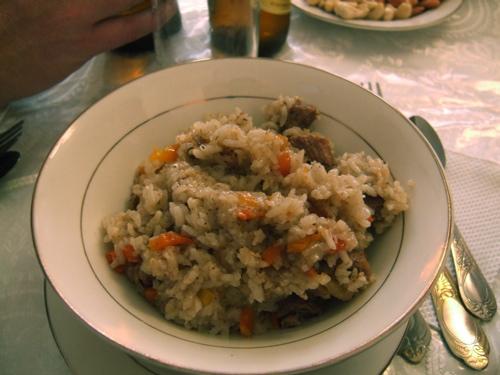
kazakhstan-food
Meals were interesting, you would get something like the rice and meat dish seen above and you would think, "OK, we're near China, this is going to have an Asian flavor to it." It did not, it was quite bland and refused to make any kind of flavor statement. It was good filling food, but not a taste sensation. I would say that the one constant with all our meals was tomatoes and cucumbers. Those were served with breakfast, lunch, and dinner. Often in the form of a salad with a light dill vinagerette or as in the case of our packed lunches--just raw. Bread was also a constant--we either had very dry crusty bread or a fried dough ball...kind of like a donut without the sugar.
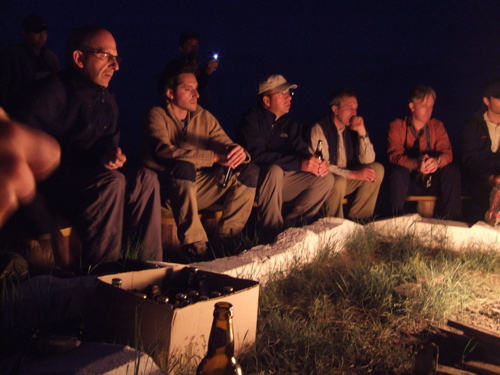
kaz-research-station-37
After dinner we sat around a bonfire with our box beer. The fire was no small feet--trees are few and far between on the Steppes, so it was made with wood from old crates or collapsing building near the station.
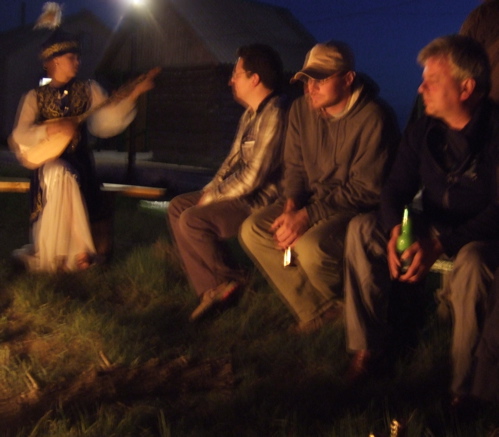


a-musician
We were treated to the music styling of a young woman not only dressed in traditional costume, but also played a small guitar of Kazak folk tunes. It started with her and later her father played a few tunes on the instrument. The small guitar looking instrument only had two strings, but both players got incredible harmonies out of it. I caught a little on my camera--and do listen, it's incredible for how simple and instrument it looks:
A lovely way to end a day of amazing birding and it was exciting to know that more adventures awaited us.
Midwest Birding Symposium 2009
Holy cow, I just checked the updates for this fall's Midwest Birding Symposium and those Ohio birders are pulling out all the stops. I think this is going to be the birding event of the year! I was already excited to go because Mike Bergin of 10,000 Birds and I were asked to come and do live blogging--our computers will be hooked up to a big screen and you can see us create blog entries (or lots of typos in my case). I love hanging out with Mike so I was looking forward to that.
But now, I see fun additions to the agenda like Birding by Segway! I love the creativity of this gathering, but that's what I would expect coming from the birding community that includes Bill of the Birds, Julie Zickefoose, Kenn and Kim Kaufman. Just take a gander at the speakers list: Scott Weidensaul, Lang Elliot, Al Batt, Jeff Gordon...are you kidding me? This is going to be a blast.
I hear early registration is still open, who's up for some fun birding and a great time in Ohio? Rumor has it that Chet Baker could make an appearance...that might even bring Non Birding Bill out.
Swift Movie: On The Wing
On The Wing is a movie about the "famous" swifts that gather in Portland, OR in the fall. According to the website, each autumn, thousands of Vaux's swifts gather to roost in a chimney of an elementary school in Portland. The thousands of swifts apparently attract a devoted following of thousands of watchers. The website describes it as a " cult phenomenon over the past 15 years and a shining example of people choosing to coexist with nature rather than smoking it out."
Here's a trailer:
[youtube]http://www.youtube.com/watch?v=vojNdQf53bQ&fmt=18[/youtube]
Odd Birding Moments In Kazakhstan
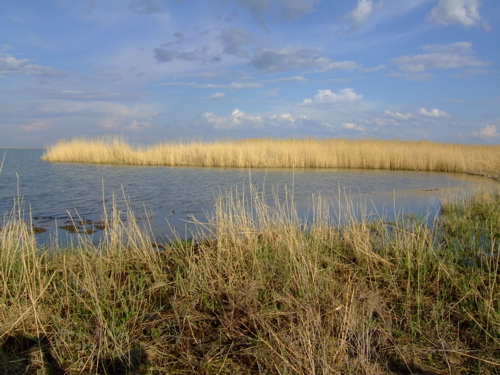
Most of the time I was in Kazakhstan, I just kind of looked around with an overwhelming sense of gratitude and wondering, "How the heck did I get here?"
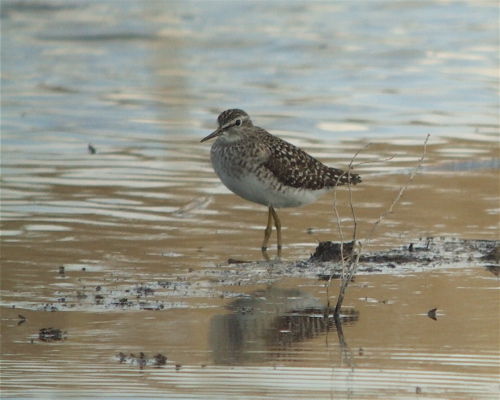
I also had some strange birding moments. Take the above wood sandpiper (it looks very similar to the yellowlegs we see in the US). This should have been a target species for me in it's native habitat. However, I had already seen one--almost a year to the day I took this photo on the Steppes. This time last year, Clay Taylor and I were on a digiscoping team at the World Series of Birding. Right before we arrived, a wood sandpiper had been reported in Delaware, so we both headed over to see it. And now, here Clay and I were watching it in it's natural environment. I looked at Clay and said, "Can you believe this, we saw this species last year."
"Yeah," he said, "3000 miles away."
Who would have thought that a year later we'd be in Kazakhstan watching it in it's native environment. Life is strange that way.
There were other birds too, like the European birders were always quick to point out the common cranes--a beautiful species...that I also saw last year in Nebraska--how weird, I should have been way more excited about that bird. Not that it wasn't cool to see, but just strange that there would be birds I had already seen as rarities in North America.
There were some odd challenges on this trip. As one of only three Americans in the group, I was totally in the minority and much different target birds than the many European birders. To them, lapwings, wagtails, and ruffs were common birds. To me, they were lifers. There are some birds I'm content to get a brief look and trudge on for more unique species, but there are some iconic birds like northern lapwing that I really wanted a good look at. I didn't get the look I was hoping for of a lapwing, but I'm sure I'll be in England at some point.

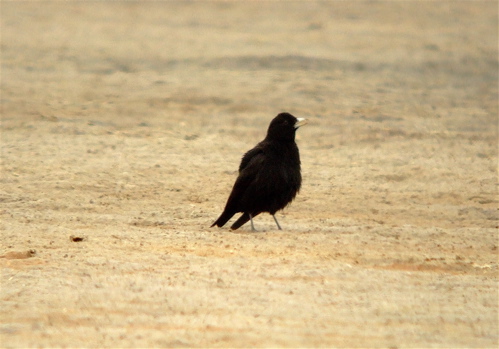
The European birders were very excited about black larks...and they were hard birds to get close to. Many wanted to get it's photo, but being a bird of open space, they were wary and it's hard to sneak up on a bird without any cover for you yourself to hide in. But it seemed as though we stopped for just about every black lark we passed.
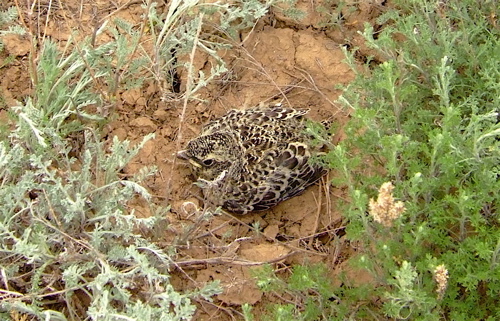
The closest we got to a lark was this young one about ready to fledge. It used its cryptic plumage to blend in with the surrounding vegetation rather than fly away from potential predators on uncertain wings.

Meanwhile, a couple of the Brits thought I was nuts for wanting the bus to stop to stop for ruffs. These are a charismatic species of shorebird that sometimes make it to the US--it's rare bird worthy in my state, but it's a bird I have not managed to see. To have a chance to see one--let alone a whole flock was just too much. I asked the bus to stop for a photo. One of the Brit's said, "Oh, that's not much of a look, let's keep going."
"Oy," I said, "we've stopped for a bunch of black larks, we can stop or this girl's lifer ruff."
He was right, it wasn't the best look at a ruff--they're barely poking above the grass, but this was as good as it was going to get for me on this trip.
All part of the fun of negotiating birds on a trip. I could understand their logic. This would be like me leading a trip in North Dakota to go see a Baird's sparrow and someone was freaked out and wanted to stop because they just saw their lifer Baltimore oriole fly over the bus. My logic would be, "Orioles are feeder birds, we can get it later, let's go for the harder to see Baird's sparrow."
However, that person may not have another shot while they are in the country--all part of the fun and challenge of birding!
Birdorable Guest Blogging Contest Winner
Hey all, sorry for the delay in announcing the winner, but the weekend kind of got away from me. The most popular entry in the Birdorable Guest Blogging Contest was...
Dawn Frary!
Thanks to Dawn and all our entrants, we'll be sending your info on to Birdorable, and you should be receiving your prizes soon.
Breeding Birds & Eagle Banding
If you're looking for links of what I talked about on KARE 11's Showcase Minnesota today, here they are: Sign up for the Minnesota Breeding Bird Atlas (a monumental project run by Bonnie Sample whom I've known from banding birds at Carpenter Nature Center) that needs volunteers and reports of birds breeding all over the state of Minnesota. This is a huge project that no one birding organization has been able to organize before. It's spearheaded by Minnesota Audubon, but will involve several state and national organizations.
The other item I talked about was Woodworking for Wildlife, my buddy Carrol Henderson's book on building nesting houses and platforms for just about any bird that will use them.

Last week, I was privleged to join my buddy Mark Martell out on the St Croix River to band young bald eagles. Above is a 5 week old bald eagle wondering what the heck is going on. Hard to take them seriously as a top predator on the food chain when their beaks look like giant schnozzes.

We had a map with notes marking where eagle nests had been spotted in the spring. We took the boat out to have a look--some were easy to find like the above nest. It's huge because the eagles have been adding to it a little every year. The birds will do this year after year until the tree can no longer support the weight of the nest or wind knocks it down.

Speaking of wind, we were banding on Wednesday--the day it was super windy in Minnesota. Normally, the tree climber who goes up to get the chicks, uses a bow and arrow, shoots and arrow with a rope over a strong branch above the nest to rappel up, but the wind was just too strong and took the arrow anyplace but where the climber needed it.

He eventually decided to climb the tree the old fashioned way. It took longer, but was the only option. Above is a photo of Dan the climber next to the eagle nest...did I mention that Dan is six feet tall? Keep that in mind as he stands next to the nest--it has to be eight feet long at least.
Speaking of Dan Kraus our climber, he has an AWESOME website called Cat In A Tree Rescue. It's a directory of tree climbers all over the country who help cats stuck in trees. If your cat is stuck in a tree, you can find a climber near you to get it down. There's a gallery on the site of cats he's rescued, if you'd like to so see some indignant kitties, check it out. My personal favorite is poor Kit Kat.

When the birds are out of the nest, we determine the age--above is a 5 week old eaglet which is ideal. Their feet are as big as they are going to get, but their flight feathers are not developed, so the bird won't fly from the nest too soon when the climber goes up the tree. Mark Martell banded the bird, took a blood sample and a couple of down feathers for DNA samples. With the type of testing they are able to do now, the climber can even bring down adult eagle feathers from the nest and if they have been banded by Mark, they can tell which bird it is based on the DNA.

Mark told me that earlier in the week when they had been banding eaglets, they had an interesting banding return. As the group approached the nest, an adult eagle flew in carrying prey and dropped it off. As the climber when up the tree, the adult took off. When he got up, he saw the prey item--it was a blue-winged teal and it was banded! He took down the band numbers and gave it to the banders when he brought down the chicks. It's rare enough to get a banding return, but to get a banding return while you are banding a different species is as rare as it gets. I'll be curious to hear about the teal's history.


Dan the climber was gracious enough to take my camera up with him when we returned the chicks and get a photo from their nest. What a view of the St. Croix River! Note how the chick's foot is sticking way out--that's normal, eaglets at 5 weeks haven't quite figured out what formidable weapons and tools those toes can be. Check out this video of Mark putting an eaglet in a bag to be taken up to the nest (keeping them in a dark cloth bag keeps them from flailing and keeps them from injuring their growing feathers). But watch how the eaglet starts to flex those talons, it's a little awkward, but foreshadowing what they can do when they grow up:
[youtube]http://www.youtube.com/watch?v=3USA2Fk0eiw[/youtube]
While we were banding eagles, we had other species checking us out.

A common yellowthroat flitted around us--it got within 10 feet, giving chip notes. After about three minutes, it seemed to realize that we had no interest in it and only the giant birds, it started singing territory song in the open. I took a few photos before we boarded the boat to check the next test.

There was also a pair of tree swallows nesting in an old tree riddled with woodpecker holes. This one kept peering out like a nosy neighbor. "Abner, what are they up to out there? You should come see this! You won't believe it!"
There were also a TON of prothonotary warblers around us. The eagles' nests are in perfect prothonoray habitat--sloughs with over-turned trees. However, they are a bit more shy and we're moving too much. Being constantly on the move and working with eagles does not make for the best conditions to get a photo of a prothonotary warbler.


We went to check a couple of other nests and were not as successful. This nest was used last summer, but had shrank considerably.

You could see half the nest had ended up on the ground. Either a branch supporting the nest had broke or a late summer storm blew it down.

There was evidence that the remaining nest had been used--check out all of this poop. I suppected owl poop and had my suspicions confirmed when...

...we found pellets with bones and feather shafts. Owl pellets will have bone fragments because they tend to swallow prey whole or in large chunks. Also, there digestive acids are not as strong as a hawk or eagle. This one looked to have been eating a good-sized bird. I even found some rusty colored breast feathers. I wondered if the owl had eaten a duck and wondered what species.

Searching through more pellets revealed more bones...and the tip of a duck beak. The tip appeared to have a bump, so based on that, the breast feathers in the pellet, the size of bones, I suspect that the owl ate a wood duck. Great horned owls would have already left the nest by now. My guess is that part of this eagle nest fell last fall, a great horned nested in the remains in January, and the young were already hunting somewhere in the woods around us.


The third nest we checked was almost gone, so we did not get to band any birds there. However, we did get to do some work at the first nest and a slow day on the river is better than a good day at a desk. It was a treat to be out with the eagle banding crew to see the work that that they do.
Digiscoping Today Blog Carnival
There's a blog carnival up called Digiscoping Today. Submit your best digiscoping blog posts here.
I Learned Why It's Called A Rookery!
Hey, if you're looking for a good reference of collective bird names, check this out. I don't know about you, but I'm feeling about as giddy as a a conventicle of magpies. I've had more than one person ask me why heron colonies are called "rookeries" and I've never gotten around to looking up the answer. Well, I had the chance to find out first hand why they are called that.
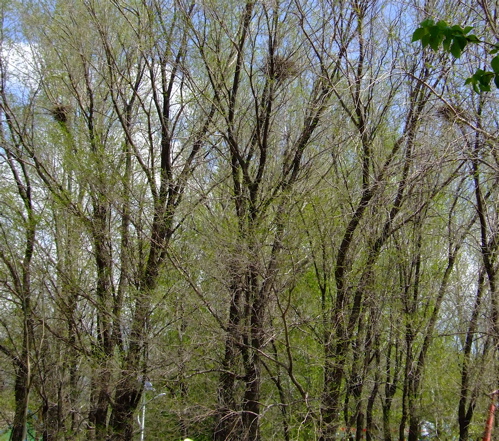
We found a few spots in Kazakhstan where several large nests were built in the trees--not unlike heron nests.
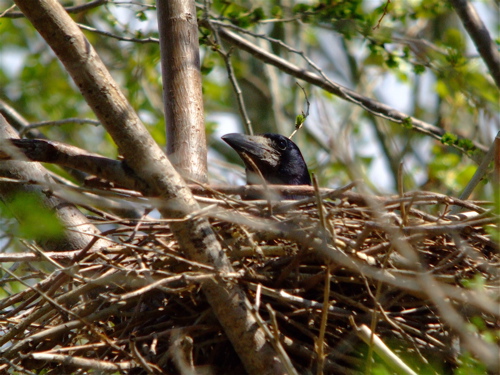
Only these were not built by herons, but were built by rooks. They look like crows with a sort of reverse goatee thing going on. The area around their bill is featherless and shows pale gray skin. As we were looking at a rook in the field guide, my buddy Clay read, "Rooks nest in colonies called 'rookeries."
We both looked at each other and said, "Duh!"
I was excited at this realization--ah rooks--nesting together in a rookery--like a heron rookery. I was surprised that I didn't figure this out sooner. I have been vaguely aware of rooks, but since they are like crows and crows in my neck of the woods are not colony nesters, I never put two and two together.
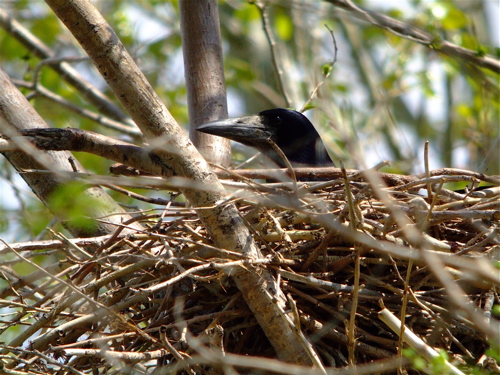
Rooks are a common bird in Kazakhstan and in Europe. One of our fellow participants by the name of Mike Weedon thought it odd that I came all the way to Kazakhstan to get a photo of what would be a common garden bird for him--but one person's common bird is another's lifer.
Here's a video that isn't all that exciting, except that you can hear other rooks calling the background. I chuckled because I realized that when I was a kid and watched the movie, The Last Unicorn, rook calls were used in the background.
[youtube]http://www.youtube.com/watch?v=mMx3D63ZMxQ[/youtube]
Prepping For The Bio Blitz 2009
Friday was a fun and active day--between the weather, the birds and friends it was just a day where you look around and think, "Isn't great to be alive?" It's been wonderful to come home to spring birds and many of the Minnesota migrants have returned--even the common nighthawk, I heard one outside of the apartment my first night home.
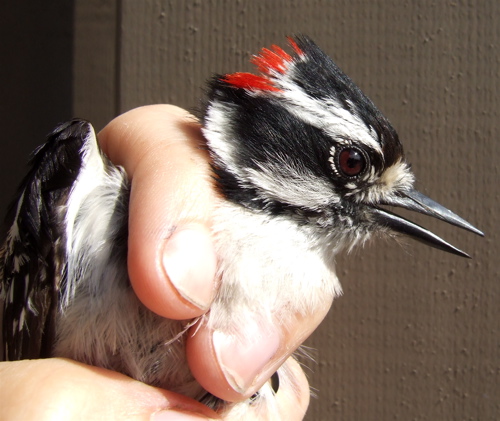
We did some banding at Carpenter Nature Center and though we didn't get huge amounts of birds, we got a good variety--especially woodpeckers. Above is a downy woodpecker male, we got in two of those, plus a hairy and a red-bellied woodpecker. I completely missed the red-bellied because...
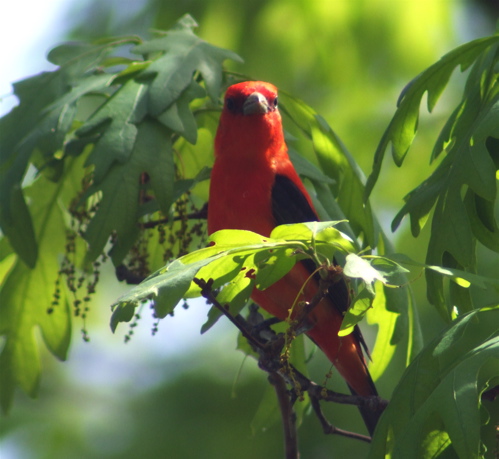
... fellow bander Larry showed me shots of a scarlet tanager that was singing along the oak savanna trail at Carpenter. Since it was slow, I took off after it. The tanager was singing on territory and moving around like crazy. It was a challenge getting him in decent light (the best I could do was the above photo) and then I just gave up to watch him...that red is practically impossible to recreate and sometimes it just fun to watch a bird with your eyes, not with your camera's viewfinder.
After banding, I met up with a group who are helping to plan the Minnesota BioBlitz. It's going to happen in the National Park that I work in: The Mississippi National River and Recreation Area--specifically in Crosby Park.
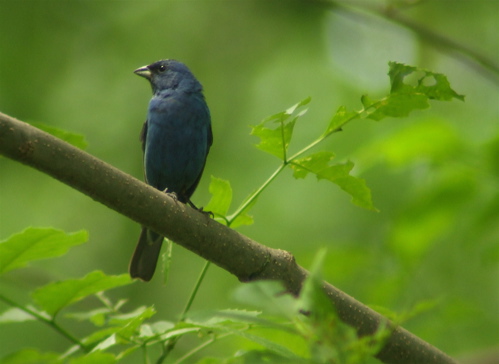
Here is one of the many indigo bunting males staking claim on some territory along one of the trails--they should still be around for the BioBlitz June 12 - 13, 2009. We're going to catalog all the wildife we can find from bugs to plants to birds to mammals to reptiles to fungus and everything in between. We'll have walks, rides on a river boat, bird banding, and a whole host of stuff.
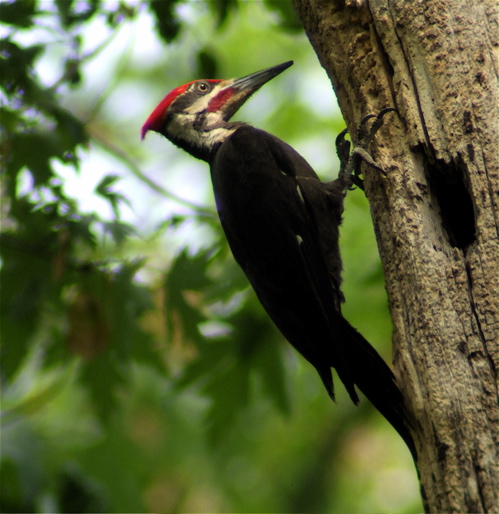
While walking the trails, a fellow ranger said, "I haven't seen a pileated woodpecker in a long time. I'd like to see one again." Within 2 minutes of her saying that, a male showed up. He stuck his head in a hole right off the trail...I'm about 90% certain he was feeding something inside the hole. He then flew off to another tree and did some territorial drumming. Here's a video:
[youtube]http://www.youtube.com/watch?v=TZlEnq2LZPM[/youtube]
It never ceases to amaze me how effortless woodpeckers look when they make that loud drumming sound. Incredible creatures.
Crosby is going to be a great spot for the BioBlitz--it's in the metro area, so it's easy to get to. Since it's right on the Mississippi River, there's going to be some great wildlife to see. If you are in the area, you should check it out, it's free and open to the public.