Los Andes Private Nature Reserve In Guatemala

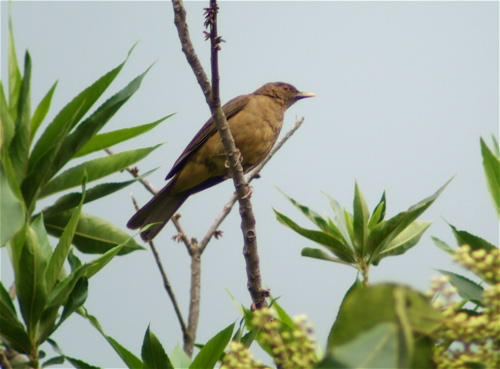
clay colored thrush Why, hello there, Mr. Clay-colored thrush! I totally forgot about this photo I took of you at Los Andes in Guatemala!

While working on another project, I discovered a huge backlog of blog posts--I have parts of Guatemala that I haven't blogged about yet--one of them was my absolute favorite lodge we visited. Doing some real digging in my photos, I have entries from last year's Rio Grande Valley Bird Festival--doh! So, we're going to catch up on a few spots as well as talk about Kazakhstan over the next week.
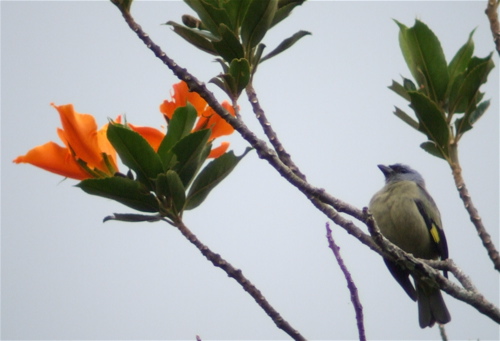
yellow winged tanager

If I ever have the chance to return to Guatemala, I want to return to Los Andes Private Nature Reserve. It's a farm that supports 80 families and grows organic tea, shade-grown coffee and quinine. Surrounding the farm are several rubber tree plantations as well. Parts of it are left untouched and you can find quetzals there. The most common bird I saw while we were there was the yellow-winged tanager (above).
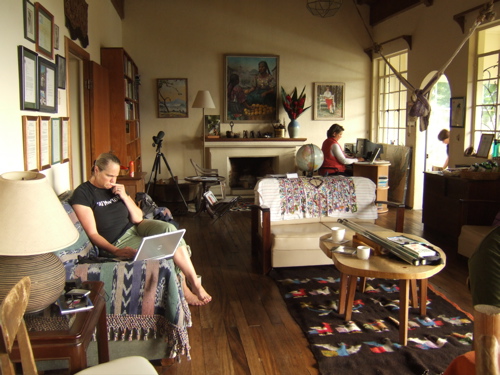
los andes

The lodge itself offered a cozy, family atmosphere. Comfortable couches, tons of books, info on the rich family history--an even Internet access. I was able to use Skype here to call Non Birding Bill free over the Internet. Dinners were family style and prepared on premises. You knew when each meal was almost ready, you could hear the cooks in the kitchen patting out the homemade tortillas. Olga, the owner, was quick to offer us samples of their own coffee and tea. She even made us fresh chai--what heaven to drink those beverages while slowly meandering around outside the house...
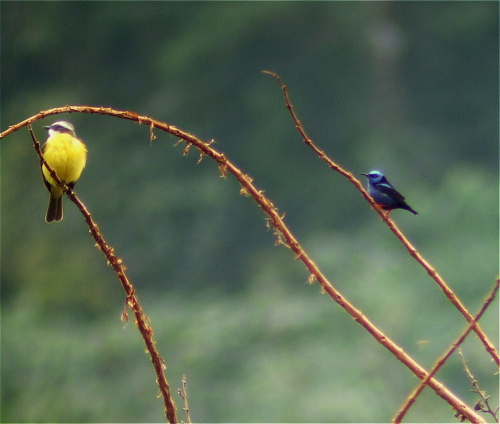
los andes drive way birds

...and watching dynomite birds like socail flycatcher and red-legged honeycreeper. I could easily spend two weeks at this place. If I ever write a birding romance novel, I would set it here.
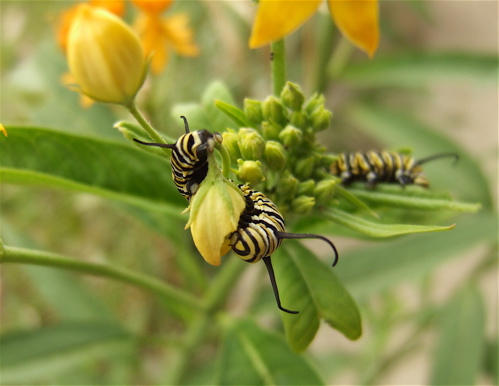
monarchs

There were some familiar sites, like tons of monarch caterpillars. I've read that there are six generations of monarchs in a year. Since it was February, I wondered if this was the first generation after the one that over-winters?
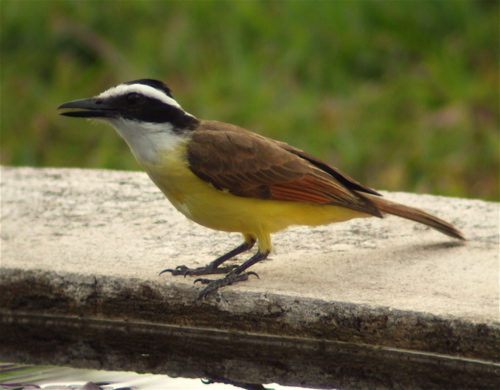
kiskadee

There were also quite a few great kiskadees around--a bird I see quite a bit in south Texas. They look very similar to the social flycather. Note the large heavy bill on the above kiskadee.
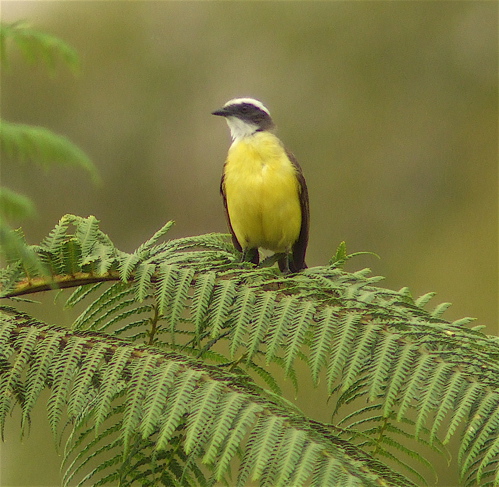
social flycatcher

Note the smaller dainty bill on the social flycatcher. The also sound quite different. The kiskadee seems to shout, "kisk ka DEE!" Here's a social flycatcher singing:

[youtube]http://www.youtube.com/watch?v=Tb91w3TDeEc[/youtube]

Almost like the kid brother of the kiskadee trying really hard, but comes off a tad whiny. Cute birds and a treat to watch while sipping organic tea.
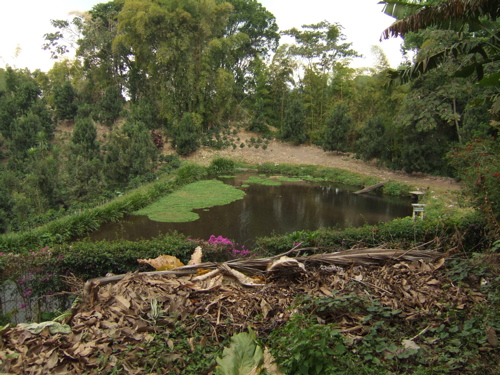
los andes pond

This is a holding pond on the property and it was chock full of birds, again some familiar like indigo and painted buntings. So exciting to see where are breeding birds, party and hang out in the winter. I don't blame them for coming to Guatemala at all--beautiful and lots of seeds and insects to eat (Los Andes also have sunscreen and insect repellent ready to grab at a moment's notice). There was even a great-tailed grackle hunting and eating small lizards around the water.
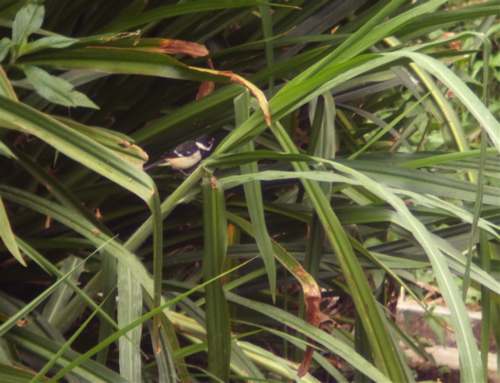
seedeater

This is a white-collard seedeater lurking in some of the grasses.
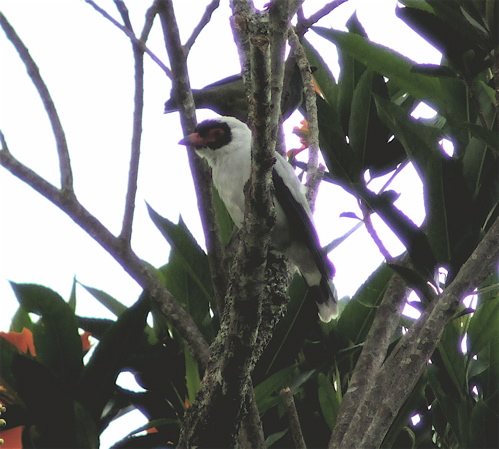
tatyra

Check out this crazy looking bird! It's called a masked tityra. Follow this link for a better photo of one, so you can really see how striking this bird looks. I think there are some issues as to where this bird belongs in field guides. It used to be considered a tyrant flycatcher (those are the classy, somewhat easy to id flycatchers like kiskadees and scissor-tailed flycatchers, not the mind-numbingly hard to id empidonax flycatchers--incidentally, those are not all the same bird in that linked photo). However, there still seems to be some debate as to where it belongs, how to call that category and what other birds would fit in there. Bottom line, it's a crazy looking bird.
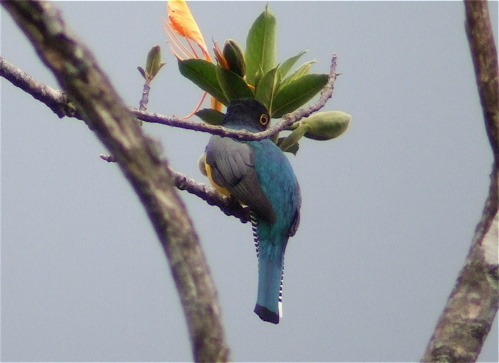
trogon

I saw many types of trogons while in Guatemala, but getting photos of them proved more challenging that i realized. Above is the beautiful backside of a violaceous trogon, perched in a tree right outside the lodge. We did explore other parts of the reserve and that is in a coming post. However, if you are looking for a place to do some relaxing birding, eat great local food, drink tea and coffee that is good for birds, and just visit with good people--Los Andes is it. Don't get me wrong, you can do hardcore birding and there are some strenuous trails here, but it was just such a joy to slowly work around the lodge itself and soak in so many colorful birds.
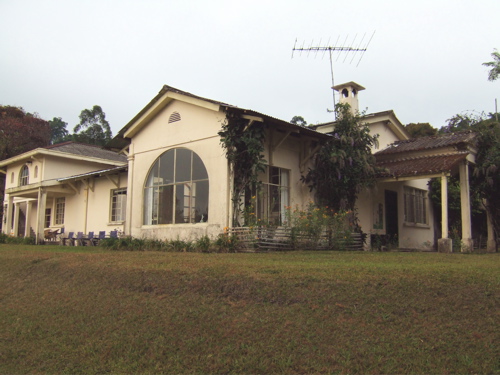
los andes lodge guatemala

Even when it rained, you could stand at the window and enjoy the view.

More on the wonders of Los Andes later.
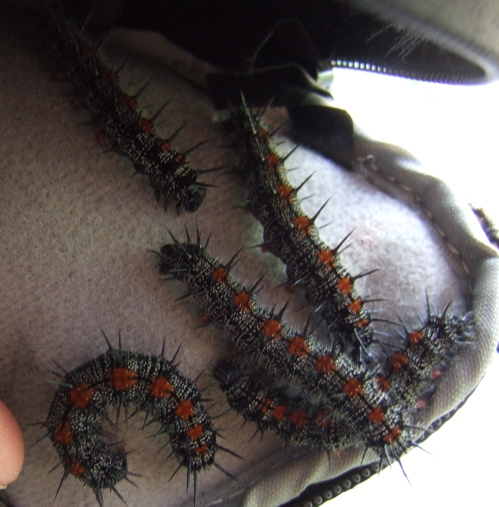
Mourning Cloak Caterpillars, Not Gypsy Moth Caterpillars

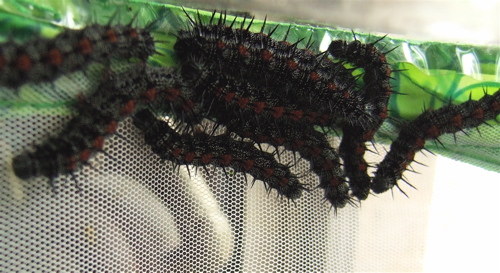
black and red spiky caterpillars Last week, when I was on the bike trail, I came across a ton of mourning cloak caterpillars.  They were trying to cross the path, some made it, some got squished by unknowing bike riders.  I tried to take some home, I fit as many as I could in my little pouch and brought them home to our butterfly ranch...I ended up with 14.

spiky caterpillar

They are a cool little caterpillar, dark with a bit of blue and red spots down their back.  And check out those wicked spikes to discourage you from eating them.  As I was getting my butterfly ranch set up for my mourning cloak caterpillars and taking a photos, a friend on Facebook posted photos of some pest caterpillars in his trees, wondering if anyone had suggestions to get rid of them.  He had contacted a pest control company who told him they were gypsy moth caterpillars and would kill his tree.  I looked at the photos and the caterpillars were not gypsy moth caterpillars, they were mourning cloak caterpillars, just like mine.

cluster

I sent a desperate plea to my Facebook friend to not exterminate the caterpillars, they were not invasive, exotic caterpillars, they were native and would not destroy his tree.  I was irritated that a pest control company couldn't tell the difference. I don't blame my friend for being confused...these caterpillars have some similar habits and if you are unfamiliar with mourning cloaks, I could see how you would be worried for your tree.

Gypsy moths feed in large groups. Mourning cloak caterpillars also remain in one large group after hatching from their eggs and feed together as caterpillars.  If you ever come across a cluster and disturb them, they'll shake and vibrate en masse.  Their voracious appetites may denude a branch, but they will not kill the tree.  Once they are full grown, the who group leaves the tree at about the same time and heads off to form their chrysalis to turn into a butterfly.

My friend ended up leaving his caterpillars alone and they moved on to pupate, but I do wonder now how many unknowing people have mourning cloak caterpillars experminated?

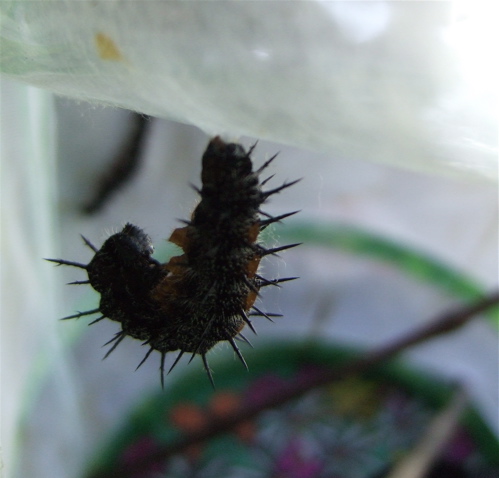
j

Mine have all taken to the J-position and are forming their chrysalises.  Hopefully,  I will have  photos of lots these gorgeous black butterflies to show later this summer.

Friday Links

It's time to share fun things found via Twitter and Facebook or share links people would like me to share. First, note that there is one spanky blog contest going on in the form of Swarovski & Birdchick's Digiscoper of the Year contest.  You have nothing to lose and a fabulous pair of ELs to win (among other prizes)--also the winners in my contest are automatically entered in Swarovski's worldwide Digiscoper of the Year contest with an even bigger prize.  You don't have to have a Swarovski scope (you don't even have to own the scope, you could borrow a friend's scope) and get out and take some shots.

Holy Old Crap!  The BBC reports that a nest over 2,500 years old has been found and they are still in use!  That's right, gyrfalcon nests in Greenland have been examined, the years of excrement around the nest has been measured (some almost 2m deep) and carbon tested the results are startling.  Read the article. They even found a feather from a gyrfalcon that was over 600 years old!  Crazy!

A couple of people have sent me stories about sandhill cranes in Florida regularly getting injured by golf balls--who knew?  An organization known as Save Our Seabirds has been working with a taxidermist to outfit some who need them with prosthetic legs.  See the a leg here and a sandhill crane with a fake leg here.  Read the news store here.

For your daily chuckle, a blogger had call to say, "Um waiter, there's a hawk in my soup."

If you love British humor, you'll love this spoof of Birds of Britain. If you're at work, you may want to use headphones, there could be some fowl language ahead (har).

Remember Golden Eagle 42--on of the golden eagles who winters along the Mississippi River on the Minnesota/Wisconsing boarder?  If you're new, he was found caught in a leg hold trap (those really need to be banned) and underwent treatment at The Raptor Center and was released in early spring with a satellite transmitter in the hopes of learning where some of these winter golden eagles go to breed.

Well, according to my buddy Mark Martell, he just keeps going north and is probably going to be a bachelor this breeding season. Martell reports, "The golden eagle continues to move north. He is now above 62.8 degrees latitude and as of June 7 was about 13 miles west of Hudson’s Bay near Rankin Inlet. Photos of Rankin Inlet posted on Google Earth show an area that seems not so friendly to a golden eagle, pretty treeless."

New maps of his journey are posted here. He's gone in kind of odd directions since his release--he even went to Iowa at first.  By the time he made it to Canada, it was late but somewhat doable for him to breed.  But with all his movement, it's clear he will not be breeding this year.  Which brings up a question that is sometimes asked--does a stay in wildlife rehab throw off a bird for a year?  Or is he just taking the summer off.  As always, birds are leaving more questions than answers.

Bees, Glorious Bees

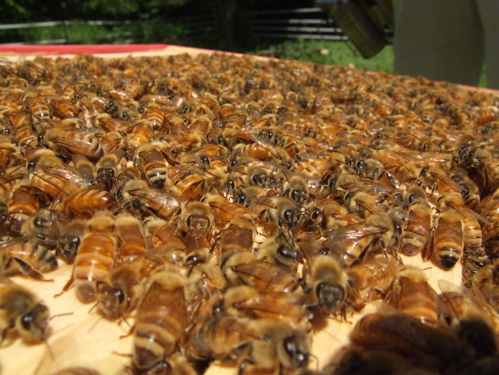
Blog Potential - 166 I've been doing so much traveling, I have not been able to visit much with our bees. Poor Lorraine had to take over beekeeping duties while both Mr. Neil and I were away. She did her best, making sure to give the bees more room to build as they filled in their hive boxes. We have one hive, the yellow Hannah hive that had been slow to build and draw out comb. Lorraine reported on Twitter that the hive had no new brood and whatever larvae was present was shriveled, other than that there was capped honey. We advised her to let the hive be, add a box if it needed it and maybe keep a food bucket on there. As soon as Mr. Neil returned from his trip and I returned from North Dakota, we'd check it and decide what do to. The shriveled larvae had me worried...did we have some new disease to deal with?

Blog Potential - 159

Non Birding Bill and I headed out to meet up with Mr. Neil and Lorraine for a hive inspection. We started with the presumed queenless hive. I wanted to see if the Hannah hive was failing and if a disease was the cause. If she was merely queenless, we thought we might combine her with another hive, but we weren't going to do that if she had something like foulbrood. However, when we go there, we could see a fair number of bees going in and out, some even arriving with loaded pollen baskets.

Blog Potential - 157

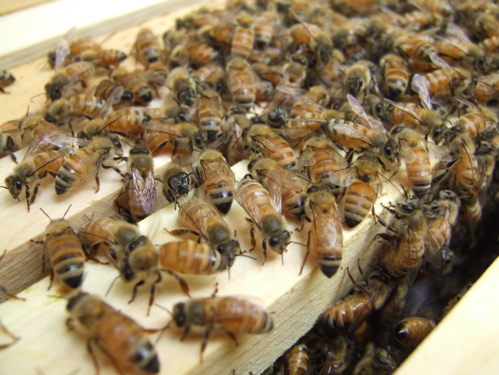
There were a fair number of worker bees inside and they were rather laid back but did not have that queenless buzz, they sounded mellow but harmonious in their buzzing. We took out a frame to assess the situation.

Blog Potential - 156

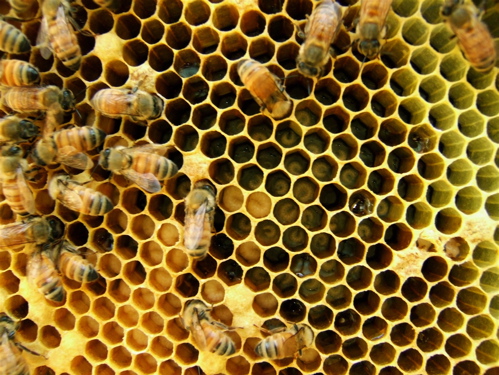
Not only did we find capped brood (larvae pupating into new workers) but we found very fresh, healthy looking larvae and eggs. The queen was definitely alive and kicking into high gear producing some larvae. We told Lorraine that she did the right thing by just letting the hive be. What she thought was capped honey was capped brood. I didn't see any shriveled larvae, just plump healthy larvae. I tested a couple of capped off cells for the presence of foulbrood but they were healthy. What a big sigh of relief--we still have four hive for the summer! We just adjusted the spacing of the frames in the hive and let Hannah keep growing.

neil gaiman

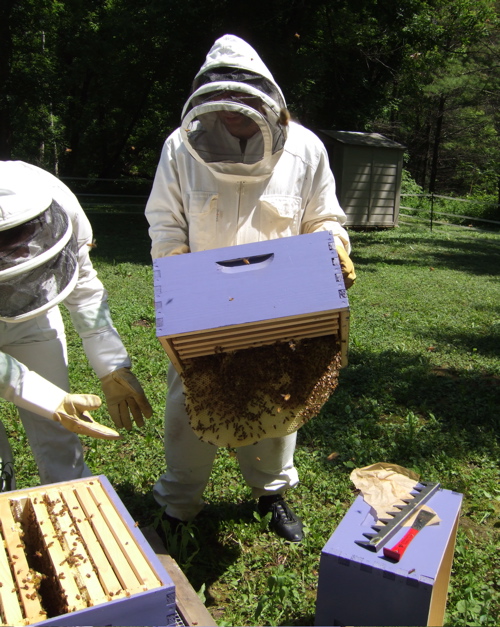
The only big problem we encountered in any of the hives was the violation of bee space. The term "bee space" came from Reverend Lorenzo Lorraine Langstroth who in the 1800s figured out that if a space of 3/8 inch is left in the hive for the bees to move around in, the bees will neither build comb in the space nor cork it up with propolis (bee duct tape). If you allow your frames to fall into violation of that space you get what's called "feral comb." As you can see in the above photo, the purple Yvaine hive had a major bee space violation going on. NBB and I had to pry off that excessive comb while Mr. Neil held the heavy brood box.

Blog Potential - 171

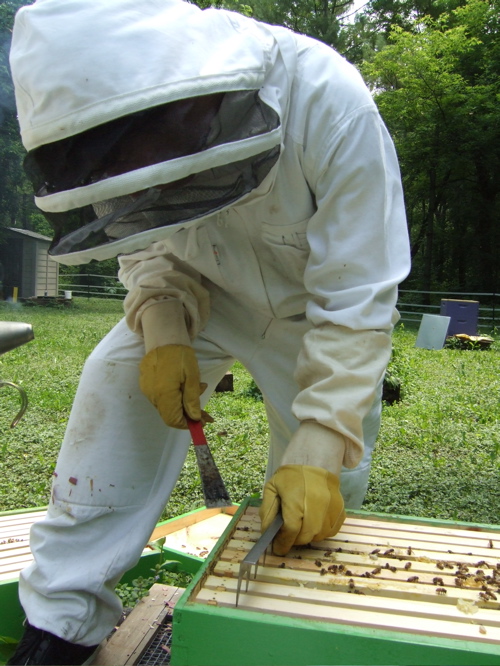
We carefully scraped it off to ensure that the queen was not there. We couldn't just leave it, the oddly placed comb would have caused more problems with future inspections and encouraged unregulated comb construction. Mr. Neil took care to properly space all of the frames in all of our hives so we could avoid future violations. Above, he's using a frame spacing tool along with a hive tool to set all the frames straight and into proper alignment for good bee space. I'd heard from more experienced beekeepers that frame spacing tools were a toy, but for newer beekeepers, they really do help cut down on the feral comb. I cannot eyeball bee space.

Blog Potential - 170

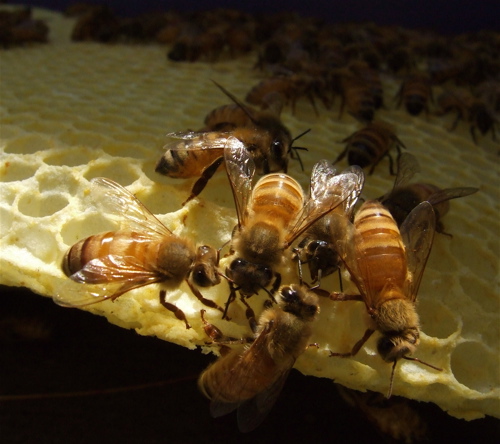
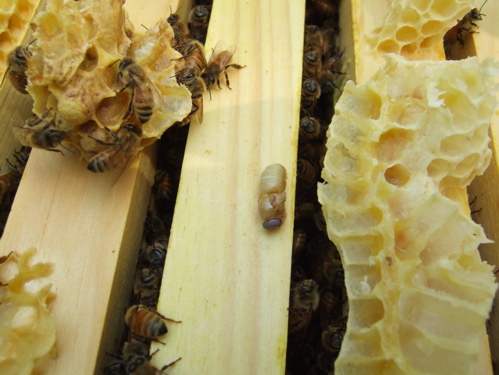
As we scraped of some of the feral comb, a few developing pupae came out. I felt bad, but again it's worse in the long run to let the comb stay. The queen lays thousands upon thousands of eggs, a few lost larvae will not destroy the hive. Lorraine however, was a tad grossed out. Here's a video of Mr. Neil properly scraping some feral comb with his tool and explaining larvae:

[youtube]http://www.youtube.com/watch?v=w97rNEzUlqU[/youtube]

One happy surprise was that our Juliet hive which started as a bit of an angry hive is mellowing out.

Blog Potential - 182

We had to make some minor repairs to her base...well, NBB and Mr. Neil did. Lorraine and I sat and studied the chilled out bees while they worked (didn't want to be in the way while the boys did the heavy lifting). It's just so relaxing spending time with chill bees while they do what they do and how pretty they look, all golden in the sun. You can watch them here, if you would like to experience the mellow red Juliet hive.

Oh, one final note: How do the boys like to spend their time while working with the hives? They make up haiku:

[youtube]http://www.youtube.com/watch?v=7CZAOlWgbfM[/youtube]

What a joy to have happy harmonious hives without the drama of the previous summers. Let's hope that holds when our Russians arrive.

Bioblitz Buntings and Prothonotary Warblers

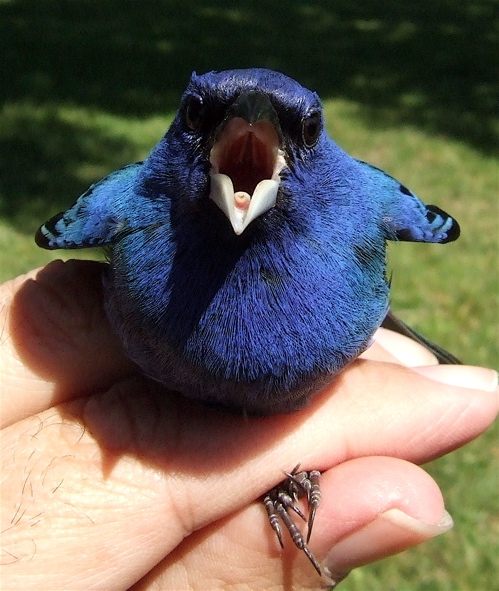
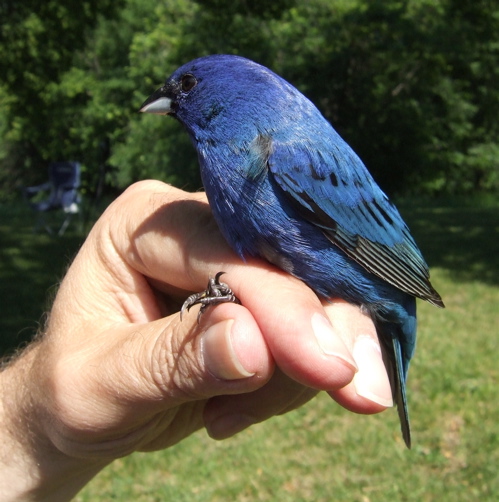
angry bird Watch out! It's the world's angriest indigo bunting!

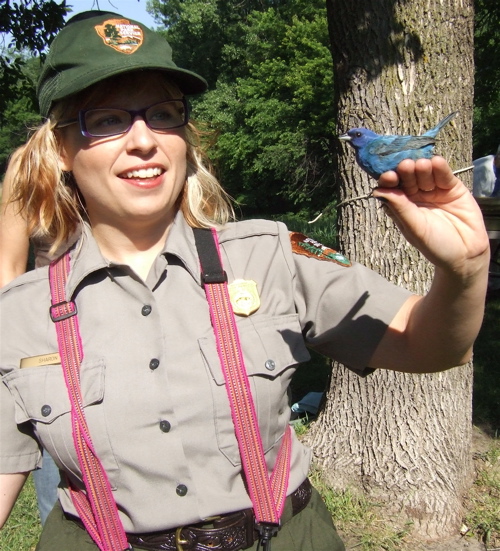
ranger shaz

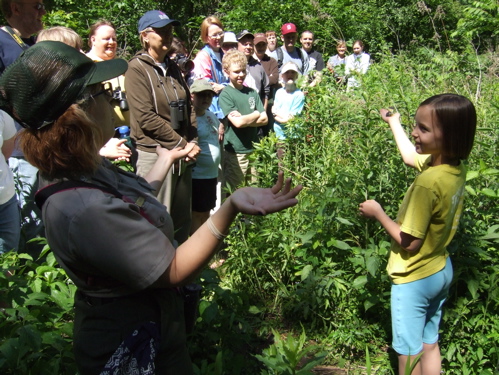
Last weekend's MN Bioblitz was great fun--if you don't know, a Bioblitz is an event where people try to document as many living species in a 24 hour period as they can: birds, fish, mammals, insects, plants, fungus, reptile--everything that is alive. I was sorry that I didn't get a chance to see some of the other non birding events, but the banding station ended up getting quite busy. I was so happy that Mark Newstrom volunteered his time to set up his nets so banding could be part o the day's activities.

waxwings

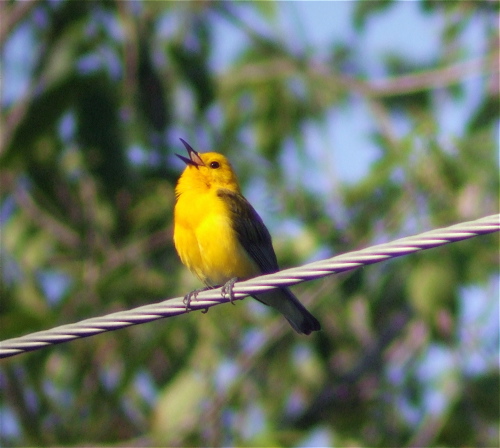
We started with a morning bird walk around Crosby Park where we saw a ton of great birds, in particular, the above cedar waxwing (who is scratching his neck). Our small, but dedicated group on the walk was hoping for a prothonotary warbler...and we found a few. At first we heard what sounded to be two singing. I was anxious to try and get a photo since my only photo was the sad blue I got at the World Series of Bird last year. We listened to try and determine where the bird was, we were in a high traffic area and kept looking in the bushes. There were several birds perched and singin on the wire, one looked like a really bright goldfinch and then I realized...that was where the song was coming from. I aimed my scope and...

prothonotary warbler

...Holy Crap! There's a male prothonotary warbler singing...out in the open...in perfect sun! Apparently, this guy did not get the memo that warblers are to skulk and hide and unlike children, they should be heard and most certainly not seen. He was so accommodating, I was able to get a video:

[youtube]http://www.youtube.com/watch?v=oUqJOKEj_-M[/youtube]

He's just one of the coolest warblers ever! Bright gold in front, delicate sky blue wings in the back! Did you notice that in the video he was kind enough to show both sides? Again, he must not be part of the official warbler union.

indigo bunting

And the beauty did not end there, we ended up getting three male indigo buntings in the nets! Crosby Park is just loaded with buntings, they like to nest on the edge of woodlands and their active song is noticeable. I'm quite certain that one of the tree birds we got in was the bird that I digiscoped the other day at Crosby. One of the nets was near his territory and after we captured the buntings, we didn't hear him sing for awhile. He had to preen that greasy human touch off of his feathers.

mn bioblitzWhat a treat to be able to show a kid an indigo bunting up close. My favorite part is when it's time to let the bird go. If a kid is nearby, I look down and ask, "You want to release it?"

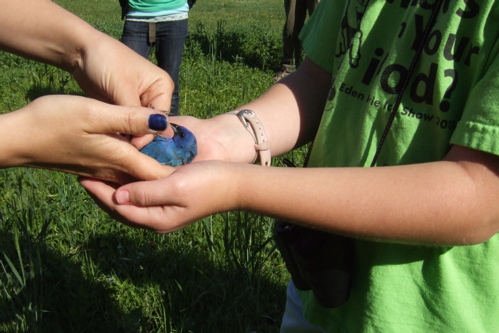
give a kid a birdMost kids say yes and all get a combination of glee and anxiousness in their face. When I placed the above male in that little girl's hands she gasped, "Oh! He's so soft!"

Take that, nature deficit disorder!

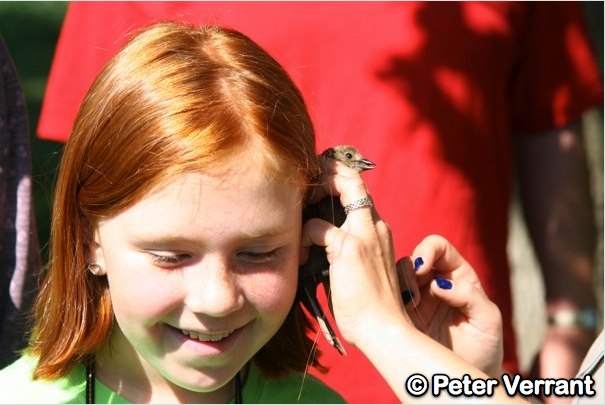
Picture 9Another thing that is fun to do with kids (and frankly, adults) is when a larger bird comes in (like the above female cowbird) and put them up to their ears so they can hear the bird's heartbeat--it sounds like a cat purring. What a great way to open the conversation up to talk about a bird's metabolism and how much they eat and how they can survive in various temperatures.

This cowbird hit the net the same time a female common yellowthroat did. I wondered if the cowbird had been about to make her move to the yellowthroat nest and deposit an egg. Mark blew on her feathers near her vent:

cowbird egg

You could see the area was swollen and an egg beneath her transparent skin. Normally, when banding birds during nesting season, we release them near where they were trapped so they can go right back to the nest, but in the cowbird's case, we let her go in the opposite direction.

Picture 7

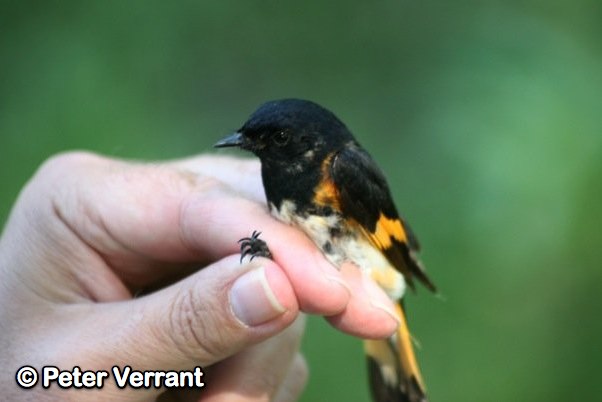
As we were about to wind up our banding station, we had three redstarts hit the nets. At first, we though we had two males (that's a male above) and one female. Males are kind of like mini orioles--small and orange black. Females are more grey and yellow.

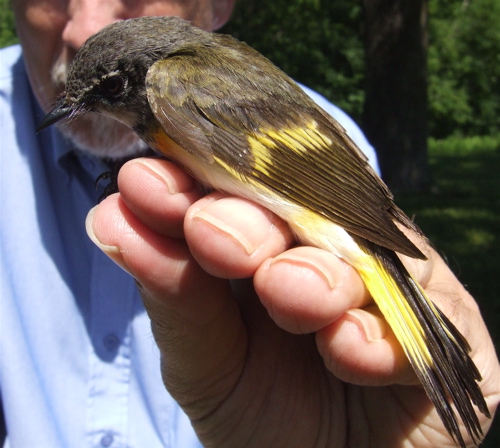
second year male redstart

The bird that I took out of the net and thought was female, ended up being a second year male. It takes redstarts two years to get their black and orange plumage. This bird was in transition. Still mostly in his immature plumage, but his tail feathers were already showing black. It was fun to show kids how you can sometimes get a very good idea of how old a bird is in hand.

I have to say that I have new respect for Crosby Park--even though it's in a very urban area, lots of great birds are there. We also heard both yellow-billed and black-billed cuckoos, broad-winged hawks, saw a beaver, someone else reported a river otter. It's a great place that I'll have to visit more often.

An Exciting Morning

This morning I heard a robin giving an agitated call.  Here's an example (only this one sounded more emphatic).  I hear them give it when a cat is in the neighborhood or when  young are fledging and you get too close.  There's another alarm call that they give for aerial predators like the Cooper's hawk, it sounds like this. Since the robins weren't giving their aerial predator call, I ignored it...until I heard a thud against my bedroom window screen.  The robin's chirp got louder and others joined.  I dashed to my bedroom, could see the feeders swinging and opened the screen to see what was on the ground below. The robin called loudly and two squirrels were frozen against a thin tree trunk.

I looked down and in the narrow passage way between my building and the next door neighbor's house was an immature red-tailed hawk perched on the fence.  The bird turned toward my building, took flight and flew up against the wall, flashing its talons.

I noticed something crawling on the wall, smallish with a long thin tail.  It wasn't a chipmunk and wasn't quite the right shape for a rat.  The hawk flew back and forth and made a few passes at the critter, each time the hawk went for it, the critter dodged onto a window frame or go in another direction--like a squirrel...and that's when it dawned on me what the critter was.  It was a very young squirrel, so young it was not quite ready to leave the nest and the tail wasn't bushy yet...I didn't know they could move so fast at such a young age. It almost lost its footing a few times and seemed shaky, but for climbing on a brick wall, it did very well.

I wondered where it came from and noticed at the front of my building along the street, the city was removing a huge elm tree.  Many branches were on the ground and I caught the movement of another young squirrel.  I'm sure a nest had fallen and the young red-tail just happened to be at the right place at the right time.  I rarely see red-tails on my street, but there is a pair that is getting more adapted to our urban area, I'm sure this is one of their offspring.

The young squirrel managed to dodge the hawk at every turn and several other birds had come in to join the angry robin.  Blue jays, grackles and more robins flew in after the hawk and began to chase and dive at it, eventually driving it away.

The squirrel won that particular battle, but it's so young, I'm not sure it's going to win the war.  I wondered what that must be like to be the young squirrel.  You've been in a dark nest with your siblings and mother and suddenly screechingly loud noises erupt from below your home, followed by loud buzzing, eventually leading to your home to come crashing down and introducing you to bright daylight for the first time.  Once you get your bearings and run from the humans and machinery, a big feathered things tears out of the sky with sharp talons to grab you.  Hello, world!

I wondered about the red-tail too.  Did it just happen to be at the right place at the right time and notice scurrying squirrels?  Is it so urbanized that it hangs around the heavy machinery and recognizes the sounds that come with a falling tree and know the potential food it could find?  It didn't seemed fazed by the tree trimmers and flew over them several times quite low.

Did the tree trimmers notice the hawk? How many different kinds of critters and bird nests to they find in trees? I watched them put branches in the wood chipper.  I wondered how many bird nests (and nestlings) end up in there?  Do they just ignore the young animals fleeing in fright when they have to take down a tree?

As usual, a wildlife encounter has left me with more questions than answers.

Cardinal With A Receding Featherline Singing

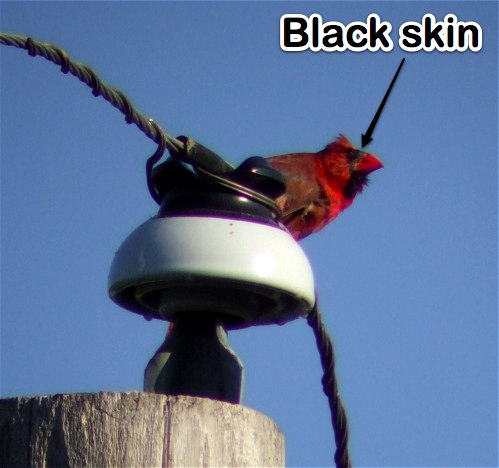
balding cardinal On Saturday, I was taking some video on a bird walk and this cardinal caught my attention, he's starting to lose his head feathers.  It's an occurrence that happens often enought that it's a question on my FAQ, usually in late summer someone will email me about a crazy looking cardinal and it's a bald one.  Here's a collection of all my blog entries involving balding birds.  I think I have photos of cardinals, a goldfinch, a grackle and a screech owl.  The above bird is about to lose his head feathers and you can see some of his black skin around his bill and his crest is half the size it should be.

However, what really caught my attention what the way the back of his neck puffed out as he sang--he has a little bubble popping up and down back there.  Check it out:

[youtube]http://www.youtube.com/watch?v=nLCO0xvVm2Y[/youtube]

Swarovski Digiscoper of the Year Contest

This is—quite possibly—the coolest contest that I have ever been able to offer on my blog.  There are super sweet runner-up prizes and there is one-giant-spanky-mondo-super-cool prize. I present you with the Swarovski Digiscoper of the Year Contest.

These are the official list of rules (and make sure to read them carefully) for entering the contest but essentially, anyone over 18 years of age who uses a camera (either point-and-shoot or an SLR) with a spotting  scope to take a photo is eligible to enter.  The scope does not have to be a Swarovski scope, it can be any make or model and you can do it by borrowing your friend's equipment.

DO NOT SEND ME YOUR ENTRIES FOR THE CONTEST. You are supposed to enter your photos here.

meadowlark

Digiscoping images must be pictures of animals living in the wild that are created using a digital camera through the eyepiece of a field spotting scope.  Above is a western meadowlark that I digiscoped as an example.

Here are the prizes: The best 10 images (places 1 to 10) will be published with the photographer’s name on the Swarovski Optik homepage.

The three entrants chosen as “Digiscoper of the Year North America” will receive the following prizes from Swarovski Optik:

1st PRIZE: EL 32 binocular (I use an 8x32 EL) 2nd PRIZE: Pocket Tyrol 3rd PRIZE: Swarovski Crystal Spoonbill

In addition these pictures will take part in the international Swarovski Optik Photography competition, so enter today.

And remember, this does not have to be a Swarovski scope or even your own scope to enter.  Just get a cool photo of a bird or other animal with a scope.  And don't limit it to photos, go for video too, get creative and get outside.  You have nothing to lose and some great prizes to gain.

I am totally shocked to be offering these prizes... these are like birding magazine prizes.  So take advantage of this contest!

Friday Link Round Up

I get so many requests to mention sites and products on the blog, I may take a cue from the Follow Friday tag that happens on Twitter and offer a Friday Link Round Up.  Also, thanks to Twitter and Facebook  you can find all sorts of fun links that are there momentarily in the ether of social media. Chatter Birds is a new site that is social media for birders.  If you like things like Facebook but would rather connect with birders only, you might check it out.

A long time ago, I linked to the video of a huge flock of starlings landing in a cedar tree causing it to bend.  The man who took that video is Scott Fraser and he and his video are supposed to be on ABC News in the next few days, however, the video and Scott are already online on the ABC site, check it out.

Cornell's Celebrate Urban Birds is having a Funky Nests In Funky Places contest. Take photos, do some painting, write a story, make a quilt, create a sculpture, just go outside and look for bird nests in odd places. When observing nests please be sure to avoid touching them or disturbing the birds.

Here's how to enter: 1.    Email your entry to urbanbirds@cornell.edu. Links are acceptable for videos. 2.    Write “Funky Nests” in the subject line. 3.    Include your name and mailing address. 4.    Explain why you submitted your entry--what's the story behind it? 5.    One entry per person, please.

Deadline for entries is July 31, 2009

The latest birding blog carinval I and the Bird is up at Birder's Lounge.  This is a collection of various bird bloggers put together in a theme, it's a great buffet of bird writers for you to check out.  Birder's Lounge have a very creative map theme going on this time.

Canopy Tower is having one heck of a deal right now.  If you check out their International Birder's Stimulus Package, you will see that depending on how many nights you book, you can get some free!  I've not stayed there yet (I have got to get there), but I know many birders who have and just love it.  I've met Raul, the owner, and he's an interesting man who loves the habitat and birds, and Carlos, one of his guides shows up at a lot of bird festivals, he's a great guide here, so I'm sure he's awesome there.  Plus, I'm fairly certain he's the best smelling man in all of Panama.  I may have to get a posse together and go down there.

There's some baby screech owl footage from Birdhouse Spy Cam...which I have but I can get it in to my tv, but not my computer...we have some flying squirrels on our window ledge that are dying to make their internet debut.  The screech owl footage is fun.