I'm Showing People How To Blog

Mike Bergin and I are here at the Midwest Birding Symposium showing people how to blog and use Twitter or heck, just answer Internet questions.  Here is a photo I'm using as a demo: snipe

This this a snipe from the shorebird banding workshop.  Isn't this a dynamite look at this sneaky little shorebird?  How can you say that they do not exist and how can people create such a weird snipe hunting prank with this dude.  More on him later.  Here's an example of a video that you can upload:

[youtube]http://www.youtube.com/watch?v=fj5gDN6akG0[/youtube]

We are using this video of great hummingbird action from my trip to Guatemala last February because Operador Latino is in the booth next to us and this is just a taste of the fantastic birds that you can see in Antigua.

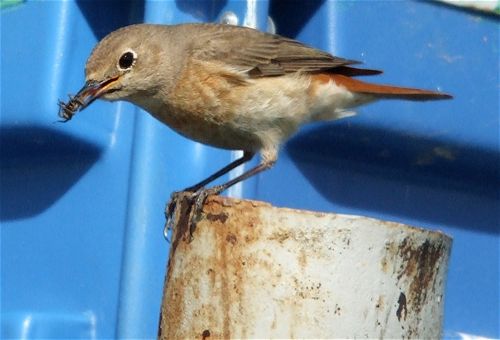
redstart

Here's a redstart from our trip to Kazakhstan and I'm posting it to show that someone who has never used their new UCA Adaptor with their scope and point and shoot camera can get a reasonably good photo after using it for just an hour.  I remember how bitter I was to be on the trip of a lifetime and forced to use a new camera adapter to take photos and then figured it out relatively quickly.  This is good because many point and shoot digital and video cameras can work with this universal adaptor.

Where Bad Bird Info Started

Non Birding Bill sent me a link to a silent film that kind of explains where that urban legend comes from, the one where someone comes up to you and asks, "I heard that the (insert your state here) DNR is paying off a family. Apparently, a bald eagle swooped down and took off with their four month old baby.  The DNR conducted a search and later found the baby's shirt (or diaper or pants or hat or sweater) in the nest.  The DNR is now paying the family millions of dollars to keep quiet so the general public won't go out and randomly shoot bald eagles.  Is this true?" No. Number 1: the DNR doesn't have that kind of money. Number 2: No family could be paid enough to keep something like that happening to their baby quiet.  Number 3: Bald eagles weigh on average 10 - 12 pounds and can only carry half their weight in flight.  How much does a four month old weigh?  Too much! And yes, I did see the story about the New Zealand "man" eating eagle.

Laugh, but I do get this question...a lot.  Almost as much as I get the question, "Is it true that hummingbirds fly on the backs of Canadian geese during migration?"

No.  Number 1: It's Canada geese. Number 2: Ruby-throats can and do cross the Gulf of Mexico on their own two wings.

But, good old NBB found this lovely silent movie demonstrating the legend of an eagle carrying off a baby.  Enjoy:

[youtube]http://www.youtube.com/watch?v=1lflJ6ZVKgo[/youtube]

Roadrunner Attacking Cowbird Video

I love birding--you can do it anywhere and I love to show people that.  To prove it, I called some friends: WildBird on the Fly and Clay Taylor and said, "Let's make some videos on birding and digiscoping in Las Vegas.  We are probably going to have at least 4 when Non Birding Bill is finished editing them (and one with a very exciting guest!).  So, here is one of them, this was done at Spring Mountain Ranch State Park and features the video footage of the roadrunner nailing the cowbird: [youtube]http://www.youtube.com/watch?v=4Mv2RNJDZqk[/youtube]

I'd like to thank Swarovski Optik for making these videos possible.  This was all filmed with your basic digital cameras from point and shoot, to handheld video to digital SLRs and Swarovski spotting scopes.

Don't forget, I have a digiscoping contest going on, where you could win some great Swarovski binoculars!

Tibetan Sky Burials

WARNING! I'M POSTING A VERY GRAPHIC LINK. IF YOU HAVE A WEAK STOMACH OR ARE REMOTELY SQUEAMISH, DO NOT CLICK. SECOND WARNING! The first link I posted has graphic pornography ads on the same page as the vulture images.  I had no idea because my ad blocking software completely blocked it when I checked the link.  I posted a second link with no naughty ads at the end.  I hope no one got in trouble at work for checking that link.

Edit to add: There are also ads for "adult" sites on the page. Our apologies.

If you have a strong stomach and want to see the "greenest" funeral possible, then check out this photo series of a Tibetan Sky Burial.  With a lack of trees for a funeral pyre and a hard, rocky soil not easy for burial, they use what they have .  Honestly, this is how I would love to be disposed of, but Non Birding Bill understandable refuses to help with such an endeavor.

Here is a link to the series of photos, without the naughty ads.

Banding Wilson's Warbler & Chipping Sparrow Tumor

WARNING!  THERE ARE SOME KIND OF GROSS BIRD TUMOR PHOTOS IN THIS POST. Don't worry, I'll end on a nice cleansing post. Fall colors at Carpenter

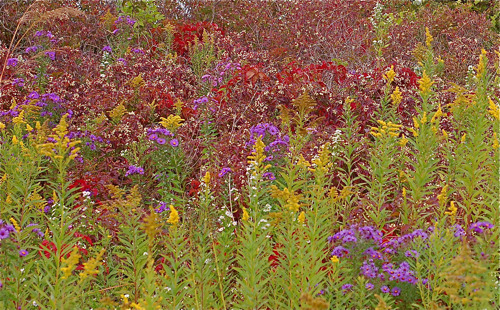
The colors at Carpenter Nature Center are outstanding right now.  This amazing palette will last over the next month or so, so if you need a day to just look at some beautiful late summer flowers, this is the place to be.

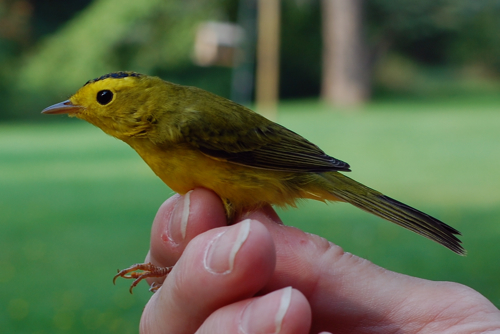
Wilson's warbler

Many of the birds in the nets for Friday's banding were pretty too, like this Wilson's warbler.  I wonder if this bird is on his way to Guatemala? It was the most common warbler I remember seeing there last February.  Between the ones I see around MN, Las Vegas, and Guatemala, I think this is the most common warbler I have seen all 2009, I think I have seen more of these than I have yellow-rumped warblers.

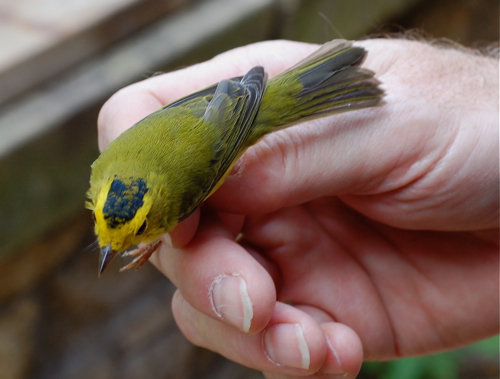
Wilson's warbler

Here's an above view of that Wilson's warbler, a hatch year male.  His cap is growing in well and his outer tail feathers are pointed.  McGill Bird Observatory has a good website with photos showing how they age and sex birds in the hand (certainly is easier to read than Pyle).

Hey!  For some crazy shots of a "washed out Wilson's warbler" found during banding, check out Bill Schmoker's blogWil.

Some days when we band birds, it is fairly easy to get them out of the nets, other days it seems as though every bird gets tangled up in some weird way, how will I ever get them out.  This was one of those days.  However, get them out we did.  We did see two birds that appeared to be having some health issues.

One bird was a field sparrow.  I did not get photos of it, but as I took it out of the net, I could see that its head was missing several feathers, almost like a bald cardinal.  Not only that, the exposed skin looked dry and had what looked like sore patches.  The bird also had a bit of bleeding around the neck.  As soon as it was out, it was let go.  This was not a situation where the bird could have been taken to a rehab center and there was no point in furthering any stress.  Whatever this poor field sparrow had going, banding was not going to help.  I had to make sure to wash thoroughly with anti-bacterial soap, so as not to risk spreading whatever the bird had.

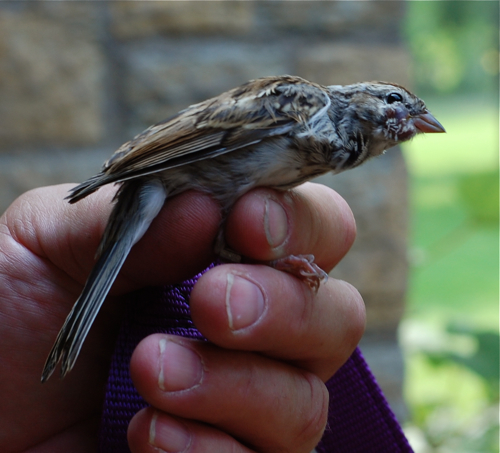
We also had a chipping sparrow fly in to the nets with a tumor.

Chipping sparrow with tumor

Apart from the tumor, this bird appeared healthy.  The lump looked like it might be a blister, but the tumor was rock solid.

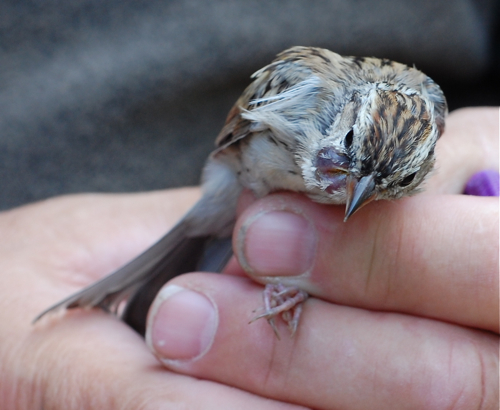
chipping sparrow tumor

If you look at it from the front, it appears as though it starts right at the gape.  It's hard when these come in.  As a human, you would like to do something to help, to make a bird's life easier.  However, would wildlife rehab really help a bird like this?  Would it be better to let it live out what life it has in the wild than to have spend a few days terrified in a clinic where it most likely will be put down?  Birds with illnesses and injuries are eaten by predators, it's a valuable source of food for migrating hawks, wouldn't it be better to let that be the ultimate end, where it continues to the cycle of life, rather than die quietly indoors?  And we certainly were seeing hawks passover--especially sharp-shinned hawks.

It's never an easy call, but something that banders are faced with from time to time.

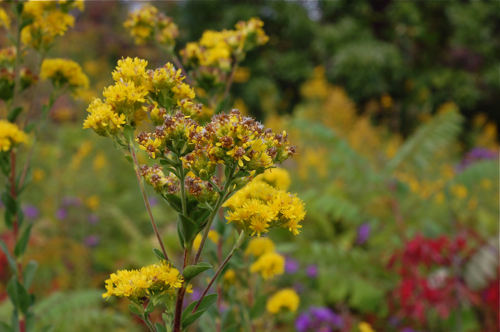
carpenter color pallette

I end with a photo of goldenrod surrounded by some of the other flowers and leaves.  If you are looking for a place to visit with some great color, Carpenter is it at least for the next month.

What's On The Mourning Dove's Mind?

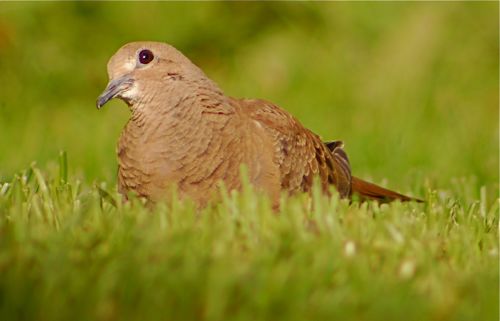
introspective mourning dove You know what this mourning dove pondering with its chickpea like brain that governs its large body? That the world is crazy!

I have never been comfortable when people tell me that they think some birds are "evil." I don't think you can categorize species as good and evil and that if you look at any species long enough, every bird has a dark side.  Many people don't like crows because they eat other birds' eggs and nestlings, but many birds do that including woodpeckers and herons. Well, to further prove that if you study a species long enough that you'll find a "dark side" researchers have discovered great tits (a cousin of the chickadee) eating hibernating bats!  What did I just type (let me read that again), yup, tits eat bats, that's what a wrote.

It's not something they do all the time, they prefer seeds and bugs but when the forage gets tough and the winter is long, they will take advantage of a hibernating bat as a source of food.  Makes you want to keep a good eye on those chickadees doesn't it?  Read the full story and see the video here.

The other thing this mourning dove might be pondering is diversity in the outdoor community.  It's been a hot button issue with me this week and there are a few conferences coming up on how we can get people of all cultures involved in birding and the outdoors.  I have asked if there is a vibe being put out to keep other cultures away from birding and this story from The Wonk Room suggests that might be the case:

Based on the recent discovery of marijuana farms on public lands, the U.S. Forest Service in Colorado said it suspected an international cartel was behind the state’s hidden weed farms. Officials issued a warning that asked visitors to look for signs of drug trafficking. The signs they suggested visitors look for? Oh, just telltale signs like campers eating tortillas, Spam and canned tuna, people drinking from Tecate beer cans, or Latino music and people speaking Spanish--all of these could be signs of illegal dope dealers and that if you encounter this, hike away immediately and call police.

Are you kidding me?  No one caught that press release before it went out?  They have since retracted it, but it's that kind of thinking that makes the outdoors seem like something only white people can do properly and that's just wrong.  Geez, spam and tinned tuna are kind of a camping tradition for many people, not just Latinos (why in Minnesota, it's practically in the state charter that you bring it camping.  Tortillas are also a staple with me (and a non Latino friend who has a yeast allergy), but fortunately I speak French and not Spanish, have Depeche Mode and bird calls in my iPod, and tend to favor scotch and gin over beer.

And yes, this is a real story, it even made it to MSNBC.

Well, let's wrap this up on a cuter note:
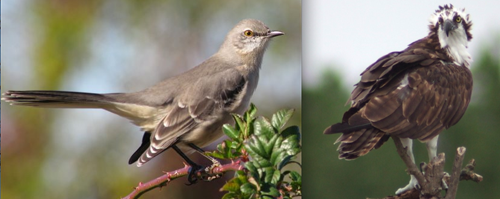
Picture 4

Some students in Florida want to change the state bird from mockingbird to osprey. Tired of having a bird that is also used by Arkansas, Mississippi, Tennessee and Texas, the state wildlife commission asked schoolchildren to pick a new state bird. More than 20,000 voted for the osprey.

The osprey "represents the thousands of miles of river ways, lake shores and coastlines that make Florida distinctive in the United States and where this regal bird makes its home," the staff of the Florida Fish and Wildlife Conservation Commission wrote in a memo last month.

Yet, there is a challenge.  Apparently a lobbyist with the National Rifle Association named Marion Hammer has thwarted attempts to change the state bird in the past and is prepared to lobby again.

"I remain unequivocally opposed to changing the state bird," Hammer has said.

She makes it clear that it's not an NRA policy but that she just loves mockingbirds.

I'm in favor of a state lobbying for a bird that is not used by other states and the fact that it is a raptor is a bonus in my book.  However, if there is a state that needs to change its state bird, it's Rhode Island, seriously, what's up with the chicken representing that state?

More Diversity Conferences

I did a bit of ranting on the blog Saturday night about a Diversity Conference happening at Black Swamp Bird Observatory in Ohio at the end of the month.  I was irritated because I had not heard about it sooner and was not able to go and lamented that the organizers were doing a poor job of promoting a much needed conference.  Kenn Kaufman disagreed with some of my remarks and rather than dragging out misunderstanding in the comments section of the blog, we spoke on the phone yesterday. He said that the point of the Ohio conference is to attract the local community in the area and to get local teachers, naturalists, and others interested in the great roster of speakers.  It wasn't meant to be a national conference.  It's a great idea and we need to have more of these.  Kenn also pointed out that there is another conference that is national going on the same weekend in Atlanta called Breaking the Color Barrier in the Great American Outdoors.

I was really surprised to not have heard about that one because one of the partners of the conference is the National Park Service (and I've worked as a part time park ranger for the last year and a half).  Ah, I think the birding community is not the best promoting our events because we'd rather be outdoors watching the wildlife as opposed to taking the time to promote.  We need these conferences, birding and wildlife enjoyment shouldn't be something that only white people do.  Is a vibe being put out that is exclusive?

The bottom line is that these are both great conferences and if you are in the Ohio area or Atlanta area at the end of the month, you should try to check them out:

Ohio: A Conference In Increasing Outdoor Recreation

Georgia: Breaking the Color Barrier in the Great American Outdoors

Birding Around Almaty, Kazakhstan

You may recall that I took a little trip to Kazahstan in May...I still have a few posts left to write about this wonderful place.  I don't know if I will ever get back, but I hope I do.  I have said it before and I will say it again, if you want to feel like the only person on the planet, you find several spots that will give you that impression. Almaty

When we first arrived, we stay in Astana, a city still growing and full of new development.  It's on the Steppes which is basically short grass prairie, but the locals do try to grow trees and they are very small.  Above is a photo of Almaty, and older city with established trees and older buildings.

soviet style sanitorium

I was most curious about my accomodations at this hotel, in my travel itinerary it was described as a "Soviet Style Sanatorium."  However, as you can see in the above photo, the rooms were not padded and did not come with complimentary straight jackets.  They were very clean and simple.  The tubs were huge and even though I was tired and had to get up early, I refuse to let an opportunity to soak in a deep hot bath pass and took advantage of it.  I had a life bird singing the whole time right outside my room, a scops owl--kind of like an eastern screech-owl (here is what it sounds like).  It was not what I would call a soothing and relaxing sound...neither were some of my fellow birders outside my room trying to call it in.  I ended up putting on my headphones in order to fall asleep.

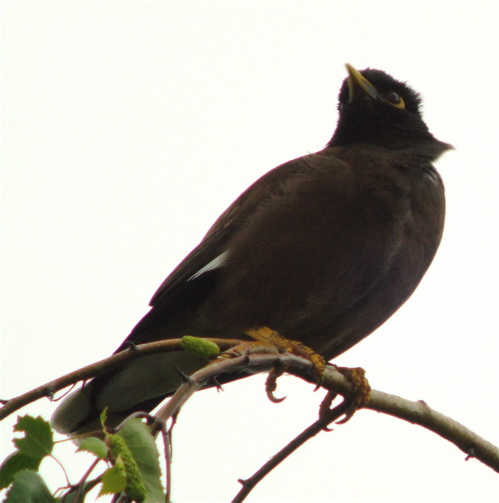
myna

The next morning I woke up to some crazy birds outside--like Indian Mynahs.  Alas, it was a tad cloudy and drizzly so I was not able to get the best photos, the mynahs were very striking birds.  Here's a photo of what one looks like.

eurasian collared dove

Here was a familiar bird--the Eurasion collared dove.  A bird working its way into the United States as an introduced species.  Again, here I was seeing the bird where it was supposed to be, Eurasia.  Our breakfast at this hotel was an odd combination of cold cuts, white sausages, cucumbers and tomatoes, cheese, some kind of cabbage salad and yogurt.  I was also getting accustomed to NestCafe--instant coffee granuals are not as bad as I thought.

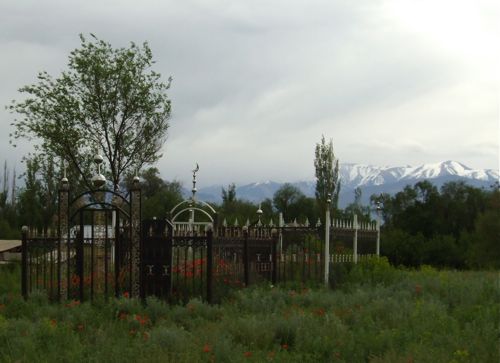
kazakh cemetery

We had quite a few destinations this rainy day, but some of the most exciting were around this cemetery.  Not quite as grand as some of the larger ones seen near Astana but still quite cool.  This spot was where we got our first look at hoopoes which were just too darn fast digiscoping on a cloudy day, but man what a dynamite looking bird.  And what a fun word to say.  Incidentally, it is pronounced "who poo" not "who poe."

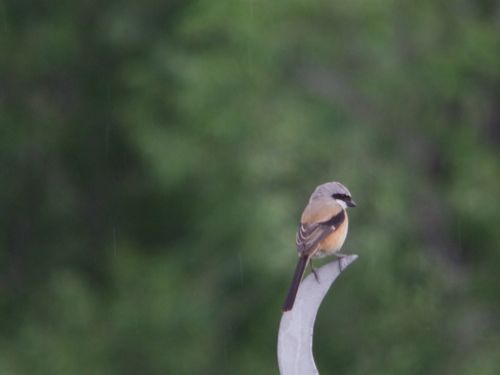
Long-tailed Shrike

We passed quite a few shrikes on the road and one was teed up in the cemetery.  For a bird that is known to impale it's prey on spikes and sharp barbs, a cemetery seemed the perfect place for it to establish territory.

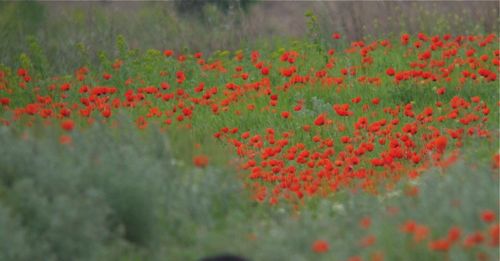
poppies

Surrounding the cemetery were huge poppy fields.  We passed dozens of fields with wide swathes of crimson, full of poppies.  When we stopped near the cemetery, we did find an interesting, yet familiar plant growing among them which we all sensibly acknowledged but left behind with knowing smiles.

Rollers

Another exciting species for me (but not as exciting for my fellow European birders in Kazakhstan) were these rollers.  They are kind of related to kingfishers.  They are a striking big blue bird and looked gorgeous over the poppy fields.

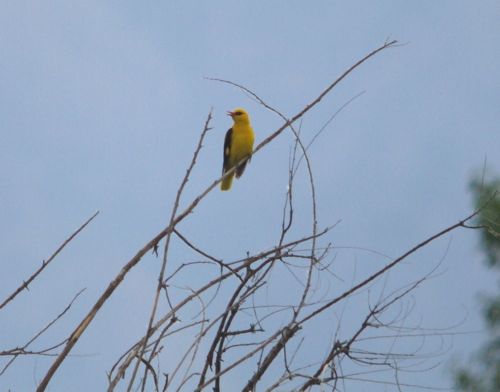
Eurasian Gold Oriole

Another bird that showed up was the golden oriole.  Again, these are just the tip of the iceberg to the amazing birds and scenery that were yet to come this day.

Showcase Minnesota

If you are looking for the hummingbird nectar recipe I used on KARE 11 today, it is four parts water to one part sugar.  And for this area, do keep your hummingbird feeders up, we can see hummingbirds in Minnesota well into October.  It is a myth that hummingbirds will not migrate if the feeder is left up after Labor Day.  For more hummingbird myths, check out this great article from Hilton Pond. If you are looking for more information on bald cardinals, follow this link.