
Birdchick Blog
Why Podcasting?
If you haven't noticed...we started a podcast. The response has been surprisingly positive as Non Birding Bill and I navigate our way through this, but we've had some questions and I want to address those: 1. Why all the podcasting, is that all this blog is gonna be?
No, that is not all this blog is going to be. The Internet is constantly changing. Blogging is not the same thing it was when I started in September of 2004. When I started, there were a handful of birding blogs and now there are a TON. The way people interact with blogs has changed and I've tried to alter my content to work with that, especially as Facebook and Twitter came into prominence. My goal has always been to get people interested in birds and I will experiment with any medium I can to do that.
2. I'm not in to podcasting, will I miss something?
Maybe. The podcast will focus mostly on news links and interesting blog entries. Occasionally, we'll interview people. It's designed for people who don't read blogs and is also supplement to mine. If you follow me on Twitter or Facebook, chances are good you'll have an idea of what's going on in the podcast.
3. Ugh, who has time to listen to this 3 times a week?
I based this podcast on how I use them. I tend to listen to podcasts when I'm tidying my home, cooking or driving. These are designed to be stand alone, you can listen to one here and there or if you subscribe you can listen to all of them each week. You can get a look at the title and get an idea if it's one you're interested in.
4. I wish you would do "blank" differently in the podcast.
Please tell me! I don't listen to them after we record them, so if you have suggestions/recommendations email sharon at birdchick dot com.
5. Wow, I could do a birding podcast so much better!
Please do! I started this because I couldn't find a birding/nature podcast that came out on a regular basis that I liked, I want one to listen to so I hope others start soon. Wouldn't it be great to have so many nature casters out there that it could warrant having it's own channel?
Spring Migration, It's On!
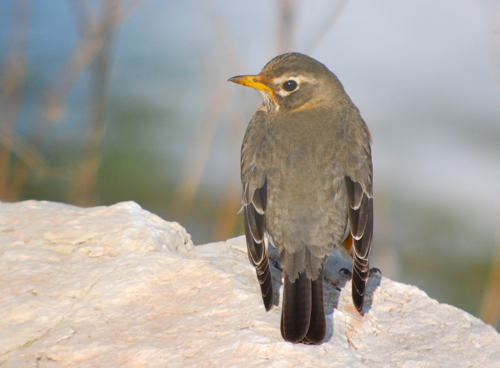 We have turned a corner winter wise up in Minnesota--I was up and at 'em early in the morning this weekend and I heard a robin singing on territory in my neighborhood! I took the above photo of an American robin outside of the National Eagle Center in Wabasha on Sunday (that's roughly 80 miles south of me). I was stationed at a binocular booth all day and it was a great vantage point for watching the birds use the Mississippi River as a major highway. Saturday was bright and sunny and my biggest surprise was seeing a meadowlark zoom right overhead.
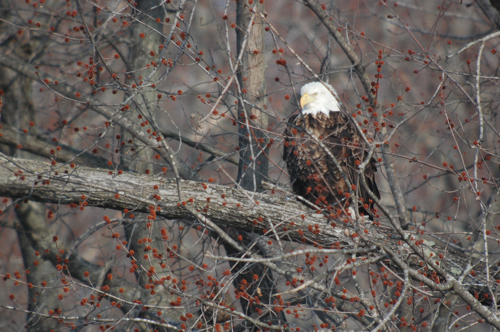
I love this photo of a bald eagle tucked behind some branches bursting with red buds about to pop. That's spring! It was crazy how migration really turned a corner this weekend. The previous weekend I struggled to see a red-winged blackbird and I passed clouds and clouds of them on my way down.
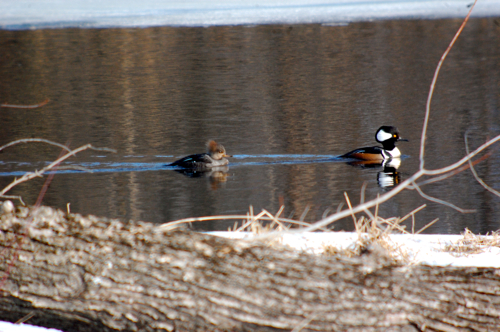
Both days, on my drive down I saw several groups of hooded mergansers involved in courtship display in the backwaters of the Mississippi. Speaking of hooded mergansers, have you seen the shots Picus Blog just posted--amazing!
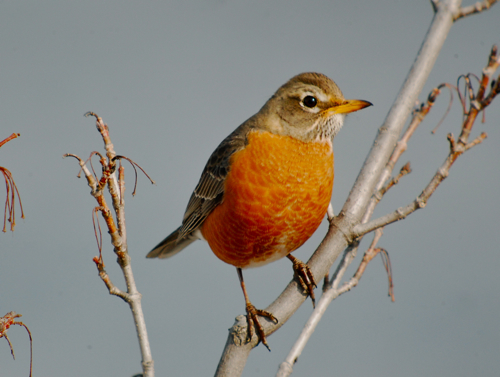
While Saturday was beautiful and offered great views of spring birds (like the above robin), Sunday was cooler and drizzly which eventually turned to fog and was utter crap for getting photos. You could still see migration working through the skies until the fog got so thick that we couldn't see across the river. We would scan the skies with the scopes and watch strings and strings of tundra swans heading north as well as a whole host of other ducks like ring-necks, scaup and common mergansers. I even got my first of year pelicans.
I'll be at the National Eagle Center one more time this month. Next Sunday, I'll do a digiscoping workshop on how to take photos and video of birds and wildlife using a binoculars or spotting scope with a digital camera. I think it starts at 11am. I'll also have my pro cleaning kit if you would like me to tidy up your optics for you too.
Birds and Beers Reminder
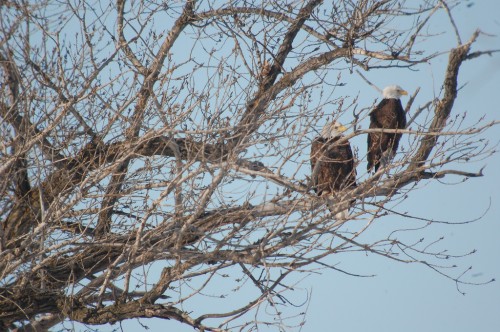 This is a reminder that there's a Birds and Beers Saturday at Nelson Creamery (right across the river from The National Eagle Center in Wabasha. I'll be at the Eagle Center all day at a Swarovski booth giving pro cleanings to optics then the Birds and Beers is from 4pm - 6pm. Stop by and say hi! Should be GREAT eagle watching weather and sandhill cranes have been reported there all week. Take advantage of this early spring day before the river floods.
Honey Covered Titmouse
This is a problem that only I could have.
Non Birding Bill and I had one of those exciting married people dates: did a little dinner, sorted some tax receipts, pretty much got down last night. While we were enjoying some sushi, my phone went off and I noticed the number was from Mr. Neil's housekeeper, Merry. She rarely calls unless there's a bird emergency, so I picked up. Her daughter Alicia walks Mr. Neil's dogs in the evening and when she arrived, she found a honey covered bird unable to fly on the ground. Merry sent this photo:
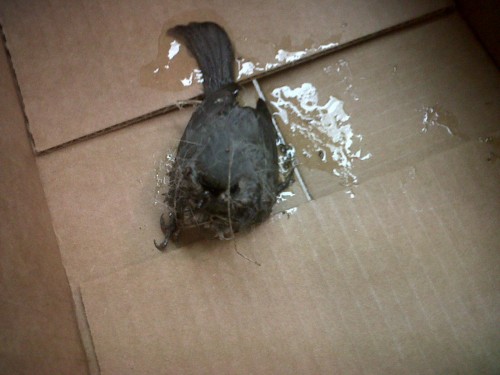
Oh no! A honey covered tufted titmouse! How the heck did that happen? I felt so guilty, it was as if the 2 loves of my life, birding and beekeeping found out about each other and got into a fight. I advised Merry to do what wildlife rehabbers do with oiled birds, use luke warm water and a little bit of Dawn Detergent and gently was off the feathers. I also asked her to check if it was banded (it was not).
So, she took to gently cleansing the feathers of the sticky bird, even carefully using a cotton swab to get the feathers around the face clean. Laura Erickson has had experiencing cleaning a red-breasted nuthatch that got caught in some grape jelly and she warned that it might take a few washings to get the bird totally honey-free.
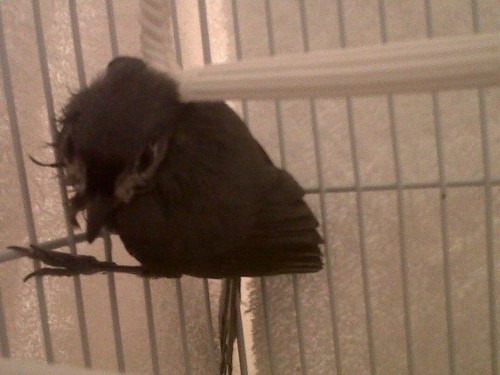
I told Merry the bird would need a warm, dark and dry place to settle, dry out and preen its feathers. I mentioned that titmice like suet, peanuts and sunflowers too, so she put some peanut suet in the cage, covered it and let the bird be til morning. I tried to puzzle how this would happen.
None of our hives survived the winter and it's been a group effort of the groundskeeper, Hans gathering the hives and all of us taking a turn at extracting the remaining honey before too many deer mice move into the empty hives and eat what the bees did not. Some of the hives have been left outside the house to await extraction. What would make a tufted titmouse explore the hives? They are not honey eaters. I wondered if our 50 degree weather brought out some early spring insects and they were attracted to the honey, which in turn attracted the titmouse?
I also recalled last fall setting out frames that were covered in wax moth larvae for the chickadees and titmice to eat. Did this bird recognize the frames as a source of larvae? It could have hopped into the open box inspecting the frames, only to come out covered in honey and unable to fly?
Thank goodness we didn't have any active hives. With that warm weather, the bees would have been out and would have gone to the titmouse to clean off the honey. The titmouse would have struggled, causing them to sting...ew, don't even want to think about that.
When Hans found out, he went back to the house last night and moved and covered the open brood boxes so no other birds would make the same mistake as the titmouse.
I got a text this morning that the titmouse was dry and feisty so it was immediately released back to the yard, hopefully a bit wiser. Thank goodness Alicia found the bird, had it been left out, it probably would've succumbed to the chilly air. It's sticky feathers wouldn't have been able to maintain a proper temperature in the cold night air. No doubt a raccoon would have found it and ate too.
Who knew beekeeping would be hazardous to birds? Now Merry has another talent to add to her resume: honey extraction from titmouse feathers.
KARE 11 Segment 03-15-11
Here are links to some of the things I talked about on KARE 11 Today this morning:
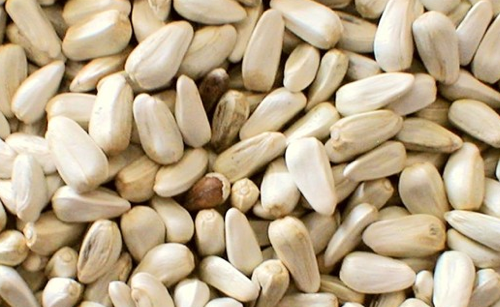
Safflower is a great tool when dealing with grackles at the feeder.
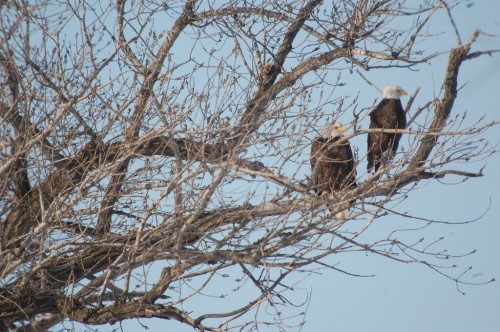
Now is a great time to watch for bald eagles along the Mississippi River (especially before the flooding kicks in). Drive down to the National Eagle Center this weekend and take part of their SOAR events. I'll be there Saturday and Sunday with Swarovski scopes for people to use and will do a professional optics cleaning on your binoculars. Saturday is a Birds and Beers gathering at Nelson Creamery from 4pm to 6pm--meet other birders and enjoy some tasty cheese and beer.
Favorite Live Cams At The Moment
There are a ton of live streaming bird cams going on throughout the year and two of my favorites are going on right now.
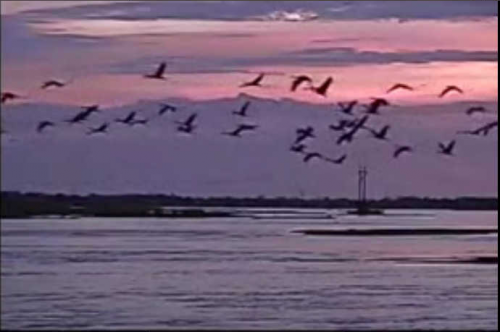
One favorite that has a brief window is the Sandhill Crane Live Cam at Rowe Sanctuary in Kearney, NE this month. The cam is best viewed at dawn and dusk but it appears to run all day and the sound is INCREDIBLE. If you've never birded Nebraska in March, you're missing out! A million snow geese and a 60,000 sandhill cranes can be found at dawn and dusk along the Platte River. If you cannot travel and sit in one of the blinds, you can at least enjoy the sites and sounds of crane cam. I especially enjoy hearing the robins and red-winged blackbirds that haven't quite arrived here in Minnesota just yet.
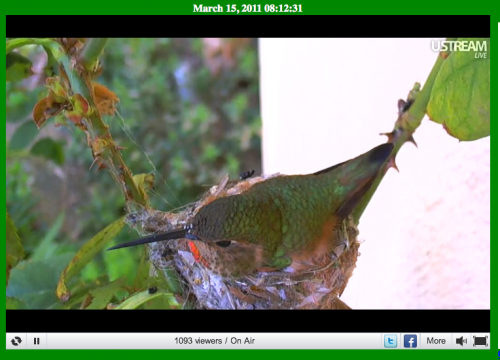
The second cam is a live cam on an Allen's hummingbird nest. The quality on the video is amazing and again, you can hear great birds like the house wren, giving us a taste of spring to come. She has 2 chicks right now and they grow fast.
The Tsunami and Nesting Seabirds
Non Birding Bill and I talked about this on Monday's podcast, but here is a first had report. The stories and images coming for Japan after the earthquake and tsunami are heartbreaking. The tsunami not only devastated many towns in that country, but it also affect nesting albatross and petrels on Midway Atoll. Albatross nest on the ground and petrels nest in burrows. Chicks and adults were washed into and stuck in vegetation or washed out to sea. Some adults were so waterlogged that they could not fly off the water. Petrels in their burrows were buried. This blog is the story of someone on the island who was there to help. They couldn't save all, but they saved many. With all of the heartbreaking stories coming from this immense natural disaster, it's nice to find hope where we can.
For those who missed the podcast, the oldest albatross, Wisdom, did survive the tsunami as well.
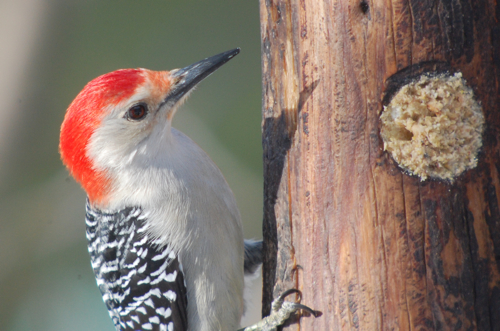 Male red-bellied woodpecker coming in for some suet dough.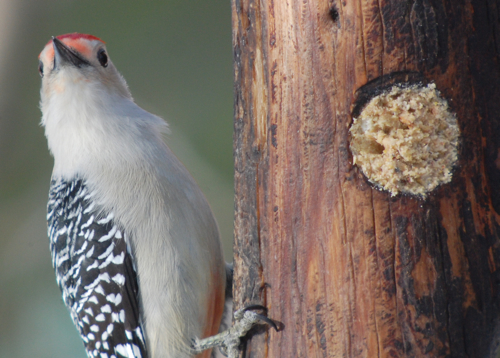
Siskins Are Moving
I went out to Mr. Neil's yesterday to deal with some of our beehives that died over the winter (it was a hard winter, lots of beekeepers lost hives, it's part of the hobby). While walking around outside, I could hear titmice singing territory song and then I heard a golden-crowned kinglet.
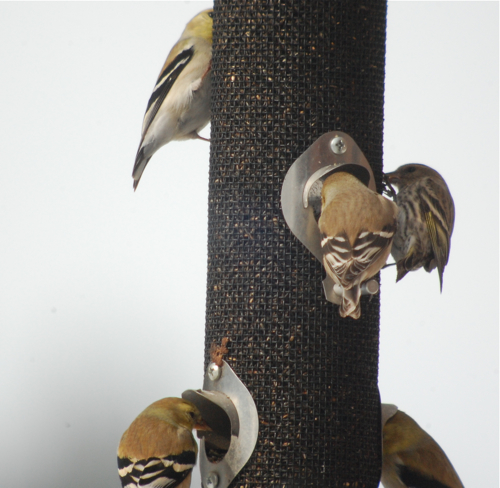
I looked out the window and among the goldfinches noticed someone a little streaky.
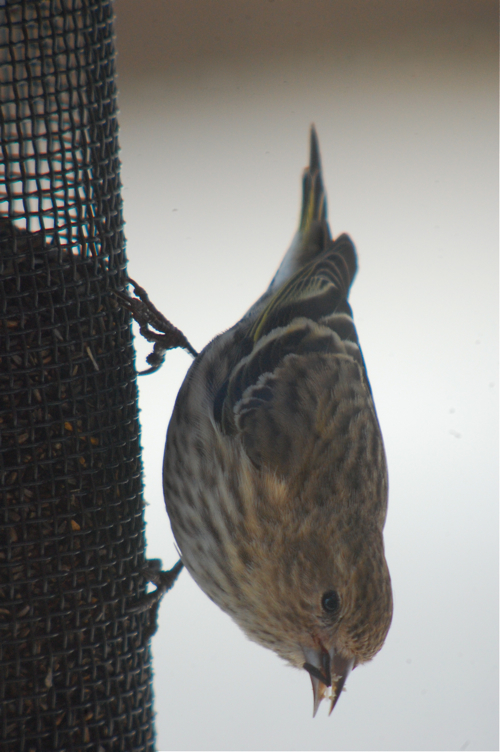
It was a pine siskin! Some winters, we get tons and tons of siskins that show up, but this winter we didn't see very many pine siskins at all. I was glad to see this one siskin and thought it strange that it was alone--you generally get a buttload of siskins, not just one or two.
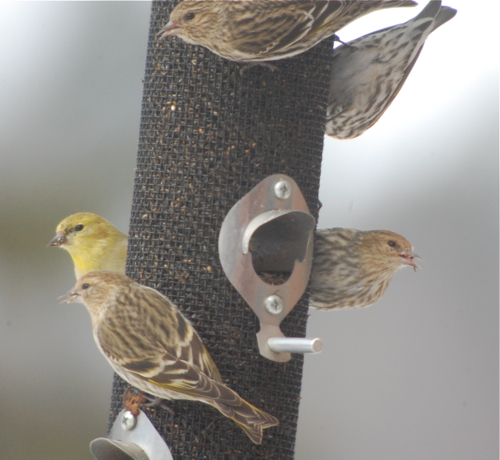
I looked out the window five minutes later and the number of siskins outnumbered the goldfinches. I went outside and the trees were full of them, their chipping and trilling took over the chorus of other birds. Here's a link to what they sound like--does that sound familiar? Have you heard that in your yard?
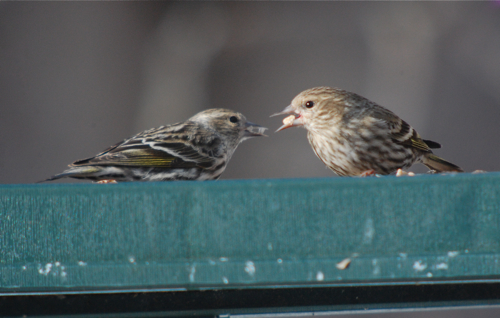
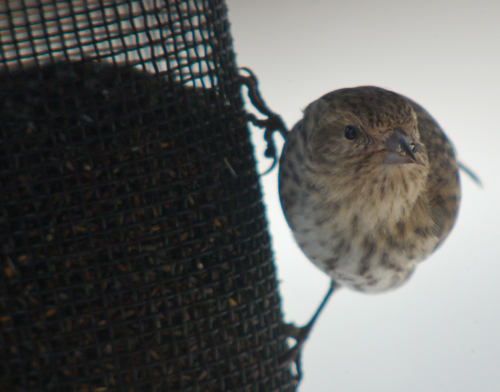
I think this is definitely a sign that spring is on its way--even up there in the northern states (finally). Between the kinglet and the large siskin flock, these are birds moving north. Can red-winged blackbirds be far behind for me? Watch for these finches at your feeder, you'll notice them from goldfinches by their extreme streaky plumage. They love Nyjer (aka thistle) and above the birds are eating sunflower seeds.
Birdchick Podcast - Dead Deer, Bent & FLAP
This has to be a Friday podcast because it got a bit weird! Non Birding Bill was not prepared for the talk of dead deer. Here are links to some of the subjects: Arthur Cleveland Bent
FLAP - Slide show at the Royal Ontario Museum and lawsuit.
Valmont Owl Cam check out the live shots. Here's a video of crows mobbing the owls.
Twin Cities Naturalist blog entry of a great horned owl visiting their deer carcass...and taking off with a leg.
Digiscoped Images
Fresh Tweets
Would you like to hire me as a speaker for your event?
Email sharon@birdchick.com