Birdchick Blog
Biggest Week In American Birding
So if you've been following my Twitter feed, you know I'm at something referred to as the Biggest Week, it's a big ole' honkin' bird festival in northern Ohio at Magee Marsh. It bills itself as the "Warbler Capital Of The World."
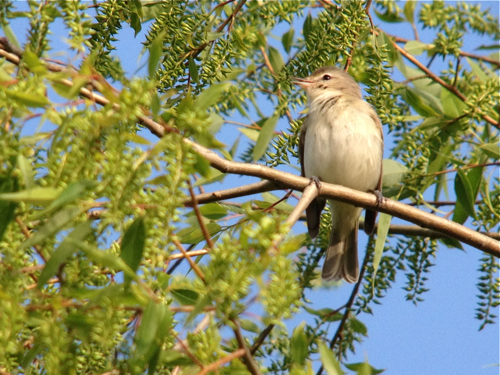
I have seen quite a few warblers, but not enough yet to call it the warbler capital of the word...yet. Warbling Vireo Capital Of The World is my current title for it--these dudes are all over the place. That's one in the above photo. I think the winds haven't been in our favor so far, so we're not getting the numbers of warblers dripping low off the trees that Ohio birders speak of with reverence, but I'm sure it's coming soon.
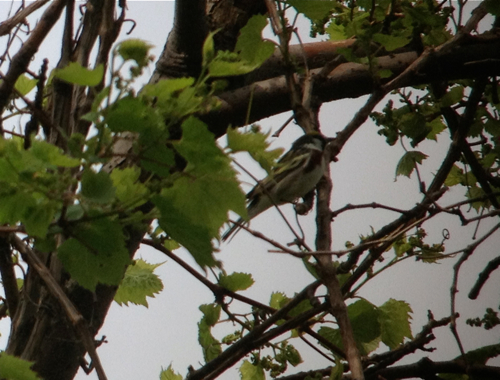
It's a cool festival though, there are warblers all around. The first bird I got when I stepped out of my rental vehicle was a chestnut-sided warbler (the bird above). It's not the best photo, I got that with my iPhone and spotting scope. As a matter of fact, all of the photos in this post were done with my iPhone. I thought I would challenge myself to only go out with my iPhone for a few days to see what I could do digiscoping wise if I left my SLR in my hotel room. Some of the results are okay, but some have really surprised me.
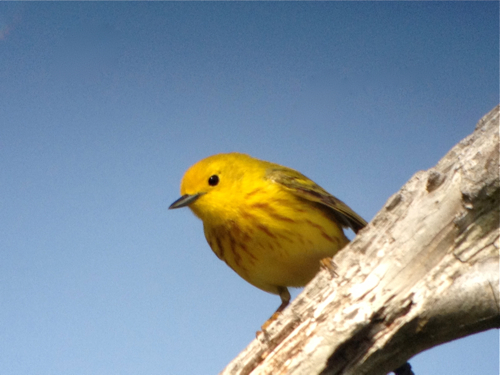
Here's a yellow warbler, they're all over the Magee Marsh Boardwalk.
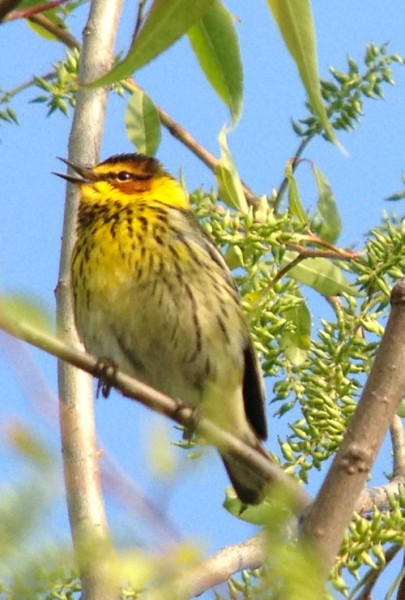
Here's my favorite warbler photo so far of a Cape May warbler and yes, I got this shot with my iPhone and Swarovksi spotting scope. Am I ready to leave my SLR home for good?
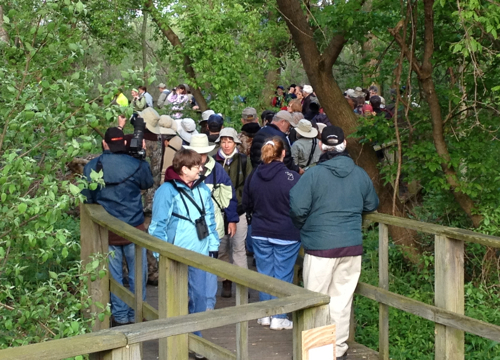
I have to admit, I was worried this festival was going to overwhelm me. You mostly bird watch from a boardwalk through Magee Marsh and with hundreds of people that can be some sardine birding. I think being short gives me a natural aversion to crowds--I can't see over tall people and I really don't like standing in a place where I cannot see an exit strategy. The west side of the boardwalk is jam packed with birders--some people really enjoy that. Not me.
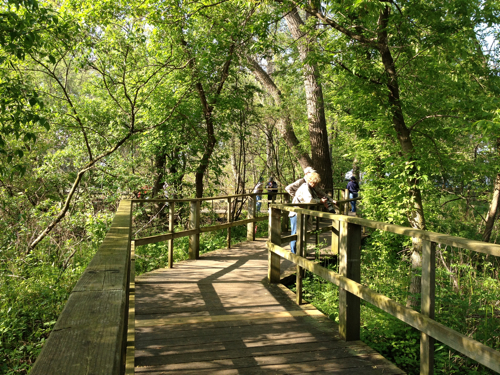
However, if you are like me and would like some space, the east side of the board walk is for you. There will be some clusters of birders but you can still get past and there are a ton of bird because warblers move around. So many birders from all over are here, it's fun to run into people I know only via Twitter or old friends from festivals past. The camaraderie is 50% of the fun.
Yellowlegs Video
Here's another video I played around with yesterday trying to stabilize my iPhone 4s up against my Swarovski spotting scope. This was taken with the 25 - 50 zoom eyepiece (I find for video I get little to no vignetting). I did some minor adjustments in iMove, mostly a little cropping to take out vignetting in the upper right hand corner). http://youtu.be/dx0x1thf6zo
iPhone Video With A Spotting Scope
Here's an experimental video of a a red-bellied woodpecker (and some red-winged blackbirds) I took using my iPhone 4s and my Swarovski Spotting Scope. I'm using my 25 - 50 zoom eyepiece on this one and I did do a wee bit of cropping to take out a small amount of vignetting. http://youtu.be/qwh6nhE9FdY
Naturalist ADD In Spring
I signed on for a book project last December thinking that this is Minnesota and an early April deadline will be a great way for me to occupy my time. Then warm temperatures came early, leaves started bursting and survey work rolled in sooner than expected. Before I knew it, my body was chained to my book and computer and I could only glare enviously at friends posts on Facebook and Twitter as they were enjoying birds.

Sure, I had some of my field work, but trying not to throw up from the back of a float plane while counting eagle nests is not the same as a bird walk through the woods. Although, I did get a kick out of a great horned owl that took over one of my park's eagle nests--that's a ballsy move, but that's a great horned owl for you.
But finally, through a scheduling snafu, I ended up with two days off in a row and in the middle of all of that, we got word that our three new beehives would arrive. Time to relish spring and not just go through the motions of spring chores.

I was worried with all the warm weather that I might have missed my chance to see wildflowers but on bee installation day the surrounding woods was carpeted with rue anemone and I found myself in a quandary--what do I focus on for the day? Wildflowers? Birds? Bees? I tried my best to do all three. What a bonus to have a day off and get so much spring all at once.

Here's a transition of winter to spring. A pine siskin and a female goldfinch. One bird that came down to feed for the winter and the other gradually shifting into a bit brighter yellow plumage for the coming breeding season.

Up in the northern US we don't have the warbler extravaganza those south of us have going on but we do have the early ones like the yellow-rumped warblers.

But even as there are birds overhead, there are secretive and unique beauties down below. There's a patch of wild ginger near the hives and they hide there flowers below their two leaves.

What an amazing tiny flower, so hidden on the woods floor.

Our bees that survived the winter are thriving in the early spring. Bees with big fat pollen baskets strapped to their back legs returning. And the pollen is in several different colors. I think most are coming back with dandelion pollen but others are foraging on flowering fruit trees. One of the hives was so full, we went ahead an put on a honey super. Lilac are just starting and I'm kind of hoping we'll get honey that has a bit of that flower. That happened a few years ago and I think it was my favorite.
We did our annual bee installation and put in three new hives, so combined with the three that survived the winter, we now have a total of six hives. As we were doing the installation, someone came by with a high speed camera and got footage of Neil dumping the bees into the hive. I love how the video almost makes Neil look like he's not moving while bees glitter all around him. Here it is:
[vimeo]http://vimeo.com/40830178[/vimeo]
So all in all some great time off. And for my mom, here are a few more wildflower photos from around the hive:

Trout lily.

Trillium.

Dutchman's breeches.
Incredible Bluebird Video
We installed our new bees for the year over the weekend and a man named Matt Kuchta came out to film them in this really fancy pants slow mo camera. I have to admit, that when I arrived and Mr. Neil was beaming at me with, "We have a photographer coming!" I thought, "Really, I didn't wash my hair, I'm not wearing clothing for it...beesuits are forgiving to one's figure..." But he was actually there to film the bees. However, he showed me this incredible video he had of a male bluebird attacking his window. Birds can see their reflection in windows and can interpret their reflection as a potential rival I've written about it on my FAQ and at 10,000 Birds. Once they start fighting, it's very hard to dissuade them. Matt has tried bird netting, which prevents the bluebird from making contact with the window, but they still waste the energy making the attempt. He's now covering the windows on the outside with tin foil to break the male bluebird of the habit of coming around in looking for his rival.
As he was doing all of this, he also has a high speed Memrecam GX-8 Camera and got some footage of the bluebird attacking his window:
[vimeo]http://vimeo.com/40834510[/vimeo]
Two things struck me with this video. First, the bluebird brings out its toes just like a raptor would--kind of brings down his landing gear. Which makes sense, you don't want to attack with your beak, your opponent could attack with his beak and damage your eyes. And insectivores have softer beaks, not really much there.
Second...his cloaca is really swollen and you can see a bit of a cloacal protuberance.
Birds and Beers Postponed
Tonight's Birds and Beers is cancelled due to weather. The rain date is Monday April 23.
Owl Attacks Heron On Live Cam
I love all the live nest cams that are available for us to watch online but knowing all the things that can go wrong with nesting, I keep waiting for the day when a nest cam witnesses something violent. Sure, we've had epic peregrine battles, but when we are we going to see something pick off nestlings...we might get that this year with the Cornell Live Heron Cam. Recently, a great horned owl tried to go all Hunger Games on the incubating heron. Check out the video and the heron gets angry and loud, so keep that in mind if you are watching this at work or if you have headphones on (don't worry, it's not bloody):
http://www.youtube.com/watch?feature=player_embedded&v=RBGYPQKt3wA
The birds have just started incubating, but if that great horned is that brazen now...will it return when the chicks hatch? I don't think this is a matter of the owl desiring a nest, I've seen great horneds take a nest in a heron rookery--it was interesting to note that the herons didn't take any of the nests next to the owl nest but seemed to get along fine with a red-tailed hawk nesting among them.
Will the herons be able to protect their young from an owl? A few years ago there was a raccoon that was systematically climbing up trees at a heron rookery in MN and eating the young one by one. The MN DNR got video footage of it and in some cases the parents watched from a nearby branch without attacking the raccoon that was eating the chicks alive.
How will this nest cam end? Happily with all five chicks flying off or brutally with some being eaten by an owl? It certainly has my attention.
Consolidating My Birding Tools On My Bike
In my effort to find ways to incorporate more exercise into my daily routine and cut back on using my car, I've been bike birding when I can. I've written about it before and how I attach my spotting scope to my bike so I can tote it around.
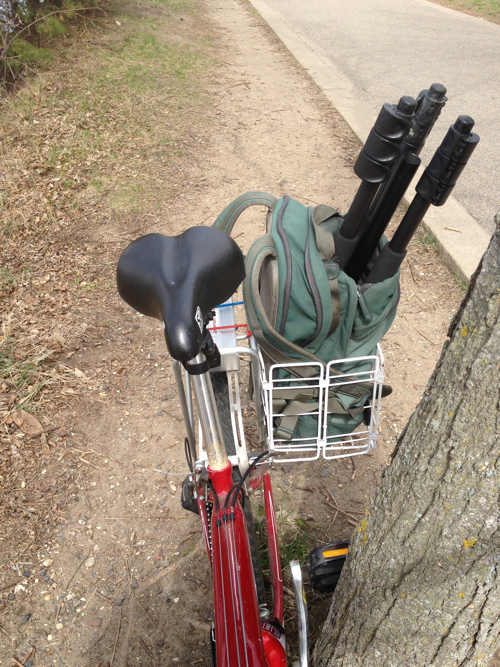
Since I've been playing around with using my iPhone instead of my SLR for digiscoping, it leaves a bit more room for toting in the backpack. In the past I have had to attach my tripod to the back of the bike with bungee chord because my backpack had the scope and the SLR. But if I leave my SLR at home I can slide the tripod into my backpack. The backpack doesn't close all the way around, but enough that it holds the tripod and scope securely in place, especially when wedged into my bike basket.
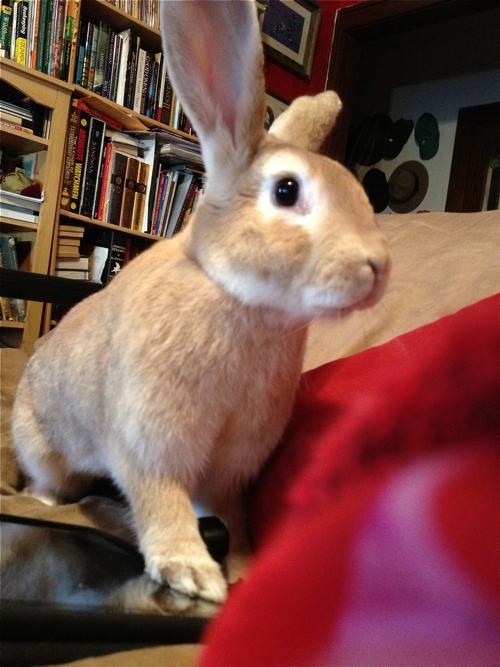
Although my bag did have one tragic accident this week. Our rabbit Dougal decided he wanted to give chewing zippers a try and he's damaged one of the zippers on the outer pocket. Just like a bunny, they wrap you around their little paw and then when you have fallen for them hook, line and sinker they begin their chewing siege on your home. But thanks to Twitter, I have leads on someone who can repair it...can I get fixed before The Biggest Week In American Birding and Point Pelee Fest though? I love that above photo, he looks like he's been caught trying to use my iPad.
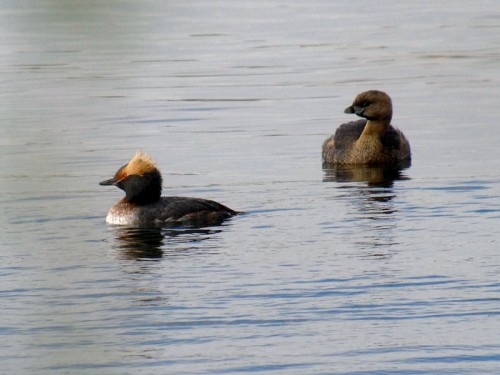
Here's a shot I got iPhonescoping while biking last week of a horned grebe and pied-billed grebe while biking the lakes around my home. I like how having a smart phone reduces what I take in the field. My phone has the ability to hold multiple field guides, the ability to submit sightings directly to eBird from the field and is a camera. The only thing it's missing is the ability to use it as a binocular and a bottle of water.
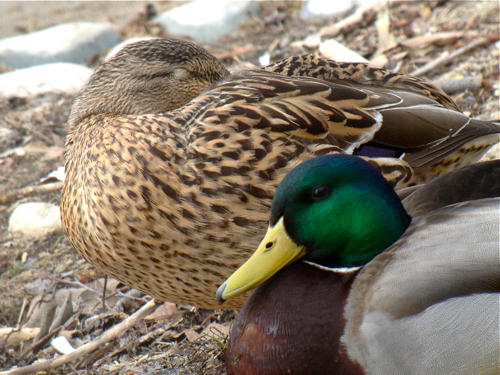
I will say, it's not quite as easy as getting shots with an SLR, it's similar to getting photos with a point and shoot as far as burst mode goes. But most of my photos end up here or on Facebook and Twitter and for simply sharing shots, I like the portability of using my phone instead of a large camera in the field. When I need serious photos for a book project, I can still take my SLR out in the field, but for general birding or light birding, the iPhone set up works well (although some of my iPhonescoped shots will end up in my next book).
I'm still pining for an adapter to hold my iPhone to my scope. I had high hopes last week when I was sent a prototype for a planned Kickstarter project for an iPhone adapter. I knew it was too small to work with my scope, but it looked like it would work for my binoculars. Alas, my Swarovski ELs are just a hair too wide for it. But it if you have smaller eye cups, a microscope or telescope, it could work well for you. I hope their Kickstarter is a success...maybe it will encourage them to work on another adapter that works with modern field optics with large eyepieces.
But, I do hear there are more in the works, so my dream can't be far off of securing my iPhone to my scope. When that happens, I'll be able to take video and I have a dream of taking off and doing daily birding shows based on what I can get with my scope and phone.
Birdchick Photo Contest Winner!
I just did the random drawing for the winner for the Birdchick Photo Contest: Congratulations to Linda Munson, you win the $250 gift certificate form Eagle Optics (they will mail it to you). Linda submitted several photos and one of my favorites was this shot of a great horned owl that took over an osprey nest in Florida:
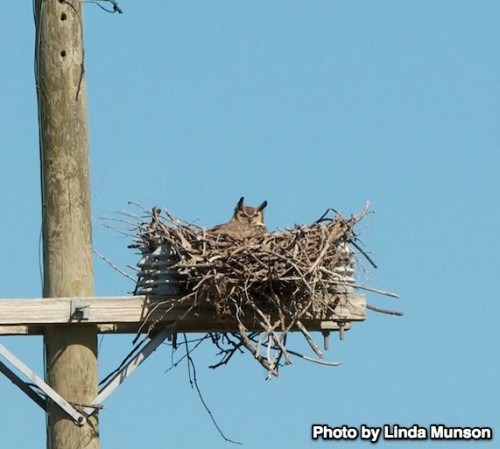
Thank you to everyone who entered. If your photo appears in the book, you will receive a free copy when it's released in 2013 and a photo credit.
Several people emailed in and very generously offered their photos and didn't want the gift certificate. If anyone else would like to submit photos, please feel free--I especially need photos of African and Australian species but I'm always on the look out of cool bird behavior from any wild species.
Thank you again for everyone's participation, there were some fantastic submissions and I'm excited and honored that you shared them with me and they will make this birding primer book very special.
BirdsEye BirdLog App Review
I've long been a fan of the BirdsEye app, it allows you find out what's been reported to eBird and gives you an idea of birding hot spots all over North America. It's my favorite birding app of all the apps available--even over any of the field guides. It works on either an iPhone, iPod Touch, iPad and Android. You need some sort of Internet access, either via wireless or the 3G network. There's been a rumor that the app would eventually allow you to update your sitings from the field directly to eBird and we waited and waited for an update. Those of us with iPhones even felt a wee bit of bitterness when it was announced that the app was available to do just that via the Android and not the iPhone.
Now it is available and boy howdy have I been giving it a workout. One thing to understand, this is a separate app called BirdLog that allows you to enter sitings to eBird from the field, it is a separate app from the original BirdsEye app that allows you to see what is being reported.
Pros of the BirdLog app:
You can enter in eBird sitings directly from the field, as it is happening if you wish.
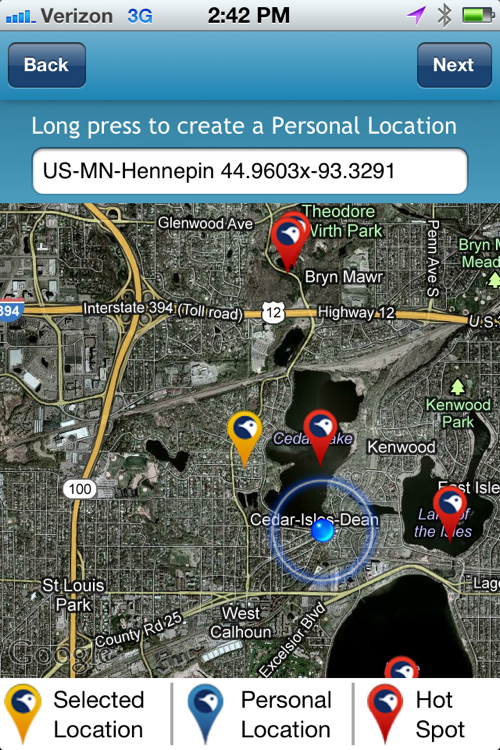
Let's say you are bike riding on a series of trails and there's a pond that particularly birdy but there's no known birding hot spot there. You can go into "Submit Sitings" and will tell you where you are and even let you know if you are near a birding hotspot. This is also handy if you in someplace like Nebraska and you're driving around and getting birds at various potholes.
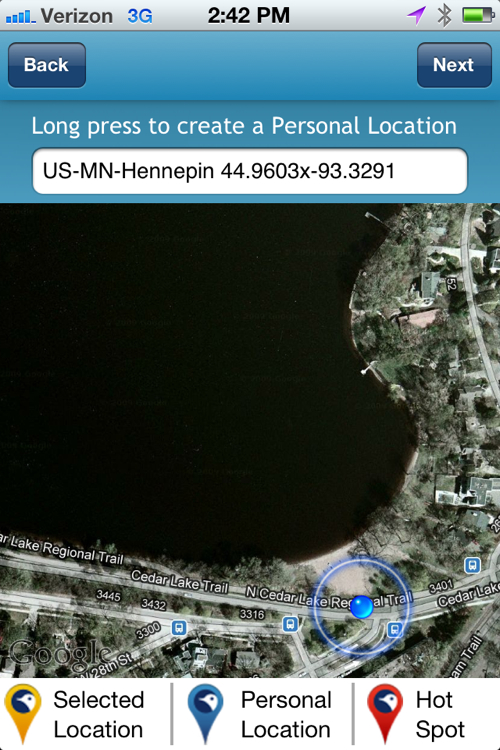
I personally don't like hunting down locations in eBird because you have to do it by county, rather than city or township and I think it's a pain the butt to figure out. This app does it for you.
It gives you a list of the most likely species.
It will keep track of how long you are birding in an area for you, so you can start it as soon as you hit the trail (alas, it doesn't keep track of how far you traveled, but there are other apps for that).
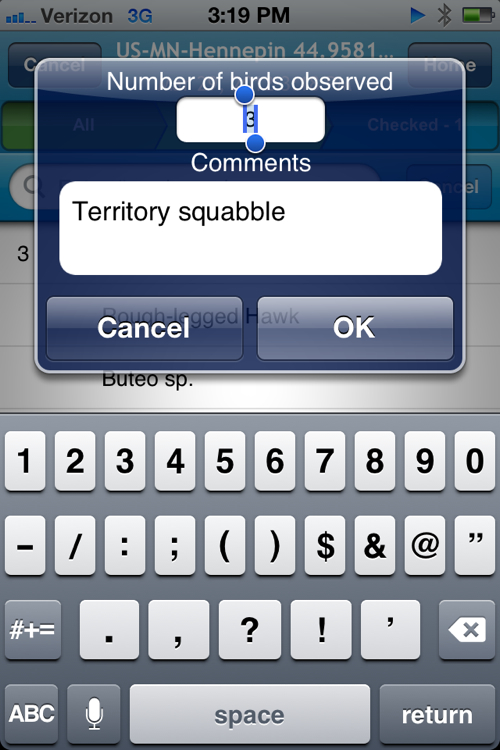
The app allows you to make notes, "Red-tailed territory display" or "nest nearby."
You can have more than one list going. I have two lakes that I do as a loop when I'm bike riding and I was able to have both lists going.
Cons of the BirdLog app:
It's separate from the original BirdsEye app.
Doesn't keep track of how far you travel on the trail.
Once you have closed out and submitted your list, it's difficult to go back in and correct it (you might as well do it at home on your computer). You can't edit the list from the app, it will take you into eBird via your phone's web browser and eBird is not set up to be viewed in a friendly way on a phone (at least not on my iPhone 4s).
When submitting sitings, it defaults to numbers, rather than letters, gently forcing you to count how many birds you are seeing. I tend for most species to enter in "x" because I don't want to count how many grackles, red-winged blackbirds or gulls I see on the trail. I think this is more my own personal issue. I so often have to count birds for work and when I'm watching birds for fun, my brain doesn't want to do it. You can still enter in "x" you just have to switch screens.
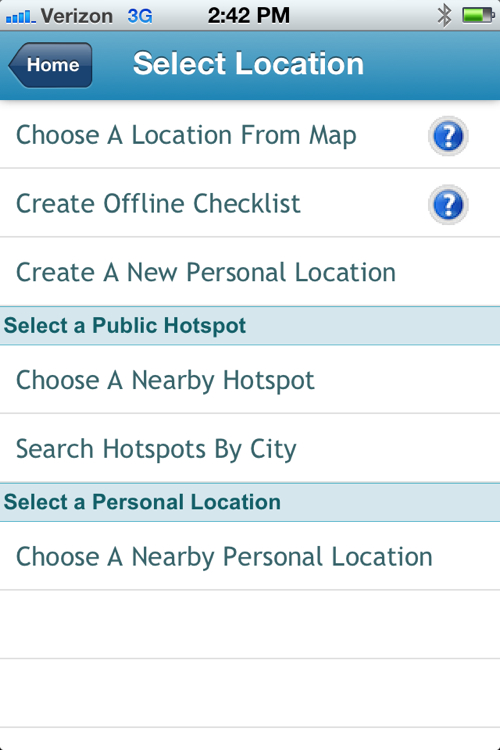
Best Uses:
Driving around on remote roads and you have no idea where you are. This is ideal for areas like Sax Zim Bog where you are mostly driving down the road and periodically stopping to find birds.
Keeping a running list of what you're seeing in the field.
I'm particularly looking forward to using this in birding programs with kids. I can let one of them keep the bird list and carry an iPad (a good hook for the kid who doesn't want to be in the woods in the first place).
I think this is a really cool app to use with kids at home. Why wait for the Great Backyard Bird Count or Project Feeder watch to notice birds? You could set up a day once a week and have your kids check off the birds in your backyard, you could even use it to keep track of what day you note when certain species arrive--like orioles or hummingbirds.
I worry some people think entering sitings to eBird is only for those who are hardcore birders and are out in the field, but backyard species are important too, especially as the globe's climate is changing and we will see more shifts in bird populations.
Here's an intro video that shows you how it works:
http://www.youtube.com/watch?v=PNliquYImFw&feature=youtu.be
Digiscoped Images
Fresh Tweets
Would you like to hire me as a speaker for your event?
Email sharon@birdchick.com