
Birdchick Blog
Golden Eagle vs Chukar
I can't believe I forgot about these photos. While cleaning out my iPhoto cache today I came across a picture of a chukar at Antelope Island in Utah.
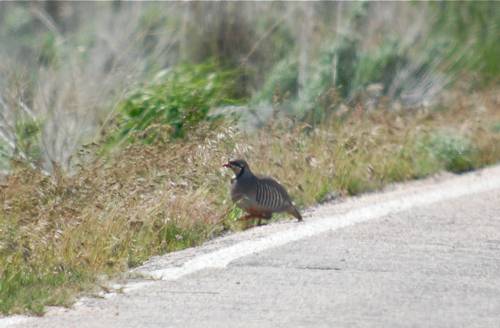
Okay, so it's a very mediocre photo of a chukar. I was driving around, just taking photos of anything when I tried to get a shot of this chukar. They are all over the island and I always end up seeing them on the sides of roads or in parking lots. They also have a knack for scurrying in to grass or brush as soon as a lens is aimed at them. Less than a minute after I got this photo, the chukar dove into the grass. I told myself to look up and about 10 feet above my rental car windshield was a golden eagle.
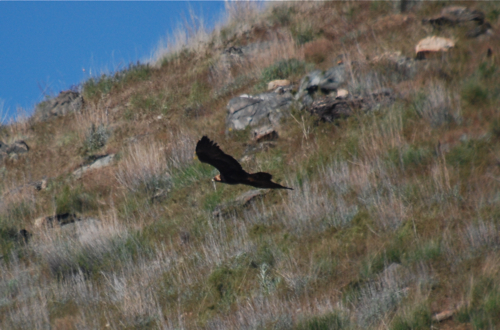
I wasn't able to get a camera on the golden until it was well past, it moving moving fast! Scott Mehus at The National Eagle center says that if you see turkeys running like a bat out of hell from a field near a goat prairie around Wabasha, MN, chances are good there's a gold eagle overhead. The golden made a dive for the chukar and missed it, but boy, what a treat to have right in front of the car.
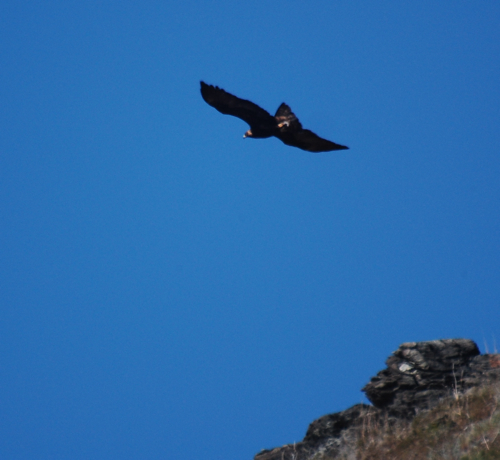
After that I got bonus time of watching the golden eagle circle on thermals coming off the bluffs on Antelope Island. It was great to be able to see the golden hackle feathers (the feathers on the back of the head).
Pelican Yawn
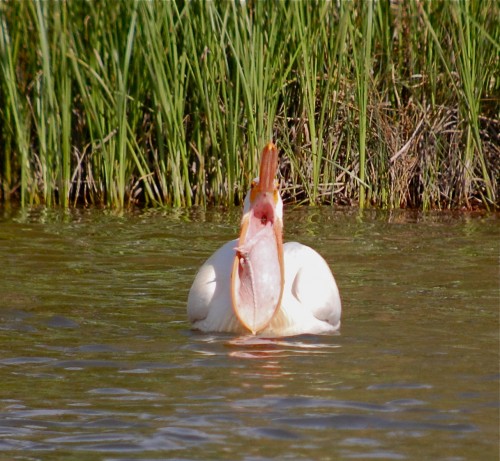 If you're a fish or crawfish, this is a terrifying site. Especially because American white pelicans will cooperatively hunt fish in the water.
Bison & Lazuli Buntings
For some reason, buntings are a hard bird for me to get. Both painted buntings and lazuli buntings were always fluttering out of sight just before I would arrive to see one. A common phrase, "Oh a whole flock just flew past here like five minutes ago." I finally got painted a couple of years ago in Florida but the lazuli seemed intent on pouring salt on my wounds. When we went to Las Vegas to make bird videos, Non Birding Bill saw one and when he pointed it out, the lazuli bunting flew away and all I saw was a small bird flashing blue. Gr.

When I was at the Great Salt Lake Bird Festival this past spring, word on the street was that a flock of lazulis were hanging out at feeding station near the barn on Antelope Island State Park. I consulted Bill Thompson about this and he gave good directions. I had a tough time finding the exact location of the feeder, it was sort of hidden away in some trees. There was the above bison pen nearby but the beast was fenced up so I could keep my ungulate phobia in check. I was getting the old ungulate stare down though. That's right, bison, I'm just going about my birding business, you stay there.

The feeders were absolutely dead. There was a sprinkler nearby and some birds were using the water source. I decided to stake myself out among some bushes, set up my scope and camera and hope for the best. I figured that this would be another opportunity to NOT see a lazuli and concentrated on the few birds that did come in like the above white-crowned sparrow. Suddenly, a large flock of pine siskins descended on the feeder and I aimed my digiscoping set up on them. The feeder was in the shade and it wasn't easy to get photos, but digiscoping passed the time as I waited for a lazuli.

And then magically among the siskins was a lazuli bunting! As soon as I got this shot it took off. As it flew, I heard chip notes and then the same chip notes from other buntings in the trees above me. More were around and I'm sure this little migratory flock couldn't resist coming down to this food source. So I waited.

And in about 10 minutes, a flock of lazuli buntings were on the ground. It was a challenge getting any photos because the birds were in the shade and my camera didn't want to give me the shutter speed I needed. So I played around and used the timer.

And I did manage to get some fun shots. Note the tiny white millet seed on the tip of the beak of this male? Most birding feeding guides say to not use millet or at least not very much, but colorful buntings are one of the few species of birds that really, really like it and it's worth having a bit in your seed mixes during the spring and fall migration.

As I was living la vie da lazuli, I suddenly heard a heavy "thump, thump, thump" and it sounded like an ungulate in full trot mode right behind me. I turned around to the sound and discovered...

The bison that was in the first photo of this post was now very much out of the pen and trotting around behind me. It started trotting right at me, then turned and went the opposite direction. I tried to take a shot as it headed towards the left of the barn (you know, one of those last known photos they could find in my trampled camera next to my trampled body). The bison pretty much went in the direction I needed to go in order to get back to my car. I stayed where I was, heart pounding and recalled the video of the woman who got charged by a bison because her idiot brother-in-law threw a stick at it to get his attention. I wouldn't do anything like that, but what if I inadvertently startled it? I've said it before and I'll say it again--large ungulates make me nervous and I really don't think my Sand People technique of startling cows would work well with a bison. They are unpredictable and it's really just a matter of time until they realize how big they are and stampede the heck out of me. I went back into the trees to stay out of the bison's line of vision and debated with myself on how to get out with a rogue bison on the loose. I soon saw one of the Antelope Island rangers and went up to here, "Uh, your bison is on the loose!"
I was also going to ask for a ranger escort back to my car but she said, "Oh yeah, he's fine, it's feeding time."
I was not going to get a ranger escort back to my car. They have signs all over this island that read, "Stay away from bison" and so I found her mellow attitude about the loose animal unnerving but I also realized that I have a larger fear of bison than most and decided to man up and walk myself back to the car. I didn't encounter that particular animal...but...

...my bison encounter was not over. Bison roam this island and on the road back to the exit, a small herd was grazing along the side. I slowed and the bison decided to cross. I had to get a shot of how close this one was to the road--see the mirror of my rental car on the right hand side? I slowly drove past, the bison watched me and I assumed the sort of upright posture most drivers do when passing a police or sheriff's car that says, "No, sir, I'm not speeding, I'm a good citizen."
Small price to pay I guess for finally getting my lifer lazuli bunting.
Grebes of Bear River Migratory Bird Refuge
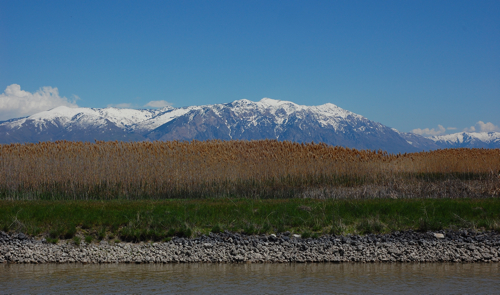 Going through spring photos and I've found a ton from Utah. I love Bear River Migratory Bird Refuge and try to make some time for it every time I'm in Utah--great birding by car and opportunities for digiscoping. Plus the scenery is fantastic!
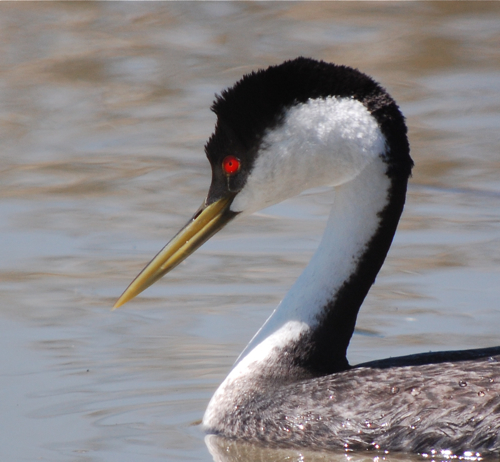
Grebes are the type of bird that make me wish I could paint or draw well. Take the above western grebe, it is naturally graceful and elegant, it is as if that bird were designed by Erte.
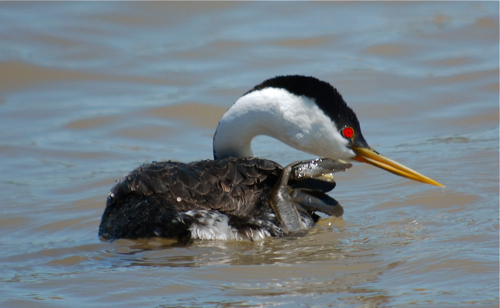
Okay, maybe grebe's lobed toes keep them from being 100% cool and elegant, but they mostly keep that goofiness under water.
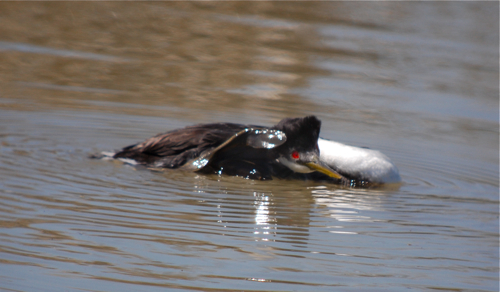
It must be really hard to scratch an itch in just the right way with those toes, but that's the price you pay to be a badass swimmer and fisher I suppose.
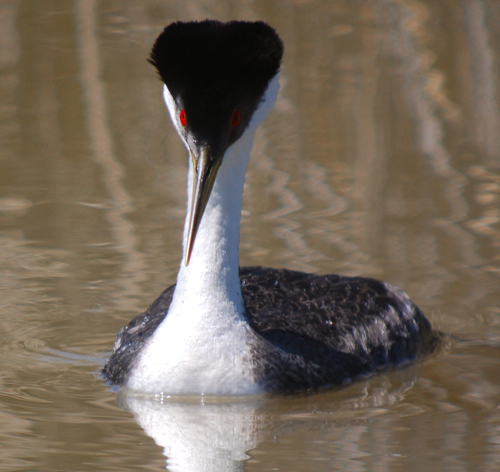
But this shot just makes me wish I would paint it and really spend time admiring the shape and curves of the bird. I love digiscoping but in some ways, you get the shots of the birds so quickly, it's not the same.
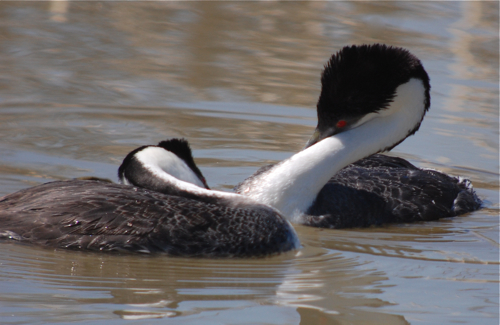
Even when they preen the look so cool and elegant. When they start dancing, I wonder if the other species of waterfowl on lakes see them as the cheerleader and football player at prom--show offs, just because they're pretty and can dance they think they are so cool.
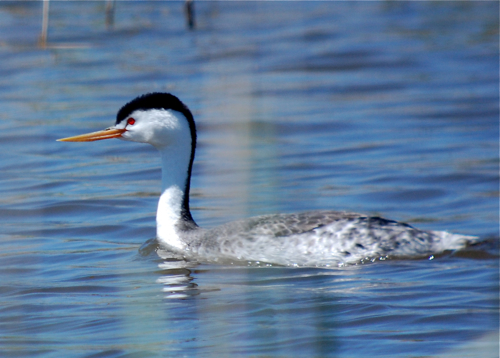
One of the cool things about Bear River Migratory Bird Refuge is that you also get a chance to see the similar Clark's grebe, they are little smaller, a little lighter in color, have an orange beak and the black on the head is above the eye. They are a cool looking grebe, but not quite as stunning to me as the western. Attenborough has a great segment on the Clark's grebe dance, check it out.
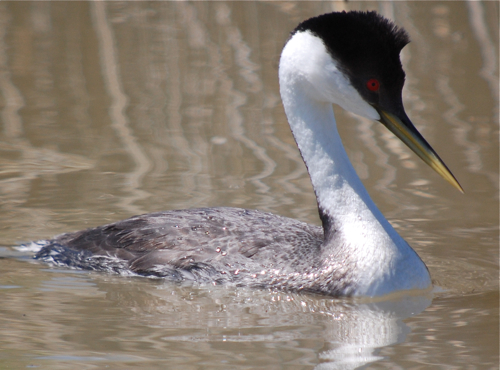
These are just a couple of the many awesome birds at Bear River, but I have so many photos, I need to start putting them up.
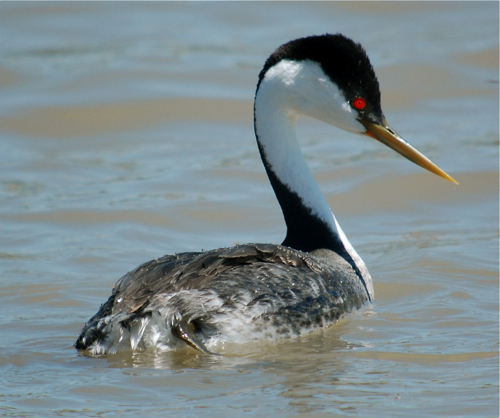
When digiscoping this area, you can either use a window mount to attach your car window, or use your car as a blind by standing behind it. If you move slowly though, the birds seem to tolerate you. If they swim away, with a little patience, they'll come a bit closer.
Cliff Swallow Nesting Area
If you ever have a chance to visit the great state of Utah, I highly recommend checking out Bear River Migratory Bird Refuge. This place is awesome, there's an easy birding drive to take and you can use your car as a blind to get great looks at western birds. You can also use the drive to get photos of grebes, ducks, pelicans and...

...swallows.

Lots and lots of swallows. If you are birding in a place with all sorts of swallows aka birds who fly around with beaks wide open eating only insects, take note. It usually means that there are a lot of insects for them to eat.

And lots of insects there are--mostly in the form of non biting midges. This was swarm that took over my rental car's windshield when I paused to get some photos. Most of the bugs you encounter are non biting...there are a few who do, but when you see clouds along the road, they are generally non biting midges. Don't let this photo frighten you from visiting this place. The midges for the most part will leave you alone and the birding is beautiful. You can also stay in your car the entire time if you really want to avoid them, but I like to step out.

I had to chuckle, as I would try to get photos of birds around the refuge, midges kept getting in the shot. All the black dots in the above photo of the marsh wren? Midges! Though there are oodles of midges and they can be a source of food for all sorts of insect eating birds, especially swallows, there is a challenge. You can have all the food you want, but if you want to raise chicks, you need a safe place to do it.

This is the outside of the visitor center of Bear River Migratory Bird Refuge--all of the birds in the photo are cliff swallows and they have built mud nests in every corner they can find since it's one of the few building around that offers shelter for their nests and safety from ground predators.

Here's a cliff swallow sitting on a partially completed nest. If you have kids and they give you any guff one day, just say, "Hey, at least I didn't make your bedroom out of mud and my own saliva. How'd you like to grow up in that?" The nests are jammed packed but there's still plenty of insects to allow for more nesting.

Then I found this little structure near the auto tour. I'm not sure if this originally was meant as a shelter for people and taken over by swallows or if this was built specifically for them. Either way, what a cool idea to build a shelter for cliff swallows to use. If I had a cabin on a lake, I'd totally make one for these insect eating birds. Might even discourage them from nesting around light fixtures or other areas you'd rather not have them nesting on.

It was hypnotic to watch the little cliff swallows come and go from the little mud cups. These are highly social bird and have no problem nesting side by side...so long as there is plenty of food.
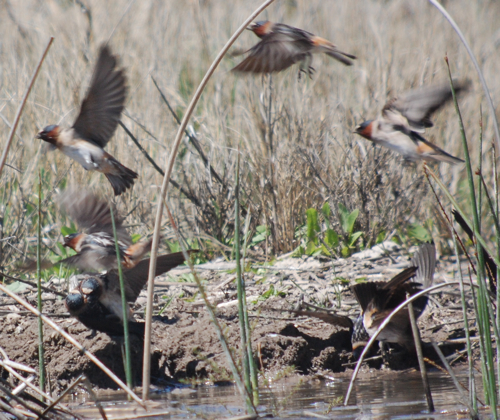
As I went around the refuge, I would find muddy patches with packs of swallows gathering mud for nest construction. Some birds, like those in the lower left hand corner got so into the spirit of things, they mated right there.

It cracks me up to watch cliff swallows on the ground when they gather mud. They keep their wings up in the air. It's almost as if it's a reminder that they don't normally perch on the ground and they need to be back in the air stat. Although, I wonder if the behavior evolved to prevent them from getting mud on the tips of their long wings?

Even though this was in Utah, cliff swallows are all over the United States, so if you wanted to experiment with making a cliff swallow nesting shelter, you could give it a go. I don't think they are in particular trouble habitat wise, so it's not like you need to do it like purple martins, but if you enjoy them, I'm sure they'd appreciate it. We have quite a few it the Twin Cities. When we do canoe paddles on the river, just about every bridge is loaded with cliff swallow nests. They look different from barn swallows, they don't have the deeply forked tail and they have that blond unibrow look to their face.
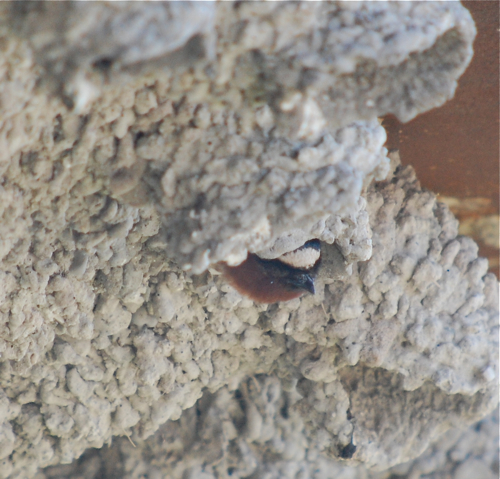 Cute little swallows.
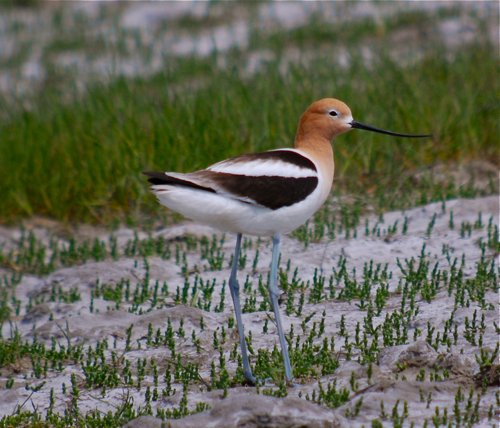
Homemade Heron Rookery
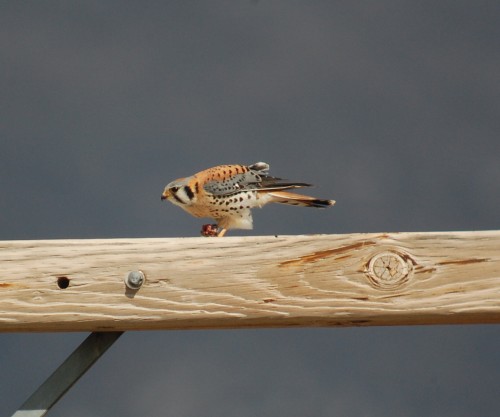
I love this little male kestrel snacking on a small rodent it plucked from a field in Utah. I got its photo at the same place I had my unexpected weasel encounter called Farmington Bay WMA.
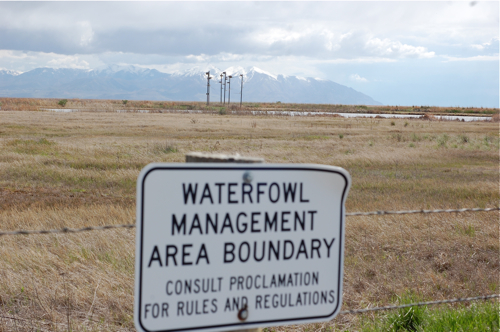
One of the coolest features about this wildlife management area is the homemade great blue heron rookery that is actually being used. I've seen plans for these in books like the fabulous Woodworking For Wildlife and I've seen a few erected, but never have I seen an artificial heron rookery being used by herons.
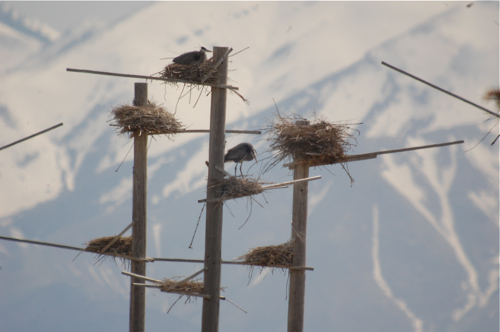 I'm used to seeing great blue heron rookeries on the Mississippi River surrounded by trees, not with a dramatic background full of snow capped mountains--too cool. Apparently, this heron nesting habitat was part of a boy scout project, that is one huge undertaking, but how sweet to see the kids' hard work pay off with actual birds.
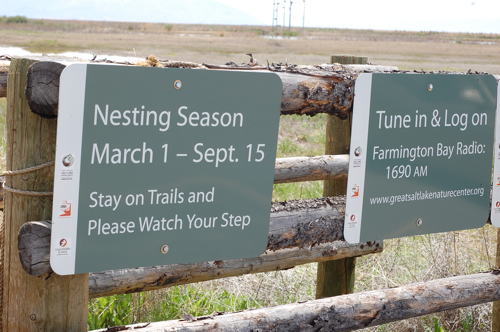 Farmington works hard to keep humans from tramping on ground nesting birds. Trails are blocked from motorized vehicle traffic during nesting season and signs warn you to watch your step.
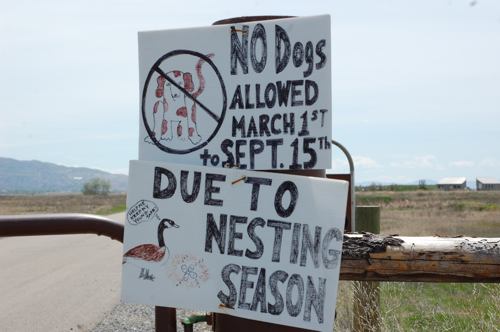
Even dogs are kept away to prevent altercations with waterfowl or to protect wayward chicks from becoming unintentional chew toys.
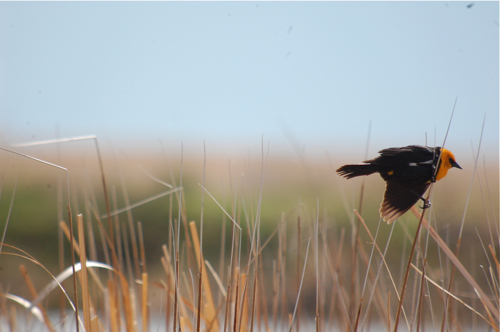
Utah is loaded with yellow-headed blackbirds and they are one of the common nesting birds at this site as are shorebirds. If you have limited time in Utah, this is worth a stop for western US specialties.
Education Magpie Envy
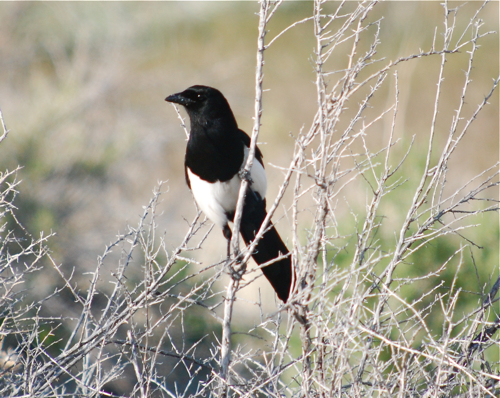 If you live in the eastern portion of the US and have never seen a magpie--Salt Lake City is the place for you. Those birds are all over the place--they're like crows (not just in family but in commonality). We have a remnant population up in northern Minnesota but not the sort of numbers you see out west. Since there are so many magpies around, there's unfortunately an opportunity for education magpies. It's illegal to keep them as pets, but someone always tries and about the time the birds reach sexual maturity, the person doesn't want the imprinted bird any more and they end up in places like Utah's Hogle Zoo.
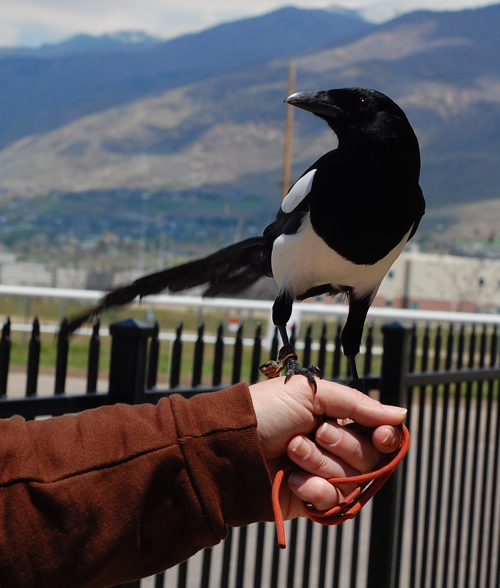
..who happened to be at the Great Salt Lake Bird Festival with an education magpie--so cool! What a nifty looking bird. I've worked with all sorts of raptors and a turkey vulture, but never a corvid. Sigh, I was totally envious. I would imagine a corvid like a magpie is a challenge in captivity--they are smart, they need enrichment to keep those little brains occupied. As I was taking photos of this bird it began to mimic my camera shutter. Here's a video:
[youtube]http://www.youtube.com/watch?v=FAzwMroL6AM[/youtube]
Another group doing live bird presentations called Tracy Aviary was there. When I walked by their display, I did a double take when I saw this bird:
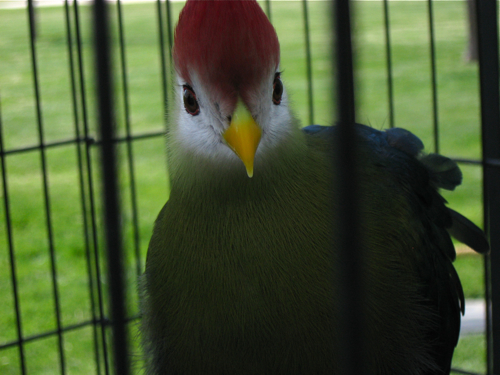
I asked the volunteer what it was for confirmation and she said it was a red-crested turaco. I thought it was a turaco--a bird I've only ever seen in field guides. Apparently this African species does well in captivity and many people keep them. It was such an odd moment for me. I collect international field guides--you never know when you are going to get an unexpected call to go out of the country...it happens a few times a year for me. I've seen this bird in my African guides and have always wondered how cool it would look like in real life. Alas, it was in a cage but still a sweet looking bird. They did use it in a free flight outdoors program so this bird does get around.
Just some cool birds around the fest and I guess I had a little turaco envy as well.
Digiscoping Workshop & Tern Rescue
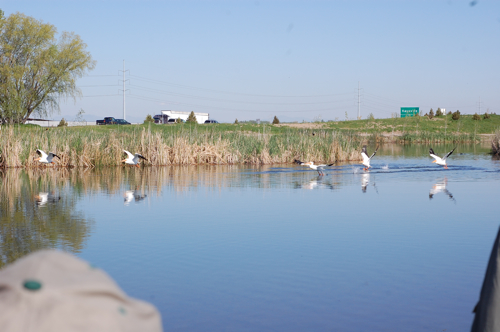 One of the reasons I was at the Great Salt Lake Bird Festival in Utah was to conduct a digiscoping workshop for Swarovski Optik. I really enjoy doing these types of workshops, we start with a basic how to and then we go out someplace birdy and take photos. They are not trips about getting a ton of birds on the list, but more going someplace with a lot of slow moving birds and practice taking photos--you really get to spend some time watching a bird. Sometimes I do this with perched out education birds or at a nature center with bird feeders. In Utah, we went to Kaysville Ponds a small park with lots of cool birds like the above pelicans. It's an urban and well used park. There were several families making use of the ponds' ample fishing resources and walking trails, it was great to see so many kids enjoying the outdoors on a Saturday morning.

A really cool bird for me was the western grebe. We have them in western Minnesota but that's a trek, so it was a treat to see them in this urban pond so close and spend time taking photos of the birds. Although, I generally end up loaning out my scope during these trips. I think many people get a digiscoping set up, take 12 photos that are crap and then are hesitant to use the equipment. When I give someone my scope, I sometimes tell them, "I don't want it back until you take at least 250 photos of that bird." The grebes were so close and so mellow, they were great to practice on. And if you end up with 248 blurry photos, they are easy enough to delete.

There were also a ton of yellow-headed blackbirds perched in the open to photograph. People got to practice with close up birds and birds further away (and learn the heartbreak of what heat shimmer will do on your seemingly in focus photos).

I did use this as an opportunity to practice some Blackberry scoping--holding my Blackberry phone to my scope and taking photos of birds. The photos are not high quality, but they do have use. You could document a rare bird and text the photo to your local state records committee, text the photo of a bird that your friend has not seen, sent it to Twitter or use your camera phone as a back up to document a rare bird if you camera batteries die or you left your camera back in the car. It's not easy because you have to hand hold the phone to the scope's eyepiece but practicing on every day birds will help you be ready should a rare bird show up.

Here's a Blackberry shot of our class, it was a fun group and again, I love being out in Utah where you are surrounded by snow capped mountains on a sunny day. The temps were mild and the wind was low--a perfect day for digiscoping. I brought some different camera adaptors for scopes for folks to try and few people brought their own adaptors andwe had a good compare and contrast of what works easily and what does not.

As we were taking photos, I noticed a Forster's tern frantically calling. I looked over as did friend and fellow field trip participant Suzy and noticed a Forster's tern in the water while another flew and called loudly overhead. Suzy noted that the flighted bird had a fish and attempted to offer it to the bird in the water. Looking through the scope, the bird int he water had its tail at an odd angle and could not pull its wing. The tern tried to flap out of the water but could not flap well at all. "Great," I thought, "a wounded bird at our workshop." Suzy hoped that it was an adult feeding a young, but both were in adult plumage. I wondered if there was any way to reach the wounded tern but it was far out in the water. I continued with the workshop with half an eye on the tern, when I noticed the flighted tern dive bombing a man on shore. I limped over to investigate (I'm still a little unsteady on my knee, but it is healing up a little every day).

I found a man with a fishing pole reeling in the tern from the water while the other tern angrily dove at him while screaming loudly. He took the tern out of the water and had some clippers. He was trying to clip the line around the bird but the tern was snapping its beak at him and he was afraid to touch it. I hobbled over and asked, "Can I give you a hand?"
"Yes, please!"
I picked the water logged tern up out of the water--how strange to put a tern in the bander's grip, they seem more like a piece of origami than bird. He swiftly snipped off the fishing line and fortunately the hook was not in her. I did a quick feel for broken bones but couldn't feel anything amiss. The formerly tangled tern's feathers looked too waterlogged to fly. I made a split second decision to let it go back in the water rather than spend the day looking for a rehab center with might cause more stress, especially if the tern wasn't injured, only wet and tired. I opened my hands for her to fly but the tern couldn't get airborne and went right back in the water. I figured that it would be far better for the tern to swim to a quiet spot, dry off and preen its feathers. The bird was mostly likely exhausted from the struggle to get away from the tangled line.

The man with the pole kept apologizing. He was there with his son to go fishing and when he cast his line, the tern flew into it and got tangled, it was a one in a million shot. He watched the tern swim away slowly, "Oh no, I'm so sorry."
I looked at him and his little boy and said, "You did your best to help the bird, I'm sure it just needs to dry off, it's featers were soaked and it wouldn't be able to fly."
"She's probably exhausted too," he said. I agreed.
"I watched before I cast," he said mornfully, "I always watch for birds. And when I swung, there she was!"
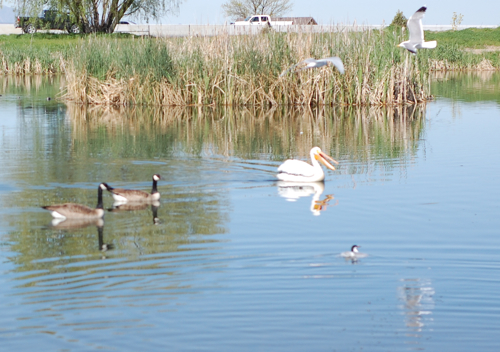 As the bird swam away, some gulls flew over low to investigate (assessing if they could eat it, I'm sure) and then a pelican swam right for it and opened it's mouth. "No," I shouted, "not today pelican!"
And that was enough to distract it and the tern paddled further away. I'm all for watching cool and gross natural history moments, but this man and his son seemed traumatized enough as it was and didn't need to see the pelican eat the tern (that's not a pretty way to go, I think I'd rather be eating by a great horned owl). And if you don't know what I'm talking about--those big birds are opportunists and there are videos of pelicans eating pigeons in parks. A Forster's tern is about pigeon sized.

The tern attempted to fly off the water a few more times and each time it got closer to being airborne. Eventually, it disappeared into some reeds on an island where I'm sure it preened and dried out. The man gave up his fishing for the morning, he genuinely felt bad about what happened even though it was just one of those things. I'm glad he took the time to help the bird and I hope he doesn't give up fishing for good.

When the pelicans weren't trying to eat terns, they made excellent digiscoping subjects! It was interesting to note the various sizes of horns on the upper bill. The above bird has a small one.

Check out this bad boy--his horn is HUGE and looks quite impressive in his full on display! No one knows for sure why males get this epidermal plate on the top mandible, but presumably it has something to do with a mating display to female pelicans. It falls off during the summer after the breeding season. I have a couple from my pelican banding days. They look like nasty toenails.

Since pelicans don't sing to attract a female, the put on these quiet, yet showy displays on the water. It almost looks a little passive aggressive, the male silently lifting his wings, puffing his feathers and crooking his neck while showing his horn and a female or two will quietly swim by and quietly take note of this display...and then keep going. It's very Minnesotan.

We had a few warblers and even an oriole (the above Bullock's oriole) to round out the rest of our field trip. Participants seemed to have a good time and learn a few tricks--like try out video on your little point and shoot cameras. One man even got video of a coot feeding it's baby. All in all it was a beautiful morning and it's always fun when your group can do a good deed while on birding trip--like helping out a tangled tern.
Unexpected Weasel Encounter In Utah
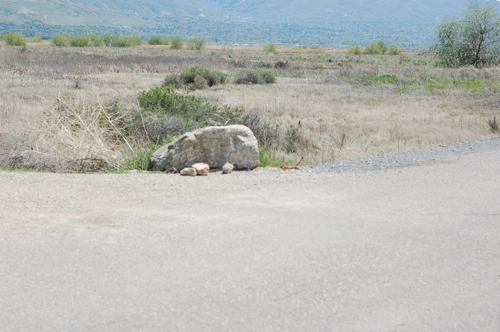 Yesterday I had some time to kill before my flight back to Minneapolis from Utah. I stopped for a wee bit at the Great Salt Lake Nature Center in Farmington to enjoy a final few moments of yellow-headed blackbirds. As I walked down the gravel road, I noticed a mammal hopping across the path. I didn't quite recognize the long shape and assumed it to be some sort of ground squirrel. However, I saw the animal zip across the road again and this time instantly recognized it as a weasel.
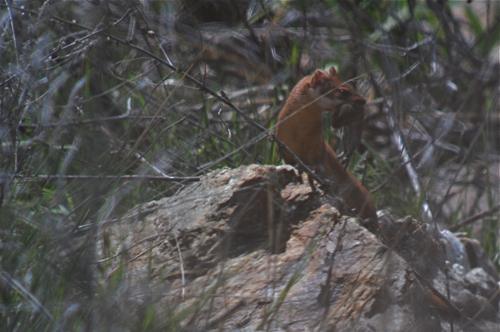
The weasel paused for a moment on a rock through some reeds and got a really craptastic photo but was excited because it looked as though the weasel had some prey in its mouth--how awesome is that? It paused long enough for me to get this shot then disappeared into the vegetation.
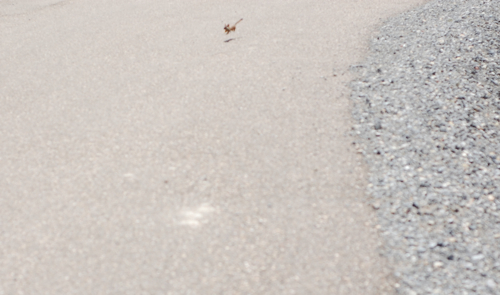
But a few seconds later, I was surprised to see the weasel come out on the road and it started to hop along in my direction. I'm not sure if "hop" is the right word for weasel travel. It looks more like the critter's body is part of a Slinky curving up and down.
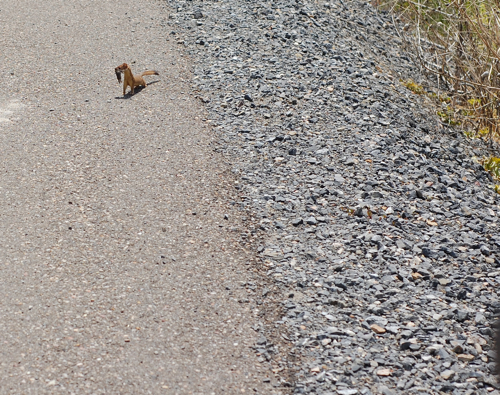
The weasel paused, it was far too close for me to digiscope so I took photos with the camera old school.
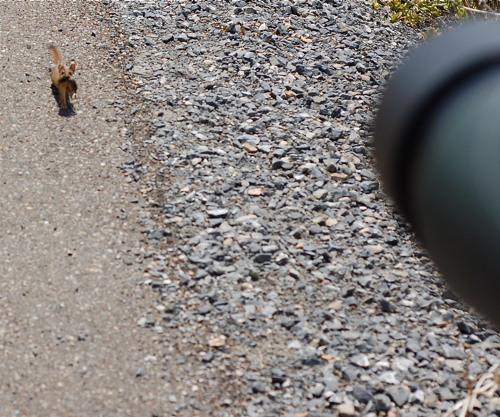
And the weasel just kept coming closer! I tried to get my scope into the shot to show how close the mammal was to me. I was perplexed and mildly concerned that it was coming so close--actually heading right for me. I wasn't flailing my arms, I stood still, but it would have heard my camera clicks and that should have been enough to want to give a human a wide berth. Weasels are carnivores and are known to go for prey larger than they are, but as short as I am, I doubt a weasel would consider me prey worthy (a mountain lion would, but surely not a little weasel).
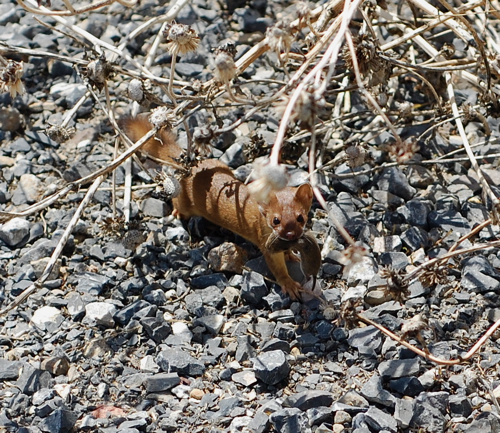
Then the weasel bounded up next to my right side, it wasn't even a foot away from my shoes and paused. It suddenly dawned on me that I had just seen the weasel moments ago running back and forth on this trek with something in its mouth. I know they are formidable predators and that they have an instinct to kill food when it's abundant and store if for later, but still--getting several small mice at once? Perhaps this weasel was not carrying prey, perhaps this was a female transferring her young from one den to another? I've read that weasels will move their den location and transfer the young if it is disturbed.
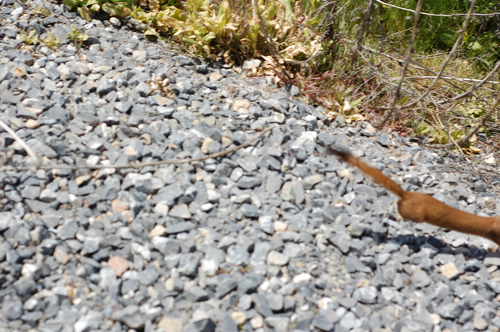
And then she dashed past me. Based on the length of her tail, I wondered if she was a long-tailed weasel or an ermine. Consulting my Peterson Mammals of North America revealed that in Utah, she would be a long-tailed weasel.
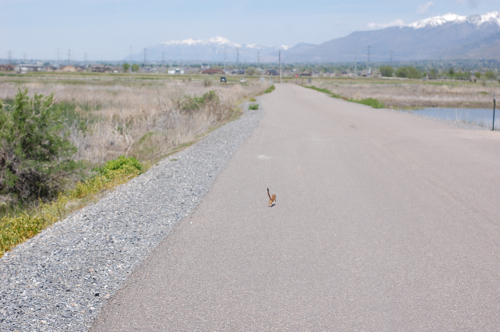
After she made it past me, she booked it to the other side of the road and down into a shrub. After sixty seconds, she reappeared and bounded past me again. She must have had another kit to retrieve from the old den. I tried to set myself up to see if I could get shots of her through my scope on her return.
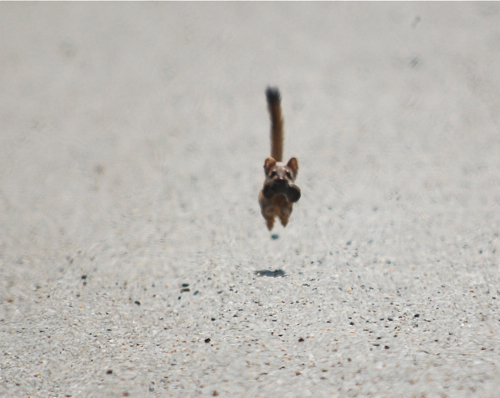
Check it out, it's hover weasel! Sure enough, she returned with another kit in her mouth and bounded right for me. Note how her long tail sticks straight up has she runs.
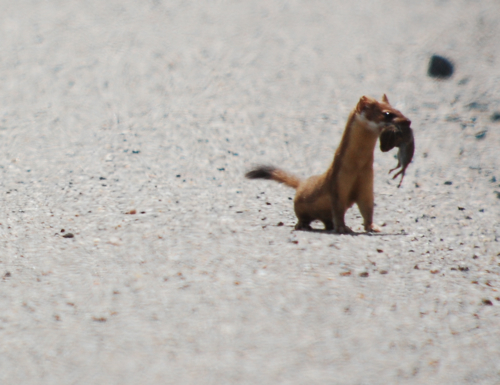
With my scope pointed at her this time, rather than just my camera, she stopped much further away to assess the situation. Since weasels are a top predator (for their size), they know that being stared at is not a good sign. If they stare at something, they are generally trying to determine how they can kill it and eat it. Having an 80mm objective lens pointed right at a her probably made her a bit more hesitant to run past me with one of her young in her mouth.
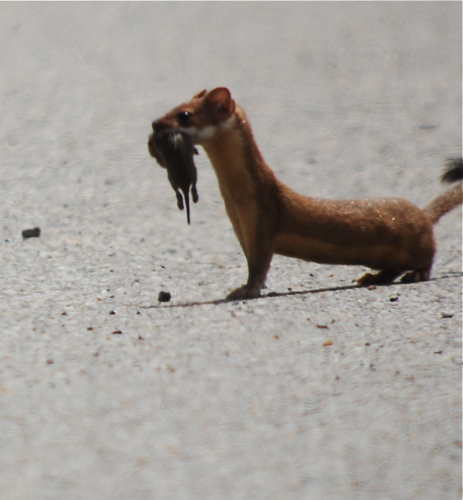
This time, she crossed the street--look at the tiny toes and skinny tail of her offspring--cute!
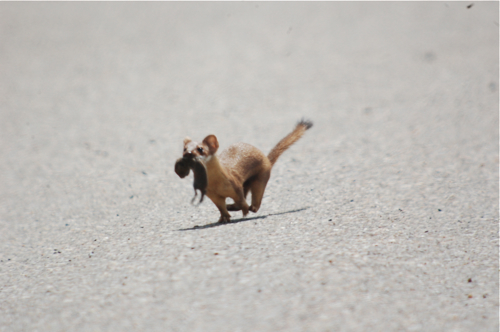
She continued on her journey and I continued down the trail. Who knows how many more young she had to transfer. Weasels can have 4 - 8 kits so if she had a large nest, she had her work cut out for her and didn't need me to distract her from the task at hand (or paw in her case). This was a new mammal for me. I've seen ermine, least weasel and mink, but this is my first long-tailed weasel.
Digiscoped Images
Fresh Tweets
Would you like to hire me as a speaker for your event?
Email sharon@birdchick.com