
Birdchick Blog
Best Bird Festival Idea Ever
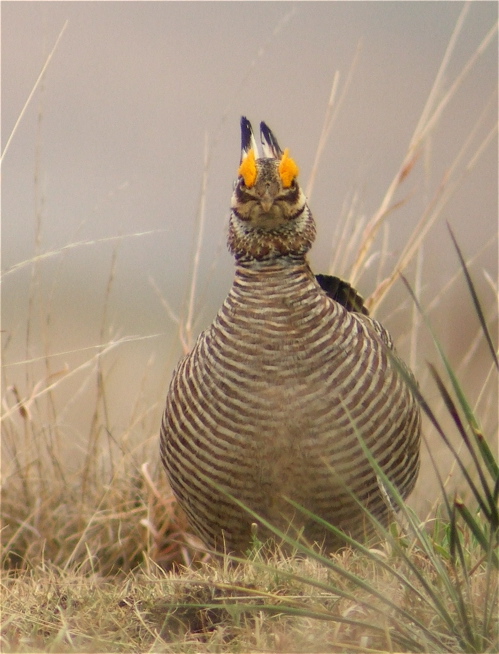
I have to say, that I enjoy attending bird festivals and events in general (I must, I go to more in a year, than most birders will in a lifetime). But, I was really struck by the Lesser Prairie Chicken Festival in Woodward, OK. Because the festival wasn't just about seeing the festival bird, but we actively helped the bird:
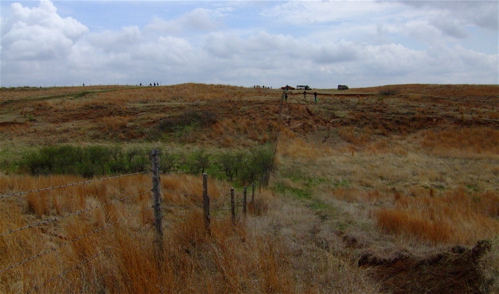
Oklahoma is a beautiful state with vast, sweeping landscapes, but it's also divided by several cattle fences. They are everywhere, dividing property lines. The fences have become a part of the many problems facing the lesser prairie-chicken's precarious future. The bird's natural defensive behavior when fleeing a predator, is to fly low, right above the grasses. If they are fleeing a fast predator like a peregrine falcon, the prairie-chickens may not pay attention in their panic and cannot dart the fences that are taller than the grasses. The chickens fly into the fences and die. Look at the above photo, you can see how the fence blends in to the grassy landscape.
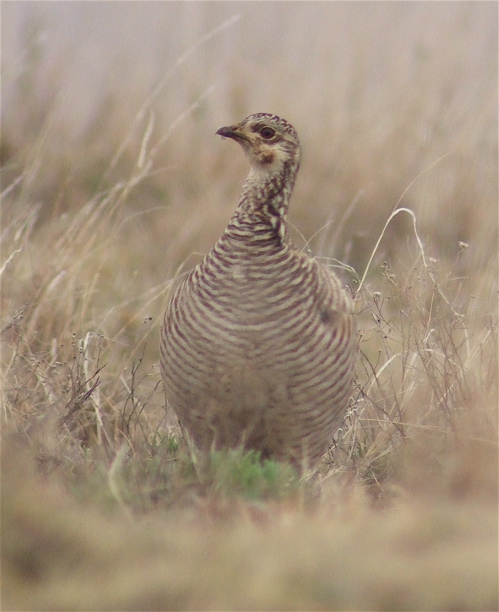
Research about lesser prairie-chicken mortality conducted by The Sutton Center has found that 40% of the mortality in Oklahoma is due to collisions with these fences! If you follow the link to the lesser-prairie chicken ecology, you can read more about the results. It was interesting to note that female prairie-chickens are especially susceptible to fence collisions and that is a huge concern--they lay the eggs. Sure, they need the males for fertilization of the eggs, but beyond that, the , build the nest and raise the young--you need all the females you can get out there to replenish the population. The Sutton Center, however, has come up with a unique plan!
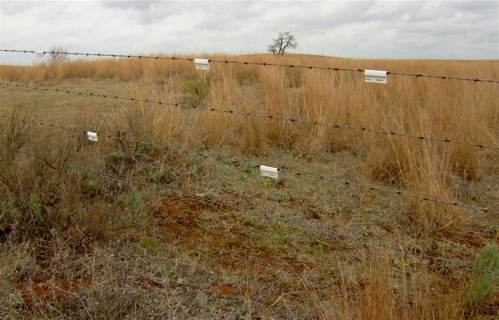
They have come up with a unique fence marking plan to save the lesser prairie-chicken. By using "undersill" strips (trim strips) of vinyl siding available at many big box home stores, fences can be made more visible to the chickens. Eric Beck, the Oklahoma Audubon Council's Important Bird Area Coordinator was a field trip leader for the festival. However, when not leading trips, he was cutting up strips of trim to be placed on fences.
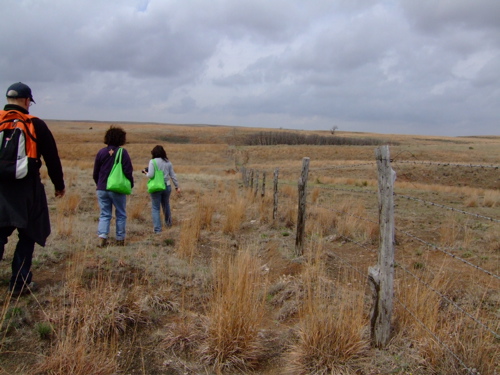
After we watched the lesser prairie-chickens on the lek, we were given a filling ranch breakfast at Selman Ranch, shown how do the fence marking, and set loose with bags of tag to mark fences at a WMA that has prairie-chickens. This was the most proactive bird field trip I have ever been on at a bird festival. What a GREAT idea--show us this cool bird and let's not just lament that it's fate in the wild is uncertain, let's actually have festival participants do something that could actually help the birds. Best idea I've seen at a bird festival in years. I love this as much as I love the Delaware Bird-a-thon that raises money to buy up migratory habitat for the red knot. We need more of this kind of active conservation and birding.

And that's not to say that fences are the only challenge facing the lesser prairie-chicken. Wind farms are popping up all over Oklahoma. Lesser prairie-chickens nest out in the open on the ground, they don't nest next to all trees--red-tailed hawks and Swainson's hawks perch there, watching for some fat tasty prey. Tall windmills look a little too much like tall trees and lesser prairie-chickens will not nest next to the farms, so that fragments their nesting habitat even more.
Still challenges ahead, but still hope too.
Other Oklahoma Birds Besides Prairie Chickens
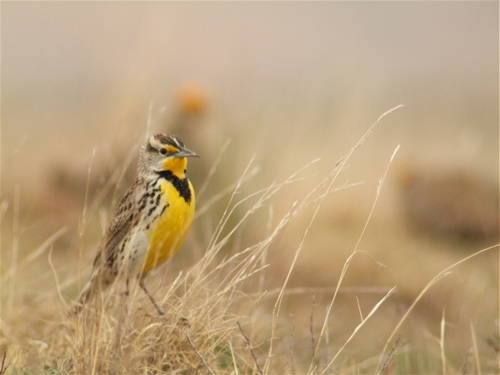
For the record, I did see other birds besides lesser prairie chickens in Oklahoma. As a matter of fact, while I was focused on a pair of male chickens in the middle of a stare down, a yellow blur moved in front of them. I adjusted the focus of my scope to reveal a meadowlark. I'm not sure which one this is. We heard both eastern and western meadowlark singing around the prairie chicken lek and I'm not bold enough to call it based on plumage. The bird did not sing while I got its photo. I love this shot of the meadowlark with the chickens blurred in the background.
If you are new to birds and have never heard a meadowlark call...or not sure if you have, check them out at Xeno Canto. Here is the western and here is the eastern. I grew up with eastern meadowlarks in Indiana (a beautiful evening song) but the westerns are quite striking.
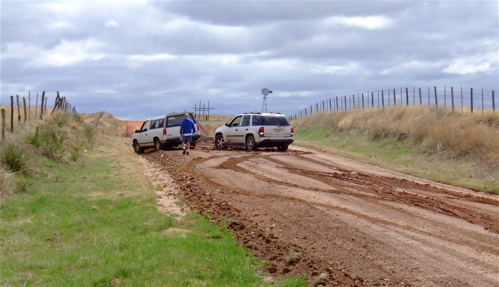
I have to say that there was quite a bit of adventure to our birding--one day about 4 different vehicles toting participants to birding spots got stuck in mud along the minimum maintenance roads. There had been quite a bit of rain beforehand. I heard through the grapevine that many vehicles got stuck on the way to the lesser prairie chicken leks. A tractor was required to get the vehicle out. Since that road was blocked, the field trip leaders cut a barb wire fence (with the fence owner's permission and the understanding it would be repaired) to get the vehicles to the blind--that's dedication to get birders to the birds! And what a great adventure to see the bird.
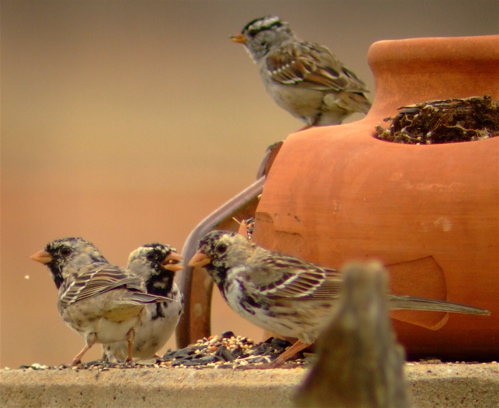
I really dug the sparrow action at the festival--check out this feeding station. Harris sparrows (dudes with the black beards) and a white-crowned sparrow. Harris sparrows are just amazing little birds. First, they look cool with the beard, but second, I was just reading on Cornell's newly revamped All About Birds site that they are the only sparrow that breeds in Canada and nowhere else. Here I was in Oklahoma watching these little brown birds, they still had thousands of miles to go to the breeding grounds.
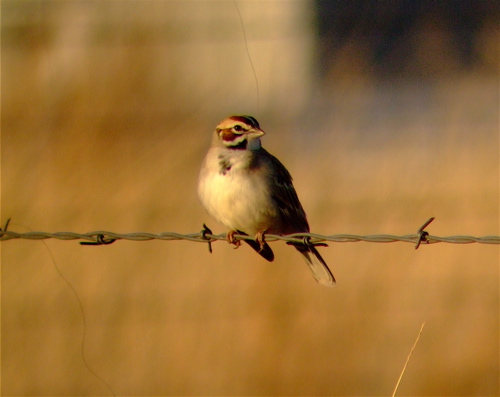
Another incredibly common bird in Oklahoma was the equally striking lark sparrow. Just about anywhere there was a barb wire fence, you could find one of these guys perched nearby. Lark sparrows have an interesting nesting history. They are capable of building nests, usually in a shrub or tree, but they have been documented nesting in old woodpecker cavities. This species has also been known to reuse old nests of mockingbirds and some notes suggest that there is a bit of nest sharing going on--perhaps unintentional. Field studies have found eggs and young of both mockingbird and lark sparrow in the same nest. Oh, lark sparrow, please do not go the way of the cowbird.
Quick & Dirty Post From Oklahoma
First, Penn Jillette has a segment on Crackle.com called Penn Says. This time he's talking beekeeping and Mr. Neil and I are referenced in it (Mr. Neil more so than me), but still super cool to hear someone in the mainstream talking about a subject I love.
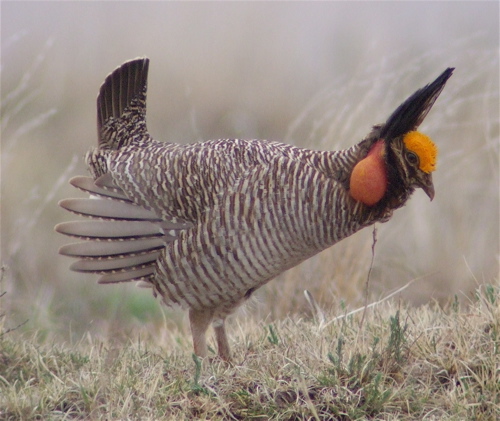
There's really nothing quite like sitting in a cold dark box on the prairie watching birds flirt. I'm currently at the Woodward, OK Leks, Treks, and More aka a Lesser Prairie Chicken Festival and this morning, I met our group at 5am to go to a local ranch to watch the lesser prairie chicken males dance for a mate. How close were we to the birds?
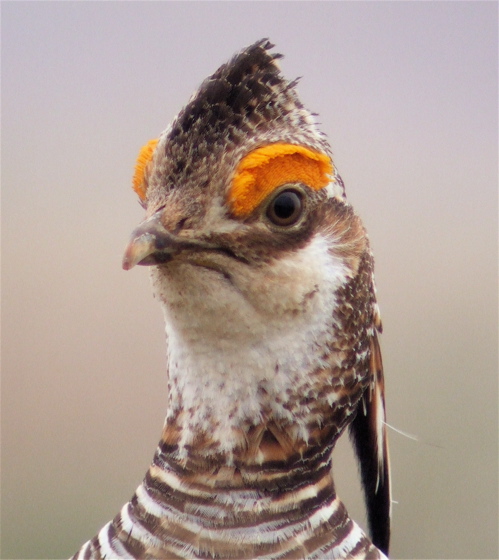
At certain points the lesser prairie chickens were so close, I could only get a head shot. This is the first year for this festival and the town of Woodward is so dedicated to this crazy dancing bird. Lesser prairie chickens are in a bit of trouble conservation wise, their habitat is threatened by fragmentation and development (more on that later). But the big highlight of the festival is getting up close looks at these elusive birds. I took over 500 photos and over a dozen videos at the lek, so expect some prairie chicken coverage.
Here is a video of the male in his display. If you've ever heard greater prairie chickens booming, these guys sound different. You will also hear a western meadowlark in the background and a camera:
Digiscoped Images
Fresh Tweets
Would you like to hire me as a speaker for your event?
Email sharon@birdchick.com