Birdchick Blog
The "Famously" Inconspicuous Henslow's Sparrow
I've really been taking the "Year of the Bird" to heart. This year I decided to carve out some birding just for myself on top of the classes and events I host. It's been one of the best springs (of course, I say that every spring when there are great birds). This week has just been spectacular.
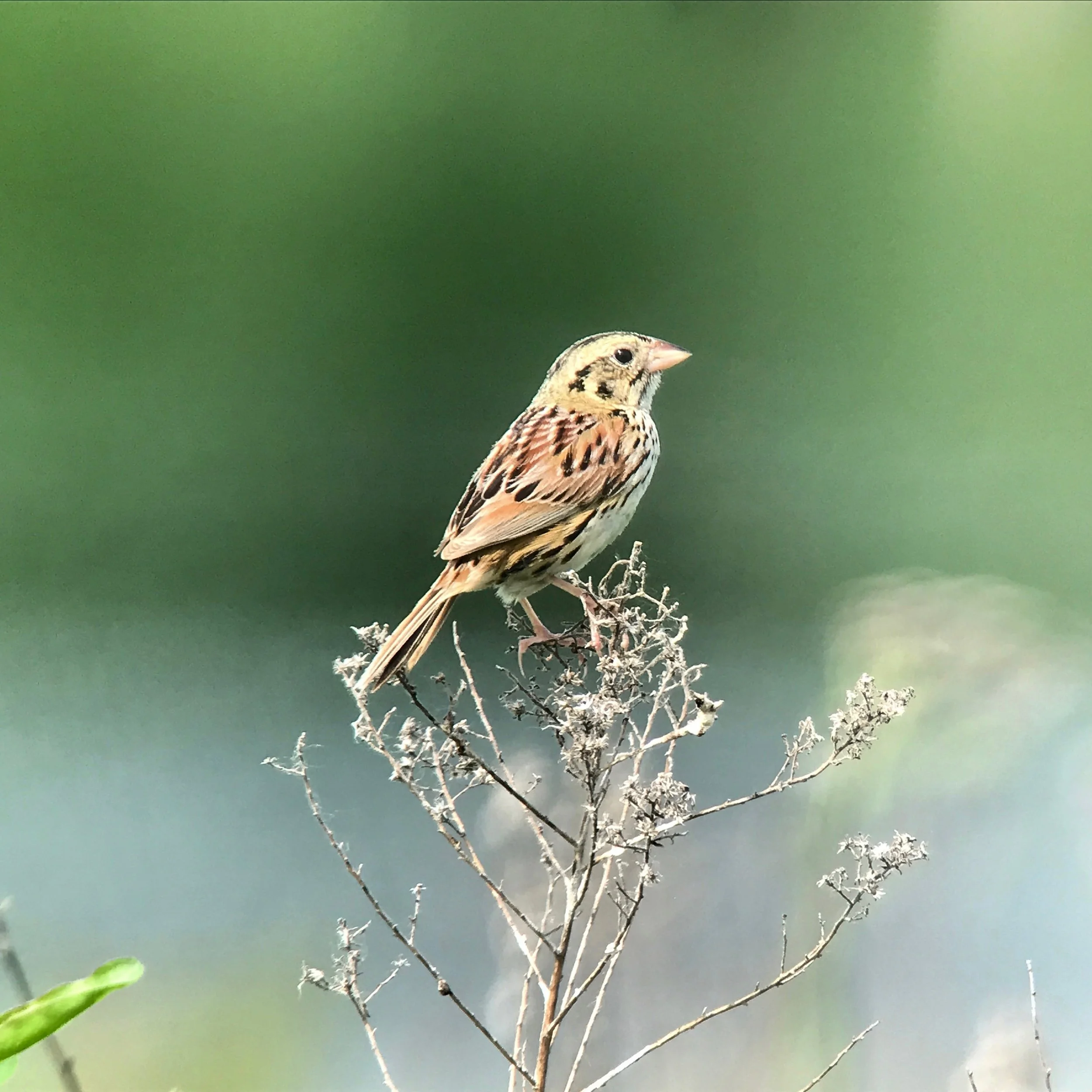
I got my whole birding by ear class on this amazing Henslow's sparrow.
I wasn't going to post this part, but I feel like I should for the sake of new bird guides everywhere...sometimes bird guides make mistakes. Accept it, take responsibility for it, do your best to make it right, learn from it, but most importantly: get over it. In the last two years I have been experimenting leading birding by ear classes and field trips. From a guiding perspective these are great: I'm not guaranteeing that we will see birds, but we will hear them--which is the case for a great many species! We usually see the birds on these outings, but I find this hits the sweet spot of under promise and over deliver.
I was loading my stuff into the car for my 8am birding by ear class. I was going to arrive at 7:30am so I was a half an hour early. As I loaded my car I got a text, "How close are you, everyone is checked in for the class."
"Wow," I thought, "that's great people are so early...oh wait..."
This was my brain:
Yep. I got the times for my class confused. I wasn't set to be early, I was set to be late. I think I need this to happen to me about once every eight years to keep me humble. I arrived and apologized for wasting people's time and promised amazing birds and a binocular cleaning if they needed it.
However the group was forgiving and the weather was wonderful. The birds were incredibly obliging as we heard scarlet tanagers and recently fledged chickadees all around us. Someone even got great looks at their lifer common yellowthroat. When I do these sorts of classes, my brain is constantly listening for what's the next sound to talk about. I try to stick birds singing nearby and ones that I think people remember or have a chance to hear in your neighborhood.
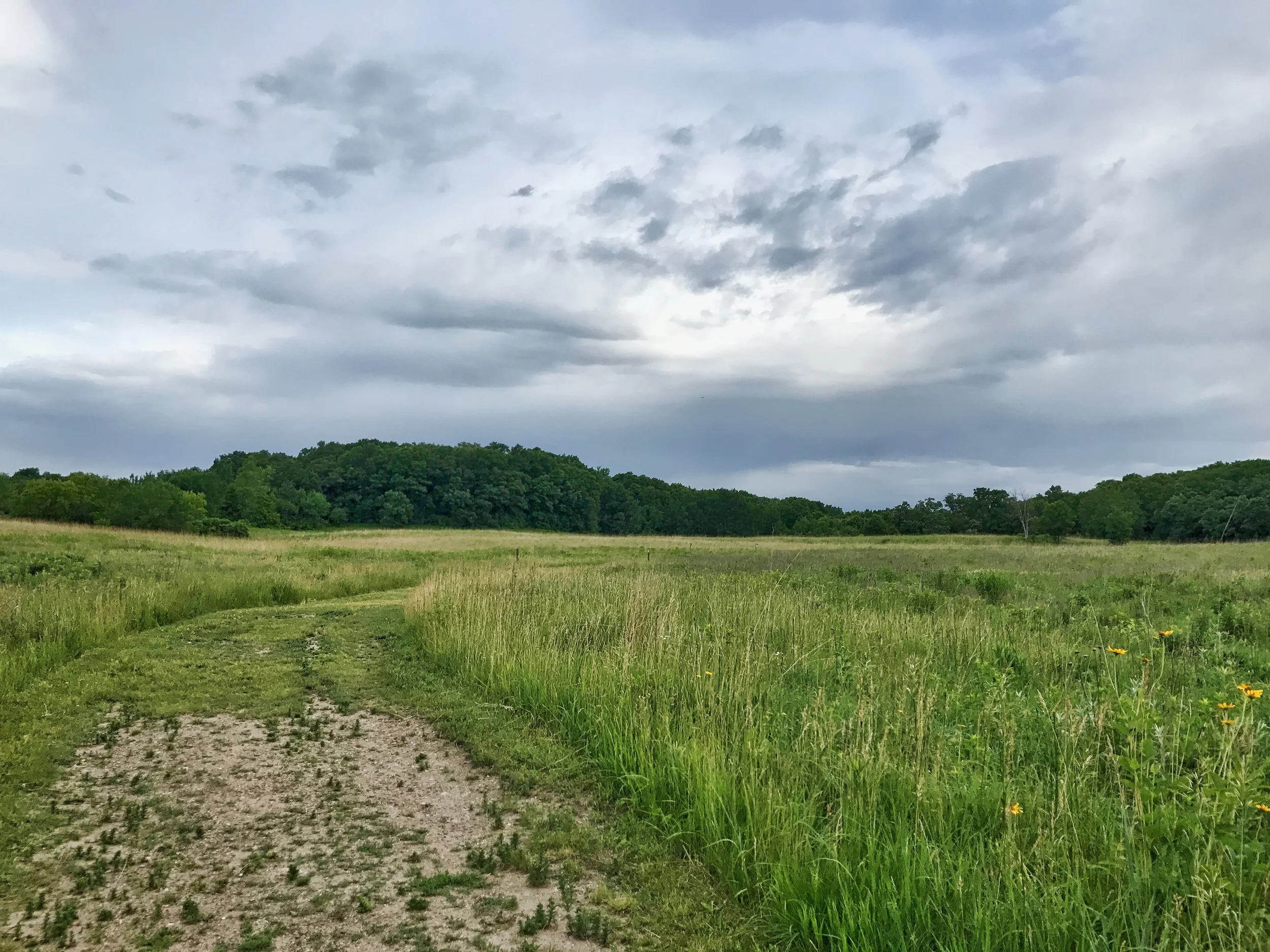
Prairie area around Richardson Nature Center.
Sometimes I can hear a "good bird" but if I know it's a long shot to get the group on it, I'll "pick my battles" and ignore it. If there is an easy to view redstart nest ten feet away and a black-throated green warbler singing very far away, I'll focus the group on the restart. I do sometimes ask the group what they want. I was doing a digiscoping workshop and as the group was practicing on a ring-billed gull, I heard a Le Conte's sparrow on territory. I announced, "Hey, gang, I should tell you, there's a really great sparrow singing behind me. They're really hard to see, super lurky in the grass and we will have to work for it, but if you'd rather do that than take pictures of a gull we can."
They looked at me like I offered them broccoli ice cream and so we ignored the Le Conte's. I, however, went back later and photographed the crap out of it.
As we walked along I suddenly heard a faint and familiar sparrow sound. It was a Henslow's sparrow, a state-threatened species in Minnesota. Their call is not easy to discern if you aren't familiar with it. In fact, I always notice it because it's so...so...blah. It's kind of like a half-assed house sparrow call. All About Birds notes that these birds are "famously inconspicuous."
I had the group listen and get familiar with the call. I offered to play a taped call once to see if we could get it to pop up, but I warned that they don't always respond to it. Sometimes Henslow's perch just below the grass and you can't see them. The group was curious and we tried it. The bird never popped up. But we got to hear it very well. We continued our way around the prairie and heard a second one singing. I'd never had a Henslow's at Richardson Nature Center, so to get two singing birds was amazing. This time we were able to spot the bird, I got in the scope and it did exactly what I said it would do, perch just below the tops of the grasses. Our binocular and scope views of the bird were obscured by vegetation but people got to see a really great sparrow for Minnesota.
We continued our way around the prairie, got some great looks at bluebirds and indigo buntings when we heard a third Henslow's sparrow. This one was really loud and sounded like it right in front of us. Sure enough someone in my group found it and it was 10 feet in front of us, teed up nicely on some vegetation above the grass.

Everyone got a look and I was able to take photos of the bird for people with their phones through my scope and of course get the video that you see at the top of this post.
I also cleaned a few binoculars as penance for being late.
Brown Birds
 Even though autumn is winding down in my part of the country, the color still tried to pop as in one last hurrah before our white and gray pallet of winter arrives. Bird migration still has a big push going and and though it may not be about warblers any more, it's sparrow city in most of my field work or even around the office. These are a sample from the last week, most of these were taken on the same cloudy day with my spotting scope and either my SLR or my iPhone.
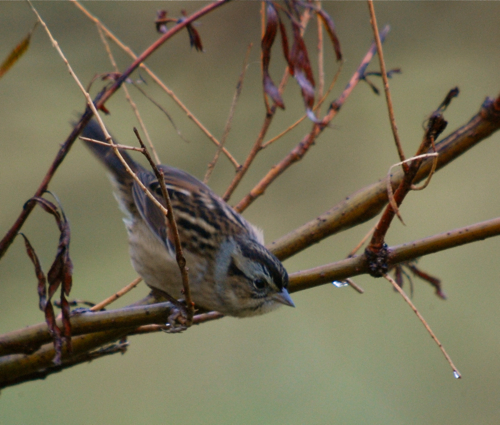
And this last ditch effort at color seems to make all the sparrows even prettier. Now, for all you non-birding/casual birding, the sparrows I'm about to post are all different birds--I swear. Above is swamps sparrow, a native sparrow and not one usually found under bird feeders. I love that pose, the bird had popped up when I pished to see what sparrows were around.
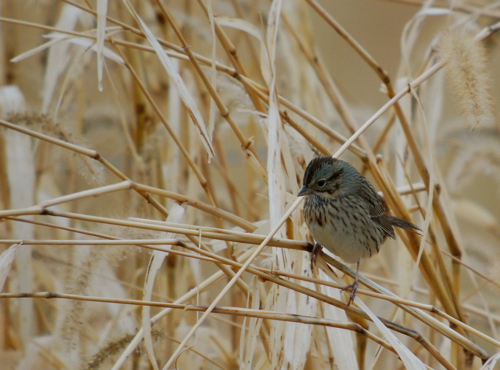
Brace yourself, this is a completely different brown bird that the one above. This is a Lincoln's sparrow that was in the same loose flock with the swamp sparrow. Note how this one is streaky on the sides and the swamp is not? I love the way this bird is highlighted by the yellow grasses.
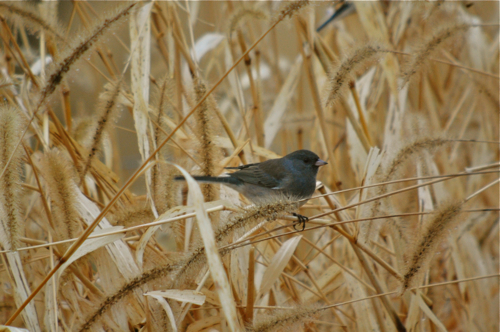
Here's a junco that popped up to remind me that it's still representin' as a sparrow.
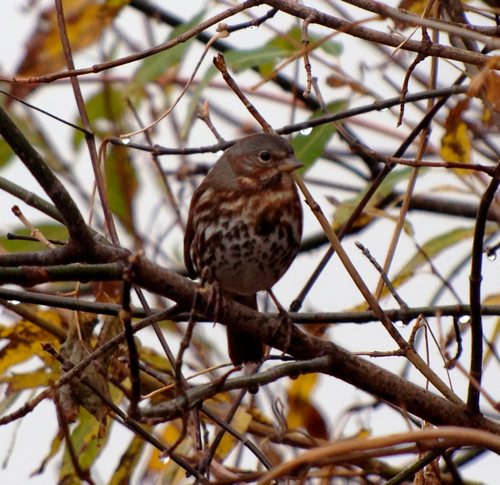
Beefy fox sparrows flush up on wooded arrows when I approach my field survey spot.
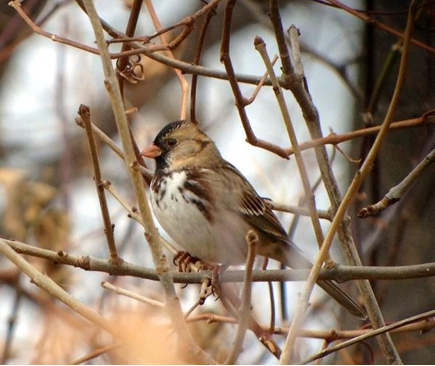
Robust Harris's sparrows are all over the place in the Twin Cities. I even had one show up at the bird feeder outside my office window, but they're all over on my field surveys too...though my non birding coworkers are dubious that this is different from the house sparrows.
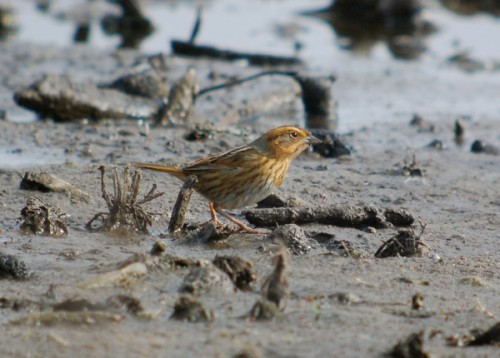
This wasn't seen on my surveys, it's a cool sparrow that with its pumpkin coloring is so appropriate for Halloween. This is a Nelson's sparrow. And as much as I love getting a photo of one, I'd rather have it on its breeding grounds and not foraging on mud during migration. But a sparrow's got eat what a sparrow's got to eat. Wish these guys would learn to love millet. I'd wet myself if a Nelson's ever showed up under my bird feeder.
The Autumn Office
Well, here we are with another report directly from the field as I do a blog post with nothing but my iPhone and my spotting scope.
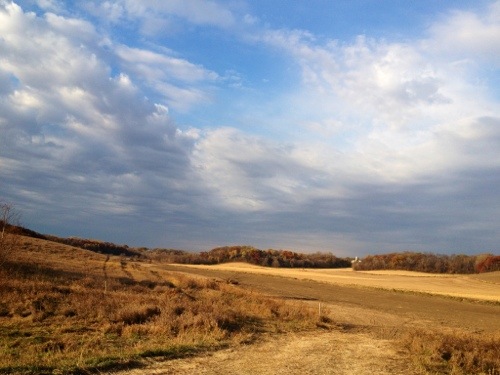
Every autumn when I'm fortunate enough to have fieldwork, I can't believe how lucky I am to have this landscape as an office and that my duty is to do nothing but watch birds or for a specific type of bird. Wearing sensible convertible all weather clothing is far preferable to wearing tights and a skirt in a cube farm.
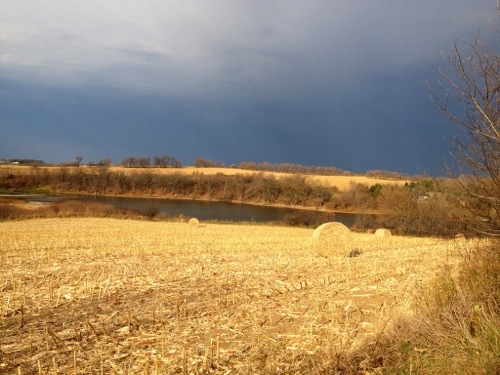
And even when autumn is supposedly Pastor Pete my surrounding office is the most gorgeous thing that I've ever had the privilege to work in. Admittedly, the bathroom situation is getting more dicey as every day farmers continue to mow down the fields of corn and soybeans that were my safe haven to a private bathroom. But you can't have everything.
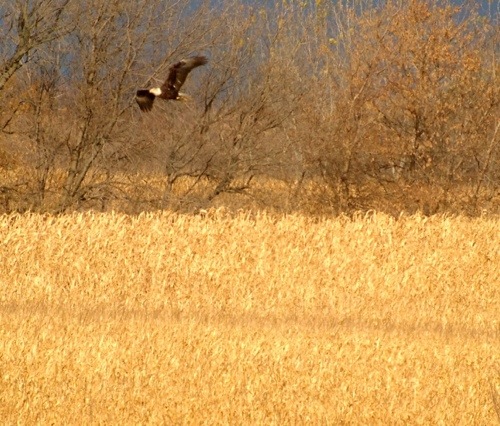
Eagles are certainly out and about this morning here's one and again I got this photo with my iPhone and my spotting scope. It's not the best photo in the world, but keep in mind I was handholding my phone up to my scope and I wasn't using an adapter.

I love watching how bird coloration mingles with the autumn landscape.
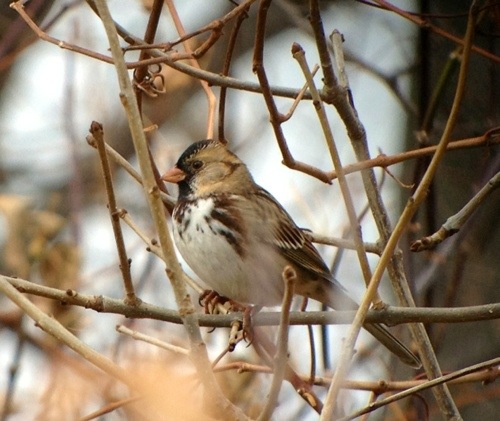
Sparrow migration is still in full swing. And though they are nothing but brown birds, it's fun to look into group of brown and pick out one who is very different from the others. We seem to be having an influx of Harris's sparrows in the Twin Cities right now and how can you not love a sparrow with a beard?
Well back to counting birds. I tried to catch as many typos as I could that AutoCorrect thought I meant, but there may be more. I love that it thought "Harris's sparrow" was "harasses Spero."
The Many Faces Of Savannah Sparrows
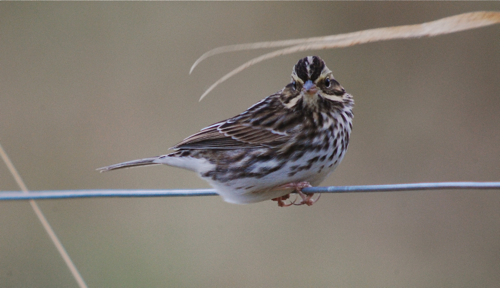
Mr. Muttonchops!
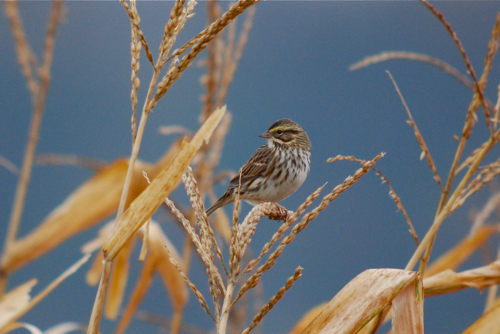
I think brown birds are beautiful as it is, but I love putting them in beautiful backgrounds when the opportunity presents itself.
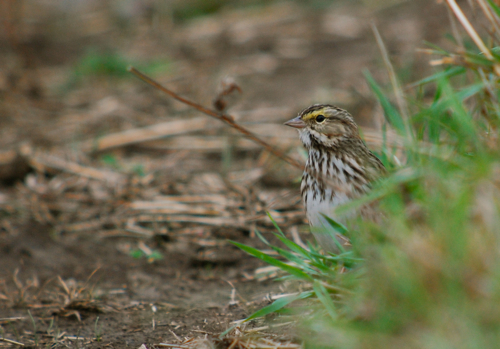
I always thought of house sparrows as the most common sparrow ever and that's true in urban areas of the US but out in the farm fields, especially the cornfields, it's savannah sparrows all the way. And no 2 savannahs seem to look the same during migration.
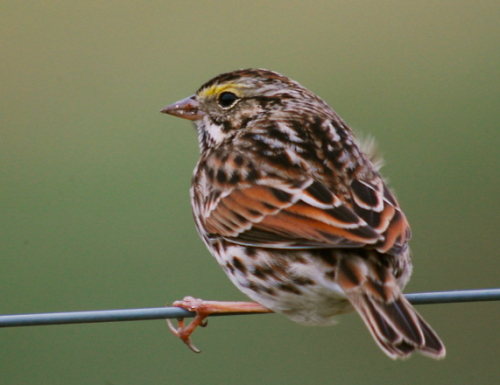
I've never seen on with so much rufous on the wings, but Sibley assures me that this an acceptable color morph.
Wet-tailed Hawk
In the midst of all the last minute planning for The Big Year Birds and Beers I still have to work and I'm in the middle of 3 different bird surveys. One is my fall waterfowl surveys in conjunction with the National Park, US Fish and Wildlife, MN DNR and WI DNR and the others are for bird monitoring for private companies.
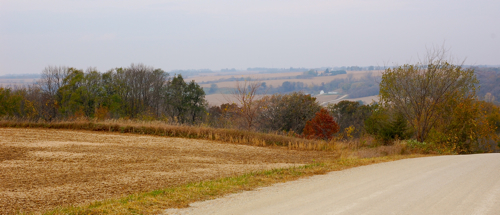
And it's totally an adventure to fly over thousands of ducks on the Mississippi River, but I do enjoy surveys on the ground, enjoying the autumn air and the last ambient sounds of leaves rustling in the wind. Almost all of yesterday was perfect. Most of my survey spots are on the side of the road so if rain comes I can quick duck in. I have one survey spot that is almost a mile walk from the car on uneven terrain. It's a lovely walk and very birdy, but I don't mind it.
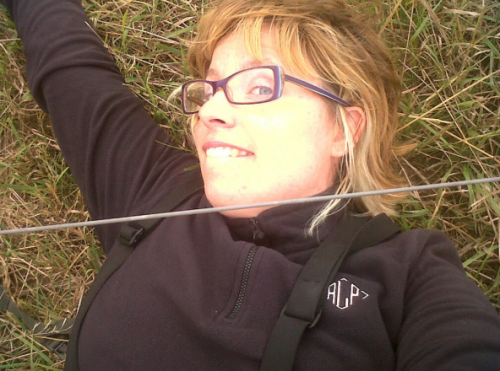
Even though I do have to wriggle under an electrified fence on my walk there. Just adds a bit of adventure to my work...and as someone mentioned on Twitter, it's also excellent motivation for not eating too much...Non Birding Bill texted that it looked like a storm was approaching. Normally, it's so quiet out here I can hear a storm when it's still 40 miles away. I didn't hear anything until a half hour before I was supposed to leave.
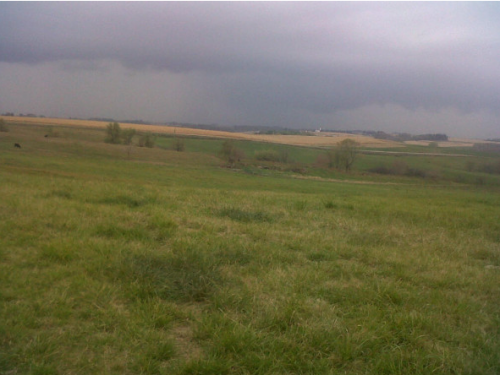
On the walk back, I could see the storm moving my way fast. I hustled to get back to the car...except at the electric fence, I took my time there. I could see hills disappearing and fading as the rain came closer and closer. Just as I was putting my scope in my trunk, buckets of rain hit. I made it just in time! I drove to my next survey point and the hard and fast rain soon passed. When it was finished, I noticed a couple of odd shapes.
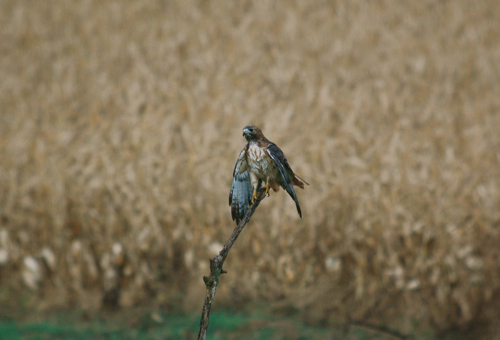
Closer inspection revealed waterlogged red-tailed hawks. I saw about three different birds, all in this posture. If you've ever wondered what birds do after a rain--spread out the wet wings so they can air out the feathers.
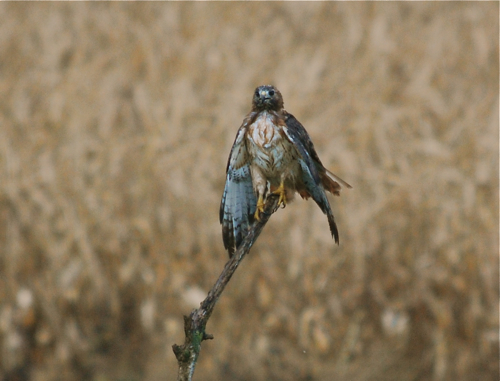
Poor wet-tailed hawk! Drenched feathers have to affect flight and one's ability to hunt. It's gotta be uncomfortable too. I wonder if they get frustrated the way humans do when rain hits after they water their yard. Do hawks think, "Dang it, I just bathed 2 hours ago in that pond and of course it rains!"
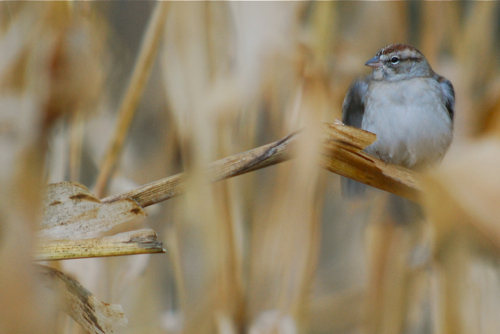
Many of the smaller birds took refuge in the remaining corn stalks. Warblers, sparrows and juncos were all over the leaves after the rain passed. Above is a winter plumage chipping sparrow. It kept flipping its wings--I would guess to try and flip off extra water on the feathers.
I have one more day of surveys today and then tonight it's our Birds and Beers and Big Year event. NBB though not a birder has been a huge help in the last minute preparations. When we got the Swarovski 10x30 CLs yesterday he posted them so people could see them...and to taunt me a bit.
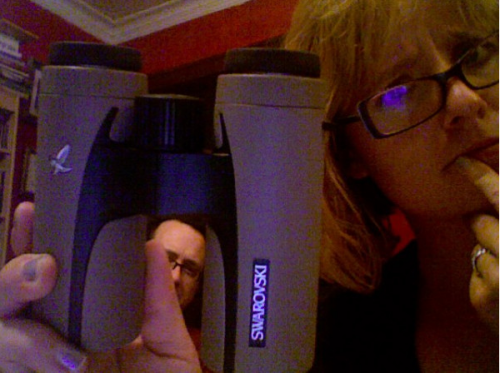
They are a sweet little pair of binoculars...complete with a Batman-like insignia.
Odd Field Sparrow
I have a sparrow that has been driving me nuts on my surveys the last week. I tried turning it in to every other bird but have finally landed on a field sparrow. The bird perches on a bush that is not part of my survey property, so I can't just walk out. Plus, I'm supposed to be monitoring other birds and can only do so much with a non survey species. Yesterday, I tried playing a field sparrow call to get the bird to fly over. It didn't but a neighboring field sparrow did. Then, I tried playing a clay-colored sparrow call and the bird flew over--and it doesn't sound like a clay-colored at all. So, is this a young field sparrow working on his sound? A really hoarse field sparrow that has been singing like crazy all summer? Or is a hybrid field sparrow/clay-colored sparrow. They have been known to occur. Here's a video of a hybrid singing.
I may have to drive down to the survey area on my own time and see if I can get a photo. The few times the bird has flown by and not hidden itself in foliage, it looked like a field sparrow. Anyway, here are a few videos of the bird singing:
[youtube]http://www.youtube.com/watch?v=cCAuHpFuLPQ[/youtube]
[youtube]http://www.youtube.com/watch?v=Mdl8zHt6CaY[/youtube]
Breathe. You Won't See Every Bird On Earth. A Nyquil Post.
I am a terrible bird watcher. I hate getting up early in the morning. The older I get, the less I care about distinguishing flycatchers (yet, oddly admire those who live for it). I hate birding in the rain--even if it is a life bird that I may never, ever get the chance to see again.

But when I'm forced to get up early in the morning, I'm generally rewarded with cool birds like the above horned lark skulking out on a gravel road above. Rewarded so long as it isn't pouring down rain. I enjoyed having that moment with the horned lark, watching it skulk out of the grasses, keep an eye towards the sky for a an aerial predator and go about its business of being a lark.
As one gets older, I think you take stock of what you can no longer do. I grew up with the notion from my mother that I could do whatever I set my mind to, I think a lot of US kids get that: This baby could grow up to be president, a movie star, a sports star, a Playboy Bunny--or all of them! As you get older, you realize certain things. For example, I remember thinking at my 27 birthday, "Oh wow, I'm too old to pose for Playboy, huh."
But the one thing that hurts the most as I get older is the realization that I won't see every single bird this planet has to offer--no one has. I even get a little down when I realize just based on time and money that I'm not going to be able to visit every country or even every US city the world has to offer. To see all the birds species in the world is a perilous pursuit, just check out the "famous birdwatchers" on the Birdwatching Wikipedia page and it lists all the horrible deaths (and even gang rape) of people who have attempted such a challenge--not to mention some of the bitterness that can come from family as you choose travel over family time. And truth be told, as much as I lament my husband's lack of birding interest, I genuinely enjoy his company and find leaving him behind a big fat bummer.
If time is running out, money is in limited quantity and I can only see so many birds in this lifetime, I do feel much better about not wasting energy on all the flycatchers that look exactly alike and focus on the ones I really find interesting. And, not being a field guide author, the pressure is off for me to care about flycatchers that look the same.

As much as I hate getting up at 4 am, I do appreciate things that force me up at all hours and give me great moments. And more and more, I find myself content to spend time with birds that I've seen several times before but still give me great views. Above is a savannah sparrow that had a nest near where I was stationed. I think that's why digiscoping appeals to me. Sometimes I'll glimpse a brown bird in a gorgeous green background and I want to save that, the green only enhances the subtle beauty of the sparrow.

This pair of savannah sparrows scurried past me several times with beakfuls of squishy bugs for hungry nestlings. I see this species in several states, but I enjoy their familiarity, much the same way I enjoy red-tailed hawks. They also have a sweet, delicated and I fear under appreciated song.

Like the horned lark. This is really a common bird, but many new birders find it evasive and don't realize that the brown bird with black tail stripes they flush as they drive down gravel roads is a potential lifer. But, if you plant yourself on a gravel road, they come out. When you get a chance to see one, they really are striking with the black horns, mask and bib. Horned larks surrounded me not only on the ground, but in the air too. Their territory song serenades me overhead as I note and count certain bird species.

And so I may not get to see every single bird there is out there, but I am content to sleep in as much as I can and smile while a horned lark takes a dust bath in the middle of a gravel road a few feet from where I'm standing.
Black Ducks Wear Dog Masks Too!
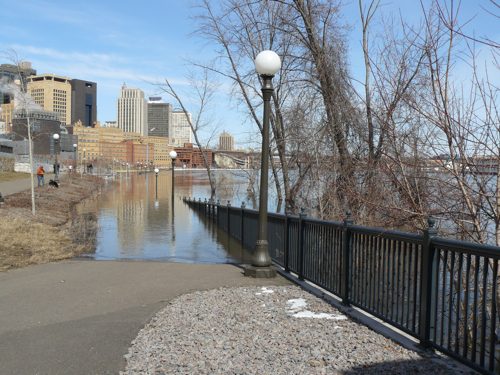 The Mississippi River has been flooding a bit in downtown St. Paul, MN. It's an exciting time for us park rangers at Mississippi National River and Recreation Area. I've been out taking photos for the park's Facebook Page of the progessing river levels and can't help but get in some spring birding when I'm out and about. See the tangle of trees on the right behind the rail? There were a pair of song sparrows lurking in there.
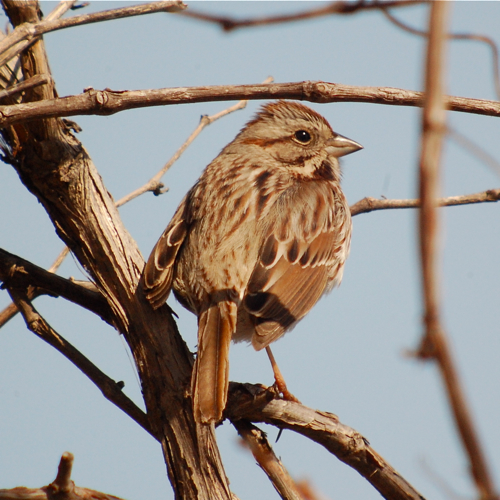
There was no singing on territory but anxious chips from the pair. I think they were looking for food and I wondered if they had nested in this spot last year when the river was lower. Now they arrived and were perplexed at the dramatic change in water level. Normally, the river is about 9 feet and when I digiscoped the above image it was over 18 feet. Soon the river will recede and the birds can go along with their nesting plans.
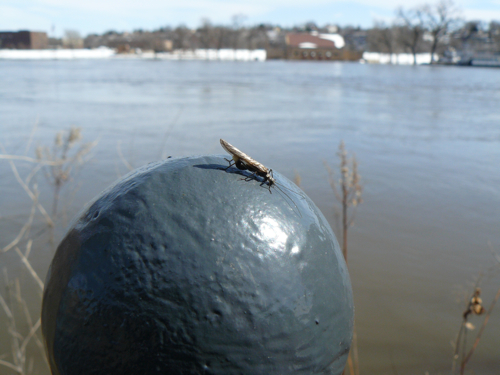
There's plenty around for the song sparrows to eat. I saw this early spring insect near the trees (that white stuff in the back of the photo is unmelted snow--yes, we still have some). There were bird feeders nearby by too, chock full of millet so the song sparrows should be fine.
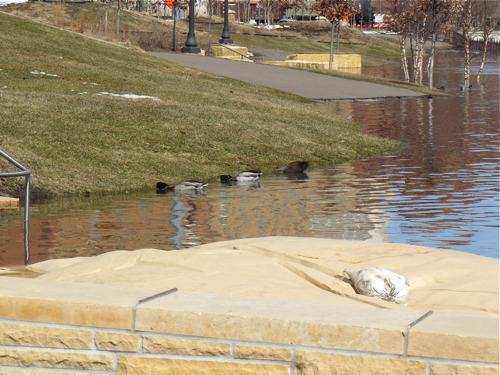
Ducks have been enjoying the high water, foraging in the grass right off the river. Above you can see 2 mallards and an American black duck. Remember the whole meme of Ducks Wear Dog Masks?
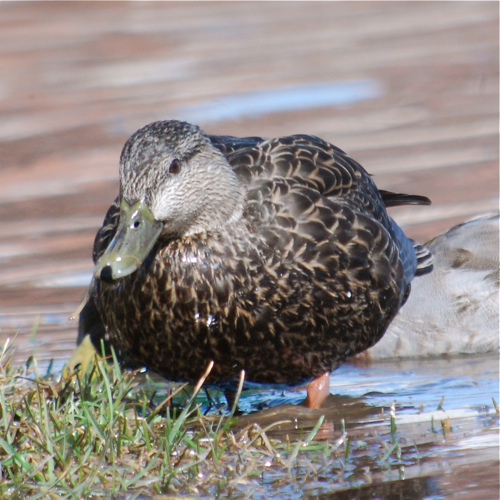
Apparently black ducks have do too, it's not just mallards. Their dog mask is a bit more subdued.
Migration, Carlos Avery and a Pub Quiz
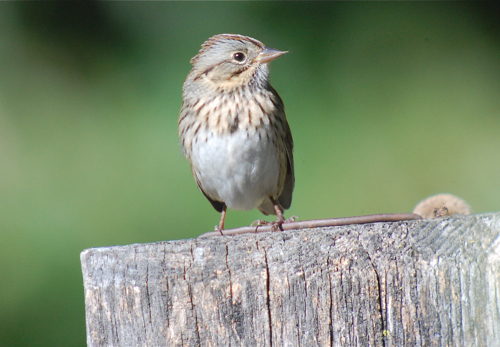
Merlin's Rest put out the call for Guest Pub Quizzers and I'll be leading the Pub Quiz this Sunday, September 19 at 7:30 pm. If you know me and the blog, you have an idea of what kinds of quesitons I'll ask, but I do promise that it will not all be bird related. I'll have some cool prizes...perhaps even some honey from our hives for the winning team.

I keep trying to deny autumn this year and I can't. I took this photo two days ago at Carlos Avery Wildlife Management Area. One can't deny red oak leaves as a sure sign that it's getting colder and the days are getting shorter. My denial was broken in full yesterday when we went on a canoe/kayak paddle in my park for work...it was a tad chilly on the river and my fingers had that dry skin ache that is exclusive to cold, dry air. Sigh. I did get one pleasant reminder of fall--Mr. Neil's housekeeper called to say that they found a 20# patch of Hen of the Woods in our usual patch--my favorite wild edible. We will have some tasty soups and sauces with that fungus this winter!

Canada geese are on the move and I got word that my waterfowl surveys start soon--at the end of the month. My route got expanded this year, but I'm also nervous. I went on a ride along for this new extension last year and the amount of ducks and species mix is a lot to take in. Will I be able to count them all? We'll do our best but I feel this year's survey is of utmost importance. When we do this again for the next few years? Will those numbers change with the Gulf spill? Despite "capping of the well" the spill is not over, there's still a ton of oil in the water, it's below the surface so you can't see it, but it's affecting the food supply.
Of large concern to me is the recent fish kill in Louisiana, Check out This Is Not A Road. Disturbing amount of fish and also interesting that in this fish kill it's several species of fish. I've seen fish kills--we get them along the Mississippi in spring and even on some of our lakes, but it's usually one species of fish. This huge fish kill in Louisiana is SEVERAL species and includes sting rays and a whale. The government says that the oil spill is not the cause even though oil is clearly visible on the fish in close up shots. They official report is depletion of oxygen...which happens this time of year and does cause fish kills but usually not this large and the depletion is caused by the dead zone in the Gulf (created by fertilizer pollution from farmers on the Mississippi River) and most likely exacerbated by the oil and more likely the chemical oil dispersent put in the Gulf). There's a great report on the fish kill from the AP on YouTube and an explanation on New Scientist. I think we'll see more problems.
Sorry for that tangent. I'm not exactly sure what to do about the oil spill. I want people to know that it's still a problem and that many birds (and other coastal creatures, not to mention people's jobs) are in peril, but I don't want this blog to become your daily downer. Just promise me you won't buy into the idea that oil spill is over and we still have problems to solve, 'k?
Back to birds:

There's a feed plot at Carlos Avery and I chuckled at this goldfinch, it was eating the tassels. I know finches are primarily seed eaters and I've recently learned that they eat all matter of plants, but I'm beginning to suspect that there's not a piece of vegetation they won't eat. I do have to hand it to them as far as creativity. You pheasants and your bobwhite go for the corn kernels, goldfinches go tassels. Great way to avoid competition.

Warblers, like the above yellow-rumped warbler were flitting among the tassels too. The appeared to be after tiny insects rather than the plants themselves.

All the grasses and shrubs along the road were alive with small birds. If you could see their shadows rustling among the leaves, you could hear their contact chip notes. A little pishing (for non birders, say the word "pish" only in a loud whisper) made some of them pop up to investigate the sound. Above are some swamp sparrows (the one on the left looks like its still molting heavily).

I love swamp sparrows and they blend so well with the changing fall foliage. I especially love it when see a sparrow head on, they look like cranky old mean with muttonchops. I almost feel like this one should shouting in a wheezy voice, "Hey you, whipper snapper, quit that pishing racket!!" As I was taking their photos, I could hear sandhill cranes calling in the distance and I noticed that they were flying above me:

I would guess that this is a family group of cranes. Perhaps they were doing some laps, getting their wing muscles in shape and teaching the young birds the mysteries of finding a warm column of air spiraling up to glide in. Those thermals save energy when on long journeys.

These cranes are far enough south that they have avoided the Minnesota sandhill crane hunt, but depending on their route, they will have to watch out for the hunts in Kansas and Texas as well. Good luck, cranes.
Digiscoped Images
Fresh Tweets
Would you like to hire me as a speaker for your event?
Email sharon@birdchick.com