Birdchick Blog

I Guess I Am A Diamond Painting Artist Now?
Seriously. It’s official. I’m an artist. I’m part of an exhibit with MIA (aka Minneapolis Institute of Arts). I entered a Diamond Painting of one of my turkey vulture photos into their Foot In The Door Exhibit and made it in. The Foot in the Door Exhibit is basically a once every ten years event where anyone can enter art in it and MIA will put it on their walls. Normally it would be on their actual museum walls, but because of a the pandemic…it’s online.
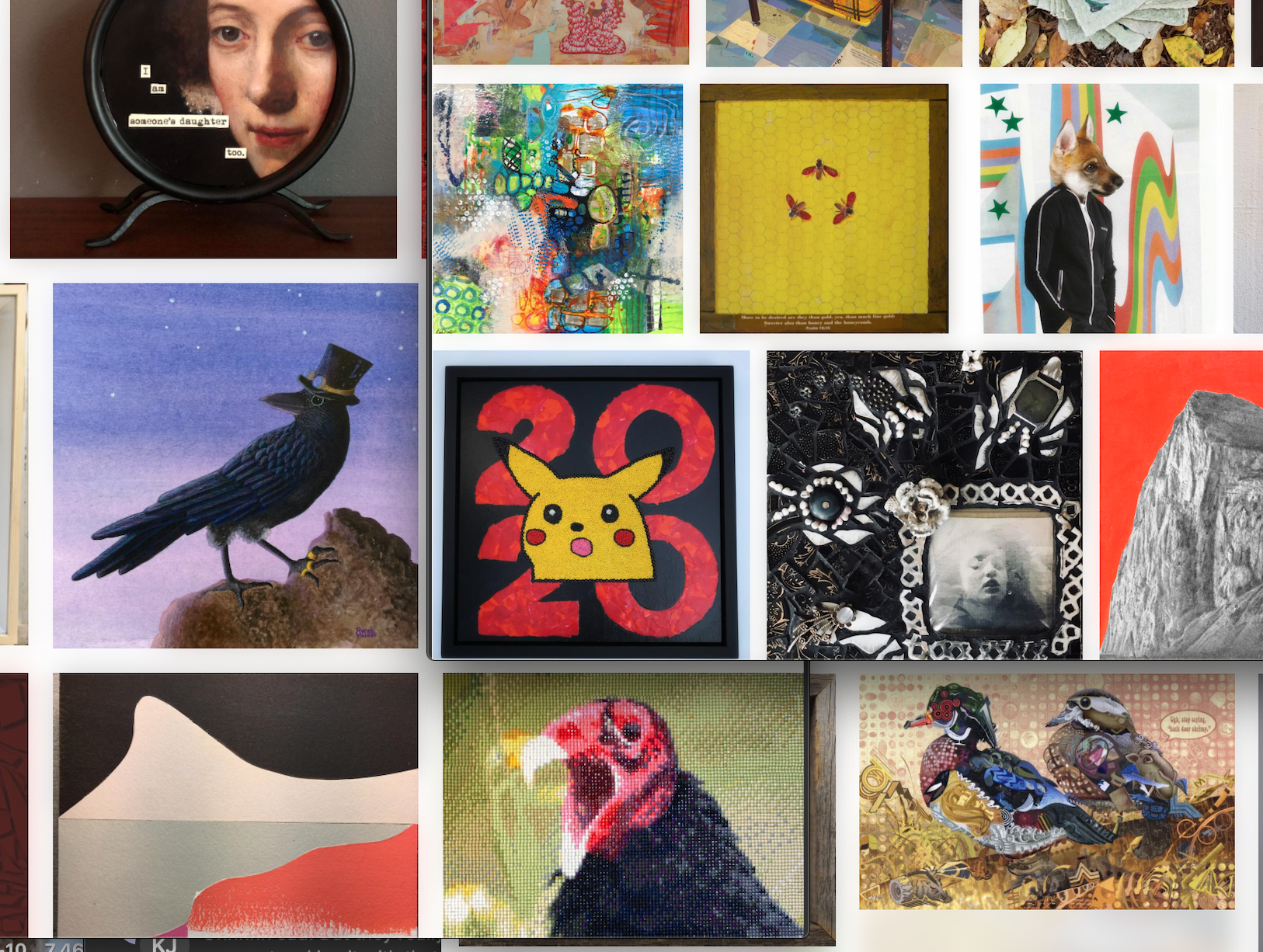
I took a few screenshots of the exhibition with my pieces and pieces made by friends.
Yet, It’s one of the few goals I actually got to keep this year and it was good for me to have something long term to work on. It makes it extra special to be in mixed media along with my friend Gayle Deutsch and artist Rob McBroom—the surrealist who always enters the Duck Stamp contest and never wins because…judges are too attached to art ducko: art that looks the same, almost like a photo (I’m not saying it isn’t a difficult or challenging technique, I’m just saying that it’s too wrapped up in only one style of art).
What is Diamond Painting? Well, if you follow me on the various social medias, you would have seen a few time lapses I made. It’s kind of a mix of cross stitch and paint by number with a little bit of a cryptogram thrown in. You get a canvas covered in sticky material. There are tiny little boxes with symbols in them. You have to match the corresponding color to its symbol by using a pen to set down little plastic diamonds. After many hours and tens of thousands of diamonds, you have your image. This image is a favorite of a turkey vulture photo that I took at Everglades National Park in Florida in 2016. It makes me chuckle that this pieces incorporates birds, digiscoping and a weird pop art. I am a little sad that people can’t see it in person, there’s so much texture to it and it’s shiny and sparkly as you move around it. However, I’ll take any win I can get this year and this is definitely a win for me.
Here’s a brief compilation of the time lapses I made this summer while working on the piece:

What the hell did I order? The title was “Jeff Goldblum Sunset.”
How does one get in to Diamond Painting…completely by folly and drunk ordering. When I got the package I had no idea what it was and I was so confused on what it could be. I put it on Facebook, “What the hell did I drunk order?”
My friend Gayle was quick to come out of the woodwork, “Um I linked to this two months ago. Did you click and buy it?
Clearly the answer was yes.
I tucked it away and thought maybe I’d find someone who wanted it since I had knitting and a supply of paint by numbers to work on. And then my mom got ill. Full disclosure: she is well today and just as sassy as ever. But at the time she was not and many things were very uncertain. And it’s very hard when your parents make decisions about their health that you do not agree with. My mom lives in Indiana and I live in Minnesota. I went down for visits, but most of my time was back up north. There was absolutely nothing I could do about the situation.

This is the chart that guides you on who to put down your various colored beads also called “drills.” The beads have a number on their bag. So the light green would be 3047 and it should be placed where you see an “X” on the sticky canvas.
In a fit of cleaning and organizing I came across the mysterious Amazon package and took out the contents. None of it made sense to me so I did what any practical thinking adult would do—watch YouTube how to videos. I thought it looked insane and would take forever. Who has the time to do this? To get a fully informed opinion, I decided to try it. This was slow and painstaking, but oh…it sent me into a mediative state.
When Non Birding Bill came home that night and saw what I was doing, he said, “I’m not sure this is a good sign. This looks really insane.”
I agreed, yet persisted. Over several weeks.

An up close look at the stick canvas with the codes for the colors.
Any free time I had, I worked on this over the next six weeks. I had ten minutes over coffee in the morning before going to work? I did it. NBB watching some weird move, I placed plastic beads on sticky canvas. Phone calls with relatives to catch up on Mom’s health? I put on more beads.
It soon became a challenge to keep the beads/drills corralled, spillage is inevitable. The bags weren’t really resealable. The beads are tiny and managed to find their way everywhere. One night, I took my bra off before bed and my chest was covered in them. I started using an old ice cube tray to keep colors separated. But even that had risks, like the day the tray accidentally flipped from the table on to the carpeting. I spent two hours painstakingly using a flashlight and tweezers to get as many as I could out of the carpet. When that spot was eventually vacuumed you could hear hundreds more get sucked up.
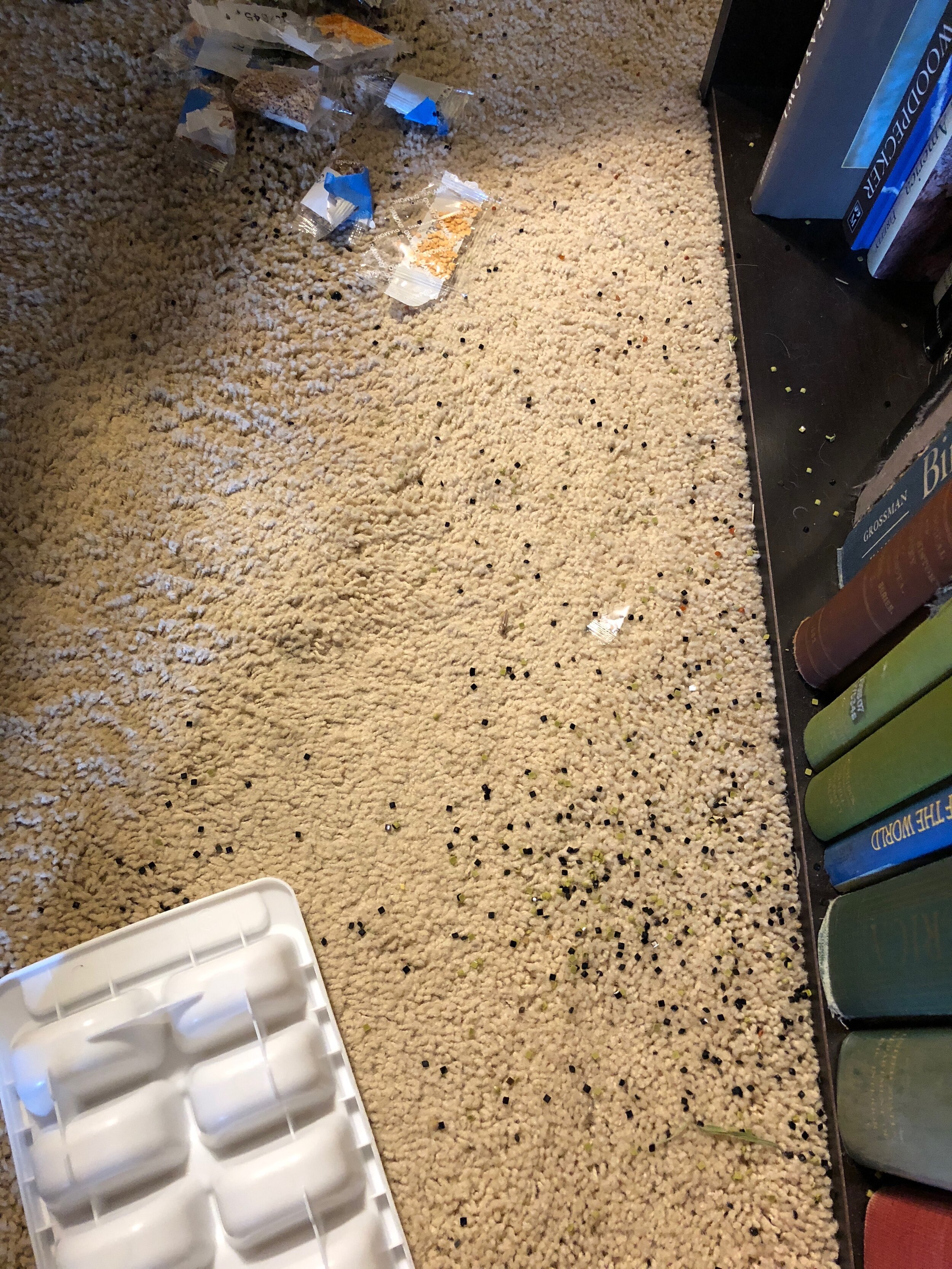
Fail.
Fortunately, these companies give you far more beads than you will ever need. And with many you can reorder them if you have an absolute disaster. I have also seen things online where there are much better bead organizers and even specialized vacuums to help you with just such a tragedy. I haven’t ordered the special vacuum but I have ordered the bead organizer. It comes with its own suitcase…that matches my luggage.
I’m fine, really.

Jeff Goldblum gradually comes to life.
It took six weeks and 19,040 little plastic diamonds to put together Jeff Goldblum Sunset—that doesn’t include the many beads that were lost on my person, the carpet or eaten by my pet rabbit Dougal. But I stuck with it and the sense of accomplishment was well worth it. If I’ve learned anything with this craft it’s that yes, control is an illusion and I certainly can’t control many aspects of my life, but damn it, I can control over 19,000 beads to create an image. I can make them go where they are supposed to and even rearrange a few if the colors don’t look quite right.
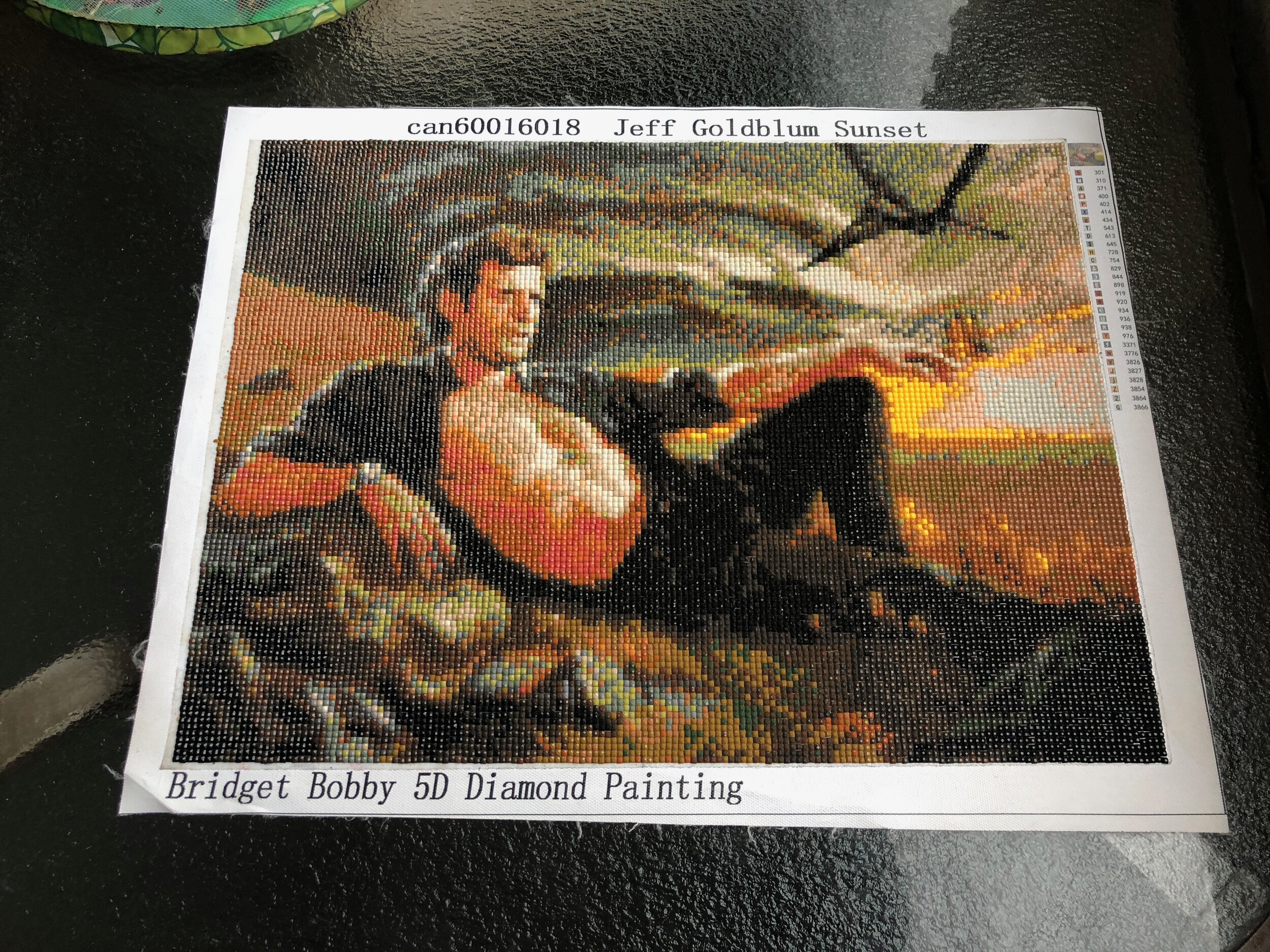
The completed Diamond Painting of Jeff Goldblum Sunset
I had no idea the amount of legend this first diamond painting had. When I moved this spring, I framed it and it was the first thing to go up in my home office along with a spotted owl painting that my mother did. Sometimes Jeff even shows up in the background of my live streams. When friends come over for a patio hangout they ask, “Can I see “Jeff?” It truly is a weird and wonderful thing and the texture and shininess always surprises people.
When MIA advertised their Foot in the Door exhibition I knew I wanted to do another one…because a pandemic will certainly fuck with your sense of control. But this time I wanted to do a custom piece of one of my own photos…enter in my favorite vulture photo. I love vultures, I also love the color of this piece and working these colors really help with my meditation. I sent my photo and desired dimensions to a company called Heartful Diamonds and their customer service was great. It takes a few weeks to get the actual kit but they do follow up in case your image doesn’t work in the dimensions you chose and they readily send out extra beads. If you want to attempt this, I’d highly recommend one of their pre made kits or attempting a custom one of your own.
Now…if you’re looking for weird, then check out the diamond painting kits on Etsy…be prepared, not all of them are safe for work and highly erotic.
And as I look down the barrel of a “Covid Winter” in Minnesota where patio hang outs aren’t going to be as readily of an option and the sun will be out for 7 hours a day, I have more on the way.
Frontera Audubon Turkey Vulture Roost

Inca dove chilling at Frontera.
While I was visiting the Rio Grande Valley with a friend with an eye on potential retirement spots I made sure to hit my favorite places. And one of those is Frontera Audubon. This is a tiny little park and every time I go, I get a gem. You can, of course get the Valley specialties, but every time I go there, I get a good bird, whether it’s a bird I don’t see all the time like a pyrrholuxia or gray hawk or even a Mexican species flitting across the border like a golden-crowned warbler.
I love all the nooks and crannies of the park and especially the sabal palm forest. The thicket is so dense it gives me a sense of peace. However, what I truly love about this place is the winter turkey vulture roost. You can smell it before you hit it. The smell doesn’t bother me, I put it in the category of “good bird smell” but when you’ve been vomited on by thousands of pelicans and herons in your career…your definition of “good” changes.
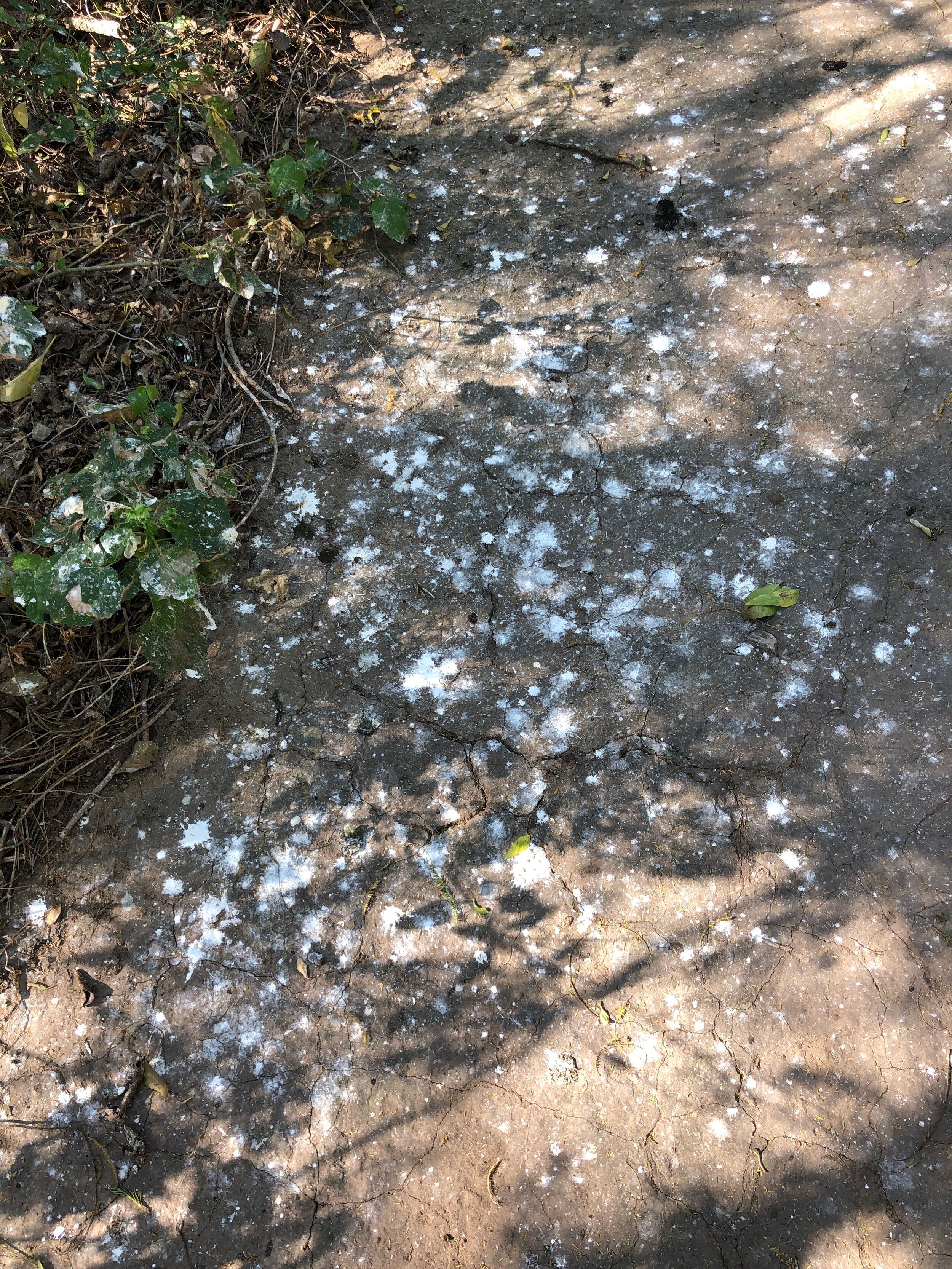
You know that you are some place special when you see this much vulture poop.
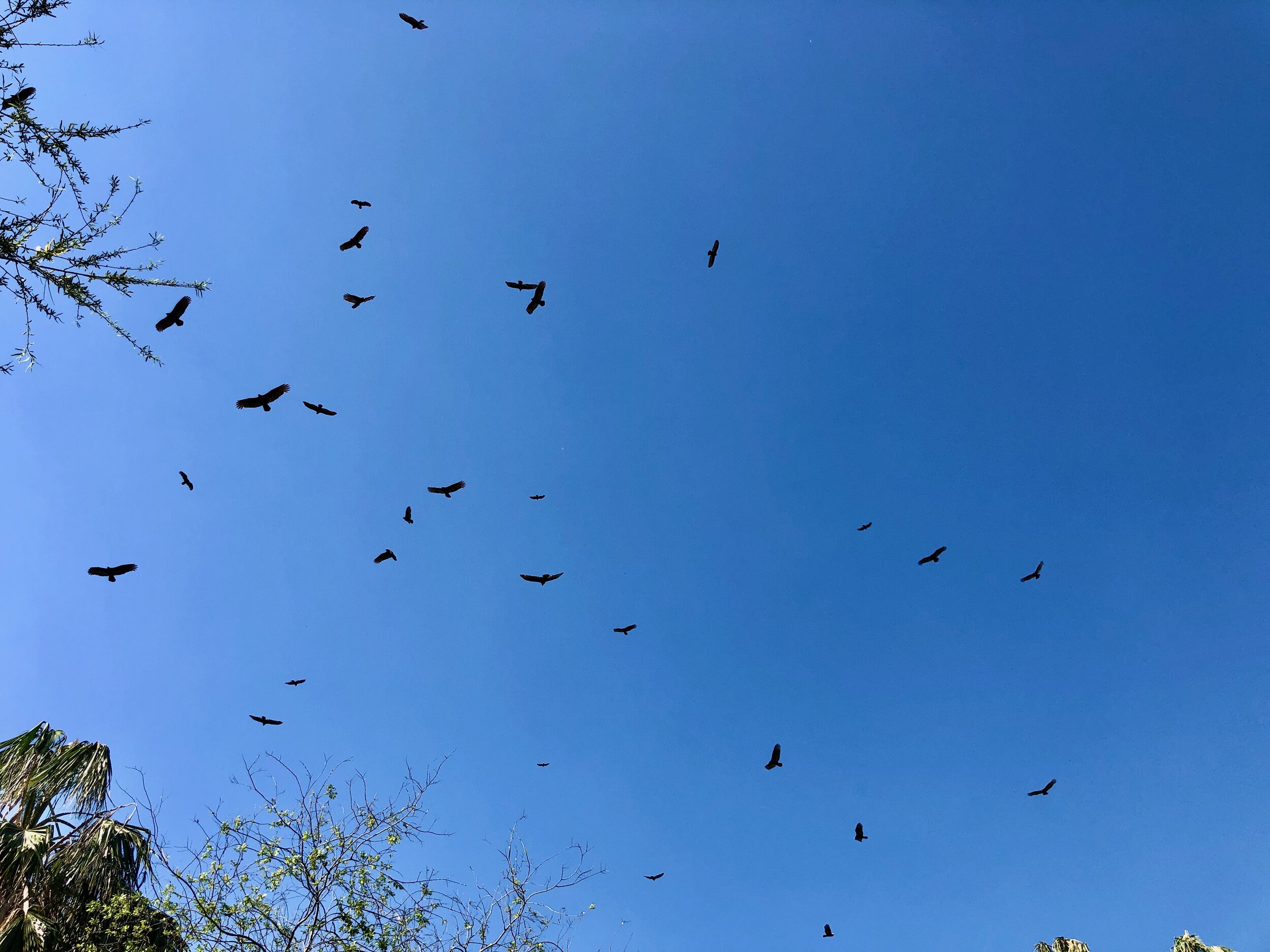
Vultures cruising in to their roost.
I do find it hilarious that when I do a google search for either Frontera or for vulture roosts, I’ll get directed to Trip Advisor reviews and people who…maybe don’t get birding. Here’s a sample:

Bad reviews of Frontera Audubon make me cackle.
Come on, people, it’s an amazing place to get vulture photos. And there’s plenty there to see, even outside of the feeders. Sure…you may have to have some patience, but that’s true of all birding spots. There are dozens of hot birding spots in the Valley and some I visit more than others, but Frontera is on the shortlist and I make it a priority every time I go. It’s tiny and chock full of birds.

Plain Chachalaca at Frontera.

White-tipped dove.

But I’m really here for the vultures. All the vultures. All the time.
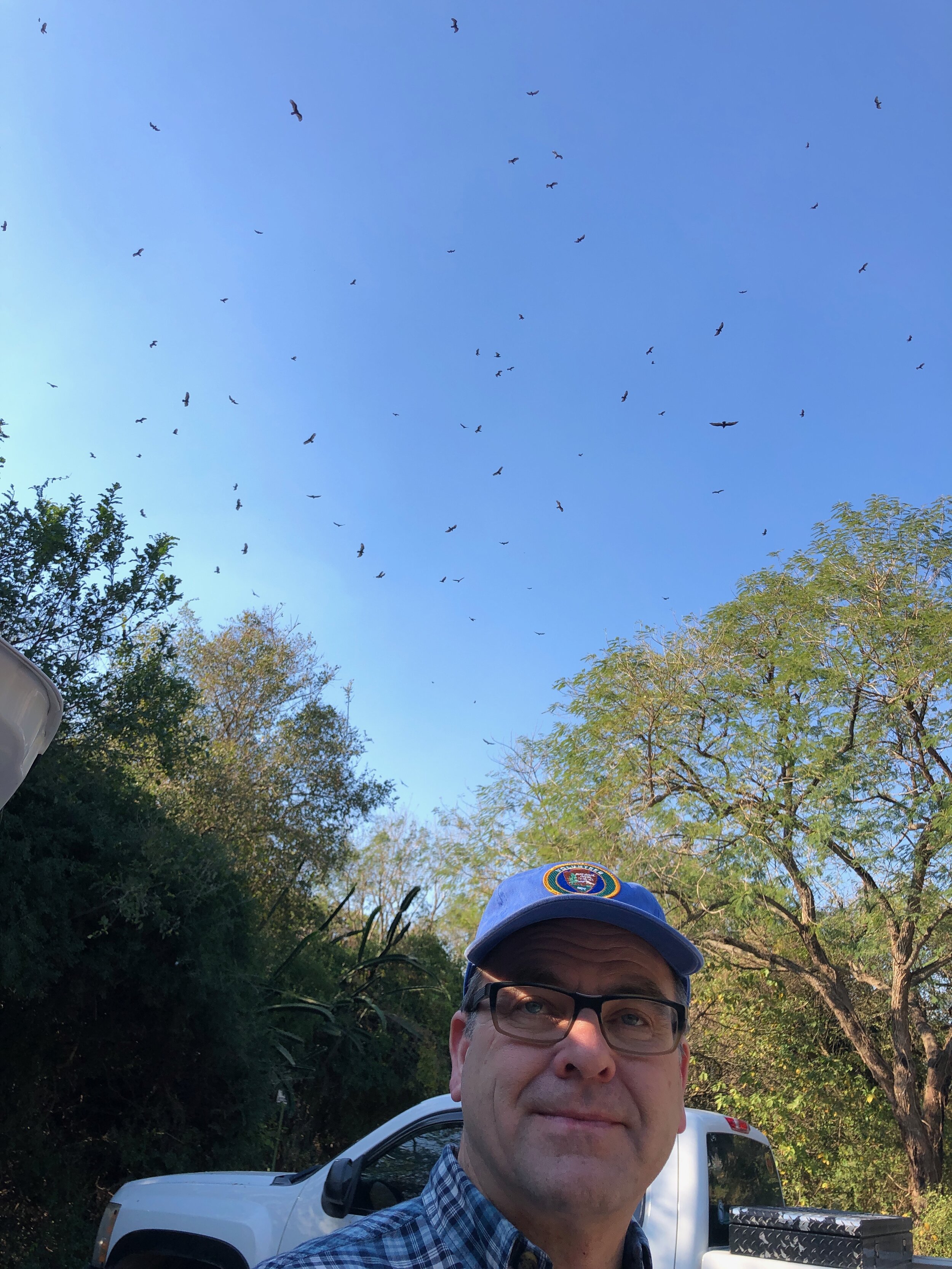
I told my friend that this many vultures soaring above his head means that it’s time for retirement.
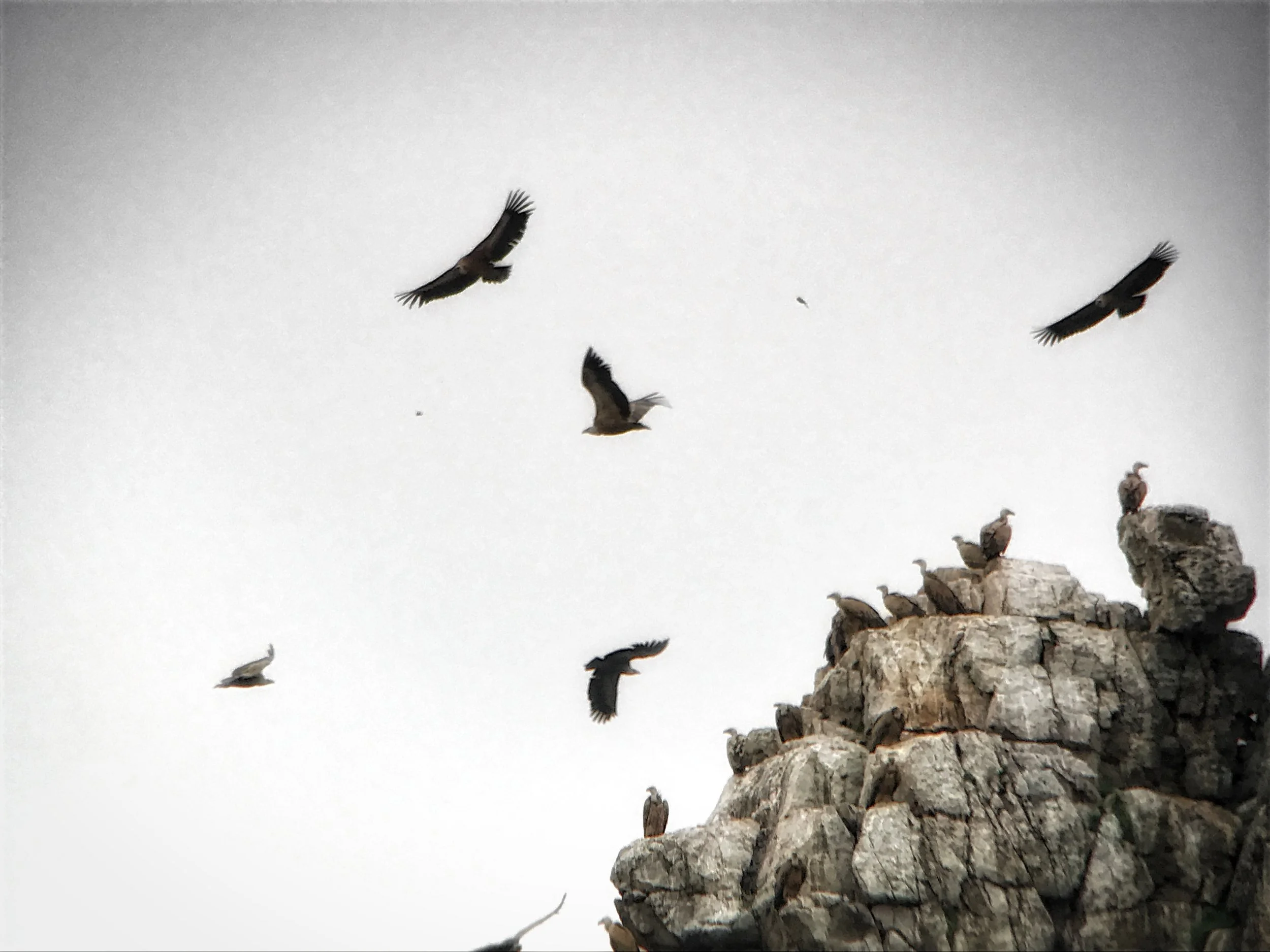
Monfragüe National Park, A Vulture Lover's Paradise
Let me tell you about about vultures...and Iberian ham...
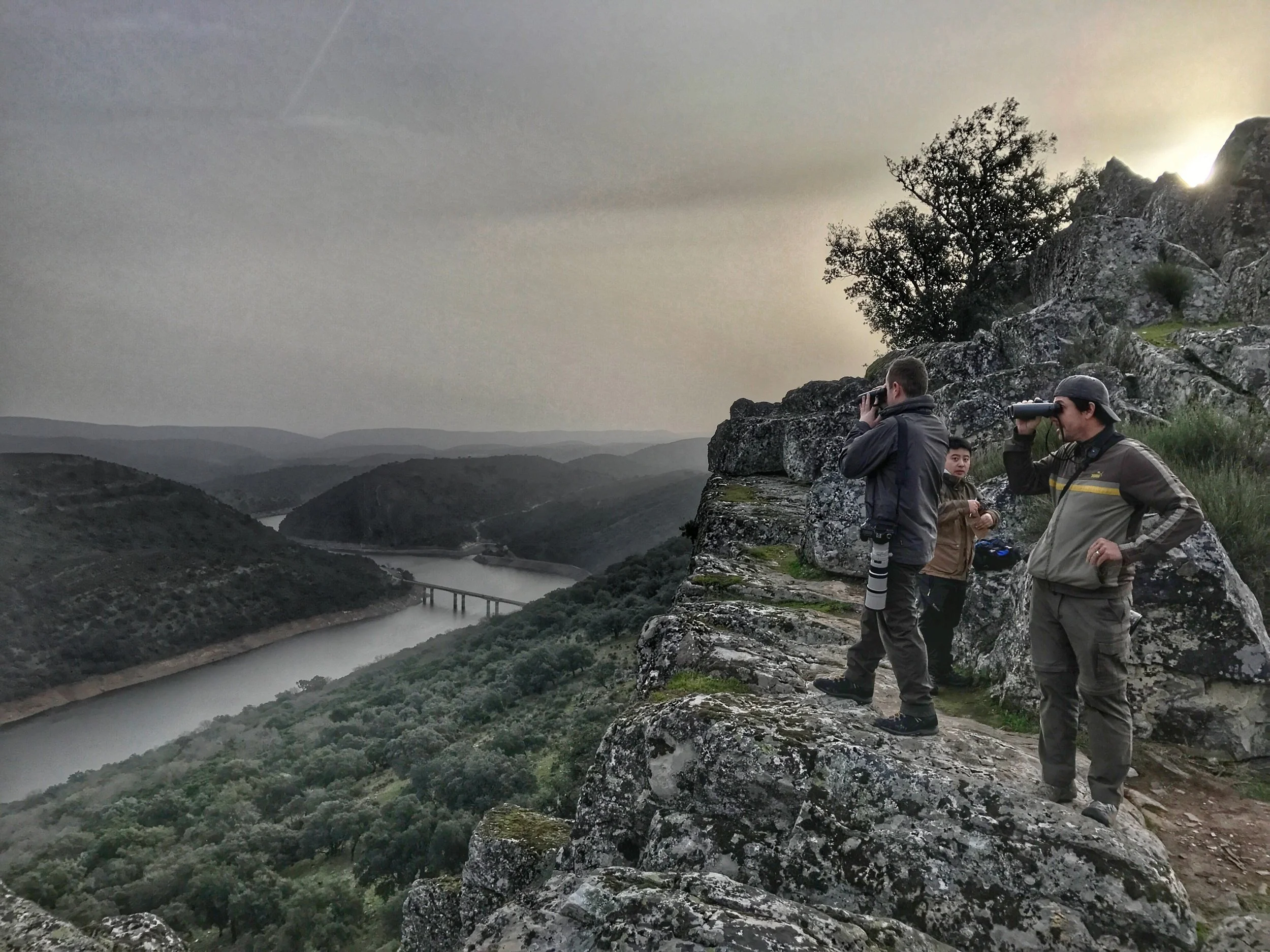
Birders looking badass as hell climbing up to Monfragüe Castle to do some birding in Monfragüe National Park in Extremadura.
I recently visited Extremadura which is in the southwest region of Spain and bordered by Portugal. It's an "autonomous community" meaning that even though it's inside Spain, it governs itself. Extremadura is fairly wild and remote and offers tremendous birding opportunity as well as Roman ruins. I've written a little bit about castle birding over at the PhoneSkope blog which includes this region. If you are looking for a unique birdwatching experience, Monfragüe National Park has it.
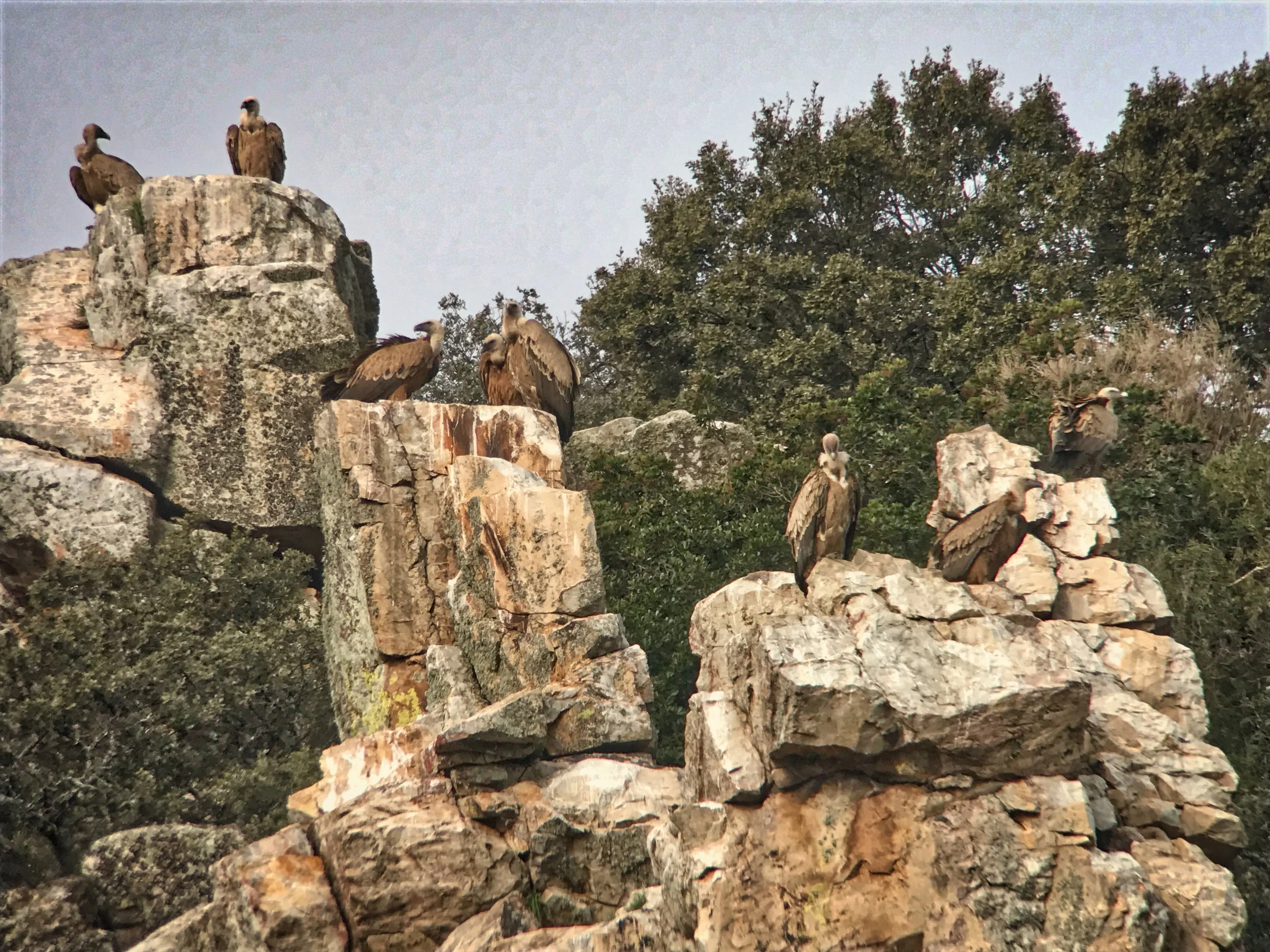
Griffon vultures roosting on one of the may rocky cliff faces in Monfragüe.
The big show while I was at the park was the large population of griffon vultures...which are a bit different than the turkey and black vultures we have in North America. This Old World species is ancient looking and gigantic, they make turkey vultures look practically anorexic. To give you an idea, a turkey vulture weighs about 3 - 4 pounds. A bald eagle can weigh anywhere from 8 - 12 pounds. A griffon vulture...now that beast can weigh as much as 25 pounds! Wrap your head around that for a minute--a soaring 25 pound bird! That's about the weight of a trumpeter swan!
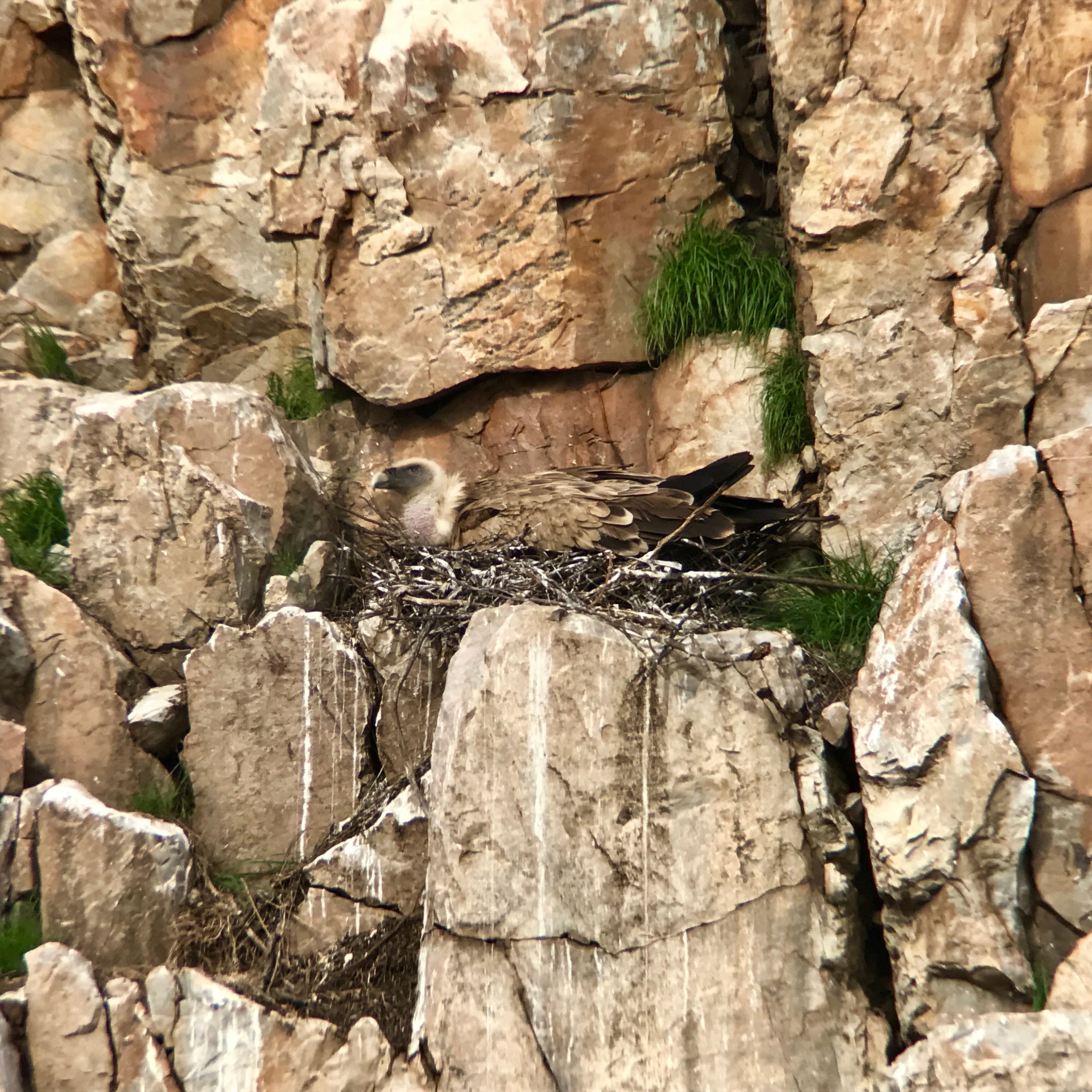
Griffon vultures pair up for life and nest in breeding colonies along rocky cliffs. Spain hosts the largest breeding population for this species and Monfragüe National Park is a great place to view them.
One morning while we were out birding, there was a griffon vulture perched on a rock in the field. There was no way to stop to get a photo, but you could clearly see the bird was almost as tall as me, at least four feet tall. Our guide said the bird was probably feeding and when the afternoon faded to evening there were no thermals or warm currents of air for the bird to use to soar up to the cliff, it had to spend the night on the ground because it's too big to flap up to the cliffs in a powered flight like a common buzzard would be able to do. I asked if there was any danger of predators getting a vulture and our guide smiled and said, "No, not a bird that big."
When I used to do eagle surveys, I always knew they would be one of the last birds to hit the thermals and I wouldn't really see them lift off until after 9:30am since they are a bit heavier than hawks and other soaring birds. If vultures are your target in Spain, you can sleep in before you go watch them.
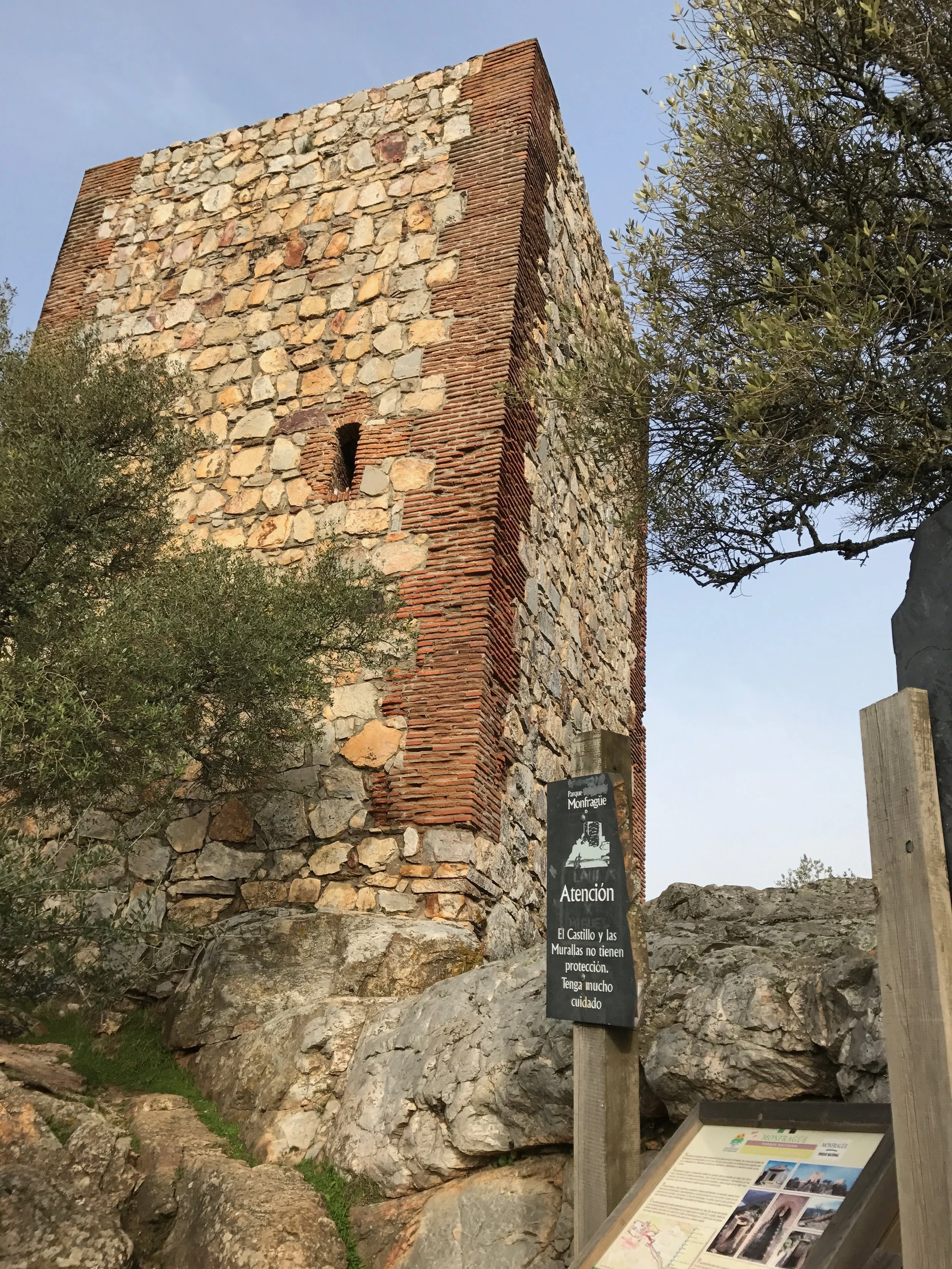
The castle in Monfragüe National Park offers dynamite views of griffon and black vultures as well as song birds on the trail up to it.
It's one thing to go birding in a beautiful park with a rugged landscape. Monfragüe ups the adventure by offering tours from a castle on top of hill and looking into the valley below. When you get there, you go out on the roof and survey the landscape. Vultures start to rise and it isn't long until they're on the thermals and soaring 15 feet away from you and your eye to eye with this massive, winged beast. To make it even more decadent, there's a vendor with a cart who will sell you some espresso or beer to enjoy while you take in the view.
Below are some more highlights:
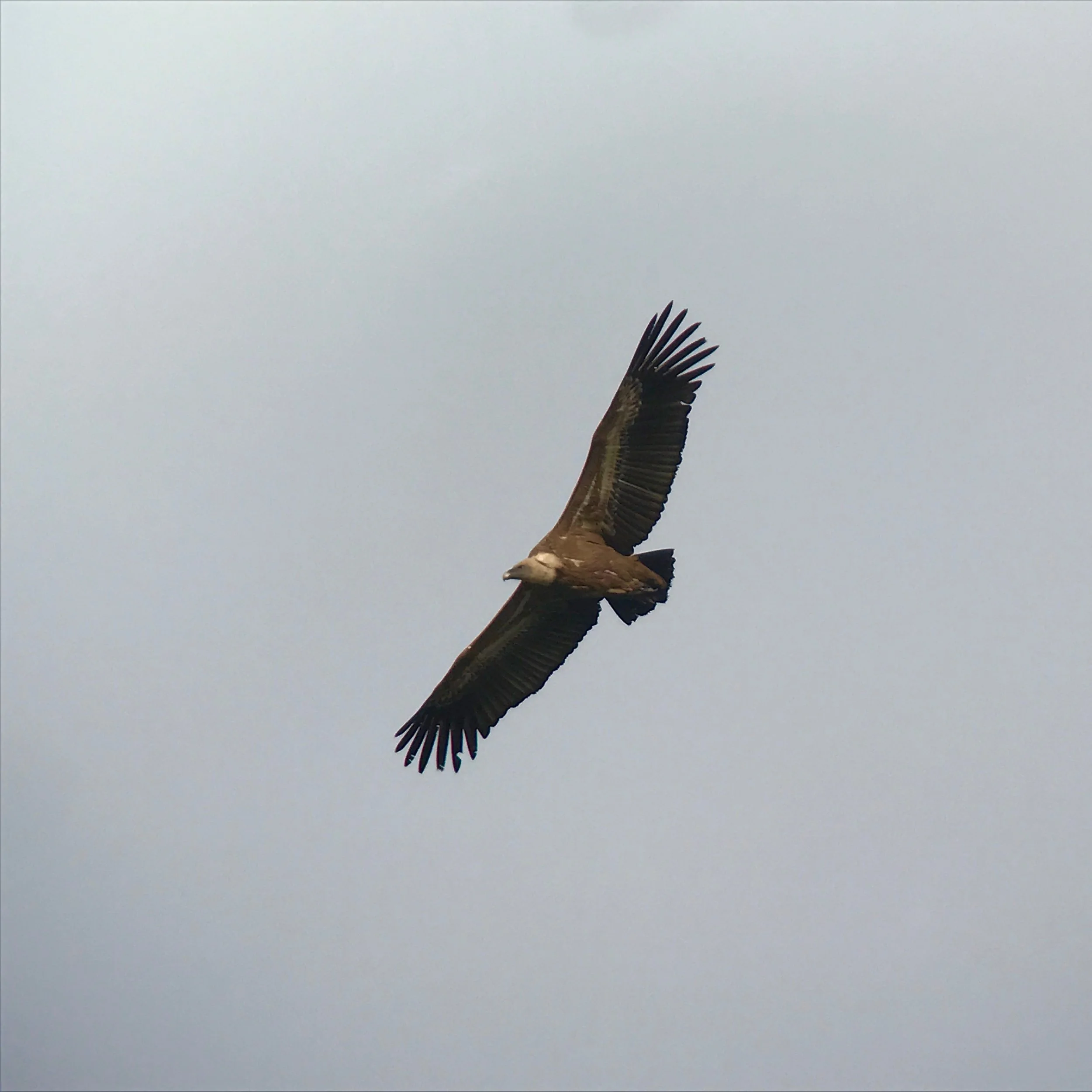
Griffon vultures rely on soaring to keep their massive weight in the air, since their heavy bodies would burn too much energy for flapping in powered flight. They soar high looking for dead livestock.
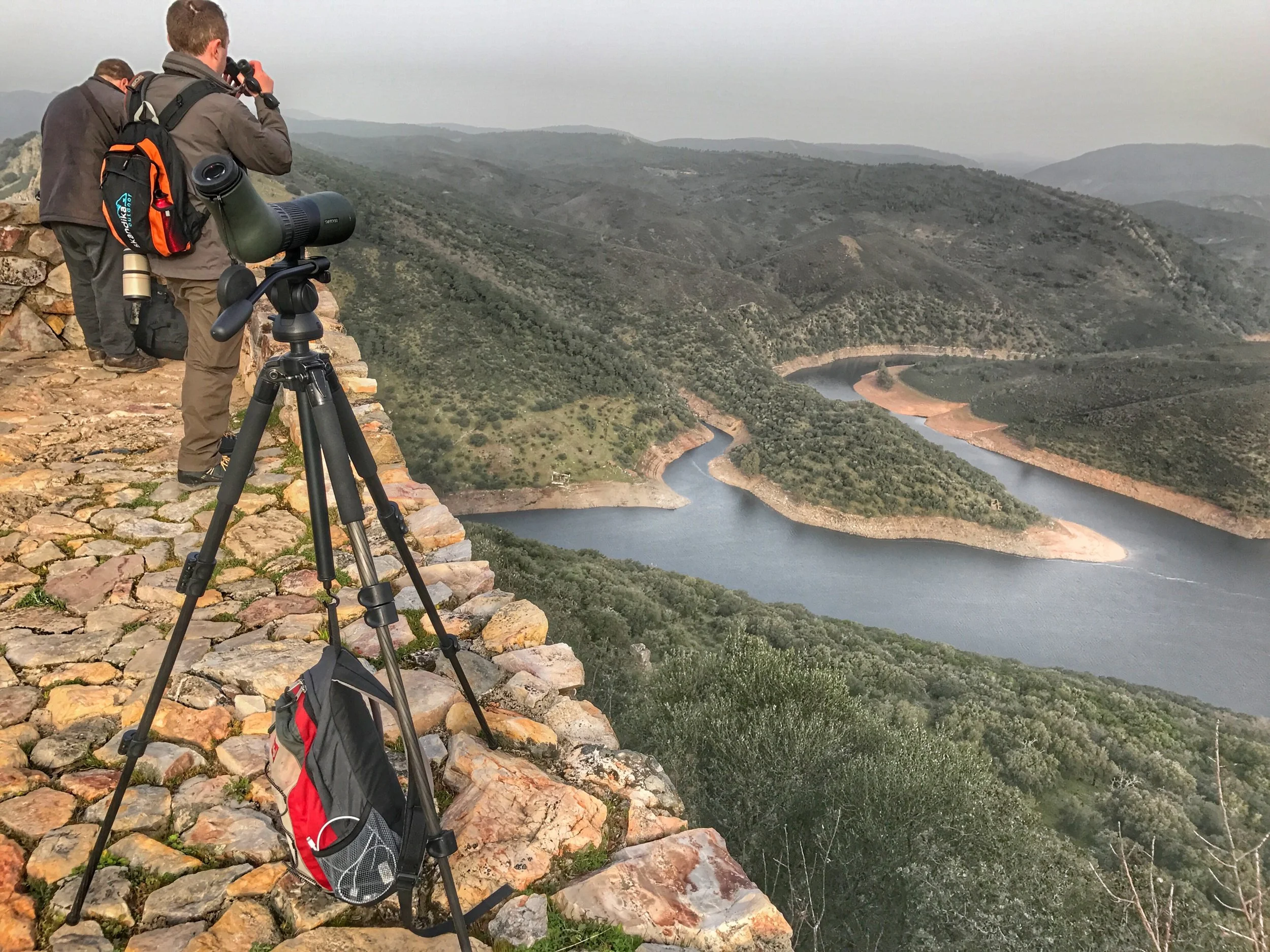
Imagine returning from vacation and a coworker asks, "What did you do?" and you can answer, "I stood on top of a castle in Spain watching vultures soar past me while I sipped an espresso."
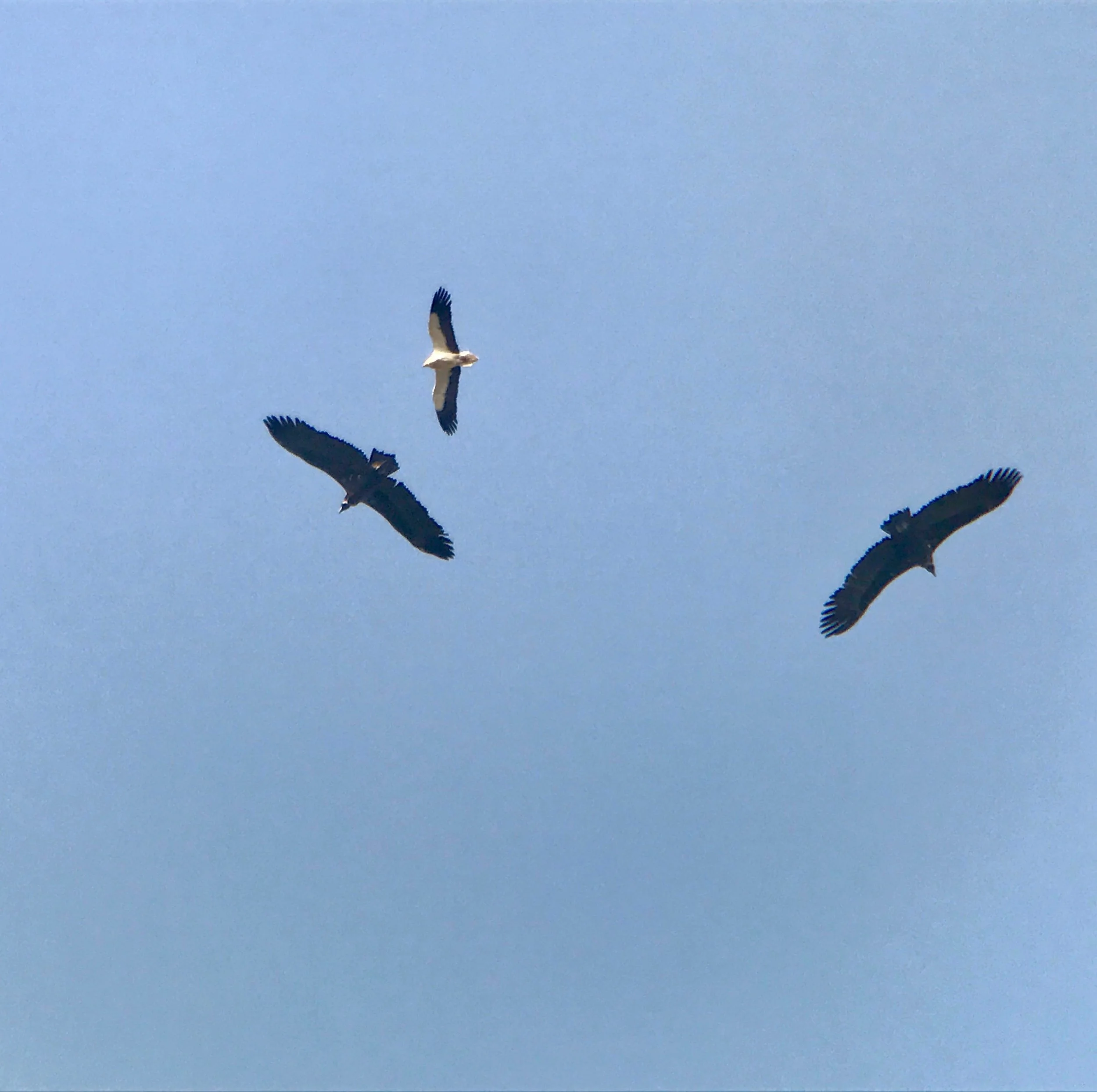
Other species of vulture can be possible too, depending on the time of year. These are black vultures with my lifer Egyptian vulture mixed in.
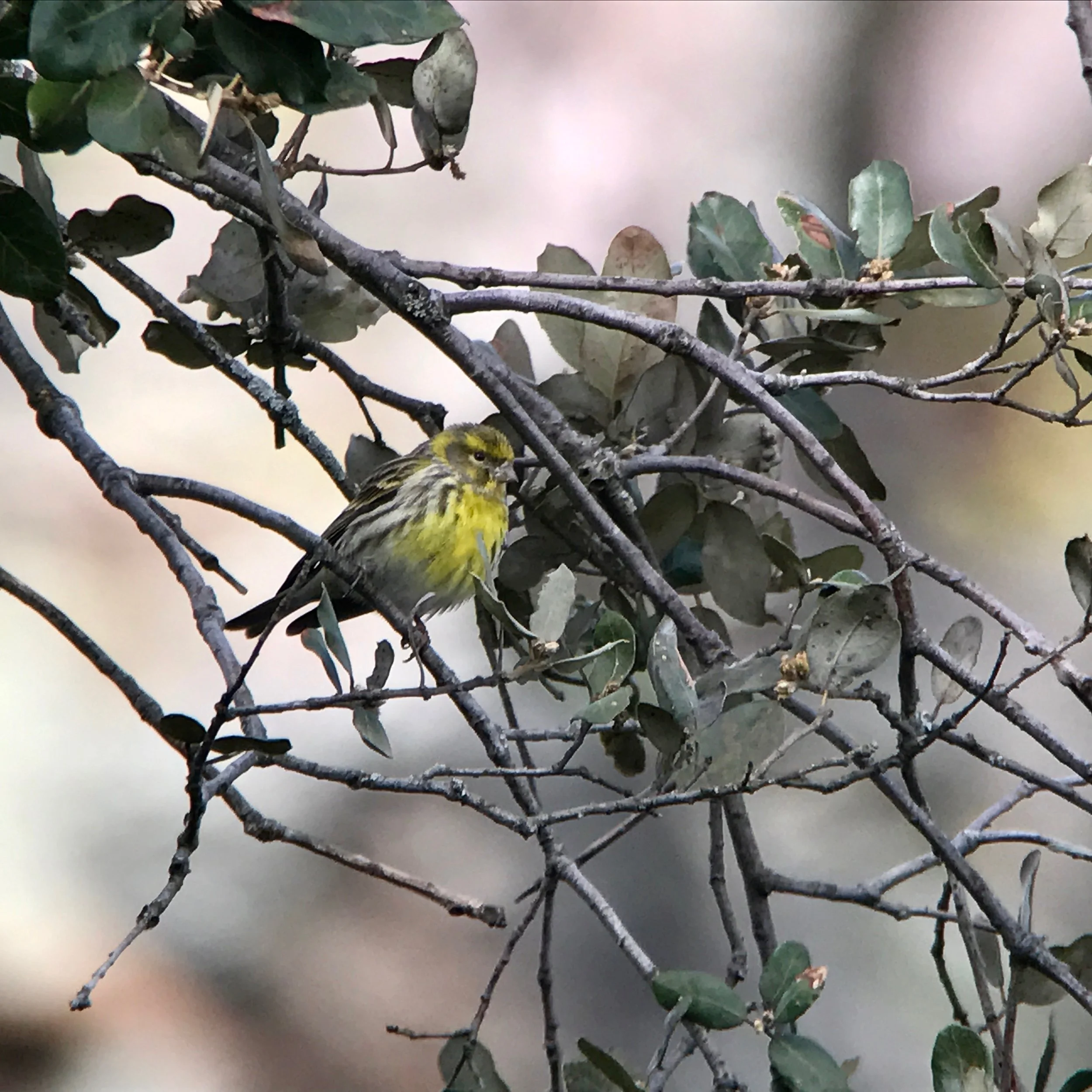
European serins serenaded us on the trails in the national park.
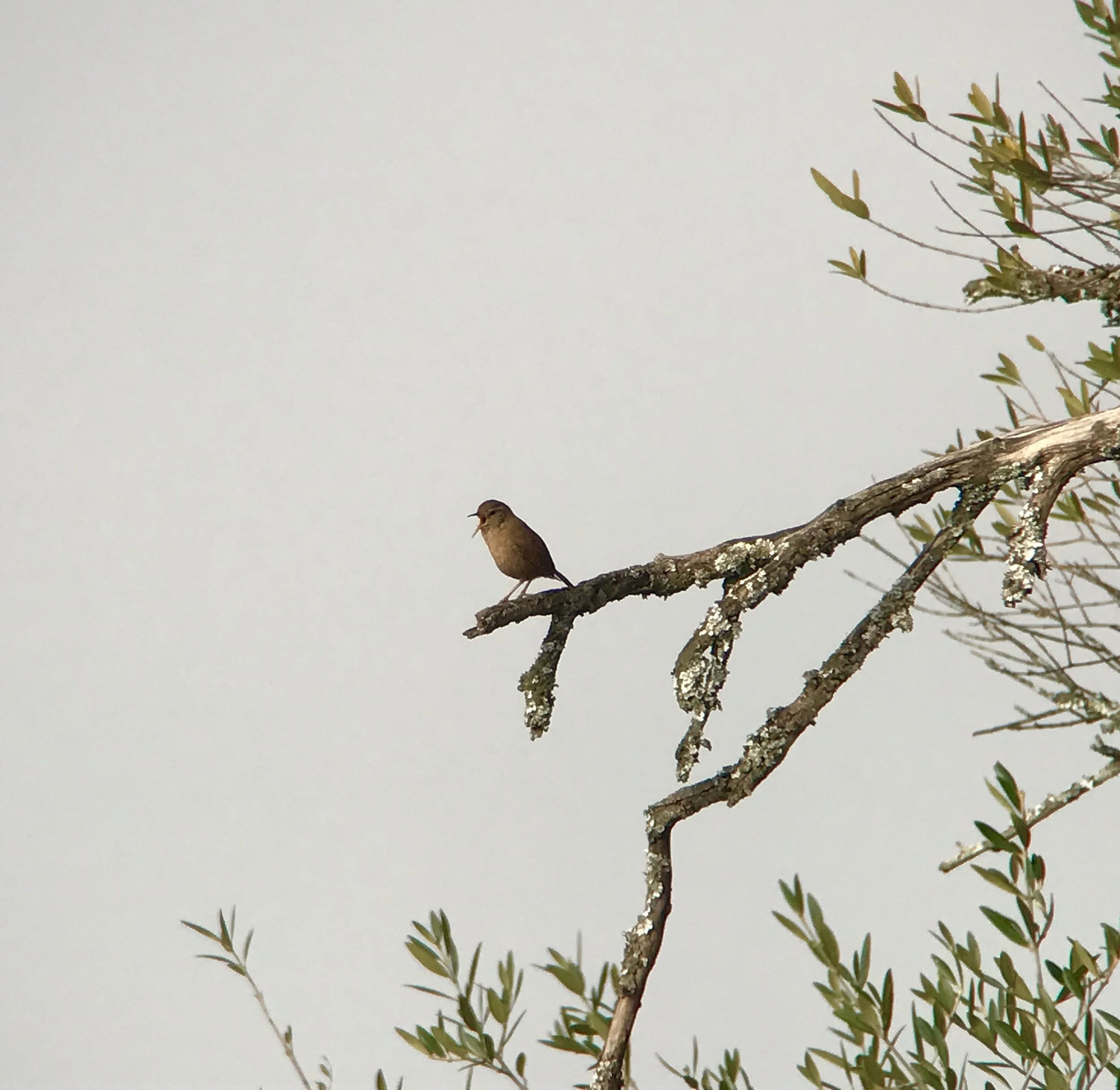
Eurasian wrens are one of my favorite singers.
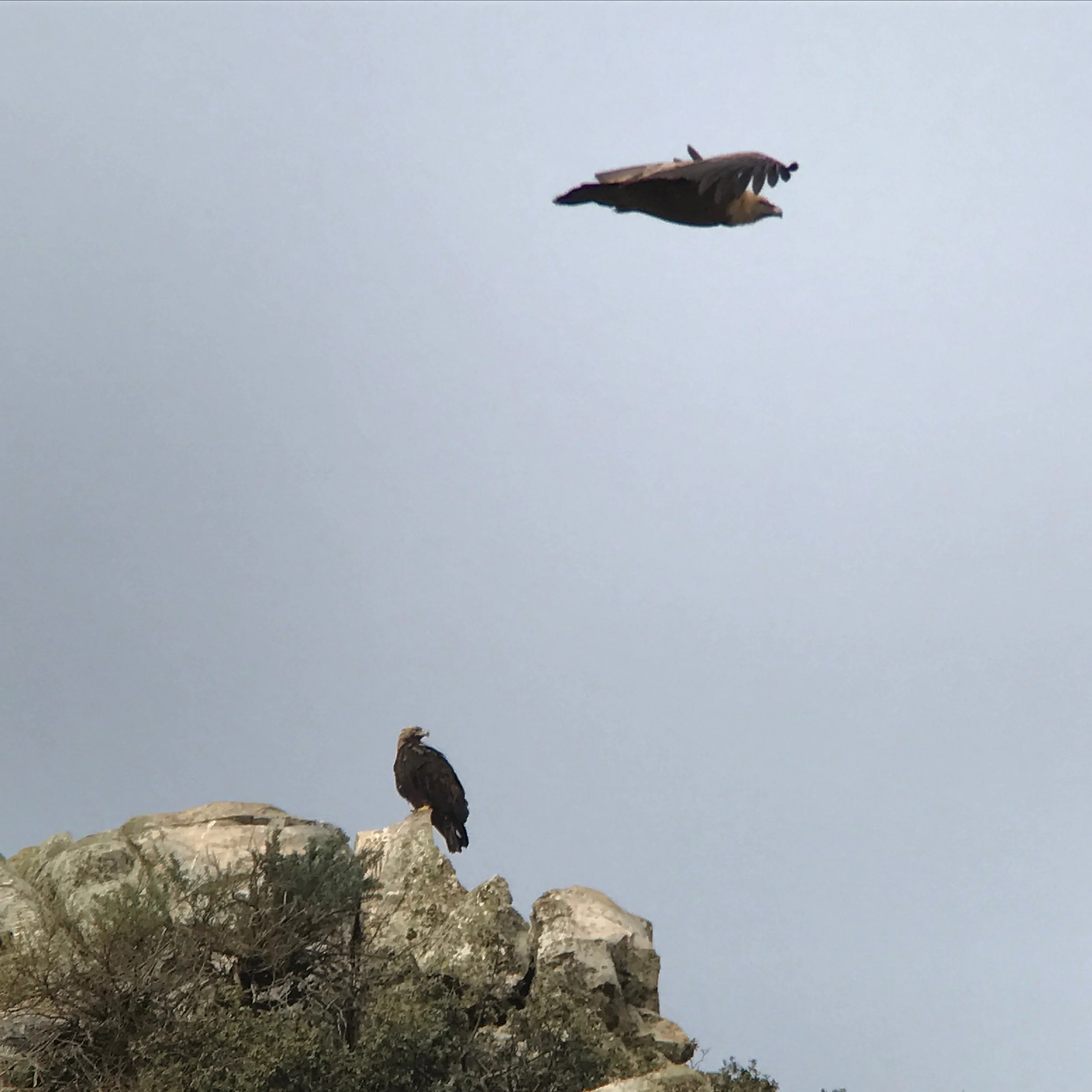
One of the prized species in this region is the Spanish imperial eagle. My picture got photobombed by a griffon vulture.
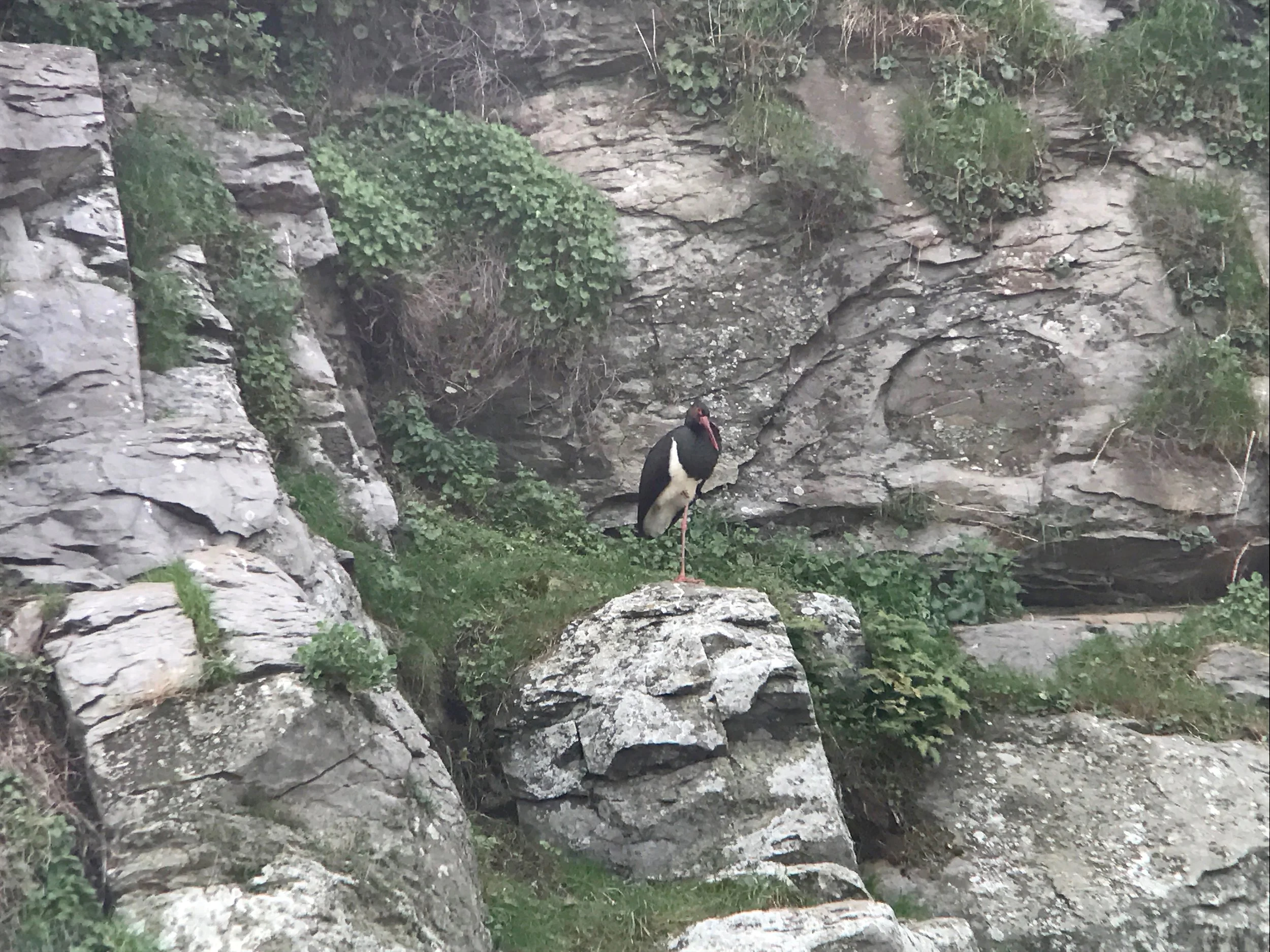
Black stork.
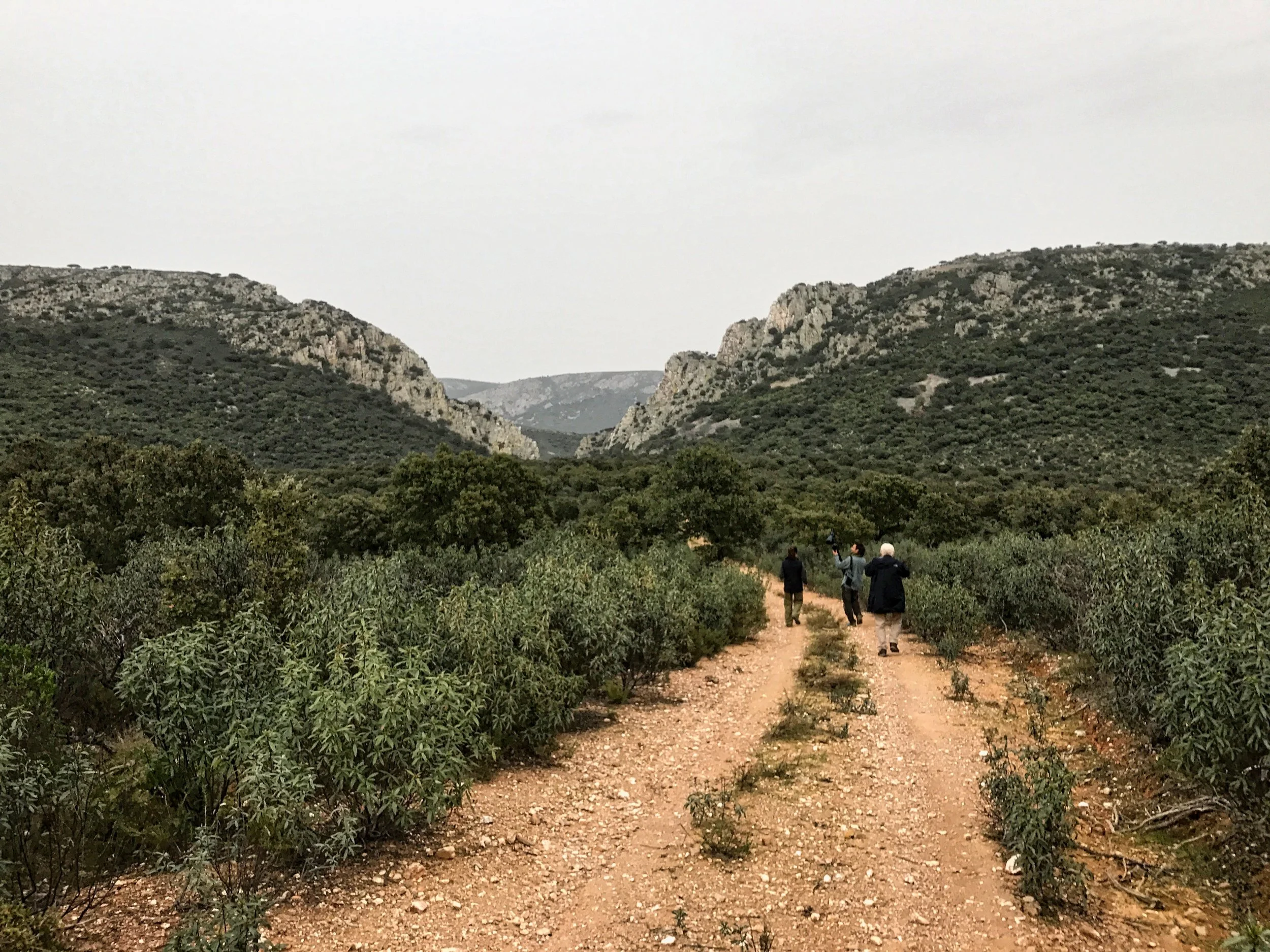
The park a mixture of scrub habitat among rocky cliffs and and small oak forests. One tends to think of Europe as being mostly historic cities and villages but there's a warm wildness in Extremadura that is unique to Europe. You can find spots and feel like you're in a true wilderness.
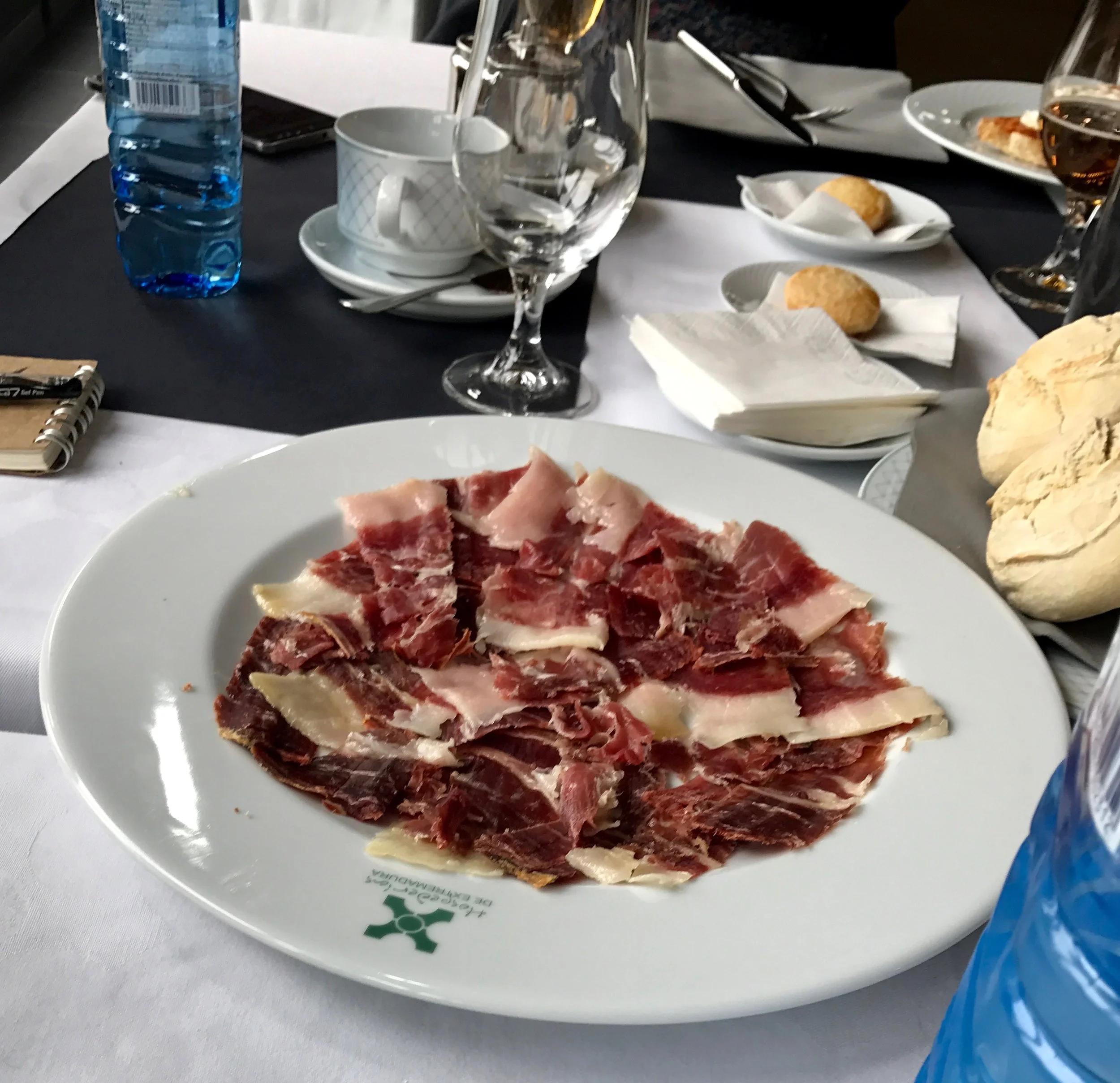
If you are not a vegetarian, make Iberian Ham a priority when visiting Extremadura.
Speaking of the small oak forests, one of the best cured meats I've ever put in my mouth can be found in Extremadura. Pigs are left to wander the oaks during an acorn mast for six months before they're killed. The meat is then cured for three years, but may linger in shops for another two years before purchase. It's buttery soft and can be put on the traditional breads, but I enjoyed it on it's own. I thought Austria had a handle on making my favorite cured meats, but Iberian Ham blows it out of the water. It's the sort of food after tasting it where I thought, "I have to come back here, I can't imagine never eating this ever again. I know a lot of birders like to celebrate a life bird with "lifer pie," but if you're in Spain and you're a carnivore then make "lifer ham."
Florida Is For Vulture Lovers

"I will beak your car when you turn your back."--Black Vulture.
I spent some time in southern Florida this year. I was there for work, but one of the upsides of Florida is that there is a large supply of lovely birds to practice your photography on. If you are someone who really digs vultures, then Florida should be your vacation destination. You have ample opportunity to soak them in.

Vultures at dawn.
My work was at Everglades National Park and Biscayne National Park. I stayed in Homestead, FL and when I woke up my first morning there, I found dozens of turkey vultures already in the air, kiting on the breezes. It was one of the eeriest albeit coolest things I'd seen in awhile. The birds hung in the sky, which seemed weird to me to see large soaring birds at it so early in the morning. Where I live, they don't get thermals until about 10am so you really don't see soaring at dawn, but when you're along the coast, oceans change things. But so many birds in the air, so silent, while wind rustled leaves and palms contrasting with the watercolor pallet of dawn make for a fantastic site.
I soon discovered why there were so many vultures passing Biscayne at all hours--there was a landfill nearby. Here's some video I got with my scope and iPhone:
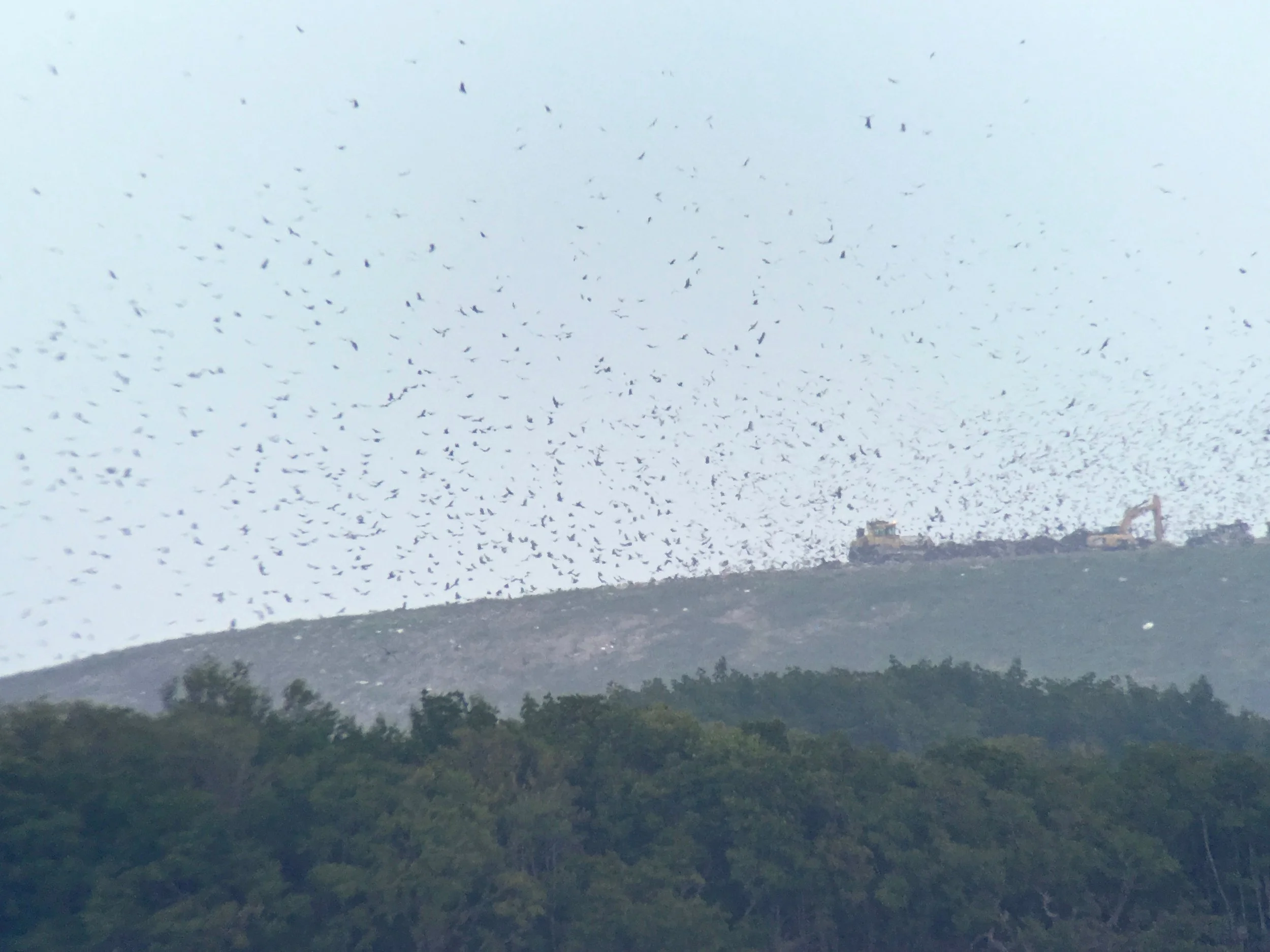
Those aren't just vultures, the birds swirling closed to the machinery are gulls, but man oh man that's a big ass pile of biomass in the air.
If you haven't been, Everglades is a gigantic beast of a national park. There are many units and varieties of habitat to check out. I was warned by a colleague that since I was driving a government vehicle, it was imperative while visiting Royal Palm that I should do everything I can to protect the car. The vultures are such an issue, the park has a page dedicated just to them.
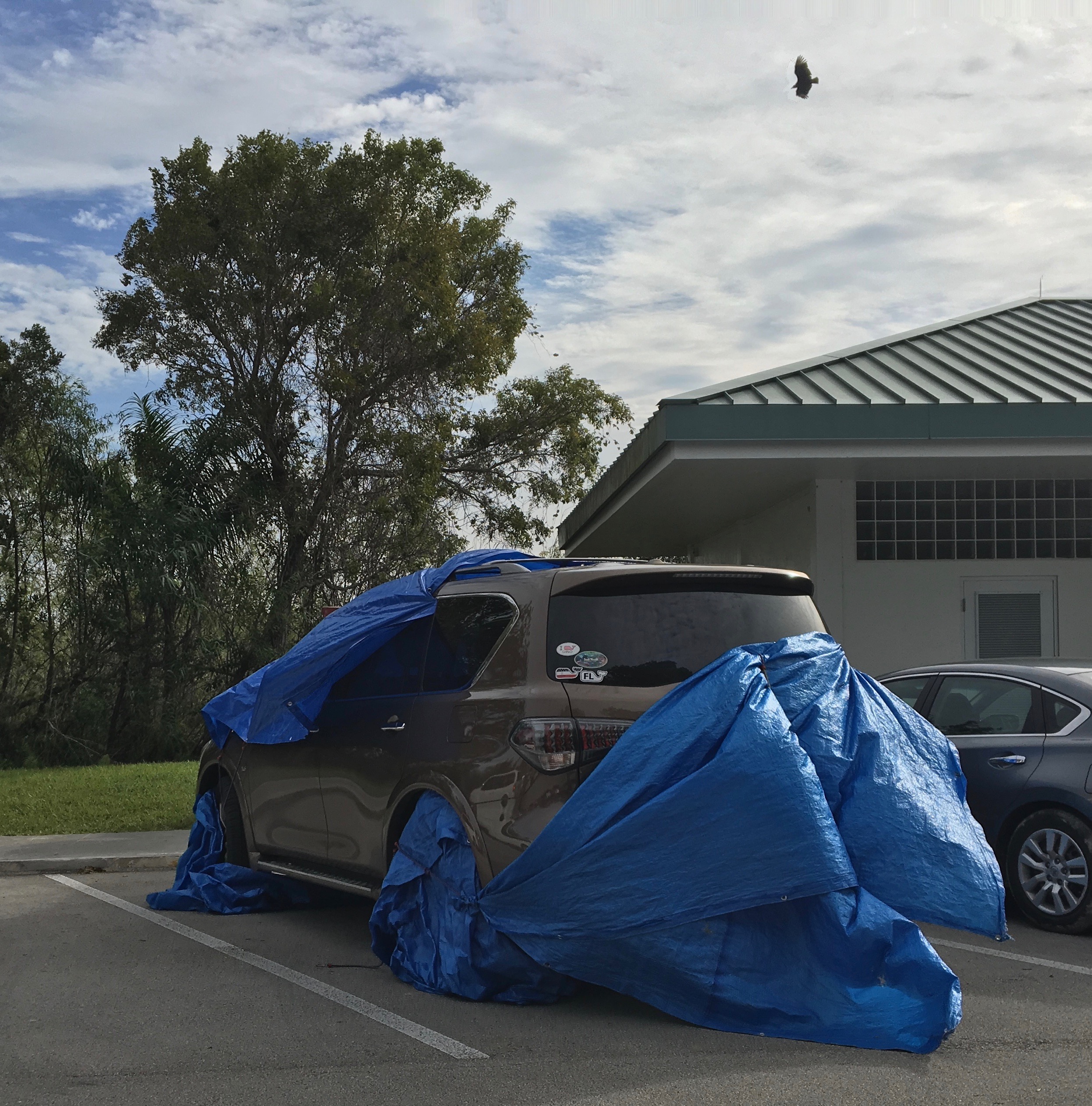
Vehicle displaying proper vulture damage prevention technique at Royal Palm in Everglades National Park. Note the black vulture soaring overhead.
Apparently it's a thing that black vultures like to chew a car and do thousands of dollars worth of damage. When I pulled into the parking lot for Royal Palm I could see that something was a afoot. Many vehicles were covered in tarps, or at least all the chewy parts were like tires, windshield wipers and the parts around windows. And if you passed all the cars and thought people were just being weird, there was this right outside the visitor center:

Signage at Royal Palm explains the whys and the hows of vulture protection in the parking lot.
No one seems to know why vultures like to chew on all the rubbery pieces on a car. Is it because they're prone to ripping putrid flesh and they need to keep in shape for when that big road kill deer appears? Or is there some flavor or nutrient that attracts them? No one has the definite answer yet, but one thing is clear, black vultures seem to be the main culprit. Turkey vultures seem content to keep their distance from cars and trucks.

Here's a black vulture selfie.
As I meandered the trails around Royal Palm I could see that they had a huge population of black vultures and those vultures gave no fucks about people. Before I took the above black vulture selfie, a group of about 20 people on a tour had walked past. Some paused to take photos and the vultures eyed them, but they were in no hurry to get away. We don't have black vultures where I live in Minnesota, but when I've encountered them in other states they prefer to keep a healthy distance between themselves and the average human. Not so in Florida.
I'm relieved to say that the tarps kept my government vehicle safe from the prying beaks of black vultures and mental note to you, don't trust your vehicle to vultures in south Florida. I'd love to see how rental car companies handle that kind of damage.
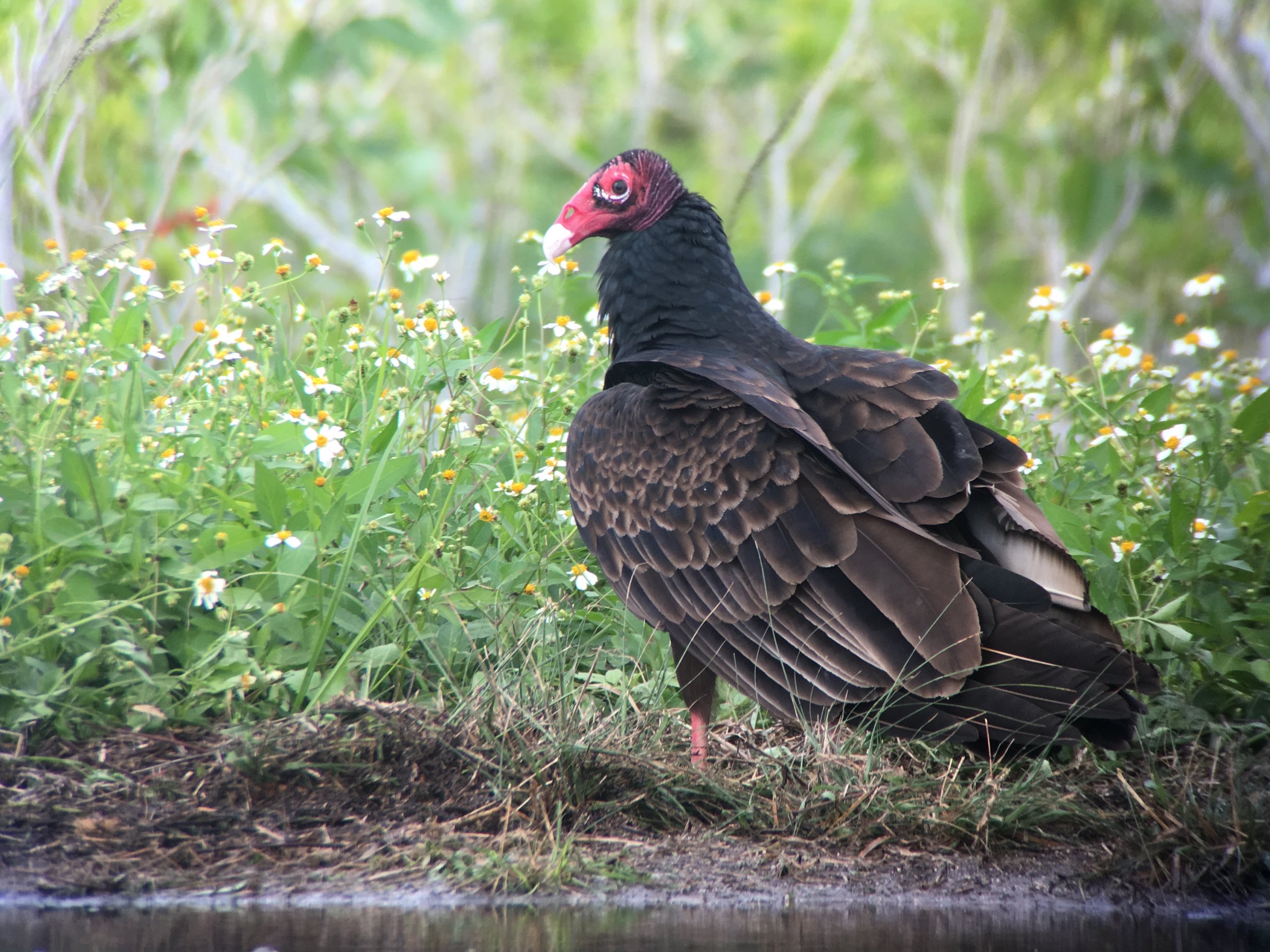
Turkey vulture with daisies, they practically pose for you at Everglades.
Meanwhile, the much more well behaved turkey vultures are a delight to experience at Everglades. Not only do they have less of an interest in chewing on your car than black vultures, they'll obligingly pose for you in good light when not soaring around looking for food.

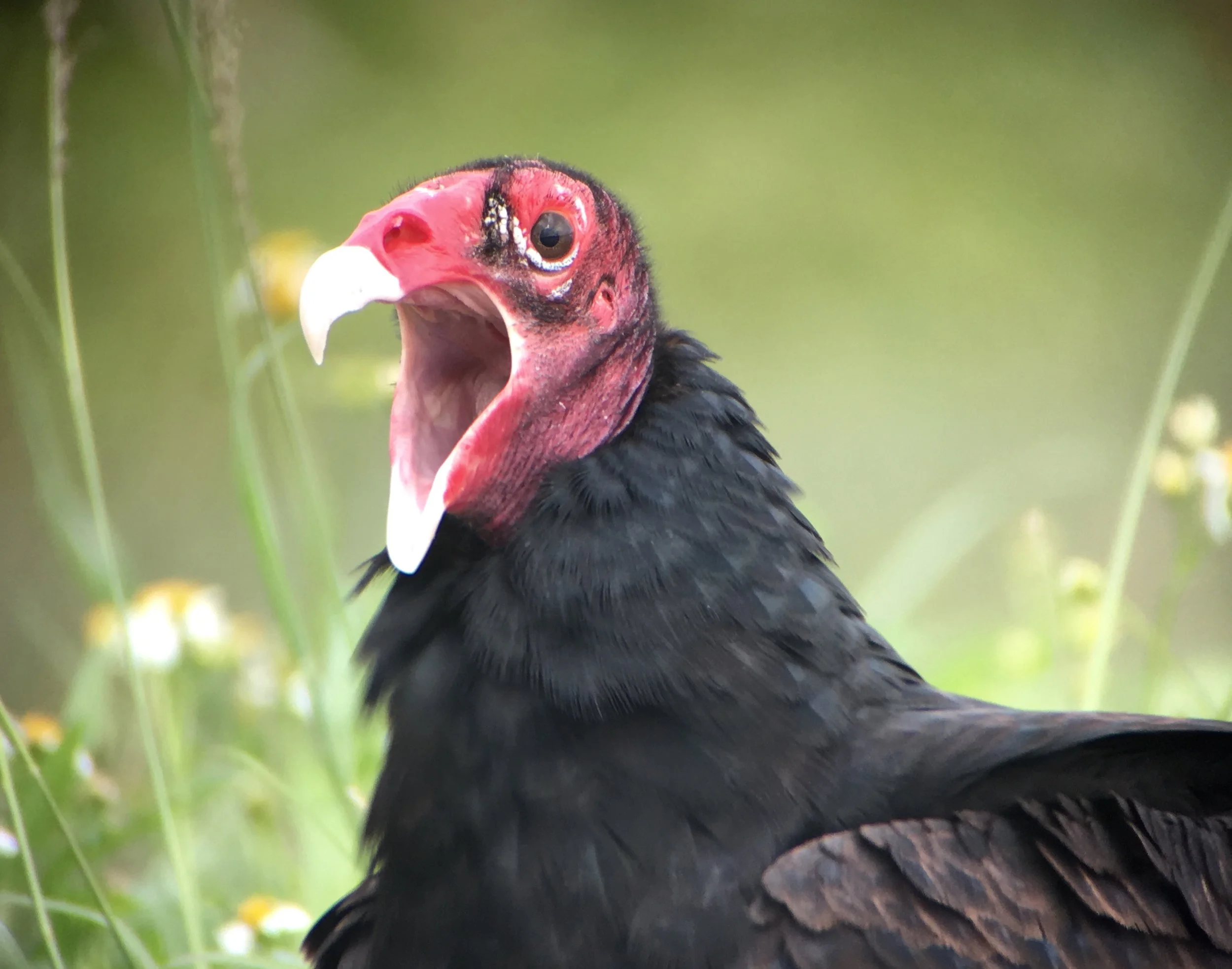
You can see right through this turkey vulture's nose.
This guy was part of a small group of turkey vultures hanging out near Flamingo at Everglades. I was out there because high tide had brought in a bunch of shorebirds and I was delightedly sitting at a picnic table loving the chance to study dunlins and western sandpipers in non-breeding plumage when a few turkey vultures landed and posed in front some daisies. I know they're not traditionally pretty, but I love the texture of the wrinkles and warts. I love that their nostrils are essentially a hole through their head, layered with sensitive tissue that can detect delicious carrion from a distance and in an appetizing way I'll never comprehend. I love the contrast of the off-white beak, the bright red head and slightly iridescent feathers. And just when I thought this bird couldn't make me love it more, it gave me this:

Hi there...
And then this:

So if vultures are your jam, make South Florida a priority to visit.
Dead Stuff In My Office
FYI: No podcast this week. I got called away to work in Missouri for the week and well, we just don't like Skyping in for the Podcast. We'll be back next week. Also, kinda gross photos ahead.
I have a weird lifestyle. I don't often know where I'm going to be from day to day. Most recently that came to an extreme level when a quick phone call Wednesday afternoon turned in to me on the Illinois/Missouri border on Friday afternoon to help with a habitat survey.
As I travel, I frequently post to social media what I call Today's Office, which is basically a shot of what my outdoor office looks like that day. Often, it's beautiful.
Then there are these sort days like I had yesterday:

Look close...that's not a bird in that tree...I think it's some sort of way to let nature clean off of a deer skull. Apart from the weirdness of suddenly noticing a giant deer head with an amazing rack suddenly appear out of the branches like a magic eye puzzle is unsettling. But then you just tell yourself, "Oh, those hunters." And press on.
Then you find another one:

And you note the rotting and shuttered farmhouse surrounded by goats and how it looks like something Jason would live in on the property and think, "Maybe I'll step a little livelier on this survey."
But deer decapitation wasn't the only fun body parts I found in today's office!

My field partner called me over to see "something cool" and he's not as into birds shouted, "You have to see this, it's so cool!" And he was right. It looked like some sort of cache, possibly a fox had left a large, dark wing wedged into some trees. Hmmm, what could this be? I had noticed some large black feathers as we were walking and took mental note. I was trying to resist the temptation to explore the wing further because I have a completely different assignment to this survey and it doesn't involve CSI Special Bird Unit. But I couldn't help but take a photo and notice a familiar smell...mmmm...vulture. And I wondered given my location if it was black or turkey.

We soon found the rest of the carcass...yep, turkey vulture based on the light gray edging on the underside of the wing.

As if that weren't proof enough, we found the head!! And that totally sealed the deal for turkey vulture based on the nose opening--look how huge it is! Black vultures do not have the sensitive aroma sniffing abilities that turkey vultures have. Definitely a cool find and one of the things I love about my super wacky unpredictable schedule lifestyle.
I can neither confirm nor deny that this head is in a make shift field envelope tucked away in a back pack in my hotel room (yes, I do in fact have a permit if I did choose to pick up the decomposing vulture head). I'm more worried about recriminations that could be suffered when a particular cohabitant finds out.
Bee Deals & Roosting Vultures #birding

October is going to be insane schedule wise. There's bee stuff to tend to, migration to watch, park service shifts, waterfowl surveys, deadlines, speaking engagements, family visits--aarg! I was coming to this realization yesterday and last night over dinner, made a deal with Non Birding Bill: I'll do laundry on Friday if he will go out Saturday while I'm working at the park service and harvest the rest of the honey and feed the bees. Deal accepted. Sometimes after a conversation like that, we stop and ask, "Is this what you imagined married life to be like?"
Some of our hives are a little behind on their honey production for winter survival and we need to help them have enough for winter. It's not unusual for beekeepers to add a nectar pail this time of year to give them a little extra. It's weird, hives that filled a honey super have a few empty frames in their brood boxes. Ah well, I no longer question what the bees do, I offer help and if they want it, they can take it. If they don't want it, I do not take it personally...anymore.
I harvested some honey on Wednesday and set up a few other hives for harvest before I left. Mr. Neil bought this really cool trap door system for the hives. You put it on the bottom of a box you want the bees to vacate--they can crawl out but cannot crawl back in--it's slick and is the best for harvesting honey.
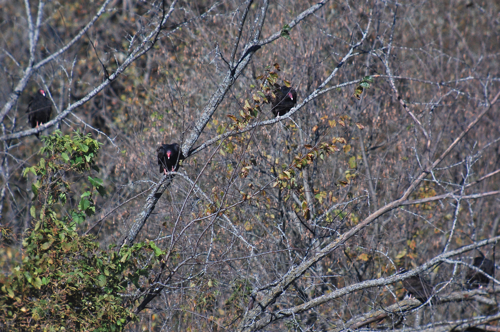
I headed out to the hives around 10am and found some vultures roosting in a nearby tree. I'm sure they roosted there the night before--a rest in the middle of their migration south. Birds that rely on thermals (warm currents of air that spiral upwards) for migration don't need to fly early in the morning. It takes a few hours for the sun to warm up the ground to create the thermals the vultures will want to glide on. These birds were loafing until the thermals were just right.
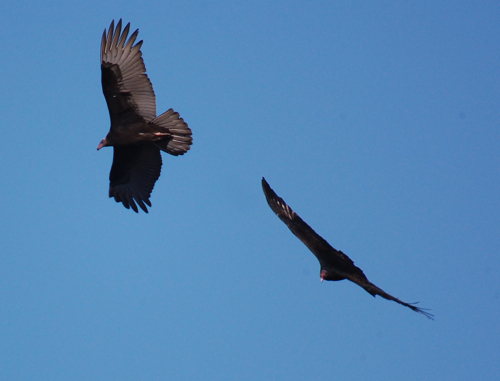
Some turkey vultures were already testing out the sky, trying to find a thermal to glide on. If you look closely at these two birds, you can see a hatch year and an adult. The vulture on the left has a dark beak and the one on the right has a white beak. The bird with the darker beak is the younger bird.
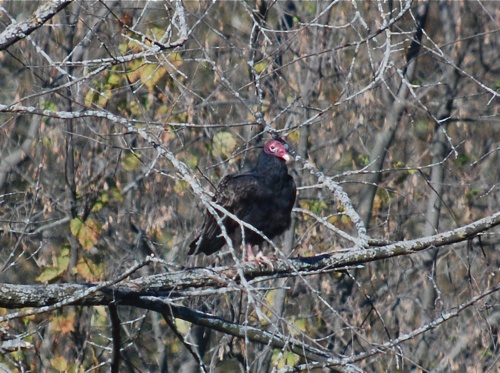
When the vultures noticed me in my beesuit, I got their attention--the white suit kind of sticks out. The spotting scope makes me very suspicious to vultures. Turkey vultures around here to do not trust a spotting scope and even though I was a good distance away, the scope did not set well with them and the rest of the flock decided to join the others already in the air.
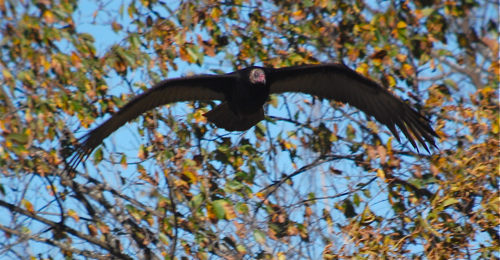
But it gave me a chance to test out digicoping birds in flight. Above is another young turkey vulture with a dark bill, even the head is still a little dark and not completely red.
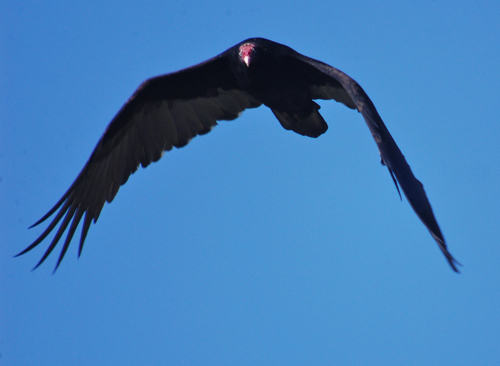
Here is an adult turkey vulture. I wondered how far south these birds would go? Florida? Would they go to Panama and visit my friends at Canopy Tower?
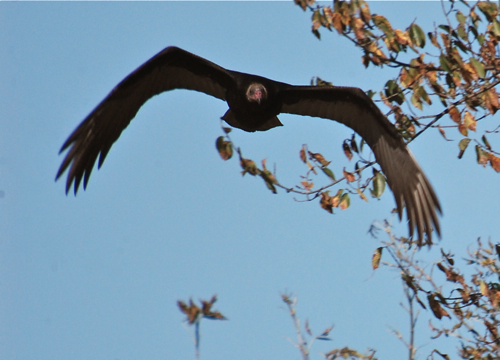
Incoming vulture! Speaking of Canopy Tower, my buddy Carlos posted a video of raptor migration seen from the tower that includes quite a few vultures, hawks and kites. Check it out. I need to get there for fall migration next year...and not overbook myself for fall.
Summit Nature Park Panama

I was beginning to think the annual cold that hits me in February might miss me this year, but it arrived unannounced yesterday morning. Gr. As I have been drinking gallons of various instant Thai soups and toddies to rid my nasal cavaties of this beast before Saturday's Birds and Beers, I wondered what might make me feel better. Reading some Isak Denisen? Watching old Douglas Sirk movies? But I decided to go back to Panama.
This trip really stuck with me. I love travel and I'm generally happy where ever I am from a lone prairie in North Dakota to the porch step of my neighbor Zoe to an abandon research station in Kazaskhstan, but when I have quiet moments to myself, I find my brain returns to the platform on top of the Canopy Tower, gazing beyond the Panama Canal and into the unknown of the rain forest listening to unknown creatures in air thick with humidity carrying the smell of lush green leaves.

One place that I really enjoyed was our trip to Municipal Summit Nature Park. Check out those big hanging oropendola nests hanging from the fronds of a palm tree. This was a zoo and park and our primary reason for visiting was to see a harpy eagle exhibit. But what I really enjoyed about this park was that it gave me a chance to spend time with some common Central American birds--they weren't in cages but in the surrounding trees and gardens. Since so many people pass through the park, the wild birds are habituated to people and you could get some great views and photos.

This is a female masked tityra, a cavity nesting bird. She was taking her time selecting the berries ready to eaten. I think this is one of those birds that scientists aren't sure where they fit in the grand scheme of taxonomy. That face with the red skin kind of reminds me of a crane or muscovy.

I think I mentioned earlier that vultures were the most common bird in Panama--like house sparrows. At the park, the vultures (like the above black vulture) flew in to see what pickin's could be had around trash bins and picnic tables. I believe you could throw scraps to some of these birds and they'd waddle right up. They were a bit cagey when I would aim my scope at them, pictures made them shy. It's okay to come to humans with food, not one that is giving you the stare down with a large scope.

We did see the harpy eagle exhibit. I believe this bird is from the Peregrine Fund and has been part of the education and captive breeding program. Some harpy eagles have been released in Panama, not too far from Canopy Tower. I was a tad jealous to discover that one was seen on a field trip after I left the Panama, but sometimes in birding, that's the way it crumbles, cookie-wise. Look at the feet on this bird. This bird has what I would call man hands for feet--that's because they eat big prey...like sloth. There's a famous video of a harpy eagle grabbing and killing a slot. The first time I showed it to Non Birding Bill, he was underwhelmed. He said, "Yeah, it's big but come on, it's a sloth. It doesn't move that fast." But then he saw one being treated at The Raptor Center one day and was shocked by the size of it's toes--they were as big as his hands.
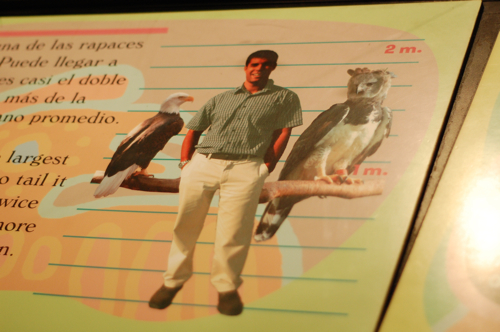
Here's a sign that gives you an idea of the size of the harpy eagle compared to your average guy and a bald eagle. According to The Peregrine Fund a harpy eagle can be between 35 - 41 inches long (huh, I'm 60 inches long) and weigh anywhere from 10 pounds (a male) to upwards of 20 pounds (female). Bald eagles in MN average about 10 pounds. It's a big, cool bird and I was honored to see one in a large paddock if I could not see it in the wild.

Another cool bird we got great looks at was a squirrel cuckoo. I'd seen one in Guatemala and we saw quite a few in Panama. They remind me of a cross between a sharp-shinned hawk and a brown thrasher (they've got the bright red eye like sharpie and the beautiful cinnamon brown of the thrasher). They're huge but like to hide in the canopy. Like many birds, they will fly ahead of an army ant swarm catching bugs trying to flee the coming swarm. Birds weren't the only fun we saw at the zoo, we also got to see some cool little bats:
http://www.youtube.com/watch?v=pN11f_lM3tI
That is a tent-making bat. Here's a photo:

Isn't just the cutest little thing! These little dudes make bite marks along the palm leaf causing it to bend down and create a tent to roost under during the day (hence the name). This species of bat is very tiny and they eat a variety of foods including insects, fruit and nectar. I love that little stripey face.

As we were leaving the park, we got one more bird--a black hawk perched on one of the paddocks. At first I thought maybe it was part of the zoo, but I banged on the cab of the truck to stop. It was a wild hawk that stay perched then flew across the road in front of us. I wasn't able to get a better photo, but it was a great view for my first ever sighting of a black hawk.

I'll leave you with one last turkey vulture shot. This poor guy was trying so hard to preen and kept missing getting his actual feather in this beak. Check it out below:
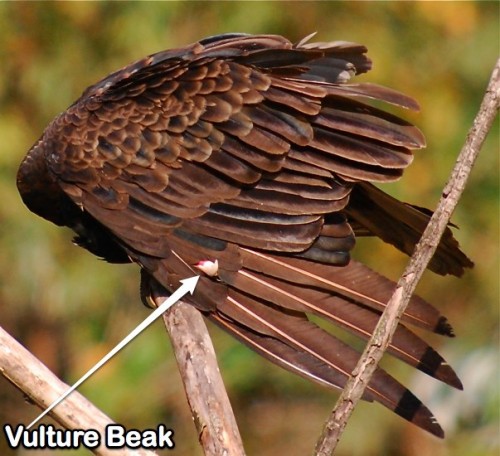
That's gotta be like an itch you can't scratch. Alright, cold medicine is kicking in. Time to stop blogging.
Digiscoped Images
Fresh Tweets
Would you like to hire me as a speaker for your event?
Email sharon@birdchick.com