Birdchick Blog
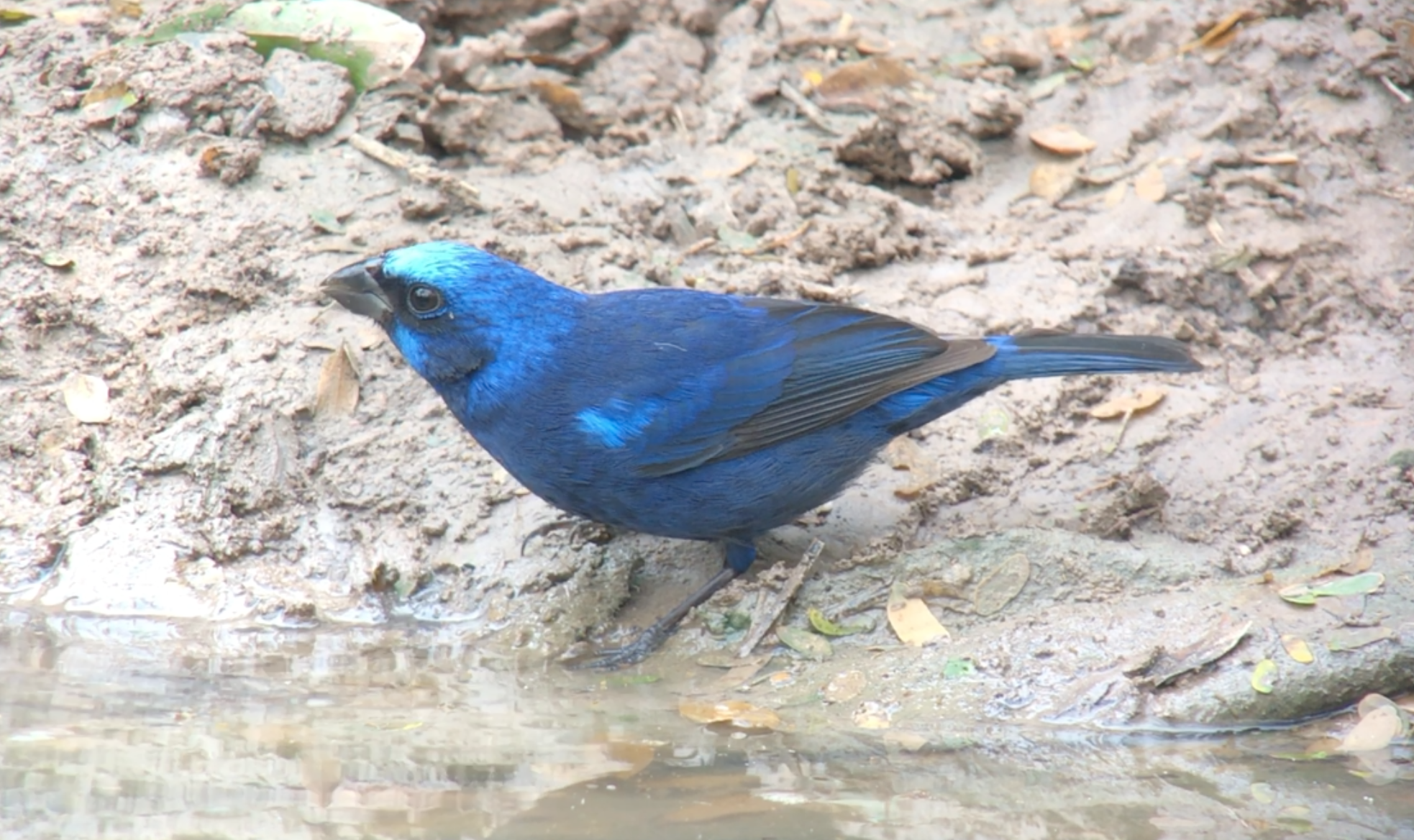
My Lifer Texas Blue Bunting

There are life birds and then there are LIFE BIRDS.
Taking a trip to a new state or country can yield you dozens of new birds in a day. But then there are those birds that catch your eye in a field guide or bird magazine article and you think, “My gods, I want that so much, I need to see it so badly, shut up and take all my money. Show me that damn bird.”
Generally, I prefer to get birds where they are supposed to be. And I’m content seeing birds over and over. The day I’m bored with green jays is the day I hang up my Swarovskis. I’m not one to chase a new state record on the other side of my state, especially if I have seen that bird where it normally lives. I’ll make an exception if it is within ten miles and I know I’ll see friends, but I’m not into chasing that much.

The blue bunting in the National Geographic Field Guide.
When I was working from the Rio Grande Valley, Texas this past winter there were many rarities being reported and of particular interest to me was a blue bunting. I have been intrigued by blue buntings ever since I was a kid and given a National Geographic Field Guide. Whenever I got a new bird book as a kid, I would immediately go to the pages of my favorite birds: scarlet tanager, indigo bunting, pileated woodpecker to see the photo or illustration. When I got to the page for buntings in the National Geographic, I was struck by a bird I hadn’t heard of before called a blue bunting that was even darker blue than an indigo bunting, it looked like it had patches of lighter blue, did the bird shimmer? As a kid I thought that must be something to see.
As I started traveling, I figured it was a matter of time until I would cross paths with one, but alas, my life list was blue bunting free. Sure, there are birds that pop up across the Texas/Mexico border, but they were usually females. I know, I know, female birds are cool too and we shouldn’t just look at the pretty boys, but I really wanted to see how that blue works on that bird. I couldn’t understand from photos what that blue was all about. Was this bunting super shiny?
This winter, one was reported at Resaca de la Palma, about 45 minutes from where I was working. People were posting pictures on social media, eBird was giving me alerts, it was too tempting not to chase. And Resaca is a good park, lots to see there so it’s not like I was going just for the bunting. I headed out and brought my bike along. Masks were still required if you were grouped around the blinds to watch the feeder birds. We waited, and even ran into a few friends who were happy to tell me that they had already seen the bunting. But no bunting ever showed up. Many other great birds did like the usual green jays and Altimira orioles. I decided to hit the trails with my bike and maybe try again the next day—the bike ride was good birding, and yielded a ruddy ground dove on one of the trails.
The dulcet tones of plain chachalaca song serenaded me as I waited hours for a blue bunting to show up to Resaca de la Palma.
I’d arrived a bit late in the day for the blue bunting and word on the birding street was that the bird shows up in the morning. The next day I arrived mid-morning and was told the bunting had just been seen. But it wasn’t seen again while I was there. I had only a couple of hours because I had an online training to do and the reception wasn’t good enough at the park for me to participate from the bird feeders. At this point I was thinking, “I’ve tried twice, let’s not waste any more time and gas…” But I kept seeing pictures of this glorious male posted by people who made the drive down from Dallas or Austin. I was only 45 minutes away. This male was practically a guarantee if I was there at the right time and when would I see one again? Also, we were in a freaking pandemic…what else do I have to do but go birding or ride my bike? The last time I’d gotten a lifer was 2019? Maybe even 2018?
I decided I would give the bird a third try, this time taking some annual leave work. I had a meeting at 12pm so I gave myself from dawn until 11am to get it. When I arrived before the visitor center was open the ranger saw me and said, “It was just here but usually will come back in 45 minutes.”

I actually got this crimson-collared grosbeak at Estero Llano Grande but it’s better than the picture I got at Resaca de la Palma. This species was all over the Valley this winter.
I had a good four hours to play with so I waited and 45 minutes came and went. I saw so many great birds that other people were trying for like the crimson-collared grosbeak, tropical parula, and golden-crowned warbler. Heck, I even saw the orange crown of the orange-crowned warblers as they bathed in the water feature in front of me. It was a weekday and pretty quiet, I mostly had the place to myself, apart from the occasional person looking for a different bird.
“You here for the crimson-collared?”
“No, but it was just here ten minutes ago, I’m here for the blue bunting.”
“Ohhhh man, I had the bunting last week, it’s amazing! Darn, I wonder if the crimson-collared will come back. I need that bird.”
Anther couple arrived and like me, they were going for the bunting. They staked themselves out at a blind to my left and we waited. 10am arrived and I began to wonder if I was going to dip on this bird again. I wanted to see it so badly. I’d already invested about 11 hours of watching and driving trying to get the bird that everyone else seemed to get. And I was seeing GREAT birds too so it wasn’t a total loss but I really wanted this bird. Time was growing short, it was already past 10:30am. I had to be in my car and driving back at 11am to make my next meeting.
Then miraculously…it flew in for some water at 10:45am. I managed to get some video because I wanted to see how all that dark and light blue worked together. Of course the danger of when I get life birds and take video is that it comes with a lot of swearing. But here is the video.
Who doesn’t swear when they get a lifer?
And the blue was insane. The bird looked like it shimmered, even though the feathers weren’t really shiny, so much as the bird has lighter patches of sky blue on its head, cheeks, and wings. It was a combination of blue that no photo can do justice and to watch it move and fly was like watching a piece of electricity flit around trees and dirt.
I drove home, triumphant. I felt giddy. I felt like a huge weight was off my shoulders. I felt like…I’d say I felt like I got a massage, but no, I felt like I’d just had really great sex. It’s not a feeling I get with just any lifer, this was a bird I dreamed about seeing as a kid—it’s colorful bird, it’s not like getting a flycatcher or Old World warbler. This was a highly desired bird. Also, I had gone for it multiple times. And while I waited for this magical creature to show up, I got to enjoy all my Texas favorites. I enjoy winter, but the silence gets to me. Working in south Texas this past winter really hit home how much I need bird song in my life as much as possible.
I lived on the high of finally seeing that damn bunting the rest of the day and well into the next. I could feel the endorphin rush with every breath. I made it back to my computer in time for my meeting. Oddly enough, the meeting I had to attend after getting that bird led me to more lifers, including a nemesis bird.
All in all, it was a great day and writing about the blue bunting still gives me a bit of an endorphin rush.
Frontera Audubon Turkey Vulture Roost

Inca dove chilling at Frontera.
While I was visiting the Rio Grande Valley with a friend with an eye on potential retirement spots I made sure to hit my favorite places. And one of those is Frontera Audubon. This is a tiny little park and every time I go, I get a gem. You can, of course get the Valley specialties, but every time I go there, I get a good bird, whether it’s a bird I don’t see all the time like a pyrrholuxia or gray hawk or even a Mexican species flitting across the border like a golden-crowned warbler.
I love all the nooks and crannies of the park and especially the sabal palm forest. The thicket is so dense it gives me a sense of peace. However, what I truly love about this place is the winter turkey vulture roost. You can smell it before you hit it. The smell doesn’t bother me, I put it in the category of “good bird smell” but when you’ve been vomited on by thousands of pelicans and herons in your career…your definition of “good” changes.
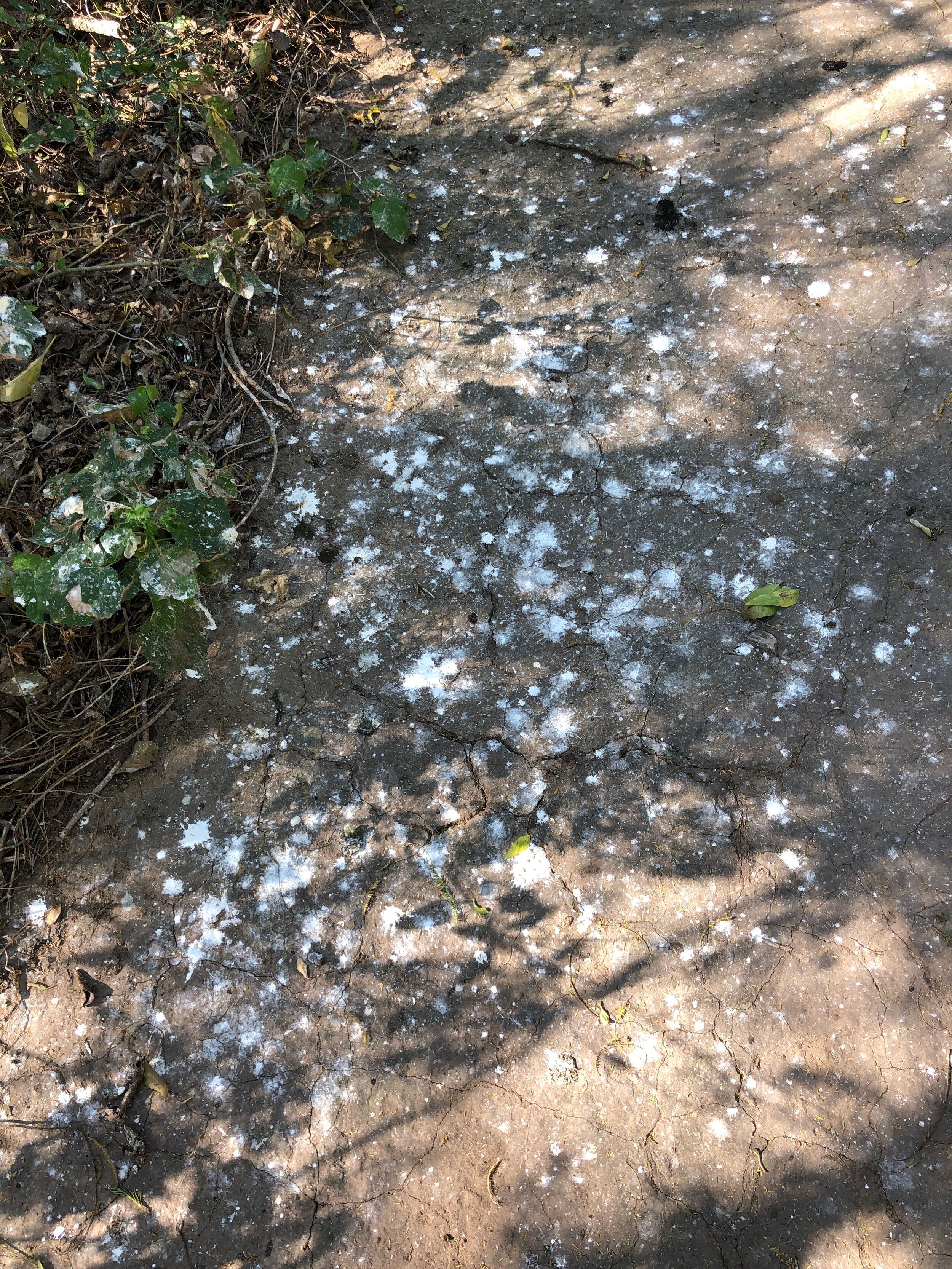
You know that you are some place special when you see this much vulture poop.
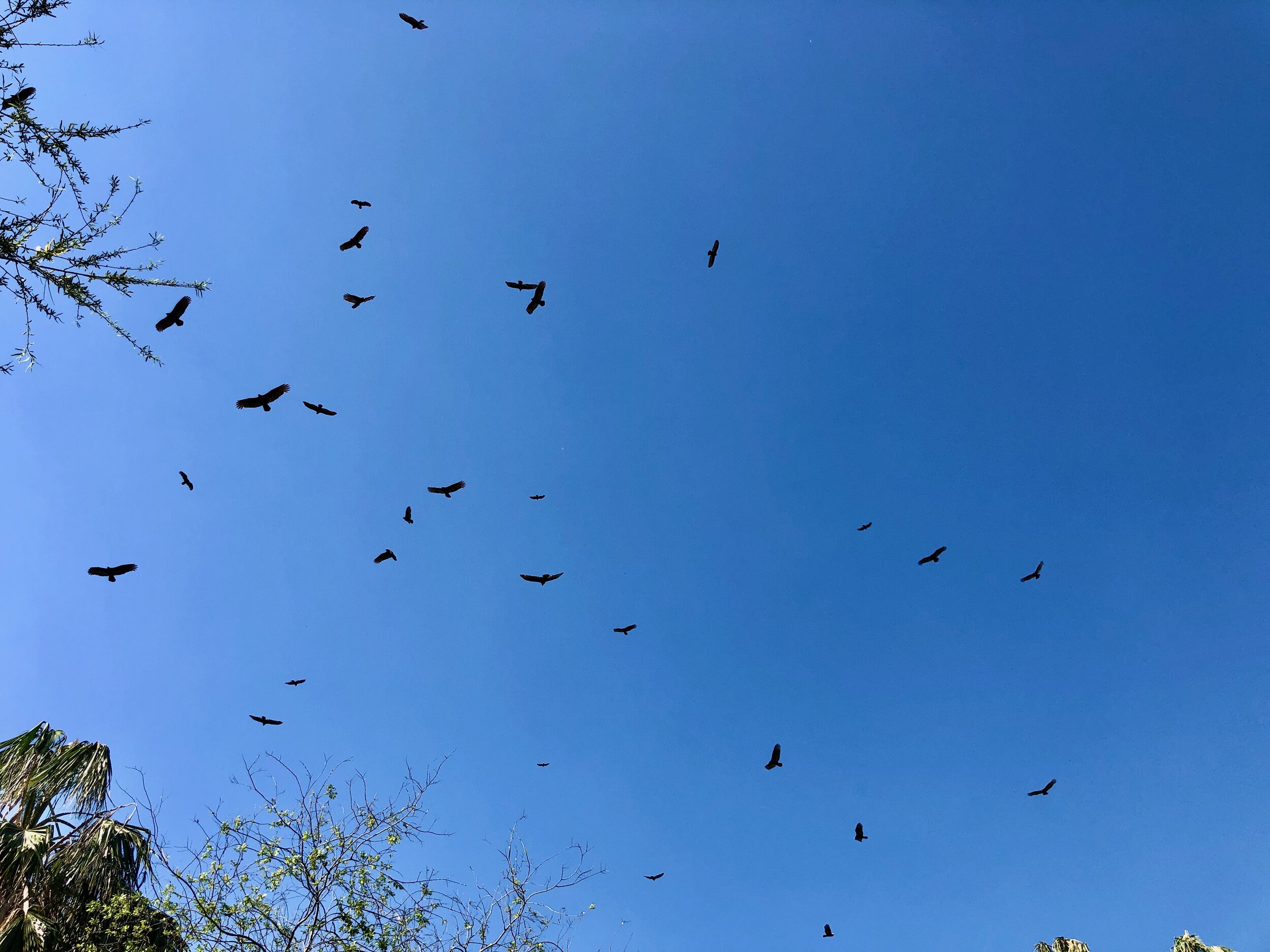
Vultures cruising in to their roost.
I do find it hilarious that when I do a google search for either Frontera or for vulture roosts, I’ll get directed to Trip Advisor reviews and people who…maybe don’t get birding. Here’s a sample:

Bad reviews of Frontera Audubon make me cackle.
Come on, people, it’s an amazing place to get vulture photos. And there’s plenty there to see, even outside of the feeders. Sure…you may have to have some patience, but that’s true of all birding spots. There are dozens of hot birding spots in the Valley and some I visit more than others, but Frontera is on the shortlist and I make it a priority every time I go. It’s tiny and chock full of birds.

Plain Chachalaca at Frontera.

White-tipped dove.

But I’m really here for the vultures. All the vultures. All the time.
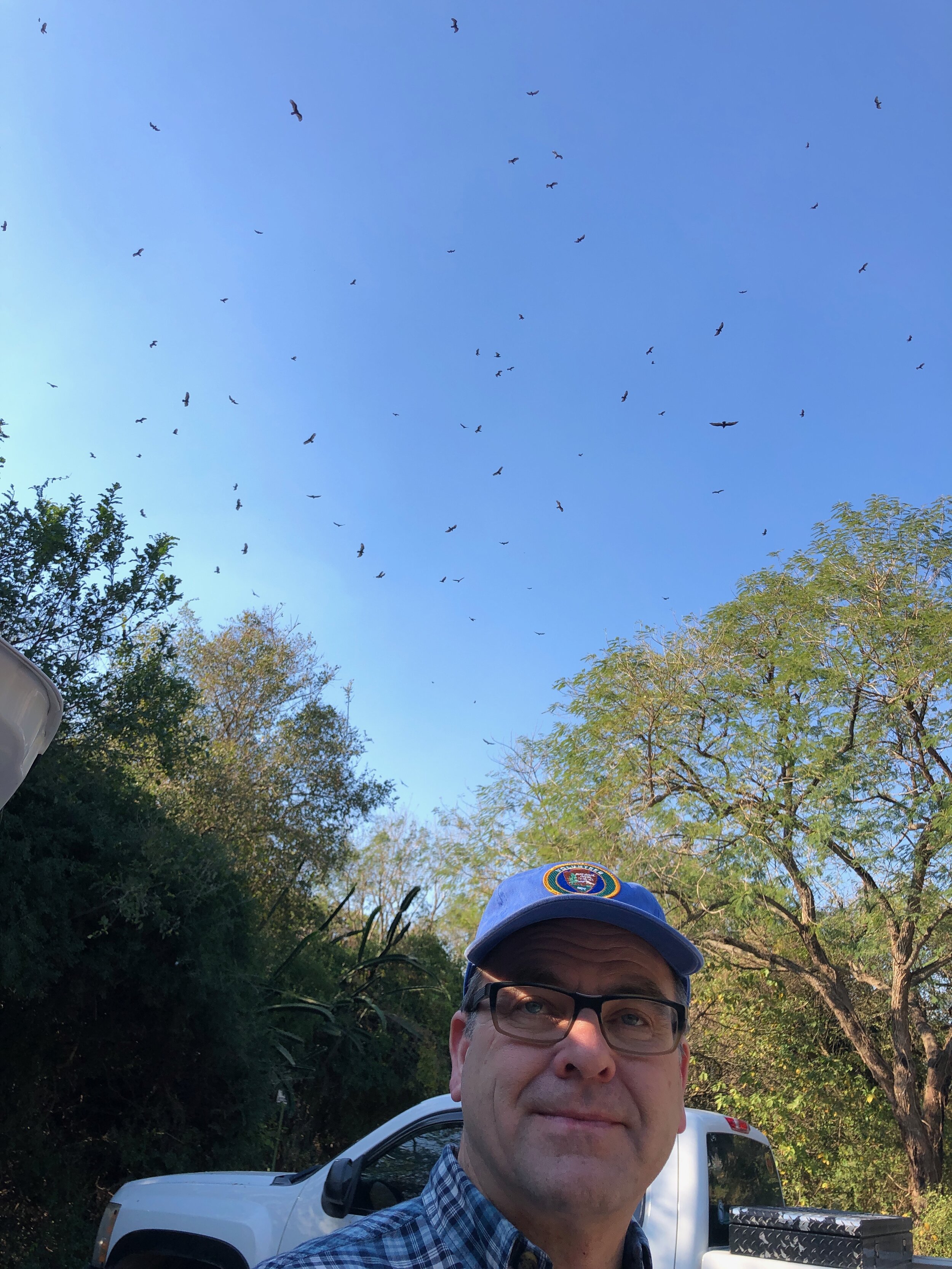
I told my friend that this many vultures soaring above his head means that it’s time for retirement.
Alamo Inn B & B in the Rio Grande Valley--just for birders!
I typically stay away from places that have the phrase "bed and breakfast" in the title. As a birder, I don't have the schedule to truly appreciate all the extra amenities. Yeah, I'm sure you make fabulous scones but your 7:30am start time doesn't always jive with my field trip that leaves at 5:30 am. Also, I'm sure the fellow guests are lovely, but I basically want to eat and run. But I've heard of the Alamo Inn B & B and Outdoor Store and how this popular place caters specifically birders. I was intrigued. Really? A B & B for birders? How does that work?

This is for sure a birder's bead and breakfast! All sorts of portable food is ready to go from breads, spreads (bonus points for Nutella), fruit, even portable apple sauce and chips. I was a particular fan of some of the fresh fruit--like the small sweet mangos--yum.
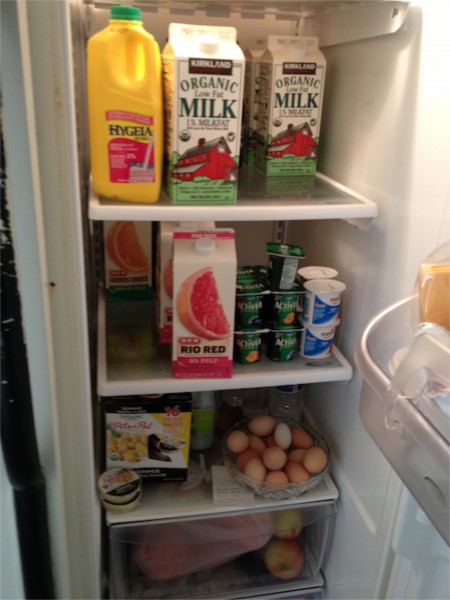
Besides the usual coffee and tea there all sorts of juices, almond milk, soy, yogurt, single serving humus, lunch meat and even eggs. The eggs are from the owners hens and hard boiled so you can eat them on the spot or take them with you. You are only charge for the food that you take and the prices are very reasonable.
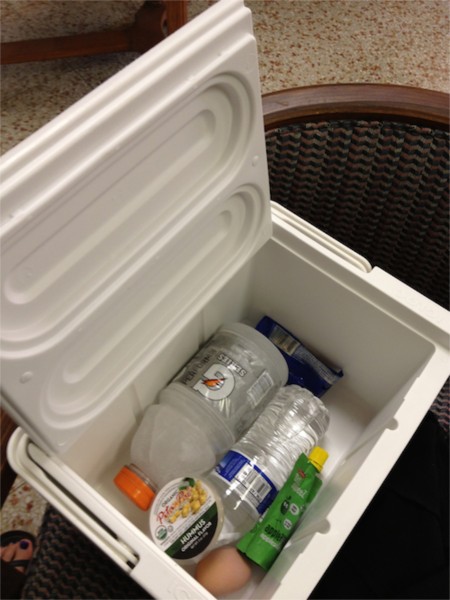
You can even be assigned a cooler to take some of these goodies with you on the road. This is incredibly smart for birding in the Rio Grande Valley because you never know where your birding day will take you. Your stomach may tell you that it's time to go hit Fat Daddy's barbecue, but you may be on to some hot shorebird action at Estero Llano Grande and you don't want to disappear and miss a single peep. You can keep the cooler with you and you can even take some frozen water bottles with you to keep your items cool and have a supply of cold water to drink later in the day. It's genius!
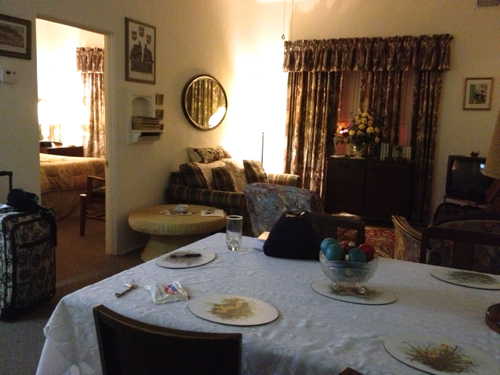
The rooms have a very homey feel, so even if you are going to "crash for the night" you can crash in the comforts of home. Its the little touches of table clothes and books that are there for you to read that get you comfy. The rooms have good couches as well as beds, so if you are going out with your birding buddies, it can accomodate them as well. Don't worry, there's a tv and wifi so if you find that after a hard day of birding you like to unwind with a little technology, you can.
I met an amiable set of folks from California birding the valley for the first time. Two men and one woman--all friends and finding the Inn to their liking. I even found a fellow Minnesota birder and friend Alex Cruz staying at the Alamo Inn--it's almost like that bar Cheers from the 80s tv show. All had done a bit of googling and found the Alamo Inn had rave reviews from fellow birders and their rates were comparable to the local hotels.
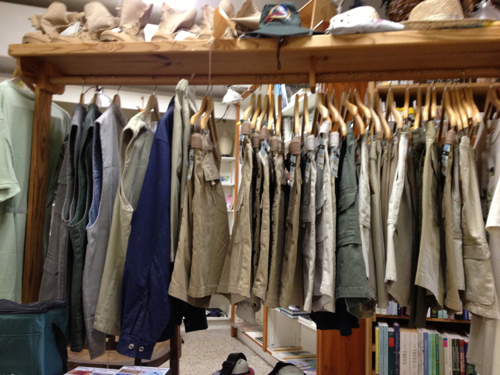
I had to chuckle, the Alamo Inn does have a birding store with field guides, bird finding guides, binoculars...and birding clothes. It drives me nuts, but birders love to wear their vests and if you forgot to pack your vest, you can purchase one on the spot if you need too. There are even shorts! This place has just about everything to cater to a birder visiting the valley.
The owner, Keith Hackland, is a true birder so he knows what we need and how to make our visit to the valley special. He has various check lists and directions readily available. He does offer guiding services if his schedule permits but is happy to make suggestions based on what he knows is being seen in the area recently. The inn itself is in an old historic building on the corner of old Main Street in Alamo, TX. Deceiving on the outside but snug and comfy on the inside. Keith and his family live nearby in apartments and I got the added bonus of seeing a lesser nighthawk hunting over their roof.
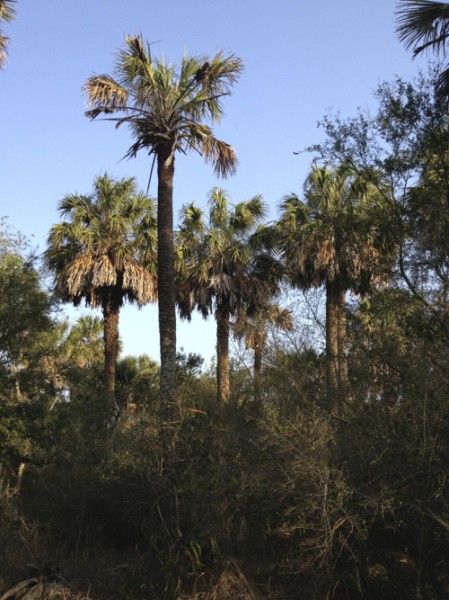
It's centrally located to Harlingen and McAllen, TX. Several popular birding destinations are less than 30 minutes from the Inn, one of the closest being Sabal Palm Sanctuary. If you tire of watching all the nest cams out there, check out their live feeder cam that gets green jays. I hadn't been to Sabal Palm for a few years and made a visit on this last trip to Texas. I forgot how much I loved the habitat of an old growth palm forest. It smelled of primeval and baked in heat. It was a bit windy on my visit which kept the mosquitos down and the warmth had a very pleasant degree.
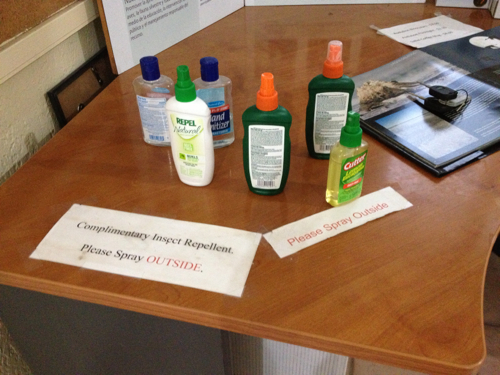
Speaking of mosquitoes, you know they are going to be bad when you stop in to pay your entrance fee and you see an assortment of complimentary repellants set out for you to wear. The skeeters are aggressive here, don't leave the visitor center without some coverage.
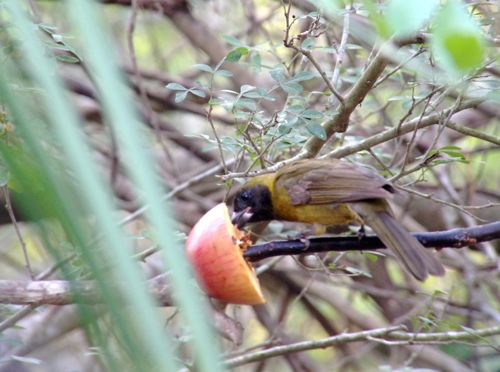
While I was visiting, Sabal Palm was hosting a rare bird, a female crimson-collared grosbeak. I got her right off the bat thanks to a group of birders staked out at the feeder watching for it. They were kind enough to point it out...one of them turned out to be a fan of the podcast and especially Non Birding Bill. Ha!
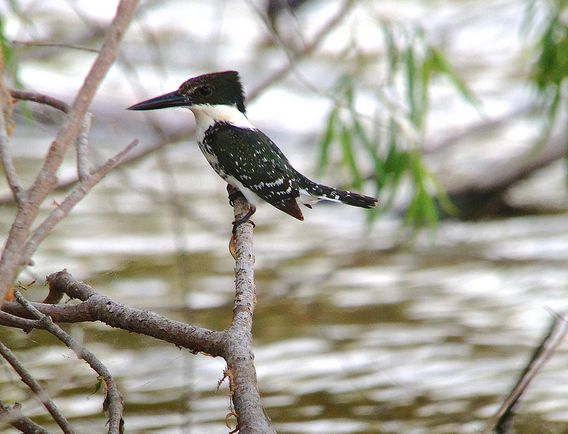
Along with the lovely trails, there's a photo blind that excellent viewing in the morning. If sit there long enough, you're sure to get a view of the tiny green kingfisher, one of the Rio Grande Valley specialty birds. This bird even landed right below one of the blind windows, far too close to digiscope, but what a treat to be only four feet away from it.
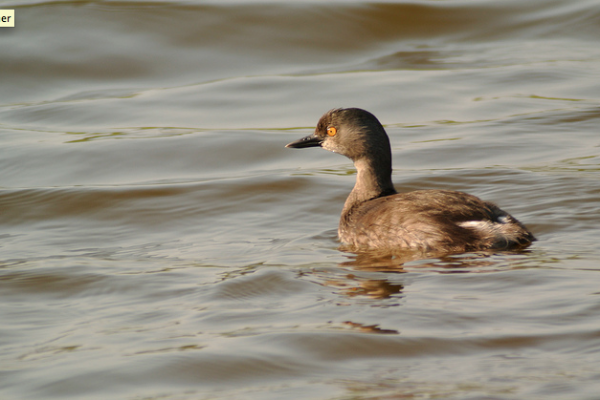 During the spring, fall and winter, the water can be chock full of ducks. Most had headed north during my visit in early April, but there were still plenty of least grebes hanging out.
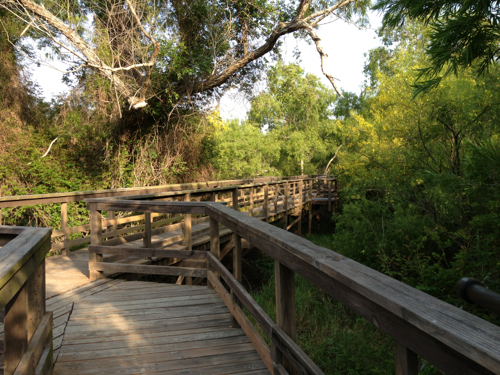
The boardwalks over the marshes can give you glimpses of teal, rails, herons, warblers and kiskadees. They are worth the walk (just don't do it without repellent).
My Perfect Birding Day
Yesterday went kerflooey. Someone close to me was in the Boston Marathon and I knew she had finished... but didn't know where she was. Her phone would go directly to voicemail. Was it off? Was it tucked away in a locker? Was she caught in pandemonium? Was she injured or worse? Was she at the scene helping? Watching the news, trying desperately to ID her based on glimpses of people in running clothes. Then finally getting a text that she and her family were safe. In the grand scheme of things it wasn't a long time, but the adrenal fatigue that followed put me in a fog the rest of the day. In the midst of this I got a call to do a bird segment on WCCO on how the snow is affecting migratory birds... I love the reporter in that segment (DeRusha is a cool dude, you should follow him on Twitter) and I hope I did my best, but I worried I was not my usual upbeat self.

I think this is a good post for the time. I find comfort in birds and I need that right now (like a lot of us when senseless violence happens). No matter how bad things get for me, I always find comfort in birds. They are one of maybe two things I can do that when I'm in the middle of doing it, I can block out everything else going on. And while I was in South Texas, I had for me what is a perfect birding moment.

We headed to the stretch of beach next to the Convention Center and I was ready to get my digiscoping mojo on. I try to play it cool around birds, I try gradually work towards them and not flush them. The advantage to having a spotting scope is that you can be a good distance away from birds and still get great views. I've noticed this with some of my friends who are in to bird photography, I can be twice the distance away that they can be. But as I was keeping my distance, a teenager at the other end started walking towards the birds, she walked through them, most flushed but a few stayed, apparently used to lumbering humans in their midst. She left and all the birds landed. I decided to see how close I could without flushing them.

I used some snoozing American avocets. I would take a few steps closer and if any opened their eyes, I stopped walking. I tried not being threatening in my approach, I didn't stare directly at any bird while I walked, I tried not to keep my scope aimed at any one bird for too long. I moved slowly and fluidly, not dashing around like a cat stalking prey.

Eventually, I found a perfect spot. My toes in the warm Gulf water, with a mixed flock of terns, gulls and shorebirds in front of me and the heat and light of the sun behind. I was also excited to finally discover a use for the hook in the center on my tripod legs--perfect for keeping sandals out of the water! You can see the flock of avocets from the previous photo off to the right.

As I stayed and had my fun, the birds continued to sleep and go about their own business. Even a few of the avocets began to feed and paid me no mind.

Herons and shorebirds soon started working the shallows behind me. And that is a perfect birding moment! Great looking birds completely surrounding me while I have my toes in the water, friends nearby, a few empty media cards and a full battery in my camera. I got to spend time just watching the birds and digiscoping them. This was what I was hoping for from South Padre Island!

I got to eavesdrop on a royal tern date that I think went incredibly well. He was hanging out and presenting his fish and she approached and took it from him.

"Wait...she took it???"
I was reading up on this on Birds of North America Online. Courtship rituals include: "food item may finally be offered to female, who retracts neck and carpal joints and sleeks plumage (while keeping crest raised), thus assuming more relaxed, submissive posture. If female accepts and swallows food, both then fly off or preen."
I saw her take the food, but I did not see her swallow, but they both flew off, hopefully to preen or more...
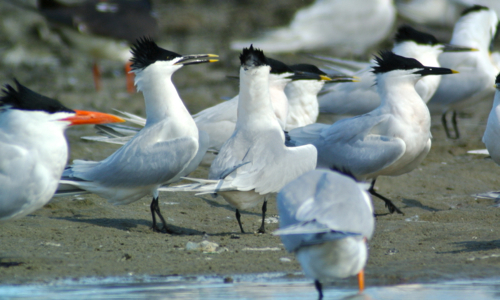 Sandwich terns were posturing like crazy as they established their pair bonds. Some of the photos I have of sandwich terns at South Padre Island are better than the photos I got for my Digiscoping Big Year, but I don't want to trade those out because I got them at a nude beach.

I almost missed these little guys because I was busy watching the big terns. This is a least tern and they're about nine inches long. To give you perspective, an American robin is about ten inches long. These are tiny dudes compared to the at least 20 inch royal terns surrounding them.

As much fun as I was having with the terns, my main goal in approaching this flock was getting shots of black skimmers. I love these birds. This bird was roosting flat, which is something you see the young do in the nest (they just quite don't know what to do with that ginormous beak). Though with this photo, the bird looks like it just woke up from a hard bender and is a little hungover, "Ugh, why did I drink so much? Uh oh, and who is that sleeping next to me??"

Here's a better shot where you can see that magnificent beak. I love these guys, with their longer lower mandible and striking black and white plumage. They're another one of those birds that I would see in my Peterson Guide as a kid and imagine what it must be like to see such a weird looking bird in person. If you've never had a chance to see a skimmer in action, here's some BBC footage (and bonus, it's narrated by the 10th Doctor):
http://www.youtube.com/watch?v=jSBushrzP0E
Isn't that cool?
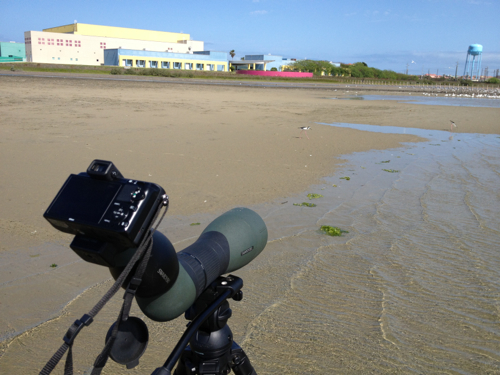 When I'm digiscoping in one spot, it's amazing how close some shorebirds will get... sometime even too close to digiscope. Black-necked stilts were zipping back and forth while I focused on terns. You can see a couple above.

Working this group of birds, it's fascinating to see all the different shapes that bird species take in order to use the Gulf as a food resource. You saw how the skimmers use it above. Terns will crash into the water and black-necked stilts like the above bird have long spindly legs and a beak to match to look for tasty invertebrate morsels. And though all of these birds are elegant patterns of black, white and gray you still get crazy accents of color in the form of bright orange mandibles or bubble gum pink legs.

I could have stayed planted in that spot for hours. The longer I was there, the more I felt tension and stress leave my body. My hope is that my buddy Clay and I might be able to do a digiscoping workshop here in South Padre Island during the Rio Grande Valley Bird Festival this fall.

And we can digiscope the crap out of South Padre Island among the sanderlings.
South Padre Island Birding
Five days. Five straight days that have included snow in April. I know. I know. I live in Minnesota, I'm used to snow. But dang it, that's brutal even for our standards. It's especially hard having just come from the warmth of South Texas.

When I got off the plane in South Texas, I was greeted by long time friend Marci (who runs the Rio Grande Valley Bird Festival) and new friend Nydia. Marci and Nydia were nice enough to go birding with me and show me some great spots for species I really wanted to digiscope. Both apologized right away for the weather, "It's going to be sunny and nice the whole time you are here."
They weren't being ironic to a Minnesota girl, they were being serious. Part of the fun of coming to the Rio Grande Valley in spring, especially in April is for the migratory fallout that can happen with storm fronts. If you're not familiar with what a migratory fallout is all about about, check out these photos from a lighthouse in Maine. Exhausted, colorful birds drop from the sky to rest and fuel up before heading further north. It's more likely to occur in some areas like the Texas coast because the birds are crossing the Gulf of Mexico. I was ok with the beautiful weather...it meant I could go birding in a skirt and opened toed shoes (which was great for my broken pinky toe--these Keens hid the bruising quite well). And at the end of the day, the Rio Grande Valley as some 30 odd endemics--birds that you can only get here. So, even without a fallout, you're going to get a lot of great birds for buck.

I wanted to head out to South Padre Island because I love beach birding and regardless of migratory fallout, birds are going to be great here. One of the perks is that you pass by Laguna Atascosa on the way. I've been there before and anytime you go near there, you have a decent chance of seeing an aplomado falcon. My birding posse for this day included Marci and her husband Terri who both know how to bird the crap out of this area. Sure enough, they found us an aplomado flacon right away on East Ocean Boulevard. They pulled over so I could digiscope it while it was on the wire. See that tiny dot? That's the falcon.

Here's a photo I got with my iPhone 4s through the scope. What a cute little falcon! For some listers, this bird presents a quandary. It's an awesome bird...but according to the American Birding Association guidelines...not countable on the list for Texas. This is part of a reintroduced population to the Rio Grande Valley and until the population is sustainable without humans releasing young birds in the wild, it can't be considered a truly countable species, surviving on its own. Now, the birds that are released have color bands and this bird does not. Could it be argued that this is a truly wild one from Mexico that flew up into Texas? Maybe. But hard to prove. Either way, I'm counting it for my Digiscoping Big Year. Birds living in the wild are a challenge to photograph and that's more what this is about. And at the end of the day, you as an individual determine what challenges you want to set for a birding list. The American Birding Association sets the baseline and you can choose to follow it yourself or tailer it from there.

This is the South Padre Island Migratory Bird Sanctuary (aka Sheepshead) owned by The Valley Land Fund. It's a pocket of habitat in the neighborhoods that is set with trees and shrubs for food and shelter, water for bathing and people bring in fruit and seed. This can be a great pocket for warblers, tanagers, vireos and hoo boy, lots of blackbirds. Tucked way back in the shadows I even saw a sora checking out the pond--you never know what migrant will find refuge here.

I big treat for me was a male hooded warbler hopping around on the ground. It was tough to digiscope at this spot. It was a cloudy day, but the cover is dense and the birds are hanging out in low light areas. But the iPhone does really well in lowlight conditions so that's how I was able to digiscope this bird. There was also a yellow-breasted chat, worm-eating warbler and white-eyed vireo at this spot.

This is one of the really cool features on South Padre Island, a very shallow stream just outside the Convention Center. The shallow depth makes it perfect for small birds to bathe in and during migration, this is a good spot to plant yourself and watch what comes in.

Here's a Tennessee warbler that flew in for a bath.

There's a gazebo set up nearby so you can sit and watch the birds in the water, though I suspect when migration is hot and heavy, this area will be packed with birders. The surrounding trees offer food for birds like orioles and hummingbirds. There were orchard orioles and buff-bellied hummingbirds working the flowers nearby.

This is my new friend Nydia Tapia-Gonzales who came birding with us. We were on the South Padre Island Convention Center Boardwalk. It gets a little confusing along here because some of the boardwalk connects and some of it does not.

The older boardwalk is free to walk along, but the newer boardwalk is part of the entrance fee with the World Birding Center. Either one you visit, you're gonna see cool birds, above is a great blue heron lurking. But you'll hear rails and if you're patient enough, you'll see things like soras and clapper rails pop out.

Here's a smattering of the bird life on the paid end of the boardwalk--redhead ducks, American avocets and a little blue heron! I've been here before during the festival and it's always loaded with fun birds. I've even gotten spoonbills here.

This boardwalk is full people walking by, some enjoying the scenery, some looking for wildlife. A father out with his two kids seemed a bit incredulous that I was only watching birds here and not alligators. I tried showing them the avocets and they conceded they looked cool, but I could tell the dad was dubious in my assertion that I found them more exciting than an alligator.

Here are some laughing gulls, it was fun to see them in breeding plumage, I typically get them here when they have whiter heads in November. As I was taking photos and racking up species for my Digiscoping Big Year, some ladies paused and asked, "Are you from Minnesota?"
"Yes," I answered.
"Are you the lady who tells people to feed sunflower seeds to cardinals and other birds?"
I was touched for several reasons: 1. I didn't expect to get recognized from my Twin Cities tv appearances in South Padre island. 2. They actually remembered me for what I say! They used actual birding advice to identify me and not just "you're that 'bird lady.' 3. They were friendly enough to say hello.
I asked if they were birding and they said that wasn't really what they were doing, just spending time on the boardwalk while the men in their party were fishing. So I showed them some of the birds that I enjoyed in this area.

I mean, I couldn't let them leave Texas without them noticing a black-bellied whistling duck, what kind of bird chick would I be?

We worked our way out towards the open Gulf and that was full of shorebirds and more rails. Here's a short-billed dowitcher that was working the mud along the boardwalk.

With the open water, we had everything from gulls, terns, skimmers and herons zipping past us. Above you can see a tri-colored heron hunting near the boardwalk. When I looked beyond it, there was a stretch of beach where people were driving on to the sand to go fishing and paragliding. I scanned the sand with my scope:

I could see black skimmers, laughing gulls and oh hey, look at the pink Franklin's gull mixed in. Fishermen were walking through the roosting birds and they would flush but settle back down. If they were that used to people...how close could I get? I asked my birding posse if we could head over to that stretch of beach so I could digiscope the crap out of those birds. We would have to pay a fee to drive on but it would only be $5. That seemed worth it to me. And so we wrapped up the boardwalk and headed over for more birding enjoyment.
Broken Toe Birding Part 2
In the previous blog post, chronicled how I broke my pinky toe and was birding Estero Llano Grande in the Rio Grande Valley with a bit of a handicap.
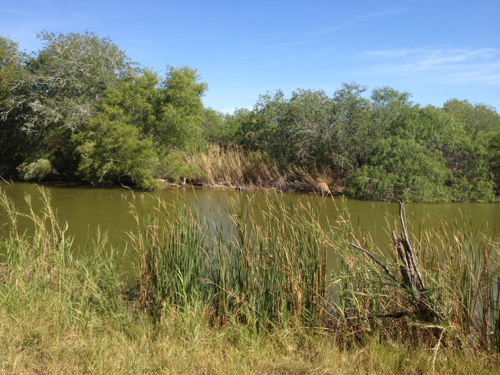
Ranger John was graciously giving me a tour of the park via tram and we picked up a few extra birders along the way. We were birding around Alligator Lake which is a known spot for anhingas, green kingfishers, herons and well...
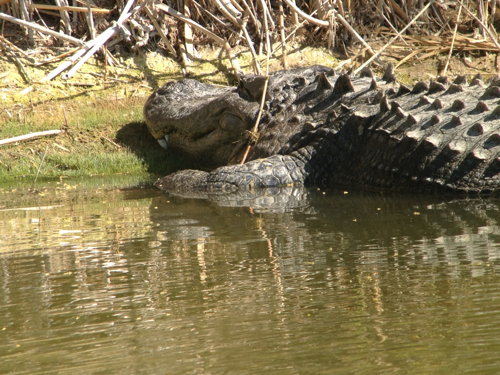
...alligators if you can believe it! How often do see the animal a like is named for? There are a lot of Otter Lakes that have left me woefully short of otter sightings. This alligator was a huge beast--you can even see the teeth. There was a story going around that a group recently witnessed an alligator in this pond take out a nutria. Well...I found the blog entry with the photos (warning, that link is GRAPHIC), If you are like me and like to watch a good train wreck, you'll want to see those images. The above was a large gator, I wonder if that was the one that took out the nutria? If not...that means there are several huge ones in that lake. Yikes.
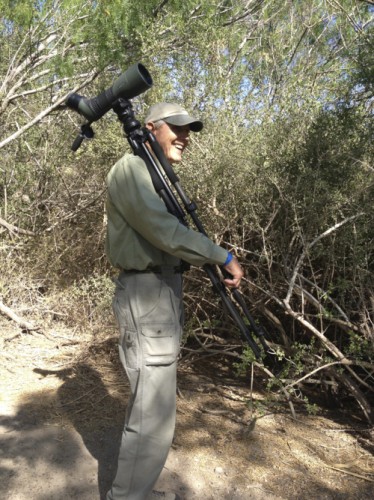 I always manage for find people generously willing to carry my scope. Even though my scope is really light and not bad to carry (unless I'm on some insane odyssey up the side of a Guatemalan volcano) folks seem to genuinely want to help me out. Above, Bob (a new birding friend) kindly offered. I'm sure my doctor wouldn't be thrilled with me carrying things around on my broken pinky toe, so I was relieved to have some help.
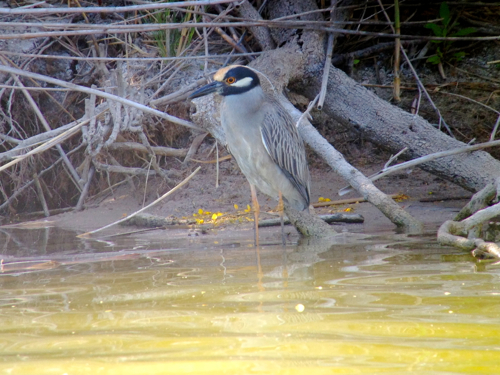
There were a few herons around like the above yellow-crowned night-heron and I imagine they all fish the lake with a bit of trepidation, they could easily wind up like the afore mentioned nutria. Other birds zipping around included scissor-tailed flycatchers, green kingfishers, little blue herons and egrets. As we were watching the birds, my coffee had worked its way through my system and I needed a restroom. I asked John if he would mind driving me back and some of the other group thought a drive to the visitor center restrooms was sensible. As we slowly made our way back, I had a text message alert. Some friends have a group messaging system they are testing for rarities. The text read, "Curlean male @ Estero by the start of the Green Jay Trail."
"Hey, John, I just got an alert about a Cerulean male at the head of the Gree..."
Before I could finish the location, he gunned it and we were on our way! Some poor aramdillo tried to crawl up on the road and as much as I would have loved to stop and get his photo, a Cerulean is a warbler I have not seen in years and waved as went by. John had us there in less than two minutes. We could see the group of birders scanning the trees and made a beeline for them. Someone from our group asked, "Hey, didn't you need to use the bathroom?"
"A cerulean takes precedence," I said. "Also, I apologize now in case my excitement at seeing this bird gets the better of me and well, I don't make it to the bathroom. This bird is worth a pee in the pants!"
We started scanning.
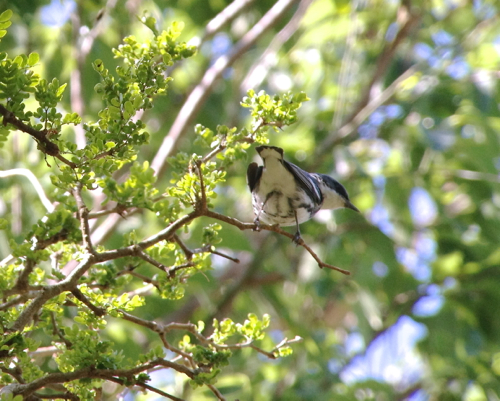
There mixed in with a couple of northern parulas was the cerulean warbler male. Not the best photo ever of a cerulean, but a documentable shot and I'm going to count it for my Digiscoping Big Year (the fundraiser for Friends of Sax Zim Bog is the Half Year, but I'm very curious how many species I can get photos of in a year and I'm going to take it to December). But what a treat to get a look at this bird again. I think the last time I saw one of these was before I even started blogging in 2004! I neglected to apply any bug spray before walking in the shade and ended up with some mighty fine insect welts, but it was worth it to get a look at a bird like this!
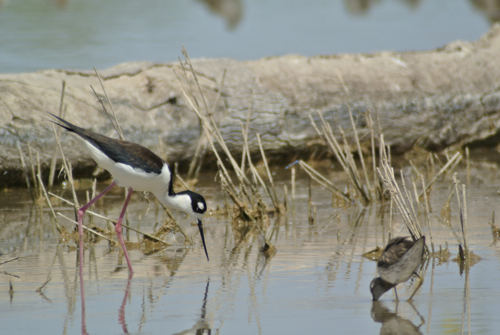
After finally hitting a restroom, John took me around to grab more bird photos at the ponds. During migration these can be filled with fun birds like black-necked stilts and all sorts of fun shorebirds from snipe, dowitchers, yellowlegs and any number of sandpipers.
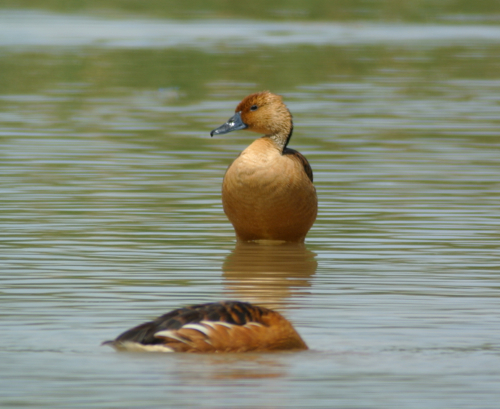 Waterfowl migration was starting to shift northwards but I was still able to get some fun target birds like the above fulvus whistling ducks. Fulvus refers to this ducks color. I learned something very interesting from John. You can black-bellied whistling ducks at this part too. The black-bellies will nest in cavities and nest boxes, whereas the fulvus nests on the ground. But this is one of the species you come to valley to see.
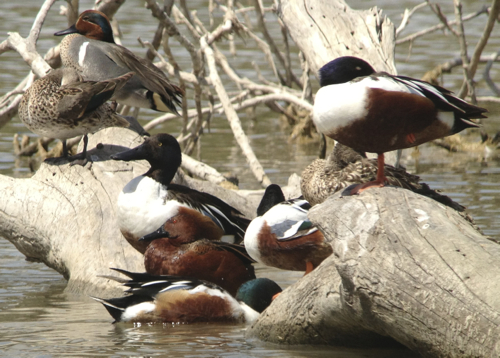
Another favorite that I got to see was a cinnamon teal! Love that bird and loved that he was mixed with some shoverelers and green-winged teal.
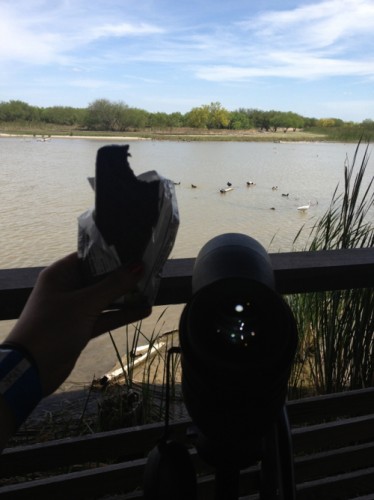
John eventually had to head back to do a butterfly program and I happily spent time on the shaded deck. If you like digiscopiong or taking photos in general, the deck is best in the afternoon and the sun shifts to being behind you. You can also grab some ice cream from the shop and watch birds to your heart's content! I had an ice cream and ibises in front of me: heaven.
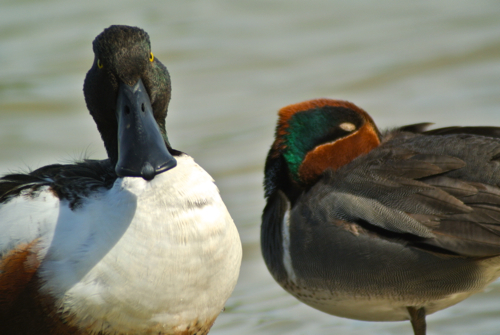
While I was hanging out on the deck, I ran into a Minnesota birder named Alex. I think because Sun Country flies direct from the Twin Cities, this is a popular and economical destination for Minnesota birders, I run into them every time I'm here. But it was fun to hang out with Alex and watch the birds as well as catch up on each other's lives. Turns out we were both rooming at the same place for the night.
So, even though I didn't start my birding in a new place in Texas, no day at Estero Llano Grande is ever wasted. I had only planned visit for half a day, but ended up dedicating a full day there. I could easily spend a weekend in the Rio Grande Valley and just park on that deck...actually, I have done that with a girlfriend and we had an amazing girl's weekend.
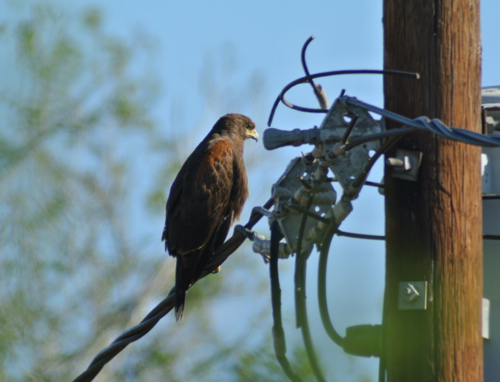 All parks are a must visit in the Valley, but I hope if you ever come here, you'll have as much fun at this one as I do. It has a little bit of everything. Even Harris's hawks!
Broken Toe Birding at Estero Llano Grande Part 1
I am both incredibly excited and a little nervous about my current spring travel schedule. It is action and birding packed but wow, it's a lot. Last week I was a guest speaker at Quinta Mazatlan but you can't go to the Rio Grande Valley for just a day. If you're going to head down, you want to take advantage of the tremendous birding opportunities. However, the day before I left for the valley...I was running around my apartment tying up loose work ends, booking future travel, packing, etc when I wasn't paying attention to where I was walking and slammed my little toe into the corner of one of our many bookshelves. Yes...I know what you're thinking. Ow. So here's a text exchange that immediately occured between Non Birding Bill and I (he was out writing at a coffee shop):
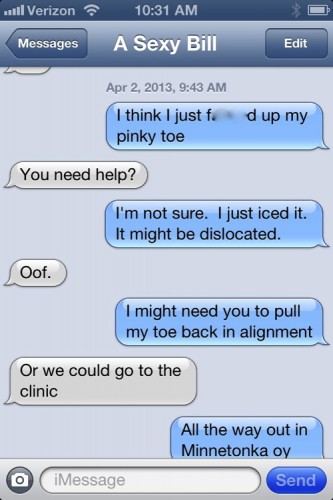
I can't believe NBB wasn't willing to watch a couple of YouTube videos demonstrating how to realign my toe. Ha. So we went off to a clinic where my doctor said, "It's not dislocated, it's either bruised, but most likely broken. Either way, you need to stay off it for the next four days and ice it for 20 minutes every two hours for twenty minutes."
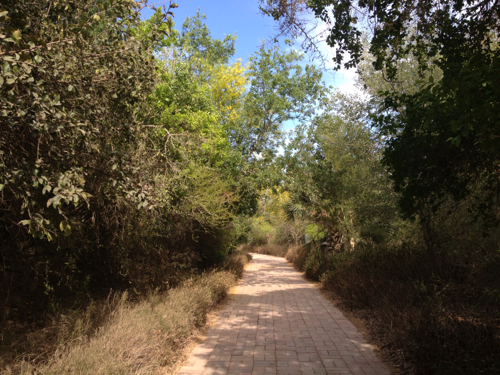
But...but...but...I have a 5K at the end of the month and I'm going to Texas for a week tomorrow (insert stern doctor look here). So wildlife drives for me it would be. This time my goal was to try and visit places I haven't visited before in RGV...or at least in a long time. However, I cannot visit this area without at least a day at Estero Llano Grande State Park. Just a stroll down this path to the deck instantly relaxes me--especially as winter holds on long and fast as if it's been taking advice from Ned Stark. So after months of monochrome cold white and gray, I'll gladly squee over green and a mere 80 degrees. Estero is arguably one of the best spots to start your south Texas birding adventure the first time you visit. They have a deck with wifi and a great view of water and I thought maybe I could hang out there and digiscope. My toe wasn't too bad and I could do some walking but I knew that wouldn't be the best way for it heal.

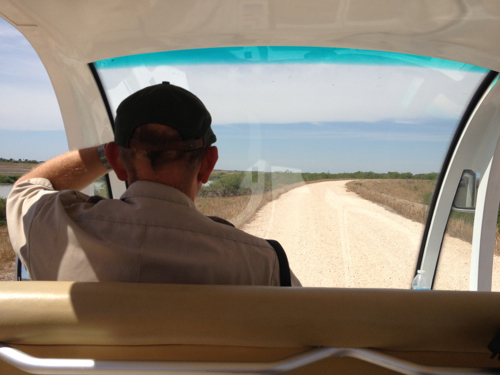
On the deck I ran into Ranger John Yochum who I have met before on my Texas travels. He said his school group had cancelled and if I wanted, he'd give me a personal tour. I mentioned my toe and to my surprise, he insisted on giving me a tram tour! I was Miss Daisy to his Polk and he saved my toe from a lot of hurting. Thanks to him I got to do a butt load of digiscoping, which was great for my Digiscoping Big Half Year Challenge for Sax Zim Bog.
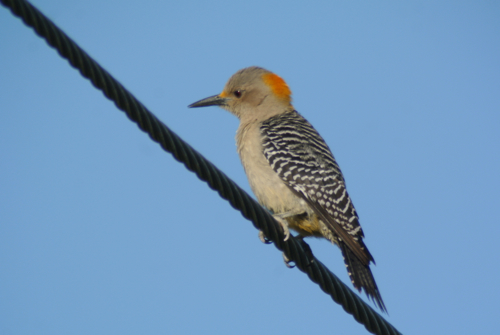
Like I said, this is a great spot to get a lot of common valley species off your list. Many of these birds will be at several parks like the above female golden-fronted woodpeckers but Estero has wetlands too.
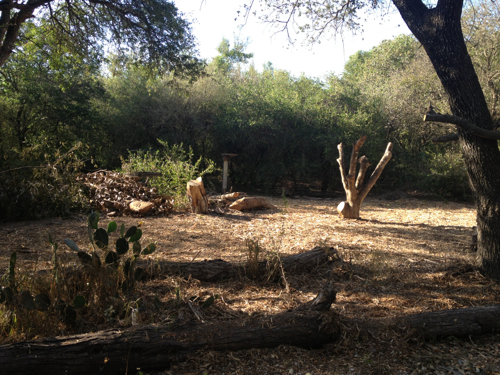
John took me to one of the newer feeding stations. Some of the parks are figuring out that people are coming here for photos and though I don't mind taking a photo of a bird at an obvious feeder, most photographers do not, so they set up natural perches were seed, suet and fruit can be tucked away and you can get some natural looking shots.
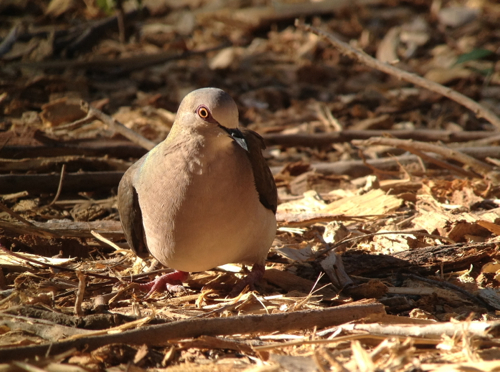
Here's a shot of a white-tipped dove, a specialty bird in the area. I'm sure the sun is just hitting the pupil just right, but the dove kinda looks a little methed out to me.
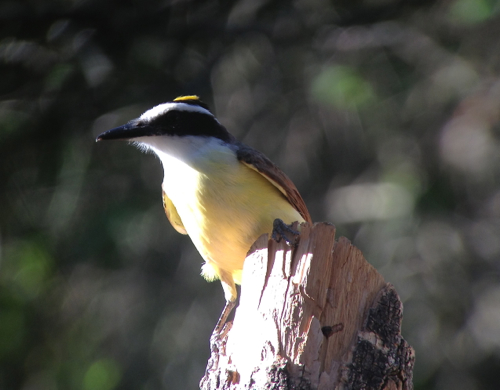
The great kiskadee is a specialy bird here and these sassy birds will fly in for peanut butter. I had to be fast to get photos, it was migration and following the northbound songbirds were lots of accipiters and they periodically bombed through the feeding station. But if you waited a few minutes, the birds would return.
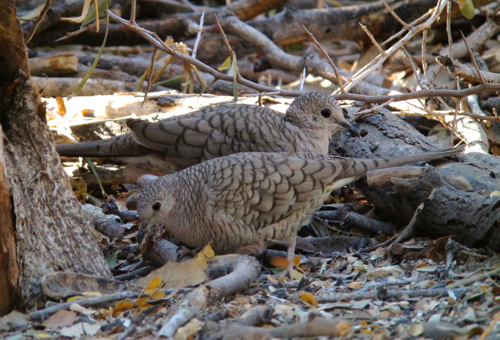
The above Inca doves. There were some common ground doves but I alas didn't get a photo.
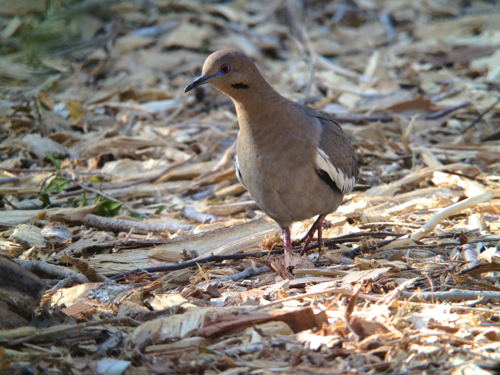
Here's a white-winged dove (yep, like the Heart song...oops I meant Stevie Nicks, cause Amy just lovingly yelled at me in the comments. Love that woman).
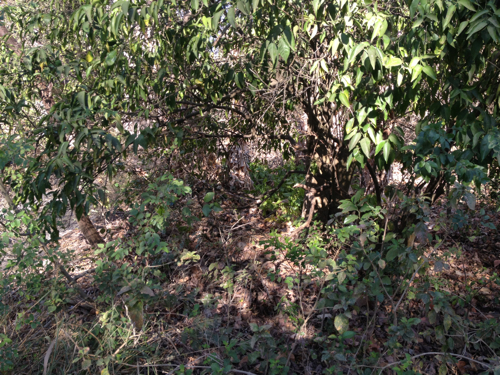
Estero is a well known as a spot to get a great look at common pauraque and John took me to a different spot to find one in the tropical area. Yes, truly, there is a bird on the ground in that photo...though even I am having a dickens of a time seeing it and I was there and too this photo. Fortunately, I digiscoped it.
As John was toting me around, we saw a trio of birders that I recognized as staying at the same bed and breakfast I was lodging in. We pulled over to say hi and I asked if they had seen a pauraque yet. They hadn't. They were very casual birders and I was worried they may miss it so I asked John if they could join us in the tram and continue on with us towards more pauraques. Everybody seemed game so the tram filled up and we headed towards Alligator Lake, the known spot for pauraques.
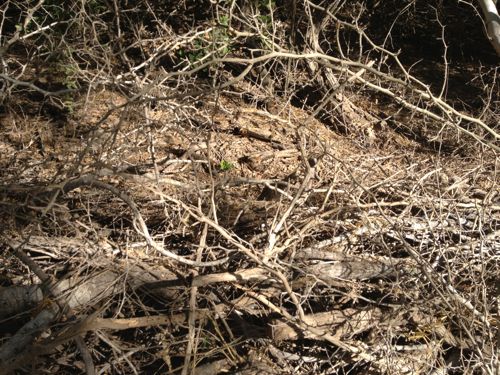
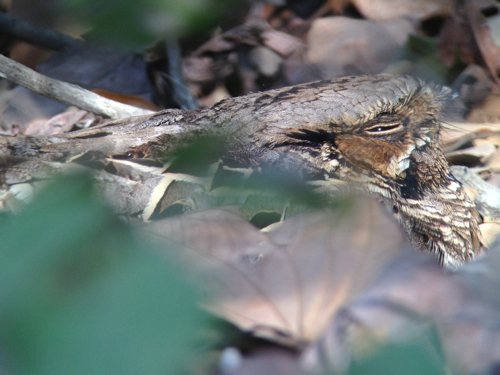
OK in this photo, I can totally make out one of the pauraques. It's on the ground, towards the top of the photo, in the center. It's amazing how quickly someone who already knows where to find the birds like these can become a de facto guide for other birds. But I really do get a kick out of taking people to see their first pauraque and waiting for them to discern its shape on the ground. It's like one of those magic eye posters!
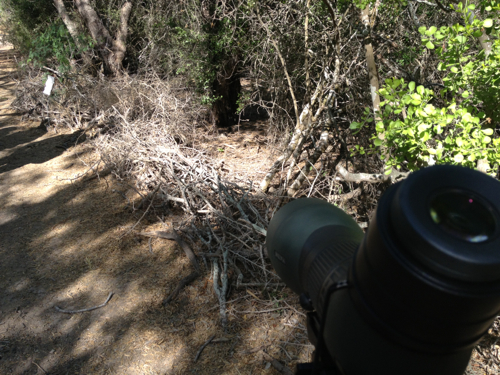
It took some fancy angling of the scope, but I was able to get it in.
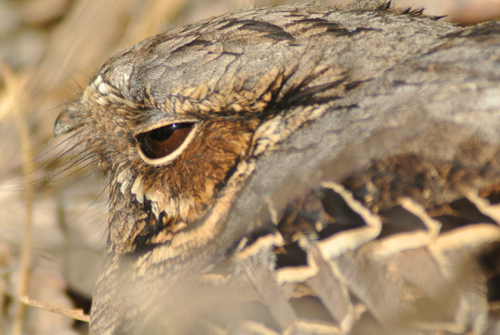
Look at that giant beautiful frown eye! I always assumed these birds were like nighthawks, flying around high in the sky at night after aerial insects, but learned I was quite wrong. Reading up on them at Birds of North America Online, I learned that they are considered a "terrestrial feeder" and flies very little during foraging. "Appears in many locations to take most of its food by 'jumping and flopping' or rarely running on the ground....When foraging on the wing, generally makes low, short, circling sallies to the air from ground or favorite low perch on rock, stump, branch, or fence post for flying insects."
Gets its food by jumping and flopping, eh? Sounds like Thanksgiving at my family's house--HEY-O! Angela, Mom, Terri, if you actually read this, I kid, I kid.
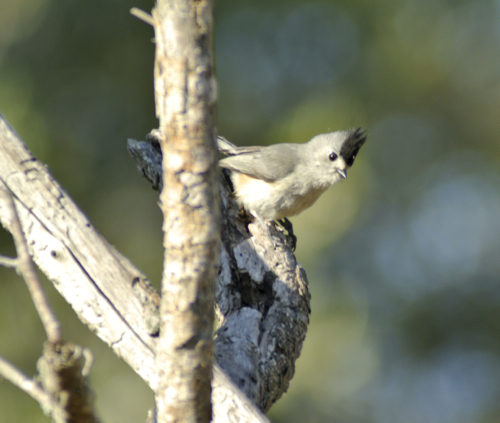
I'm going to try and divide up some of my Estero adventures in more posts. I have too many photos for one post at this spot and I have to get dressed and go work at the park service.
Because I Love Bird Camouflage
I was recently at the Rio Grande Valley Bird Festival in Harlingen, TX. If you can't tell by how often I talk about South Texas, it's one of my favorite places to visit not only for the birds, but also for the great friends I've made at the festival. Next year is the 20th Anniversary of the festival, it should be a wild time and if you have never been, you should have it on your bucket list.
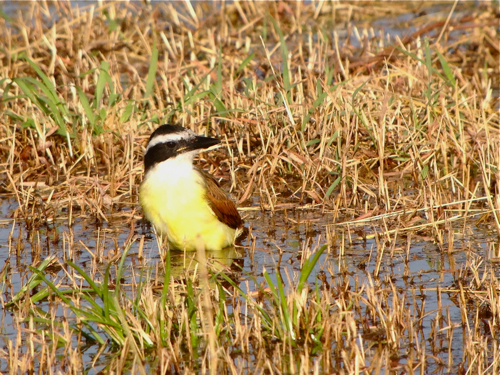
I have an odd checklist when I visit, I've seen almost everything I can possible see there but getting the key valley species as soon as I arrive is always fun (like the above great kiskadee). This time I went with a new friend that I made at the Biggest Week In Birding Festival in Ohio last May. She had never been to the valley so showing someone all those great Texas specialties for the first time is as fun for me as seeing them the first time.
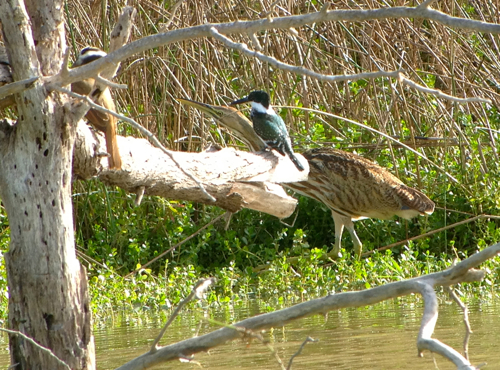
I could spend several days at Estero Llano Grande (and have) and this photo though not the best on the planet is a great cross section of the amazeballs birding that can happen. In one scope view I have green kingfisher, American bittern and great kiskadee. I ask you, where else would you get such a great birding trifecta in the same field of view? South Texas, it's hard to beat.
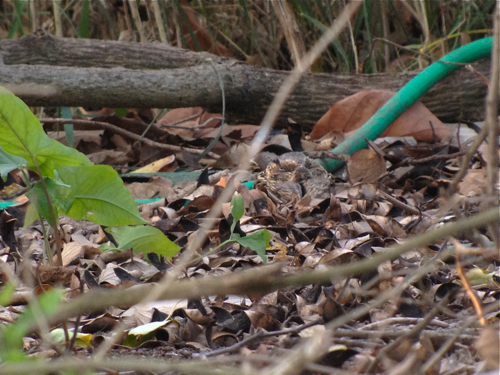
I swear there is a bird in the above photo.
Estero is where the nightjar known as the common pauraque is relatively easy to find. I've posted about their camouflage before. And though we were able to find them easily in that same spot, we were pointed out more parauques by field trip leaders that were hunkered down in yards of people who live next to Estero. There's one in the above photo...can you find it (even Non Birding Bill was able to find to find it in the photo).
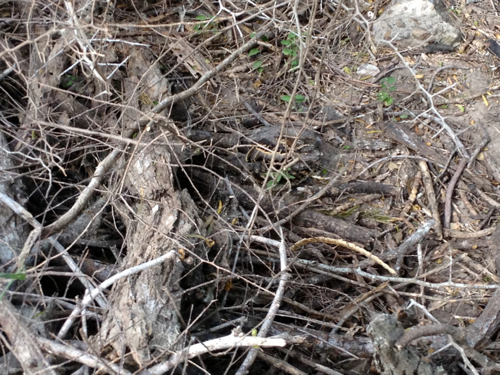
Yep. I swear there's a bird in the above photo too. That's the pauraque in the "usual spot" at Estero. There are actually about two or three in this spot (but only one in the above photo). I know brown birds aren't for everybody. I know that I can seem unreasonable in my love of things like native sparrows and pipits but you have to give it to pauraques as a brown bird. They at least stay in one spot for several hours to give you a chance to find them.
Drive By Cooting
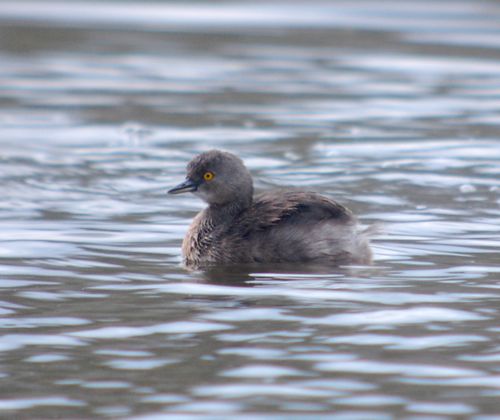 During my South Texas break, we stopped at Santa Ana NWR for a bit. It ended up being too mosquito-ish for my taste and we didn't last long there but got some great looks at least grebe. These always look like they just heard the most shocking news ever...or that they are swimming around with some juicy gossip. Saw-whet owls have the same look to them.

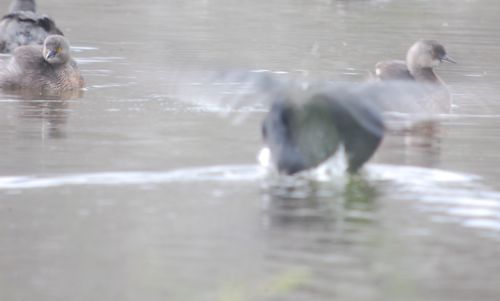
Suddenly, an American coot just took off full bear towards the least grebe I was watching. Note the other grebe up in the left hand corner watching with excitment.
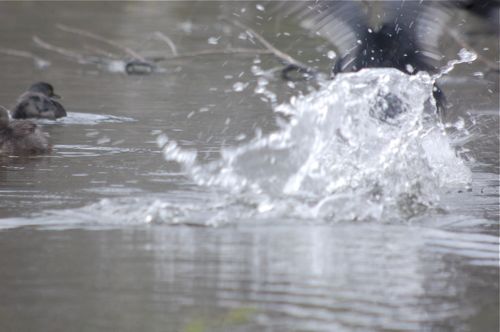
BOOM! The coot nailed the grebe!
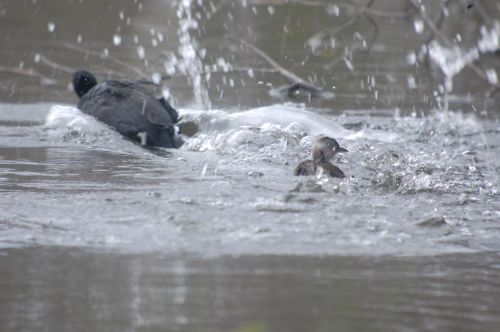
I'm guessing the grebe managed to dodge the coot with a quick submerge but I was surprised it resurfaced so quickly.
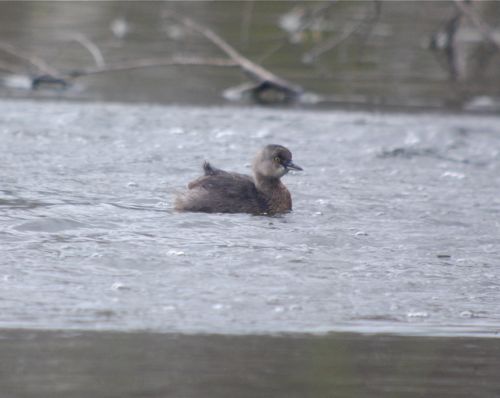
I love it. The least grebe looks as if it's thinking, "WTF was that all about?"
Bentsen Rio Grande State Park Birds via iPhone
South Texas, as always was SO much fun. Even if you choose to do some casual birding you can still hit all the specialties. I took a mini break down there over the weekend to hang with a girlfriend and since we had both been there, each day we slept in and let our bodies wake us rather than our alarm clocks and enjoyed the local Mexican restaurants and headed to our favorite parks.

I always have a soft spot for Bentsen Rio Grande State Park. It's the first south Texas park I ever visited in the Rio Grande Valley and where I got most of my Texas specialties like the above green jay (you can get them at most of the parks, but like actors who portray The Doctor, you never forget your first). Sitting in the balmy 60 - 70 degree weather with my scope and bins really made the tension melt from my bones.

Though walking and biking are fantastic ways to enjoy this Texas park, the bird feeders really deliver. The birds went crazy for this log filled with peanut butter. There was even a clay-colored thrush (or clay-colored robin as some field guides call it). These sometimes zip over the border from Mexico but I haven't seen one since Panama. Not that I really note that, but I guess I got a new bird for my US list without even trying.
I really clicked with using my iPhone 4s for digiscoping rather than my Nikon D40. I'm hopeful that by the time spring arrives, I will no longer go out with that camera and only go out with my iPhone...we'll see. Hand holding has been okay but not as nice as having an adapter. But since I was having such luck in Texas, I tried taking video at the feeders...I was hand holding but it turned out okay. Ignore what the people are saying during the oriole part. They were sitting next to us and talking about a different bird than what you see in the video.
http://youtu.be/A1j4Rvcz0pE
I loved those great kiskadees. They were "peanut butter catching" at the feeder like they would for aerial insects. As a matter of fact, because the kiskadees were so fast, they people next to us thought they were grabbing flies attracted to the feeder. But check out these stills I grabbed from the video:

That's a beakful of peanut butter!

Even the plain chachalacas got in on the peanut butter action...I don't think I saw a single woodpecker come to that feeder.

Besides all of these there were warblers checking it out as well (warblers in January, what a gift to this Minnesota girl). We didn't see them, but many reported that bobcats come to hunt around the feeders too...needless to say, we didn't see squirrels.
Thank you, Bentsen State Park, for a lovely afternoon.
Digiscoped Images
Fresh Tweets
Would you like to hire me as a speaker for your event?
Email sharon@birdchick.com