
Birdchick Blog
Do You See That Pauraque?
I'm going to start this post off with landscape shots that have a brown bird called a common pauraque in them. See if you can find the bird(s) and at the end of the post, I'll put up the photos pointing out where they are and you can see if you were able to find them.

Let's start with an easy one, there's one common pauraque in this photo.

There's one pauraque in this photo.

There's one pauraque in this photo.

This is the hardest one, but there sure is a pauraque in this photo.

There are actually 2 pauraques in this photo, one easy...one almost impossible.
Most of my birding time during the Rio Grande Valley Birding Fest was spent at Estero Llano Grande State Park. Partly because I love it but also because some of my other favorite birding sites in the area were closed due to flooding. I went there several times with both Birdspot and WildBird on the Fly. One of the target birds on the trails is a common pauraque, a nightjar that is similar to nighthawks and whip-poor-wills. I've heard them and I've seen them flushed on roads at night in Central America, but I've never seen a roosting pauraque.

I knew people were seeing between 1 - 3 at a time and I was hopeful we'd find more than one. We sure did, above is one of the pauraques. With that cryptic brown plumage, you can understand how they might be easy to miss. They are active at dawn and dusk and fly around to catch insects with their mouths wide open. Don't let that tiny beak fool you, it belies a mouth worthy of any mother-in-law.

The park rangers and other birders were very helpful to point out the general areas of where the nightjars were being seen, but you still had to some work. Here's the trail near alligator lake where they typically have been found roosting. Note the white sign, it warns people to stay on the trails so the pauraques do not get flushed. Note the pile of brush on the left side of the trail, that's where the pauraques were. I suspect the brush was placed there to encourage people to stay on the trail and not wander in looking for the birds and inadvertently flushing them.

Check it out: Disapproving Pauraque! We found one right away and I was happy for that. These nightjars were a challenge to digiscope. Number one: they were in the shade. I could get around that by using the timer on my camera and minimize camera shake for a long exposure. However, the second and the most challenging problem was that the birds were too darned close to focus in my spotting scope! The sticks that were protecting the pauraque roosting location blocked some angles and I wasn't about to move the sticks, they were there to help the pauraques. But with patience and creative angling, I managed to grab some shots.

As I was setting up the above digiscoped shot, I found a second and then a third, each closer than the last. The third pauraque we found was literally three feet away from the trail. Finding the pauraques reminded me of morel hunting. Once you find one, you instantly see all the other mushrooms surrounding you. It was the same with pauraques, once you found one, the other popped out like an image in a magic eye painting.

Many of the pauraque photos like the above bird were not digiscoped because they are just too close. I always wonder how many owls I pass under on a regular basis, not I wonder how many pauraqes, poor-wills and other nightjars I have almost stepped on in my birding travels. The pauraques did seem to be everywhere in South Texas. Birdspot and I were wandering around Frontera Audubon, watching a brown thrasher that was working some leaves, when all three of us--especially the thrasher jumped with a leaf toss flushed a pauraque. I wonder how often other birds flush nightjars. And I wonder if they are irritated because of the scare?
And now to see how you did with finding the pauraques in the first five photos:

Here's common pauraque number one. This one may have been too easy, that eye sticks out. But I walked past it at least twice before I finally realized it was three feet from the trail.

Hidden pauraque #2.

Pauraque nestled all snug among sticks.

I realize that even though it's circled, this pauraque is hard to see, so here is a zoom in of the cryptically plumaged nightjar:

Even up close, you can see how well their feathers work in their habitat!

The one in the front is fairly obvious, but the one in the back is really hard to see. Here's a close up:

See, there really is a parauque by those sticks!
Ah, nothing makes me as happy as looking for brown birds!

Dramatic Hawk
[youtube]http://www.youtube.com/watch?v=gSZaC_W7eyE&feature=player_embedded[/youtube]
South Texas Redheads
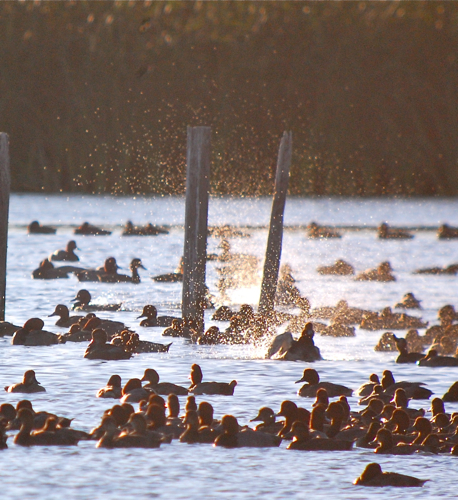 These are some redheads bathing and splashing against the sunset at Leonabelle Turnbull Birding Center in Port Aransas, TX. I took this particular photo through my spotting scope. The redheads were not at the best sun angle, but with the splashing, I thought it was an arty shot.
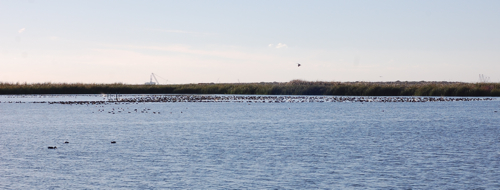
It was a huge flock of birds. At first glance I would have guessed 1500, but in the scope, the redheads just kept going. We estimated that there were close to 4000 redheads were in this raft. I half wondered if any of these birds had been counted on our aerial waterfowl surveys on the Upper Mississippi River.
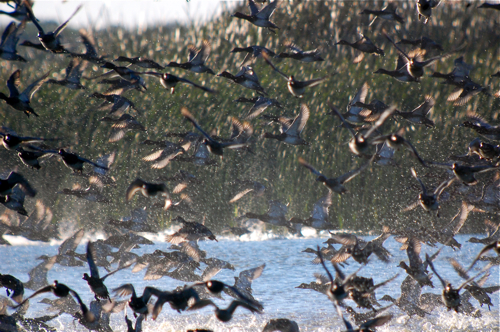
Suddenly, the flock of redheads took off.
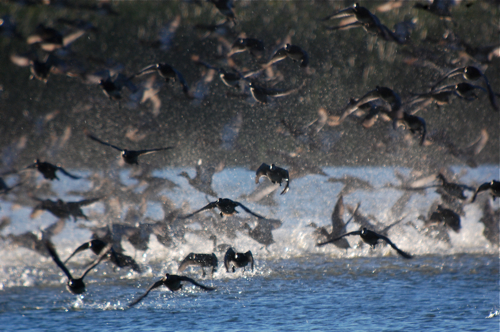
Something must have spooked them. There are warning signs about alligators around the boardwalk, so my guess is that an alligator went for a duck.
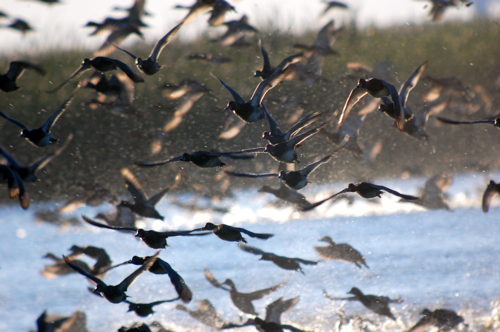
One of the benefits of being one for 4000 is that you are less likely to be the one nailed by a gator.
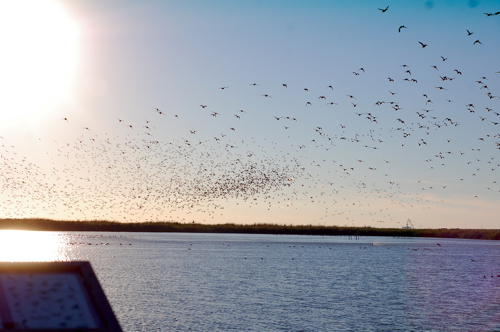
Once the flock what in the air, you could really get a sense of the size and agree that yeah, there must be close to 4000 birds there.
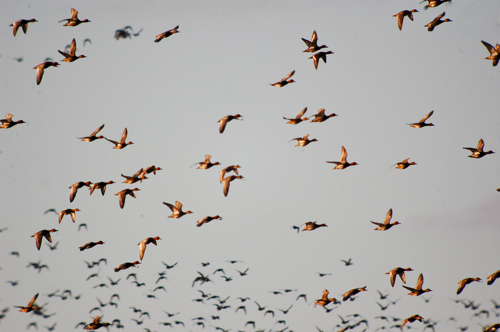
I couldn't help but notice other species mixed in with the flock and making mental notes. In the above photo there are a couple of scaup mixed in--can you pick them out? I still crack up that even though I was on vacation from my waterfowl surveys, I'm still attracted to ducks in large numbers.
BEST #Birding Video EVER!
They had me at "Thou Shalt Not Wear A Tilley Hat." http://www.youtube.com/watch?v=vHXQp-NhFuE
Thank you GyrCrakes!
MRVAC Action Tonight!
I can't remember if I have put this in the blog, but tonight I will be at the Minnesota Valley National Wildlife Refuge Visitor Center at 7pm in an auctioneer capacity for the Minnesota River Valley Audubon Chapter. This fundraiser helps MRVAC with their educational programs. I'm a big fan of this Audubon Chapter, when someone new asks me about a birding club with fun field trips--this is the group I steer them towards. Nice, easy going folks, especially for those new to birding.
Bird ID Webinar Tonight!
 My Beat Writer post is up over at 10,000 Birds. It's about an interesting Cooper's hawk in my neighborhood.
And if you are asking yourself how did I know that the above birds was a Cooper's hawk and not a sharp-shinned (or any other hawk) there's a webinar that you might be interested in! My buddy Clay Taylor from Swarovski Optik and I are guests on Johnathon Robinson's Identify Birds by Sight and Sound webinar. Clay and I will discuss different birding tips (probably argue a bit) and you can ask us questions on identification. It's a fun way to spend a Wednesday night, I think there will even be some sort of giveaway.
FourCast Interview
Man! A lot going on this week!

I flew in from South Texas (aka the land of the above green jay) Monday afternoon and hit the ground limping! The limp was from the closing party at the Rio Grande Valley Bird Festival...I twisted my knee while singing karaoke--yes, that's right, that's how hard I bring it to fake singing! Boy you know it's a good vacation when you come home slightly injured. I think I aggravated the injury I got banding birds in May, or perhaps my body is trying to subtly tell me that my table dancing days are over?
Monday evening I recorded a podcast with one of my fellow Geek A Week cards, Tom Merritt. He is cohost of a podcast called FourCast. They have guests on and we discuss future predictions. First we discuss something that will happen soon, something in about a 100 years and then a bizarro one that could be millions of years away. You can listen on their site or even watch it on YouTube (it's about 52 minutes long):
[youtube]http://www.youtube.com/watch?v=NkRL8Bc57AE&feature=player_embedded[/youtube]
It was a fun way to spend an hour. When I posted on Twitter that I would be doing this, one of my nieces was excited and knew of the podcast, so I was honored to do something she thought was cool.
Ecuador Birding Job Includes A Horse!
Want to go to Ecuador? How badly? If you answered the way most people do for a Klondike Bar, then this might be for you: TEMPORARY RESERVE MANAGERS
Life Net is searching for a mature, very fit, and responsible couple or two friends with strong interests and/or educational backgrounds in reserve management, nature conservation, tropical ecology, birding, sustainable agriculture, ecotourism, environmental education (all or some) to steward a small (50 ha) but very bio-diverse nature reserve in Western Ecuador.
Due to the remote setting and challenges with visas we offer the position at the Las Tangaras Reserve for only 3 months to non-Ecuadorian citizens. We provide $300/month cost of living stipend, housing, and use of a rather unpredictable horse named Guapo.
The reserve is an incredible place to live, and research and photographic opportunities abound. Life Net monitors and researches bird communities, and current stewards, Steve and Amanda, are describing plants and insects, respectively.
Duties include, reserve improvements and stewardship, upkeep of trails, marking of trails, water system upkeep, septic system upkeep, maintenance of cabin, tools, equipment, research materials, small library. Options exist to develop visitation and earn additional donations from visitors to the area for birding trips and hikes, etc.
Desirable qualifications include ability to communicate well in Spanish, experience with care of horses and interest in them, college degree in a topic related to the position, related experiences with wilderness biology field work in the tropics, interests in research and nature interpretation, experience with guiding nature or birding tours, simple bio-regional living experiences, wilderness, leave no trace camping ethics, carpentry and building skills, financial management experience, business sense, etc.
Current managers finish their term 18 Dec 2010. An Ecuadorian will steward the reserve until new managers begin. We desire a pair to start early Jan, 2011 (by 10 Jan), to be on site and working through 10 Mar 2011. Send resume and cover letter to DR. DUSTI BECKER and DR. TONY POVILITIS. We want to decide on new stewards by Jan 1 and we had 300 applicants last round, so apply ASAP if you are qualified and serious about the adventure and responsibility.
How could you turn down the bonus of an unpredictable horse named Guapo?
Love Affair With A Green-winged Teal
My non birding New Orleans fun is finished and I'm back in Texas to enjoy some time with friends at the Rio Grande Valley Bird Festival.
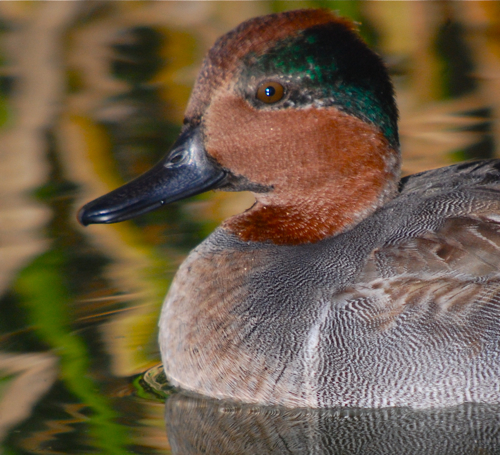
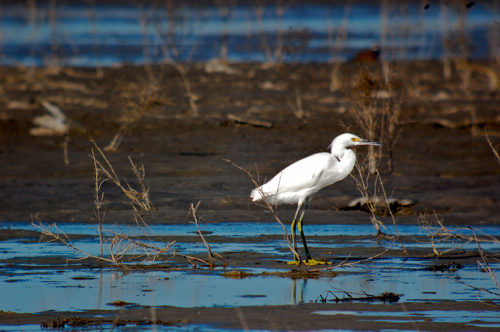
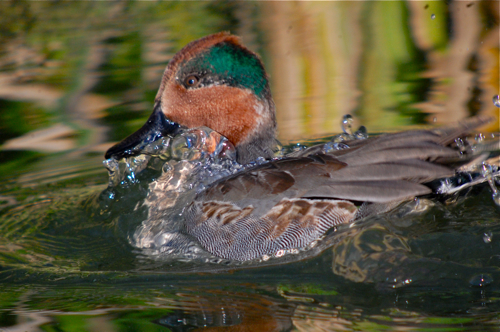
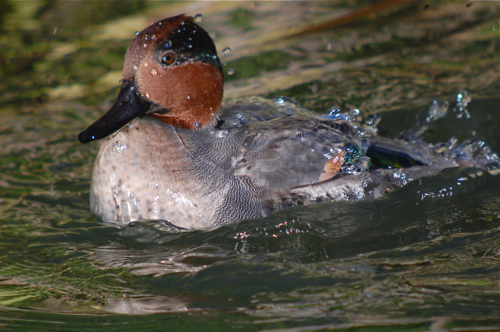
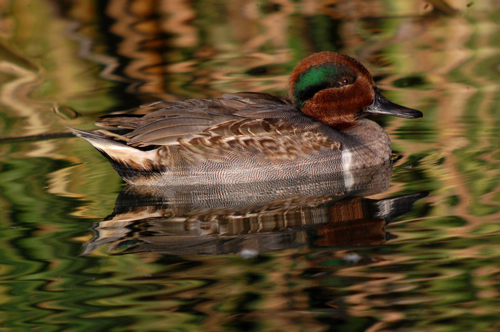
I had a brief love affair with a green-winged teal. I don't normally get the above view of a teal. Generally, they are fleeing from our plane when we count them. So to see a green-winged teal chilling in the evening sun was quite the treat.
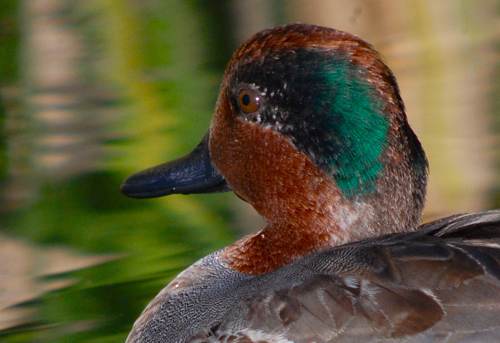
At first glance, they may appear brown, but their heads rival any mallards with the rich rusty read accented by a swath of iridescent green behind the eye--like eye shadow gone wild. This is the smallest dabbling duck in North America, so besides the color, they are quite cute. They will forage for aquatic insects on the water's surface or dip below for vegetation.
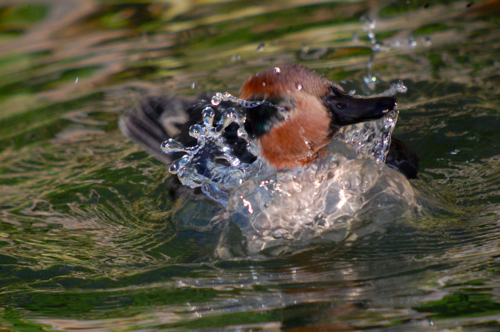
This bird went into full on bathing mode while I was digiscoping it. I think I will let the photos speak for themselves.
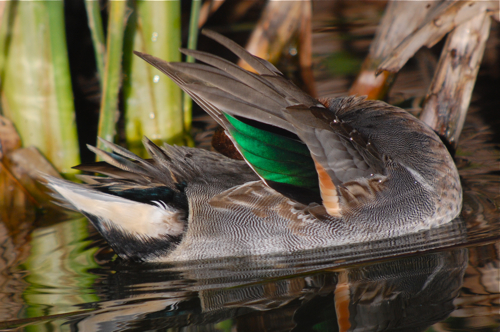
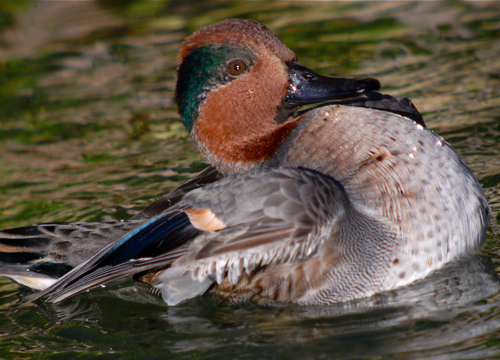
After a good bathe, a nice preen is in order. I love this shot, you can see the green patch from where the teal gets its name.
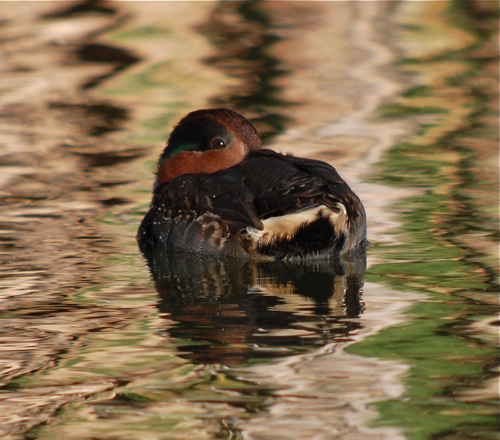
And then a nap.
Digiscoped Images
Fresh Tweets
Would you like to hire me as a speaker for your event?
Email sharon@birdchick.com