
Birdchick Blog
Grebes of Bear River Migratory Bird Refuge
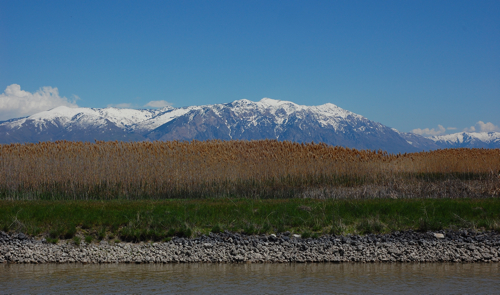 Going through spring photos and I've found a ton from Utah. I love Bear River Migratory Bird Refuge and try to make some time for it every time I'm in Utah--great birding by car and opportunities for digiscoping. Plus the scenery is fantastic!
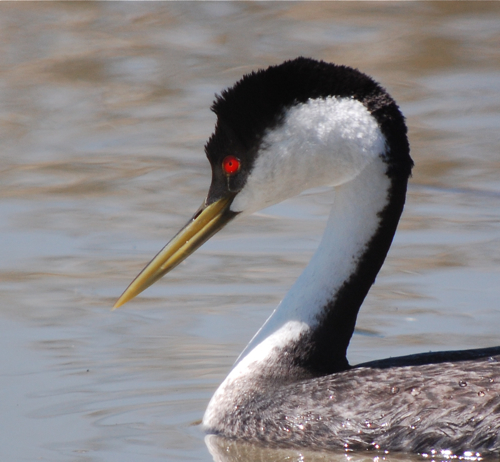
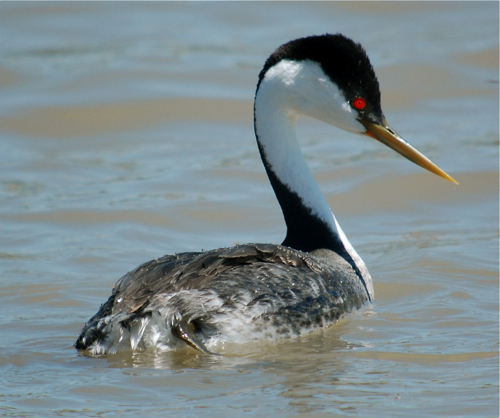
Grebes are the type of bird that make me wish I could paint or draw well. Take the above western grebe, it is naturally graceful and elegant, it is as if that bird were designed by Erte.
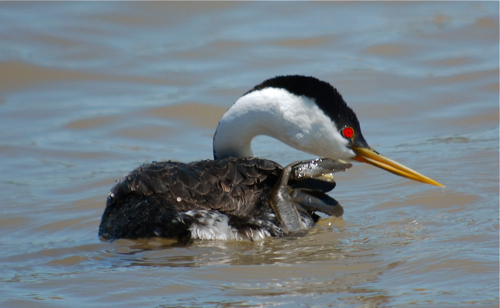
Okay, maybe grebe's lobed toes keep them from being 100% cool and elegant, but they mostly keep that goofiness under water.
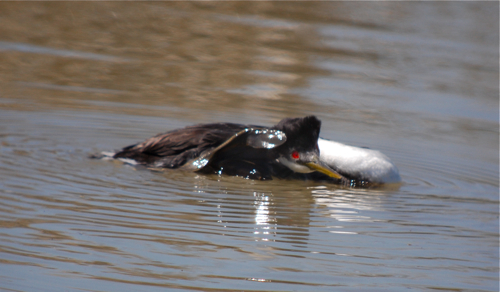
It must be really hard to scratch an itch in just the right way with those toes, but that's the price you pay to be a badass swimmer and fisher I suppose.
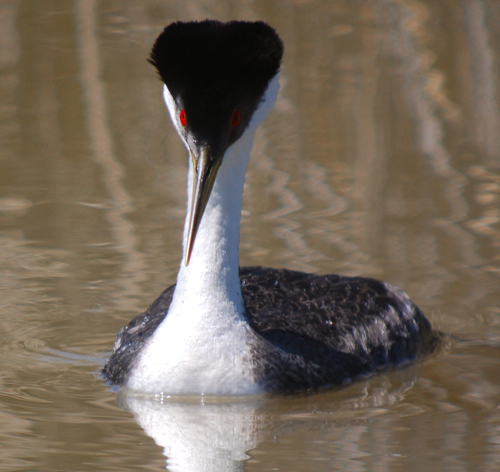
But this shot just makes me wish I would paint it and really spend time admiring the shape and curves of the bird. I love digiscoping but in some ways, you get the shots of the birds so quickly, it's not the same.
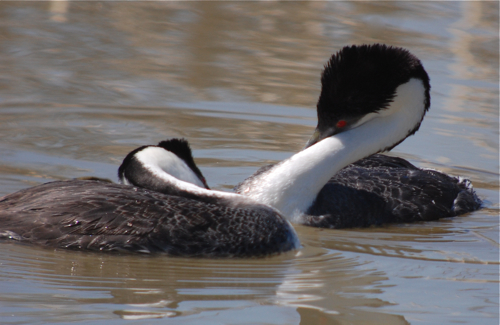
Even when they preen the look so cool and elegant. When they start dancing, I wonder if the other species of waterfowl on lakes see them as the cheerleader and football player at prom--show offs, just because they're pretty and can dance they think they are so cool.
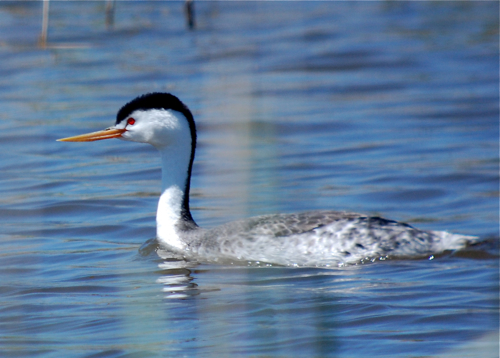
One of the cool things about Bear River Migratory Bird Refuge is that you also get a chance to see the similar Clark's grebe, they are little smaller, a little lighter in color, have an orange beak and the black on the head is above the eye. They are a cool looking grebe, but not quite as stunning to me as the western. Attenborough has a great segment on the Clark's grebe dance, check it out.
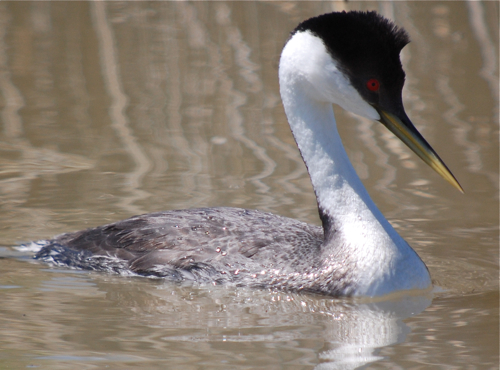
These are just a couple of the many awesome birds at Bear River, but I have so many photos, I need to start putting them up.
When digiscoping this area, you can either use a window mount to attach your car window, or use your car as a blind by standing behind it. If you move slowly though, the birds seem to tolerate you. If they swim away, with a little patience, they'll come a bit closer.
Leftover Horicon Marsh Photos
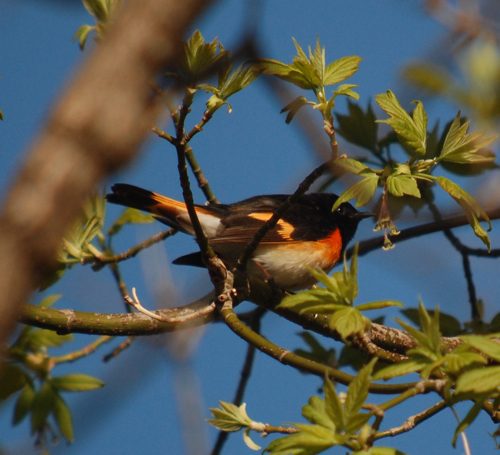 Hey, remember in May when I went to Horicon Marsh? It's funny, I've always been the sort of blogger who puts stuff up as she goes, never one with a backlog of material but as the Internet has changed to interacting with people via Facebook and Twitter, I don't blog as much and now I have a glut of back posts and photos. Last week on one of my bird surveys, I found a yellow-throated vireo, then a Tennessee warbler and even a yellow-rumped...a pang hit me--an early mixed flock? Fall warbler migration! Noooooo! Perhaps it was the long, slow cold spring (I wore gloves in June) but it seems like it was only two weeks ago that I was watching warblers like the above American redstart pop in through new leaves.
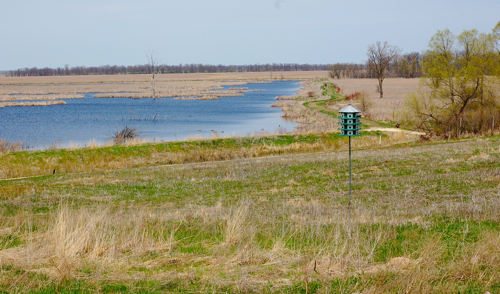
Horicon Marsh is an awesome place. And if you are looking for a great place to stay and relax when not birding, I highly recommend the Audubon Inn in nearby Mayville, WI. It's a lovely old huge hotel in the theme of John James Audubon--even some of the windows in the hotel have his paintings etched in them. The rooms are lovely, the floors full of cozy common areas with books, buy my absolute favorite part with the hotel bar--the food was excellent and it made for some great people watching. It was a great place to get to know the local townsfolk and fun to watch their interactions and it had Internet access.
Below are some of the birds that I managed to digiscope while out an about Horicon Marsh:
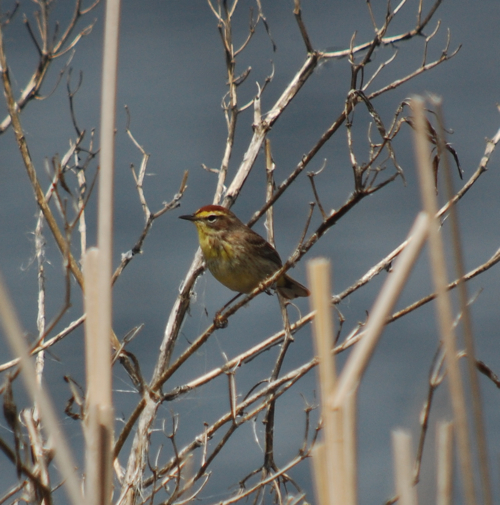
Palm warbler.
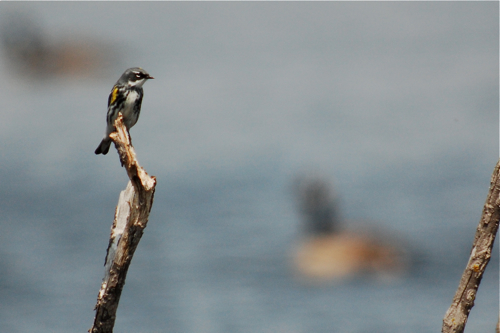
Yellow-rumped warbler.
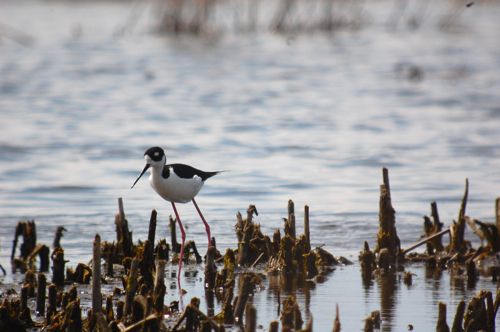
Black-necked stilt (part of a pair).
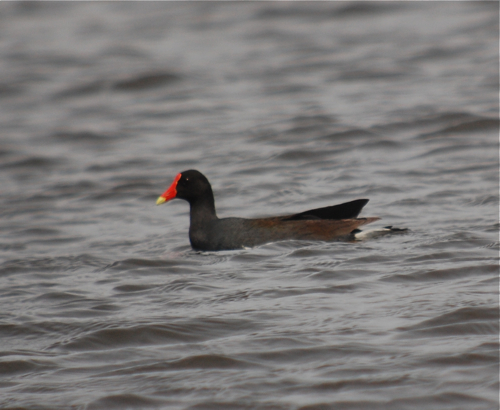
Common moorehen.
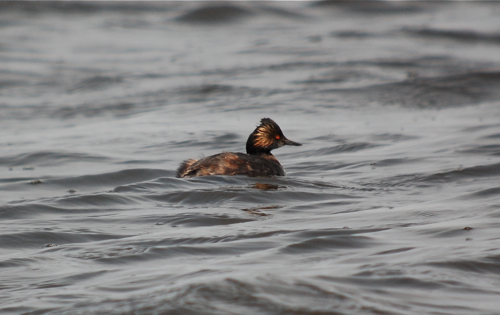
Eared grebe.
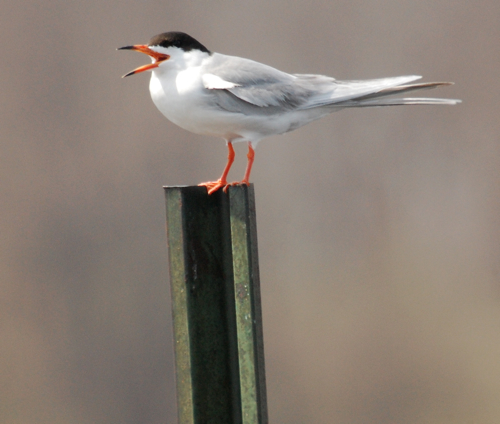
Forster's tern.
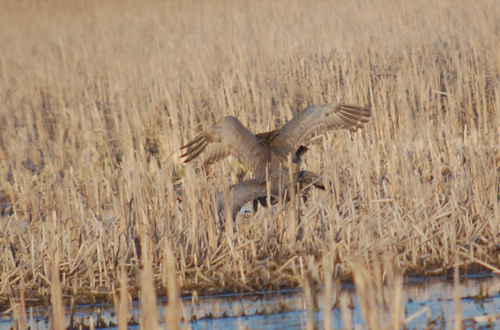
Sandhill cranes...caught in the middle of the cloacal kiss.
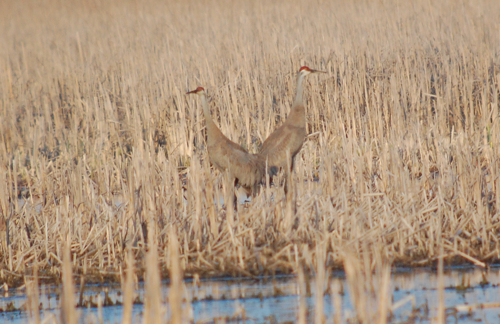
Sandhill cranes trying to pretend that I didn't just catch them in the middle of something.
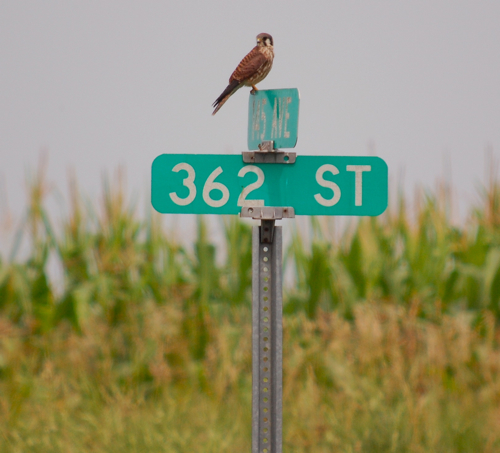
Odd Field Sparrow
I have a sparrow that has been driving me nuts on my surveys the last week. I tried turning it in to every other bird but have finally landed on a field sparrow. The bird perches on a bush that is not part of my survey property, so I can't just walk out. Plus, I'm supposed to be monitoring other birds and can only do so much with a non survey species. Yesterday, I tried playing a field sparrow call to get the bird to fly over. It didn't but a neighboring field sparrow did. Then, I tried playing a clay-colored sparrow call and the bird flew over--and it doesn't sound like a clay-colored at all. So, is this a young field sparrow working on his sound? A really hoarse field sparrow that has been singing like crazy all summer? Or is a hybrid field sparrow/clay-colored sparrow. They have been known to occur. Here's a video of a hybrid singing.
I may have to drive down to the survey area on my own time and see if I can get a photo. The few times the bird has flown by and not hidden itself in foliage, it looked like a field sparrow. Anyway, here are a few videos of the bird singing:
[youtube]http://www.youtube.com/watch?v=cCAuHpFuLPQ[/youtube]
[youtube]http://www.youtube.com/watch?v=Mdl8zHt6CaY[/youtube]
Final two rescued herons released
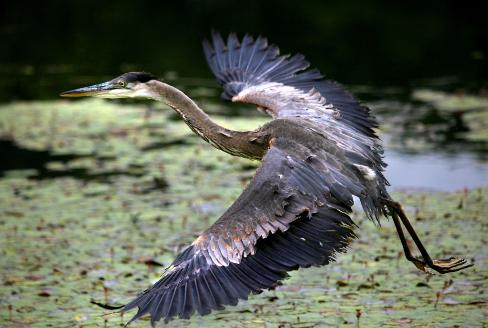
Photo by Brian Peterson.
Hello all, NBB here.
The StarTribune has a story about the final two heron chicks that were rescued after a tornado destroyed their rookery on the Mississippi River. Sharon's been involved with this story as one of the first people to investigate the damage, to being part of the rescue team, to helping release the birds.
The Strib talks about the rehabilitation process for the birds:
The nine chicks had spent much of their three-month respite in a 20-yard-by-5-yard kennel, on property in Inver Grove Heights that belongs to Vance Grannis. Their kennel, originally built for rehabilitating swans, also held a pool stocked with fish, giving the birds a vital chance to practice hunting. They also could spread their wings and fly, though not far. The nine young were lucky. They came in healthy, if a bit stressed. The center's staff and volunteers worked hard to keep them that way until they were old enough to care for themselves.
Check out the Strib site for more on the release, and some great pictures of the birds.
Fledging Flickers
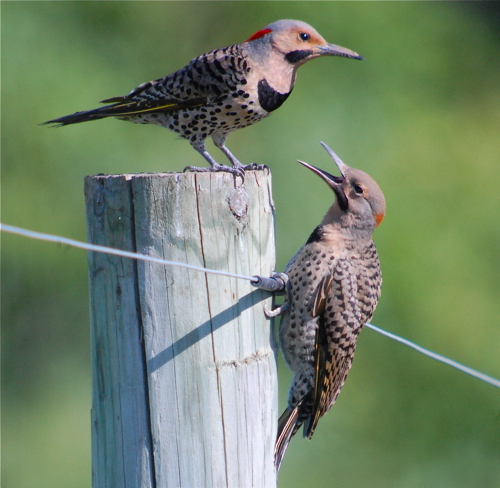 I saw some flickers learning the ways of the world on my bird surveys the other day. Even though that baby looks full grown, he's still hoping to be fed by the adults. Old habits die hard.
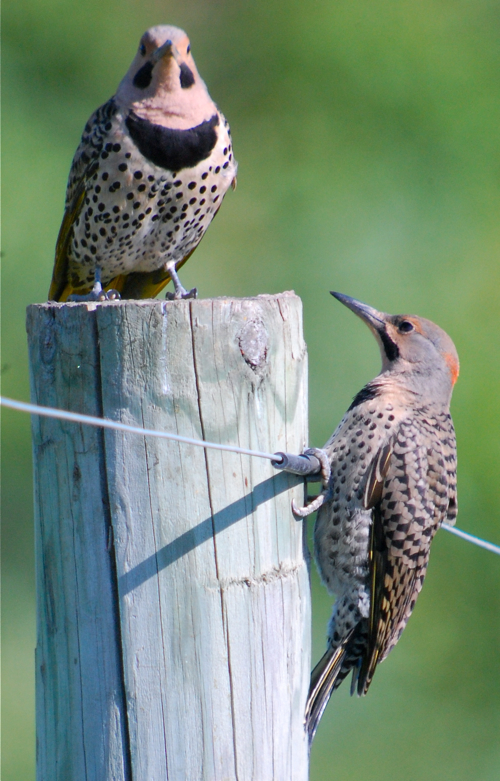
This appears to be a little bit of some father son bonding (they are both male, they both have a mustache).
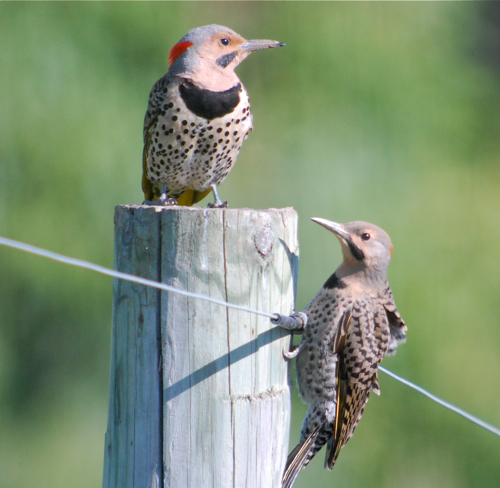
The adult male didn't feed the younger one, but flew off, presumable to teach the younger bird where to forage for food on its own.
Young Herons From Tornado Released!
If you've been following this blog this summer, you are aware of the tornado that hit Minneapolis in May and destroyed a heron rookery and the recovery and rebuilding.
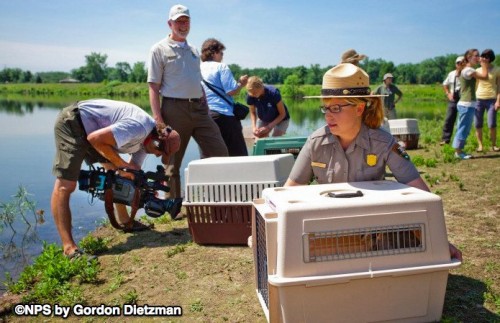
I got a call from the Wildlife Rehabilitation Center that last week and they planned to release 7 of the 9 great blue heron chicks recovered after the tornado last Monday. They invited a couple of us from my park (the Mississippi National River and Recreation Area to be there) and I got to release one of the herons and my fellow Park Ranger Gordon took photos.
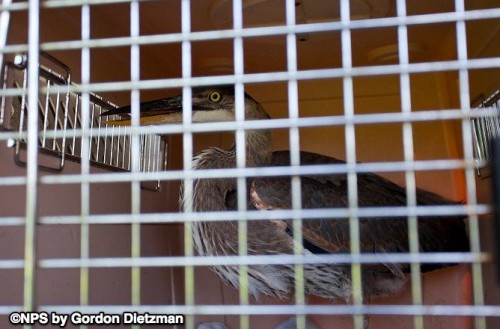
This was the great blue heron in my box. The herons have come a long way from when they were first admitted to the WRC. Videos on YouTube showed their progress--here's one of the chicks honing its fishing skills.
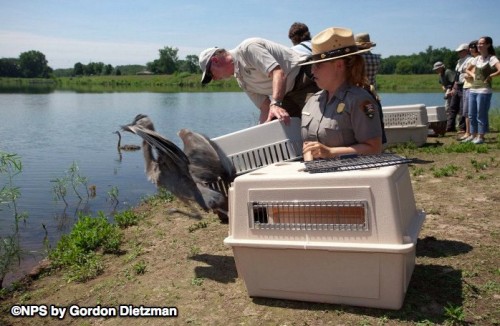
The birds were released at Cenaiko Lake at Coon Rapids Dam Regional Park--a perfect spot since the lake is managed and stocked for trout fishing. It's also not too far from the Coon Rapids Dam heron rookery, so they will be able to watch the local adults to see where they go to forage and learn from them. Perhaps one of the adults renesting in the park is a parent of one of the released chicks? There won't be any magical family reunion, if these are any of their chicks, too much time has passed for the adults to regard these chicks as anything other than a competitor for food and territory.
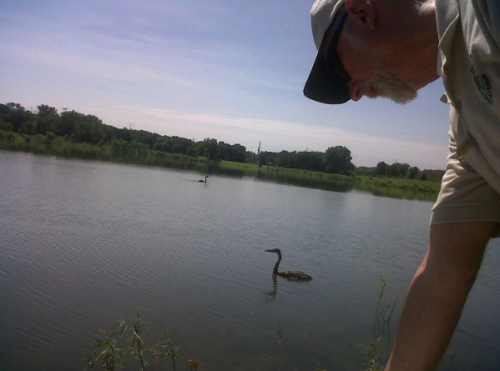
I took this shot with my phone. My heron was one of two that hung out in the water for several minutes after release. I'm sure some if it had to do with the confusion of a new situation for them but the day we released the herons was the first day of that nasty heatwave that ravaged the midwest last week--yuck. I think they just wanted to cool off.
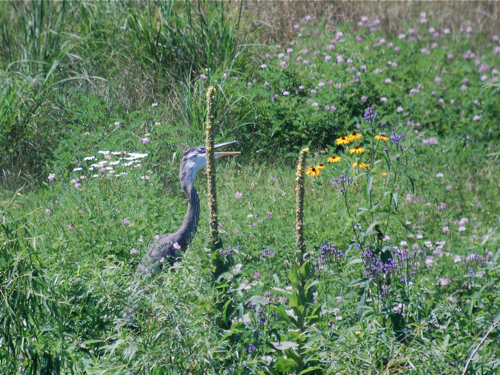
The heron from my box eventually flew to the edge of the lake where it was promptly bapped by some red-winged blackbirds who didn't take kindly to it being in their territory. It then found an edge where it could gather its thoughts in peace and heat. It started panting and I could understand why. I was in my full on Park Ranger uniform and I have to tell you that the poly-wool blend the government makes us wear retains heat like nobody's business. I was only out in the heat in under 30 minutes and I'm certain I lost 5 pounds in sweat. My clothes were soaked through when I got to the car. Eventually the heron flew to a shadier spot close to the water, ready to fish.
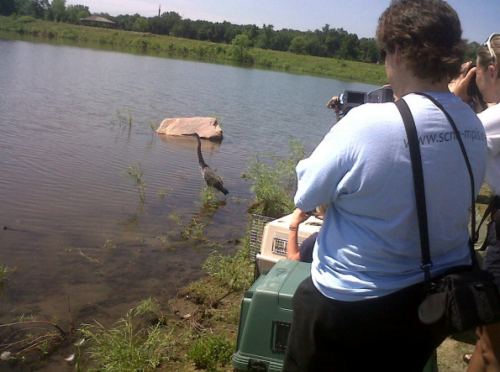
And so this is a happier ending to the Minneapolis tornado for the herons. Though many nests were lost, the herons rebuilt and a handful of chicks have been returned to the wild. These chicks have aa good of a chance as any raised completely in the wild and I hope that they will figure out the best fishing spots and have a chance to migrate south and return next year.
Here's some of the media coverage of the release from KARE 11 , MPR and KSTP. (Mom, you'll be interested in the first 2 links).
And I leave you with a funny video of the herons from the WRC not long before their release. One of the chicks decides to take on a monster sunfish. With that sort of can do spirit, I'm sure the will do fine:
[youtube]http://www.youtube.com/watch?v=c-7KEwkF-kU&NR=1[/youtube]
Completely gratuitous Harry Potter post
Hello all, NBB here. Sharon is in the middle of deadline hell so she's asked me to write a guest post while she gets caught up. The podcast will also be slightly delayed. Since I long ago depleted my limited store of bird knowledge, I thought I'd just indulge in some shameless pandering by writing a Harry Potter post, since I've had to watch the movies prior to the release of Deathly Hallows pt 2. Birds are a big part of the Harry Potter world, not just in the obvious way, but there are lots of little things that lead me to believe that J.K. Rowling is a birder. Of course, the most compelling evidence is the one that everyone notices:
Crookshanks
Hermoine's cat. Right? It's named "Crookshanks." Which is a homophone for Allan D. Cruickshank, who produced a photographic guide to Birds of America. See? See? It's right in front of you, people!
Ugh, you probably want more.
Okay.
Buckbeak

Half-horse, half bird of prey, Buckbeak was probably the most impressive special effect in the movies, if only because the effects artists managed to somehow match the two different creatures so well. Buckbeak had the graceful power of a horse in his body, but his head carried all the curiosity of a raptor. "Is that food? Can I kill that? Can I eat that?" Kudos to the actors for managing to interact with a special effect that wasn't there when they filmed. Buckbeak is sentenced to be put down after he mauls a student, but the student involved was a total jerk, so our heroes decide to save the creature, who now realizes how easy people are to kill. Uhm, five points for Griffindor!
Thestrals
 A Thestrals is kind of like a Goth Pegasus. A flying horse without skin and batlike wings, they can only be seen by those who have witnessed death. They're basically the creepiest My Little Pony ever, and are used at Hogwarts to pull carriages. They use invisible flying horses to pull carriages. Okay! The really odd part is that Pegasus exist in the world of Harry Potter anyway: they're used to pull the flying stagecoach of the Beaux Batons school. And that's all they do, except drink single malt whiskey as their only sustenance. Does drunk flying horses sound like a recipe for disaster? You bet! My guess is that Pegasus crashes are a regular occurrence, spiraling into the ground in a fiery wreck, which produces Thestrals, who as I mentioned look like they've had their skin burned off. Ecology!
Hedwig
 Question: Why would you get an owl for a pet if its primary job is delivering mail and you have no one to send messages to? Seriously. I know it's supposed to be a familiar, but Harry doesn't use it in magic, his parents are dead (OH SNAP! Spoiler alert!), he hates his aunt and uncle and they certainly don't want to get a message that has owl saliva and bits of mouse on it. Add to the fact the number of people who got owls for their child as a pet (legal in the UK) and then didn't take care of them once they realized that raptors don't like to cuddle, and the whole Hedwig thing just makes me so mad I should probably stop thinking about it.
The Danger Of A Stake Out Bird
On Monday, a bird call woke me from my sleep. Half asleep I thought, "Why is a robin singing with a cardinal type whistle note?" Something didn't add up. I rolled over and pressed nose to the screen trying to wake up and figure it out. This is not a sound I hear in my Minneapolis neighborhood...so different...so familiar...what does it sound like?
I went to the bathroom and it sounded as though the bird were right outside the window. I stepped over the tub to the window and pished...then saw it--a Carolina wren! Rare for Minnesota and no wonder I couldn't place it in my half awake state. I stream of profanity let loose from my mouth as I tried to figure out how best to document it. My bedroom and bathroom are both the worst for digiscoping. I dashed to my camera. All my noise woke up Non Birding Bill and he asked drowsily, "Wait, what is it, what's wrong?"
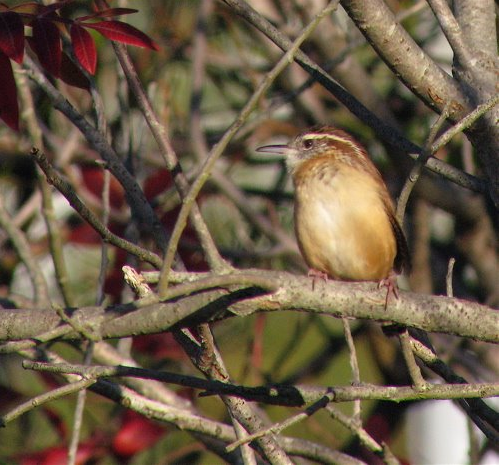
This is not the Carolina wren outside my window, this is one that I took a picture of one in Cape May, NJ. But you get the idea of how distinctive they look.
"Carolina wren outside our window, not supposed to be here," I said searching for an SD card for my camera. By the time I got it, I came into the bedroom to find NBB upright in bed and aiming his iPhone to our window where the bird feeders are. Here's the video he got (you can't see the wren, it's perched just above the feeder, but you can hear it):
[youtube]http://www.youtube.com/watch?v=QQEuDWTiPQ0[/youtube]
Alas, the wren flew off before I could get any kind of photo. I posted the news to my Twitter and Facebook account and then got a couple of messages from local birders telling me that they have either never seen one or at least not in Minnesota and could I let them know if it comes back...panic set in.
The bedroom is by far the MESSIEST room in my apartment--it is the land of laundry and books and the occasional computer part NBB is playing with. I mean, I look at our apartment as a place to sleep between birding trips, not a display of indoor decorating. I can live with people seeing that chaos, but the bedroom? Yikes! Worse yet, there's a whole host of embarrassing things in there. I can't have people in my apartment...at least not the bedroom. The bedroom window is the only window my apartment building allows me to have feeders, the other windows face a paring area and people don't like seed shells and bird poop on their cars, so it's not like I can move the feeders.
Mercifully, the Carolina wren has not returned but I'm still a bit stressed that it could at any moment...
Breathe. You Won't See Every Bird On Earth. A Nyquil Post.
I am a terrible bird watcher. I hate getting up early in the morning. The older I get, the less I care about distinguishing flycatchers (yet, oddly admire those who live for it). I hate birding in the rain--even if it is a life bird that I may never, ever get the chance to see again.

But when I'm forced to get up early in the morning, I'm generally rewarded with cool birds like the above horned lark skulking out on a gravel road above. Rewarded so long as it isn't pouring down rain. I enjoyed having that moment with the horned lark, watching it skulk out of the grasses, keep an eye towards the sky for a an aerial predator and go about its business of being a lark.
As one gets older, I think you take stock of what you can no longer do. I grew up with the notion from my mother that I could do whatever I set my mind to, I think a lot of US kids get that: This baby could grow up to be president, a movie star, a sports star, a Playboy Bunny--or all of them! As you get older, you realize certain things. For example, I remember thinking at my 27 birthday, "Oh wow, I'm too old to pose for Playboy, huh."
But the one thing that hurts the most as I get older is the realization that I won't see every single bird this planet has to offer--no one has. I even get a little down when I realize just based on time and money that I'm not going to be able to visit every country or even every US city the world has to offer. To see all the birds species in the world is a perilous pursuit, just check out the "famous birdwatchers" on the Birdwatching Wikipedia page and it lists all the horrible deaths (and even gang rape) of people who have attempted such a challenge--not to mention some of the bitterness that can come from family as you choose travel over family time. And truth be told, as much as I lament my husband's lack of birding interest, I genuinely enjoy his company and find leaving him behind a big fat bummer.
If time is running out, money is in limited quantity and I can only see so many birds in this lifetime, I do feel much better about not wasting energy on all the flycatchers that look exactly alike and focus on the ones I really find interesting. And, not being a field guide author, the pressure is off for me to care about flycatchers that look the same.

As much as I hate getting up at 4 am, I do appreciate things that force me up at all hours and give me great moments. And more and more, I find myself content to spend time with birds that I've seen several times before but still give me great views. Above is a savannah sparrow that had a nest near where I was stationed. I think that's why digiscoping appeals to me. Sometimes I'll glimpse a brown bird in a gorgeous green background and I want to save that, the green only enhances the subtle beauty of the sparrow.

This pair of savannah sparrows scurried past me several times with beakfuls of squishy bugs for hungry nestlings. I see this species in several states, but I enjoy their familiarity, much the same way I enjoy red-tailed hawks. They also have a sweet, delicated and I fear under appreciated song.

Like the horned lark. This is really a common bird, but many new birders find it evasive and don't realize that the brown bird with black tail stripes they flush as they drive down gravel roads is a potential lifer. But, if you plant yourself on a gravel road, they come out. When you get a chance to see one, they really are striking with the black horns, mask and bib. Horned larks surrounded me not only on the ground, but in the air too. Their territory song serenades me overhead as I note and count certain bird species.

And so I may not get to see every single bird there is out there, but I am content to sleep in as much as I can and smile while a horned lark takes a dust bath in the middle of a gravel road a few feet from where I'm standing.
Digiscoped Images
Fresh Tweets
Would you like to hire me as a speaker for your event?
Email sharon@birdchick.com