
Birdchick Blog
Win A Swarovski Scope
Guess what, gang? http://www.youtube.com/watch?v=Mm0OE0aSoV8
Once again, I have partnered up with Swarovski Optik North America to give away a spotting scope. And this time we are producing a short eight episode web series with birding and digiscoping tips with me and my buddy Clay Taylor. Now for the contest part: the birds in each episode are a clue to the overall series theme. If you correctly guess the theme, you will be entered into a drawing for a Swarovski STM spotting scope!
The series will debut this spring, we are still filming some of it. You do not have to be a top notch birder but it helps if you know birds.
Spotting Scope Contest WINNER!
This contest got a little nuts! It is hands down my favorite contest of all the ones I've ever done, because people made me laugh so freakin' hard! You guys--you are not good photographers. Out of over 500 submissions, I alas, can only have one winner. We narrowed down the 512 entries to 151 finalists and you can see the finalist set over on Flickr...along with the hilarious descriptions. From there, we used a random number generator to select five finalists from the 151 and then we assigned our aloof pet rabbit Dougal to select the winner by scattering treats all over cards with the random five names. Whichever one he ate off of was the winner. But first! Let's see some of my personal faves from the finalists

...like the above feeder in the Rio Grande Valley by Christine Williams, that is a crap photo!
I noticed that we had some subcategories like...people who were too close to the bird (they seriously needed a scope):

Dawn Bailey, you were lucky this bird didn't give you pouch lice...

I'm not sure what the turkey had in mind for AJ Zirch.

Deborah Weston, I hope you survived the goose attack.
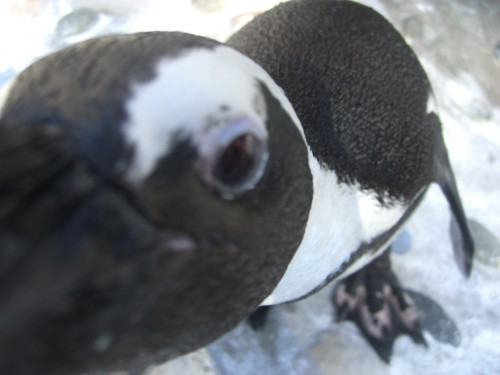
Chelsea McGlynn claimed this penguin gave her nasty bite. Hopefully her camera survived.
Another category that cracked me up was the "near miss." We've all been there.

Sharon Hull almost got that bald eagle (incidentally, that was the most submitted bird species).

Almost got that red-tailed hawk Kathy Java!
There were some photobombs, I loved this:

Robin Oxley was trying to get the jay but the lady wasn't thrilled, the jay was stealing her food.

There were some digiscoping fails like poor Melissa Hero's condor picture.

Then there people like Carrie Laben who got shots of their optics as opposed to the actual bird.

Poor Shelley Rutkin had more vignetting in her photo than actual bird.

I loved the people like Saundra Martz who got shot of their screen in focus...as opposed to the Cooper's hawk who is hiding Where's Waldo style in the photo.
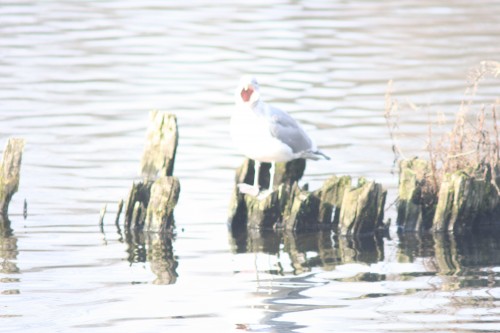 This one by Mandy Klehr cracked me up because she labeled it over-exposed gull mouth...which would be a great name for a Courtney Love cover band.
Then there were the photos where I just kind of asked for it (like the guy giving me the bird...well played, sir, I sprayed coffee out of my nose on that one. But other photos from people who have picked up on certain things about me and used photos that they thought would get our attention.

At first, I didn't quite get this photo...then I saw the feet, then recognized my own feet...a birder on a trip with me out in North Dakota submitted of photo of me peeing behind a truck on the prairie...yep, that's a bad bird photo. You're a dead man, Robinson. Just sayin'.

Kirk Mona submitted this photo of dead eagle he found...very creative, my man.

And bless Wendy Root's heart. I do see the eagle, Wendy. Thank you for pointing it out. I'm gonna go watch some brown birds now.

Though in focus, Claudia Lee's photo is certainly not the best turkey photo I've ever seen. Very creative, Claudia!
And there are the ones that just are so cute:

Like people who have to point out exactly where the bird is and yet, I'm still dubious there is an actual bird. Nice try, Deanna Wright.
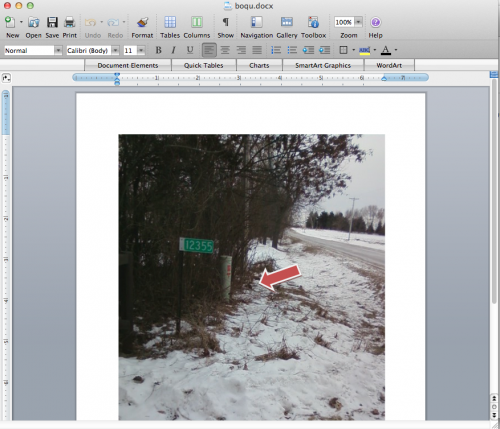 I love this one because it's a crap photo of a bobwhite and Jen Vieth, bless your little heart, you sent the image in a word document. Some of you may not get the beauty of that, but those who do are shaking their head and saying, "Alright."

This was from Adam Beeler and was supposed to be a bad photo of long-tailed manakins and instead, there was a problem with the encoding of the photo in his email. I don't know if he sent it to me this way on purpose but either way--THAT is a very lousy photo of a bird.
Be sure to see the full set of the bad photo finalists.
And now, here is the video announcing our grand prize winner! Thanks again to everyone who entered. All of you made me laugh in the best way for days during this contest:
And now for the video of our winner. Watch Dougal select who wins my spotting scope:
http://youtu.be/A3zadmZv_SQ
Link to the winning photo.
Win My Spotting Scope!!
This is the story of a girl and her spotting scope...
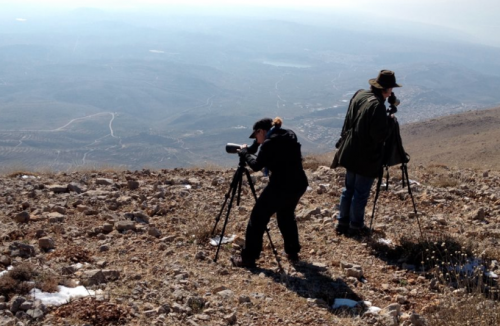
Oh, the adventures I have had with my Swarovski ATM spotting scope. It has literally traveled the world with me. We ascended Volcán Atitlánin Guatemala to see horned guans. We survived rigorous airport security in Kazakhstan to view breeding sociable lapwings on the Kazak Steppes. We got our lifer Syrian woodpecker outside a mine field on the Syria/Israel border. We even delighted in digiscoping tufted titmice at Neil Gaiman’s bird feeders. We’ve showered together when covered in sand and dust. In short: we have had a blast.
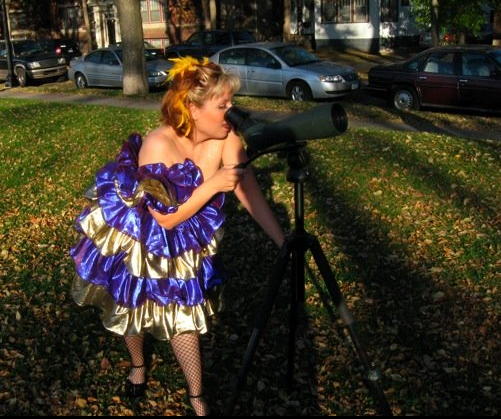
But, some partnerships must end and some things are so awesome, they should be shared. Swarovski hires me from time to time to teach workshops, test equipment and help out at booths. That means I need to have the latest equipment to take to events. When equipment changes, I have the option of purchasing the older equipment or I can send it back to Swarovski. With the debut of the new Swarovski ATX scope, it was time to change out my equipment.
This time I asked, “Hey, could I have a contest so one of my blog readers could get my scope and all the great birding mojo that has built up with it over the years?”
And Swarovski said, “Yes!”
So, anyone who reads my blog has a chance to win a FANTASTIC spotting scope. You will receive my ATM scope with 20 – 60 zoom eyepiece and my carbon fiber tripod (and I’ll even throw in my DCA digiscoping adapter). This is a scope and tripod that has been loved hard and used on a daily basis. I will send it in to Swarovski headquarters to get cleaned up before you get it (maybe Gail can finally get that heron poop stain off) and whoever wins it will also get the Swarovski Optik limited lifetime warranty with the scope. I love this thing, it has been such a wonderful birding companion and helped me id so many birds and I hope whoever wins it, gets the birds of a lifetime that I have gotten with it.

I really wanted to come up with a contest that would level the playing field. The logical thing would be a photo contest, but if you can get really great photos, you don’t need my scope. I want any birder of any age to have a shot at winning this magnificent, light-weight beast. I thought about a guest blogging contest but I know not everyone is comfortable writing, so Non Birding Bill and I kicked around ideas to figure out what would be something universal that anyone could do…and we landed on a contest that would truly level the playing field:
Birdchick’s WORST bird photo contest!
That’s right, kids, send me your worst bird photo: blurry, over exposed, under exposed, funny, weird, get creative. That’s right, I want to see the worst bird photo you can possibly take. There are any number of ways to do it, so you can go bonkers with this.
We will post our favorite images and then those that are selected as our favorites will be entered into a drawing and we will pick the winning name from that bank of entries!
Rules:
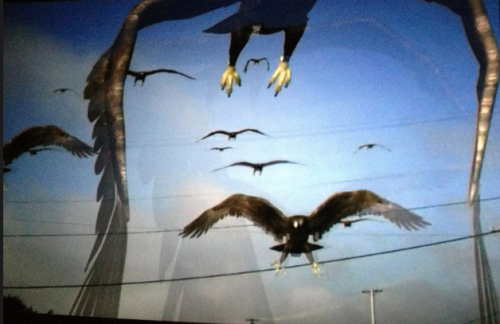
- Photo must be one that you have taken. You can’t just harvest a bad photo off of Wikipedia or Google Image Search. I have strong Google Fu and will find it if you do.
- Photo must be accompanied by a brief description or what you think the bird was that you were trying to photograph.
- Photos must be emailed to sharon at birdchick dot com.
- Photo submissions must include your first and last name in the email and your shipping address (so if you win, I know where to send my scope off to).
- Photos must be submitted no later than February 8, 2013. The winner will be drawn and announced on February 11, 2013.
Don't be afraid to get creative! Good luck!!
Birdchick Photo Contest
Hey Gang! I'm working on a book project and it needs some photos! Most of the book photos will be my own but if I need others, that has to come out of my own pocket. I don't have huge amounts of cash but I do have a $250 gift certificate from Eagle Optics. So here is what I propose:
Submit your photos via email to me. If I choose your to be in the book, you get a photo credit, a free copy of the book and your are entered into a drawing to win the $250 gift certificate. If this sounds reasonable to you, please send me photos!
So, what am I looking for? Birds from all over the world--really any species from penguins to hawks to backyard birds. Things I especially need: European species at feeding tables, nesting photos (any species, worldwide), but really any species of birds outdoors and not in zoos. The book is a bird watching book and essentially and Everything You Need To Know About Birding (we're still arguing title). It comes out in 2013.
Photos must be sharp and in focus! I cannot stress the in focus part enough. Photos must be high resolution for print quality, at least 300 dpi or the largest photo size your camera will export. Also, photos must be your own, meaning you have the right to send them to me.
Please email photos to sharon at birdchick dot com and please include your name, how you would like your photo credited and your mailing address.
Contest Deadline: April 2, 2012
Gift Certificate Winner will be announced April 3, 2013 and I will contact your via email and announce it here in the blog.
The important legal bits (please read):
By submitting an image to me via email, you agree to give me, Sharon Stiteler aka BirdChick.com and Perseus Books the right to use that image in my book and anything related to the book. This may include, but is not limited to, reproduction on the World Wide Web, print in the book or magazine form, retransmission via email, and distribution via all electronic means related to the book including but not limited to eBook, audio book or app. You also agree that you have no implicit right to financial compensation from my use of the image. If you don't like this, please do not send me a photo.
Swarovski Digiscoper of the Year Contest
This is—quite possibly—the coolest contest that I have ever been able to offer on my blog. There are super sweet runner-up prizes and there is one-giant-spanky-mondo-super-cool prize. I present you with the Swarovski Digiscoper of the Year Contest.

These are the official list of rules (and make sure to read them carefully) for entering the contest but essentially, anyone over 18 years of age who uses a camera (either point-and-shoot or an SLR) with a spotting scope to take a photo is eligible to enter. The scope does not have to be a Swarovski scope, it can be any make or model and you can do it by borrowing your friend's equipment.
DO NOT SEND ME YOUR ENTRIES FOR THE CONTEST. You are supposed to enter your photos here.

Digiscoping images must be pictures of animals living in the wild that are created using a digital camera through the eyepiece of a field spotting scope. Above is a western meadowlark that I digiscoped as an example.
Here are the prizes: The best 10 images (places 1 to 10) will be published with the photographer’s name on the Swarovski Optik homepage.
The three entrants chosen as “Digiscoper of the Year North America” will receive the following prizes from Swarovski Optik:
1st PRIZE: EL 32 binocular (I use an 8x32 EL) 2nd PRIZE: Pocket Tyrol 3rd PRIZE: Swarovski Crystal Spoonbill
In addition these pictures will take part in the international Swarovski Optik Photography competition, so enter today.
And remember, this does not have to be a Swarovski scope or even your own scope to enter. Just get a cool photo of a bird or other animal with a scope. And don't limit it to photos, go for video too, get creative and get outside. You have nothing to lose and some great prizes to gain.
I am totally shocked to be offering these prizes... these are like birding magazine prizes. So take advantage of this contest!
Birdorable Guest Blogging Contest Winner
Hey all, sorry for the delay in announcing the winner, but the weekend kind of got away from me. The most popular entry in the Birdorable Guest Blogging Contest was...
Dawn Frary!
Thanks to Dawn and all our entrants, we'll be sending your info on to Birdorable, and you should be receiving your prizes soon.
Birdorable Guest Blogging Contest: Voting!
 Time to vote for your favorite entry in the Birdorable Guest Blogging Contest!
You can view all the entries one this page. When you're done, simply pick your favorite from the drop-down list, enter your name and email address (which will not be sold, rented, given, or disclosed) before Friday, May 22nd at 5 p.m. CST. One vote per person.
Time to vote for your favorite entry in the Birdorable Guest Blogging Contest!
You can view all the entries one this page. When you're done, simply pick your favorite from the drop-down list, enter your name and email address (which will not be sold, rented, given, or disclosed) before Friday, May 22nd at 5 p.m. CST. One vote per person.

Each of the ten entries has already won a Tough Titmice Magnet from Birdorable, and the grand prize winner gets a Birdorable Spotting Scope shirt! The shirt pictured a red-cockaded woodpecker perched on the scope, but they said the winner can choose the bird species. So, if you would prefer something like a Cooper’s hawk, cardinal, or shag, they’ve got you covered.
 So, vote away!
Birdorable Guest Blogging Contest #10: Gunnar Engblom
Time for the final entry: this one comes to us from Gunnar Engblom and details the 11 Peruvian birds you must see.
Thanks to everyone who entered; we'll have the voting poll up shortly!
Why Birds?
Birdwatching is a specialized hobby. The birdwatchers aim to see hundreds of birds during a holiday in Peru. However, there are certain birds that transcend to more normal tourists. Some birds that you don't have to be a birdwatcher to appreciate. Those birds that will leave an impact on anyone who lays eyes on them. These kinds of birds become banner species and tourist attractions and could be decisive to turn a non-birder into a birder. They are also important for conserving habitat and supporting local small scale businesses which often give direct revenue to local communities. I hereby present the 11 most important birds in Peru as tourism attractions.
Condor
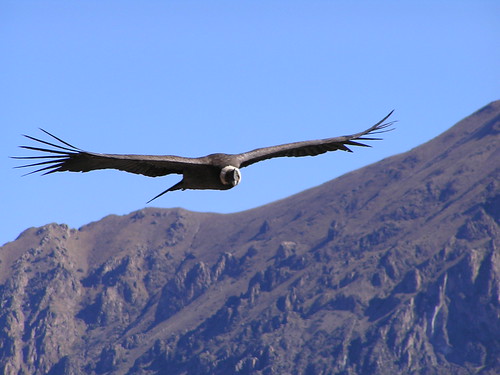
Emblematic bird of the Andes. 100.000 people travel yearly to Colca Canyon near Arequipa to see the mighty Condor. Kolibri Expeditions have found a good viable population in Santa Eulalia canyon only 3 hours from Lima, which also is a good place to see this majestic bird. You'd be surprised to learn that most tourists that come Peru, and those that do not visit Colca or Santa Eulalia Canyon, will not see a condor in spite it being such a tremendously important symbol of Peru and the Andes. The closest they will get is hearing "Condor pasa" - the Peruvian song Simon and Garfunkel made world famous. At every little coffee shop to every fine restaurant in Cusco you will hear it played with panpipes and charrango. You cannot avoid it - not escape it! Strangely enough Peru has yet to raise the awareness of the importance of the species for eco-tourism in other rural areas. As such it may become an important cash cow for communities. This would change the present situation in many places where the species is persecuted and seriously threatened.
Macaw-lick
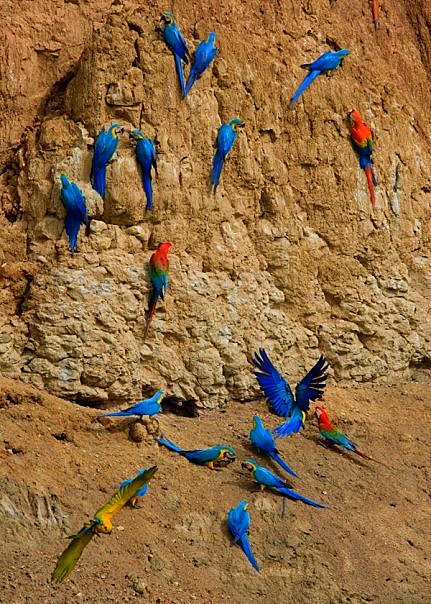 There are two major macaw-licks in SE Peru where these giant parrots descend on sunny clay river cliffs to ingest the clay with thousands of other parrots. The best one that attracts 5 species of macaws is situated in the Tambopata area near Tambopata Research Center. There is extremely important Macaw research going on here and you can help as a participant volunteer. See Tambopata Macaw Project. The other important one is downriver from Manu at Blanquillo near in vicinity of several lodges.
Andean Cock-of-the-Rock
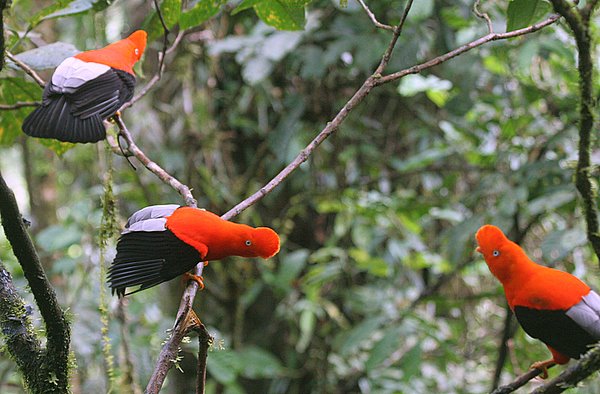 Wow! Exclamation mark is necessary! This surreal member of the Cotinga family has a wide distribution from Venezuela to Bolivia. It is one of the most colorful birds of the Andes. The males gather in "lek" - displays - where the perform ritual dances and make noisy grunts and shrieks. In many places leks have become tourism attractions. The most famous is perhaps next to Cock-of-the-Rock Lodge, but there are several places in Central and Northern Peru where leks also can be seen. Locally, it has become good incentives to conserve forest. Since the cock-of-the-rock is also un-officially national bird of Peru kids all over the country learn to appreciate it. Only five years ago, when traveling in Central Peru inquiring where I could see it, I was directed to the zoo or a man that allegedly had stuffed ones for sale! Things have changed now.
Inca Tern
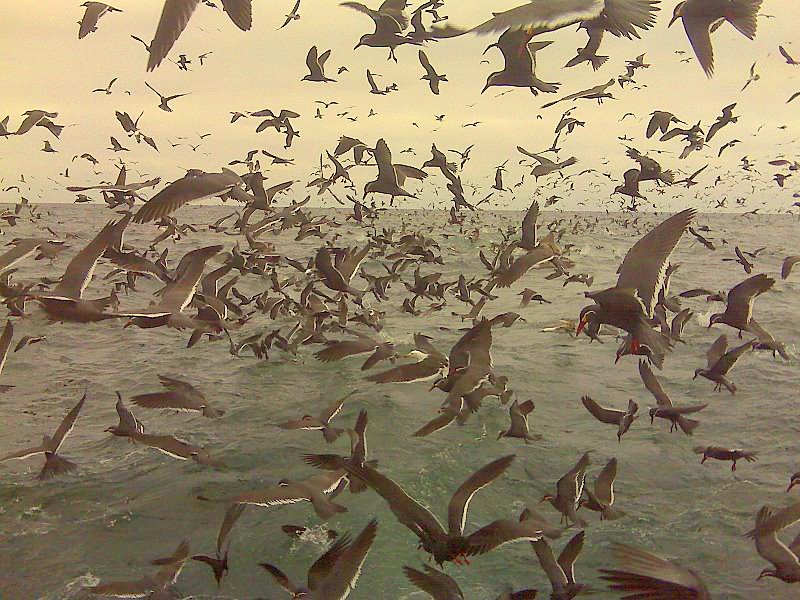
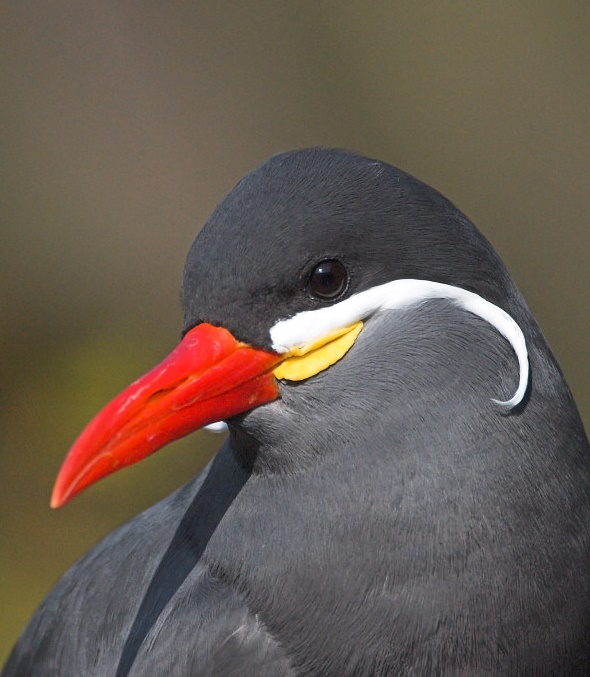
Its coral red bill and feet, and yellow and white waxy mustache on a slaty blackish body makes the Inca Tern the most beautiful Tern of the world. This specialty of the Humboldt Current is not difficult to see in large numbers. In many places it can be approached for a photograph. A spectacular event on the Lima pelagics is when the fish scrap leftover that is used to attract seabirds at the high sea is thrown out after the boat and up to a thousand Inca Terns come in to the stern.
Hummingbird feeders
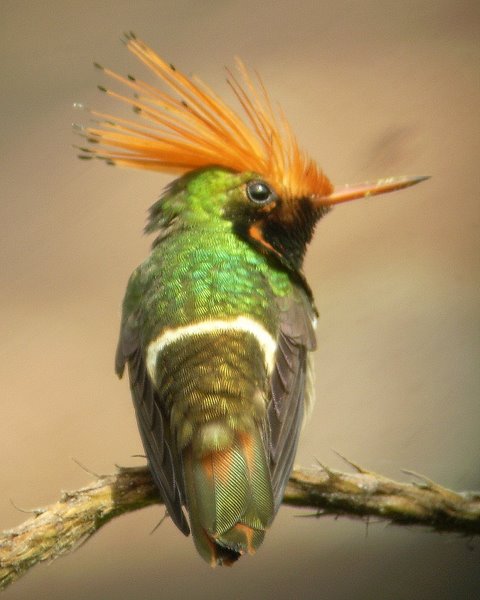
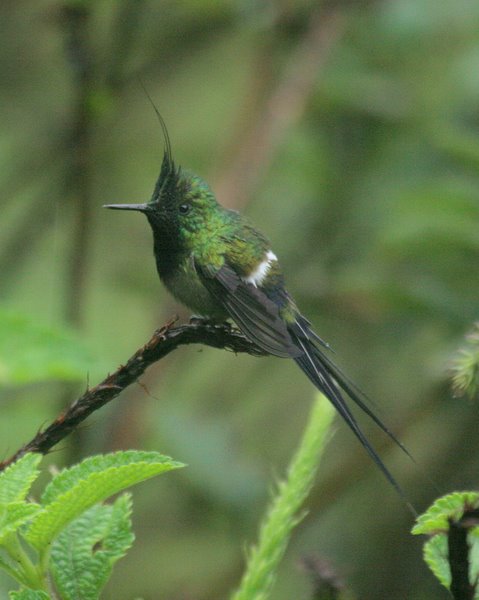
Peru has yet to develop more places with hummingbird feeders, but the ones available are truly spectacular. My favorites are the following.
Amazonia Lodge at the bottom of Manu road, with specialties such as the rare Rufous-crested Coquette, Koepcke's Hermit and Gould's Jewelfront and another dozen of more common hummers such as White-necked Jacobin, Blue Emerald, Gray-breasted Sabrewing and Black-eared Fairy come to the garden with feeders and blue vervain in front of the ample porch of the main building..
Machu Picchu Pueblo Hotel the luxurious hotel with precious subtropical gardens decorated with orchids and bromeliads at the foot of Machu Picchu next to Aguas Calientes village. The hotel also have dozens of well maintained hummingbird feeders spread out in the compound open only to its guests. The specialties include Gould's Inca, White-bellied Hummingbird, Long-tailed Sylph, Chestnut-breasted Coronet and Booted Racket-tail.
Cock-of the-Rock Lodge on the Manu road, has a open veranda dining room looking out to the garden where tanagers are fed and Blue Vervain and feeders attract the hummingbirds. The specialties include Violet-fronted Brilliant, Many-spotted Hummingbird, Wire-crested Thorn-tail, Booted Racket-tail and many more.
Marvelous Spatuletail
[youtube]http://www.youtube.com/watch?v=Df8jhng3xgQ[/youtube]
If I should choose just one hummingbird species in Peru this would be the one. It is the most spectacular Hummingbird in Peru. The male has long streamers ending in blue rackets. It may not yet be a large tourist attraction since it occurs only in Amazonas department and a bit off the beaten track for most general tourists coming to Peru, but it is certainly on the birdwatcher's radar on the Northern Birding Circuit and the principle attraction. Kolibri Expeditions has initiated a project here together with local farmer Santos Montenegro obtaining funds through our clients allowing Santos to buy some land from his neighbors. The idea is to turn the small reserve to a Hummingbird information center.
Chilean Flamingo
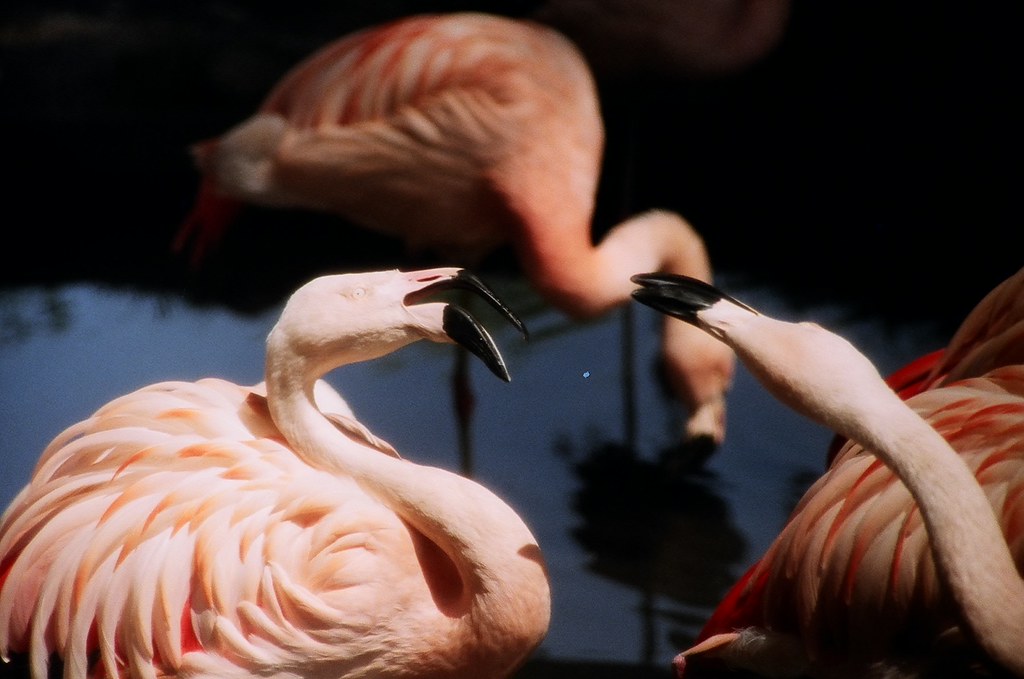 Flamingos are big tourist attractions all over the world, and the Chilean Flamingo in Peru is not an exception, especially since legend has that the flamingos San Martin saw in Paracas before leading the liberation from Spain, inspired to the design of the Peruvian flag. There is not a person in Peru, that is not familiar with this story. Unfortunately, many flamingo colonies are well off the beaten track, except that of wintering flamingos still present at the Paracas bay. One may hope however those remote flamingo colonies could be integrated in sustainable tourism packages and this way supply income to local communities at the same time protecting the colonies. The practice common is the past to scare the colony to take flight for a photograph, is fortunately no longer carried out. It seems to me that Peruvian awareness for the well being of the natural attractions has increased in recent years.
Hoatzin
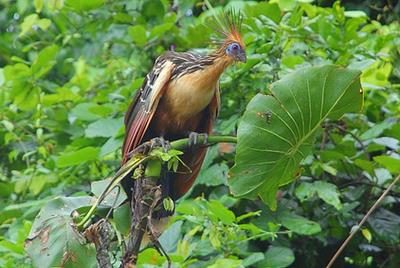 Without being a particularly rare bird, the Hoatzin inhabits lake sides. It prehistoric looks, similar to the Archaeopteryx and the fact that the young have claws in the wings, make it a tantalizing. The hisses it makes add to its pre-historic image. It occurs in colonies and is mostly not hunted because its meat is smelly and not good. It has constantly bad breath as its digest is completely leaves which are fermented in the crop. Hoatzin can be seen in many places in the Amazon. Most photogenic perhaps at Amazonia Lodge.
Humboldt Penguin
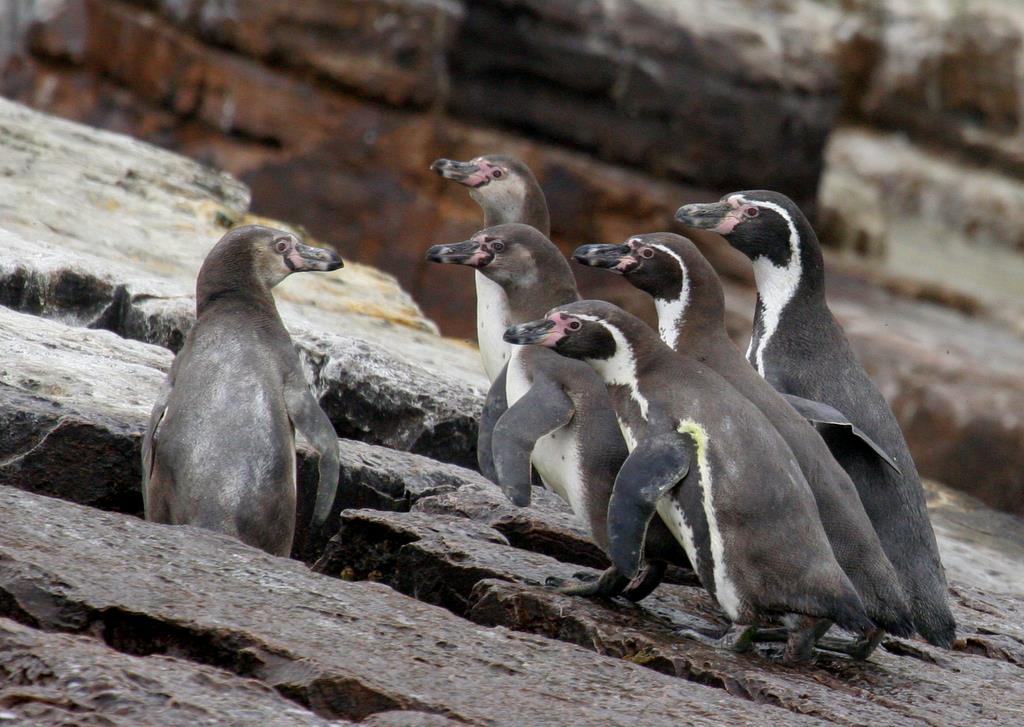 Paracas has been the traditional place where many tourists come in contact with the species for the first time while visiting the sea-lion colonies at Ballestas Islands. In recent years however trips have been arranged to sea-lion colony at Islas Palomino from Callao, Lima, where also the Penguins occur and this is a time effective alternative to Paracas. Recent studies show that Humboldt Penguins are very sensitive to disturbance - much more so - than its close relative Magellanic Penguin that occurs in Patagonia and with colonies that attracts tens of thousands of visitors. Fortunately, there are no colonies in Peru that are accessible to tourists to walk around in. The large colony at Punta San Juan near Nazca is closed to the public.
Other places where one can see Humboldt Penguin include Pucusana and the new San Fernando reserve close to Nazca.
Torrent Duck
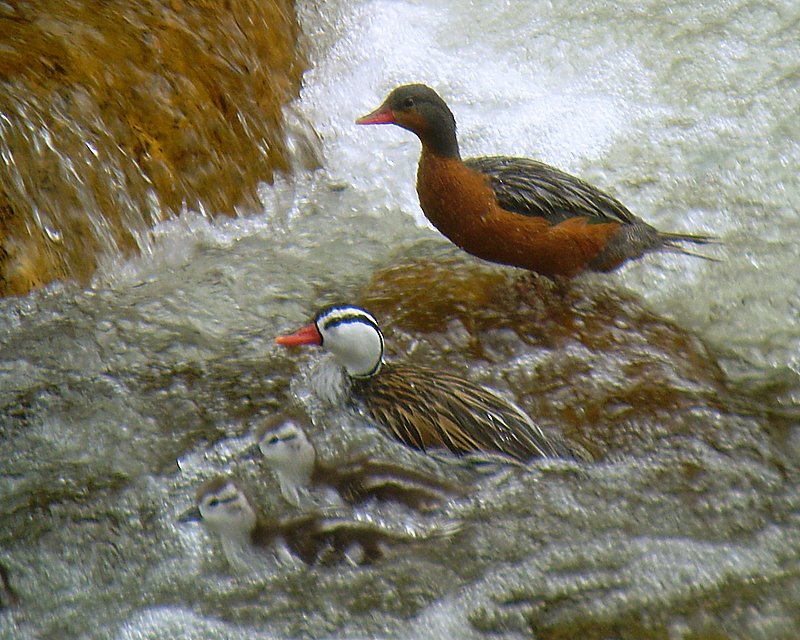 A highly dimorphic beautiful duck specialized living its life in streaming water and fascinating to watch. One of the best place to see them is at Aguas Calientes below Machu Picchu. In fact, they can often be seen looking out the window from the train to Machu Picchu.
Waved Albatross
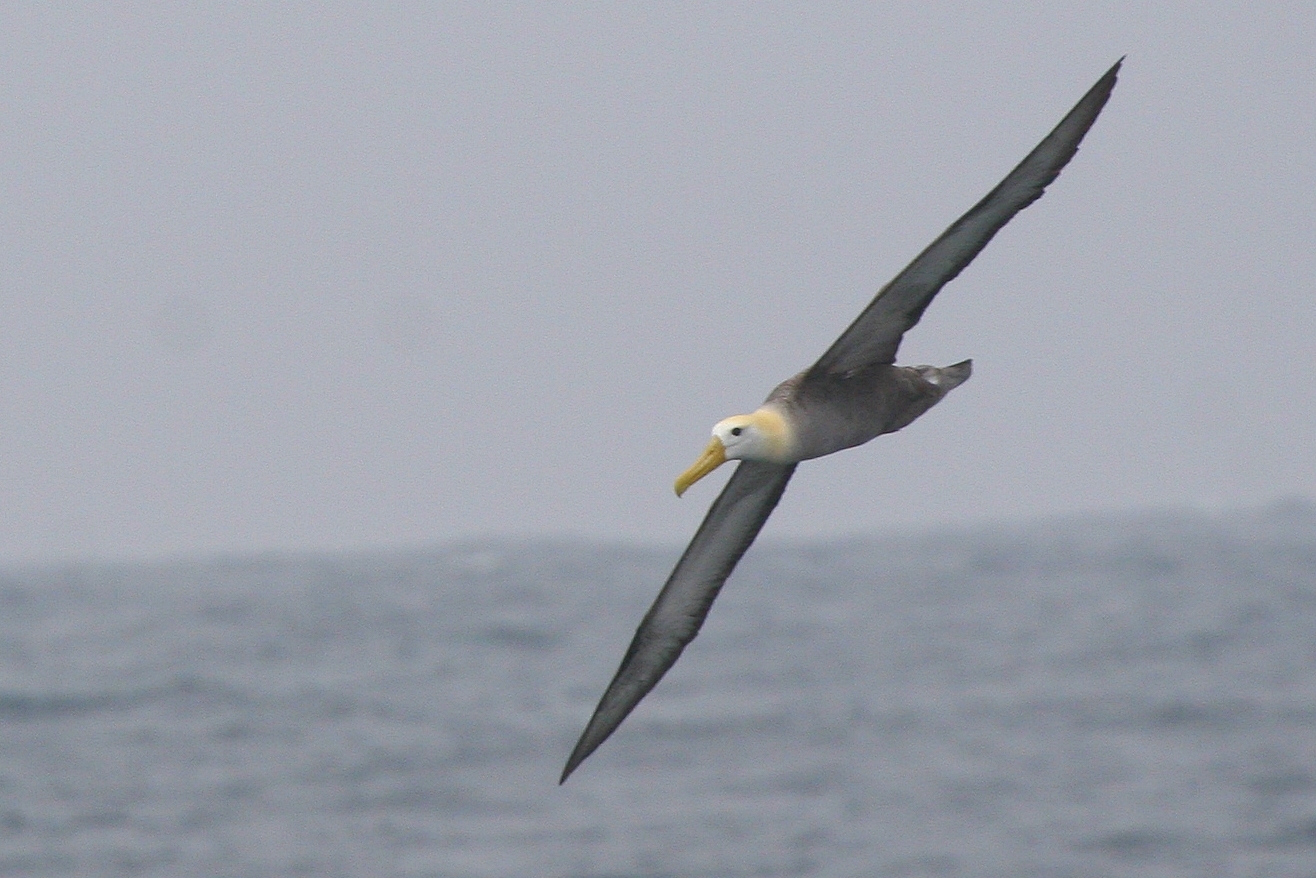 In spite of being a bird breeding on the Galapagos, practically all individuals of the species will spend considerable time in Peruvian Waters in its lifetime when not breeding. The pelagic birdwatching and whale-watching trips from Lima has made it possible for larger numbers of people to see an albatross at relative ease. Waved Albatross is critically threatened due to high adult mortality in recent years. In spite of being one of the smaller albatrosses, with 2.30m wingspan it is still impressive and a highlight for anyone venturing to sea to see it.
This article was brought to you by Kolibri Expeditions. Kolibri Expeditions runs tours everywhere in Peru and can take you to all these birds, providing a full-fledged birding holiday or a holiday to culture and nature on a more general level.
Photos by license of creative commons: Ogwen (Condor), Species snob (Chilean Flamingo), OlliethebastardHoatzin), and Inca Tern close up by Suneko (
Special thanks to Tim Ryan of The faraway, nearby blog, for letting me use his Macaw pictures from Tambopata. All other pictures by Gunnar Engblom and Alex Duran (Rufous-crested Coquette and Torrent Duck). GE´s and AD´s pictures may be used under creative commons license. Link and acknowledge this page. Thanks
Birdorable Guest Blogging Contest #9: Laura Erickson
As we close in on the last two entries (one more today) of the Birdorable Guest Blogging Contest, we're happy to present a rather unusual entry from Laura Erickson, written from the perspective of one of our fine feathered friends.
The Original Norwegian Bachelor Farmer
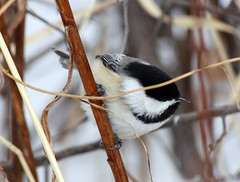
Well, den, I don't know if my ancestors come from Norway, but yah, my mother always said we chickadees are the original Norwegian bachelor farmers. We're very sociable, ya sure, you betcha, but it makes us uncomfortable getting too close to one another. She said we're just naturally reserved.
Well, that leads to pretty peaceable flock relations since no one oversteps their bounds, but like my mother told me, every now and then we have to get VERY close to at least one other chickadee to do what birds and bees and educated fleas do, or there won't be any baby chickadees anymore. Think of the children!
So we have to overcome our inhibitions every spring. But to do that takes a lot of buildup, literally. Our gym teacher told us that every autumn our gonads were going to atrophy. That sounded pretty impressive to me, but my dad said no, we weren't going to get trophies--that's just the technical way of saying that our sex organs would shrink every year. I thought that seemed pretty yucky, but Dad said they're just excess baggage that make us heavier and waste body energy to maintain, which we can't afford in the dead of winter.
But even though they're all shrunken right now, they do need to swell up and be full sized by April or May. To get revved up, we males start singing every January. We try to make it sound as romantic as possible, singing, "Hey, sweetie!" Every time we sing, we feel just a little bit-- well, empowered. And every time our sweetie hears it (and if we sing a whole lot, even some other guys' sweeties!) her heart gets a-thumpin.'
It starts out slow, but by Valentine's Day we're singing quite a bit. With the days getting longer, and sometimes warmer, we have plenty of time for finding food with time left over for romance. By March we'll be singing twice as much as we're doing now, and by April we'll be singing twice as much as we were in March, and by May--well, we'll be so revved up that we won't even need Powdermilk Biscuits to be able to get up and do what needs to be done.
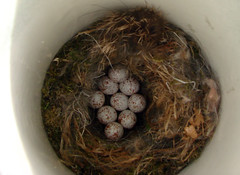
My mate will lay lots of eggs--last year she produced nine! We want to be sure there are plenty of little chickadees to maintain our traditions, but more important, producing such a large clutch all at once ensures that we won't have to go through all that rigmarole again for another year.
Birdorable Blogging Contest #8: Dee Kuder
Sharon is back, safe and sound, and will have many a tale for you about her adventures in Central Asia.
Today's guest entry is from Dee Kuder, of Crane Lake Nature Blog, writing about the life and habits of the Spruce Grouse.
Spruce Grouse
This bird is definitely one of very all time favorites! In fact, some of my friends could say that I am totally obsessed with this bird. I was lucky to find a very cooperative male Spruce Grouse the other day on the Echo Trail.

Spruce Grouse
This photo shows the beautiful sculpting of the back feathers. This bird may be just gray and black, but if you look closely the pattern of the feathers on his back side are stunning.

Spruce Grouse in full display
There’s good reason that back in the old days, this Grouse was called “Fools Hen”. They seem to be completely unfamiliar with people. Just imagine living life in the deep forest with an unlimited supply of food - they live off of Jack Pine and Spruce needles. Their predators are probably few and far between, and if they are being hunted by something, the places that they live, in the deep cover of a Spruce swamp, could deter any attacks. Maybe the terrible taste of their flesh is also a deterrent. Spruce Grouse can be legally hunted, and an estimated 20,000 were taken last year in Minnesota, although I don’t know why anyone would want to cook them up. I’ve heard that the taste of pine neeedles is what they’re all about.
Unfortunately, the Spruce Grouse may be taking the same path as Moose in northern Minnesota. For the past 60 years their numbers have been steadily declining. They may be extirpated (species that formerly occurred in the state but have disappeared and aren’t expected to recur) in northern Minnesota in the near future, just as a downturn in the Moose population is feared. I have heard from some of the locals here in Crane Lake that Spruce Grouse were once common. Now they are considered a very rare bird. Only a few pockets of remote forest around northern Minnesota currently hold these birds. I would love to hear some more stories about this Grouse, please contact me with any comments.
The Spruce Grouse is the only Grouse where you can readily tell the female from the male. Some people can get confused when they see a female Sprucey and think they are seeing a Ruffed Grouse. The Ruffed Grouse is the only Grouse that has a crest - Spruceys will always have a round head. The other very reliable field mark is the chestnut or rufous colored tips on their tail feathers. Both males and females have this marking. Of course, the male is unmistakable - they are beautiful birds!

calm Spruce Grouse
Notice the calm expression in this photo, the red above his eye is hardly showing…

Spruce Grouse with red eye combs
Now he’s a little more excited with his enlarged red eye combs.

Spruce Grouse with rufous tail tips
Now he’s up and displaying, notice the chestnut colored tips on his tail. [youtube]http://www.youtube.com/watch?v=WMrDVBvFAd4[/youtube] The Spruce Grouse in this video was displaying. The most striking thing about this video was the way he was seemingly able to control each and every one of his breast feathers. The way he was moving them around made me think he was trying to hypnotize whatever he was trying to influence. Whether it was a female that he was impressing with his wiley ways or another male that he was trying to prove his manhood to, I don’t know, but this bird is absolutely beautiful! Can you tell I love this bird?
Digiscoped Images
Fresh Tweets
Would you like to hire me as a speaker for your event?
Email sharon@birdchick.com