
Birdchick Blog
Roadrunner vs Cowbird At Spring Mountain Ranch State Park
 I need to get back to Spring Mountain Ranch State Park in Nevada. I blogged earlier that I given the advice by the Red Rock Audubon Society to visit here, since there would be different species than we would see in and around Las Vegas. We saw some great birds and I got a life bird, but I also saw one of the coolest birding interactions I have ever seen.

It started when we reached the actual ranch part of the park. That's Clay and Non Birding Bill setting up their cameras. Clay spotted a predator in the grass:

Can you see it? Believe it or not, there is a greater roadrunner lurking in that grass. Clay gets them in his backyard in Corpus Christi. Roadrunners are incredible predators that will eat snakes, reptiles and even birds. In Clay's yard, the roadrunner stalks house sparrows. He recognized this bird as being on the hunt right away. Most of my experiences with roadrunners has been watching them scurry along a road, so to watch it in full on skulk mode for the hunt was incredible.

The roadrunner would crouch down in the tall grass and slink along with just the top of its head visible. Almost like a feathered shark fin breaking the top of an ocean. Periodically, it was stop for an insect and gulp it down while using the grass for cover. What was this bird stalking for a meal?

A flock of unsuspecting cowbirds. They were following the cow and the horses in the field. The area was recently grazed and the grass was short for the cowbirds to feed, but nearby the taller grass hid a predator actively stalking them. Clay, Bill and I all staked out a position to get photos of whatever was about to happen.

One lone cowbird made the fatal error of straying away from the safety of the flock. I tried to line this shot up so that the cowbird was in front of the roadrunner, but the roadrunner had crouched so low, you couldn't see it. Suddenly, the cowbirds took flight, some went right over the roadrunner. The predator leaped into the air, grabbed a cowbird with it's beak, whacked it a few times against the ground, and took off running. NBB actually got footage of that, which you will see when we get the videos edited together.

I got a shot of the roadrunner crossing the road in front of us with the dead cowbird in its mouth. I previewed this photo on Twitter with the question, "Guess what's in the roadrunner's mouth?" A few were insistent that it was a house sparrow, but this is a young cowbird--note the size in relation to the roadrunner, the white throat patch, the thick dark bill, and the vertical streaks on the breast (young cowbirds have vertical streaks). House sparrows and brown-headed cowbirds are unpopular birds. House sparrows are an introduced species that can wreak havoc on nesting bluebirds, chickadees and nuthatches. Brown-headed cowbirds are natives, but their nesting habit of laying their eggs in other birds nests has caused problems for species like Kirtland's warblers. Many people don't mind a roadrunner eating those particular species. But like any successful predator, roadrunners are generalists. They don't go for just he unpopular birds, many in the western US are chagrined to find roadrunners stalking their hummingbirds feeders.

As we worked our way around the trails, we made it to Lake Harriet, which was an oasis of color. Above is WildBird on the Fly scanning the water for ducks. It was quiet apart from some young coots incessantly clucking. I think this would be packed on a weekend, but on a week day this was a spot where you could imagine being the only person for miles.

It was weird having NBB along on this trip (my birding and non birding world was colliding, my compartments were getting mixed up). I sat at this spot and leaned against NBB for a moment. I'm so used to seeing a beautiful vista and wishing he were next to me or wondering what he'd be doing while I'm and about, it was a treat to have him there to see this with me. My filmmaker husband did surprisingly well on this trip. I must admit that I was nervous with how we would handle being around my birding friends for 5 days and out doing some hardcore watching and filming in the heat. But I think since he was focused on getting footage, he was able to do it. I'm so proud, he got some great footage--especially that roadrunner. Editing is going to take longer than I thought, but this video series is going to be so cool, it's about how you can watch birds anywhere and we're using a small HD camera while Clay experimented with a cheaper hand held video camera with the new Swarovksi UCA adaptor and I took video with my Cannon A570's point and shoot video feature and my scope. On the fly birding videos for the internet, I love making these.

This little lake was chock full of young coots. They don't quite look like the black adults, but when this young bird stepped out of the water, those lobed toes gave it away as a total American coot. Again, I wish we could have explored further, there's an old cemetery in the park and it would have been fun to visit that too. This park was a great suggestion from Red Rock Audubon.

We saw signs around the park that wild burros were possible and as we were packing up to leave NBB said, "Look, burros."
There they were! Wild burrows...well feral burros...oh heck, we all shouted, "Wild Asses!"
Just what we came to Vegas for!

These are feral burros, they were brought over as a beast of burden by the Spanish because they do well in arid climates. The ones that roam the west are the result of escapees or released animals from well over a century ago. They behaved pretty much the way a captive burro would behave and I'm not sure why I got so excited over seeing feral ones. What is it about seeing an unfettered ass that makes me so happy?
So, this is a very cool park and if you have some time in Vegas, check it out. You could easily spend a full day here, but we did it in half a day. It was easy to get in and get out with a rental car. If you don't have a rental car, if you contact Red Rock Audubon Society, you could probably find a guide to take you there for a reasonable fee.
I'm going to end this with some video of the cowbirds. Note how they keep their tails cocked up while they feed. I wonder if they are releasing heat from their vent area as a means to keep cool?
[youtube]http://www.youtube.com/watch?v=hiX_fIBU0js[/youtube]
Spring Mountain Ranch State Park
 When I told people that I was going to Las Vegas on a birding project (and to visit some old friends) people thought I was a little nuts. Vegas in August? The timing may not have been ideal, but there were birds there. Most people tend to think of the casinos and great shows (by the way, we saw the Penn & Teller Show--highly recommend it, we had a GREAT time) in Vegas and my earlier posts have focused on the urban birding potential. However, in just a short drive into the mountains, you can find some fabulous natural scenery:
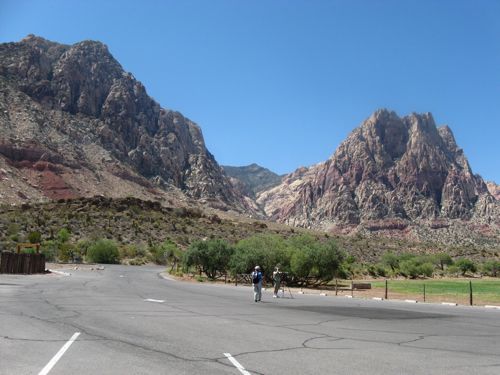
This is Spring Mountain Ranch State Park. Rita at Red Rock Audubon Society recommended this site to our group and I'm so happy we took her advice--isn't that gorgeous? Totally worth the $5 fee to get into the park. It's recommended that you visit this park on a weekday when there are fewer people, on the weekends this park gets packed with people. We were here on a Thursday and there were times when we felt like we were the only people in parts of the park. We didn't have a chance to do it all, but if I ever go back to Vegas, this park will be at the top of my list to revisit.
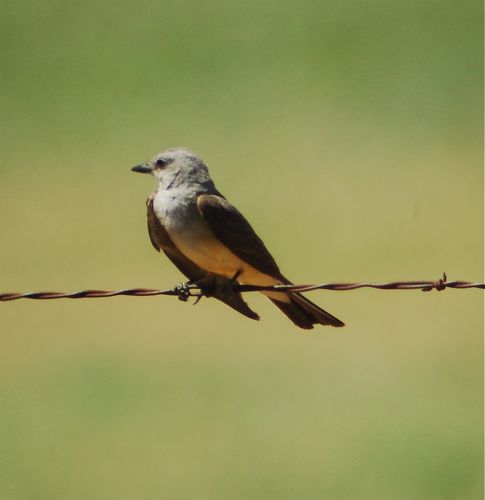
We were greeted by a western kingbird in the parking lot with a lone raven calling overhead. The park's cooler temperatures were instantly noticeable when we stepped out of the van. It was still hot, but this park is 3,800 feet and averages about 10 - 15 degrees cooler than Las Vegas. The drive from our hotel to this park was about 40 minutes, so if you have a rental car, it's an easy day or early morning trip. One of my favorite sparrows was in the parking lot too--lark sparrows! Such a classy looking brown bird. Here's a video:
[youtube]http://www.youtube.com/watch?v=P0XAqZKuaEQ[/youtube]
While we were in the parking lot, we could hear a TON of house finches in the distance. As we all went our separate ways to record video of birds, WildBird on the Fly, Non Birding Bill and myself headed towards the finches.
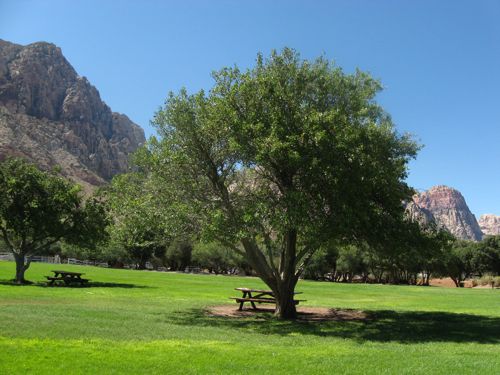
The sound came from this pear tree with branches laden with ripe fruit. The house finches were going crazy eating the pears.
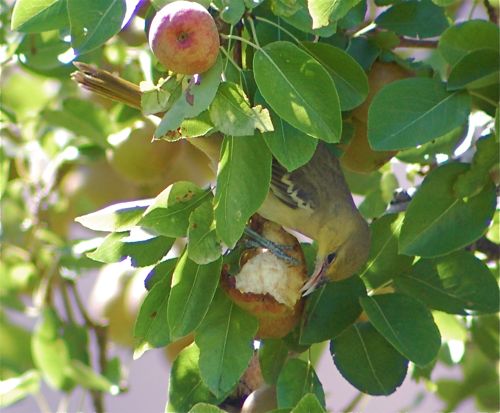
Here's a female Bullock's oriole chowing down on a pear. She worked this one for a good ten minute. It was interesting to watch her wedge her bill inside the white flesh and then open her beak to cut out a morsel to swallow. Western tanagers also flew in to take advantage of the tree's bounty. We could also hear other cool birds around us including lazuli buntings (Which almost caused an argument with me and my husband, it's a nemesis bird for me, I always miss it. As a matter of fact NBB got a clear look at a male before I saw a bunting period. I did not get the best look of lazuli bunting, but I at least got a countable look).
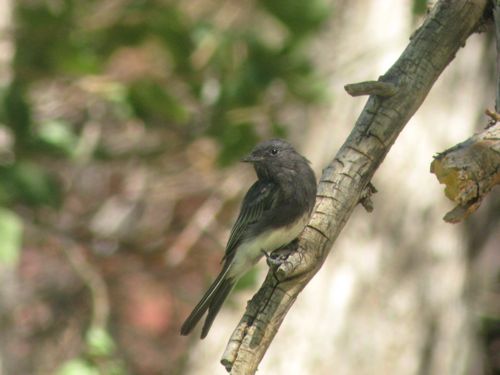
I had WildBird on the Fly try out some of my digiscoping equipment and lo and behold, she actually got a good shot of a black phoebe at the park. This was using my Swarovski scope and DCA adaptor with a Cannon Powershot A570, not bad for a newbie.
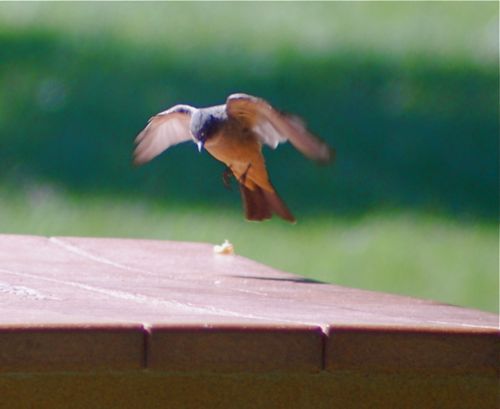
Check out this Say's phoebe I got with my new SLR. I was experimenting with my new Nikon D40 that I got right before I left...which Non Birding Bill pointed out, "Don't you tell people in your workshops to not get their equipment right before they leave? But I figured that Vegas was not the trip of a lifetime and my beloved Fuji FinePix E900 died. The Cannon A570 is a serviceable digiscoping camera but not my favorite. The D40 worked but I did have a strong learning curve. I have to look through the view finder and not at a digital screen with the SLR. All my shot look perfect in the view finder, but had I paid attention to the shots as they showed up for a few seconds after been taken, I would have seen that they were under exposed. So, I thought I was getting 50 great shots at a time, but in reality when I downloaded them, I discovered that I got 1 or 2 for every 200 photos taken.
Again, that is advice that tell people about digiscoping. For every good photo, there are 200 utter crap ones. I think once I get my groove down, I'm going to like this camera, but I'm still trying to figure out how to carry this larger SLR camera and my binoculars.
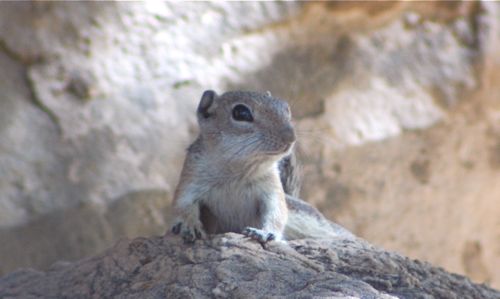
Check out his cutey! The park was full of these tiny critters and when they ran away from you, they had tiny white tails--like a rabbit. My cute mammal centric husband enjoyed these far more than he enjoyed the birds. After checking out my Peterson Mammal book, I learned that this is an antelope squirrel, small social critters that are adept at climbing cactus. We also saw a mountain cottontail and the park brochure said that if you go into higher elevations mule deer, big horn sheep, and kit foxes are possible.
More on this park in the next entry.
Las Vegas And Urban Burrowing Owls
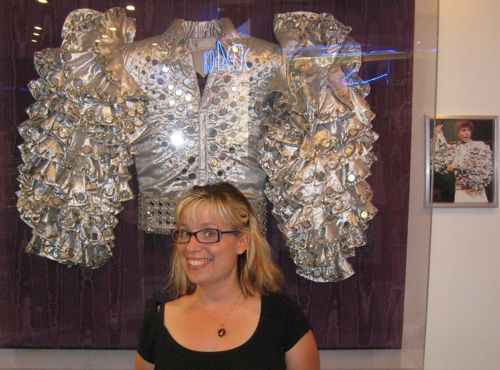 Las Vegas is a strange world that I cannot quite fathom. I get the spectacle of it, I love how just as a visitor, you yourself become a part of the overall Vegas ambiance, you become part of the background of someone else's vacation. I love that I can go into a casino and have my photo taken with parts of Barry Manilow's wardrobe (I know that looks like something Liberace would wear, but believe me, that is classic Manilow). I love that there is a store that sells nothing but Barry Manilow items--a whole store, in this economy, a whole store dedicated to Mr. Copacabana himself (a note--Donny and Marie have a case as a casino shop, but not their own store, that's how big Barry rates). I love that I can turn my phone from a mere Blackberry to a Blackbarry Manilow.
But other parts of Las Vegas baffled me, like golf courses aka lush areas of grass made to fit in a desert landscape.

And then there is the casino itself. If someone wanted to torture me or if I believed in a hell, I think that my version would be in the center of a casino surrounded by slot machines and the only way out is desert heat of 105 degrees. I'm unnerved by the number of slot machines based on my childhood like above Dukes of Hazard or Green Acres (or That Girl, and yes I mean THAT Girl or R2D2 or Indian Jones). Standing in the middle of a place like the Flamingo surrounded by an overhead speaker pumping in Lady Gaga surrounded by blinking machines all playing a different computerized tune with no outdoor lighting totally freaked me out. I marveled at people who think, "Yes, this is how I'm going to spend my hard earned vacation money!"
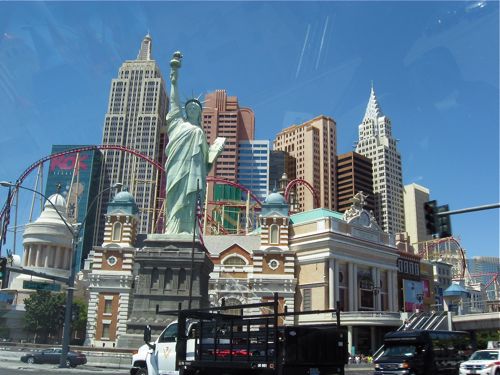
I know I am not one to be putting on airs when it comes to how one should spend relaxation time, we all recharge our personal batteries in our own way. Just as I am baffled by those who sit in the din of electronic over stimulation of a casino, I'm sure there are tons of people who would find my personal heaven of sitting in a dark box on a cold fallow farm field at the crack of dawn waiting for a hawk to fly by so we can band it equally as torturous. To each their own, I suppose.
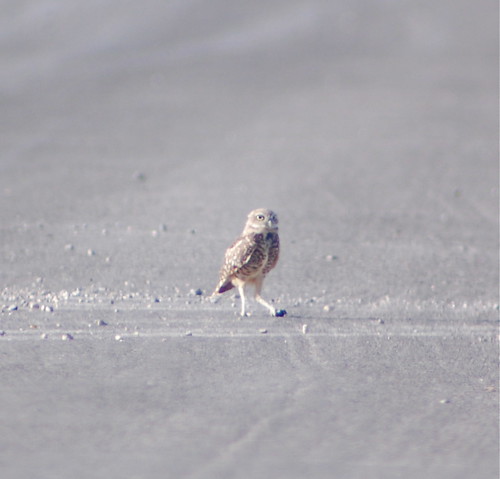
Fortunately, there are plenty of birding opportunities in Vegas. One of the best ways to take advantage of them is to contact the Red Rock Audubon Society who hooked our crew up with Rita Schlageter. They were happy to help us find birds and suggest locations, one being a spot for one of my favorite birds, the burrowing owl (above, claiming taloned victory over a rather large beetle in the middle of a street).
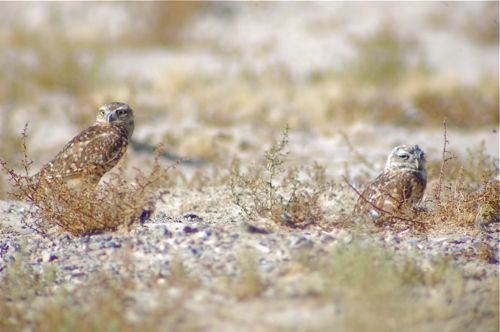
If you want to enjoy the burrowing owls in Vegas, you MUST contact Red Rock Audubon. The members are engaged in a partnership with US Fish and Wildlife for the Urban Burrowing Owl Monitoring Project in the Las Vegas Valley. The goals of this project are to map and monitor the location of burrows used by breeding owls and to educate the public about collecting scientific data and bird conservation. Rita took us to owls that would be good light for filming and were also not too skittish around people. She had a specific distance she wanted us to stay from the burrows so as not to disturb the owls. With her help we got the best view we possibly could have and for me, these were the best looks I have had of this species.
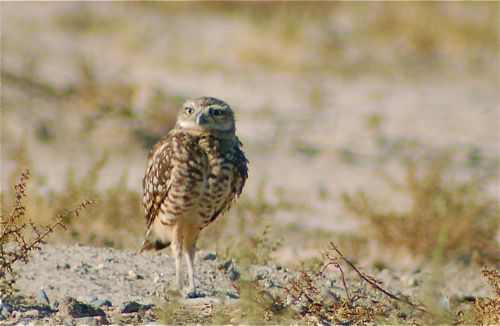
Burrowing owls are a crowd pleasing bird, even my husband Non Birding Bill enjoyed filming the owls. How can you not enjoy an owl that is active during the day, are about nine inches long (with long legs), who take over old burrows or dig their own and lurk at the entrance like a little boy cautiously defending his tree fort from cootie laden little girls?
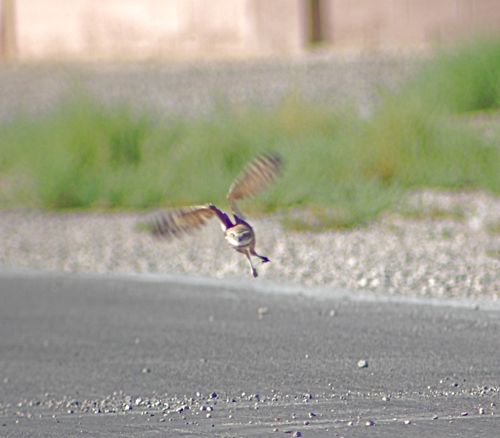
Even though we kept our distance, the owls were not disturbed by us in the least little bit. One burrowing owl we were watching, took off and flew with four feet of our group. We marveled at its bouncy flight, watched it flip around, heard a faint snap and fly back to its original location. Clay asked, "Did that bird just grab something?"
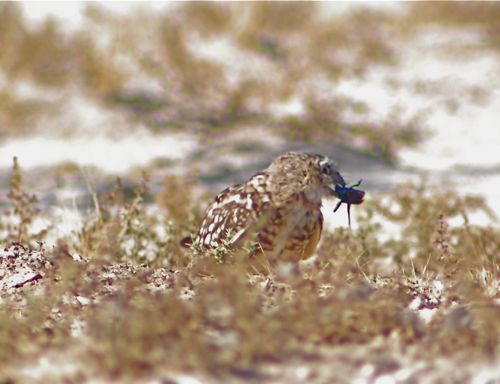
Yes it did! Some sort of ginormous beetle that was flying behind us (yuck, that's what's flying around in Vegas--EW!). Clay estimated that the owl saw it flying in from behind us and when it came in range, made it's move. I just enjoyed having the bird in flight so close to us, what a treat to watch its feeding behavior in action. Rita was a distance away and was impressed by the owl's hunting technique.
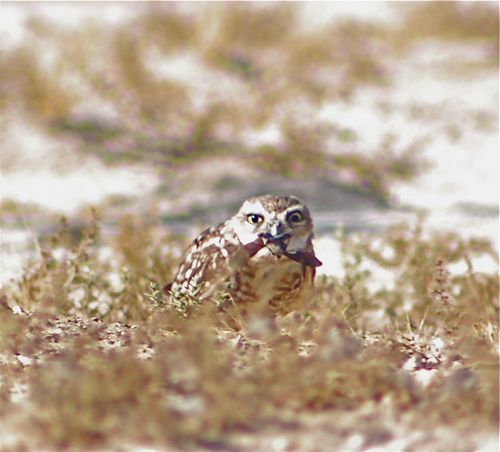
Look at the wild look in the bird's eyes as it nom, nom, noms up that crunchy big beetle. What great pest control for the neighborhood. Alas, it appears to be on borrowed time.
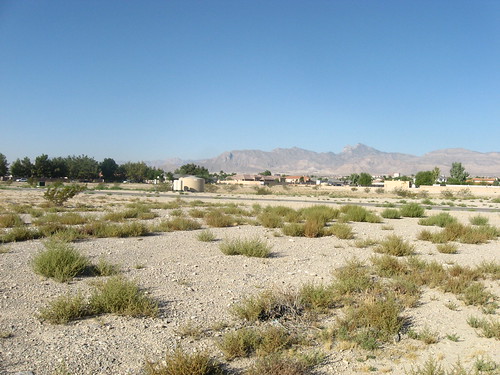
This is the small lot where we found the owls. There's another one across the street and between these two lots were about a dozen owls, perhaps four family group. Rita said that according to Red Rock's numbers, there are about 27 pair in and around Las Vegas. These two lots are slated for development, but thanks to the recession, all construction on the two lots is currently on hold. Once the economy bounces back, construction will begin and all of the burrowing owls will have to move on. Where will they go? Flat open space without trees and buildings is harder and harder to find.

I think we got some great footage for a birding segment here. I'm glad we had an opportunity to experience this spot chock full of cute owls. Consider giving Red Rock a call if you are interested in seeing and learning about burrowing owls in Vegas. Here is some raw footage of burrowing owls, I especially love the little guy lurking in the burrow. I think you will see four individual owls in this clip. One is eating another ginormous beetle. Note how the burrowing owl eats it like parrot by holding it with its foot. Also, I recommend having the volume down, there's quite a bit of wind in this footage:
[youtube]http://www.youtube.com/watch?v=Y-2A0AU-6Vg[/youtube]
Birding Around Henderson Wastewater Treatment Plant
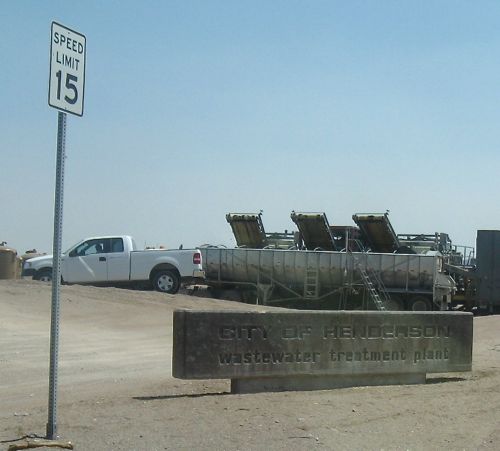 That's right, we did some birding at Henderson Wastewater Treatment Plant and is also known as Henderson Bird Viewing Preserve (doesn't that sound better), which is just a hop, skip and jump away from downtown Las Vegas, about 13 miles southeast. This is a popular destination for birders visiting around Las Vegas and certain times of year will be more productive than others. We didn't spend too much time here, it's hours vary depending on the time of year. In summer when it is beastly hot, viewing is only allowed between 6am and noon. You also have to get buzzed in, sign in and out at the visitor center. Non birding readers of this blog must be imagining all sorts of sordid smells and disgust by birding at a wastewater treatment plant in hot august.
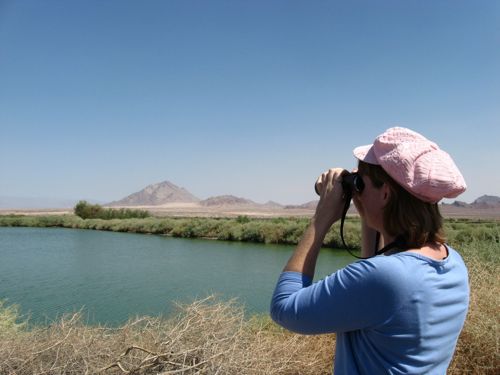
However, the view was quite lovely--isn't that a cute hat worn by WildBird on the Fly? When we first arrived, there were a few black-necked stilts around, but they were rather cagey and took off. We also noticed a few flocks of white-faced ibis.
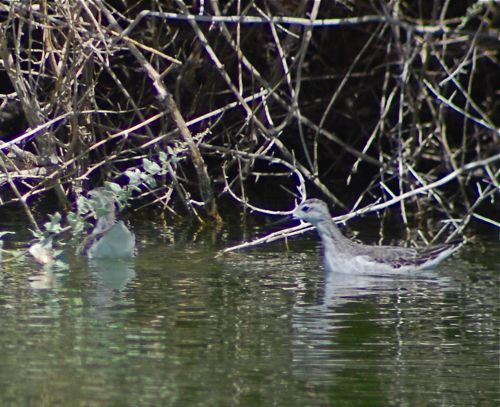
We were there about an hour before it closed, but this place would be loads of fun at 6 am and especially in spring and fall based on what we saw. Above are a couple of Wilson's phalaropes in their non-breeding plumage. A far cry from the beauties I saw in North Dakota a couple of months ago. There were also quail, mourning doves, common yellow throats, one lone snowy egret and a green heron.
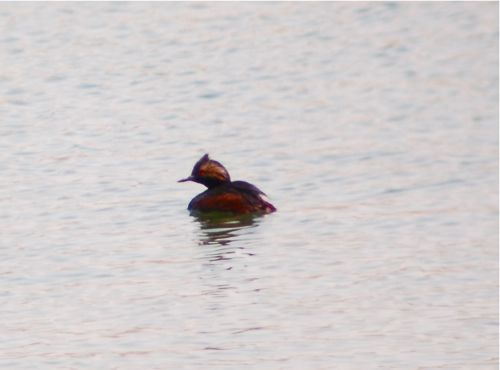
Earred grebes (above) nest at the preserve and one of the men working the preserve showed me some of his photos of a pair with a chick--that he took the day before we visited. There were also quite a few male and female ruddy ducks, although the males lacked the sky blue bill (already transitioning into their nonbreeding plumage, even though we did see at least one female with chicks). Here's a video of one of the male ruddys:
[youtube]http://www.youtube.com/watch?v=XPY3TfXpV0w[/youtube]
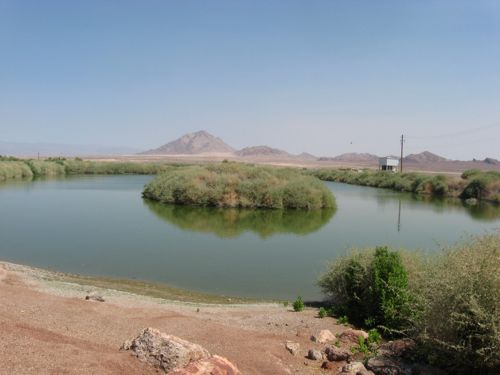
This is definitely a place I would put on my list for birding if I happened to be in Vegas. If what little we say doesn't tempt you, another one of the workers at Henderson showed me a photo on her camera and got a shot of a black-throated gray warbler around the preserve--this is a great birding spot, so close to urban Vegas.
Whirlwind In Vegas
So, our weekend in Las Vegas went from easy paced fun in the heat to holy crap this is really happening go, go, go, go, go! We got all kinds of footage and now that we have completed the filming and I don't feel like I'm going to jinx anything, I can say I went to Vegas to film some birding segments for the Internet. Some of the filming involved Amy from WildBird on the Fly but the other involved someone you may not think would have an interest in birds.
I have to say, you can get some GREAT birds in and around Las Vegas and if you are married to someone who isn't interested in birds or you aren't into the spectacle of the strip but you spouse/boyfriend/girlfriend needs to go for a convention, you can find some fun stuff. There are a few good spots right in urban Vegas and some great places just outside the city where on a weekday you can feel like the only person for miles.
One of my favorite things was going to view some burrowing owls. Here is some raw footage and I would have your speakers on mute, the wind was pretty beastly. This was filmed on the north end of town:
[youtube]http://www.youtube.com/watch?v=EhWK4TE68Bg[/youtube]
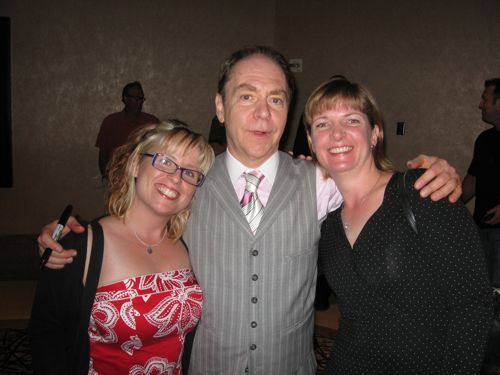
And to give you a hint of the other segment Non Birding Bill and I are editing...here is a hint--below is a photo of WildBird on the Fly and I with the person I did not watch birds with:
Birding In Sunset Park, Las Vegas
 Well, I don't know how I survived it, but yesterday, my buddy Clay Taylor and I (and my poor husband Non Birding Bill) went to Sunset Park in Las Vegas for a little afternoon birding...in 104 degree heat. I was a tad moist at the end of it. I wasn't wearing too many clothes, yet I felt about as soaked as I would working my hives in a full bee suit.
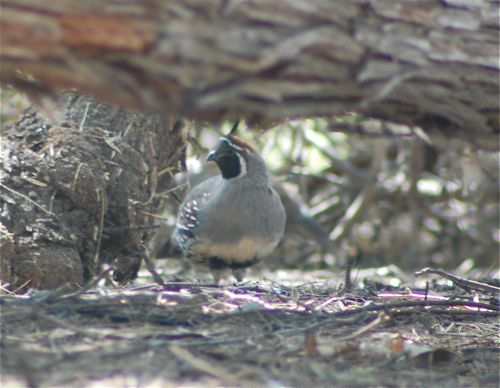
We went for Crissal thrasher who hang around in the mesquite by the administrative building, which we saw but did not digiscope, but we did see tons of Gambel's quail which made NBB hum the Benny Hill theme every time they ran--too cute and too funny. The quail loved to lurk and watch us from the brush, can't blame them for seeking shade. As I was getting photos of the above male, something walked into the shot:
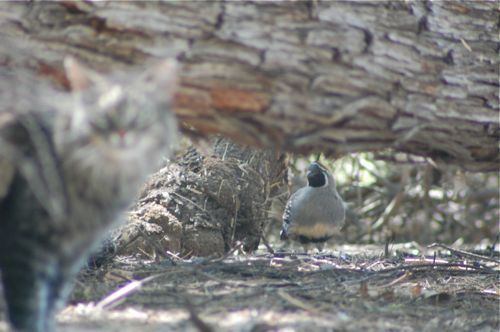
Oh, hello there outdoor kitty. Fortunately for the quail, the cat was more worried about me and the scope than the intended quarry in the brush. I looked up from my scope and the cat skulked away.
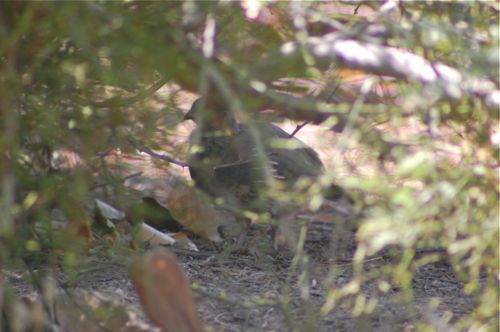
Clay found another critter as I was trying to get this hidden quail. Can you see signs of another animal in this photo. Take a quick look above. See it? I didn't either and would have missed it had Clay not pointed it out. I'll give you a hint if you can't see it, the animal part is on the bottom towards the center left...see it? It's a rabbit ear.
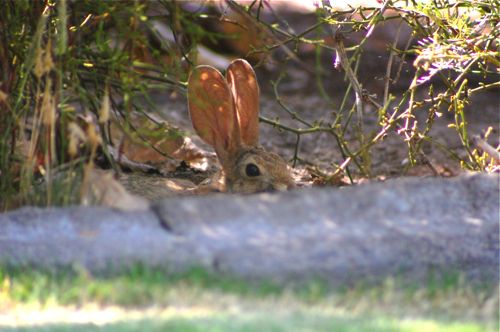
Here I focused on the rabbit. Look at how crazy long those ears are! From this angle I thought that it must be some sort of hare, but it seemed to small in the body.
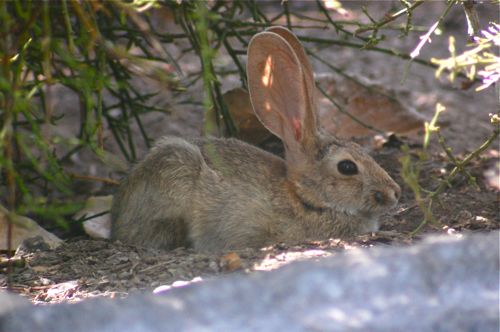
I adjusted my position for a better view and saw that it had more of a rabbit body than a hare body. I quick look on the internet and I found out that it's a desert cottontail. Rabbits use those ears for thermal regulation. Where I live in Minnesota, the cottontails have tiny ears. If you are in the Vegas desert, you need big ole honkin' hears to deal with the heat. My non birding hubby was hidden under some shade marveling that Clay and I could bird and digiscope in the heat. I walked over and told him about the rabbit and asked if he wanted to see it. He declined but said some small yellow bird was coming down from the trees and feed a few feet away. I waited and...
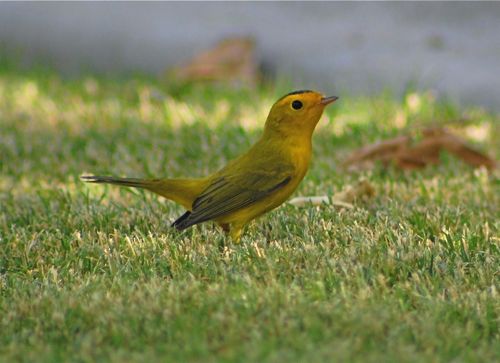
...down popped a Wilson's warbler. How fun to have such a cooperative warbler! We saw these all over in Guatemala and I see them from time to time during migration in Minnesota, but this guy was so cheerful and perky in the heat. We also saw a butt load of mourning doves, black-tailed gnatcatchers and verdin. Not bad for a quick afternoon spot in oppressive heat.
Birding The Tien Shan Mountains Part 2
If you'd like to read the first part of this leg of our Kazakhstan trip, visit here.
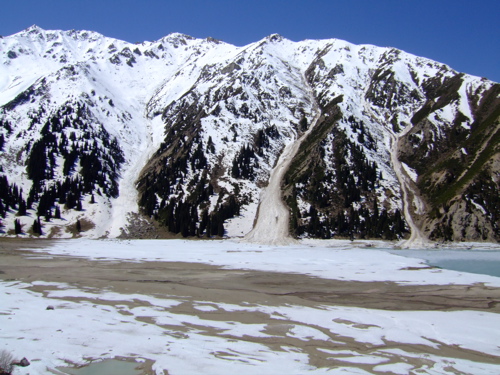
I think the Tien Shan Mountains were my favorite, check it out in the above photo--glaciers! One of the people in our group had been to this area before. He said that his group started earlier than ours and he knew of where we should be and at what time. After we spent the morning enjoying great birds like brown dipper, Eurasian hobby, and Himalayan rubythroats, it was time for lunch. Our guide found a nice clearing in the sun with a great view and not so much snow. However, the other birders wanted to go higher and staged a bit of a mutiny.
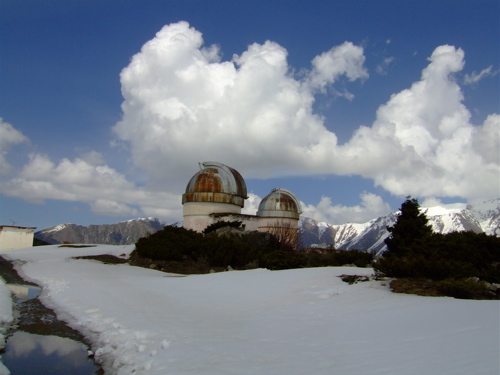
We drove up to a higher elevation that was covered in snow. If you were willing to walk up a very vertical and rocky ledge, you wound up at this abandon research station. And this was where other birds like white-browed tit-warbler. All the birders scattered in various directions. I tried, but there weren't very many clear paths. The few that were there, were covered in very deep water. I opted to walk through the snow and discovered that in some parts, it wen all the way up to my hips. I think I have said it before in the blog and I'll say it again, I have a new appreciation and respect for the REI convertible pants. I stayed fairly warm and the material dried out quickly. It was hard work toting my scope, pack, recently acquired bagged lunch through such deep snow and rather than struggle to keep up with the tenacious long-legged birders in hot pursuit of tit-warblers and accentors, I decided to answer the call of my stomach and eat. I trudged my way to the building's steps.


Above is my provided bag lunch. The food in Kazakhstan was not what I would call exciting--edible, yes. A sensation for the taste buds, not so much. What struck me most was that every single meal (even breakfast) included cucumbers and tomatoes. Usually in the form of a salad with a light dill vinaigrette, but in the bagged lunches, we got a whole tomato and a hunk of cucumber. The above lunch included a boiled potato, apple, hard boiled egg, a chicken thigh with a lot of paprika, and four rolls (one of which reminded me of the female anatomy). Breads were common at meals too. The favorite to eat was a fried bread, kind of like a donut with out the sugar, which is a good way to describe a lot of the Kazak food. At some meals a plate of rice and meat would be in front of you and being fairly close to China, you expected it to be spicy. Not the case, it was quite bland, but if you wanted fuel to keep going, then this food did accomplish that goal.

This was my view during lunch. I could hear several Himalayan snowcocks singing all around me in the crisp mountain air. It was nice to take a break from the birding and just admire the beauty of the remote region I was in. I thought about what I would be doing if I were home, what others were doing. I thought about how huge and beautiful our planet is despite what we hear in the news and how little time any of us have to see it. Sometimes I get to a location and realize that my chances of ever being here again are next to impossible, I want to burn them into my brain. It was already pretty amazing I had made here in this lifetime.
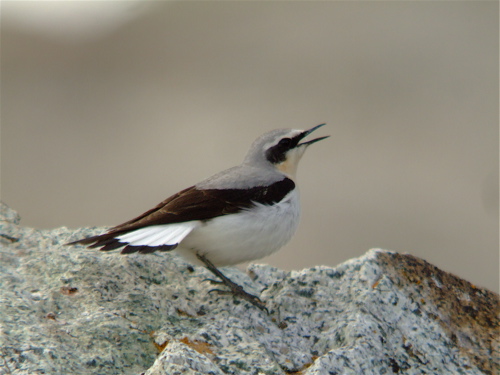
Northern wheatears were all around too. What a treat to see this bird up close! Rarely, one will come down out of Alaska and hit the very northern tips of Minnesota, but never in sleek breeding plumage. And what funny noises they made! This one made sounds like a camera shutter going off. I don't know much about wheatears to know if they are a mimic species. I do know that they make all sorts of crazy sounds, but this one really had my attention. I did manage to get some video with my digiscoping equipment, you may have to crank your volume to hear it:
[youtube]http://www.youtube.com/watch?v=91JBg6ZzJog[/youtube]
My buddy Clay came over and digiscoped it too. He pointed to the mountain side behind the wheatear where we could hear snowcocks chasing each other and said, "See the Batman?
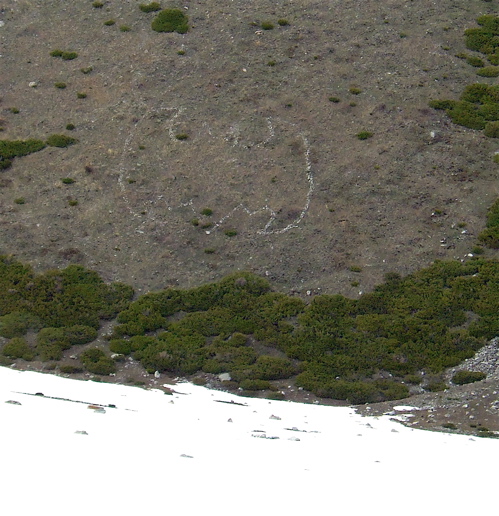
And there it was, the Batman Insignia made of a collection of fairly large mountain rocks. If I had to guess, it was about 40 feet long. Those researchers at the abandon station must have gone pretty darned stir crazy sometimes. I love how I'm in one of the most remote regions on the planet and yet, cannot escape Western culture.

Much to the reluctance of our group, we had to begin the slow decent down the mountains. It was early afternoon and we had to get down to the bottom in time for dinner and for part of our group to leave. I stayed for a couple more days, but most of our group was leaving that night and getting a large group of birders to move, especially in a place where once in a lifetime birds are packed, is no easy feat. Above was one of our target birds called a black-throated accentor. This little bird just refused to perch in better light, but you can see a photo of it here. The higher we went, the less variety we had, but still cool birds nonetheless. I don't think anyone in our group got the tit-warbler, so I do have some excuse to come back.


This was lovely little bird that we saw flitting about called a blue-capped redstart. I'm not sure where the redstart comes from, but at least it had a blue cap.
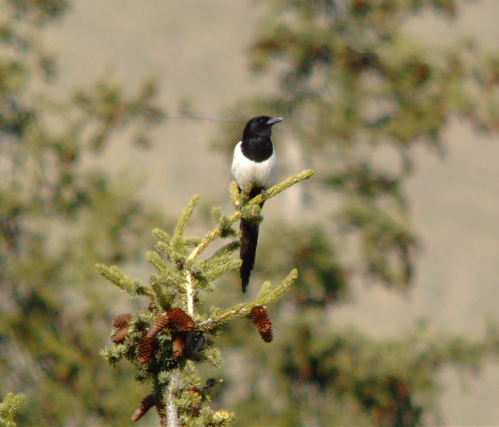
Magpies were common on the Steppes in Kazakhstan and common in the trees in the mountains.
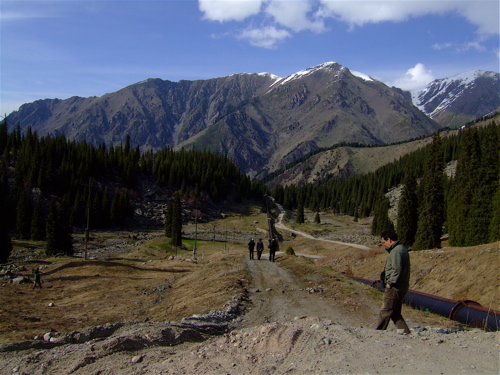
As the day became later, the light became perfect. We saw less and less snow and our faster pace made us warm up.

Tim Appleton (the guy who started the British Bird Fair) and is one of the most interesting birders I have ever met) came over to us and said, "There's a ruddy shelduck in perfect light for a photo." He was correct, what lovely color this duck was. We had seen them earlier on the lake, but they were very far away, this one was much closer and Tim was correct, in perfect light. It was about this time that I was starting to fade. Kazakhstan is about eleven hours ahead Minnesota and we'd been hitting hotel beds at midnight and getting up by 5am pretty regularly. Fortunately, Corey Finger became my pusher man with his oh so tasty cappuccino caffeine pills--bless that man. They did have some coffee in Kazakhstan but it was more int he form of NesCafe.
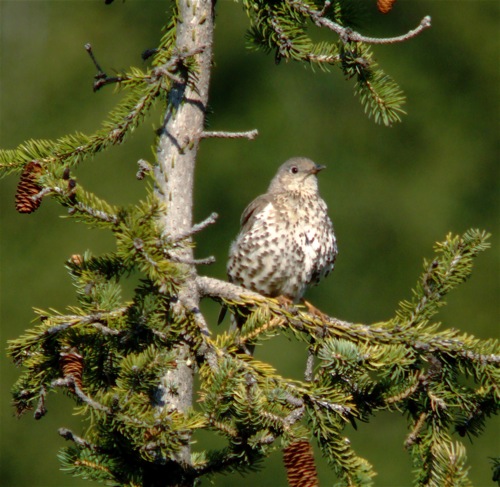
After perking up, I was able to enjoy the birds, like this mistle thrush perched in perfect view taking a preen. You can view a video of this large robin like bird here. We eventually made our way down the mountain, but moving a group of birders is like herding cats, we made it to the restaurant late and many of the people taking flight that night had to change clothes and repack carry on luggage in the parking lot.

The restaurant had all kinds of Kazakh symbols around, even part of a replica of the Independence Monument found in Independence Square in Almaty. The full monument is a golden man holding what I think is supposed to be a golden eagle and the golden man is riding a flying snow leopard. I know the bird is dinky for a golden eagle, but hey, this is a golden man, chances are if a dude is made of gold, he's going to be bigger than your average male. When I told people that I couldn't believe I had the chance to go to Kazakhstan, one of the first reactions was, "No one ever goes there." The truth is that I have always wanted to go, ever since I had read about tours to see Kazakh tribesmen hunt with golden eagles. We didn't get to do that on this trip, but we did see wild ones flying over.

Here is one of the dining rooms at the restaurant. We didn't get this one, our room had chairs, but it's basically the same decor and color in a huge outdoor gazebo. All of our chairs had blankets we could drape over ourselves as the darkness brought with it the cold mountain air.
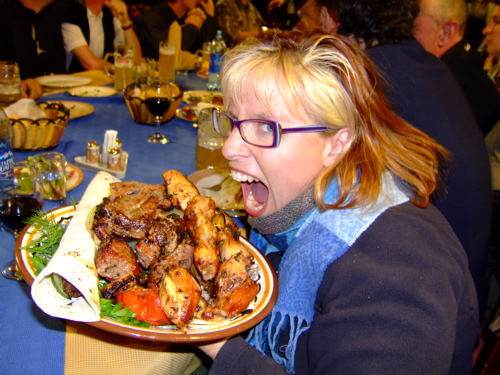
By the time the food arrived, I was so hungry that I could eat a horse, which was fortunate, because that's some of what they served us. They also had chicken, beef, and something tougher that I suspect was goat, but the horse was a surprise. It was mixed in with a cucumber and tomato salad (again with the cucumbers and tomatoes) but it was pleasantly marinated and was quite possibly the tastiest thing I had the whole week (outside of the odd pizza that had no sauce but had carrots as as a topping).

After is was quite dark, one of my favorite bird names dropped in to our gazebo--a great tit. The bird fluttered right over us and began hawking for insects attracted to the light bulb. Clever bird, ignoring the usual convention of roosting at night and taking advantage of an abundant food source.
Birding The Tien Shan Mountains Part 1
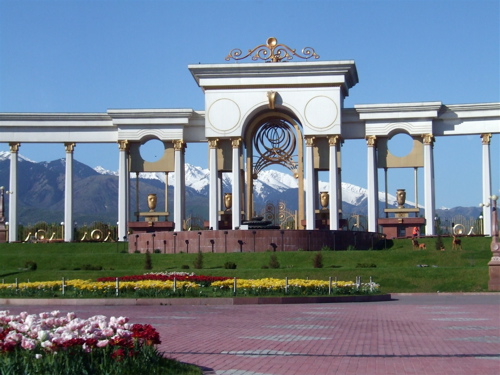 I've blogged quite a bit about the first part of my amazing trip to Kazakhstan. We spent the first half on the Steppes (short grass prairie) and then flew from Astana to Almaty. I think my favorite part of the trip was exploring the Tien Shan Mountains near Almaty--beautiful, remote, rugged. Everywhere you went, even in downtown Almaty (above) you felt that adventure was just around the corner.
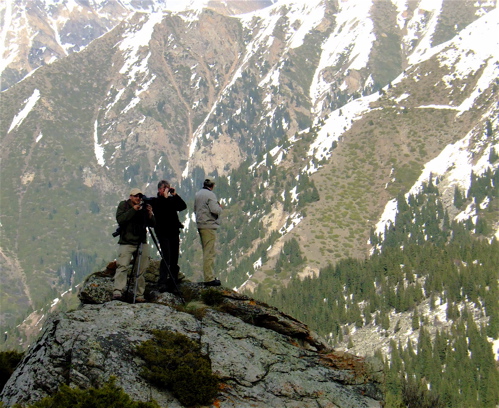
And for people who think birding is boring, I submit this photo. How can you see birders perched on on a peak surrounded by snow capped mountains in Kazakhstan and say that bird watching is boring? Especially with the types of birds we saw.
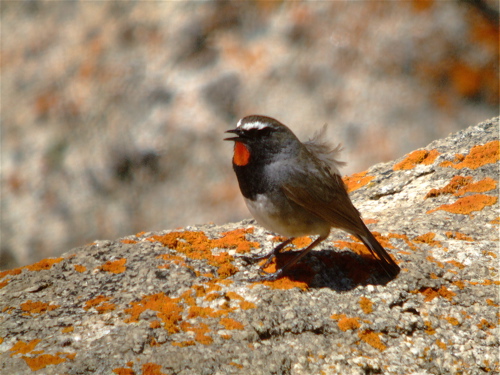
Look at this little beauty. This is a Himalayan rubythroat singing on territory--I love that I saw birds with the word "Himalaya" mixed into their name. Some of the other birds our group saw on this glorious day included red-mantled rosefinch and fire-fronted serin.


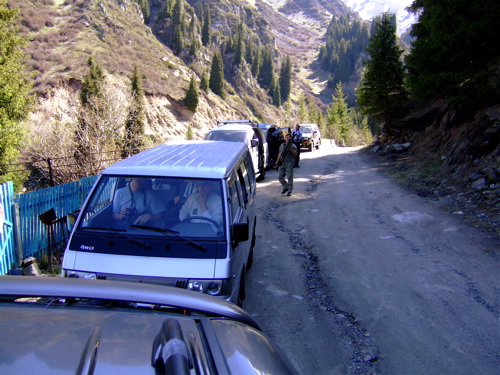
After an interesting breakfast of cold cuts, tomato cucumber salad, porridge, various breads, really white sausage, and Nescafe we loaded up into vans and took some very vertical and rutted dirt roads into the Tien Shan Mountains. We were on our way to Ili Alatau National Park (follow the link to the park and take note of the wildlife species list). It was a warm May day outside our hotel but I noticed that the mountains in the distance had snow, so I wore my convertible pants, socks with my Keens, wore a fleece and kept a scarf around my neck.
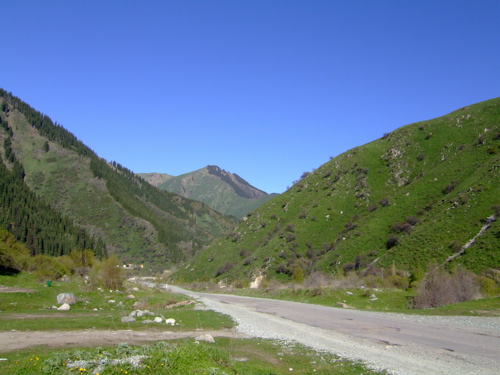
Everywhere we looked, we were surrounded by grandeur. We made a few stops for soaring raptors and found black kites and a non raptor called a chough (pronounced "chuff"). All kinds of smaller birds could be heard echoing from the mountains.


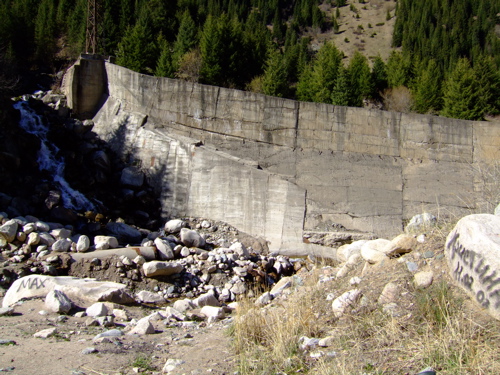
We made a stop here for brown dipper. It was cumbersome getting a large group of eager digiscopers around the rocks, we were all impatient for this cool life bird and anxious to get a photo. I got a brief look and the bird flew round the bend. Some of the group followed, but I opted to stay in my spot. If this dipper was like the dippers in North America, it would be back.
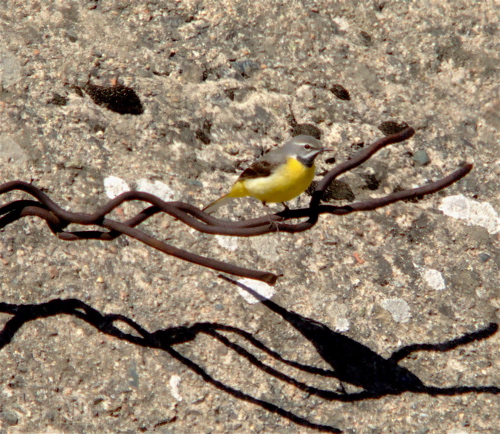
While I waited, a grey wagtail perched nearby. One of the British birders made a comment that I shouldn't be wasting time with that species, there were more exciting ones to be seen. Wagtails in all sorts of color variations are prevalent in Europe and since I hadn't been anywhere near Europe up to that point, it was very exciting to me.
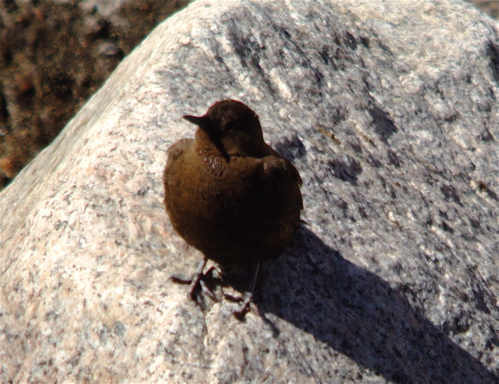
The group that followed the brown dipper got great looks at a mating display. All of us ended up getting photos of this little brown bobbing bird.

We eventually made to our destination--Big Almaty Lake. Our target bird was a shorebird called an ibisbill. The birds have nested in this area in the past. Alas, we did not see it on this trip, but who cares when you have scenery like that to take in? Despite all the snow and ice, it was perfect hiking weather. I even had to remove the fleece because I got so hot.

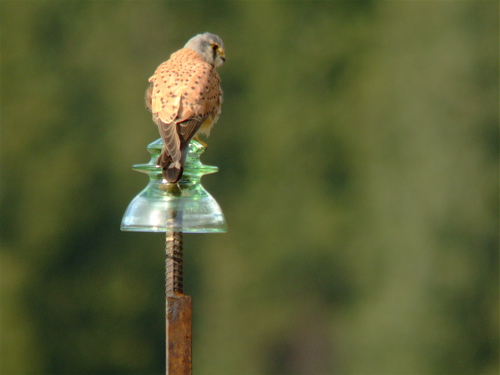
There was a pair of common kestrels hunting over our heads (above is the male). That was not the only falcon--there was also a pair of Eurasian hobbys screaming and flying overhead--I was so excited to see those and they totally make up for the lack of ibisbill. I have always wanted to see a hobby ever since I was a kid and watched an episode of the Leo the Lion called The Falcons when an angry flock of hobby falcons get dropped off in Leo's jungle via a tornado and attack all the animals.

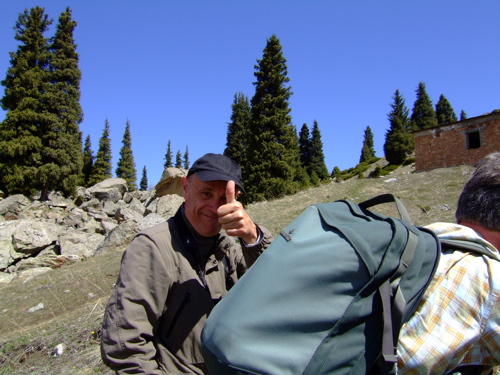
While we were walking, we could hear Himalayan snowcocks calling all around us. They sound kind of like loons or perhaps a bit more like elk. I scanned the tops of the mountains wondering where they were when Philippe Jacques Dubois (the dude in the above photo) actually found them with the scope!
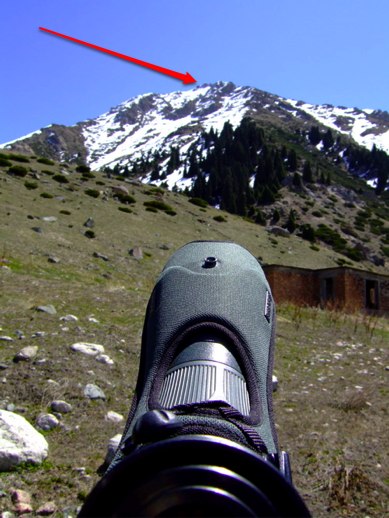
The arrow is pointing to roughly where the snowcock was standing and calling.
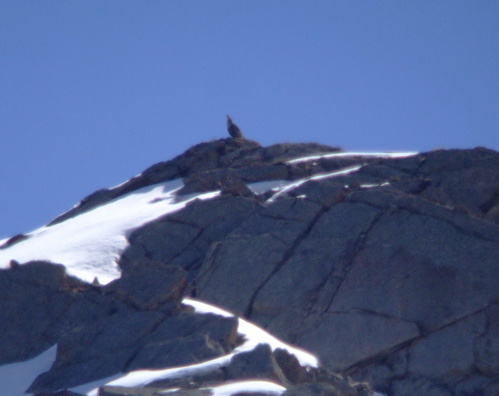
And there is the snowcock and here is a link so you can what they look like close up. There was also a female who would pop up and down causing the male to go into full display mode--it was awesome. I was so excited to see these birds here in their native habitat. We actaully have a population of these birds in Nevada...a snowcock introduction program was started in the 1960s because Nevada felt there weren't enough native game birds to hunt, so why not bring in an Asian species?

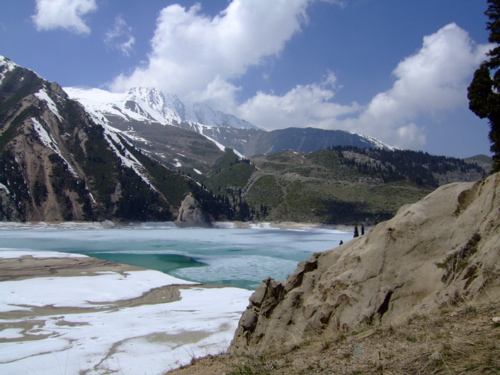
But being surrounded by the gorgeous mountains while listening to the lonely wail of the snowcock made for a perfect day.
More coming.
Playing With The New Swarovski Digiscoping Adaptor
Now that spring migration has settled down a bit, I can talk more about Kazakhstan. I took out a group this weekend for some birding and one asked, "Why did you go to Kazakhstan?" There were several reasons, the biggest was that I have always wanted to go ever since I read about the country years ago. It sounded wild, remote and untamed.
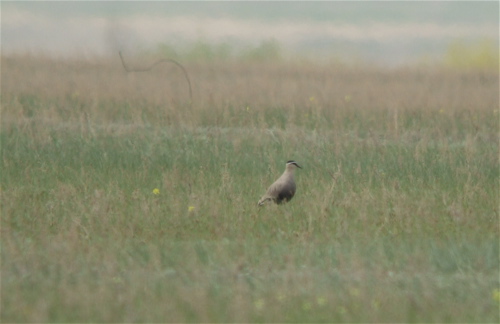
The other reason was a bird called the sociable lapwing (kind of a very snazzy killdeer--seen above). Swarovski Optik is a species champion of this bird through BirdLife International. It's a bird population that has dramatically declined in recent years and is of great concern. It's not certain what the original population was on the Steppes of Kazakhstan. There was a count of 5,000 birds in 1990 and another count in 2002 put their numbers at 1200 in 2002.
Current research suggests that the decline of the sociable lapwing is due in part to unevenly grazed habitat. Sociable lapwings used to live among ungulates known as saiga (do click on the photo of the saiga, that is one crazy looking ungulate). As the saiga declined, so did the sociable lapwing numbers. Incidentally, there were about 2 million saiga on the Kazakh Steppes in the 1950s, but a dramatic decline hit in the 1990s because of poaching--Saiga horn is used in traditional Chinese medicine as a fever cure. The lapwings apparently really liked the way the Saiga grazed the grasses to make watching for predators good for them when they are nesting.
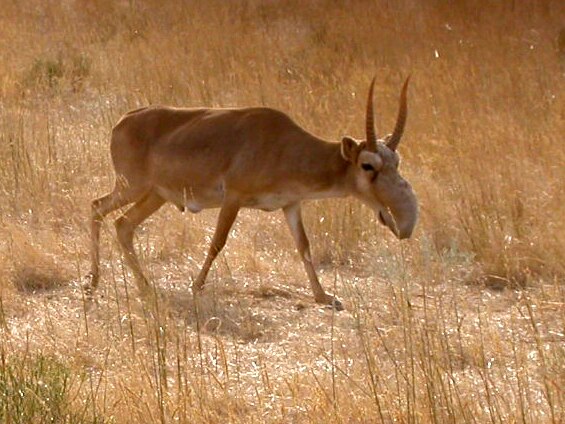
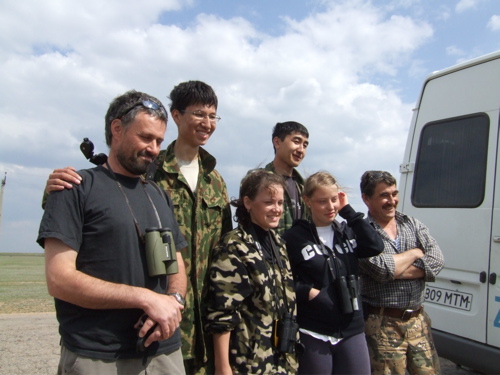
Swarovski and BirdLife International has made it possible for teams of locals to come out and monitor the lapwings, work with the locals to appreciate the birds and hopefully avoid the nests, and to work with cattle owners to graze in a way that mimics saiga grazing and is favorable for the lapwing. Note the young faces who are part of the Kazak research team, it's local people working with their birds and their communities, not a bunch of foreigners coming in and telling people how to manage their land.
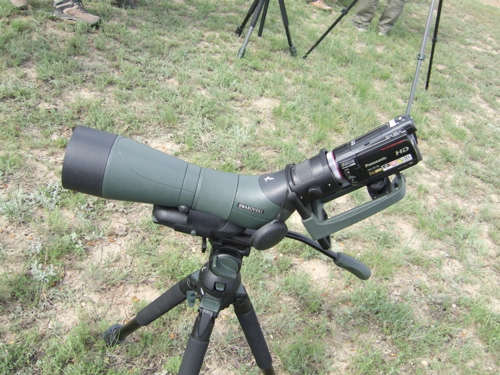
Swarovski is also coming out with a new digiscoping adaptor called the UCA. It's a bit more universal in the sense that many different cameras (even small video cameras) can be attached to the scope and it slides off easily. When we were taken to the sociable lapwing area, we were asked to test out the new adaptor. I have to admit, being on a trip of a lifetime and seeing unbelievable life birds, that last thing I wanted to do was learn a new adaptor for my camera and scope. But it was surprisingly easy to figure out.
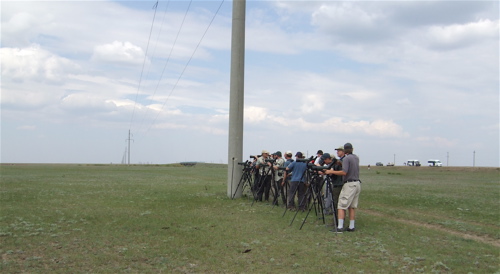
Now, the challenge became how to get twenty some odd birders close to skittish ground nesting bird when there isn't a lot of cover. I don't think we were all that sneaky behind that power pole. The researchers had us march in a single file line towards the lapwings, but the rightly suspicious birds just kept walking in the other direction.
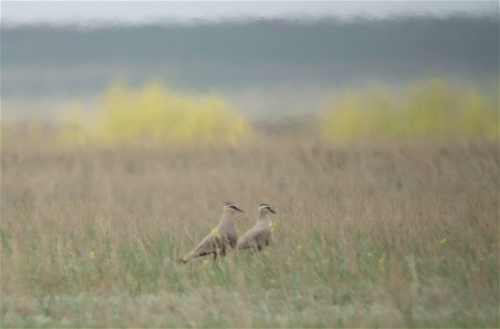
We had to be careful, because the females easily flush of the nest and the research team did not want to risk losing one valuable nest of this declining bird. We were getting great looks at the birds, but they were too far away to get great photos.
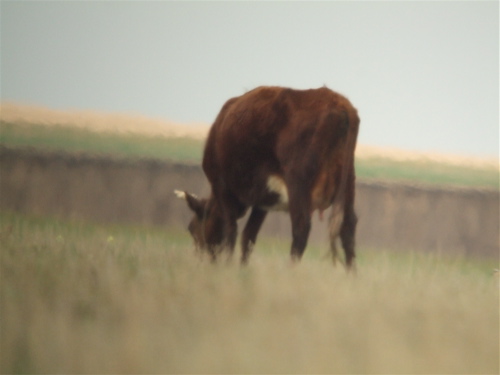
Plus, heat shimmer was really starting to become a factor. The area behind the cow looks like a van Gogh painting. I even took a video and it looks like a raging forcefield is behind the cow. You'll note that a lone man walks behind the cow, apparently oblivious to the rare and sensitive birds nesting around him. That's part of the research team's job is to work with locals and let them know about these cool birds and hey, maybe don't walk right through their nesting territories right now.
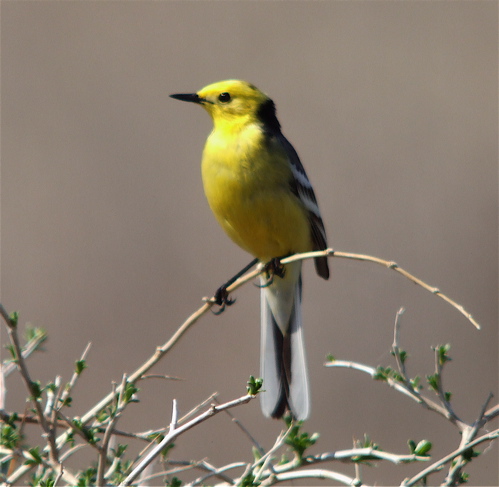
We went out in search of other birds around the Korgalzhyn State Natre Reserve with the adaptors and we were able to get some cool shots. Above is a citrine wagtail--isn't that a fabulous little yellow bird and so accommodating to perch out in the open.
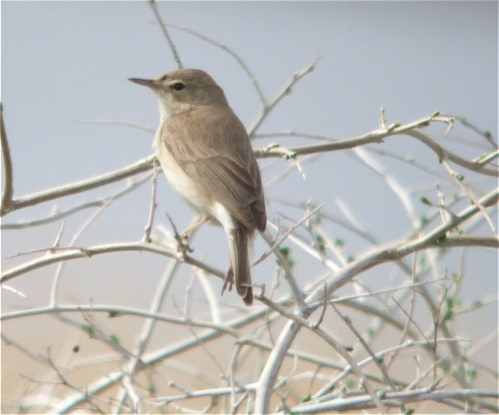
I was even able to digiscope a warbler with the new adaptor--and those aren't easy. I have to say, warblers over in Europe and Asia aren't anything like our warblers here in the Americas. Above is a booted warbler and it pretty much looks like all the other Euro warblers: small, brown and fairly non-descript. Other warblers you can see over there are reed warbler, Hume's warbler, and Savi's warbler--brown, brown, brown. I'm used to prothonotary warbler and blue-winged warbler. I'll never complain about fall warblers in North America again. Even an orange-crowned warbler in the fall is more colorful than a booted warblers.




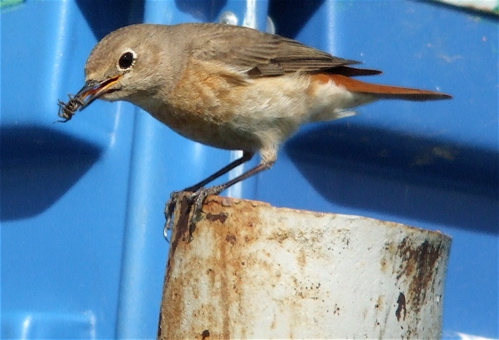
I also got some amazing shots of a female common redstart...they look a bit different than our American redstarts. It's not a wood warbler like what we see in North America, it's more like a flycatcher. The males are quite snazzy, but so are the females with their red tails. Since she was so accommodating, I thought I would get some video of her with the UCA. My Fuji FinePix E900 does video as well as photos:

[youtube]http://www.youtube.com/watch?v=WptkbSWFwiI[/youtube]
While on the preserve, we also found a nice mudflat to check out for some waterfowl.
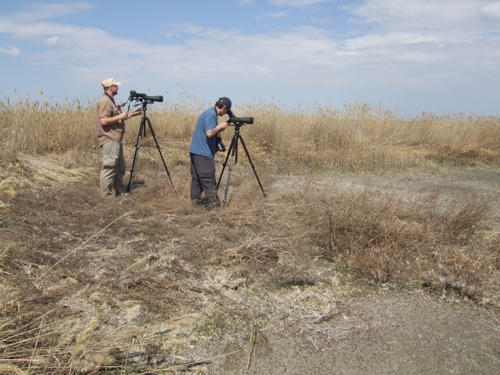
Above is Corey from 10,000 Birds and Dale from Discovering Alpine Birds getting some shots of the ducks and shorebirds. Some of the species we saw included spotted redshank (gotta love a black shorebird), red-crested pochard, white-headed duck, and white-winged black tern. There were some familiar birds too. I heard gadwalls calling and I went to grab my cell phone (gadwall is one of my ringtones). Then I remembered that my phone didn't work in Kazakhstan and looked overhead. There were three gadwalls flying over--ah the familiar in a strange land!

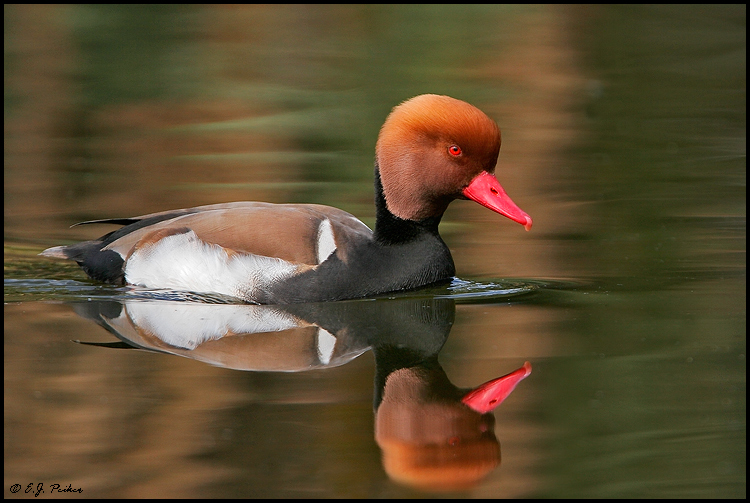


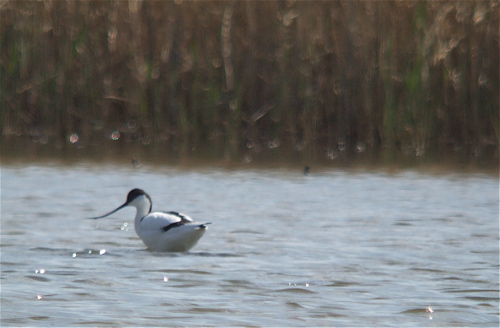
We also saw black-winged stilts and pied avocet (that's the avocet pictured above, distinctive with their long, upturned bill).
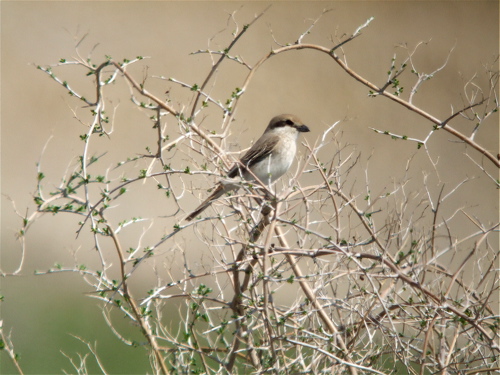
As we ended our time on the Kazakhstan Steppes, an Isabelline shrike popped up.
I was surprised at the photos I got using the new adaptor that I had not worked with before in a place where I was unfamiliar with the birds. I don't think I will trade in my DCA for digiscoping with my Swarovski scope, but if my current camera craps out and the next one I get does not work with the DCA, I could see myself using a UCA. It's a bit larger, so doesn't fit in a pocket as neatly, but it is light in weight could be hooked around a finger.
Swarovski Digiscoper of the Year Contest
This is—quite possibly—the coolest contest that I have ever been able to offer on my blog. There are super sweet runner-up prizes and there is one-giant-spanky-mondo-super-cool prize. I present you with the Swarovski Digiscoper of the Year Contest.

These are the official list of rules (and make sure to read them carefully) for entering the contest but essentially, anyone over 18 years of age who uses a camera (either point-and-shoot or an SLR) with a spotting scope to take a photo is eligible to enter. The scope does not have to be a Swarovski scope, it can be any make or model and you can do it by borrowing your friend's equipment.
DO NOT SEND ME YOUR ENTRIES FOR THE CONTEST. You are supposed to enter your photos here.

Digiscoping images must be pictures of animals living in the wild that are created using a digital camera through the eyepiece of a field spotting scope. Above is a western meadowlark that I digiscoped as an example.
Here are the prizes: The best 10 images (places 1 to 10) will be published with the photographer’s name on the Swarovski Optik homepage.
The three entrants chosen as “Digiscoper of the Year North America” will receive the following prizes from Swarovski Optik:
1st PRIZE: EL 32 binocular (I use an 8x32 EL) 2nd PRIZE: Pocket Tyrol 3rd PRIZE: Swarovski Crystal Spoonbill
In addition these pictures will take part in the international Swarovski Optik Photography competition, so enter today.
And remember, this does not have to be a Swarovski scope or even your own scope to enter. Just get a cool photo of a bird or other animal with a scope. And don't limit it to photos, go for video too, get creative and get outside. You have nothing to lose and some great prizes to gain.
I am totally shocked to be offering these prizes... these are like birding magazine prizes. So take advantage of this contest!
Digiscoped Images
Fresh Tweets
Would you like to hire me as a speaker for your event?
Email sharon@birdchick.com