Birdchick Blog
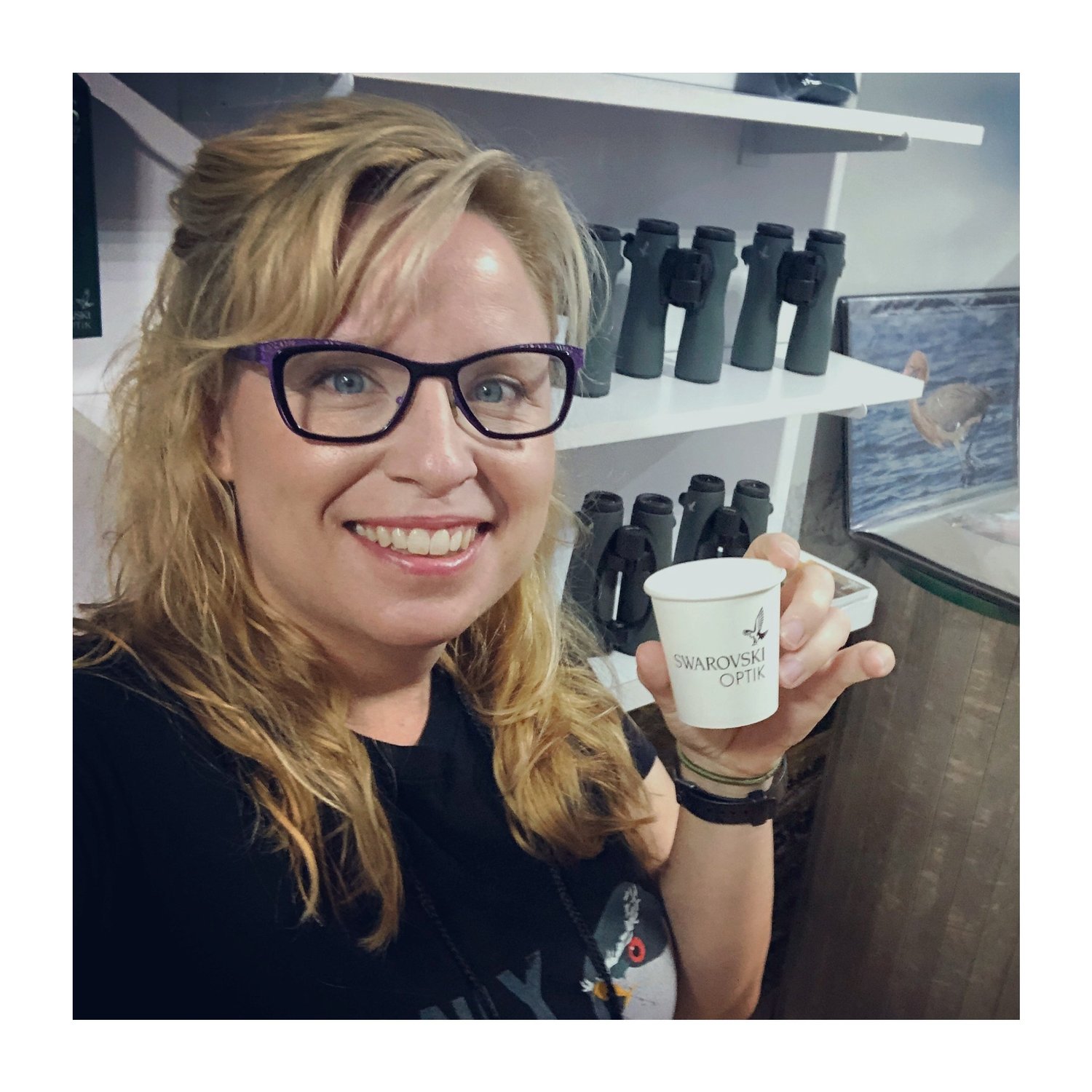
Big Year Screening & Swarovski Optik
 Okay folks, it's almost time for the Big Year and Birds and Beers! Call the showplace icon and get tickets ahead of time to ensure a seat. The number is 1-800-326-3264 and you want the Midnight VIP screening of The Big Year.
Showplace Icon is going to offer a special midnight screen Friday morning at MIDNIGHT (so you’ll need to plan to stay up late Thursday, October 13!). There are even going to be prizes—Swarovski Optik is coming and everyone who comes to VIP event is entered into a drawing to win their prize. Rumor has it that it's the new CL 10x30s.
I'll have some other prizes too and I’ll be there at about 10:30pm to have a drink and socialize–there’s a bar in the Icon below the theater and then carry on the fun above.
Don't tell me this is too late of an evening for you to do--really nice binoculars are on the line. Also, I'm doing bird surveys all week (we're talking 10 - 11 hour days) and I have to go to a meeting on Friday. This is why we have things like shade-grown coffee and Red Bull.
Digiduel 2 Results
Clay and I both posted albums of our five favorite photos from Digiduel 2 on the Swarovski Optik Facebook page. You can vote on your favorite Clay photos here or my photos here.

This photo of rock pigeons balancing on thin branches of a hackberry to eat the fruit was one of the photos that didn't make it in to the deadline. It's weird to for me to see pigeons in a tree--I'm so used to them on buildings and sidewalks.
My eventual goal with this Digiduel Project is that we can open it up for other people to play all over the world-you have a digiscoping set up and Twitter account--you can take a turn at a Digiduel. Clay and I wanted to do a few against each other to work out some kinks...and boy were there kinks to work out this time around: We usually use Twitpic to upload photos onto Twitter but it was down for a good portion of the day. I switched to Plixi as a back up but eventually Twitter refused photos from any photo site. I had about ten images (like the above rock pigeons) that never made it up to Twitter in time and Clay had a few come in after the deadline of 4pm Central time, even though he sent them in well before the deadline.

We also decided to add a new component to the competition. There are now two ways to win. You can try to take as many species photos as possible in the time allotted or you can go for "quality images" or really try to get the bird in a pretty pose with some nice fall color behind it. By adding the photos to the Facebook site, people can vote on their favorites. And the above European starling did not get uploaded to Twitter before the deadline and I didn't include it in the album on Facebook. It's just as well, I don't see a lot of people voting for a starling, no matter how cool they look in their winter plumage.
If you are interested in participating in a digiduel, let me know. Clay and I will try to work you in to the competition. The keys are to find a spot where you can get photos of birds and have internet access. It appears to work best if you can do it from or from a park with reliable internet access. I tried doing it from a park and popping over to a coffee shop periodically. Doable, but annoying and a waste of gas.

Hooded mergansers flying away.
The Birds That Got Away
 One of the things I was counting on to give me an edge over Clay in our Digiscoping Duel was this mountain ash tree (or rowan as Mr. Neil calls it). It's ripe and the berries time perfectly with fall migration.

This tree can be loaded with all sorts of birds like the above female rose-breasted grosbeak and I did get shots of cedar waxwings right away, but as soon as the contest was over, all sorts of species flew in for a feast. The light hit the tree perfectly, so I stuck around after the contest was finished to get some shots.

Of course there were more waxwings. My first photo wasn't bad but they practically seemed to be posing now that the contest was over. Above is an adult cedar waxwing.

The younger waxwings that were hatched this summer will be stripey. If you have waxwings in your neighborhood, take a moment to watch them in your fruit trees--they attack the fruits and berries with such verve. They don't come to bird feeders--they don't seem to have any interest in sunflowers and millet. They will come in to birdbaths and you generally don't get one at a time, you get thirty (at least).

I love watching them gulp berries. These small, slender birds are easy to miss in tree branches. Even their calls blend in well if you are tuned into them. Here's a link to waxwing calls so you can know what they sound like.

Among the waxwings was this Tennessee warbler (dude, where were you during the digiscoping challenge--arg). Especially after the dreadfully blurry and ghostly image of that black and white. Ah well, win some, lose some.

Too small to grab a whole ash berry and gulp it, this bird used its dainty bill to pierce the skins to get at the juice on the inside.

The next bird that popped up was a male scarlet tanager already in his winter plumage--really, tanager, you're killing me here. I will say this, even though I tried to use a fence and bush to break up my silhouette from the sun behind me, it felt very cagey with my scope aimed on it. It ate three berries and flew off.

Even though I already had a photo of an eastern bluebird, I was sorry I couldn't use this shot of a juvenile molting into its adult plumage.

Here was another heart-breaking shot--far better than the image I got during the actual contest of a red-eyed vireo. Alas. I still had a tough time getting a shot of this bird. Vireos are known for their ability to flit about the top of a tree canopy and sing nonstop. The bird kept moving around so much in the tree that it had trouble stopping long enough to eat some berry. I always thought accipiters like Cooper's hawks and goshawks were ADD birds, but I suspect the vireo is even worst. Constant movement is a good strategy--good way to sneak up on insects and confust potential predators. Just makes going for stationary berries a challenge.
This tree is a good example of providing food for birds and other wildlife in your yard besides just bird feeders and water sources and it's part of what makes Mr. Neil's yard so fun for me to watch birds in and take their pictures.
To see more photos of the Digiscoping Duel, check the Flickr Album.
Digiscoping Duel Results
The results are in from the first ever Twitter Digiscoping Duel:
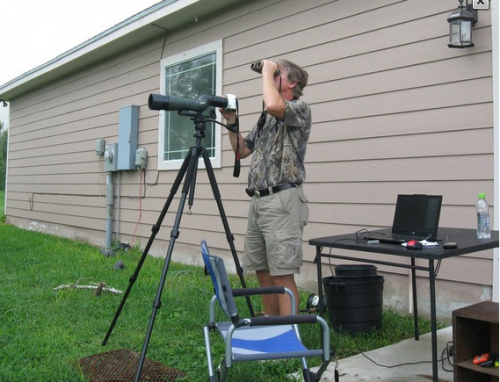
My buddy, Clay Taylor of Swarovski Optik digiscoped from his yard in Texas and he posted photos of 31 species.
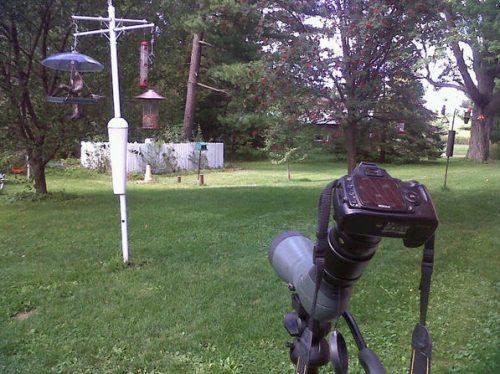
I set myself up at Mr. Neil's yard with the above digiscoping setup--lots of birds and easy Internet access. Alas, my final total was 28 birds. Cornell was kind enough to say, "But should there be a correction for higher diversity in TX," but I think that weather and internet connection can help even out the competition--there were 3 very common birds that I expected to get and did not: blue jay, pileated woodpecker and turkey vulture. I won't post all 28 photos, but I'll post some highlights below:
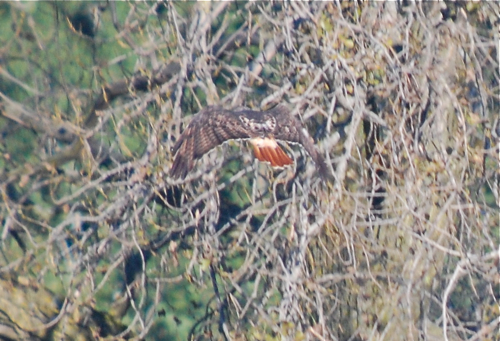
My first shot of the day was a red-tailed hawk flying away. I found another red-tail perfectly perched in great light later in the day, but I really liked the way you can see the rusty red tail on this guy. Besides, Clay and I weren't going for art, we were going for identifiable photos and well, it doesn't get more identifiable than that with a red-tailed hawk.
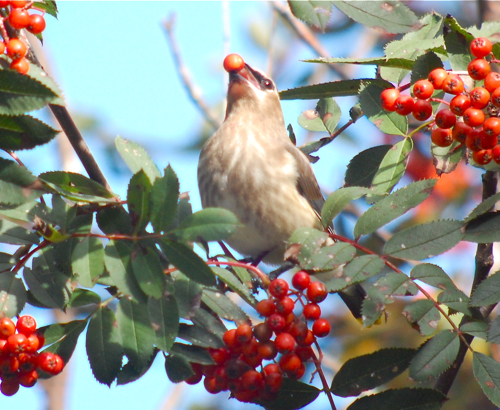
Early in the morning, things were going swimmingly. The showy mountain ash tree around the feeders was ripe and attracted loads of waxwings. I expected warblers and vireos would soon follow (the tree eventually did follow this pattern...after the contest was over).
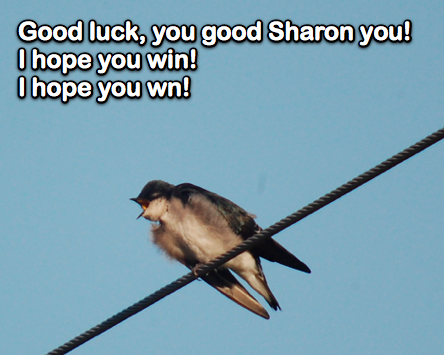
As I loaded up photos here and there on Twitter, I even got a little cocky and added some captions. The above caption with the tree swallow was for Non Birding Bill and a nod to Jack Lemon from the movie The Great Race. I really enjoyed being able to interact with people throughout the contest. It was like being sequestered during a bird-a-thon or at the World Series of Birding. I could see what Clay was up to and see comments on photos...and even answer a couple of bird questions.
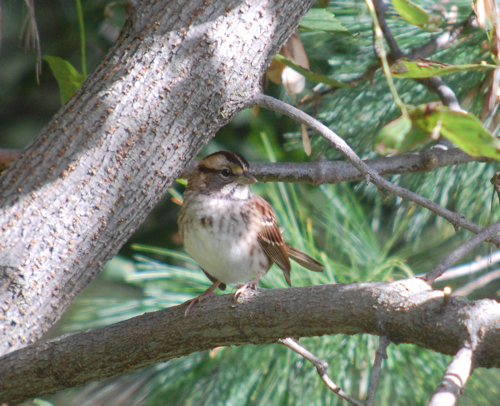
I did find the flocks of white-throated sparrows a bit sobering. A week ago today it was 92 degrees F. When I started today, it was blustery and in the 40s. And these sparrows are a sure sign of fall. Sigh.
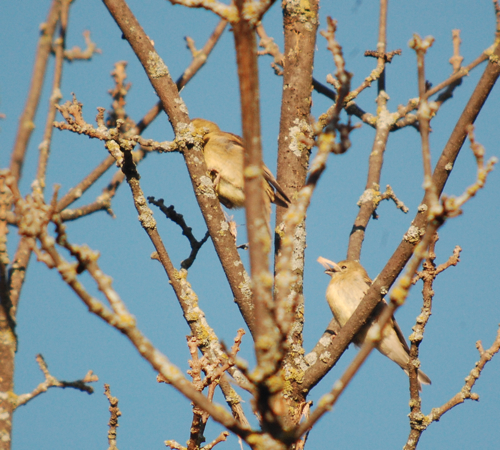
I did see some crazy stuff going on, like the above immature goldfinches stripping off bark from a dead tree and eating it. I checked Cornell's Birds of North America Online and bark stripping is one of the many things goldfinches will eat.
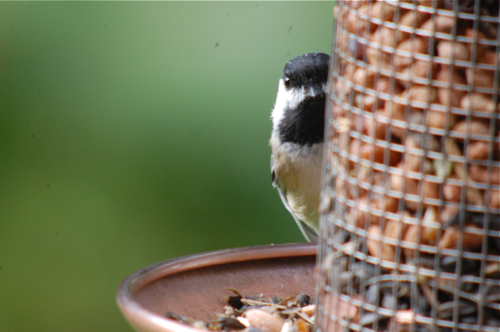
When it came to the common feeder birds, I tried to get interesting shots--like the above black-capped chickadee. It's as if it's stalking me...and perhaps plotting my demise.
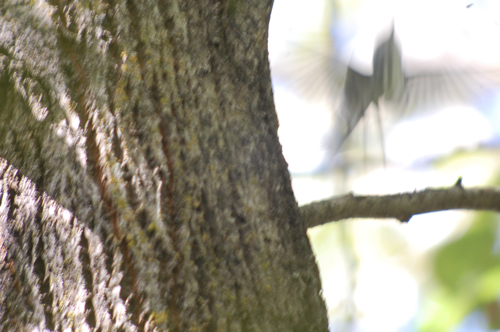
Not all of my photos were worth writing home about. I'm pretty sure that this is the worst shot of a black and white warbler in recorded history. I posted it as a joke and Clay let it go through, he said he could kind of see a black and white warbler...he was too kind.
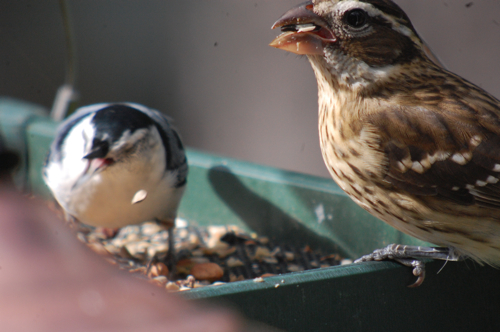
Here's a candidate for Awkward Family Photos. What is that nuthatch doing--sneezing? Flipping seeds? Swearing? Either way, the rose-breasted grosbeak appears uninterested.
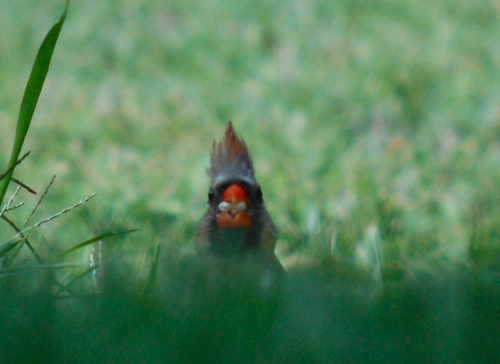
All in all it was a great time and I hope we can do something like this again.
Some of my favorite shots that Clay got are his zone-tailed hawk, yellow-breasted chat, purple martin, royal tern and his winning final bird Mississippi kite. He's got mad skills with birds in flight and digiscoping not to mention a crazy bird yard in Texas.
To see more photos from the day of the Digiscoping Duel visit the Flickr Album.
Digiscoping Workshop & Tern Rescue
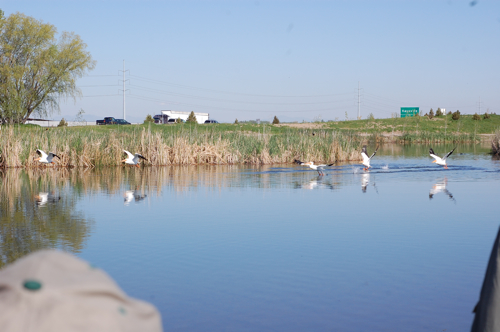 One of the reasons I was at the Great Salt Lake Bird Festival in Utah was to conduct a digiscoping workshop for Swarovski Optik. I really enjoy doing these types of workshops, we start with a basic how to and then we go out someplace birdy and take photos. They are not trips about getting a ton of birds on the list, but more going someplace with a lot of slow moving birds and practice taking photos--you really get to spend some time watching a bird. Sometimes I do this with perched out education birds or at a nature center with bird feeders. In Utah, we went to Kaysville Ponds a small park with lots of cool birds like the above pelicans. It's an urban and well used park. There were several families making use of the ponds' ample fishing resources and walking trails, it was great to see so many kids enjoying the outdoors on a Saturday morning.

A really cool bird for me was the western grebe. We have them in western Minnesota but that's a trek, so it was a treat to see them in this urban pond so close and spend time taking photos of the birds. Although, I generally end up loaning out my scope during these trips. I think many people get a digiscoping set up, take 12 photos that are crap and then are hesitant to use the equipment. When I give someone my scope, I sometimes tell them, "I don't want it back until you take at least 250 photos of that bird." The grebes were so close and so mellow, they were great to practice on. And if you end up with 248 blurry photos, they are easy enough to delete.

There were also a ton of yellow-headed blackbirds perched in the open to photograph. People got to practice with close up birds and birds further away (and learn the heartbreak of what heat shimmer will do on your seemingly in focus photos).

I did use this as an opportunity to practice some Blackberry scoping--holding my Blackberry phone to my scope and taking photos of birds. The photos are not high quality, but they do have use. You could document a rare bird and text the photo to your local state records committee, text the photo of a bird that your friend has not seen, sent it to Twitter or use your camera phone as a back up to document a rare bird if you camera batteries die or you left your camera back in the car. It's not easy because you have to hand hold the phone to the scope's eyepiece but practicing on every day birds will help you be ready should a rare bird show up.

Here's a Blackberry shot of our class, it was a fun group and again, I love being out in Utah where you are surrounded by snow capped mountains on a sunny day. The temps were mild and the wind was low--a perfect day for digiscoping. I brought some different camera adaptors for scopes for folks to try and few people brought their own adaptors andwe had a good compare and contrast of what works easily and what does not.

As we were taking photos, I noticed a Forster's tern frantically calling. I looked over as did friend and fellow field trip participant Suzy and noticed a Forster's tern in the water while another flew and called loudly overhead. Suzy noted that the flighted bird had a fish and attempted to offer it to the bird in the water. Looking through the scope, the bird int he water had its tail at an odd angle and could not pull its wing. The tern tried to flap out of the water but could not flap well at all. "Great," I thought, "a wounded bird at our workshop." Suzy hoped that it was an adult feeding a young, but both were in adult plumage. I wondered if there was any way to reach the wounded tern but it was far out in the water. I continued with the workshop with half an eye on the tern, when I noticed the flighted tern dive bombing a man on shore. I limped over to investigate (I'm still a little unsteady on my knee, but it is healing up a little every day).

I found a man with a fishing pole reeling in the tern from the water while the other tern angrily dove at him while screaming loudly. He took the tern out of the water and had some clippers. He was trying to clip the line around the bird but the tern was snapping its beak at him and he was afraid to touch it. I hobbled over and asked, "Can I give you a hand?"
"Yes, please!"
I picked the water logged tern up out of the water--how strange to put a tern in the bander's grip, they seem more like a piece of origami than bird. He swiftly snipped off the fishing line and fortunately the hook was not in her. I did a quick feel for broken bones but couldn't feel anything amiss. The formerly tangled tern's feathers looked too waterlogged to fly. I made a split second decision to let it go back in the water rather than spend the day looking for a rehab center with might cause more stress, especially if the tern wasn't injured, only wet and tired. I opened my hands for her to fly but the tern couldn't get airborne and went right back in the water. I figured that it would be far better for the tern to swim to a quiet spot, dry off and preen its feathers. The bird was mostly likely exhausted from the struggle to get away from the tangled line.

The man with the pole kept apologizing. He was there with his son to go fishing and when he cast his line, the tern flew into it and got tangled, it was a one in a million shot. He watched the tern swim away slowly, "Oh no, I'm so sorry."
I looked at him and his little boy and said, "You did your best to help the bird, I'm sure it just needs to dry off, it's featers were soaked and it wouldn't be able to fly."
"She's probably exhausted too," he said. I agreed.
"I watched before I cast," he said mornfully, "I always watch for birds. And when I swung, there she was!"
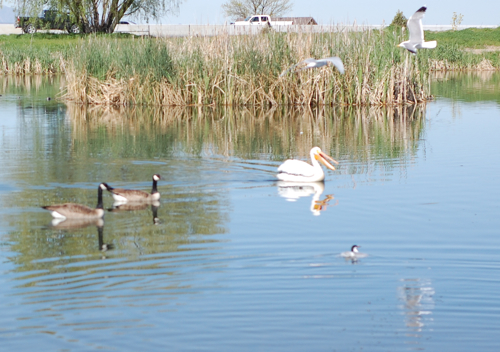 As the bird swam away, some gulls flew over low to investigate (assessing if they could eat it, I'm sure) and then a pelican swam right for it and opened it's mouth. "No," I shouted, "not today pelican!"
And that was enough to distract it and the tern paddled further away. I'm all for watching cool and gross natural history moments, but this man and his son seemed traumatized enough as it was and didn't need to see the pelican eat the tern (that's not a pretty way to go, I think I'd rather be eating by a great horned owl). And if you don't know what I'm talking about--those big birds are opportunists and there are videos of pelicans eating pigeons in parks. A Forster's tern is about pigeon sized.

The tern attempted to fly off the water a few more times and each time it got closer to being airborne. Eventually, it disappeared into some reeds on an island where I'm sure it preened and dried out. The man gave up his fishing for the morning, he genuinely felt bad about what happened even though it was just one of those things. I'm glad he took the time to help the bird and I hope he doesn't give up fishing for good.

When the pelicans weren't trying to eat terns, they made excellent digiscoping subjects! It was interesting to note the various sizes of horns on the upper bill. The above bird has a small one.

Check out this bad boy--his horn is HUGE and looks quite impressive in his full on display! No one knows for sure why males get this epidermal plate on the top mandible, but presumably it has something to do with a mating display to female pelicans. It falls off during the summer after the breeding season. I have a couple from my pelican banding days. They look like nasty toenails.

Since pelicans don't sing to attract a female, the put on these quiet, yet showy displays on the water. It almost looks a little passive aggressive, the male silently lifting his wings, puffing his feathers and crooking his neck while showing his horn and a female or two will quietly swim by and quietly take note of this display...and then keep going. It's very Minnesotan.

We had a few warblers and even an oriole (the above Bullock's oriole) to round out the rest of our field trip. Participants seemed to have a good time and learn a few tricks--like try out video on your little point and shoot cameras. One man even got video of a coot feeding it's baby. All in all it was a beautiful morning and it's always fun when your group can do a good deed while on birding trip--like helping out a tangled tern.
Watching Hummers With Penn Jillette
There are more people interested in casual birding than we realize and you never know who that is. So, last fall I went to Las Vegas with Non Birding Bill, Clay Taylor and WildBird on the Fly to film some digiscoping videos, I think I had my biggest geek out ever--bigger than the time I met Scott Weidensaul. I was a tad inebriated at a bar during an ABA convention and Scott suddenly walked in and all I remember is thinking to myself, "Act sober. Act sober. Act sober."
I must not have been too bad because Scott still welcomes me with a hug when he sees me, rather than darting away in the opposite direction.
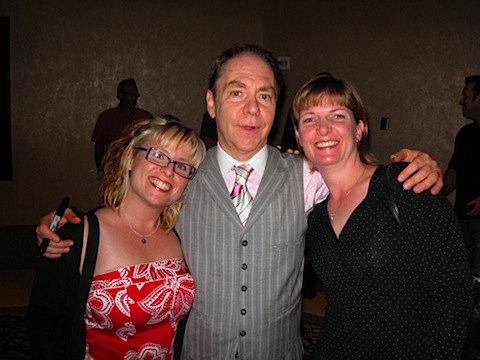
But due to some lucky scheduling and total generosity of Penn Jillette, we got to see the Penn and Teller Las Vegas show , hang out backstage (that's Amy and me with Teller), and watch birds at Penn's house--I got a lifer in his yard, a black-throated sparrow.
It was the most surreal moment of my life back stage. For one thing, it was the first time NBB has met some of my closest birding buddies. For another, how weird was it to be back stage with a bunch of magicians, the editor of WildBird Magazine and Swarvoski Optik--and we ended up talking about bees! Penn and Teller told us about a segment where they made thousands of bees appear on stage, you can watch it here (see if you can tell when they get stung).
I said, "Holy crap! How did you do that," meaning how did they work with bees, but they told me how they did it, how the entomologist they consulted backed out because he got freaked out and how many stings they ended up with and how Penn had a rather unusual injury on a rather sensitive area of his anatomy--I'll let you google that one, it's easy enough to find or better yet, if you meet Penn, he will gladly tell you the story much better than I ever could.
Again, Penn had a lot going on that weekend, he was flown to another state to shoots a scene for a movie, had his own Vegas show and still managed to give us some time to talk hummingbirds (I got to make hummingbird nectar in his kitchen). Since we were dealing with brief time and when working with video things like cicadas and air traffic can get in the way it's not perfect, but it's still someone I think is cool showing an interest in birds.
I've also hesitated posting this because I was geeking hardcore on the inside during this segment and tried very hard to keep my geek in check. I think from now on, I'm going to have to just let my geek flag fly because trying to play it cool makes me look like a dork.
So here it is and thank you to Swarovski for making this possible and to Birdorable for making the perfect shirt to wear in Vegas and especially to Penn Jillette and his people for being so nice, so gracious with their time and allowing us a few moments to chat about birds.
You can do some awesome birding in Las Vegas. We still have one more video to go, but here's a link to some of our adventures. Between this, testing Swarovski awesome new digiscoping adaptor in Kazakhstan, and climbing a volcano in Guatemala to see a giant tree chicken I can safely say that 2009 was hands down the craziest (in a good way) year of my life.
Charyn Canyon, Kazakhstan Winds Dangerous For Life!
I found another Kazakhstan entry from when I was there last May! Whoot!

One of the coolest places that Swarovski took us to test out their new magnesium scopes was Charyn Canyon in Kazakhstan. It's so huge that you can barely see the people in the distance in the above photo. I think the only bird we got here was the alpine swift because we were so overwhelmed by the breathtaking views...and the dangerous winds.

We had been birding other areas and we were fortunate that for the most of our trip we avoided rain. But a storm was coming and our van driver was doing his best to get us to the canyon before the storm hit. The dark clouds swallowed the huge mountains as it caught up to our van.

We made it to the canyon with the storm still at bay. We had to check in at the ranger station...wow, I feel like some of my local parks are neglected when it comes to funding, but all this ranger had was a trailer. That's our guide Sergei entering to make sure our bus could pull through. I think the ranger was just excited to see people.

Our bus took the narrow gravel roads as high as it could and we were let out to take in the view. Above is Dale from Discovering Alpine Birds and Corey Finger of 10,000 Birds (and my buddy Clay Taylor is lurking behind them). I think this was a little prayer sanctuary right above the canyon. Knowing that we had limited time before the storm hit, we left all of our scopes there to take a few moments to explore the trails.

The canyon was like a mini version of the Grand Canyon, but no less spectacular. The locals refer to it as "Dolina Zomkov" which translates to "Valley of Castles" and it's easy to see where that folk name came from. Even with the approaching clouds, the color of the rocks were a lovely palette.

The canyon was formed over over centuries with the Charyn River, a large river that runs through the Tien Shan Mountains. In a short amount of time, we had managed to work our way down the trails and the wind hit and it hit hard. As I took this photo, a fellow traveler who was much taller than me was literally knocked over by the wind. He wisely hightailed it back towards the vehicle. My low center of gravity kept me fairly upright and I explored a bit further down the trails.

I could see Dale off in the distance. His defense to get the perfect photo was to lay flat on the ground, which is close to the position he remained in on his way back up the trail.

Here's Corey and Sergei working their way back up the trail. The wind eventually was so strong that I crouched too. It was simultaneously exhilarating and scary. We would crouch and work our way up, then periodically hold on to one of the larger boulders when the wind would gust harder. If I stood straight up, I could feel my body being moved as my shoes slid over the loose gravel. Getting knocked over by an invisible force larger than myself and plummeting to the canyon below became a real possibility. While we were down the trail, we had left our magnesium scopes up at the top--the wind blew them all over. Fortunately, Swarovski scopes can take a beating, so they all survived, but Clay and some of the others gathered the scopes and loaded them into the van so they would blow over the side of the canyon.

I have to say that up until this point, our guide Sergei had been a very serious man. As soon as the wind hit, he laughed and howled like a wild man, it energized him like a thousand cups of coffee.

This sign wasn't kidding, this canyon is Dangerous for life when the wind hits. Dale put up a YouTube video of his shots that he got when the wind first hit. There's also a bit of me demonstrating what it was like to walk to walk in that wind.
[youtube]http://www.youtube.com/watch?v=LflDWa8csRY&feature=player_embedded[/youtube]
When I walked into our van, Clay snapped a photo:

My hair that morning started out wavy and ended up stick straight after that wind. All in all, one of the highlights of the trip even though we didn't see much in the way of birds.
Roadrunner Attacking Cowbird Video
I love birding--you can do it anywhere and I love to show people that. To prove it, I called some friends: WildBird on the Fly and Clay Taylor and said, "Let's make some videos on birding and digiscoping in Las Vegas. We are probably going to have at least 4 when Non Birding Bill is finished editing them (and one with a very exciting guest!). So, here is one of them, this was done at Spring Mountain Ranch State Park and features the video footage of the roadrunner nailing the cowbird: [youtube]http://www.youtube.com/watch?v=4Mv2RNJDZqk[/youtube]
I'd like to thank Swarovski Optik for making these videos possible. This was all filmed with your basic digital cameras from point and shoot, to handheld video to digital SLRs and Swarovski spotting scopes.
Don't forget, I have a digiscoping contest going on, where you could win some great Swarovski binoculars!
Birding Around Almaty, Kazakhstan
You may recall that I took a little trip to Kazahstan in May...I still have a few posts left to write about this wonderful place. I don't know if I will ever get back, but I hope I do. I have said it before and I will say it again, if you want to feel like the only person on the planet, you find several spots that will give you that impression.

When we first arrived, we stay in Astana, a city still growing and full of new development. It's on the Steppes which is basically short grass prairie, but the locals do try to grow trees and they are very small. Above is a photo of Almaty, and older city with established trees and older buildings.
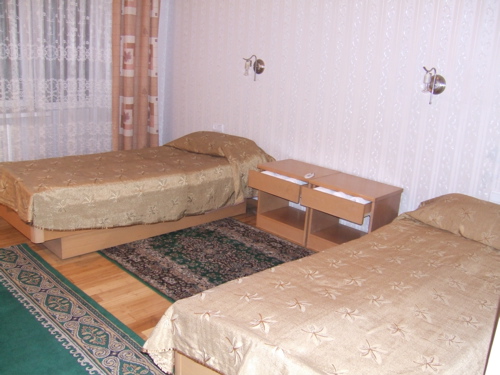
I was most curious about my accomodations at this hotel, in my travel itinerary it was described as a "Soviet Style Sanatorium." However, as you can see in the above photo, the rooms were not padded and did not come with complimentary straight jackets. They were very clean and simple. The tubs were huge and even though I was tired and had to get up early, I refuse to let an opportunity to soak in a deep hot bath pass and took advantage of it. I had a life bird singing the whole time right outside my room, a scops owl--kind of like an eastern screech-owl (here is what it sounds like). It was not what I would call a soothing and relaxing sound...neither were some of my fellow birders outside my room trying to call it in. I ended up putting on my headphones in order to fall asleep.

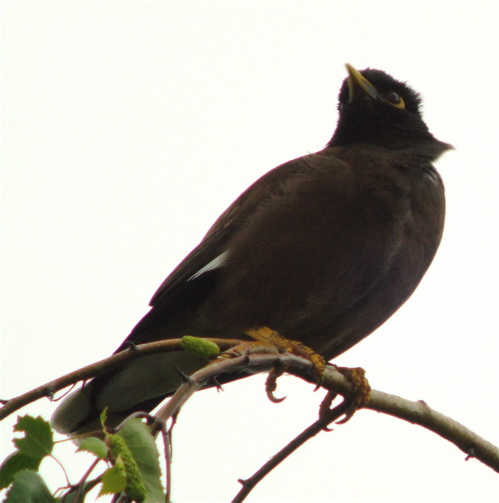
The next morning I woke up to some crazy birds outside--like Indian Mynahs. Alas, it was a tad cloudy and drizzly so I was not able to get the best photos, the mynahs were very striking birds. Here's a photo of what one looks like.


Here was a familiar bird--the Eurasion collared dove. A bird working its way into the United States as an introduced species. Again, here I was seeing the bird where it was supposed to be, Eurasia. Our breakfast at this hotel was an odd combination of cold cuts, white sausages, cucumbers and tomatoes, cheese, some kind of cabbage salad and yogurt. I was also getting accustomed to NestCafe--instant coffee granuals are not as bad as I thought.
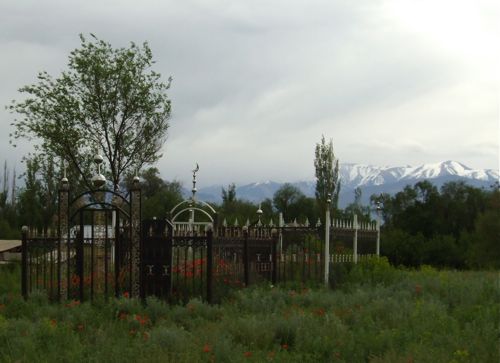
We had quite a few destinations this rainy day, but some of the most exciting were around this cemetery. Not quite as grand as some of the larger ones seen near Astana but still quite cool. This spot was where we got our first look at hoopoes which were just too darn fast digiscoping on a cloudy day, but man what a dynamite looking bird. And what a fun word to say. Incidentally, it is pronounced "who poo" not "who poe."

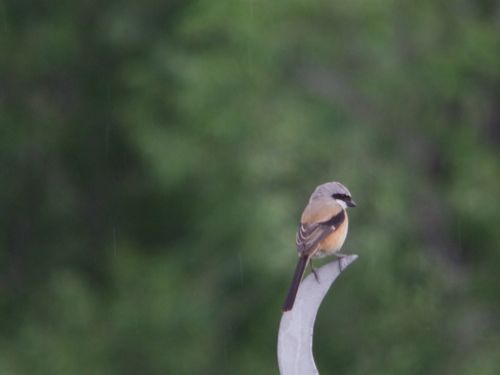
We passed quite a few shrikes on the road and one was teed up in the cemetery. For a bird that is known to impale it's prey on spikes and sharp barbs, a cemetery seemed the perfect place for it to establish territory.
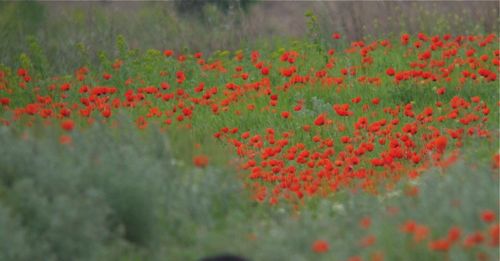
Surrounding the cemetery were huge poppy fields. We passed dozens of fields with wide swathes of crimson, full of poppies. When we stopped near the cemetery, we did find an interesting, yet familiar plant growing among them which we all sensibly acknowledged but left behind with knowing smiles.


Another exciting species for me (but not as exciting for my fellow European birders in Kazakhstan) were these rollers. They are kind of related to kingfishers. They are a striking big blue bird and looked gorgeous over the poppy fields.
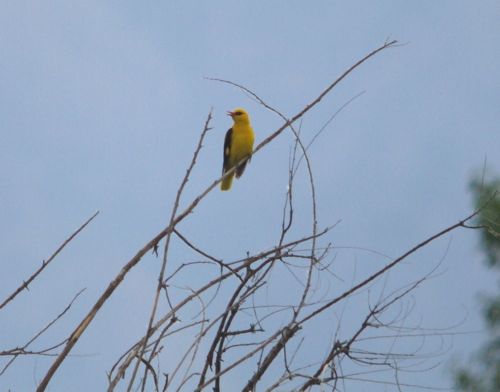
Another bird that showed up was the golden oriole. Again, these are just the tip of the iceberg to the amazing birds and scenery that were yet to come this day.
Birding Private Property While In Las Vegas
 Again, when I said I was going to Las Vegas to see birds, many thought I was a bit crazy. A few thought that I would just see the birds at the casinos like the flamingos above who reside at...The Flamingo. There were also hooded mergansers, shovelers, pochards (which I've actually seen in their native Asia), wood ducks and sacred ibis. But I was into more.
Rita, our contact with Red Rock Audubon said that she knew a great place for hummingbirds, but it was on private property and she needed to get permission to escort us there. It was a lovely yard with a feeding station for hummingbirds and many seed eating species. The home was in the mountains, about 50 miles from downtown Vegas and so worth the trip, it wasn't too far from Spring Mountains National Recreation Area. The morning temperatures were lovely. The only downside was one REALLY pesky honeybee. That bothered all of us and was very interested in my scope and some of my camera equipment. I must have some honey/wax/propolis residue from my hives and this girl was looking to rob.

This was one busy place for hummingbirds. I'm only going to id the in focus rufous hummingbird, those western hummers are a bit tricky for me where I live in the land of mono-species hummingbird. The birds were zipping all over the place, Amy Hooper almost got totally beaned by one and another flew right between the legs of my tripod.

I had to get some help from hummingbird maven Sheri Williamson for this bird's id. She called it a juvenile black-chinned male hummingbird. Speaking of Sheri and black-chinned hummers, she had quite the big news this summer. Some hummingbird banders got a recapture in their nets this summer, only the bird was not orginally banded by them, but was banded by Sheri...in 2000! Nine years ago! That's geriatric by hummingbird standards which are believed to have an average lifespan of three years. You can read the full story here.

Sheri also helped me id this little dude, a broad-tailed hummingbird. How fun to have three different species flying around. Depending on what you read about Nevada, more species are possible.

But hummingbirds weren't the only attraction, there were also Stellar's jays--I love these guys, they almost make the blue jays I see down right drab (almost). The appeared to be a younger jay going through a bit of a molt, but check out the snazzy white eyebrow. You might also notice the white stripe going up from the bill. This is a variation in plumage known as the "interior west." Like many jays, the Stellar's were all happy to hop down and grab a peanut in the shell.

This is a young black-headed grosbeak that flew in for black-oil sunflower seeds and suet.

There were also oodles of finches. Above is a pine siskin on the left. The larger obscured bird in the back is a Cassin's finch. I saw those in Utah, but did not grasp how large they were for a finch. Especially compared to the siskins and goldfinches around.

There were quite a few lesser goldfinches (note the dude with the cap on the right). They were eating black-oil sunflower seed, Nyjer and some sort of finch mix. They were almost as abundant as the hummingbirds.

The lesser goldfinches also ate some of the leaves on the trees too. I wonder if that's a tactic to get moisture?

A big unexpected surprise and probably the best new bird I got on this trip was the finch in the above photo in the middle with the yellow on the wings--a Lawrence's goldfinch! I told Non Birding Bill that for a non birder, he was getting some amazing birds on this trip. He simply gave a non committal, "Oh."
This bird is on Audubon's "watch list" and according to their website its breeding range "is confined to the Central Valley and coastal foothills of California, as well as the northern portion of Baja California." Was excited to get one in Vegas. Rita our guide said that there is usually one that will show up in Nevada when they disperse after breeding season, but did not expect that morning. What a treat!

We were also treated to the uber cute mountain chickadee coming in for sunflower. There was a pygmy nuthatch that popped in and out around the chickadee, but it refused to be digiscoped.
This a GREAT spot and you have to contact Red Rock Audubon to see if you can get permission to visit this yard. The home owners are gracious to allow birders to look at their great feeding station but it's best to make sure to keep the neighbors happy. If you do get the chance to visit, you might consider bringing either a bag of table sugar (for hummingbird nectar) or a back of black-oil sunflower or Nyjer as a thank you for the hosts' birding hospitality.
Digiscoped Images
Fresh Tweets
Would you like to hire me as a speaker for your event?
Email sharon@birdchick.com