
Birdchick Blog
OpenSky Update
I was going to post a second part to my waterfowl surveys but found my inbox chock full of emails. Apparently, my coupon code for OpenSky was a bit more popular than expected. Many shopkeepers were given a code to offer their readers and the surge in traffic with that, combined with the coupon code getting picked up by coupon sites led to the crash. Because so many orders came in, they suspended my coupon code.
The founder of OpenSky realized that this would not set well with me and my readers, after all, I promised you guys a deal and I don't love spamming my site and I don't want to tell you "Hey, gang, do this and then not have it available. So, they said that they will do what it takes to make this right. If you tried to place an order and the code got rejected, contact me at sharon at birdchick dot com about what you tried to order and we will get this worked out.
Sorry about that guys. I do think this is a legit company and once they get their kinks worked out, this will be a great way to help maintain blog cost and more importantly give money to much need bird programs for the American Birding Association.
Thanks for your patience.
Maybe Verdins Know What's Up With Bees
Check out this photo of a verdin watching a honeybee...then check out this photo--perhaps verdins are behind Colony Collapse Disorder?
The photographer listed as nnitzky on Flickr wrote, "While waiting for hummingbirds to arrive at my feeder, this little verdin (Auriparus flaviceps) landed on my honeysuckle bush. I took a series of images of it as this bee flew right at it. The bird lunged forward to try to grab the bee, but the bee made a quick evasive maneuver and escaped unharmed."
Cool photos, nnitzky!
Aerial Survey Waterfowl Idenification Part 1
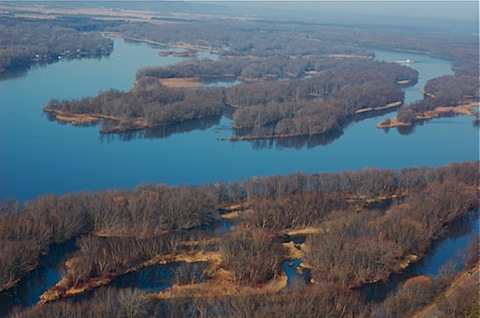 Doing aerial waterfowl surveys is hard work. It's a lot like shorebird identification, you can't just rely on colors, it's more general size, shape and impression--that's right giss birding! I'm told that the hard part for many on these surveys is not getting motion sick in the plane. I can't imagine being motion sick and trying to id and count large amounts of birds literally on the fly. Ick. Fortunately, for me as long as I'm not chugging martinis the night before and if I keep some snacks handy, nausea avoids me. When I first learned that I would be doing these surveys, I was given six hand illustrations of ducks to study and I searched Google Images to find photos of ducks taken from aerial surveys to make flash cards...there aren't too many images like that out there. My hope is that someone who gets to do this in the future, finds this blog entry and has some chance of learning what to watch for the first time they go up. The truth is, nothing really trains you like having an experienced eye with you the first few times you fly to help you learn your birds.
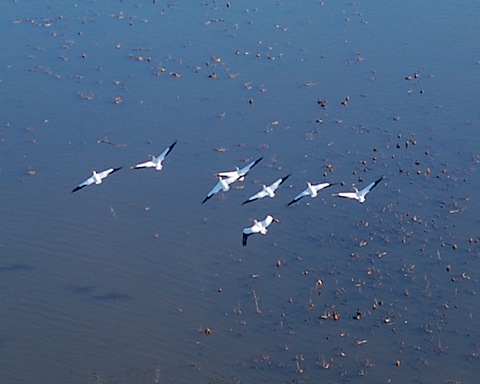
Some birds will be easy to identify on an aerial survey--American white pelicans are huge, fly slowly and are quite distinctive.
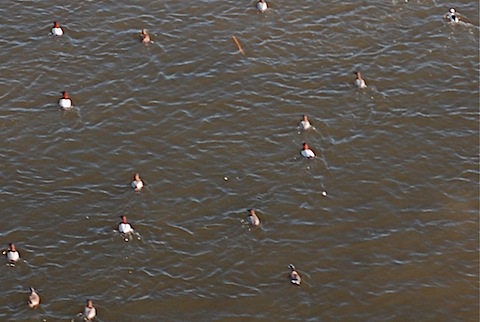
And some ducks are easier to identify than others. Can you pick out the three species of waterfowl above?
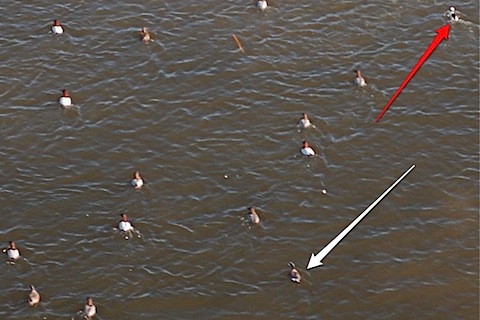
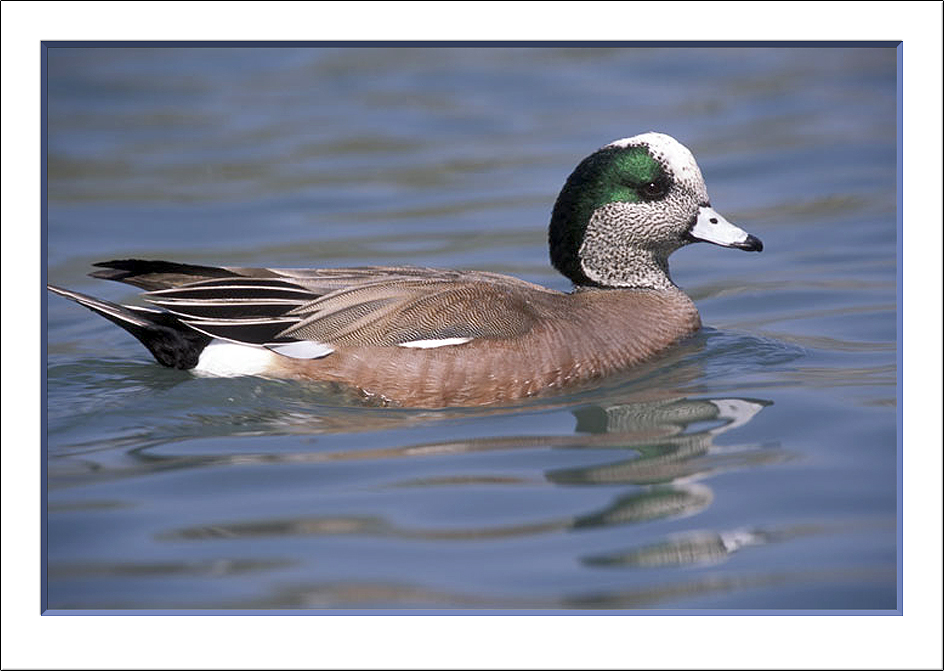
The ones with the prominent white back are canvasbacks. The white arrow points to a bird with a prominent white stripe on its head--that's an American wigeon and then up in the corner is a distinct black and white bird with a bold white patch on the head--that's a bufflehead.


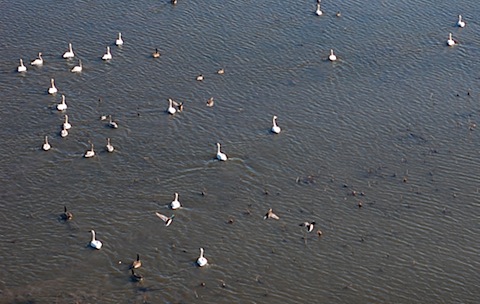
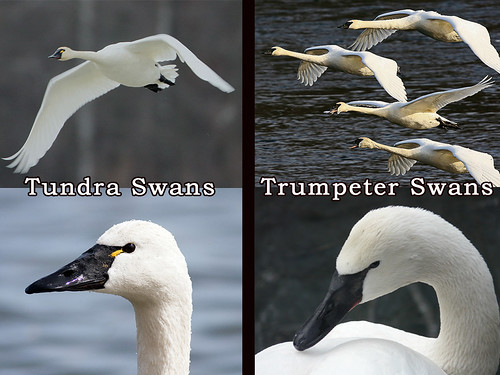
Here's another group that is fairly easy to figure out. Can you name the tree waterfowl species above? The white birds are tundra swans, the medium sized brown birds are Canada geese, and the smallest birds are mallards. You can't see it in the above photo, but the male mallard's green head was easily visible when we were flying this low. Some would ask how we knew these were tundra swans and not trumpeter. The short answer is we don't, but the longer answer is that these swans were in an area that is known to host thousands of tundra swans in November as they stage and feed before flying out to Chesapeake Bay for the winter. Chances are that a handful of trumpeters could be mixed in, but our survey is primarily about general fall usage. There have been a few points along the survey when we've been closer to the Twin Cities, flying over small family groups of swans that I wondered if we were passing trumpeters and I make sure to note that when I turn in my survey sheets. Now that we have such a large population of trumpeters and they stick around in the winter, it's a challenge to tell trumpeters apart from tundras when flying over them in a plane.

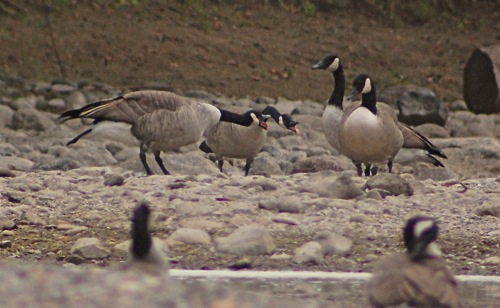

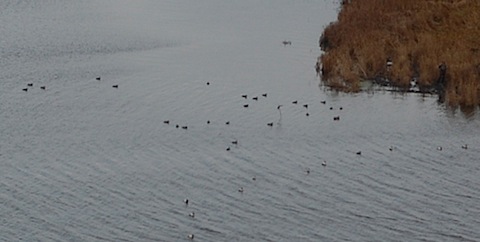
Basic waterfowl id isn't the only challenge. Can you see what's wrong in the above photo? Take a look. Here's the answer:
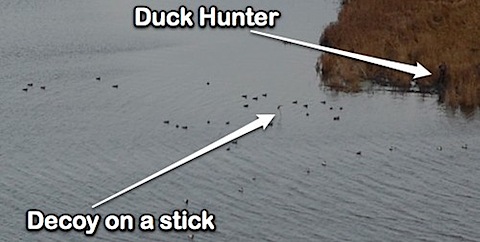
You have to watch closely to make sure that the waterfowl you see are live waterfowl and not a hunter's decoys. The motorized decoys are easy to spot because you start counting and then immediately ask yourself--why is that duck hovering like a hummingbird?
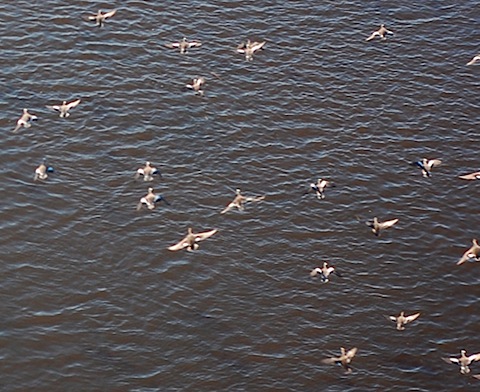
So, these are some of the basic of birds. I'll leave you with a photo that I'll id later. Can you tell what ducks are in the photo below?
Disapproving Rabbits Note
On the off chance anyone here has not seen it, we have a new logo for Disapproving Rabbits and it's available on a shirt and hat. Sunday, November 29, 2009 is the last day to place an order.
We also have stuff in the Zazzle store which will continue to be available. We don't use Zazzle for shirts and hats because our friend Leann at NoodleTogs does such a great job with them, does them for much less money and Leann's husband Jon was in Non Birding Bill's production of THAC0. We love Leann and her family and love that Disapproving Rabbits stuff contributes to their kids' college fund. We use the Zazzle store to create "on request" items like Disapproving Rabbits shoes (who knew), if anyone has any requests for bird or bee stuff, let me know and I'll create it--titmouse shoes anyone? Bee stickers?
Operation Migration Needs Our Help
Well this is a nasty Thanksgiving Week surprise. Operation Migration is a group that has been using ultra light planes to teach an introduced population of whooping cranes their migratory flight path from Wisconsin to Florida. They raise the young cranes in captivity and great pains are taken to make sure they young birds do not imprint on humans...because when the humans are around the cranes, feeding them, tending to them, etc--they must dress and behave as close to a whooping crane as they can.
Once the young birds learn to fly, they are guided by special planes down to Florida--it is a long drawn our process. The flights must be taken in small steps, weather and aerial predators and individual bird strength must be considered. They are actually in the middle of a fall flight right now. Here's a short video that gives you an idea of what they do:
To add to their worries, their hangar used in summer and storing equipment and belongings of some of the crew working with the cranes on the current has been vandalized. Here's an excerpt of a news report from the Wisconsin State Journal:
The Operation Migration effort that is escorting young whooping cranes to refuges in Florida, already beset by weather-caused delays, received a major blow this week when a break-in and heavy damage from vandalism was discovered at its Necedah aircraft hangar.
The Juneau County Sheriff’s Office confirmed the break-in, but was unable to supply details.
In the daily Operation Migration field journal, which reports on the progress of the migration, Joe Duff wrote Wednesday from Livingston County, Ill., that the small nonprofit’s hangar used during the summer was "robbed and vandalized." The lights were smashed and tires slashed on the stored vehicles of two staff members. One of the staff members, who lives with the endangered birds all year, lost all of his belongings, Duff reported.
"His entire life is spent on the road so he uses the hangar to store all of the belongings the rest of us would leave at home. Most of them are now gone or destroyed in some distorted expression of violence that we simply cannot understand," Duff wrote.
Four wings for the ultra-light aircraft, used to escort the birds, were slashed, something that will cost $20,000 to replace. The group does not have insurance. A full-sized sculpture of a whooping crane, made by one of the ultralight pilots, was smashed and spray-painted. One of the ultralights used in the past to lead geese, swans, sandhill cranes and whooping cranes was damaged.
You can read the full story here.
It's going to take a lot of love and donations to make that up. All of us are tapped right now. It's the Holidays, there are gifts and as someone who earns have of her living via free lance work who now has the joy of a car payment reintroduced to her life, it's a tough economy. But, if you have any spare dollars or are looking for a unique gift idea, consider giving what you can to Operation Migration to help their efforts.
One way that will be easy for some is to just Give a Whoop or a $10 donation. That's two drinks in my neighborhood or about three fancy coffees from a coffee shop. If just ten readers gave $10 each, that's an easy $100 buck for the cause which is much needed right now. Also, check out the Crane Gift Shop--surely you could find some cool gifts for the birder or even the person marginally interested in birds in your life. It's a tight time and many of our favorite organizations and sadly many people we know are struggling. But if you can help, I highly recommend helping this crowd.
Hazards Of Hand Feeding Raptors Part 2
I hope readers who celebrate Thanksgiving had a wonderful day full of favorite foods, gratitude and a minimum of family drama. Non Birding Bill and I thought of all the things we're grateful for and one thing that I am always grateful for is the opportunity to work with birds of prey. There's something captivating about the intimacy of a bird ravenously feeding from your gloved hand.
I found some more video footage I took of hand feeding raptors that again demonstrates some of the perils of hand feeding birds, although not nearly as gross as the red-tailed hawk incident. When you feed peregrines on the fist--especially something like quail, you just know that you're going to end up messy at the end. In the wild, peregrines will fly to a perch and pluck off feathers of their prey to gain access to the meat (many raptors do pluck out the larger feathers of prey). In this video, it's interesting to note how large the quail is in relation to the falcon...and how little is left at the end.
Incidentally, peregrines are one of the reasons I'm no longer a vegetarian. They make eating meat look so, so good.
Did you love the little "quail mustache" that the bird has while chowing down? And here is what your pants (and sometimes your hair) looks like when you are finished feeding a peregrine:
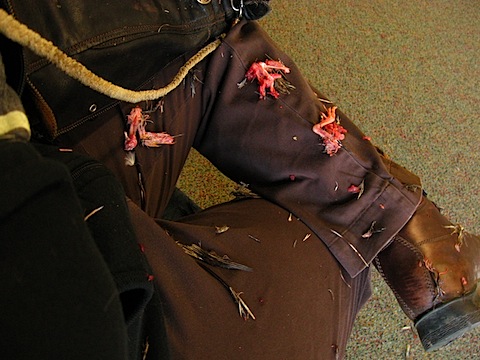
You get covered in plucked feathers and unwanted bits of meat.
A Christmas Carol: The Golden Girls Remix

If you're in the mood for a little something not bird related, Non Birding Bill and I are in a show at the Bryant Lake Bowl. It's a little bit of Dickens and a whole lotta Golden Girls. We opened last night to a full house and a lively audience and got a mention in MetroMix. We're running Sundays (and one Friday) through Christmas. The BLB is a great place, you can come for dinner, a drink and even bowl a game after the show. I highly recommend the artichoke dip.
Pine Siskins Hit This Weekend
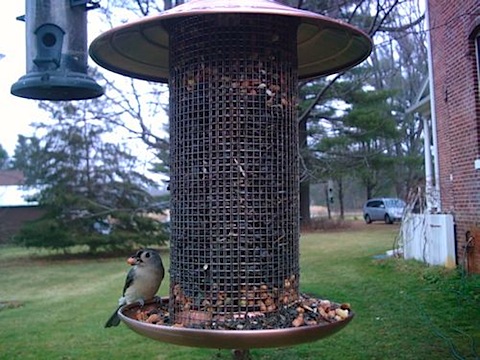 We had the Wingscapes Cam up at Mr. Neil's this weekend and I'm fairly certain I witnessed the arrival of pine siskins. I was out and about on Wednesday and I didn't see any. Just the usual suspects like the above tufted titmouse were using the feeders on Wednesday.
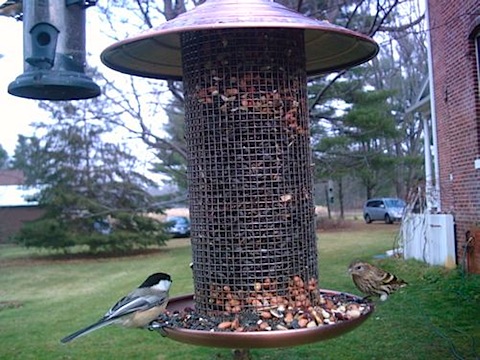
Then on Saturday, I noticed one or two pine siskins. The pair either jockedy for position at the thistle feeder with the goldfinches or took their chances with the more easy going black-chickadees at the sunflower feeder. Non Birding Bill and I ended up spending the night and the next morning...
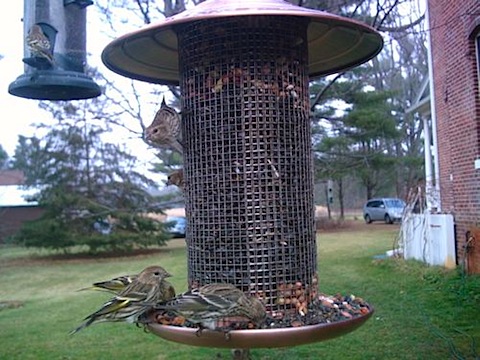
...it was pine siskin palooza! I stepped outside and you could hear that distinctive upward trill of the siskins sounding from the tops of trees, they easily out numbered the goldfinches at this point. I wasn't expecting to get big numbers of siskins this year, last winter we had tons and some even stayed around the Twin Cities metro area to breed. I wonder if we'll get a few redpolls again this year?
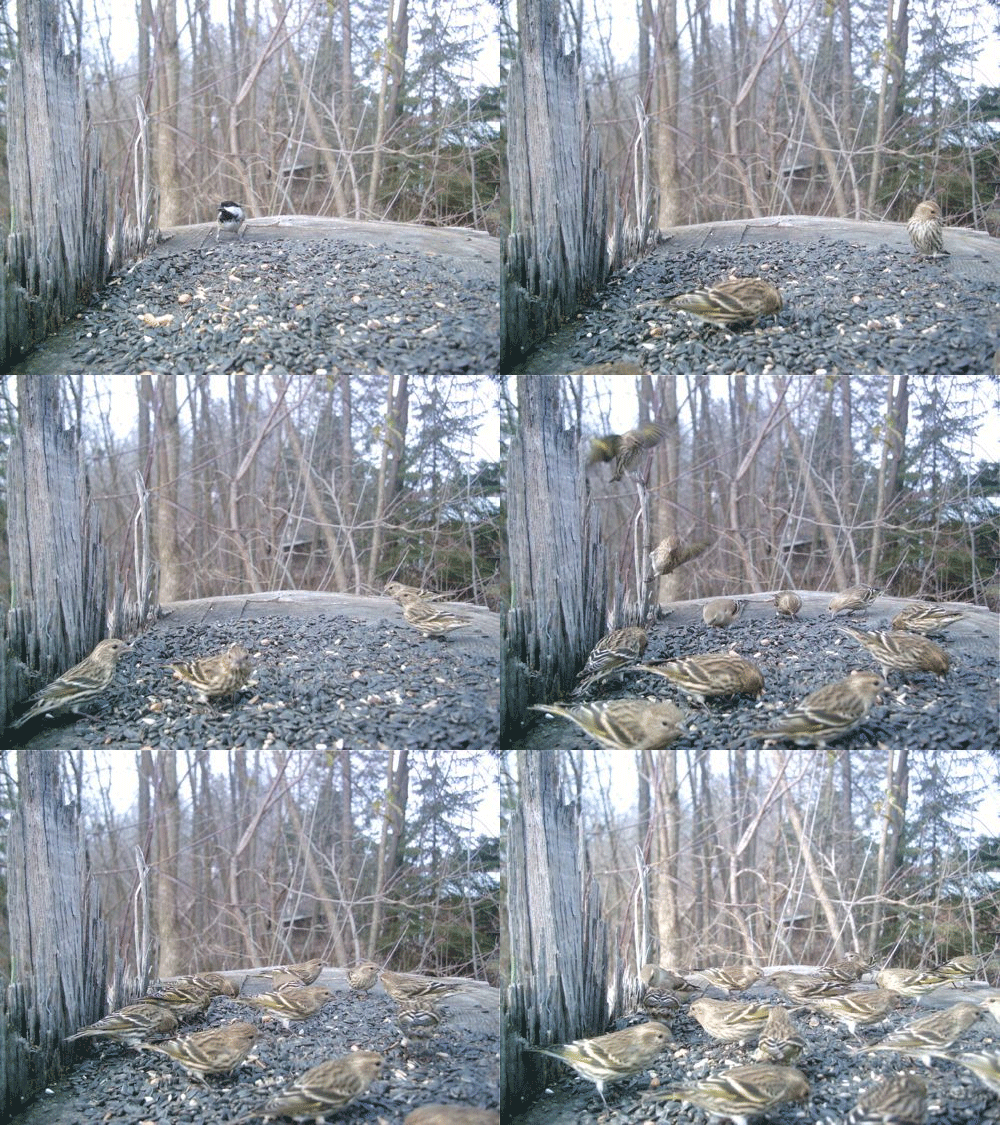
Here's an animated gif of the birds flocking down to the stump covered with sunflower and thistle. I love watching the build up with the photos. It starts with a chickadee and then ends with a ton of siskins.
Hazards of Hand Feeding Raptors
Warning! This video gets kinda gross...especially for me.
After we banded birds this morning at Carpenter Nature Center, I was asked if I could help feed some of their education birds of prey. Their red-tailed hawk is a very easy going imprinted bird. He eats easily from the hand, so I thought I would take a quick video so you could get an idea of what it's like to watch a red-tail up close as he eats a gutted mouse. Well, he got a chunk of mouse lodged in the wrong way and tried to gag it out as if it were a pellet...
And there you have it, the chunk of mouse nailed me right in the kisser. I don't know if you caught it, but you can see a red smudge on the right side of my mouth--from the offending piece of regurgitated mouse.
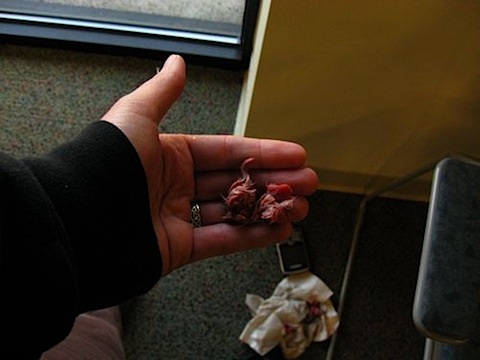
Here's what hit me. It's bad enough feeding peregrines who pluck feathers all over you, but leave it to a red-tail to up the ante and nail you with actual flesh.
Yuck. The price I pay for cool birding experiences.
Chasing Golden Eagle 42
WARNING: some of the photos in this post are of animal parts. If you are squeamish, this might freak you out. I don't think this is as gross as previous photos in this blog, but Non Birding Bill frequently points out that I have a very different of definition of gross than most.
Golden Eagle 42 has been on the move. Since I have last posted about the bird, he has already gone down to his presumed wintering grounds near Wabasha, MN, but then headed a bit north again. Now we have more questions. How wide is his winter territory and if it's really wide...are there way more golden eagles than the 80 or so that have been documented about Wabasha, MN?
Mark Martell and I were supposed to have a lunch meeting today, but he called early this morning while I was having a little breakfast and working on the previous blog post to ask if I would mind heading out to see if we could find Golden Eagle 42 who was about 60 miles away and had been hanging out in one spot for a week. How could I say no to tracking a golden eagle with a satellite transmitter by using the gps coordinates sent out that morning--it's like bird geocaching! I met Mark and we headed out.

It was a blast following the directions and then trying to match the roads on Google Earth to the terrain and figuring out the roosting location of this eagle. We figured out where the bird was and presumed that since it's deer season and this is a rural area, the eagle was most likely feeding on a deer carcass. We found a dirt road that matched what was on the Google Map and drove around to speak with landowners to get permission to walk out and check the bird's location. One man was just about to head out with his daughter for some deer hunting. Mark showed him the map and explained about the golden eagle. The man was excited and then pointed to the trees behind us to an eagle perched near it's nest--right at the end of his yard! We got an okay and headed out. The road ended we faced the above corn field--everything matched the map. You can't see it in the above photo, but there was a deer stand behind the tree line on the left. The deer stand was close to where the eagle had been hanging out and added credence to the idea that there would be a deer carcass nearby.

We carefully made our way down between the rows of corn. I always feel weird because I can't see over the corn and feel like something going to come out and grab me. We could hear crows going bonkers ahead of us...could they be excitedly dining on a deer carcass? Or better yet mobbing a golden eagle??

We got to a break in the corn. According to the data of the transmitter, Golden Eagle 42 was hanging out in the stand of trees ahead, about in the direction Mark if facing above. The woods were chock full of crows. Mark suggested that I stay out in the field as he approached. If he flushed birds, I would have a better view of them with my scope and he might miss it being closer. It was a plan.

Sure enough, as Mark carefully approached, a large eagle like bird took off! I did a Fred Sanford, clutched my chest, "It's the big one, Elizabeth!!" I trained my scope on it and just slammed my finger onto my Nikon D40 and took photo after photo, hoping against hope we had flushed our boy.

Alas, the eagle banked and quickly revealed this was an immature bald eagle. DANG! But still cool to see an eagle. Mark motioned for me to join him and we headed to the wooded edge.

We found a trail and figured this must be used by the hunters who use the deer stand. One the right it was flat and on the left was a ravine that went down to the creek, we could hear dozens of crows off to our left and a red-tail screaming above our heads.

At the base of the trail we found lots of poop. Mark and I wondered if this was crow poop, red-tailed poop, or possibly eagle poop. We both wondered aloud how close a carcass would be and then we looked ten feet to our left on the edge of the ravine...

There they were, a pile of deer parts and they looked pretty picked clean. The crows, foxes, coyotes, bald eagles and mostly likely Golden Eagle 42 had been taking advantage of this ample food source. I presume this pile was the result of hunting leftovers, but this could also be a pile from road kill. When I worked at the bird store, the county would drop of road kill deer in the marsh behind the store. I was kicking myself for not bringing my WingScapes Cam to see what comes to the carcasses...I may come back it in a few days. Who knows, maybe there will be fresh deer on the pile?

The carcass still had plenty of food to offer birds like the above downy woodpecker flying in. She landed on the rib cage and carefully peeled off scraps of meat and fat--as did several black-capped chickadees. They were all taking advantage of the original suet feeder.
We did not find Golden Eagle 42 but we had one heck of an adventure. Mark would like to trap a few more golden eagles and put transmitters on them to find out more about their breeding grounds. We're learning some interesting things about Golden Eagle 42, but one bird does not speak for a whole wintering population. Mark got that bird from The Raptor Center, he was found caught in a leg hold trap last winter (that eagle has a thing for scavenging). Mark has tried to trap goldens but with no success. He mentioned that last Spring they tracked Golden Eagle 42 to a carcass in this same county. The carcass was in the woods like this pile, not out in the open. Mark had tried baiting golden eagles out in the open and now wonders if he should try doing it in a wooded area like this carcass.
I love bird banding and all the cool stuff we learn from it. Can't wait to see what else happens with this projects.
Digiscoped Images
Fresh Tweets
Would you like to hire me as a speaker for your event?
Email sharon@birdchick.com