Birdchick Blog
Rose-breasted Grosbeaks Are Back
 We had a small flock of rose-breasted grosbeaks arrive yesterday. They are loading up on food until the insects are out. Just the males are here now, with the cold and the wind, they weren't singing too loud today but I'm sure they will set up terretories soon and if they squabbling at the feeders is to be believed, they'll be duking it out for the best nesting tree too.
Franklin Red-tailed Hawk Cam
I've been checking in on the Franklin Institute live red-tailed hawk cam which is fun now that the babies are about and the adults are doing more than just incubation. I watched some cool behavior that I've read about but not actually observed. I took some screen captures:
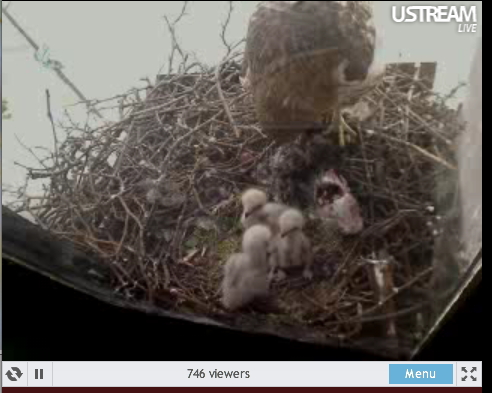
Here an adult is feeding the tiny fierce puffballs.
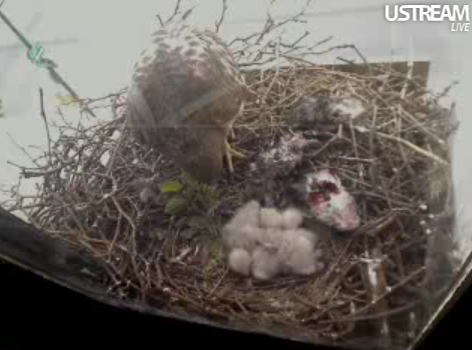
Then the hawk flew off for a moment and returned with a leafy branch. Some speculate that the leaves of certain plants have natural insect repellent properties and help keep nest parasites to a minimum.
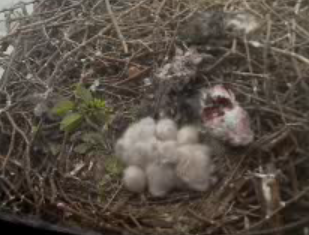
I have no idea what type of plant the red-tailed hawk brought in--looks like it either has some green berries or some green buds on it. Just some of the cool things one can observe in this day and age of online birdwatching.
Canada Geese Chicks Are Hatching
 I saw some Canada goose goslings yesterday as well as a few mallard ducklings. Another serious spring sign was hearing an oriole sing--do you have your grape jelly and nectar feeders out?
Crosby Park Ranger Work
One of the things we get to do at my park as a ranger is "roving." Essentially, we pick a part of the park and rove around to answer questions or interpret wildlife. It reminds me a bit of doing improv work-- you rely on the audience to guide where the sketch will go. In this case, you walk into to a park and use whatever is on hand as your method of interacting with the public.

On Sunday it was my turn to rove and I chose Crosby Park which is great during warbler migration as it's right on the Mississippi River and anything is possible. There were some great birds there and while I was taking a photo of this song sparrow, I heard a sora. Tons of birds were recent arrivals like great-crested flycatchers and yellow warblers. I also noted a pair of broad-winged hawks setting up territory, which is fun because when we do Big River Journey, I always see broad-wings soaring over the park from the boat on the river.

The best part of my morning was when I hung out at this shelter--a great interpretive prop presented itself. It's at a busy intersection of the trails in Crosby--it's actually not a bad spot to sit and listen for warblers. But as soon as I approached, movement caught my attention...and it wasn't a bird. Can you make out an animal in the above photo? If you can't, don't worry, it's hard to see. But check out that big hole in the trunk of the tree, just above the shelter roof. It's a raccoon. When I arrived, all you could see was the body rising up moving around, I think the raccoon was grooming itself. When people would stop and ask what I was looking at, I'd set my scope on the hole and pish very loudly like I was targeting a huge bird.

The large raccoon leaned its head back as if to say, "Yeah, lady, what do you want, I've got things going on in here." It was the perfect place to camp out and interpret. And a perfect place for a raccoon. Nice secluded tree with a big comfy hole. Enough natural food and litter to keep a raccoon fat and sassy.

As with birds, the raccoon soon grew tired of my pishing sounds and eventually ignored them, but it was fun while it lasted. I showed Non Birding Bill the photos and he agreed they were cute but liked this raccoon hole photo series better. In particular, this photo.


As I continued on, I heard a pair of robins raising a HUGE fuss. Something was in their territory and they weren't happy. It was a serious alarm sound but not the aerial predator sound. There was a clump of leaves and I did my best to scan, as best as I could make out, a red squirrel (see the eye and the whiskers in the center of the photo) had found their nest and was eating their eggs. They did not make it easy for the squirrel, and smacked into it several times with their body. Fortunately, it's very early in the nesting season, they will find a better nest location and rebuild. What was interesting was that I heard a new sound made by robins in alarm--bill snapping! I always though only owls did that, but robins do it too. As the robins were calling in agitation, it spurred the local house wren pair to sing on their territory below their nest. Here's a sample:
[youtube]http://www.youtube.com/watch?v=rs7Pn3mMa5M[/youtube]
I was missing a piece of one of my digiscoping adaptors so I had to hand hold my video camera up to my scope, but you can hear the wren and the robins in the background.

I love watching wrens sing, they do it with such gusto!
For such an urban St. Paul park, Crosby is great, we did the Bioblitz there last year and not only does it have nesting indigo buntings, but also prothonotary warblers. I'm a bit concerned about the warbler season. The leaves are out in full force now and warblers love to hide in the tops of trees, they are going to be hard to find this spring! Ah well, it will be a good chance to practice birding by ear.
May Morel Madness 2010!
We have had the pleasure of finding some of the tastiest (and easiest as well as "safest") edible fungus on Mr. Neil's property in warm weather including Hen of the Woods, Chicken of the Woods and Giant Puffball. We've seen morels here and there but because they tend to come out during spring bird migration, my mind is otherwise occupied and I've never made the effort for an all out morel hunt. I had done it a few times in Indiana but not much more. Also, nearby neighbors usually hunt morels and in good years they are very generous with their harvest (and I'm not opposed to a honey/morel exchange) so I haven't had huge incentive to look.

This year, Lorraine and I decided that we would give it a go. We researched morel sites on the interwebs--our favorite site is The Great Morel (great information for beginners and a map that shows when people are finding them). It seemed to us that the time was right and all we needed was a night of rain, some 60 degree-ish temps and some dead elms. We noted that it was going to rain Friday and felt Saturday morning would be great for a meet up. We boned up on morel hunting and used Google Image search to see what elm tree bark looked like so we would know what to look for. Isn't it great what we can to with the internet these days?

As Non Birding Bill and I were driving out to meet Lorraine at Mr. Neil's we got a call. It was a frantic Lorraine. She was already there and had decided to test her dead elm id skills. She looked under a tree that looked like a dead elm according to the Internet and was surrounded by morels. As I heard NBB's end of the conversation, I was screaming, "I can't believe she started without me!!!" NBB was laughing, she didn't mean to, she just checked a tree in the yard to see if it was an elm and there they were.

Lorraine kindly left a cluster for me to find and pick when I arrived--what a gal! It was a great way to start and we searched the surrounding dead trees. Morel mushrooms are not only tasty but part of the Foolproof Four category of wild mushrooms--you can't mistake them for any other mushroom. Now, before anyone takes me to task in the comments about false morels--true morels are hollow in the middle, false morels are solid in the middle. All of our findings were very hollow in the middle.


We did find a few more morels in the general vicinity of Lorraine's first harvest but not like the grouping she had initially found. Of course, we were sticking pretty darn close to the house, we still had acres of woods to check--who knows how many more we would find?

There were white-throated sparrows serenading us as we searched. I made the choice to leave my digiscoping equipment back at the house while we went into the woods. As I said earlier, my birding distracts me from morel hunting. I needed to make sure to focus on the ground, not getting photos of warbles flitting in the leaves overhead. I took my binoculars--I wasn't crazy, if a cool bird was around I was going to look, just not focus on getting photos of them. As we went through the woods, we were not finding any more mushrooms--at least not edible ones. We thought about what was different from the yard vs the woods--shade. We found another spot that should have had morning sun and began to search. Lorraine and I wandered from each other and after about fifteen minutes I heard a scream, "MUUUUUUUUUUUSHROOOOOOOOOM!"

Lorraine found more! She collected her bounty and we were re-energized in our search efforts. It wasn't long before we found another patch--this one however was surrounded by some young stinging nettle. We didn't let it deter us but our hands felt the sting for several minutes afterwards.

This patch was so large (and fortunately not all in the nettle) and so spread out that when we realized it, we were surrounded. We were afraid to take a step for fear of crushing the tasty, tasty shrooms. I got on all fours to get ground level and a better view of the morels that were all over. We filled our bags and they were heavy! I attached my laundry bag to a stick to make it easier to tote. The woody/nutty/salty smell of the fungus made my stomach growl. I've run across a few morel hunters in the woods before and always felt a slight pang of envy seeing those bulging bags of shrooms. Never thought I would be one, but there were with heavy laundry bags full of morels--like we were pro shroomers! As we wrapped up our day of hunting, I got a text from NBB back at the house--even he found a morel. His location was by far the best:

He found a tiny one at the zombie graveyard. Makes sense...morels kind of look like brains and what self respecting zombie is going to ignore a brain shaped shroom?

So above is our harvest for our first ever morel hunt. Not bad! Especially since we are beginners when it comes to morels and...Lorraine doesn't like to eat mushrooms. She's getting a bit more adventurous and has eaten Hen of the Woods and she did make us an awesome morel asparagus cream soup for dinner but I think she dug the hunt more than the taste. I enjoyed both. NBB and I took some home and ate them in omletts and sauces and then Lorraine dried the rest. Reconstituted morels make a most excellent broth--I'm salivating just thinking about what Mr. Neil might whip up for us when he returns.
Can't wait to see if we find any more this month. Check out the Great Morel sight for more info if you would like to search for your own.
A Little Lang Elliot Cleanser
Okay, the news in the gulf is really bumming me out. And I can't have a Friday be all about a bummer blog post. So, the most awesome Lang Elliot has provided a cleanser. Chances are that if you have listened to a bird call CD or program, you have heard Lang's work--he is considered by some the grand pooba of bird song recordings. He's started a blog with some of his friends called The Music of Nature that is "dedicated to promoting the understanding and appreciation of nature, with an emphasis on nature that is near at hand."
Basically, they are out, making awesome videos of birds (and crickets and frogs) and sharing them. It's very cool and looking at it, it's what I'd like to do with this blog but man oh man, their recording equipment is off the hook. I may give up blogging and just watch this blog.
Anyway, it's a nice cleanser from the gulf spill and a great way to take a break from work and enjoys some short videos of nature. Here's a sample:
[youtube]http://www.youtube.com/watch?v=JJTaV95E9Qg&feature=player_embedded#![/youtube]
Oil Spill in the Gulf Disaster
When I first heard about the oil drill rig explosion on the Deepwater Horizon in the Gulf of Mexico, the gravity of the situation didn't hit me. I thought it incredible that over 100 workers came out alive and felt bad for the anguish of the families of the 11 missing. Then the story got worse and really hit me hard in the last 24 hours. It didn't occur to me that the well 5000 feet deep in the gulf waters would still be spewing out oil with no one sure how to stop it...and now reports are that it's spilling out 5000 barrels (210,000 gallons) a day. A day. This is likely to exceed the Exxon oil spill in 1989 when 11 million gallons spilled in Alaska.
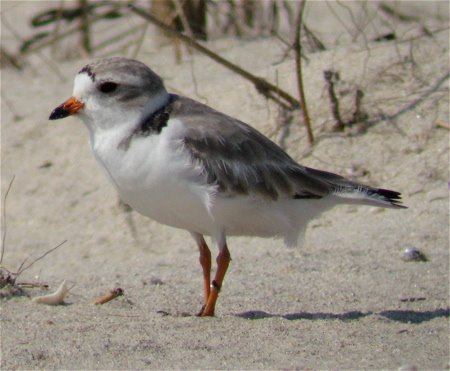
The reports this morning is that it's hitting the Louisiana Coast. I feel totally helpless. Creatures that I love are nesting in sensitive areas and this gloppy mess is creeping their way. I know a lot of news reports are focusing on pelicans but not so much on the uber cute birds that nest on sandy shores like the above piping plovers.
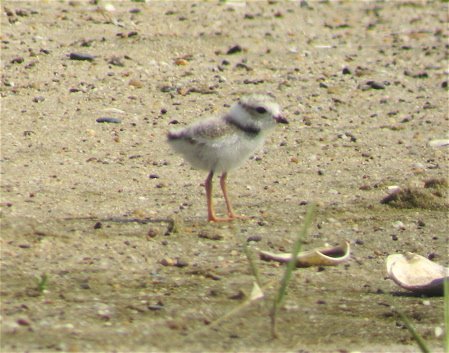
Their chicks look like little cotton balls running around on toothpicks. And it's not just nesting birds that are affected, but sea turtles and otters too, not to mention fish. This is going to have long range and far reaching effects. We already have a dead zone in the gulf, now this. If you are feeling helpless to the situation like I am, I think the group to watch is the International Bird Rescue Research Center which sadly is well experienced in dealing with spills. They have a blog with up to date information on the spill and what they are doing like helping to support and mobilize wildlife rehabbers in that area. Wildlife rehabbers already have it busy this time of year because of baby bird season, who knows how much oil covered wildlife they take in. Already the IBRRC has contact info for those who want to help:
"Anyone wishing to learn how they help must contact the British Petroleum Community Support Team Hotline at 1-866-448-5816.
To report oiled wildlife affected by the Gulf oil spill please call the Wildlife reporting hotline at 1-866-557-1401."
If you are like me and cannot fly down to Louisiana and help pick up oiled critters or do the painstaking task of wiping oil off rocks and cleaning soil, you can help support the organizations doing it. You may not have a ton of money, but something simple you can do is the next time you purchase detergent for your dishes--get DAWN. When you purchase a bottle of DAWN, you can enter the bottle's number online and IBRRC and the MMC will split $1.00 per bottle donation from Proctor & Gamble. The maximum donation from DAWN will be $500,000 to both groups. IBRRC will certainly need the money in the coming weeks.
Wildflowers Around The Beehives
 I mentioned earlier that the wildflowers seemed to be going gangbusters this year around our bee yard--perhaps it's a matter of me exploring an area around our bee yard that I usually do not get around to visiting? They are in an area outside of Mr. Neil's property--across the creek as it were. Hans (the groundskeeper) has put up a bridge over the creek making it easier to access. The ravines across the bridge are well used by the locals for horse trails and hunting (at least four deer stands).

I've gone over a few times in winter to look for owls but this is the first spring that I've done some serious exploring. There's been a pair of Cooper's hawks calling back and forth so I've crossed the bridge looking for them but have been distracted by wildflowers like the above wild ginger (there also a few white Dutchman's breeches in the lower left corner). When I noticed the wildflowers on Saturday, I saw a TON of large-flowered trillium about to bloom and made a plan to come back the following Tuesday to see them in full bloom.

When I found the wild ginger on Saturday, I was excited that I was able to id on my own. It's one of those flowers I've seen in the couple of wildflower books and thought, "Wow, that's an interesting flower." It looks kind of like an orchid, it's purplish, and the flower hides beneath the leaves, low to the ground. When I came back, I wanted to bring someone with me to enjoy the show. I was planning to come back on a Tuesday so that ruled out most of my friends--not everyone has the odd schedule I do. I thought about Non Birding Bill (take a personal day from work) but then realized that bringing my man in the woods to look at tiny flowers was probably not the best thing. But I did think that Lorraine has an odd schedule so I invited her along. She hadn't been across the bridge very much either so I was excited to show her what was there (plus with her love of horse back riding, I figured she would be interested in the horse trails).

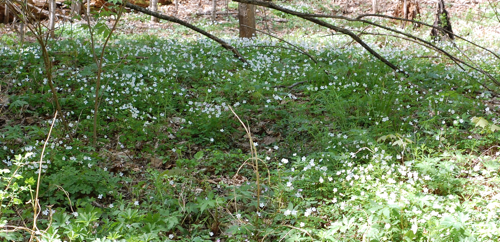
The trillium show was spectacular--it was as if we were in crazy trillium land. Pretty much every thing that's white in the above photo is trillium (note the little blurry dots of white in the background). It was just underway too, several more trillium buds still had not burst open yet. The more I learn about trillium the more I like it and I marvel that it's managed to survive at all. Picking it can kill the plant, deer love to browse on it so if you have too large a deer population, that can be detrimental to a trillium patch, it can sometimes take up to seven years for a plant to bloom and it needs ants to spread the plant--it's crazy. I'm sure a survival strategy that worked great before European settlement of our continent. It's amazing to find such a huge patch of high maintenance flowers in the woods.

The spring beauties were winding down but a few pink ones could still be found. Below are some others that I'm posting, more so I can have a record of the native wildflowers I have found (it helps me learn):

Another flower I was hoping to find in large droves was the yellow trout lily. Their mottled leaves were carpeting patches of the forest floor. We saw quite a few blooming but the leaves suggest thousands more are still to come.

I love this shot, doesn't it look like the flower is holding its arms out and yelling, "Ta Daaaaaaaaaaa!" I was scanning some of the hills with my binoculars to make sure we weren't missing any flowers when I noticed a trout lily that was white--another species of trout lily--who knew. I kind of hoped it was a dwarf trout lily, but that only grows in one spot in Minnesota and nowhere else so this is a regular white trout lily...still it added to our wildflower list.

Wood anenome was all over in huge bunches, highlighting the forest floor.

This is wild phlox (with a tiny spring beauty in the center and an unopened trillium in the lower right corner).

This is one I had to look up and the noticeable leaves are very cool--it's called a sharp-lobed hepatica.

The bloodroot was almost finished blooming but a few were still going.

The Dutchman's breeches were also about finished blooming but a few patches could be found in the shadier areas. We did note that we didn't see any of our honey bees on these flowers. The one honey bee we saw was on a dandelion (non-native). This is probably because honey bees are non-native and are not attracted to our native flowers. They didn't evolve together and the native flowers grew to attract some of our native pollinators like bumblebees.

And I found one lone Jack in the Pulpit. These were all over the place last year so I can't wait to see how predominate they will be here in the next few weeks. So, after Lorraine and finished the walk on the other side of the bridge, I suggested we check around a different part of Mr. Neil's land and perhaps check out some of the nearby state land. We found a few wildflowers but most of it looked like this:

Good old garlic mustard. We've made attempts to rid this before after a blog reader pointed it out in one of my photos years ago. As we walked we noticed creeping charlie, buckthorn and dandelions--all non-natives. Lorraine wondered, why are there so many cool and different flowers across the creek and all we have over hear is garlic mustard. After seeing the wonderland across the creek, we may have to take some active measures. I've read that trout lily can be a good thing to plant to combat garlic mustard. You can also purchase it from reputable nurseries. Perhaps we will have to redouble our efforts towards the buckthorn and garlic mustard. Anyone have any tips for dealing with garlic mustard (outside of a controlled burn)?
Honeybees or Space Ship?
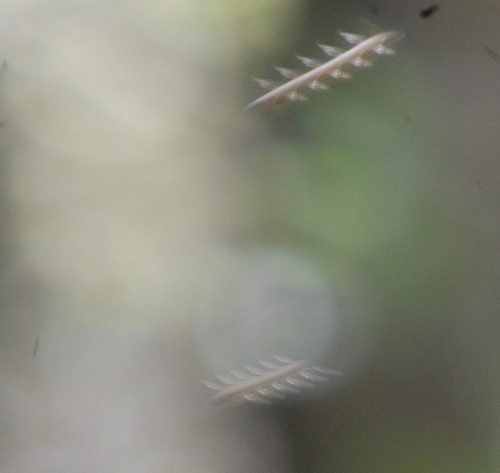 I digiscoped the strangest photo of my bees yesterday. I'm not sure what setting I had the camera on but they look like odd little space ships.
Digiscoped Images
Fresh Tweets
Would you like to hire me as a speaker for your event?
Email sharon@birdchick.com