
Birdchick Blog
Common Nighthawk Freakout
So we've had a common nighthawk completely freaking out in our ally the last week. I'm not sure what's going on, I'd almost think it would be nesting, but these guys should be about to migrate from our neck of the woods. But it started when Non Birding Bill noticed it.
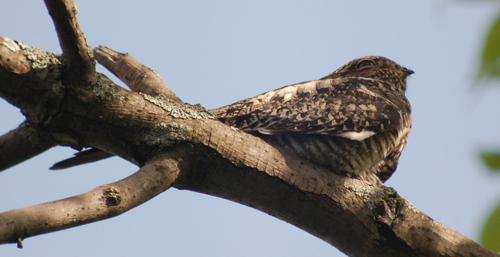
Yes, I know, stop the presses: Non Birding Bill noticed one of the browniest birds out there. Above is what a common nighthawk looks like. In some areas they are a common city bird in the summer but in Minneapolis they have had a dramatic decline. We've had only one pair successfully fledge a chick in the 14 years we have lived in our neighborhood. This summer we had a nighthawk displaying and it seemed he found a mate but then he started displaying about three weeks ago and I wondered if he was attempting to re-nest and if a crow had gotten the chick.
Sunday NBB came in after pilfering some green tomatoes from an accommodating neighbor's garden and asked, "Nighthawks are brown, right?"
"Yes," I said.
"And when they fly they have those white wing stripes?"
"Yes..."
"I just saw one in the ally and it was making this strange kind of chatter sound. I got video of it. It landed on the wire above my head but sat along the wire," he said while trying to load his video.
"That's what they do when they perch," I said, intrigued that a nighthawk would be active in the morning daylight hours. While NBB searched for his video, I played common nighthawk's "alarm calls near nest UT" on my Sibley app and he said, "Yeah that's the sound!"
And we've heard it two or three more times this week. One night I was soaking in the tub and I heard it, so I got out and went searching for the nighthawk.
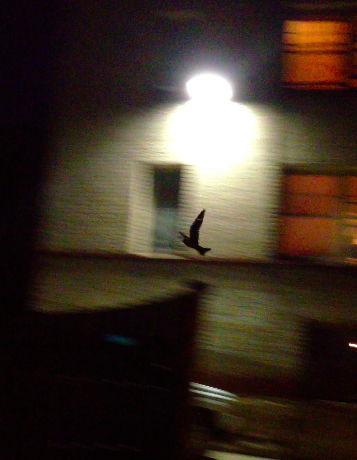
The nighthawk alternately landed on our neighbor's driveway or circled the ally as it chittered in agitation. I never saw a chick or heard one begging so I'm not quite sure what is causing the nighthawk freak out. Perhaps we had an owl in the vicinity?
Here's what it sounds like (the video is terrible because it was dark out, but you can sure hear that bird):
http://www.youtube.com/watch?v=rU2hk24pjJQ&feature=youtu.be
Pledge To Fledge
There was a movement started last week called Pledge to Fledge. I saw all the Twitter and Facebook updates with that in the title, took a casual glance at the website, thought, "cool, get kids into birding," and then tunneled back into the work hole I've dug myself this summer. Then I got a call from Richard Crossley...and Dave Magpiong, the two movers and shakers getting this global birding movement off the ground. Both noted my lack of mention and both wondered why since this is the sort of thing that I do. I said I noted it, was busy and that I'm all for getting kids into birds and was going through a PG-13 phase at the moment. Both corrected me that this is not just about kids. So here is what Pledge to Fledge is all about:
The weekend of August 24 - 26, 2012 you must promise to casually introduce someone (adult or child) into birding. You can do it in a variety of ways. Invite someone who has had a passing interest in birds out in the field with you, give away an old bird book you are not using to friends, plant yourself and a spotting scope someplace with a good amount of foot traffic like a beach or lake shore path and share what you see to passersby, or if you are on Facebook or Twitter, write a few updates about birds or if you are so inclined, post photos of birds. You can be as extroverted about it as you like, but the key is to put it out there and see if you can generate a spark.
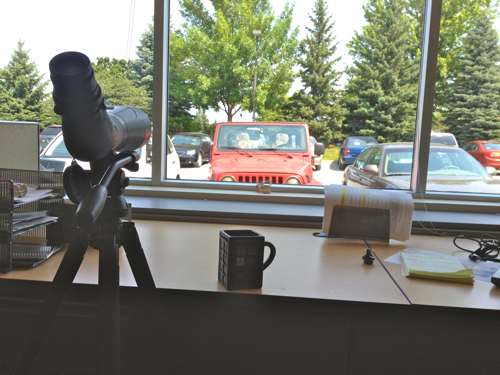
This is something that I do on a day to day basis. For example, one of the first things I did at my new job was to put up some bird feeders outside my office window and on days when I'm not in the field, I'll set up my spotting scope so anyone walking by can take a look.
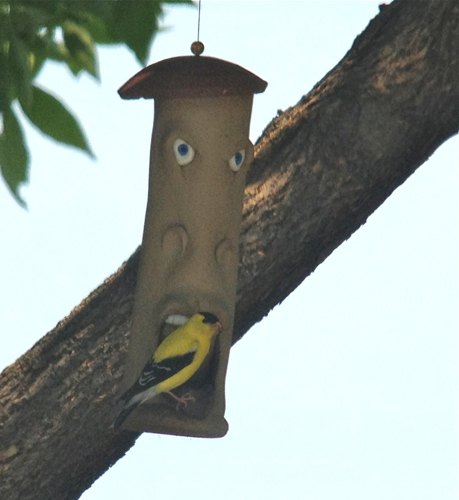
They might get to see a goldfinch on the tongue feeder I just put up or any number of species. Watching birds through my scope is all well and good, but I wanted a bit more. In the last week I have added a suction feeder to my office window...which started quite the debate. Several people came by and said, "A feeder on the window? Won't that make birds fly into the glass?" From this I was able to talk about how that's a strategy to use to prevent window collisions. Others are dubious that a bird will actually come up to the window. We've already had one brave house sparrow check it out, so I know it's a matter of time till the chickadees, nuthatches and finches take it over.
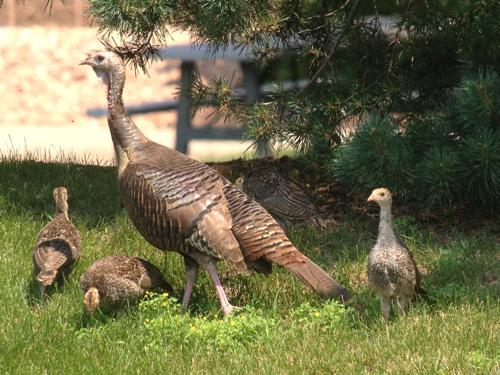
We also have the office turkeys who visit our parking lot too. Half the office gets excited about this and will come over and tell me about them. I love that word is spreading that if someone sees a turkey flock, they alert the environmental department so we can enjoy the too. I love when somebody sees something bird related and thinks of me.
So, how about you? Can you "pledge to fledge" a new birder? Another way you could do this is to host a Birds and Beers. I know I started it, but I simply cannot visit every state (or city) and host one. I can't drink that much! But you could host one in your town. We always have new people show up to Birds and Beers and many are very new birding, it's a fun casual way to bring others into the fold.
Don't worry that you may not know everything is to know about birds...no one does. Some of us know more about certain species than others, but there's still a lot we don't know and there's no harm in ever answering a question with, "I'm not sure about the answer to that, what a good question. Let's look that up!"
This Sparrow Is Driving Me Nuts
Last year on one of my bird surveys, I head the craziest sparrow, it sounded like a really groggy field sparrow and I wondered if it was a hybrid clay-colored/field sparrow (something has been documented before). Here's what it sounds like: http://youtu.be/Mdl8zHt6CaY
I tried like crazy to get a photo of the bird last year but wasn't able to. I was only able to get video of it singing. On Monday I was in the same area and I heard it again on the same survey site. Alas, I've never been able to get a good view of the singing bird it's now on property that I'm not authorized to walk on for surveys and this vexing singer may have to remain one of Life's Great Mysteries.
Jonathan Franzen Cannot Be The Most Annoying Bird Watcher In The World
I'm fairly certain that there are people out there who would gladly place that sash over my head and if it's going to be a cage match, Franzen, I warn you now, I may be a girl, but I fight dirty, know my way around a folding chair and I'm not afraid to attempt a Pile Driver. There's an article about the documentary on HBO about birding called The Central Park Effect. I haven't seen it yet, I would love to have HBO cause I loves me some Peter Dinklage on Game of Thrones however, I'm not willing to pay over $100 to get one channel and a whole host of others that I'm really not interested in. I do want to see it because birdspot is in it and I'm generally interested in the subject.
However Jonathan Franzen is in it and well, Laura Helmuth over at The Slate has some harsh criticism for him in her article Jonathan Franzen Is The World's Most Annoying Bird Watcher. Which I have mixed feelings about. She gets off some great quips and it's clear that Franzen has given her some fantastic ammunition, from the article:
"And here’s Jonathan Franzen on birding: 'I thought it was embarrassing. I still think it’s embarrassing, a little bit. You’re basically defenseless. You’ve got your binoculars up and you’re looking at something nobody else is looking at, and everybody else is looking at you and thinking, what a dweeb.'”
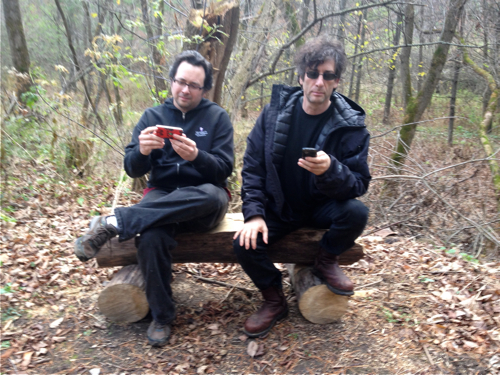
But let's face it, whatever issue one my have with Franzen (I've never met nor birded with him so I have no idea how annoying he could be) I think the bar has already been set very high as to most annoying bird watcher on the planet. Not that the two gents in the above picture are the most annoying bird watchers ever, though, Non Birding Bill has pointed out on more than one occasion that when the three of us are out in the woods, I tend to stay several paces behind so I can hear birds and see the ones they flush. But I love this photo because there they are in the woods with their phones and I've overheard more than one bird watcher grumble behind me that all I do is text when I'm birding--even tho I'm usually sending photos of birds we see in the field to Twitter and those same people who complain love my phone when they want to know football scores.
As cringe inducing as it is to have someone well known to the non birding public talk about his birding shame, that's not that annoying. When I think of annoying bird watchers, I think of scope hogs or people who walk/stand in front of spotting scopes, paying not attention to the group behind them.
Or I think of the awful field trip leader who waded into alligator infested waters to wander through a bunch of reeds to clap and flush a bittern so people could see it (where if we had just exercised a bit of patience a fantastic view of a stationary bird in full sun could have been had by all.
I also think of the know it all types who rip beginning birders a new one because they don't know all the unwritten rules of the birding listserv and post something they shouldn't have or ask a question that's far too basic.
Or the birding related companies that offer trips to introduce new product and only invite male writers and editors because why would you want females out in the field?
There's a whole host of most annoying bird watchers in the world.
I also think we should be careful with well known people who watch birds and the standard we hold them to. For most of us, bird watching is a hobby, a form of relaxation, a release. I know there are several celebrities who watch birds and for them, that is their break, their time to unwind. They may not want to be the poster child for birding, they may just want to hang out in the park and enjoy those kingbirds.
Granted, Franzen did bring this on himself by writing and being interviewed about his deep birding shame.
Osprey Banding
Even though I have a spanky new job with a desk and everything, quite a bit of what I do is field work. And like any job, you have to keep your skills sharp and go out for training.
This week it took the form of helping Mark Martell of Audubon Minnesota with banding osprey chicks. And because we have the same heatwave in Minnesota that's gripping the rest of the nation, we had to start early and scramble like crazy to get four nests of birds banded before the heat of the day would make it too stressful to handle young birds.
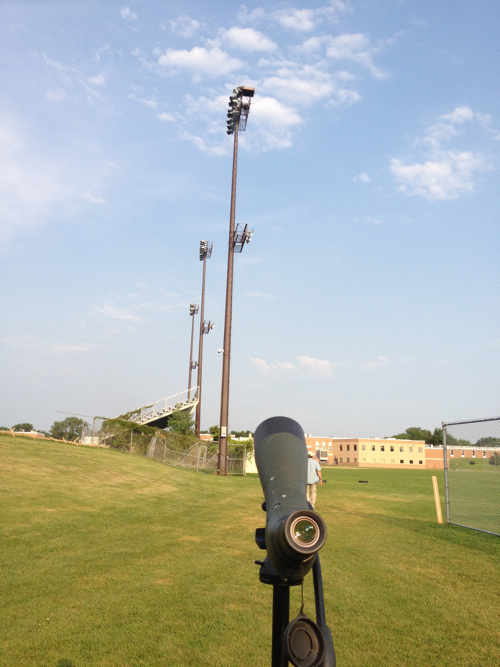
Most of the nests were on typical poles but our first nest was on top of the lights in a high school ball field. We use a professional tree climber to climb up to the nest. He uses his yellow bag to load up the chicks and gently lowers them down to the ground. He will remain at the nest while we band the birds and then we will hoist them up the rope.
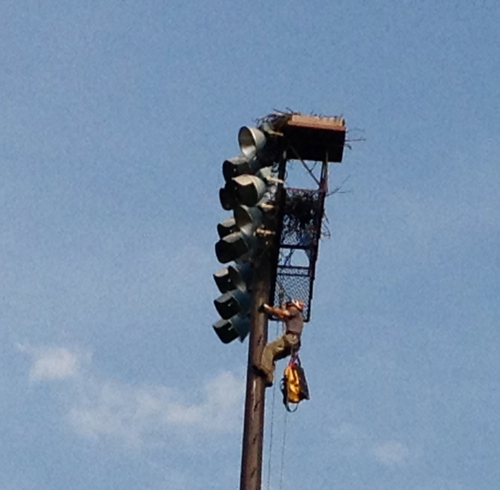
I'm sure the tree climber gets a great view, but I'm so glad that's not my job.
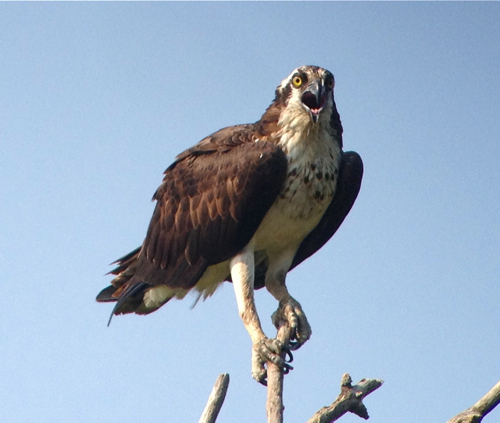
Some of the chicks were so large that we had to send them down one at a time in the bag. While we do this, the adults fly around and make a fuss. The don't really attack us, they mostly flap can yell. Occassionally one will dive towards the climber, but doesn't get very close unlike peregrine falcons or Cooper's hawk which actually will make contact. The above adult perched long enough for me to get a photo of her by holding my iPhone up to my spotting scope. She really does look like she's spewing some serious profanity at us.
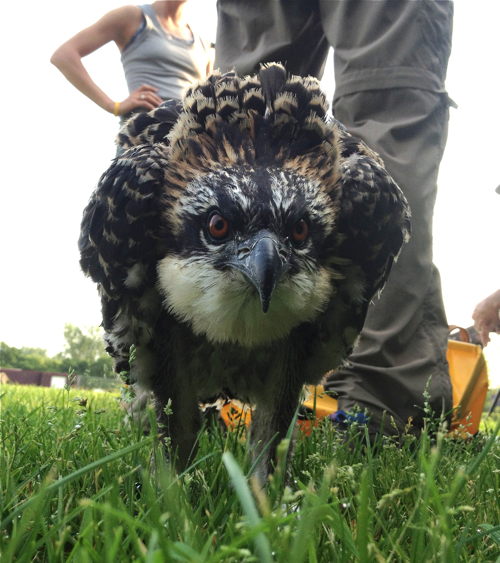
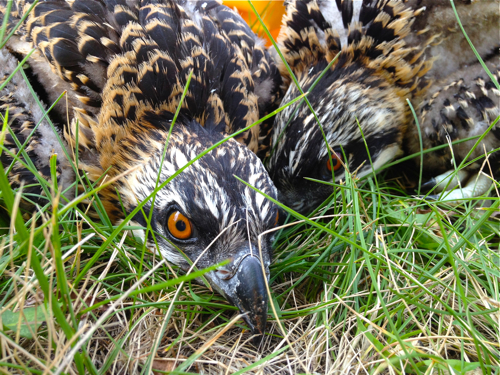
When we take the chicks out of the bag they are up right. As the adults circle overhead and make warning calls, an instinct for the chicks to flatten kicks in.

And they sort of deflate right before our eyes. It's an interesting defense, if you are looking at the nest from the ground, you can't see any chicks. And with that coloration on their backs, they would blend in well with the colors of the nest and help hide them from aerial predators.
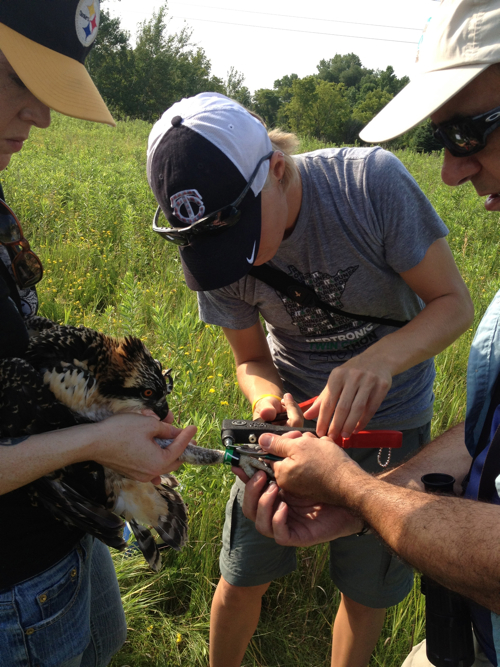
Above is Avian images holding a chick, my coworker Brie applying a rivet band and Mark Martell walking us through the process. Each bird gets a silver federal band and color band that will be easier to read for tracking purposes. Most of the chicks were in the five to six week old age range, meaning their feet are big enough for a band, but not old enough to attempt to fly. But some of the chicks were getting closer to fledging age which is between seven to eight weeks. After we banded older birds, we sprayed their feathers lightly with water which makes them less likely to flap around after they are put back in the nest and less likely to take a tumble over the side as the climber puts them back.
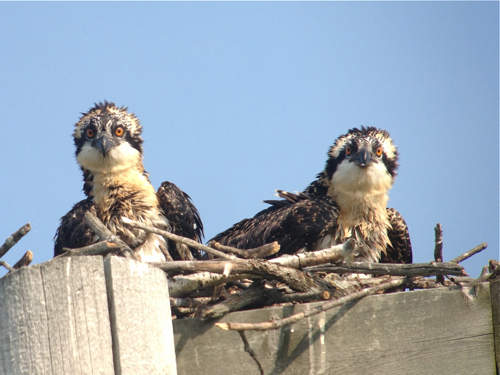
Here are two chicks after being banded. Don' you just love osprey faces? They look like, "WTF just happened?" Just think, in a couple of weeks, these two kids will be learning to grab live fish with their toes and then migrate south into Central and South America. They will spend the next 18 months down there figuring out how to be an osprey and then return in 2014 to breed. That sounds so appealing sometimes, going south of the border to find discover myself for 18 months. Sigh.
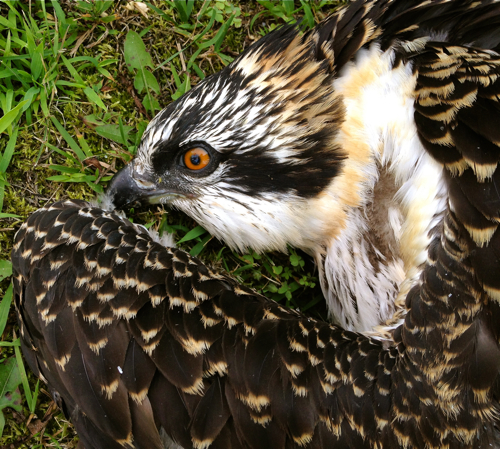
I checked out osprey longevity records on the Bird Banding Lab site. The oldest osprey I could find according to bands on wild birds lived over 25 years. There were a few birdrs over 20, though I think 16 - 18 years is closer to the normal age range for a wild osprey.
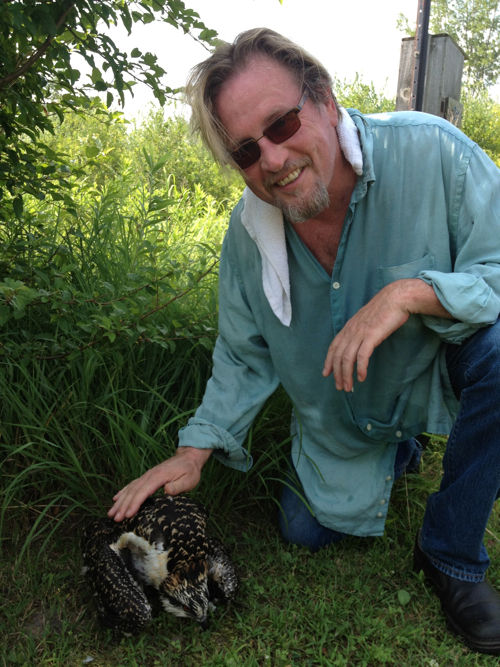
I love all the different people we encounter when we band these birds, above is musician and author Paul Metsa. You don't have to be hardcore into birds to appreaciate the amazing osprey. One of the really cool things about osprey is that they are truly a worldwide bird. They are found on every continent except Antarctica. They are a charismatic bird that appeal to people. While we were banding at the first nest we noticed someone on the other side of the ball field in a minivan watching us. One of us went over and told her to join us so she could see the banding up close. Turns out she lived in the neighborhood and has been watching the nest. She heard about the banding and wanted to watch but didn't want to interfere. But I love how osprey inspire people to take note of nature. I love how they have adapted to using poles people put up for them but also taking on light poles and water towers. They are a truly resilient and tolerant bird.
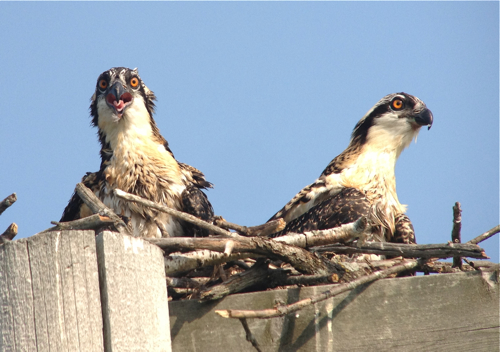
Another sweaty day in the office but a fun day nonetheless.
Music of the Birds iPad Book Review
I think I have found the missing link between the traditional paper copy of a bird book and an electronic bird book. Kudos to the awesome that is Lang Elliot and Marie Reed for coming up with Music of the Birds, a multimedia guide to 20 favorite North American species. If you aren't familiar with these two authors, you may recognize Lang's voice as the narrator of several bird song ID CDs and Marie is a a fantastic photographer. I've linked to some of the incredible footage their site Music of Nature.
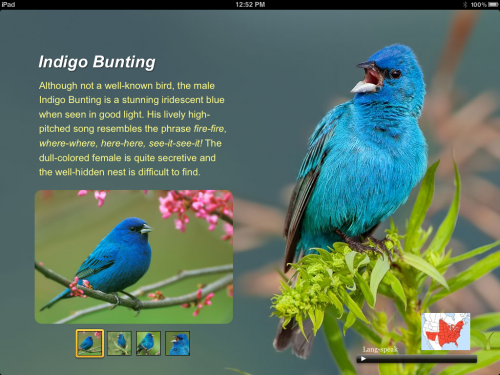
This $7.99 book for the iPad available on iTunes is great for adults and kids, people who go birding all the time, the casual birder or someone you would like to get into watching birds. It takes 20 popular birds (like the above indigo bunting) gives you incredible photos, stunning video and some background information.
Here's a sample of one of the videos of a Veery--how many of us have heard that song but never actually saw the bird that can harmonize with itself?
[youtube]http://youtu.be/cK1gaTqBRRk[/youtube]
I can really see this book appealing to kids. They love to play with iPads and with fantastic photos and videos of many birds that can be found it backyards, it may help inspire them to actually look for them.
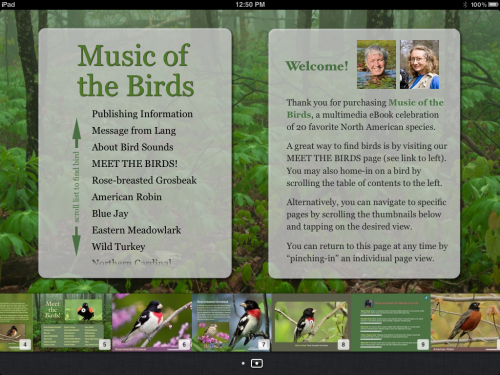
I do think that some day we will see field guides that will also incorporate video of birds to aid us in id, rather than relying on illustrations and calls only. I'm really excited to see someone take this on and come up with a such a user friendly and beautiful iPad book.
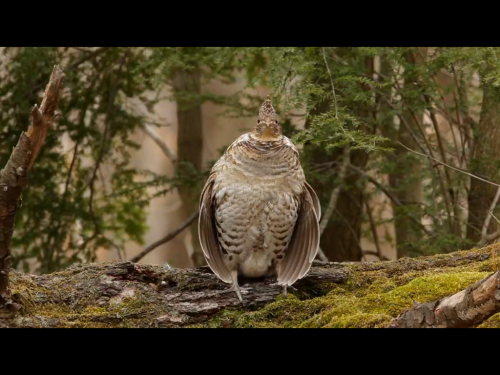
So if you have an iPad and an interest in birds, definitely check this one out.
Dickcissel Invasion
Holy cow there are a lot of dickcissels in my neck fo the woods this year. Last year on my surveys I had one dickcissel pair, this year, I'm practically tripping over them. They are by far the most abundant bird outside of red-winged blackbirds on those same survey routes.
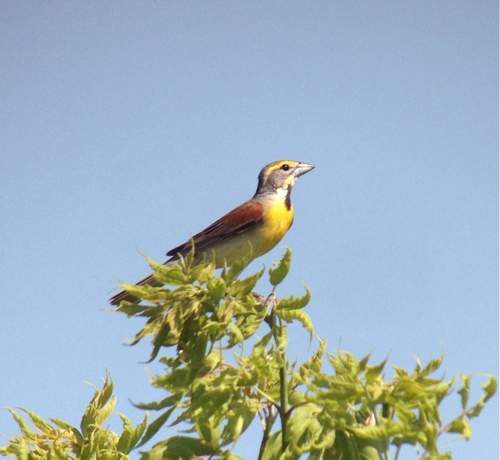 One of my final duties at the park service was a banding program with Avian Images (and for those who missed it, one of my freelance clients hired me full time and I'm now an Avian Field Ecologist with Westwood Professional Services). The banding program was at Bruce Vento Nature Sanctuary and we even found a breeding pair of dickcissel there.
The birds have been noticed here in Minnesota and Wisconsin and a challenge has been issued to try and document them in every county. Checking out dickcissel information online, this is par for the course for this species on the outer edges of its breeding range. According to Birds of North America Online:
"...this species is notorious for regular seasonal movements within its primary breeding range and for irregular movements outside of this core range to breed in surrounding areas where extensive grassland habitat exists. These erratic, semi-nomadic movements result in dramatic year-to-year changes in distribution and abundance, especially in peripheral and sporadically occupied areas."
And Minnesota and Wisconsin definitely fall on the outer edges of the dickcissel range.
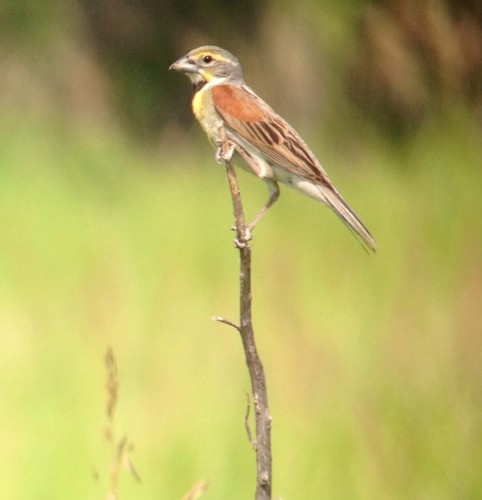
I can't help but wonder how an influx of dickcissel works with other species. Do they drive out bobolink and frustrate savannah sparrows?
I did some more poking around on Birds of North America Online and if you don't have a subscription, you should really consider it somtime and read up on your favorite birds. You never know what little gems you will find in there. Some of my favorites about dickcissel on BNA include:
"Nothing remarkable about defecation."
and
"Dickcissels show resource-defense polygyny (Zimmerman 1966b), as do a few other grassland species (Verner and Willson 1966). Polygyny in Dickcissels is not based on a skewed sex ratio, but on spatial heterogeneity in grassland habitat, such that some males hold territories of higher quality and attract more mates than others."
As if the name dickcissel weren't provocative enough. I wonder if anyone has tried to use the above as an excuse for infidelity? "Really, honey, it meant nothing. It was just a little resource-defense polygyny, nothing more. You know how great of property we have? How could I say no?"
Lawrence's Warbler
I took a quick trip down to Indianapolis to visit my family. On the way, I made a stop at Mr. Neil's and got a big surprise. I went to the spot where blue-winged warblers have nested in the past and sure enough heard the familiar 2 note, buzzy call of a blue-wing. I was excited to see one, but when I got it in my binoculars I was surprised to see something golden-winged warbler-ish...it was a hybrid!
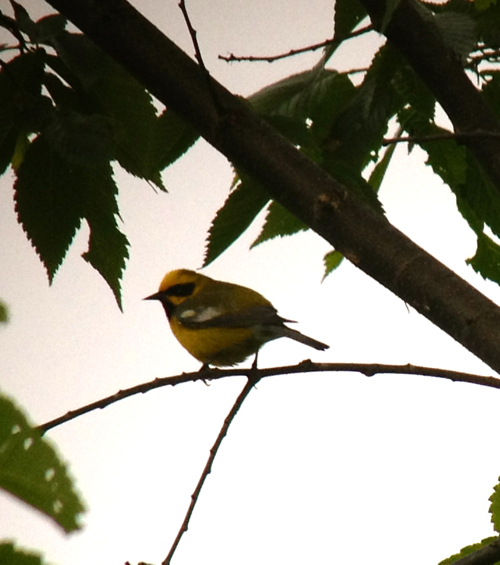
This is a Lawrence's warbler which is some sort of mix of blue-winged warbler and golden-winged warbler. These two species are known to hybridize, the more familiar hybrid is the Brewster's warbler. This bird really threw me for a loop because it sounded so much like a blue-winged warbler. Here's a video so you can hear what it sounded like (there's also a common yellowthroat singing in the background):
http://www.youtube.com/watch?v=4XffAG983LY&feature=youtu.be
I was kicking myself that I didn't wander the trail for bird watching until so late in the evening, I wished I had better light. I took both the photo and video with my iPhone through my scope...incidentally, I used the Meopix iScoping Adaptor to secure my iPhone to my spotting scope...more on that later.
I found an interesting article by by David Bonter and Irby Lovette on these two hybrids. It reads, "The most common hybrid form is known as a "Brewster's" warbler; the rarer form is known as a "Lawrence's" warbler. We currently believe that a "Lawrence's" warbler results when two "Brewster's" warblers mate, or when a "Brewster's" warbler backcrosses with one of its parent species, but research into the genetics of hybridization between these species is underway and many questions remain unanswered."
I haven't paid attention to this spot in the last few years because of my work and travel schedule. Did a golden-winged warbler mix it up with a blue-winged warbler? I can't imagine this bird coming to the exact territory where a blue-winged has nested in the past unless it hatched here. One thing is for sure, I'll be checking it more closely this year.
Here's a an article from the American Birding Association's Birding about the hybrids with lots of great photos.
The Anniversary Of The Great Blue Heron Rookery Destroyed By A Tornado
This has been an action packed week for me, it's the one year anniversary of the Minneapolis Tornado that ripped through a great blue heron rookery, destroying all the nests (and almost all the offspring) and displacing most of the adults. The herons ended up renesting, some at an older rookery at Coon Rapids Dam and then other establishing a new rookery downriver at the Head of Navigation on the Mississippi River, near Marshall Terrace Park. To our surprise and relief, some of the birds ended up fledging young last year.
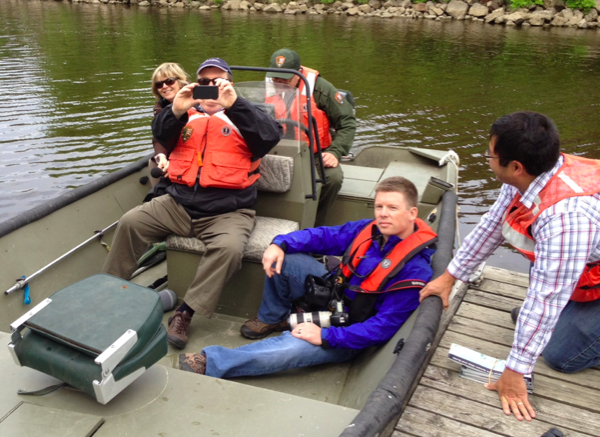
And to my utter delight, they came back this year and nesting is again well under way. Tom Crann from All Things Considered asked if there was a way to go out and visit the rookery. The superintendent of my park (MNRRA) Paul Labovitz offered to drive the boat and try to safely land on the island. So off we went under the threat of rain and lots of wind to visit the new rookery. Above is Jayne Solinger, Tom Crann, Paul Labovitz, Jeffery Thompson and Brian Valentine. Tom was getting a photo of me getting a photo of him. It was all very meta on Twitter.
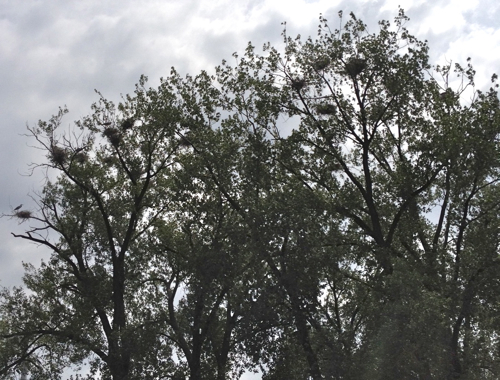
This is a shot beneath the rookery from the boat, look at all those those nests. Even though it was windy, if you took a moment, you could hear the chicks begging for food. Paul found a safe place to land the boat and we walked around on the island. I was able to count about 40 nests, most of which were active. I wasn't sure if some of the smaller ones were starters or leftover from last year. There's still plenty of room to grow on this island, so I'm sure we'll see more nests in years to come.
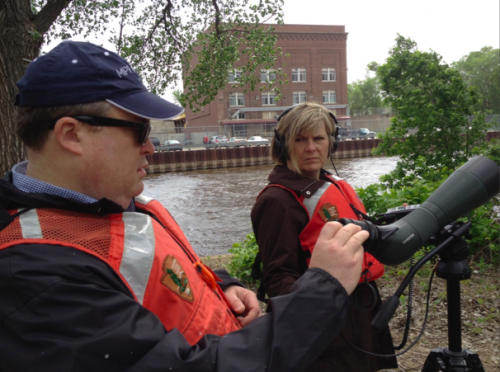
We had fun on the island and I even taught Tom how to digiscope with his iPhone and my Swarovski scope.
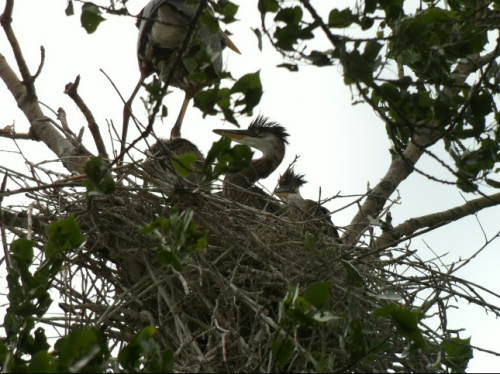
This is one of our iPhone scoped photos, we were sending them to Twitter, but Tom also added them to the story on the MPR site. Awesome. These young herons look like they are about to leave the nest. I think that mild March allowed the great blue herons an early start on nesting.
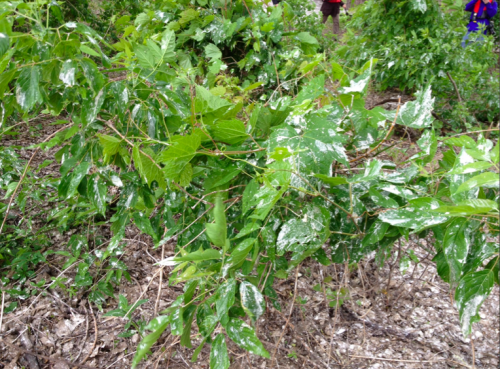
I couldn't help but notice how much poop was on the island. As I understand it, Xcel Energy owns the island and you're not supposed to land on it, but people do. Last year I found some campers and a local tour operator landing under the rookery. I couldn't help but think this a foolish situation, fish reeking heron poop is no fun to have on your clothing...or to camp under--ew. While we were on the island, we felt some moisture and we thought it had started to rain...
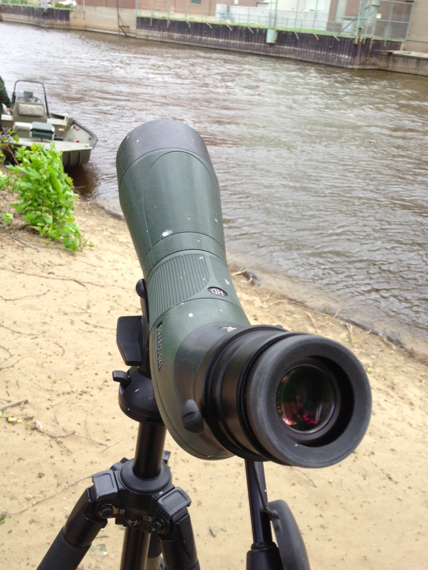
Then I noticed that the speckles were white and realized that I just got the MPR crew covered in heron poo! Way to go, Ranger Sharon! I had to call and ask Swarovski what the best and safest method is for removing heron poop from my spotting scope body. Typically I just run it under the shower but I think this will need a little elbow grease...and quite possibly a toothbrush.
Thanks to the super windy conditions on our way back to shore, everybody got sprayed with Mississippi River water, so that did kind of help clean off the heron poop...though everybody had to go back to the studios a little wetter than expected.
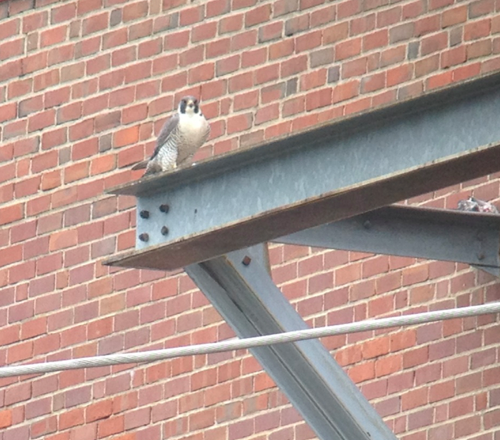
The peregrine falcons who use the nest box flew around us on the island a few times.
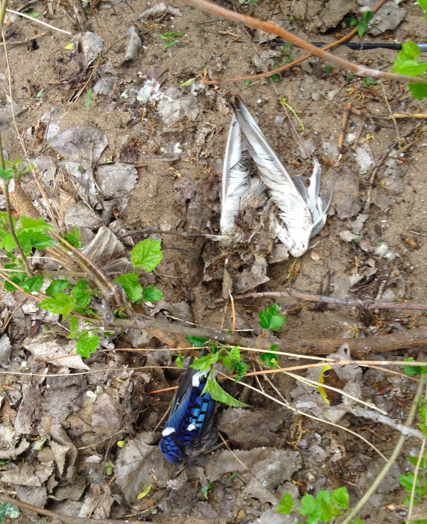
You can see they are still using the island as their plucking perch. We found all sorts of bird parts from several blue jay wings, killdeer wings and catbird parts.
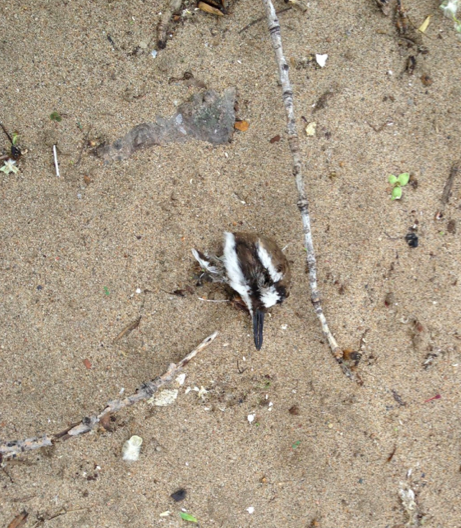
There was even a disembodied killdeer head!
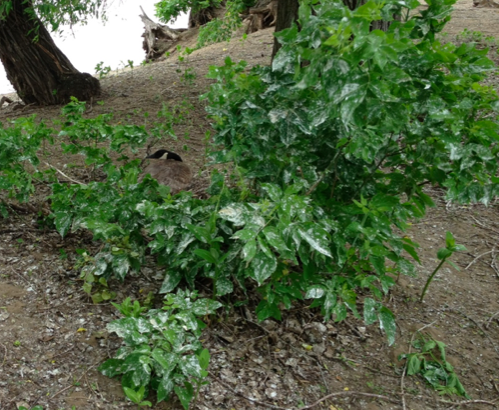
Canada geese nest all over the island, but many of the nests were abandon. I wonder if people landing on the island or the constant barrage of heron poop was the cause. I wasn't able to get a photo but there are also at least three spotted sandpiper nesting territories. You know, if it weren't for the heron poop factor and parent freak out factor, this island is a naturalist's dream and I would love, love, love to use it as an outdoor classroom. So much to explore and every bit of it is a teachable moment.
So, here is the story from All Things Considered and Tom also found that Xcel has set up a heron cam, so you can watch from the safety (and less stinky) area of your desk.
Hummingbird Reminder
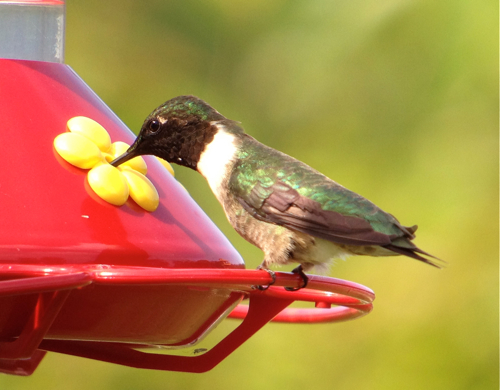 It's the time of year when I get hummingbird questions so I thought I would do a quick reminder about hummingbird nectar. Here is the recipe:
4 parts water 1 part table sugar (not honey, not corn syrup, not Splenda, not Stevia, no artificial sweetner)
Don't bother with red dye, it's not needed, could be harmful (we don't know for certain but it's best to err on the side of caution). Your feeder should be red enough to get the hummingbirds' attention.
Mix until the sugar is dissolved. One thing that I do is add in a little hot water from our tea kettle to the sugar, just enough to dissolve it. Once it's dissolved I add in cool water so the nectar won't be too hot and can go right in the feeder. You can make a big batch and store the excess in your refrigerator for up to two weeks.
Remember to keep the nectar in the feeder fresh. If you feeder is in direct sun, change the nectar every two days. If it's in the shade, change it every five days. If the nectar looks cloudy or if you see black on the inside of the feeder or around the feeder points--clean the feeder and change the nectar. A clean feeder is essential.
If the idea of keeping a feeder clean is daunting, use flowers to attract hummingbirds instead.
http://youtu.be/JhTSjgwKzUo
Digiscoped Images
Fresh Tweets
Would you like to hire me as a speaker for your event?
Email sharon@birdchick.com