Birdchick Blog
Frontera Audubon Turkey Vulture Roost

Inca dove chilling at Frontera.
While I was visiting the Rio Grande Valley with a friend with an eye on potential retirement spots I made sure to hit my favorite places. And one of those is Frontera Audubon. This is a tiny little park and every time I go, I get a gem. You can, of course get the Valley specialties, but every time I go there, I get a good bird, whether it’s a bird I don’t see all the time like a pyrrholuxia or gray hawk or even a Mexican species flitting across the border like a golden-crowned warbler.
I love all the nooks and crannies of the park and especially the sabal palm forest. The thicket is so dense it gives me a sense of peace. However, what I truly love about this place is the winter turkey vulture roost. You can smell it before you hit it. The smell doesn’t bother me, I put it in the category of “good bird smell” but when you’ve been vomited on by thousands of pelicans and herons in your career…your definition of “good” changes.
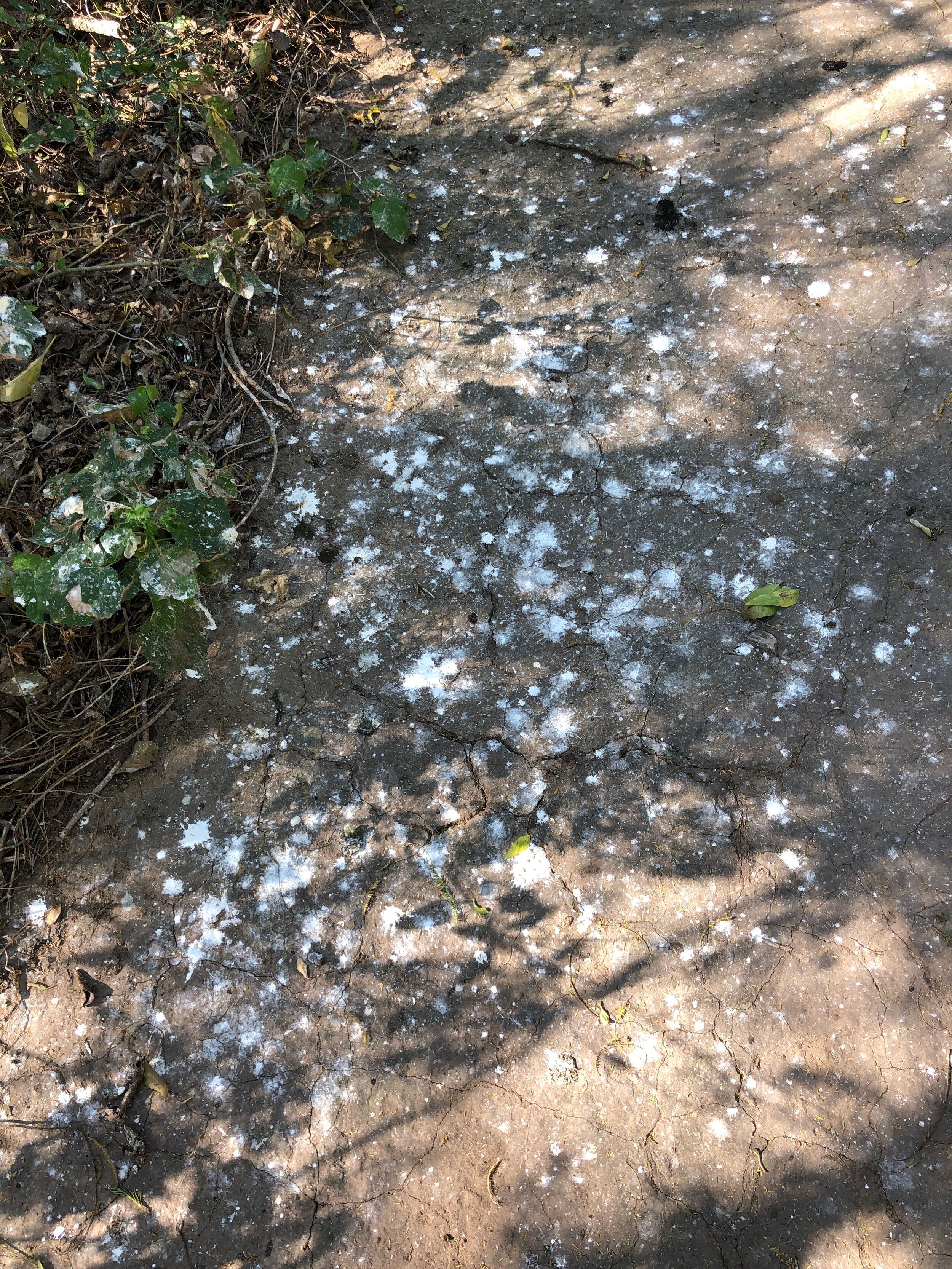
You know that you are some place special when you see this much vulture poop.
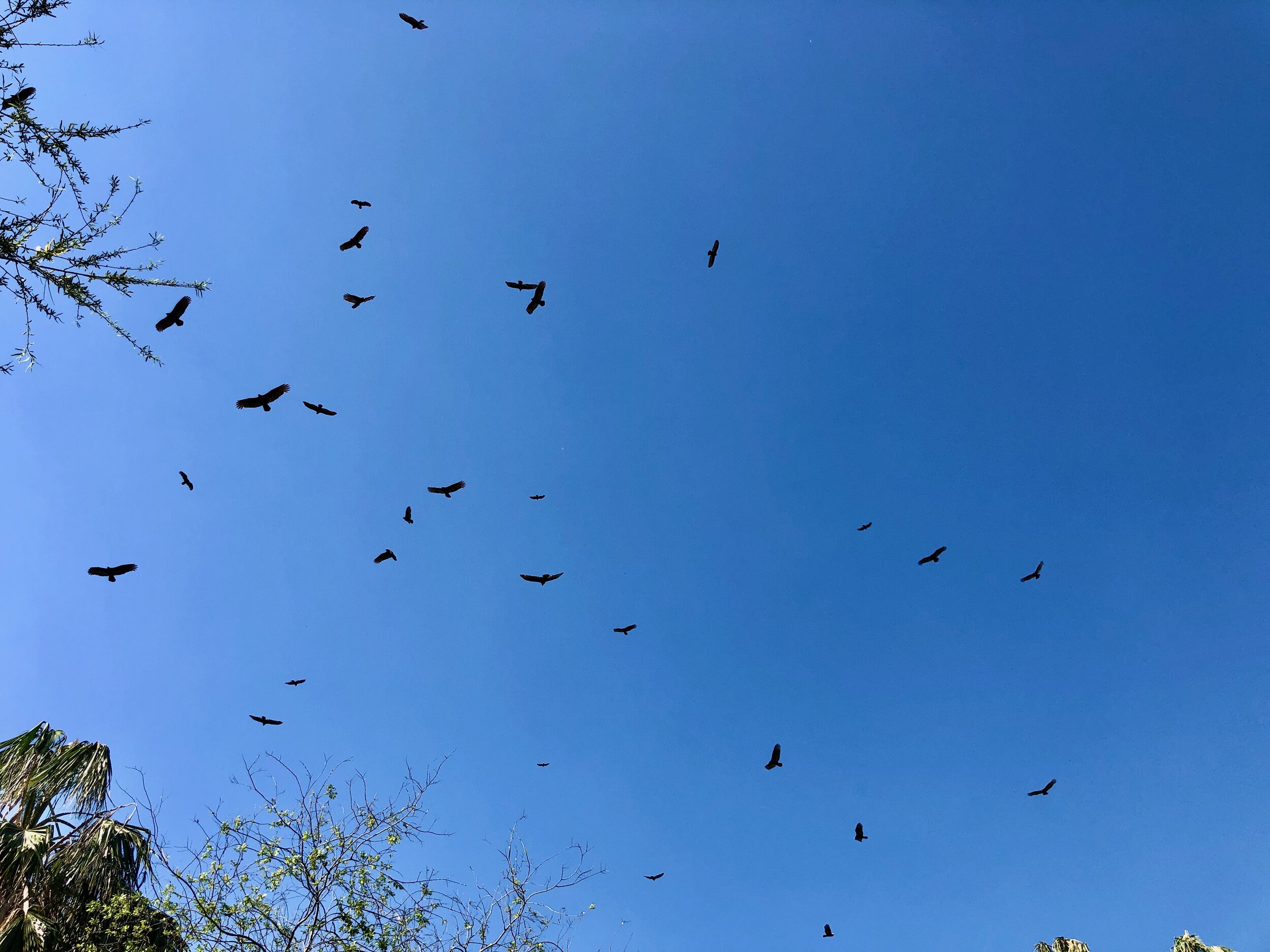
Vultures cruising in to their roost.
I do find it hilarious that when I do a google search for either Frontera or for vulture roosts, I’ll get directed to Trip Advisor reviews and people who…maybe don’t get birding. Here’s a sample:

Bad reviews of Frontera Audubon make me cackle.
Come on, people, it’s an amazing place to get vulture photos. And there’s plenty there to see, even outside of the feeders. Sure…you may have to have some patience, but that’s true of all birding spots. There are dozens of hot birding spots in the Valley and some I visit more than others, but Frontera is on the shortlist and I make it a priority every time I go. It’s tiny and chock full of birds.

Plain Chachalaca at Frontera.

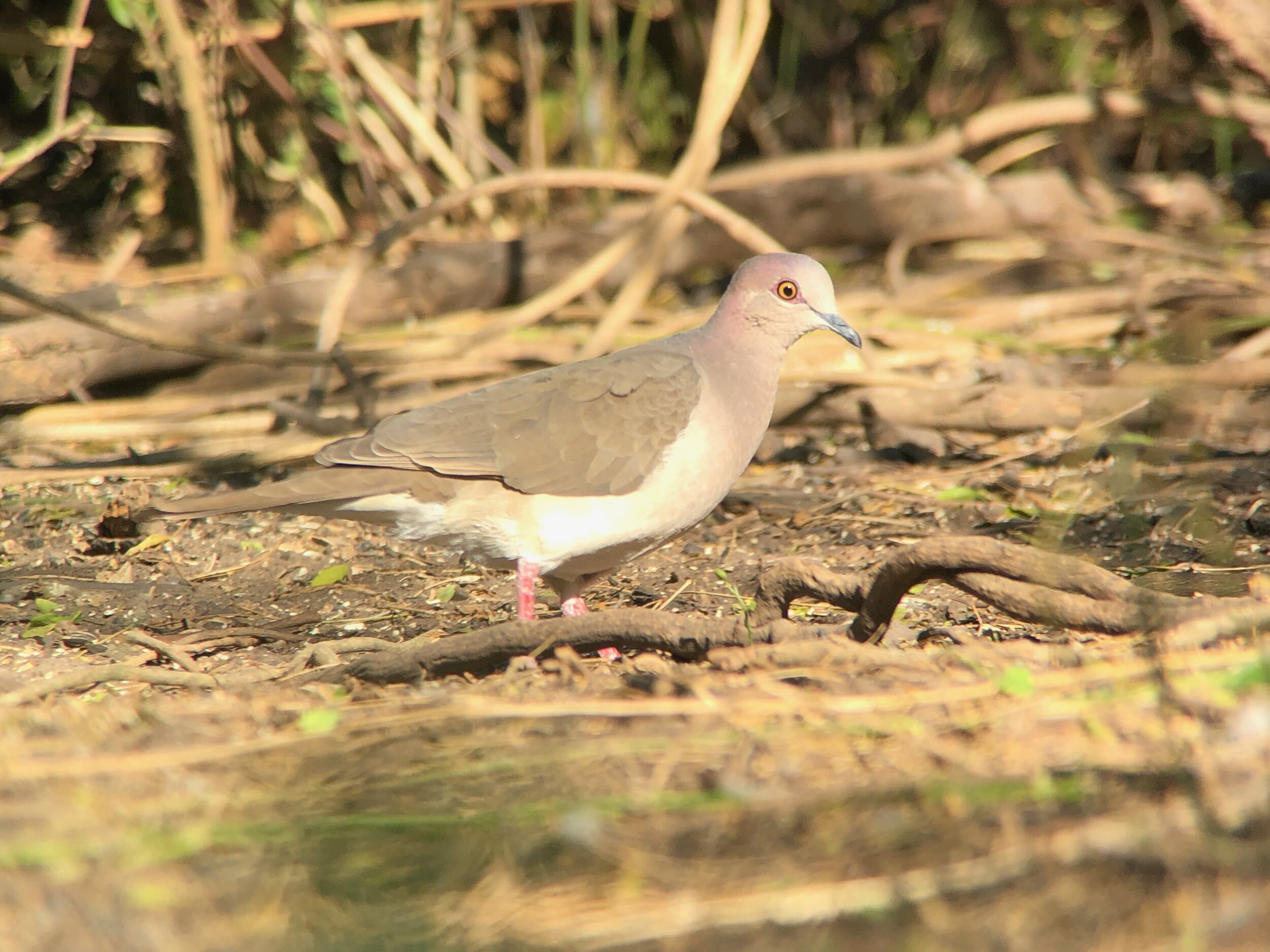
White-tipped dove.

But I’m really here for the vultures. All the vultures. All the time.
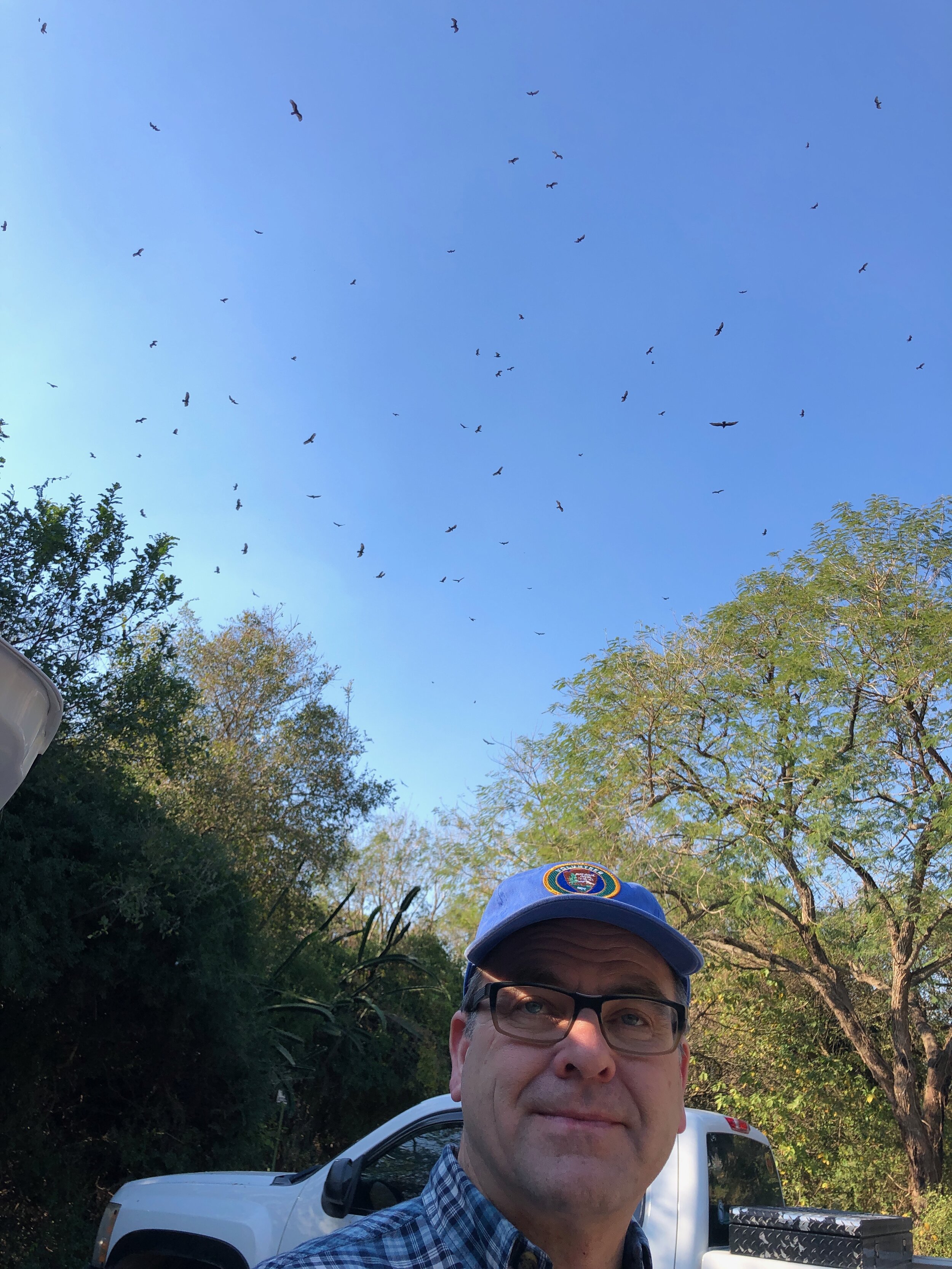
I told my friend that this many vultures soaring above his head means that it’s time for retirement.
February 2020

This Altimira oriole’s face kind of sums up my thoughts on the year.
Divorce just blows. There’s no other way around it. It’s not fun and it’s certainly nothing like the booze filled Divorce Train to a ranch in Reno that was featured in the 1939 classic movie The Women. But if there is any upside to suddenly being on your own after twenty years of shared decisions…it’s that ALL THE THINGS are back on the table: jobs in remote areas, eating microwave popcorn for dinner three nights in a row, traveling without checking someone else’s calendar…and where to retire.

The sidewalk entrance into Estero Llano Grande State Park always gives me a sense of peace.
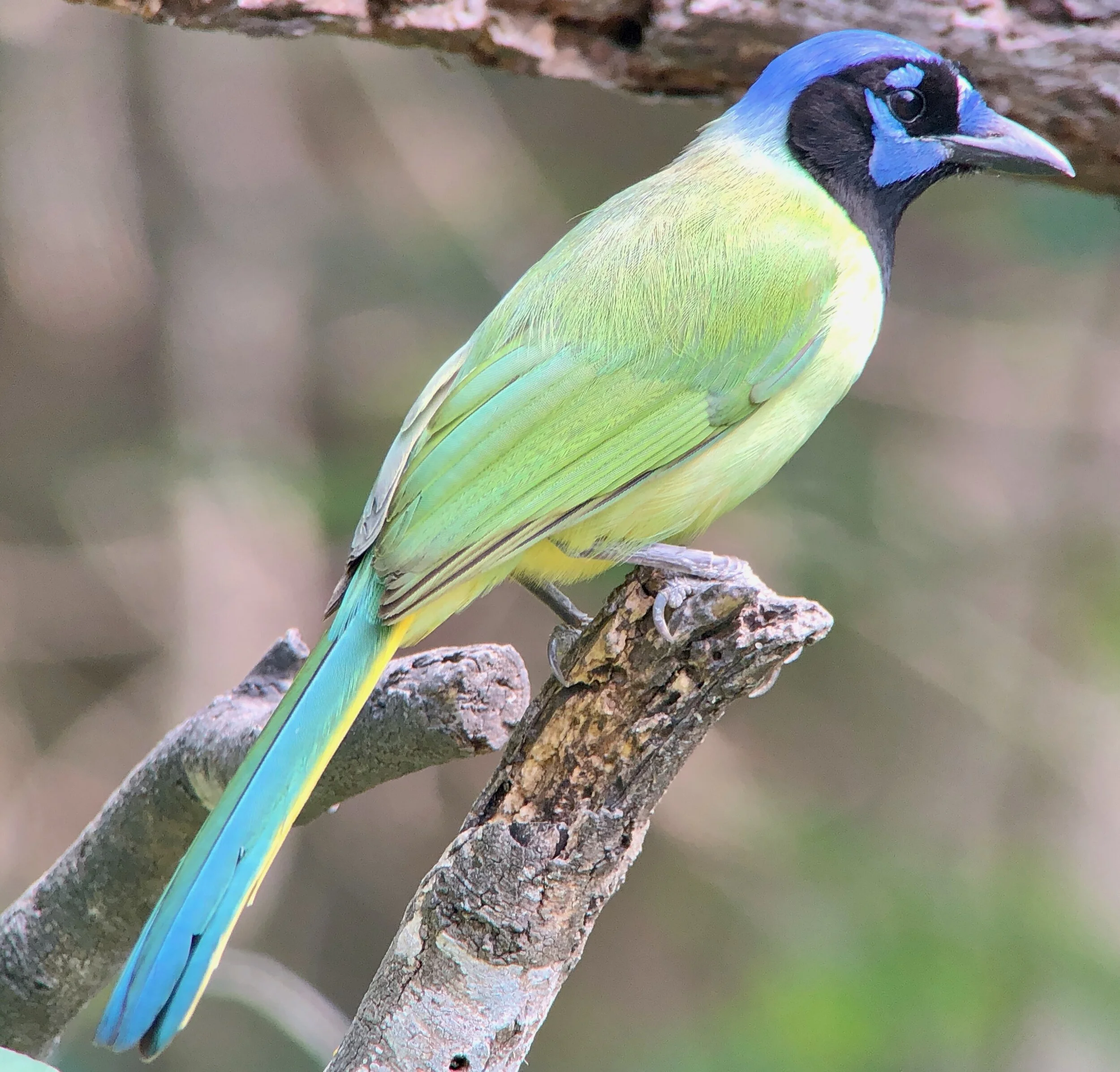
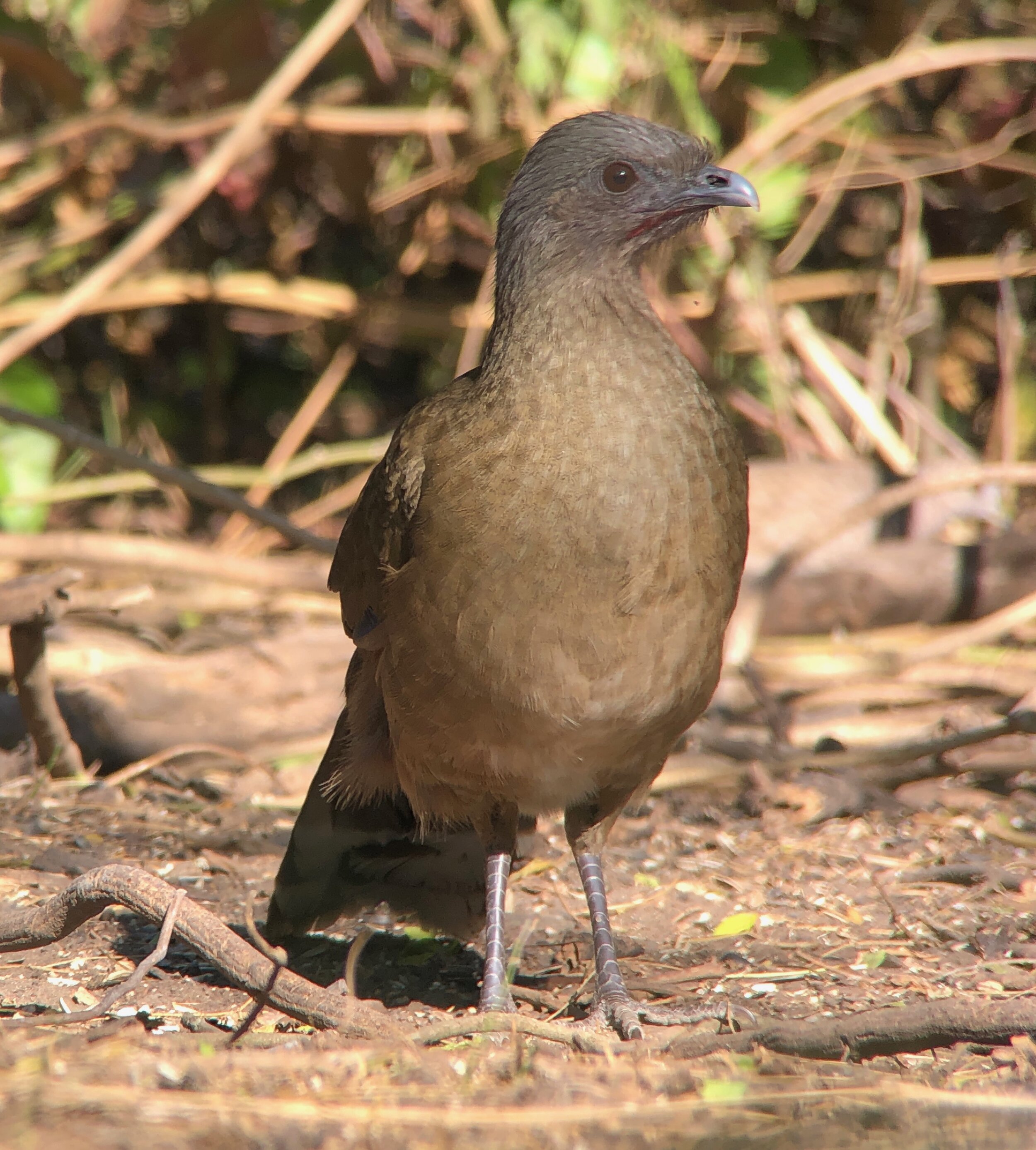
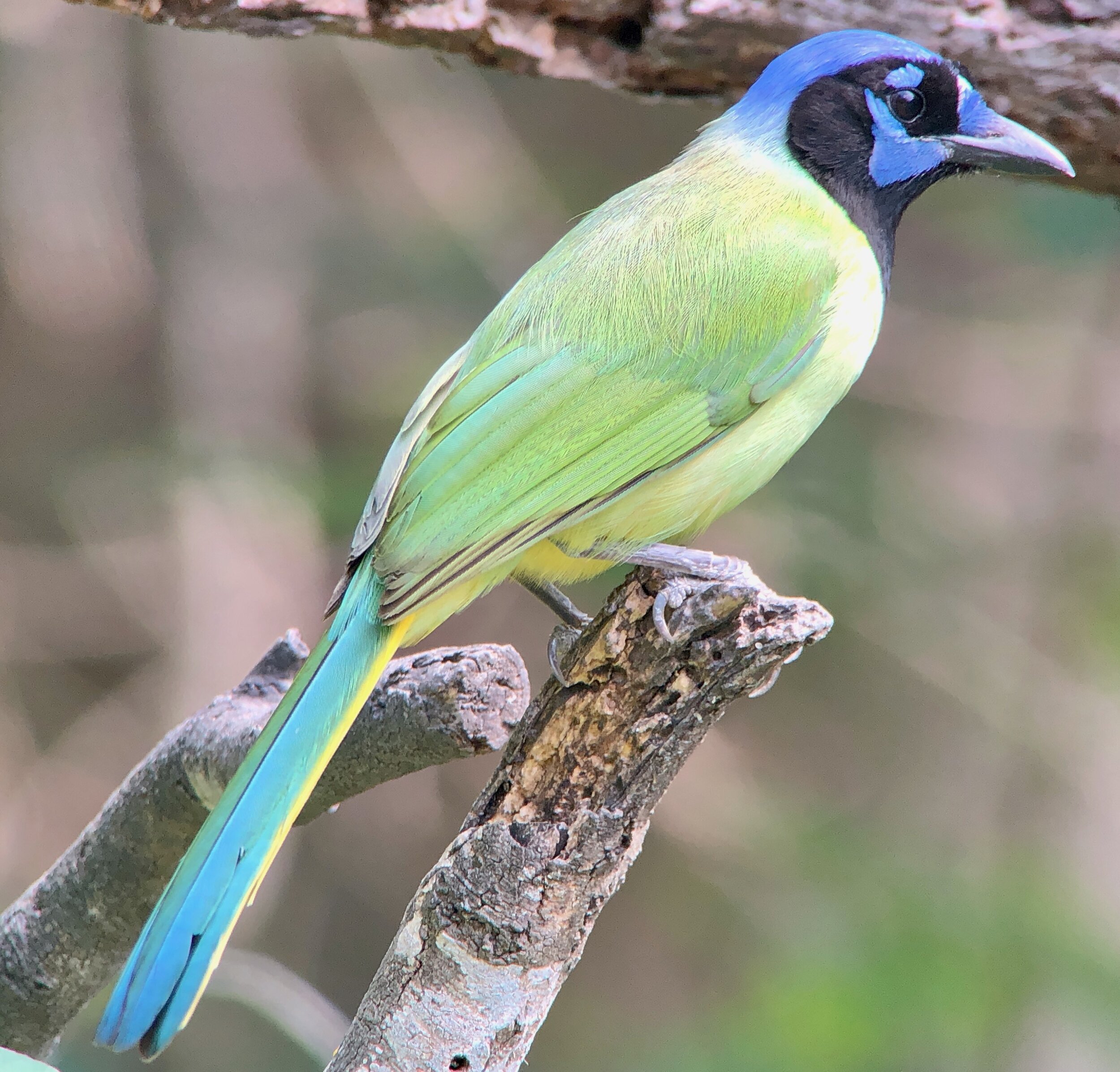
I’ve always harbored a fantasy of spending my retirement (if that ends up being a possibility for me) in the Rio Grande Valley, Texas. It’s my favorite birding area in the United States. I’ve often said that the day I’m tired of seeing a green jay is the day that it’s time for me to hang up my binoculars. But the idea of a tiny home, with a water feature, native plantings and access to all the Tex Mex food I want and maybe volunteering at Estero Llano Grande just seems like a wonderful way to round out the last part of my life.
When I tried warming up my ex-husband to the idea he wasn’t having it. I remember I took him down there for work and as we were driving around Harlingen he said, “Man, what a depressing area.”
“What are you talking about, this place is beautiful,” I protested.
“I see why you like the birds and the parks, but this place isn’t beautiful,” he said.
We saw things with very different lenses. But now retiring in Texas is back on the table and I decided fly down to the Valley in February…it was my last trip on a plane for a looooooong time. But I’m glad that my last plane trip was to a favorite place and not someplace like Mexico, Missouri.

An Audubon’s Oriole at the National Butterfly Center.
This trip, I made a point to stop at the National Butterfly Center, ground zero of the border wall fight. The federal government contractors started clearing the land before the wall project had been announced, much less before any eminent domain procedures had been followed. I started to drive to the property and a sheriff’s car was parked at the entry and told me we that we couldn’t get in. I thought it was odd but check in at the visitor center. “Of course you can get in. Unless they’re doing an active pursuit of people trying to cross, the area is open.”
There’s plenty to see and do around the grounds. It’s meant for butterflies but birds abound there and it’s a great spot for all the Valley specialties and sometimes there are bonuses like the Audubon’s oriole that was hanging out while I was there. The staff and volunteers also showed visitors an eastern screech-owl roosting in a picnic shelter. Here’s a video:
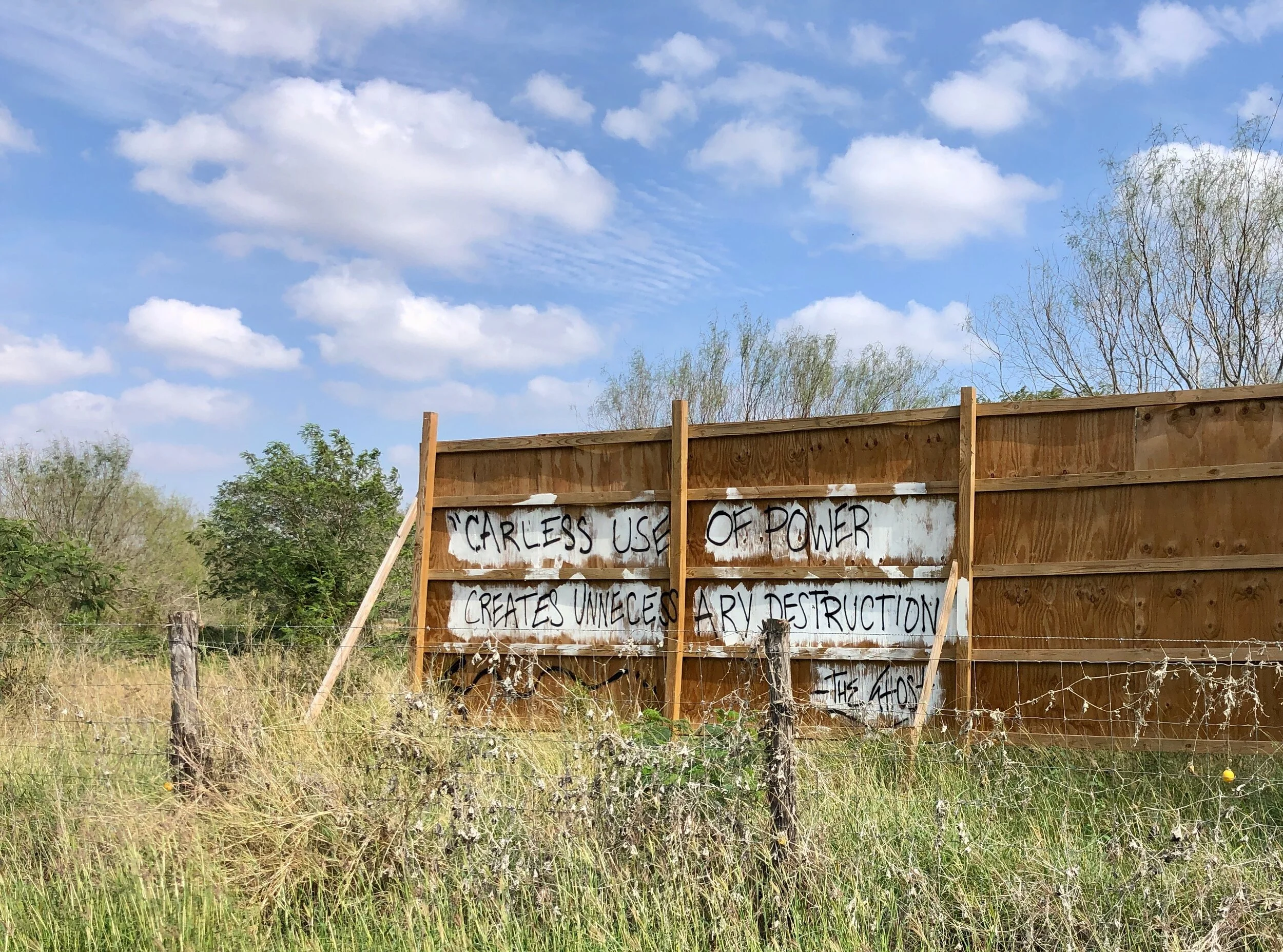
Some graffiti along the fence for the National Butterfly Center.

After walking the grounds for an Audubon’s oriole, I went back and the sheriff was gone. I headed down for more birding and a chance to stick our feet in the Rio Grande itself.
So many struggles in such a beautiful and serene environment: the struggle for families in dire circumstances doing whatever they can to forge a better life for their kids, no matter how high the cost. The struggle for someone to prove they can do something no matter the cost, they just want a showy legacy that won’t even do what is promised. The struggle of private landowners to have what they own being taken away by a government. All of this as there are struggles with all the plants and wildlife struggling around human made chaos. It’s a heartbreaking beauty in some ways and I wonder how many more years I’ll have to witness this beauty before it’s blocked off by a useless, ugly wall.

Meep meep. Zip. BANG!
I still have no idea what my future will hold at this point. My life has taken such a strange turn even outside the divorce. But I do hope it includes the valley again.
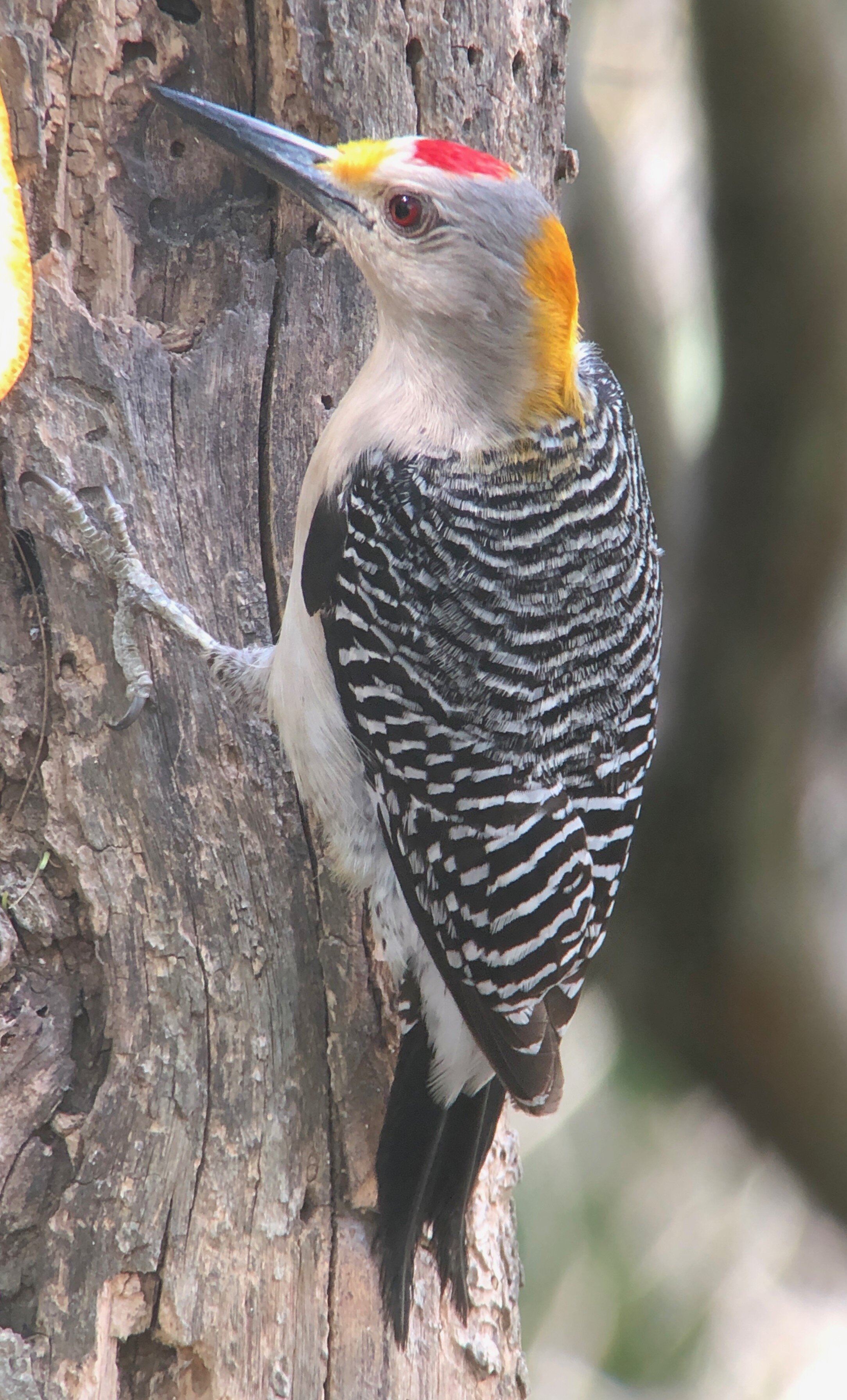
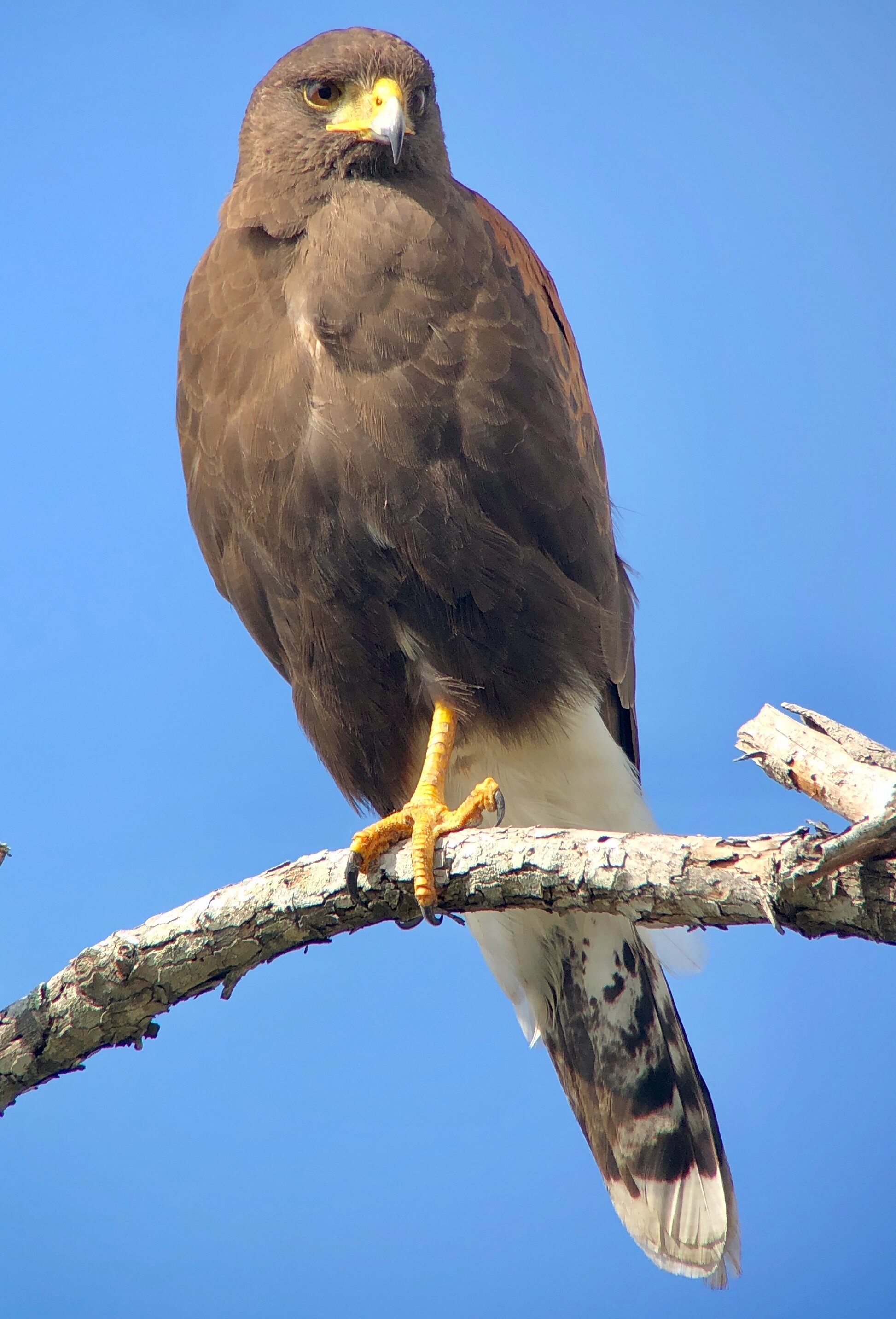
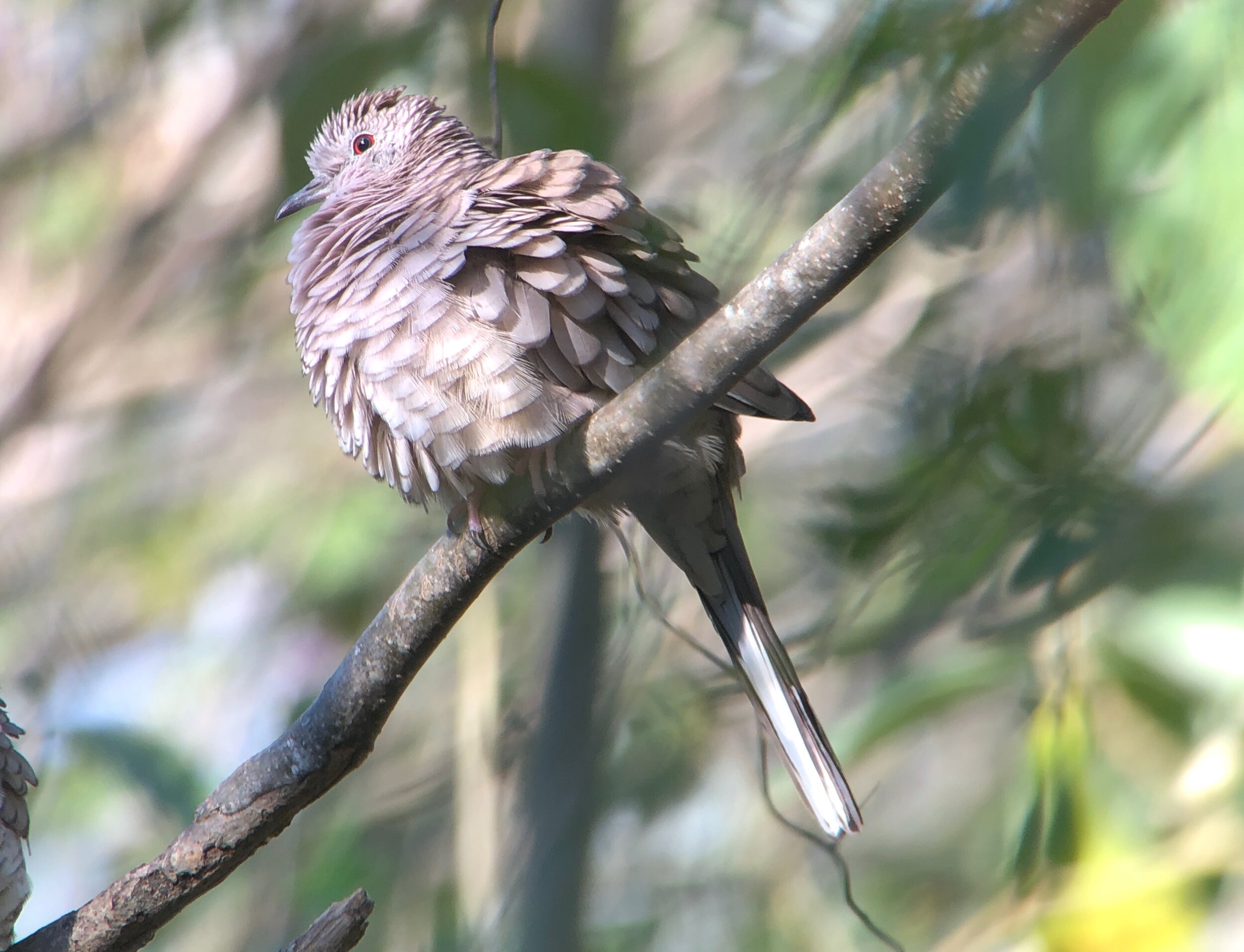
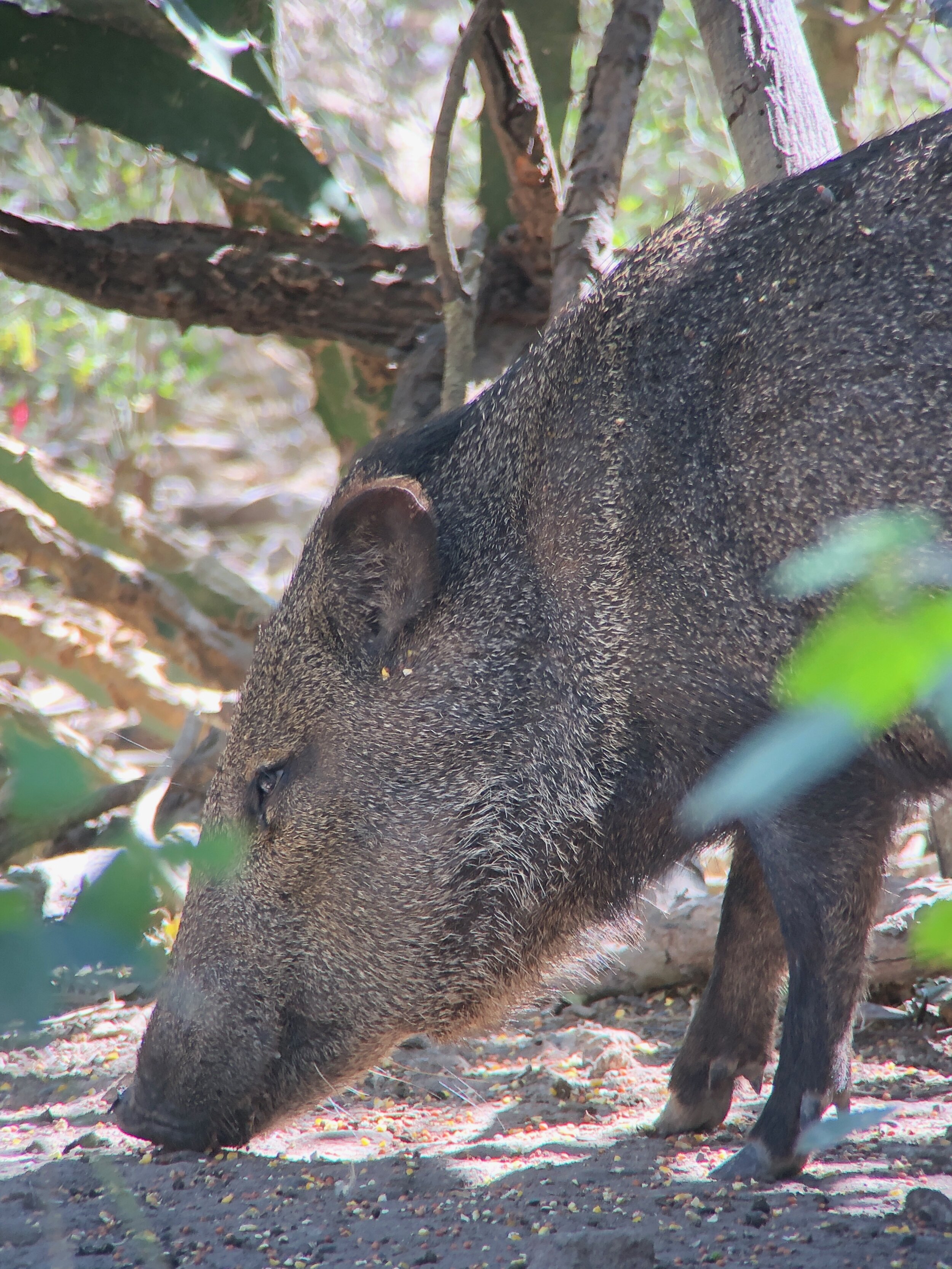
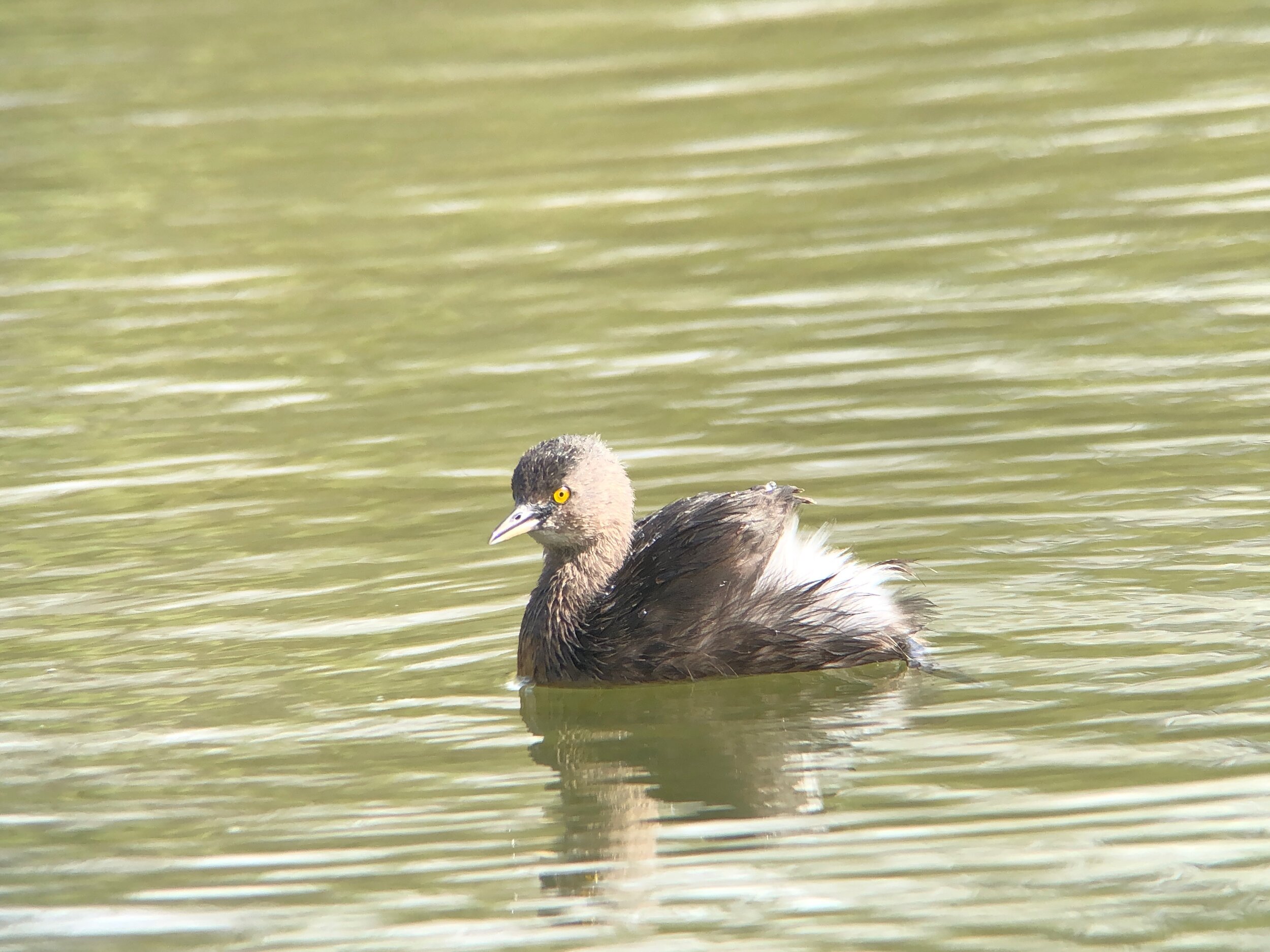
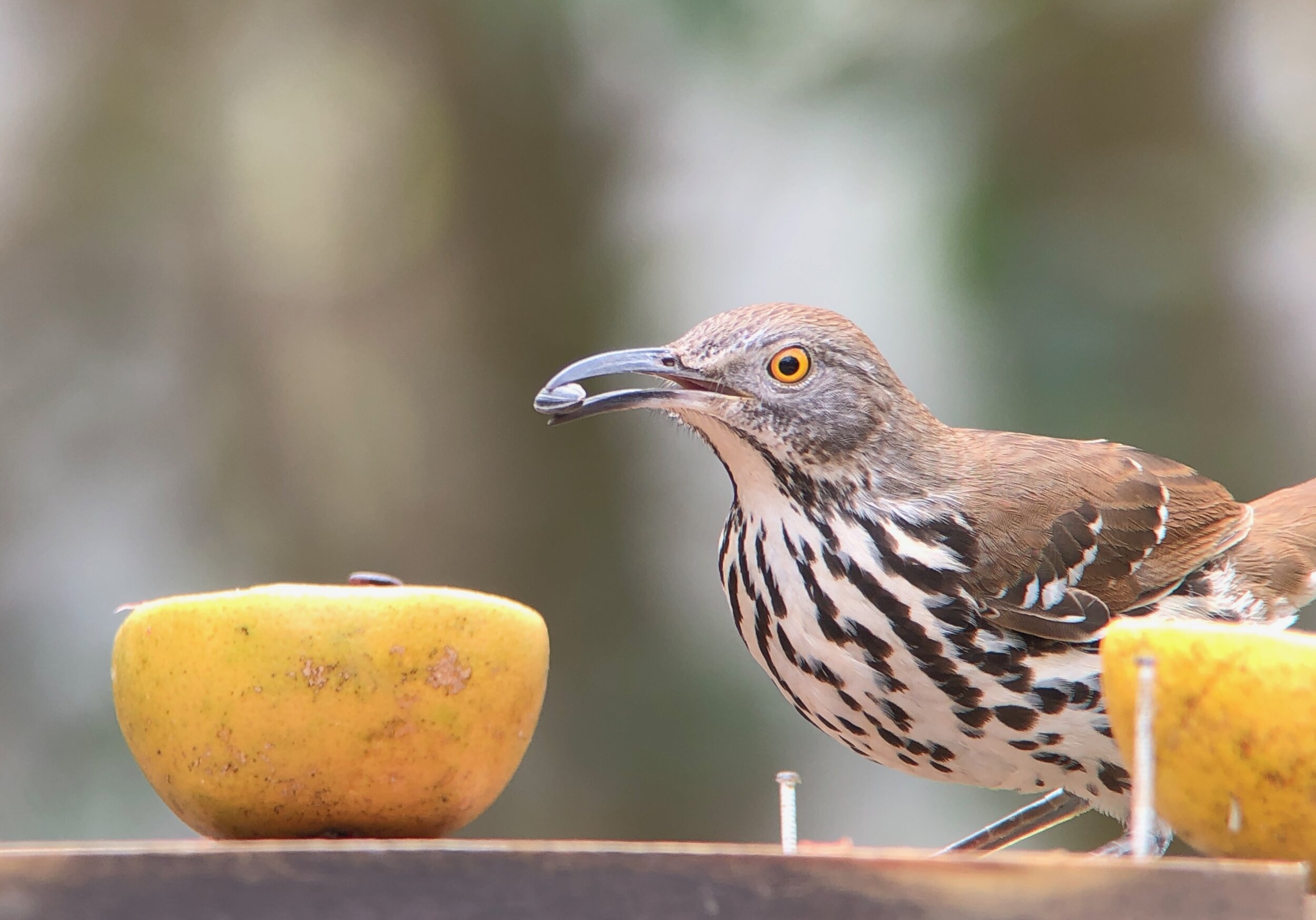
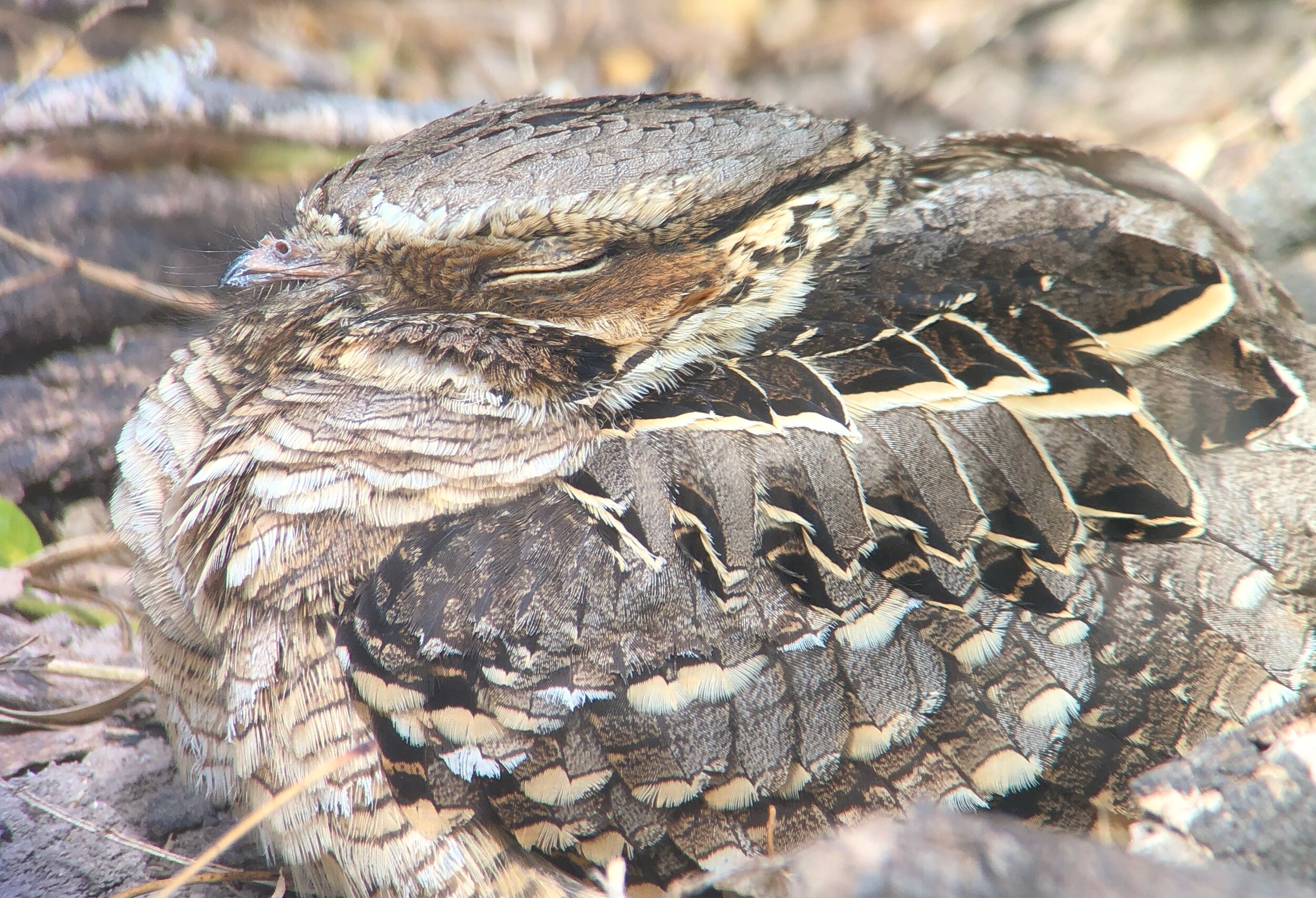
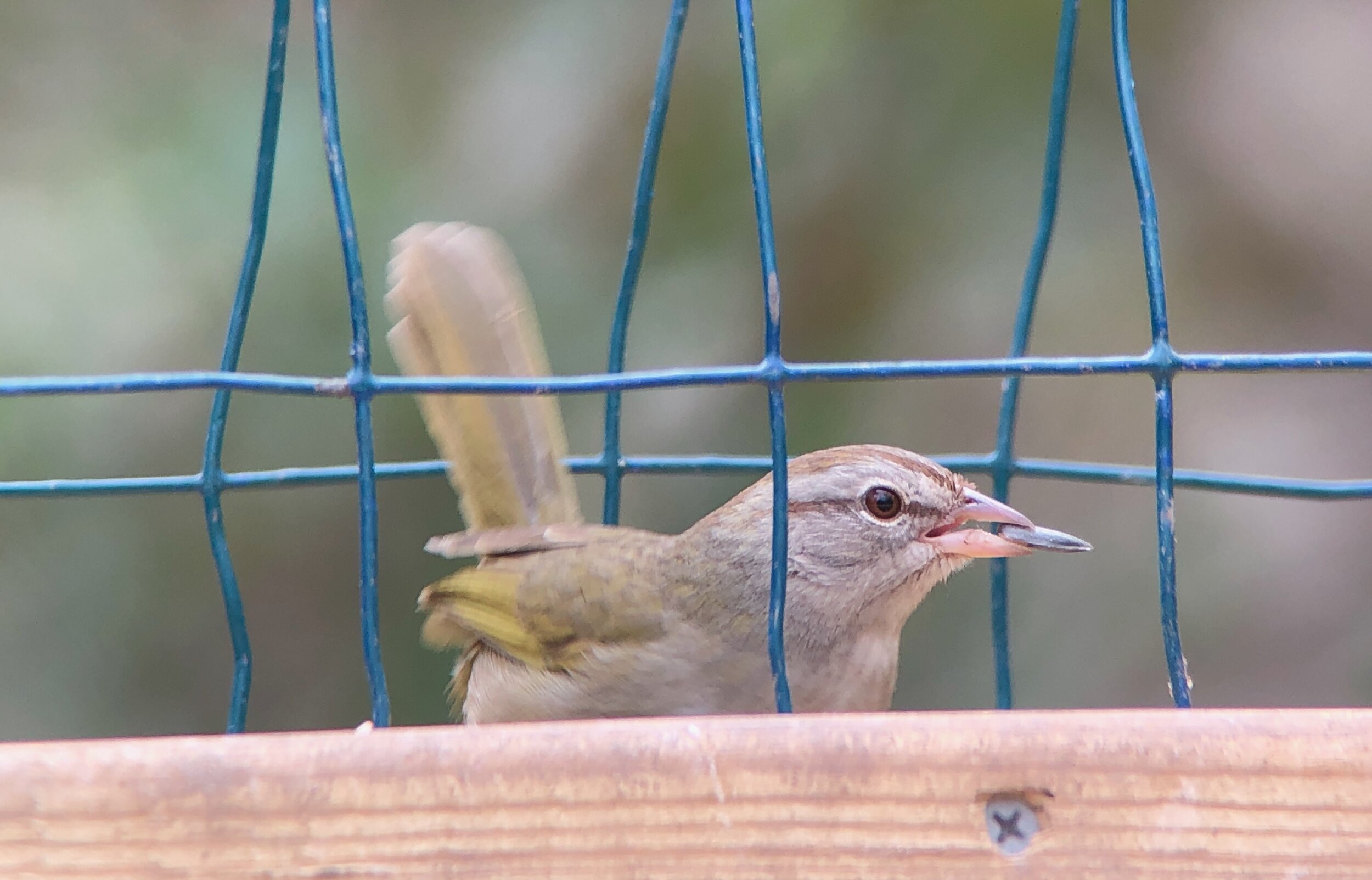
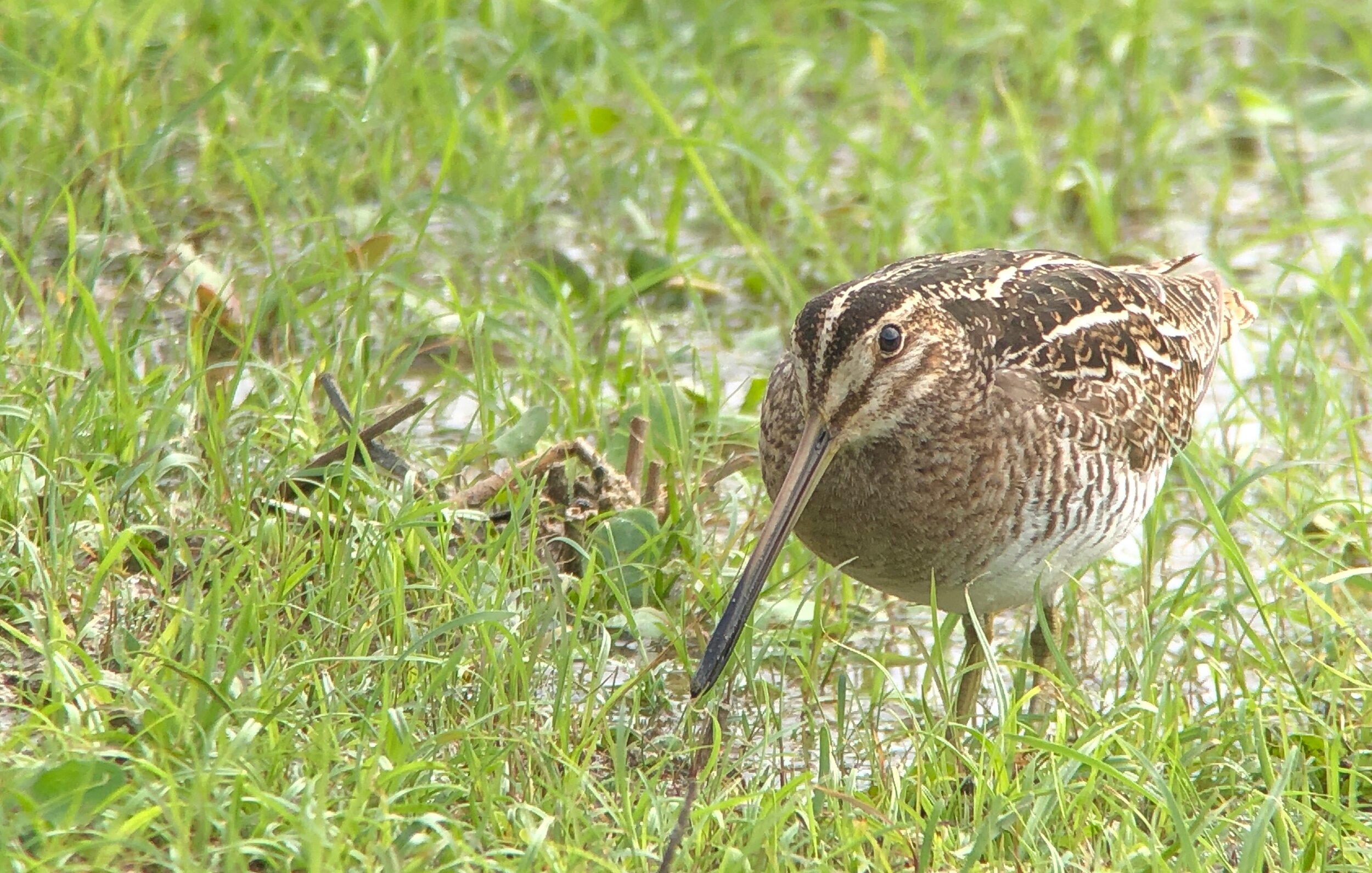
January 2020...Birding Unfettered

I this meme posted on social media and it took me a full two minutes to realize that people were making a joke that one shouldn’t 30-40 olives directly from a jar for dinner. I’ve done this more than once and have no regrets. It’s kind of the same way I feel about popcorn for dinner. Don’t get me wrong, I love to cook, but I hate doing dishes.

Possible dating profile picture…one should know what they’re getting into with me, deer rib cages and sub-zero temperatures and all.
I make jokes on social media using #DatingInYourForties is weird. Although, I’m sure I’ve probably inspired a few #DatingABirderIsWeird after someone found a frozen blue jay in my freezer when they went to get some ice. It is very hard for my brain to process that birding can now be a potential romantic activity. I have been a great compartmentalizer my whole. You are my birding friends. You are my sci fi friends. You are my friends through Bill. You are my travel birding friends. You are my comedy writing friends. And so on and so forth. After being with a non birder for a couple of decades, birding just never fell into the romantic category of activities. “Life pie” can have a whole new meaning.
Of course, birding in winter in Minnesota is a strange test because your clothes for single digit temperatures aren’t exactly what I would call “sexy time clothes.” But good birds can make even the most awkward date a good time.
I know I’m not the first person to find themselves unexpectedly in a completely new life circumstance where none of the old routines apply and you can make up completely new ones. I decided for one thing to say yes to all the invitations. It’s great to only check with myself before I do something. It’s a liberating feeling to just say yes to a birding trip without checking to see if something non birding had been planned or that I’ve not been spending enough time at home.
Want to go birding tomorrow morning? I’m not working, yes.
What to go to Texas next month? I have lots of frequent flyer miles, yes.
Want to go to a cabin this weekend and do some birding? Oh, hell yes.

View from a cabin.
In Minnesota, many people have cabins for the weekend. You have to get used to a different schedule when you have a friend with a cabin. They generally are unavailable for city plans on the weekend from spring until autumn and forget holidays. Sometimes you can get invitations to cabins, either staying in them or pitching a tent outside. Cabins run the gamut from very basic with no shower but all the fishing tackle you could ever want and can be grand lodgings with air conditioning and hot tubs. Some are closed down for the winter, but a few have good heating and insulation and can be fun winter getaway.
When I moved to Minnesota I got a real education on cabin culture when I ran a wild bird feeding store. The company even came up with a seed mix just for cabin people called, “Cabin Mix” that people could grab on their way out of town and into northern Minnesota. We also carried rustic looking houses and feeders to match cabin decor, but honestly, the people really need something strong enough to withstand being knocked down by bears.
Friends with cabins have been gracious hosts when I learned that they have a cabin near a public blind with a lek. I’d rather roll out of bed and drive twenty minutes in the dark to get to a sharp-tailed grouse blind than leave the Twin Cities at 2am.
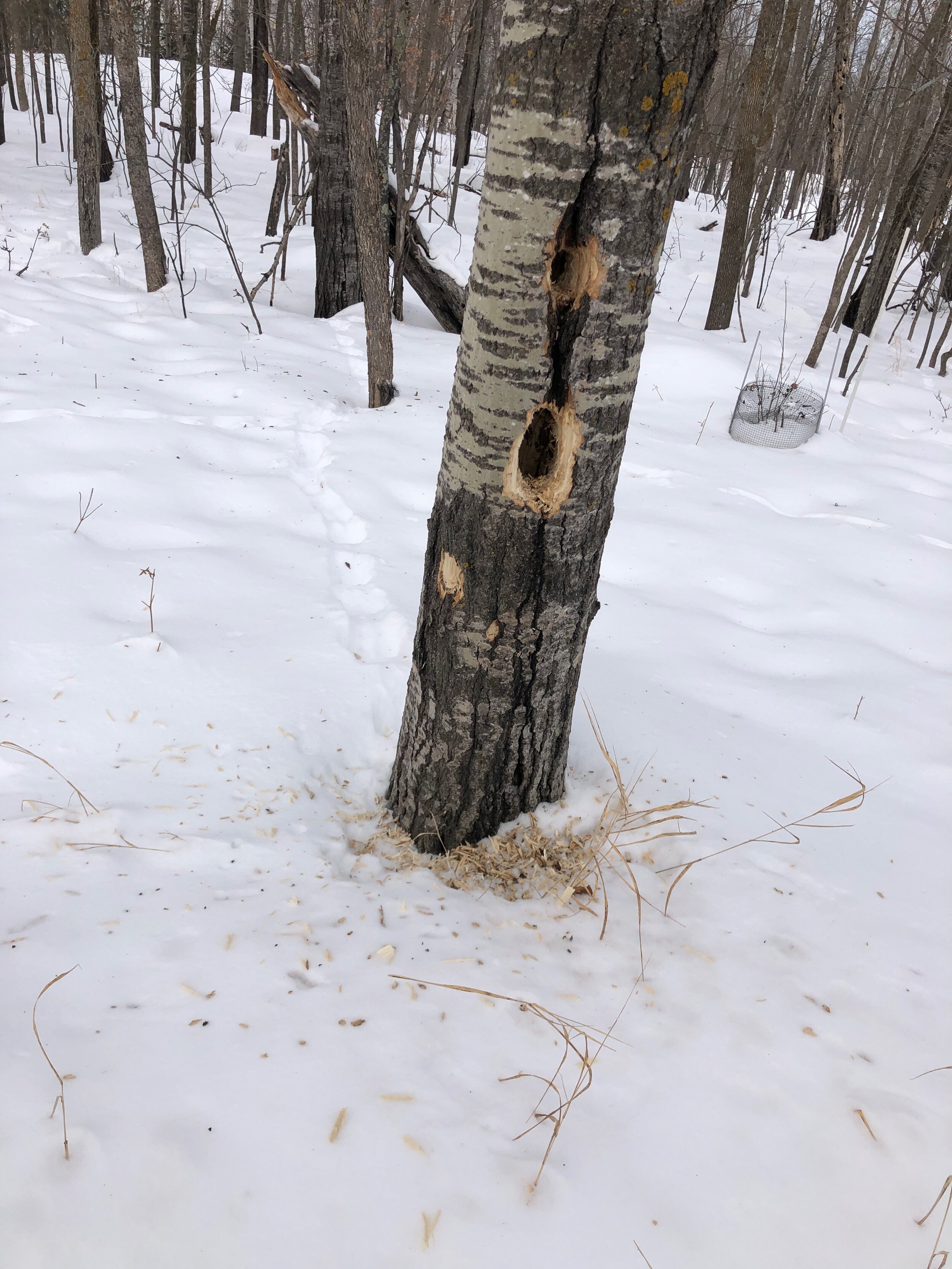
Fresh pileated woodpecker work outside a cabin.
I had an invitation to visit a cabin with some friends in January for snowshoeing on frozen lakes, birding and maybe some fat tire biking. These are fun weekends that generally involve cooking together as well. There was some very visible pileated woodpecker activity around the cabin and the next morning a pair took turns wailing into a tree.

The bird was so close…so photographable…except for the storm windows.
The cabin was fun for me—warm winter foods and nonstop pileated woodpeckers. Even if we never made it outside, I could watch my spark bird all day long. Although, I did feel super taunted by the bird. It was a great digiscoping opportunity, however storm windows keep your place snug and warm, but they can blur the heck out of photos.
However, the next day the cabin owner had removed the storm window and even carefully opened it when the birds returned so I could take all the photos. That is one trusting cabin owner to let out precious heat for a bird photography opportunity.

A clearer view of the pileated. There’s still a bit of heat shimmer from the heat escaping the cabin through an open window, but I still dig this picture.
The next day we headed to Sax Zim Bog for some birding. It was such a great time, not only for the birds but because I ran into so many friends who were birding up there for the day. Some were guides and when I’d pul over to watch birds, I’d find text messages that said, “Hey, did I just pass you over by the goshawk?” Yes, yes they had.

Hoar frost in the bog.
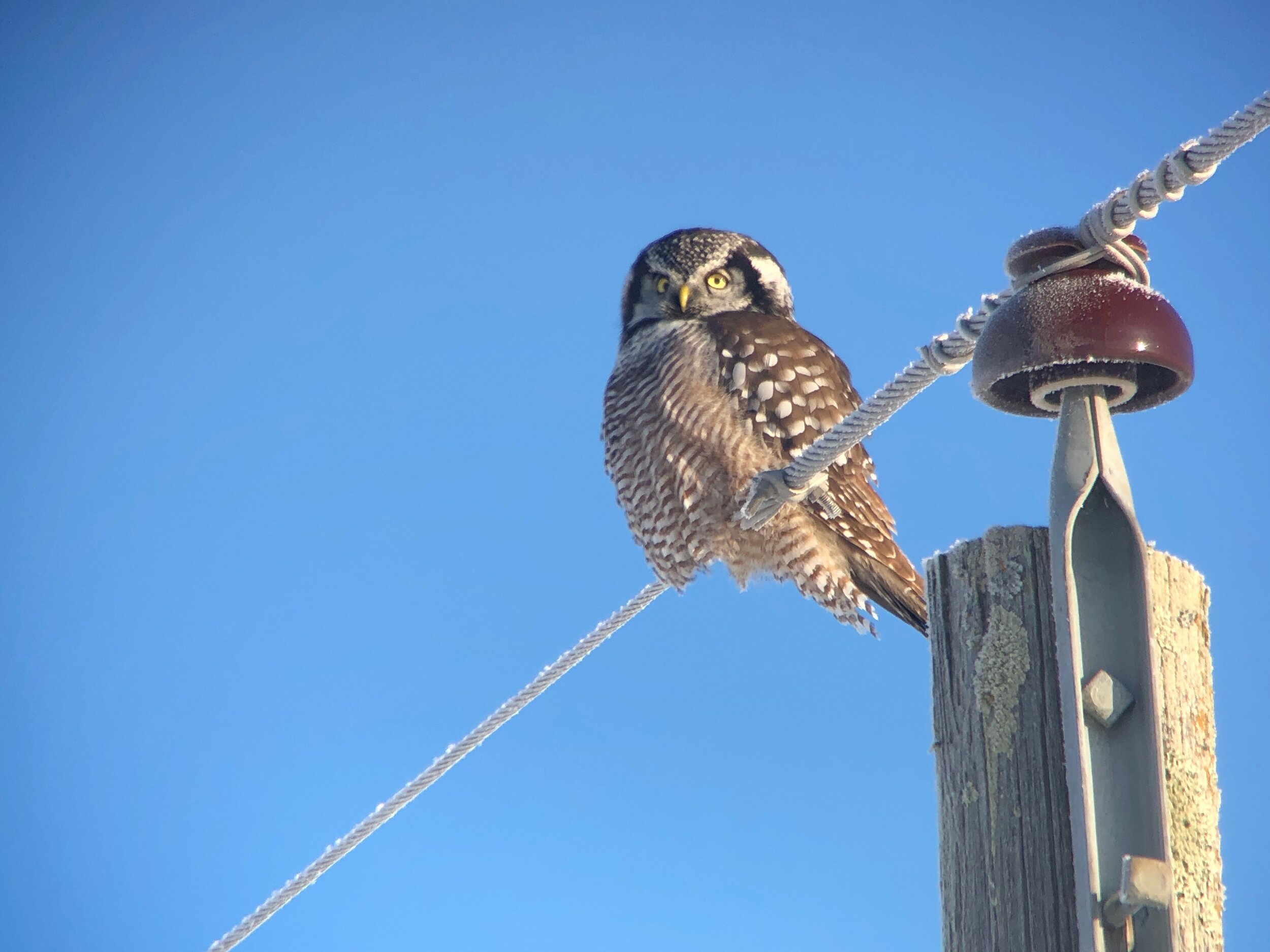
If you’ve never birded the bog and you have lots of lifers to get, especially owls then hiring a guide is a must. But if you have mostly seen the birds or only need one or two lifers, you can get by on your own with a stop at the visitor center and eBird. I knew of a reliable northern hawk owl and that was our first stop. The crowd of birders on the side of the road alerted us that the bird was indeed there.

A lovely way to start the day with a northern hawk owl who gives very little care to the birders below.

A female black-backed woodpecker (was a lifer for one of us) found on the way to the Sax Zim Bog visitor Center.
We were getting all the bog birds fairly easily, except for boreal chickadee, but that’s ok. Canada jays, rough-legs and barred owls are a nice consolation prize. We continued to run into people throughout the day, including one of my fellow park rangers who had just retired last fall. We ran into him at Wilbert’s Cafe and ended up having lunch together.
From there we headed out to a spot to look for three-toed woodpeckers. And I ran into John Jonas, one of my favorite wildlife photographers. He saw me driving my Prius around the bog, pulled over and asked, “You brought a Prius to the bog???” I smiled and said, “That’s how badass I am.”
We had quite a bit of hairy woodpecker activity and Jonas found the three-toed, but it was camera shy for me. I paused to get a slefie of all of us in the bog and it was at that moment a three-toed flew over all of us.
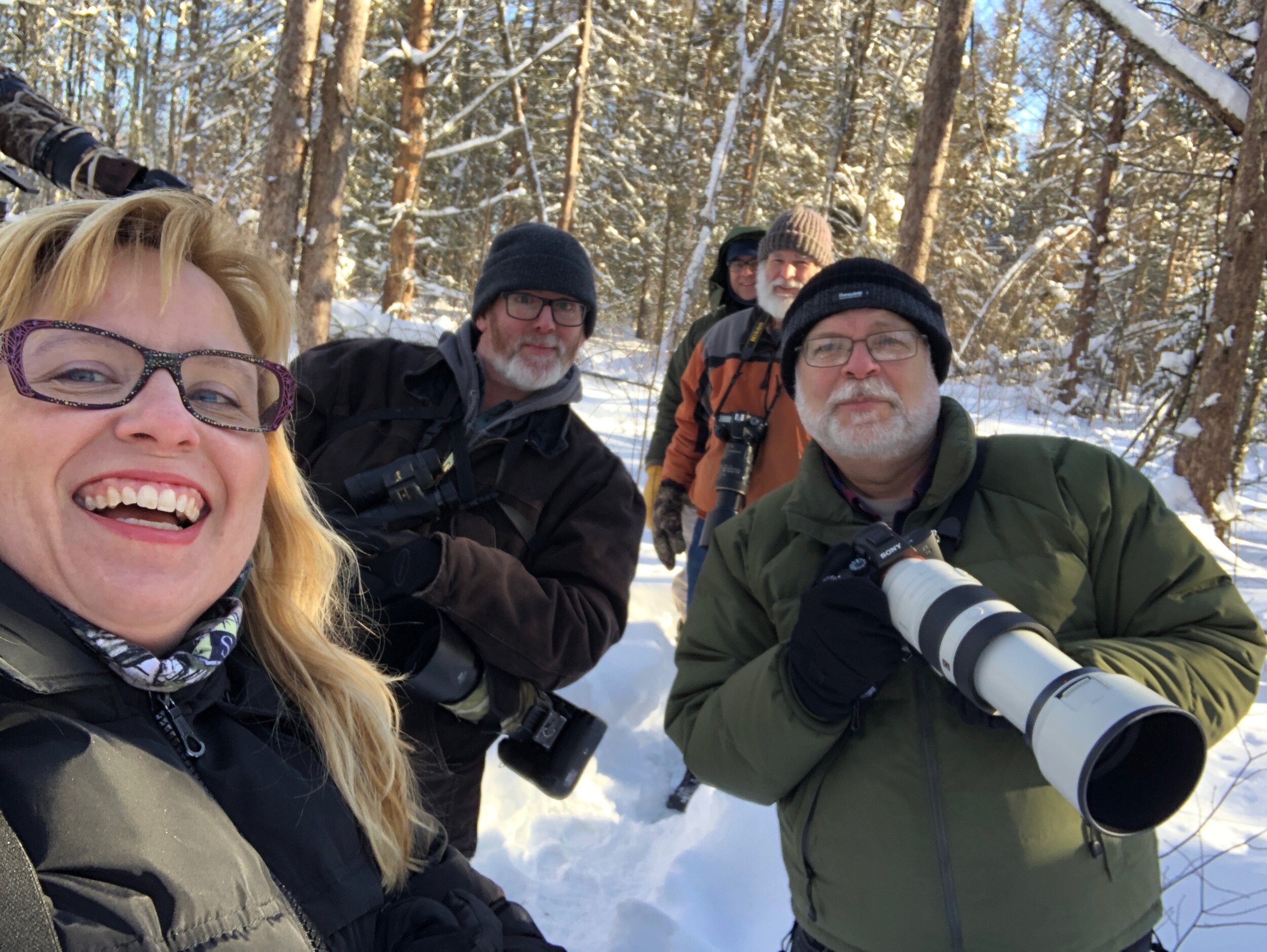
Beardy men at the bog.
What we lacked in three-toeds was made up for with a cool mammal experience. We did find a snowshoe hare hiding near the trail. I’ve seen them here and there, usually hopping away. But this was one of the closest encounters I’ve had with one and what a treat to see its winter camouflage in action!
We tried to finish the day with a great gray owl, but no one was having any luck. At sunset we drove the usual hangouts and it seemed that every ten minutes we’d pass one of the Sax Zim guides in their vehicle with clients trying to find a bird. We’d already seen many great grays and headed back to the cabin at dusk for some celebratory beer and whiskey. I have never seen so many ruffed grouse in the trees and bushes. It was clearly a bumper crop year and it explained why goshawks were easy to find in the bog this winter.
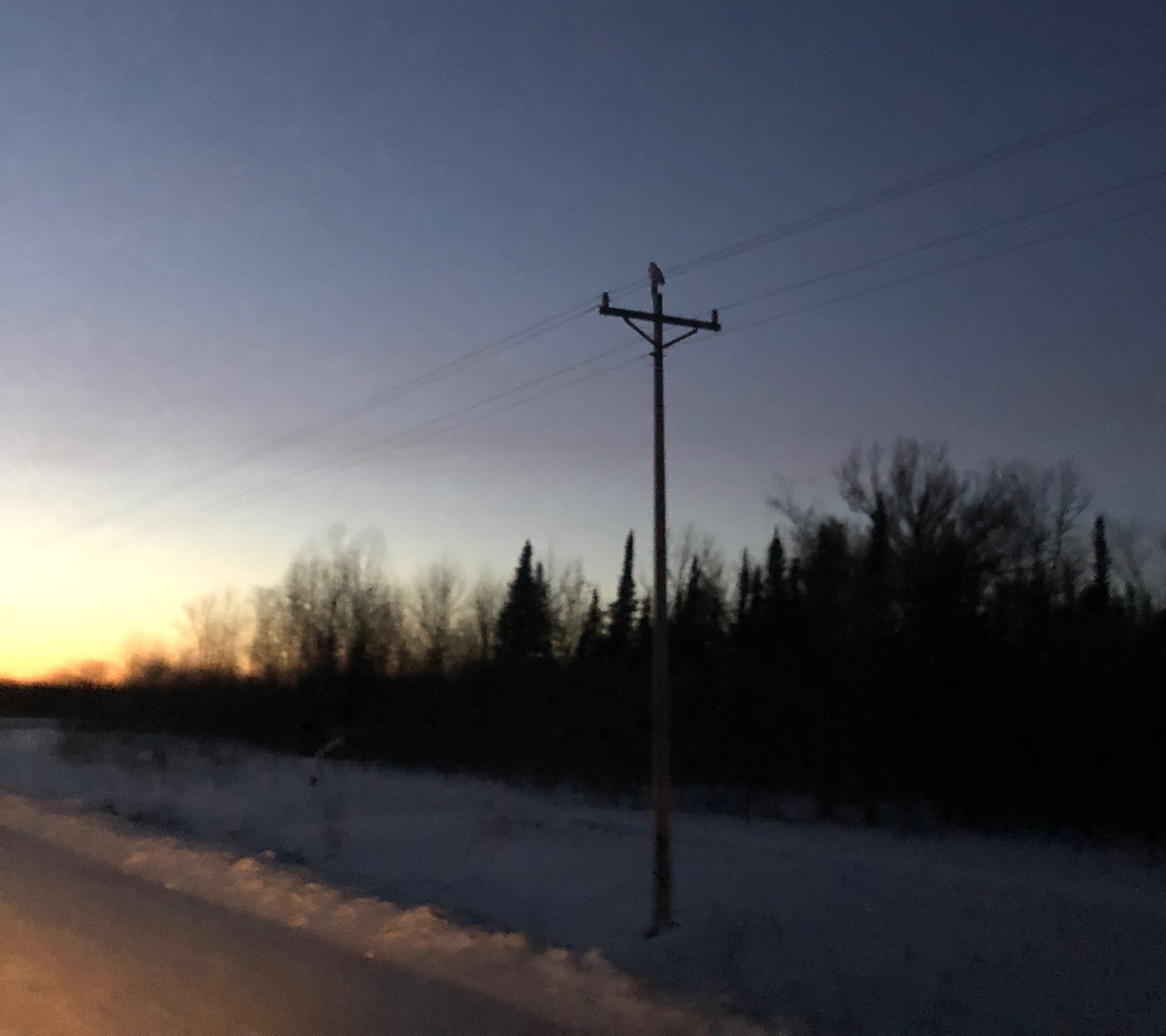
Craptastic owl photo!
We did manage one more species of owl that day. We drove past a snowy owl as we headed back towards Aitkin County. Not a lifer, but a cool bird.
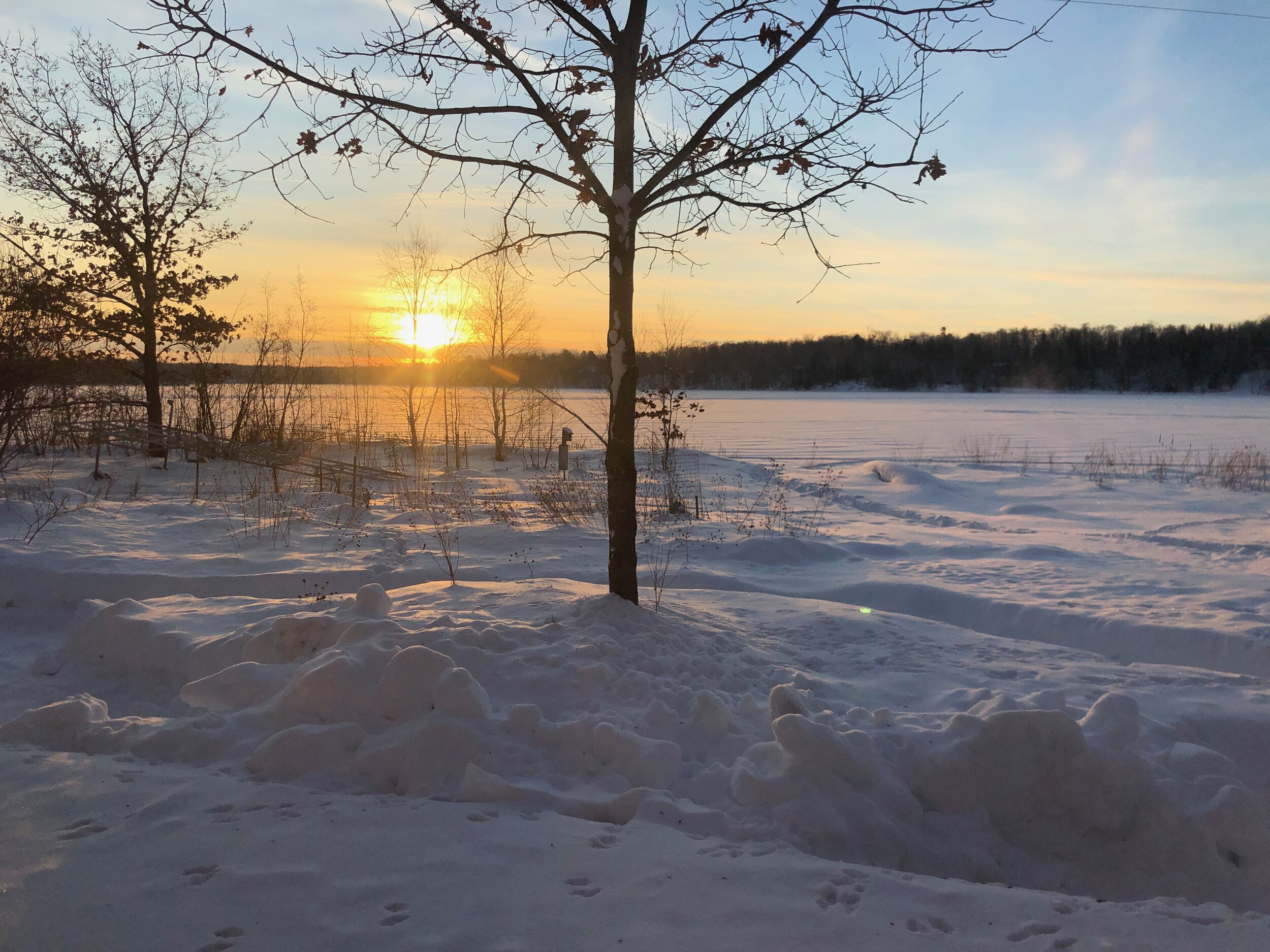
Sunrise at the cabin.
On one page, a cabin just seem like a second home that you have to take care of: extra cleaning, yard work and other maintenance. On the other page, cabin life is seductive when you watch the sunrise over coffee while bacon sizzles on the stove a fox darts through the yard. You feel like you could give up work and just live hand to mouth up there forever.
But work calls. And friends in the city call insisting on lunch plans.
January 2020 My First Birding Event of the Year
That awkward feeling when you write about your relationship a lot on the Internet and incorporate them into storytelling shows and then that relationship ends and you really don’t want to talk about why, but feel you kind owe people an explanation and well, you get booked for storytelling shows…and one of the first for the year is where that relationship started.
I knew this year was going to be weird. I knew writing was going to be hard. I never anticipated having an ex husband and having to navigate that phrase. But here I am.
The one thing that I know how to do really well is to move forward. Just keep moving forward.
I generally get booked for speaking engagements a year to two in advance. When an opportunity to speak and lead trips at the Virginia Beach Winter Wildlife Festival came along in late 2018, I was all for it. They contacted me over a year out and at the time I thought I’d get Non Birding Bill to come with me because we used to go there with his family for summer vacations when we first together. And because Virginia Beach was where he proposed. We had lots of great memories there. I got many a life bird at Sandbridge Beach and Back Bay National Wildlife Refuge.
And then life happened. And I found myself heading to a very public event loaded with emotional land mines alone. But, you have to move forward.
I’ve traveled enough that I know my limits on a good weekend and how to pace my flights. I purposely booked myself in early to give myself some time alone in the spaces that would be hard. Places that I wouldn’t want to show people shorebirds and gulls while reliving parts of a marriage this is no longer viable. I mean, c’mon, shorebirds are hard enough to identify as it is with out hardcore break up emotions exploding all around you. No one wants to get a lifer while their field trip leader is a bawling mess.
I went to the mostly deserted beach as cold winter winds accompanied the waves rushing to shore. It was the perfect weather for me in that the moment. I didn’t come to the beach to take in warm rays, I came to scour out emotions. I relived all the wonderful memories. I dusted them off, shined them up and put them on their proper place on the shelves in my mind. I examined the painful recent ones and tucked them away in a box and placed them in a drawer where they don’t need to be seen every day. I cried and was grateful that winter made people avoid the beach and if people saw me, they’d assume my eyes were watering with the cold wind. No one walks the beach to look at other people, the walk to look at the ocean and the crashing waves, perhaps even a gorgeous sunset.
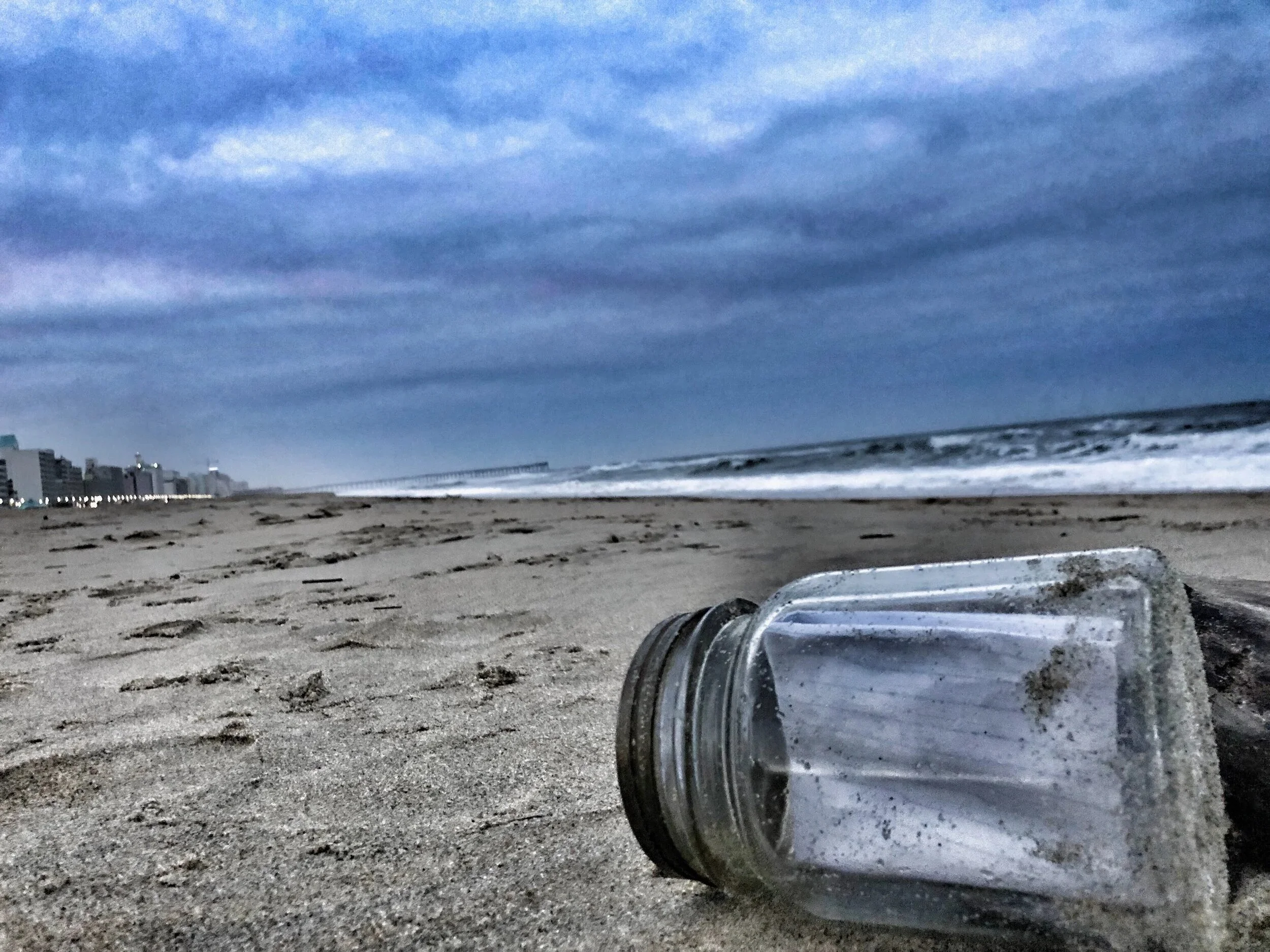
I found someone’s secret in a mason jar on the beach.
As I walked, I came across a mason jar in the sand with a note that had washed ashore. I opened it and read it. It was someone’s secret. I’m a huge fan of PostSecret and read it religiously every Sunday morning over coffee when I wake up, no matter where I am. The secret in the jar was hard and painful and the writer was letting it go on the beach. I took in their secret, I understood it. If PostSecret teaches you anything, it’s that secrets are universal and letting them go or sharing them with the right person is liberating. And in a long exhale I let go of what I was holding on to and hoped that I was helping them let go at the same time. I put the secret back in the mason jar and left it exactly as a found it. Maybe someone else would be walking the beach that night and need to read it?
I continued down the dark beach, met the organizers for dinner and had a lovely time meeting new people and learning about their jobs and what brought them to birding.
My hotel was right on the beach and I was lucky enough to get a room facing the beach. I took a time lapse of the sunrise as I got ready for my day.

A nice big, fat sassy greater black-backed gull in front and a snoozing lesser black-backed gull in the back, surrounded by ring-billed and laughing gulls.

A willet working the shore. I got my first ever willet here over twenty years ago.
I looked out onto the beach and could see gulls and shorebirds. I took some time to enjoy them in the morning sun. I enjoy spending time with birds that I don’t normally see where I live. It’s nice to get a chance to soak up the differences in various gulls when it isn’t -20 degrees Fahrenheit and I take the time to nice not only color differences, but shape and flight patter.

Tundra swans at Back Bay National Wildlife Refuge.
Apart from my fond memories from over 20 years ago at Virginia Beach, one thing I was particularly excited to revisit was Back Bay National Wildlife Refuge. When I would go on those early vacations we would drive down the road or even bike there. I got so many new birds Back Bay as a young birder: blue grosbeak, sanderling and king rail just to name a few. No jokes about sanderlings, I was a land lubber from Indiana at the time. I also remember the insane amount of cottonmouths. Usually, when you go to a refuge and there’s a sign warning of a potential danger (or a particular bird) it means that someone in the last 10 years. The cottonmouth signs were no joke. They were everywhere in the evening. I remember my ex husband was no fan of them and that if he saw one he would immediately make us leave. There was more than one cottonmouth that I falsely identified as “just a water snake, but don’t touch it.”
When we visited in July all those years ago in a time share, I read the signs at Back Bay that explained that tundra swans spent the winter there. When I moved to Minnesota and saw them by the thousands stopping in Minnesota to carbo load before reaching Back Bay, I always wanted to go back in winter to see them. This trip would be my chance and they did not disappoint. It was nice to finally realize that dream of so long ago.

White ibises were found among the swans.
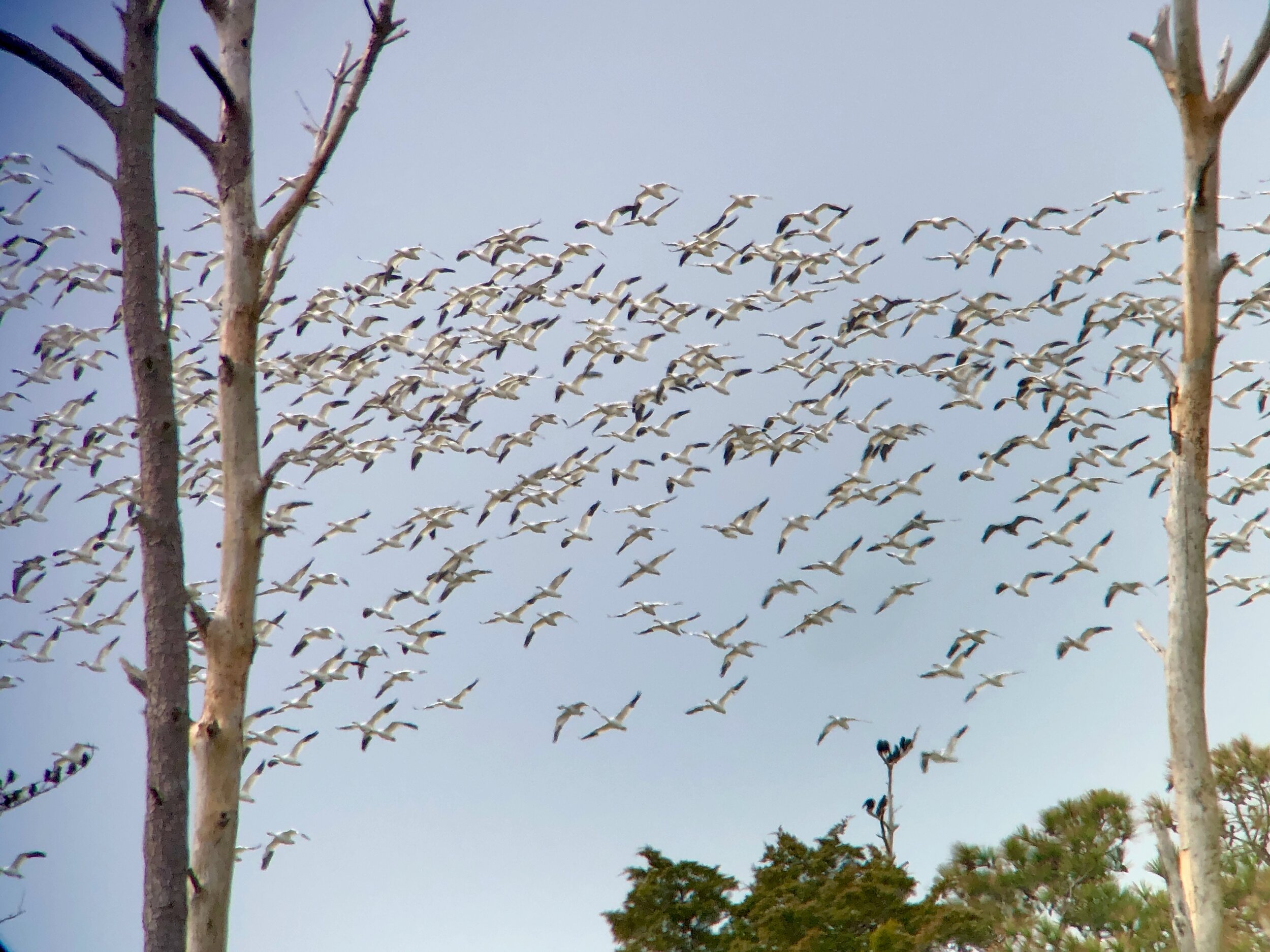
I never get tired of large flocks of snow geese.
The rest of the festival was wonderful. We birding along the Chesapeake Bay Bridge Tunnel—both on it and along side in a boat. I remember years ago after 9-11 having to get a permit to bird along there so I could get an American oystercatcher. My father-in-law went along as something to do, but also I think he was baffled by a new daughter-in-law who said that if they went to a particular island, they would see a very particular bird. Birds fly, why would one be so reliable. We got to the oystercatcher spot, pulled into a parking lot and as soon as we stepped out I said, “There it is.” He was shocked that the bird was so “easy.” Ahhhh, if only they all were so easy.

Long-tailed ducks and a couple of red-breasted mergansers.
The winter offered many delights and I loved looking out at a huge flock of gorgeous long-tailed ducks. Their elegant plumage reminded me of the move The Last Unicorn when King Haggard described watching them on the crests of the waves outside his castle, which stayed on an extended loop in my head the rest of my time at the festival when I saw the long-tailed ducks.
On top of those elegant beauties were scoters, loons and gannets. It was a tremendous day with lots of birders to share it with.

Surf scoters.

Brown pelican and black-backed gulls from the boat.

Chumming.
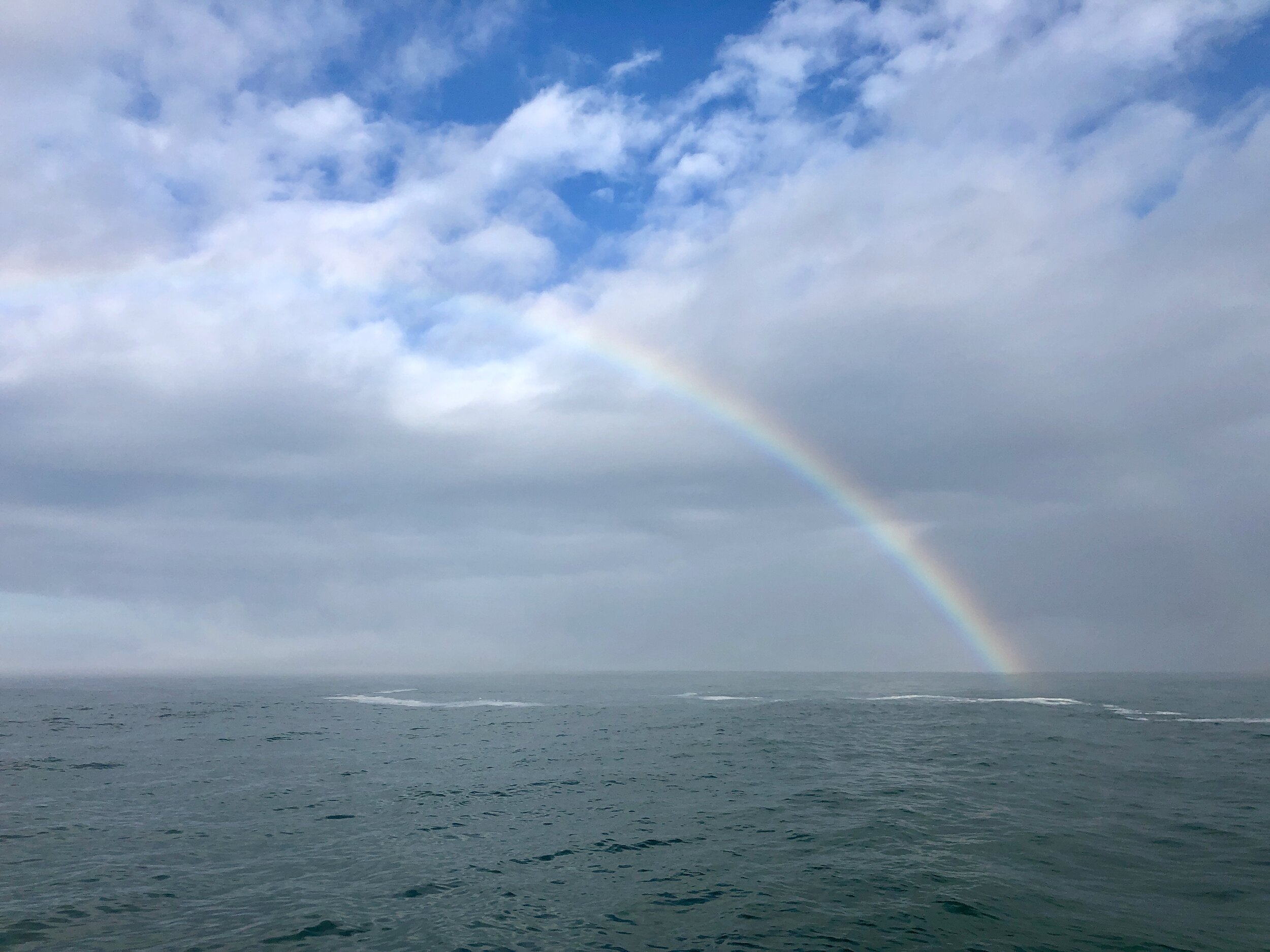
One of MANY rainbows I’ve seen this year. Nice to get one in January right over the ocean.
The boat ride made an attempt at chumming and though we didn’t get rarities, I never get tired of seabirds chasing a boat going for raw fish scraps, I especially love watching the giant brown pelicans thrown into the mix. Who knew how much I would rely on these images for backgrounds in Zooms and Teams meetings?
I did give my keynote, something that I generally love to do, these are tried and tested stories. I’ve tested many out on the road and these are the ones that always bring the audience along and even play well with non birders. But I was nervous because phrasing had to be changed with some of them. Would I trip up?
It was a wonderful way to get my toes back in the water.

Bobby Dyer the Mayor of Virginia Beach was my opening act.
I love that the Virginia Beach Mayor gave the opening remarks and a proclamation, it’s important to see local political officials taking birding seriously as an economic force. I apparently did fine, the audience was full and wonderful and afterwards the theater tech running the show said, “Hey, we had a guy here a couple of weeks ago from America’s Got Talent and you got way more laughs than him! I had no idea birds could be funny.”
I think I had a primed audience, but it’s good to know my stories still work, even if I had to make some relationship adjustments.
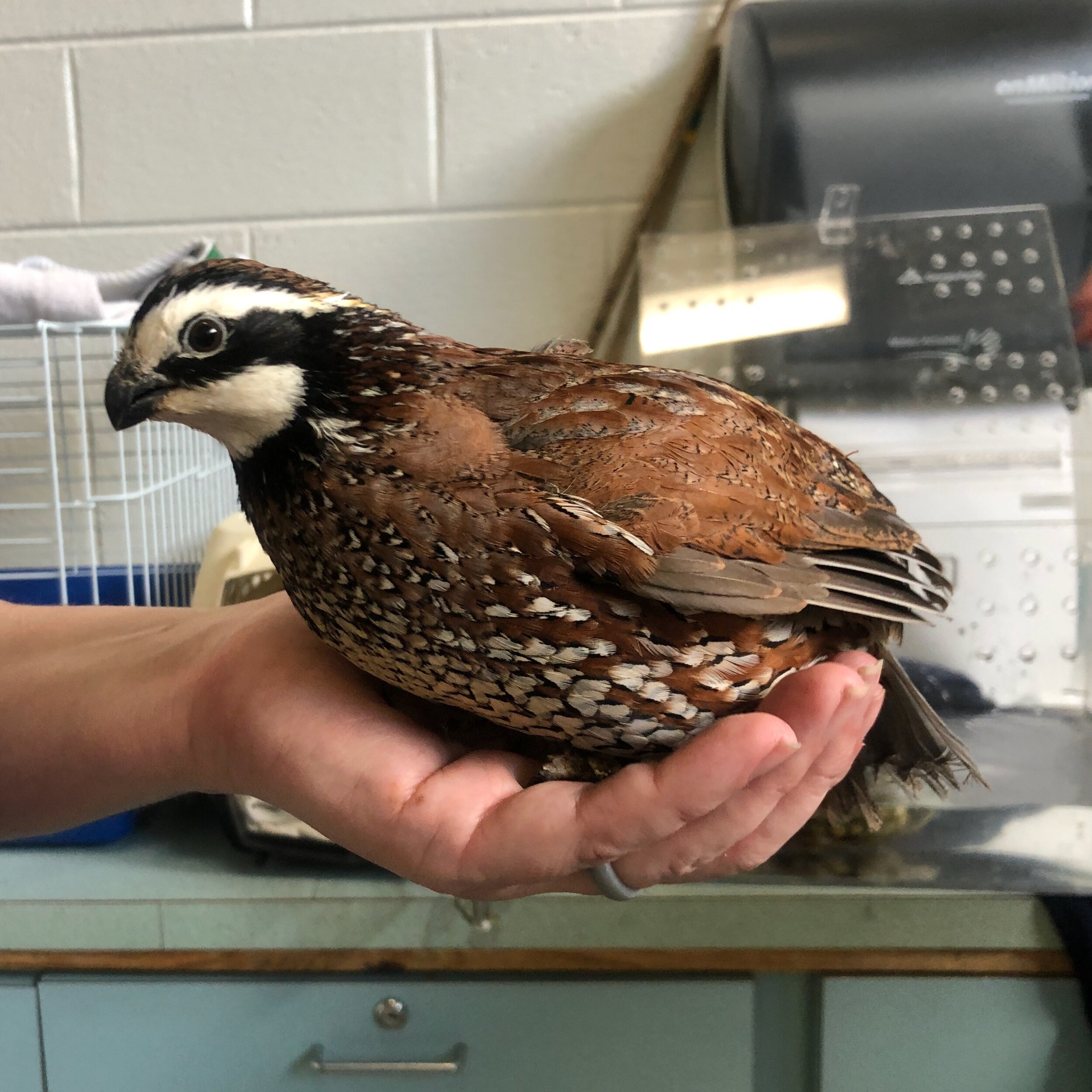
Bob, the Bobwhite.
Speaking of relationships, I flirted heavily with an education bobwhite quail while at Virginia Beach. I try really hard not to be the “ahem, I’m the keynote, can I have this special favor” at birding events, everyone is busy keeping an event running smoothly. However, when the caretaker for an education bird ask, “Hey, you want to feed my boy some wax worms,” and it turns out to be a bobwhite…I’m gonna play that card. How can I resist a cute chonky boi who makes all sorts of squeaky sounds? I’d like to think he was flirting back at me, but his interest went only so far as the few wax worms I had to give him. Listen to those little squeaks, how could anyone deny him anything:
Why can’t someone as cute as that ever show up on Tinder?
A good start to a strange year. That just keeps getting stranger. But we move forward.
Birding around Budapest
I love a trip that give me a good sentence.
I was editing some photos and enjoying a drink in the outdoor cafe of my hotel in Budapest when a fox wandered in, looked at us and then went about its night.
And that is one of my favorite memories of a trip to Hungary a few years ago, I love the random and unexpected. I loved that fox on that trip. Well, that fox and the very distance ural owl we saw at Bukk. Some of the best stuff was right around our hotel in Budapest in late May. I’d never planned on going to Hungary in my life, but when life hands you an opportunity, you take it. It was a wonderful trip.

Since spring was heading into summer, blooming poppies were still abundant.

I spent a few days in this cozy hotel near the airport called Sarokhaz Panzio.

Red and white are popular themes in Hungary. This is the sort of thing I love to see and live in on the road and when I try to bring it into my home it makes my place look like an interior designer’s nightmare.
The great thing about birding is that it can be done pretty much where ever you are. I share this hotel with my buddy Clay Taylor from Swarovski and Jessie Barry from Cornell. This was one of my first opportunities to bird with her and she was hell bent on recording sounds of birds to at to the Macaulay Library. She has the enviable ability to hear a bird song once and have it down. I need to hear a song several times and in habitat context to get it down. Case in point, one of the few birds I know well by song in Europe is the crested lark. I was relieved to be able to id that one on my own.
The three of us basically walked the neighborhood around our hotel and to a nearby abandoned (or so I thought field loaded with poppies and larks. As Jessie grabbed recordings and I tried to give her space so as to not mess it up, a man started yelling at us in Hungarian. None of us spoke the language well and he didn’t speak English.
“Parlez-vous français,” I asked.
He shook his head now and asked, “Deutsch?”
Not really, well enough to get me slapped and find a bathroom. But between his German and my French we figured out the issue. We were near a construction site and trucks would be hauling. They didn’t want people wandering around. We showed him pictures from my camera to show we seriously were “vögel beobachten” and he told us we had a little more time before we really had to leave.

European goldfinch that sang over us at the cafe in our hotel.
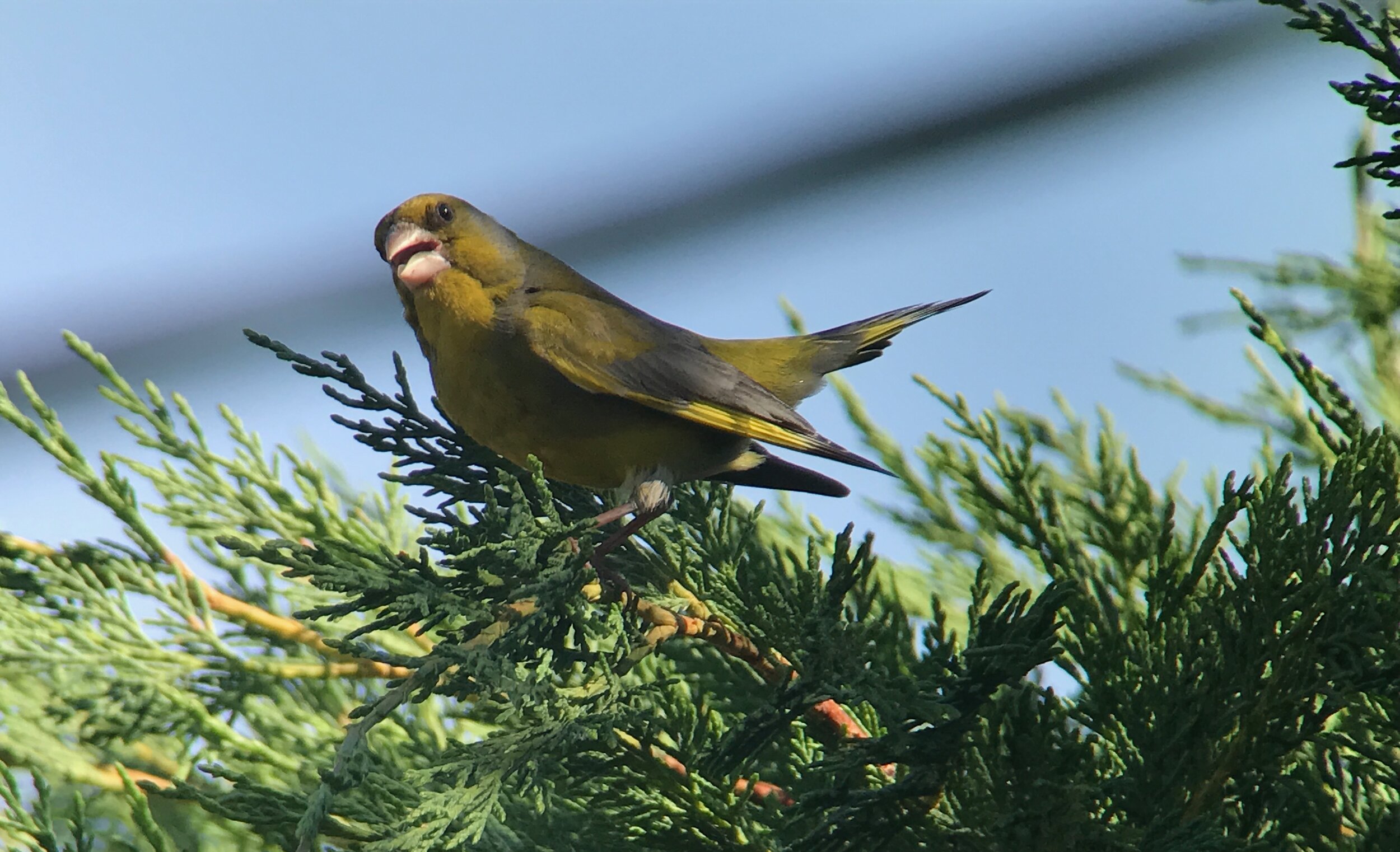
There were many green finches in our neighborhood.

Clay going for images of crested lark singing on one the trucks we were warned about.
The crested lark Clay was watching. I took the video with my iPhone 7, PhoneSkope case and Swarovski ATX 65 mm scope.

Northern wheatear on territory.

Lesser whitethroat. Jessie was working overtime to get songs for the Macaulay Library.

Delicious soup and some pepper spread for fresh bread at the cafe at our hotel. Delicious!
Jessie and I did take time to wander around downtown Budapest and see the bridge. We climbed the hill overlooking the city to see the statues. My one regret in Hungary is that we did not visit the Columbo statue in Budapest, but we saw several others. It’s a beautiful city in the spring with poppies and birds.

Liberty Statue that overlooks the city.
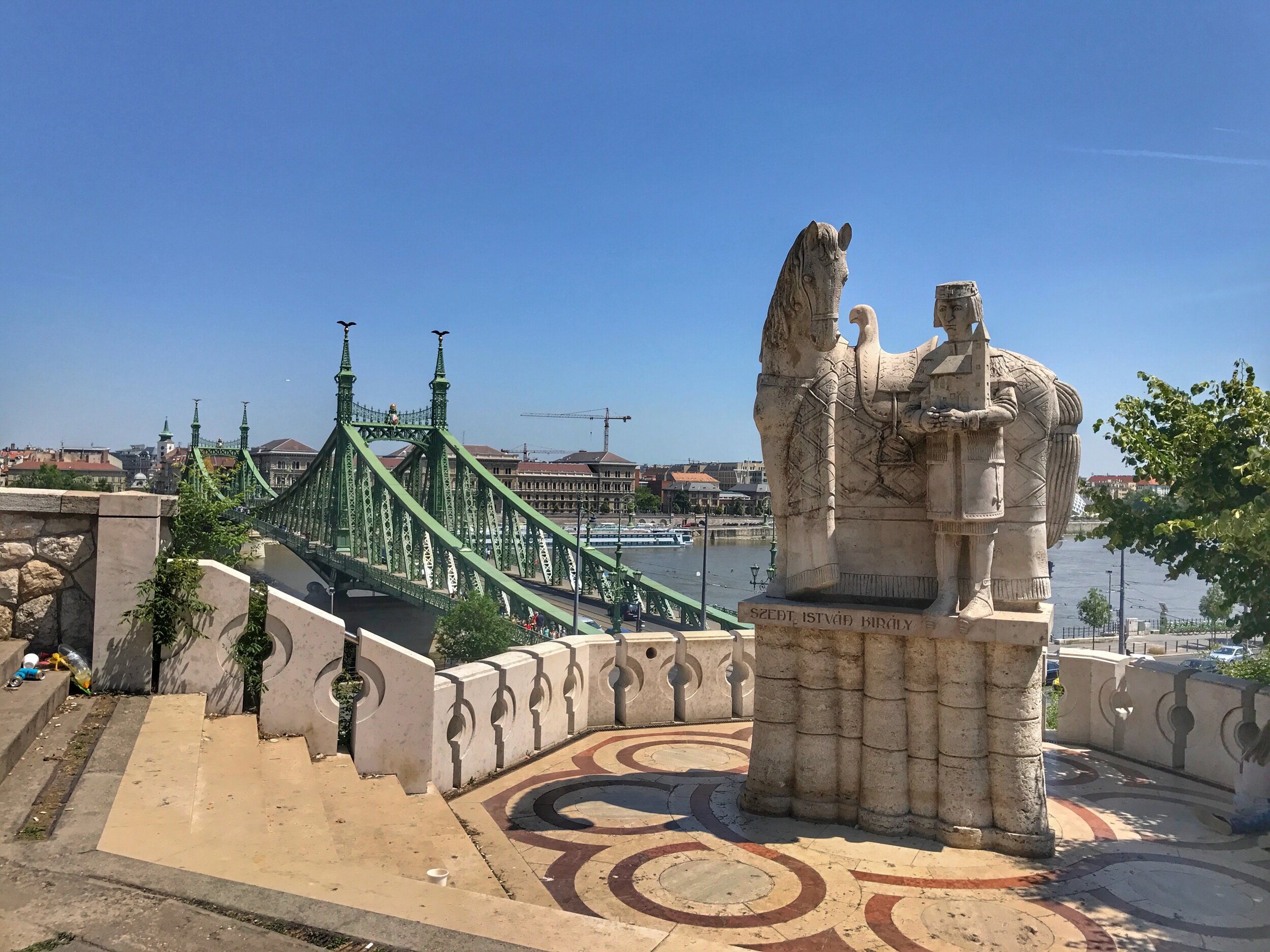
Liberty Bridge.

Because of course I would go to Budapest and buy these as souvenirs…
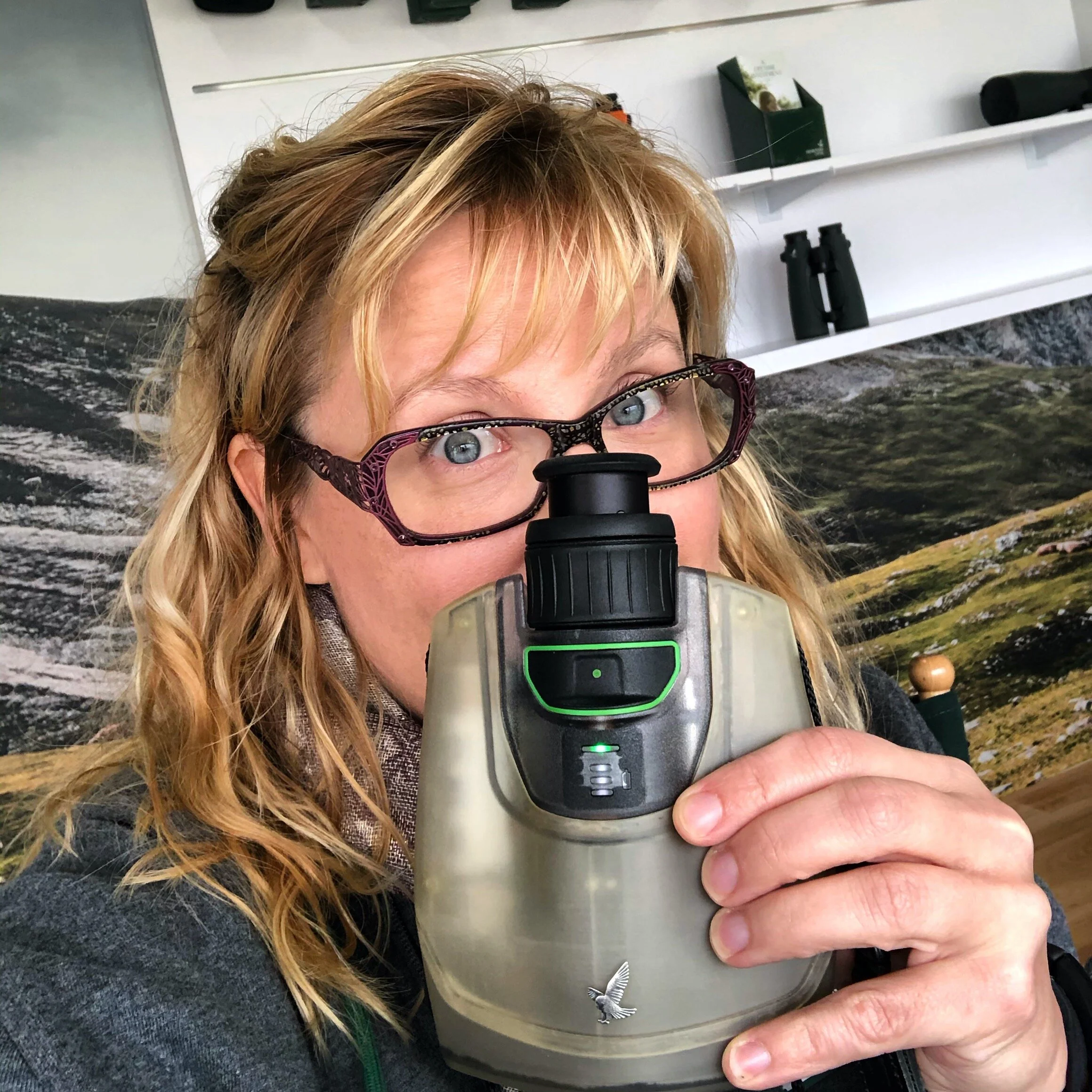
The Swarovski Digital Guide
I got to play with a prototype of a Digital Guide that Swarovski Optik is working on with Merlin from Cornell Lab of Ornithology. The video above gives you an idea of how it works. We demoed the guide with some birds like a mourning dove—mostly because the bird was super chill and not moving and it made a great show. I also tested it on green jays and pauraques.
But I also took it out on some of my field trips in the Rio Grande Valley to really put it through its paces. Here are some screen shots:
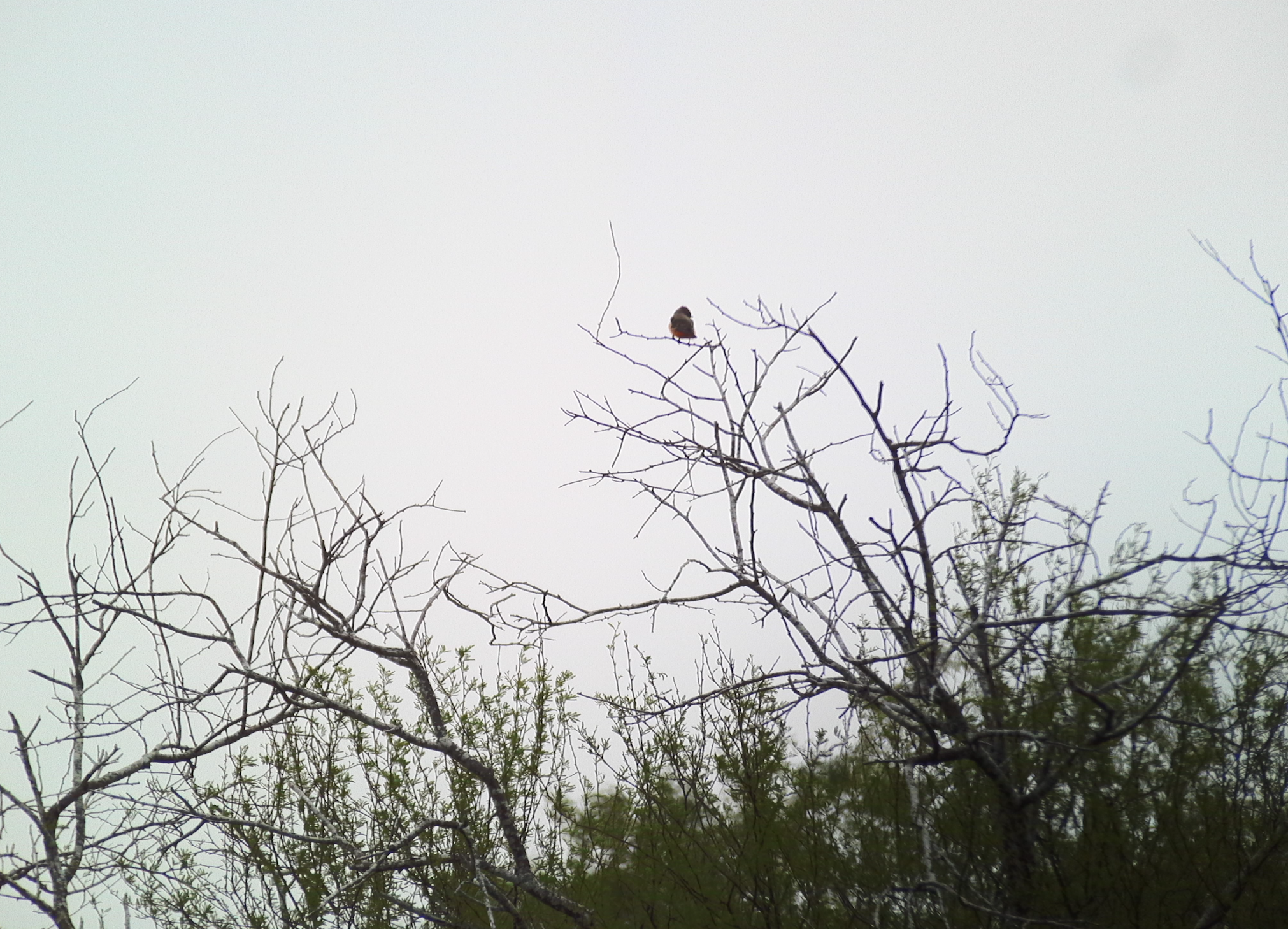
Here’s a picture of a female vermilion flycatcher on an overcast day.
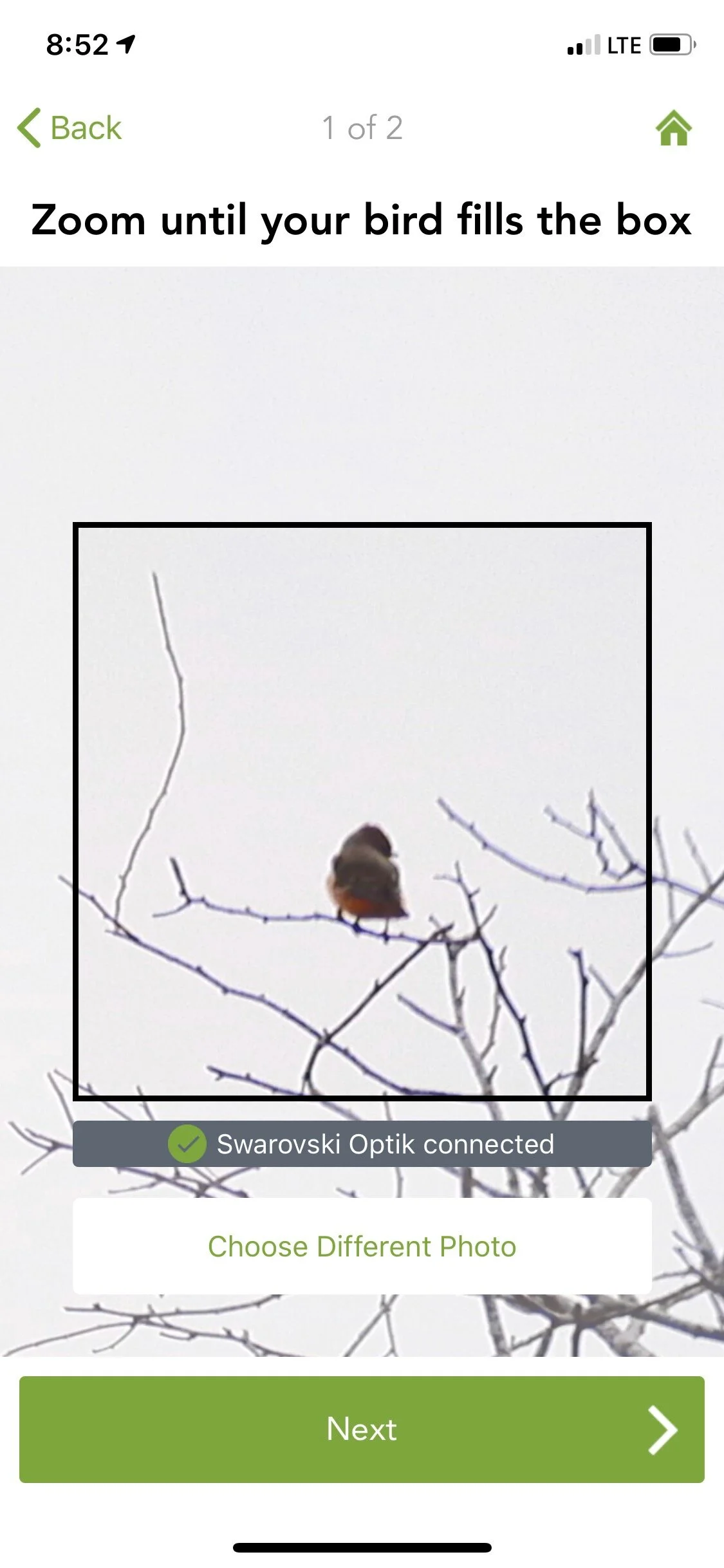
Here I zoom in on the image I got with the Digital Guide prototype in the Merlin app.
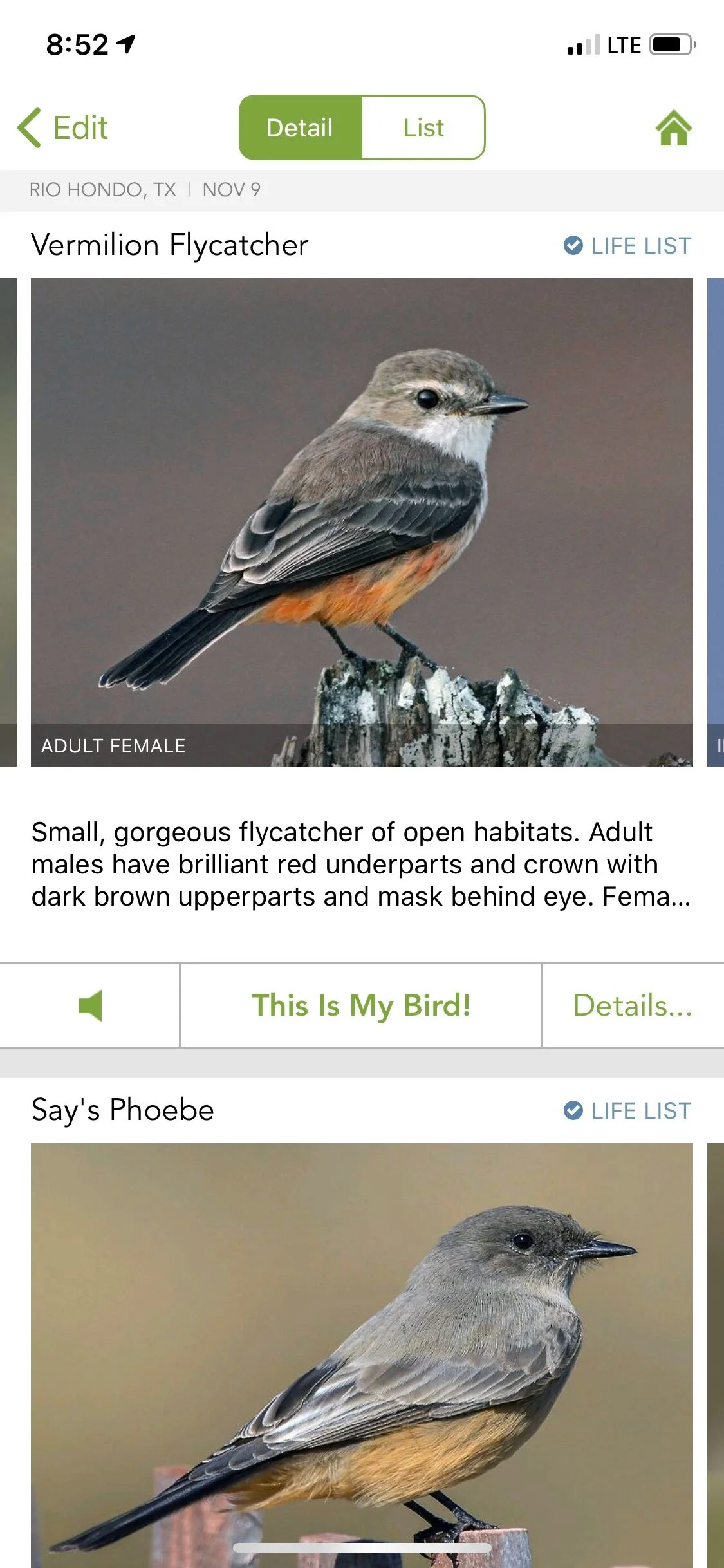
Merlin nailed the id.
You can take great photos with this, it’s basically an 8x30 monocular with a camera built in. And though it can take great pictures, I was more interested in what it could do if conditions weren’t great for photography, but you still wanted a bird ID. It works great. Scary great.
It’s a wifi hotspot so it can send the images to either Merlin or the Swarovski app. If you have good cell service, Merlin will ID it right away.
I can tell that it works well in warm weather, but I was curious about some cold weather and I mean some serious Minnesota cold. I took it to Sax Zim Bog on a -15 degree Fahrenheit day to see what would happen. The device worked well, but the lack of cell service from Verizon meant that Merlin didn’t work so great up there. On the upside, I was able to store photos and use Merlin when I had a reliable connection.
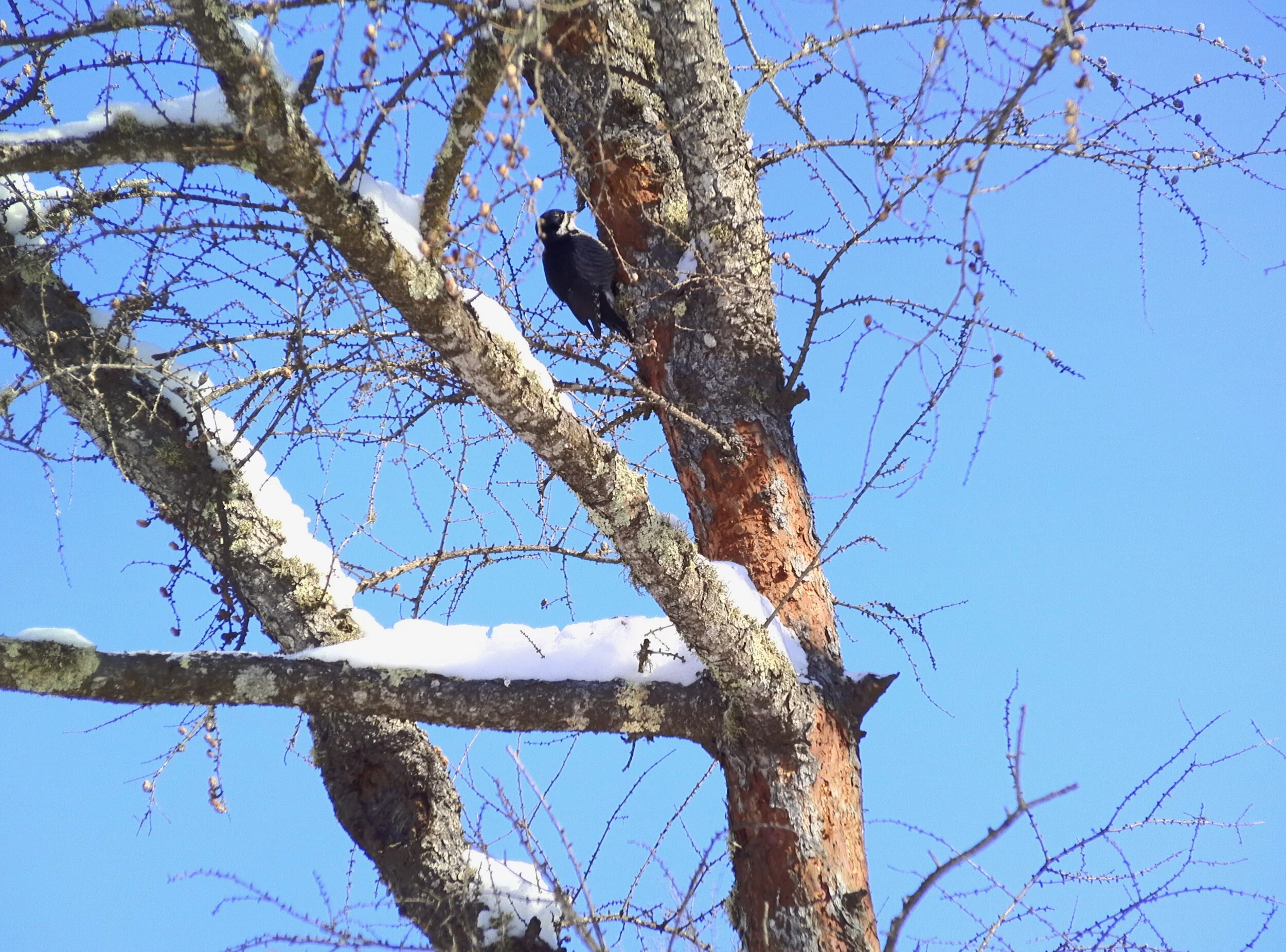
Here’s a black-backed woodpecker taken with the Swarovski Digital Guide.

The Digital Guide saved the date, time and location of where the image was taken. So even though I had lack of service in the field, all the information was saved for when I could use Merlin. And all of it was stored in a separate album in Photos.
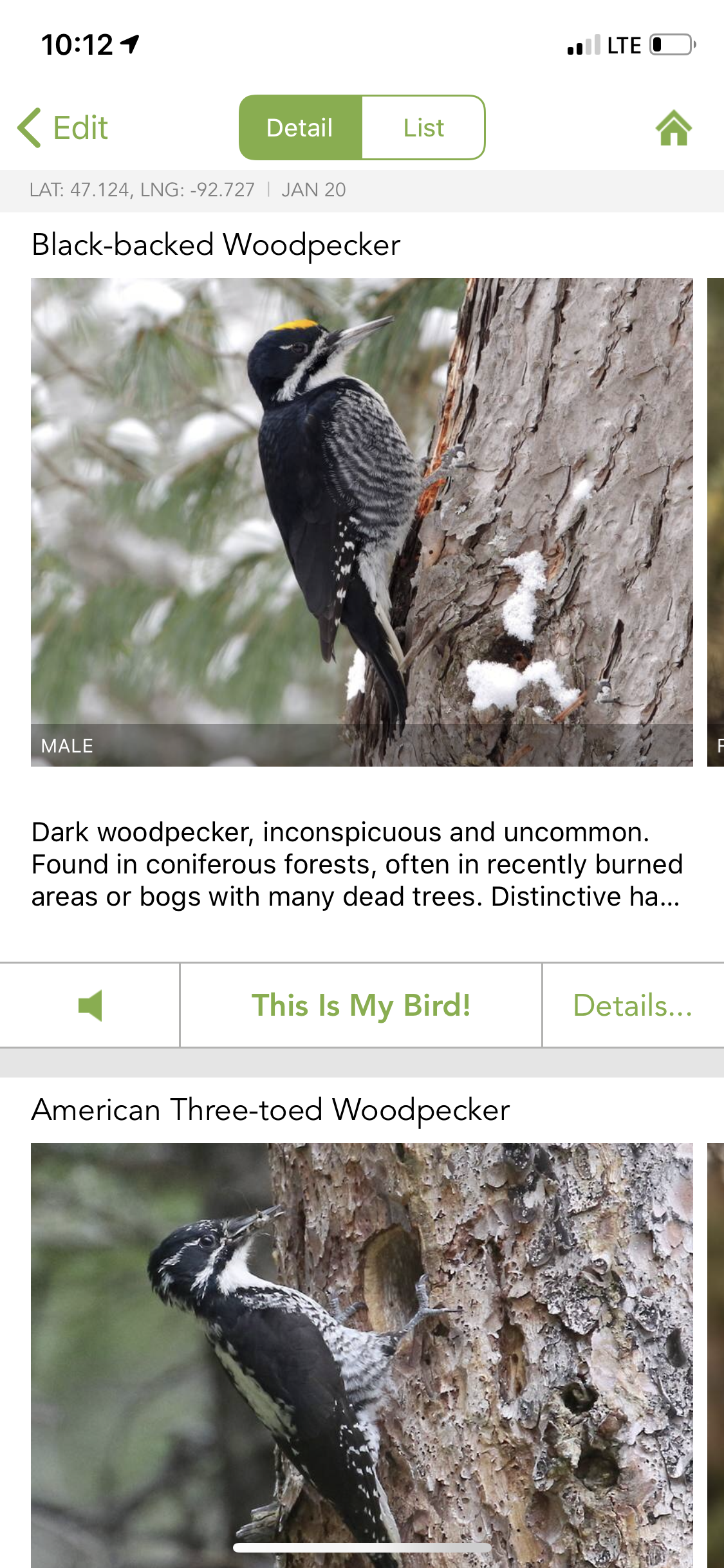
The black-backed woodpecker was Merlin’s first ID.
Now, I know some people are going to gnash their teeth over this—”THIS IS GOING TO RUIN BIRDING! WHY CAN’T PEOPLE USE A BOOK!”
This is not going to ruin birding. This is a tool to help you get started. And there will always be people interested in artisanal bird identification. It’s fascinating to watch where technology can take us. And to have a device with Swarovski quality glass that works with Cornell’s Merlin app is amazing. There are plans that the device will also work to identify other things like mammals and butterflies as well.
The future is now.
An Ivory Gull Chase with Wendy
I think I talked about the ivory gull that was in Duluth back in 2016 when the podcast was going, but I never wrote up what a great day it was. This was back when my friend Wendy Cass lived in the same state as me. She was a regular to Birds and Beers and when the ivory gull showed up and stayed more than a week, she revealed that she hadn’t birded Duluth, Minnesota in winter and I decided it was time to pop that particular cherry.
Duluth can be as much fun as Sax Zim Bog in winter. There can be sea ducks, rare fulls, owls and if you’re lucky, a gyrfalcon. Pretty much all of those were being reported so I picked up Wendy one Sunday morning and off we went. As much fun as it can be, it can also mean standing on SUPER cold Lake Superior. Years ago some friends and I hired a guide out of Duluth to take us birding in the bog. He kept adding gulls on Lake Superior to our itinerary. We were like, “Thanks, but no. We want owls this round.” He kept pushing, even trying to sell us on how beautiful ring-billed gulls can be in the early winter light. I finally joked, “I will pay you extra not to show us gulls.”
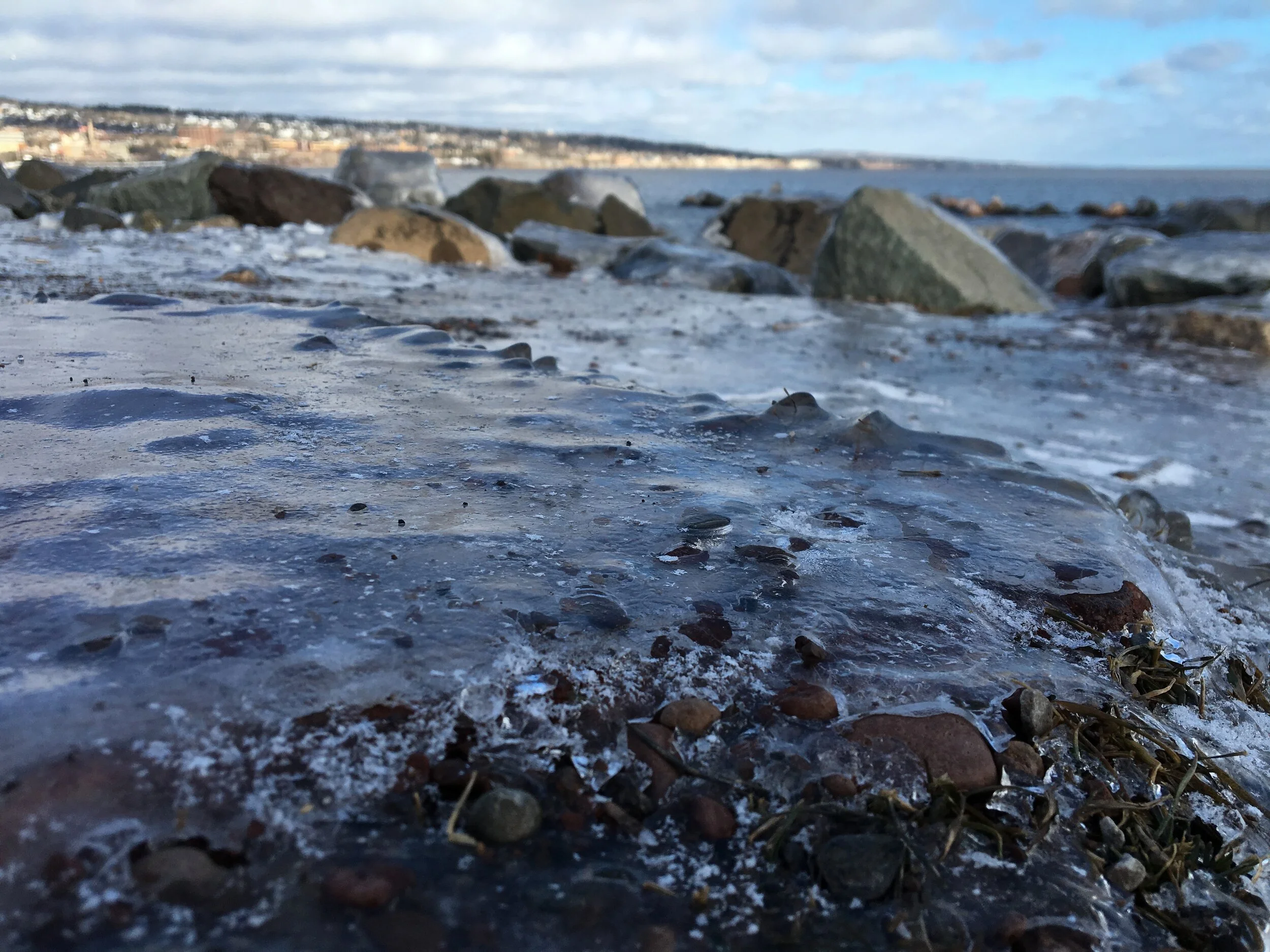
The icy terrain around Lake Superior on a frozen January day in 2016.
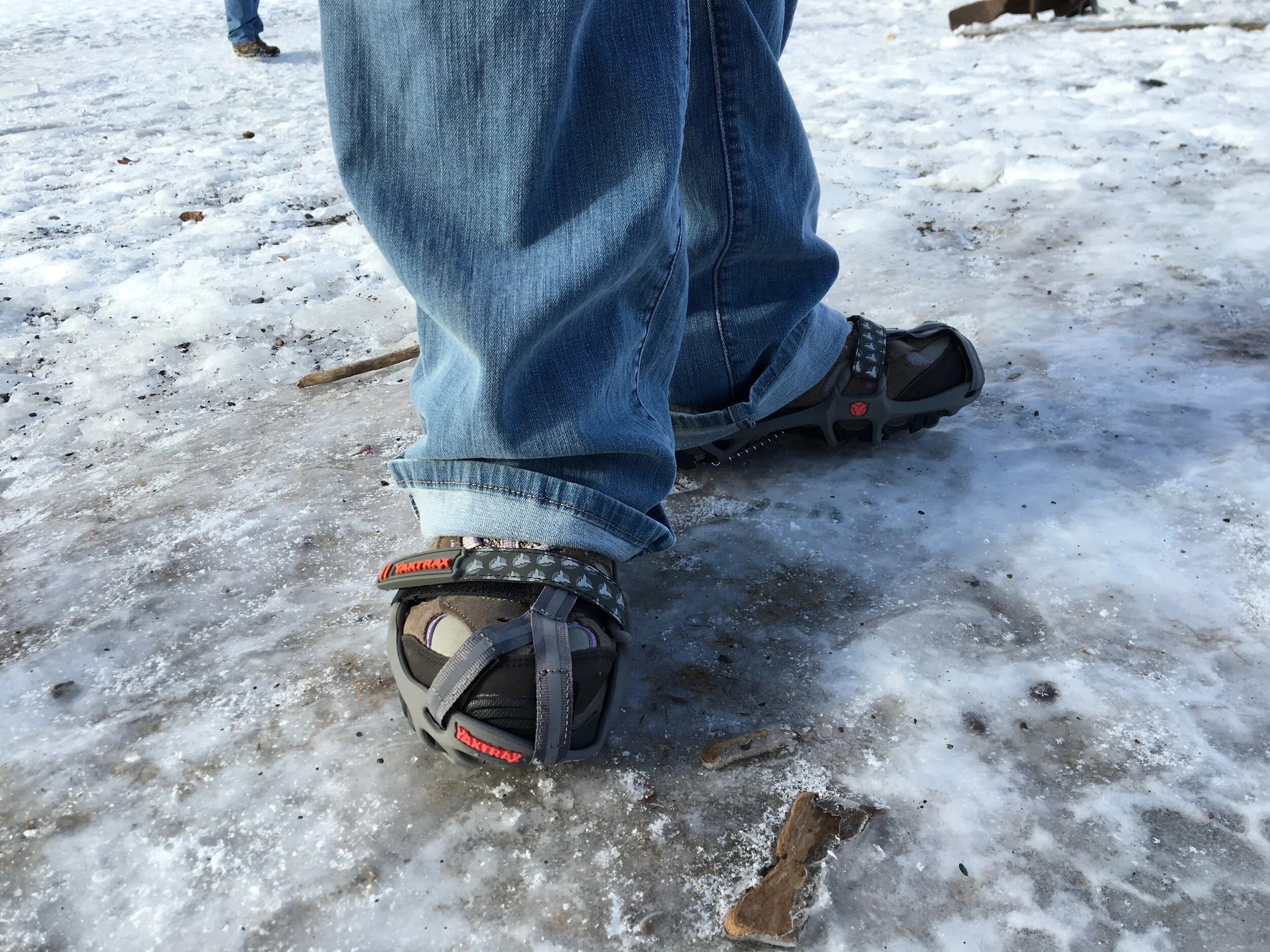
Wendy was far better prepared for our walk from the parking lot to Lake Superior with her ice spikes.
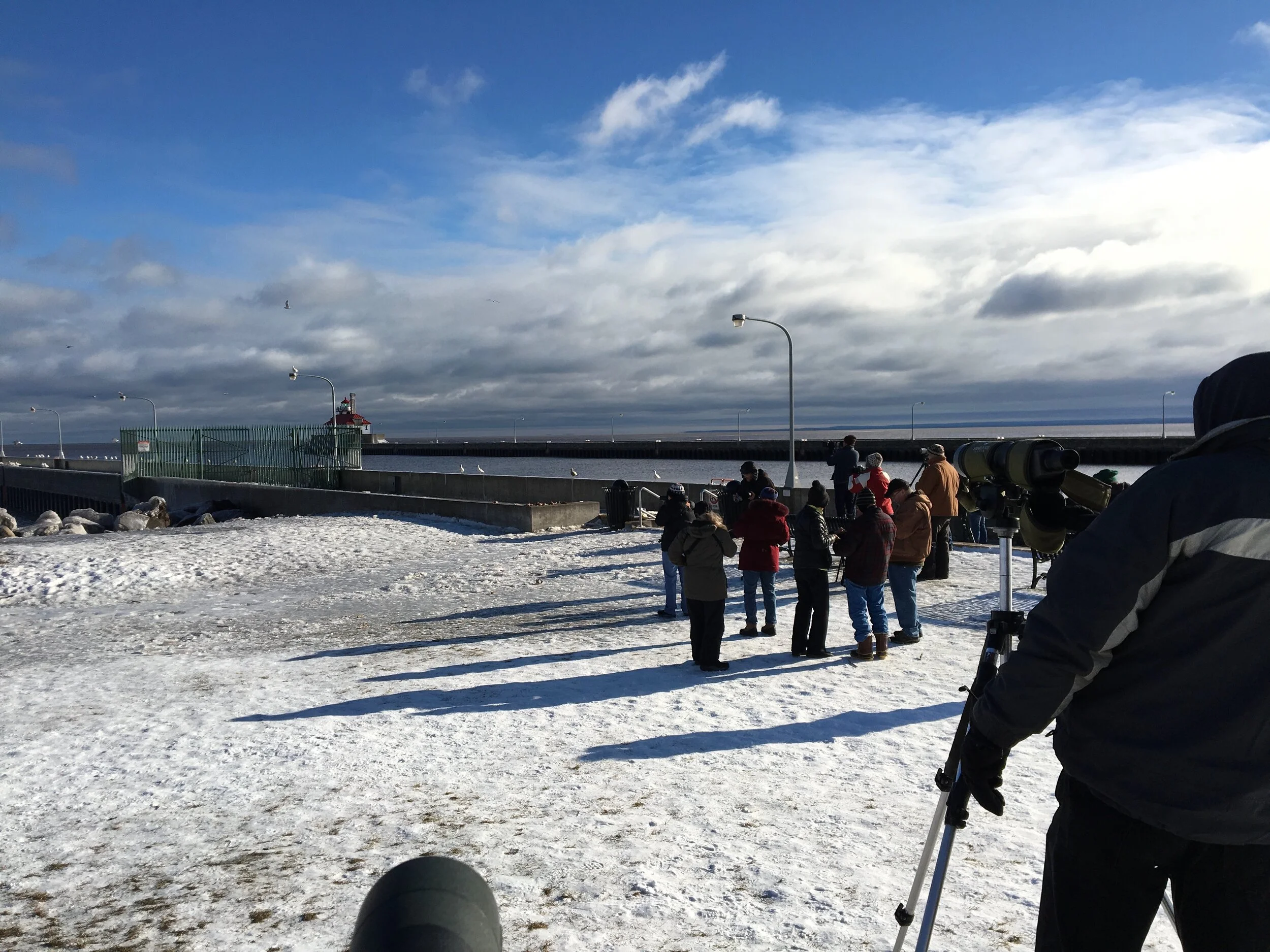
It was easy to figure out where the ivory gull was being seen. We saw the bird and some birding friends right away. Someone put a pile of fish down to bring the gull closer.
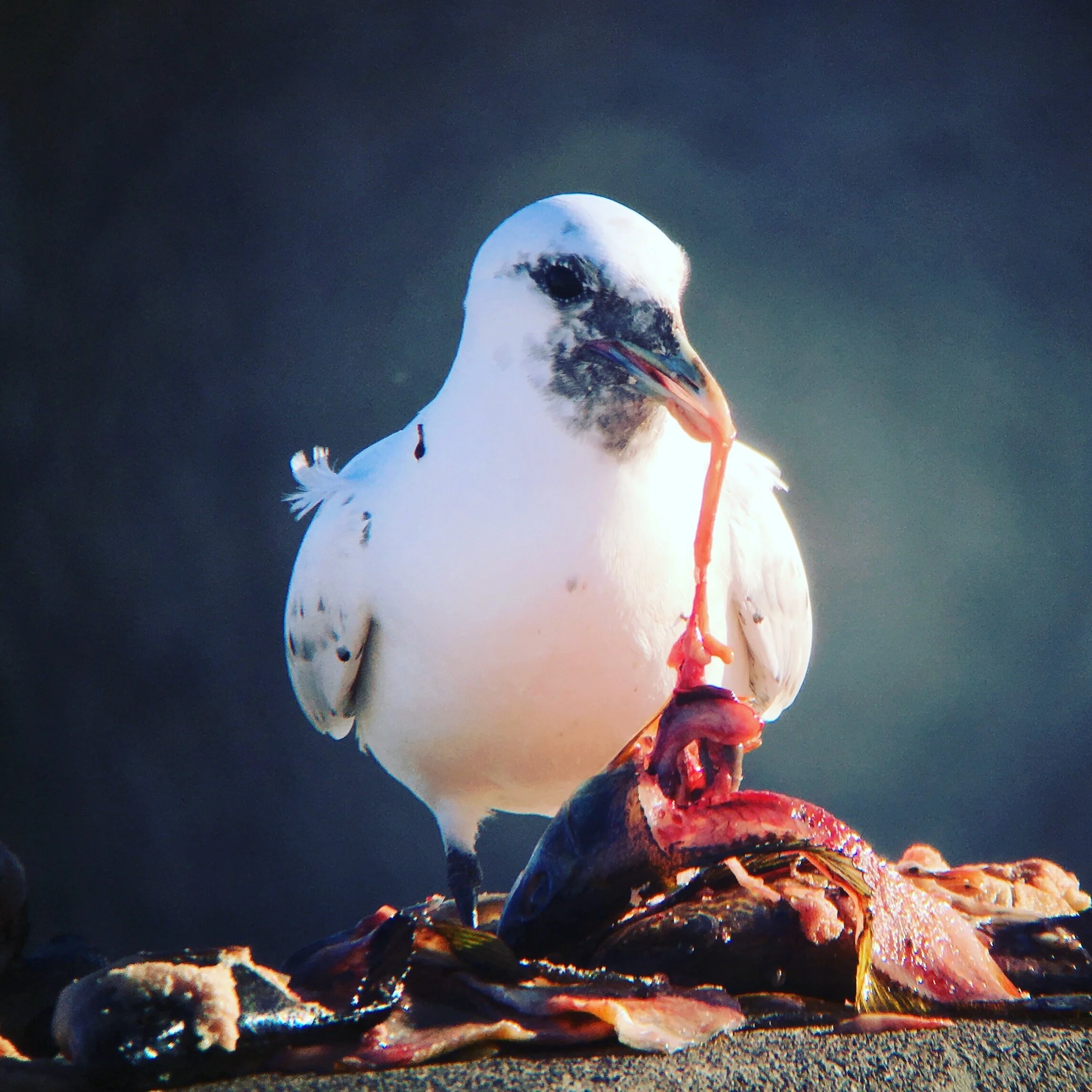
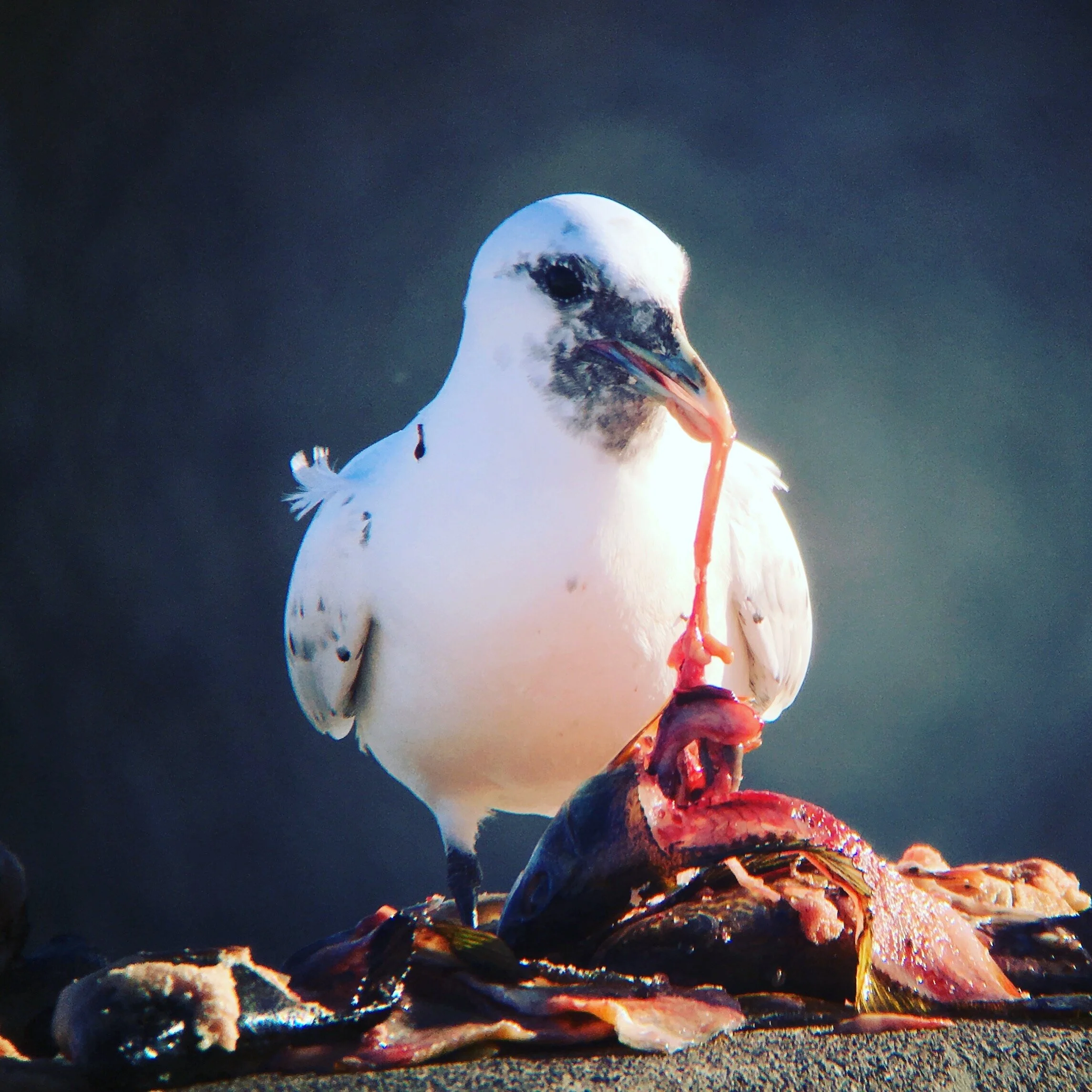
Ivory gull chowing down on fish birders left for it (good thing it wasn’t an owl). I got this with my iPhone 6 and Swarovski ATX 95mm scope.
It was so cool to see the gull right away and socialize. Even though this bird had been seen for several days, there’s always the chance that one the day you decide to go on the two and a half hour drive up that it could disappear.
Incidentally, this is the bird that caused a stir on birder social media in 2016 because one morning, someone found a carcass of an ivory gull that had been eaten by a peregrine on the Wisconsin side of the water. Birders all over were losing their shit because they were going to see it that day or the following day. Then a guide up in Duluth said, “Hey, we’re looking at the ivory gull now!” He was unaware of the carcass and everyone demanded pictures. He posted a selfie with the gull a few feet behind him. There had been two gulls—and one would have been countable in Wisconsin. Everyone rejoiced; memes were made and people had another two weeks to go see an ivory gull in Duluth. I compiled a bunch of memes and gifs that represented birder emotions that morning.
After Wendy and I got the gull, I took her to some prime winter gyrfalcon habitat.

Yep, a grain elevator can be prime winter gyrfalcon habitat.
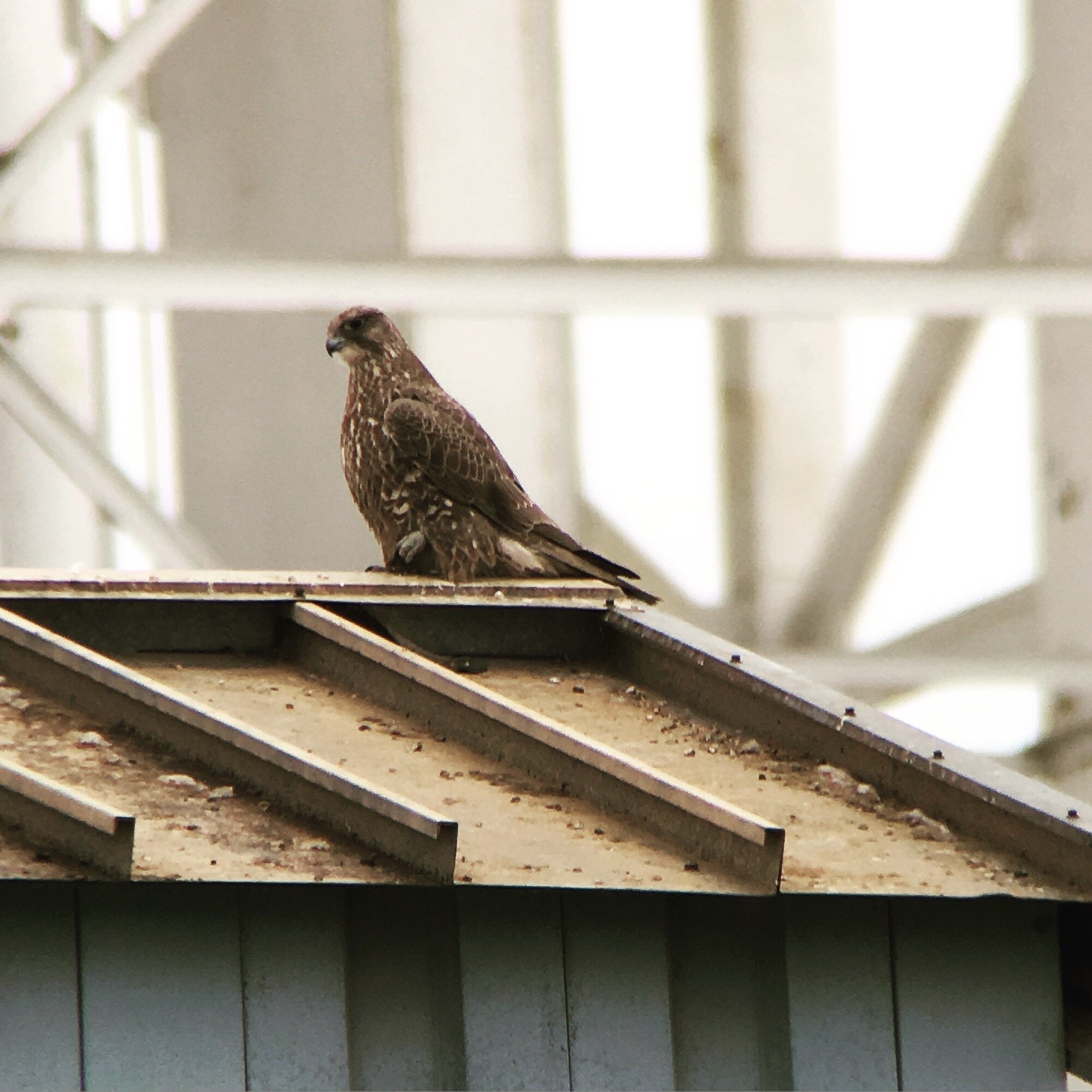
Look at that sexy beast! We got the full show from this bird, including going after the many terrified pigeons at the grain elevator.
It was great to be getting two great birds right away on top of the other northern birds we can get: eagles, rough-legs, waxwings. But just seeing these harder see species without a long wait felt like such an honor. I try very hard to remind myself that this is one of the reasons birding is so fun. There’s all the days when the bird doesn’t or if it does, it’s really far away. This was a party.
And speaking of parties…I usually bring a flask for rare birds with some nice scotch. We don’t drink the whole thing, but just take a celebratory sip—it’s even better if you have the one sip while the bird is still there. Wendy brought her own flask.
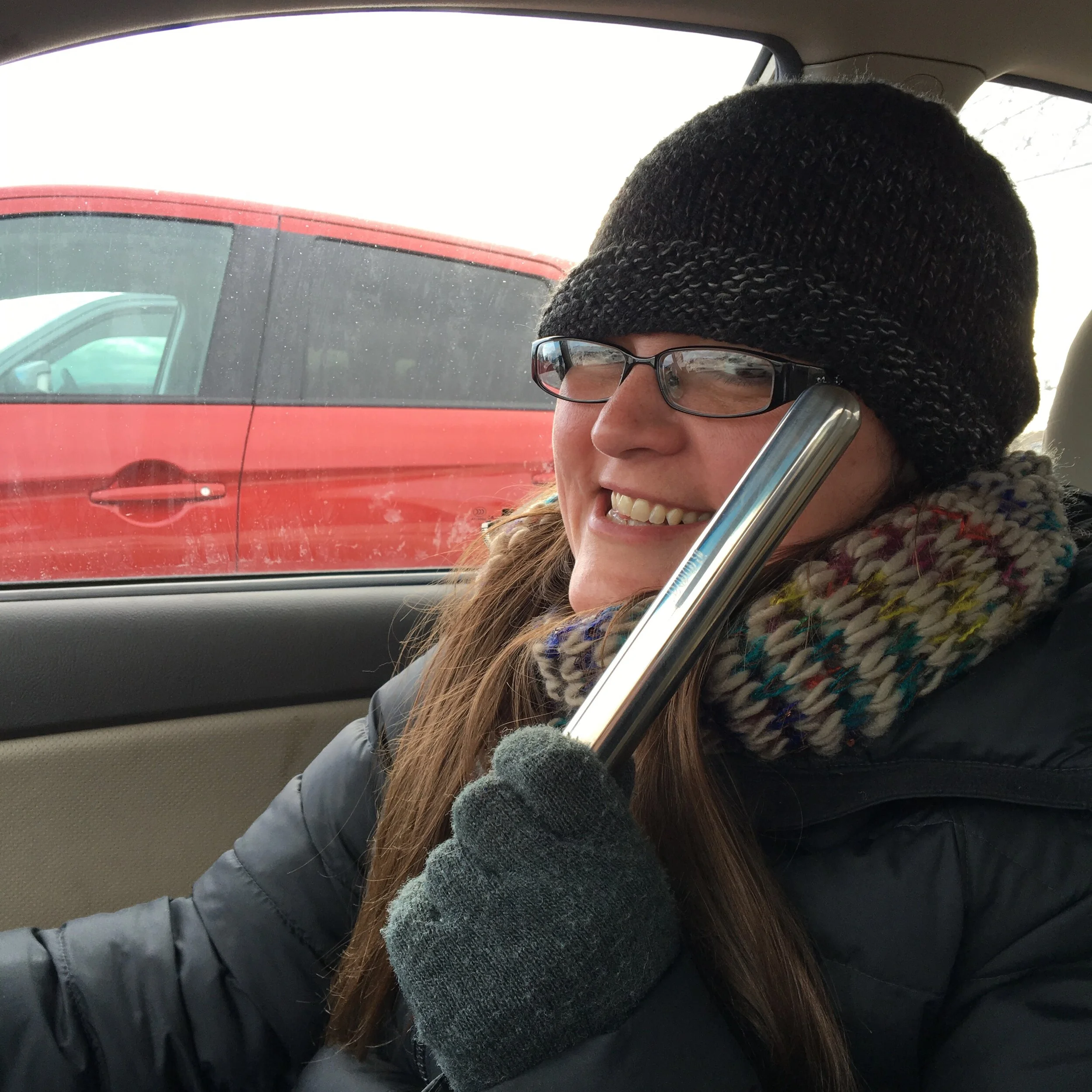
Um…Wendy…what kind of birding party is this?
Wendy’s flask was unlike any flask I’ve ever seen…I was like, “Honey, are you sure that’s a flask??”
After celebrating her two lifers we decided to go for one of the many snowy owls that were reported that winter. One being at the local Menards!
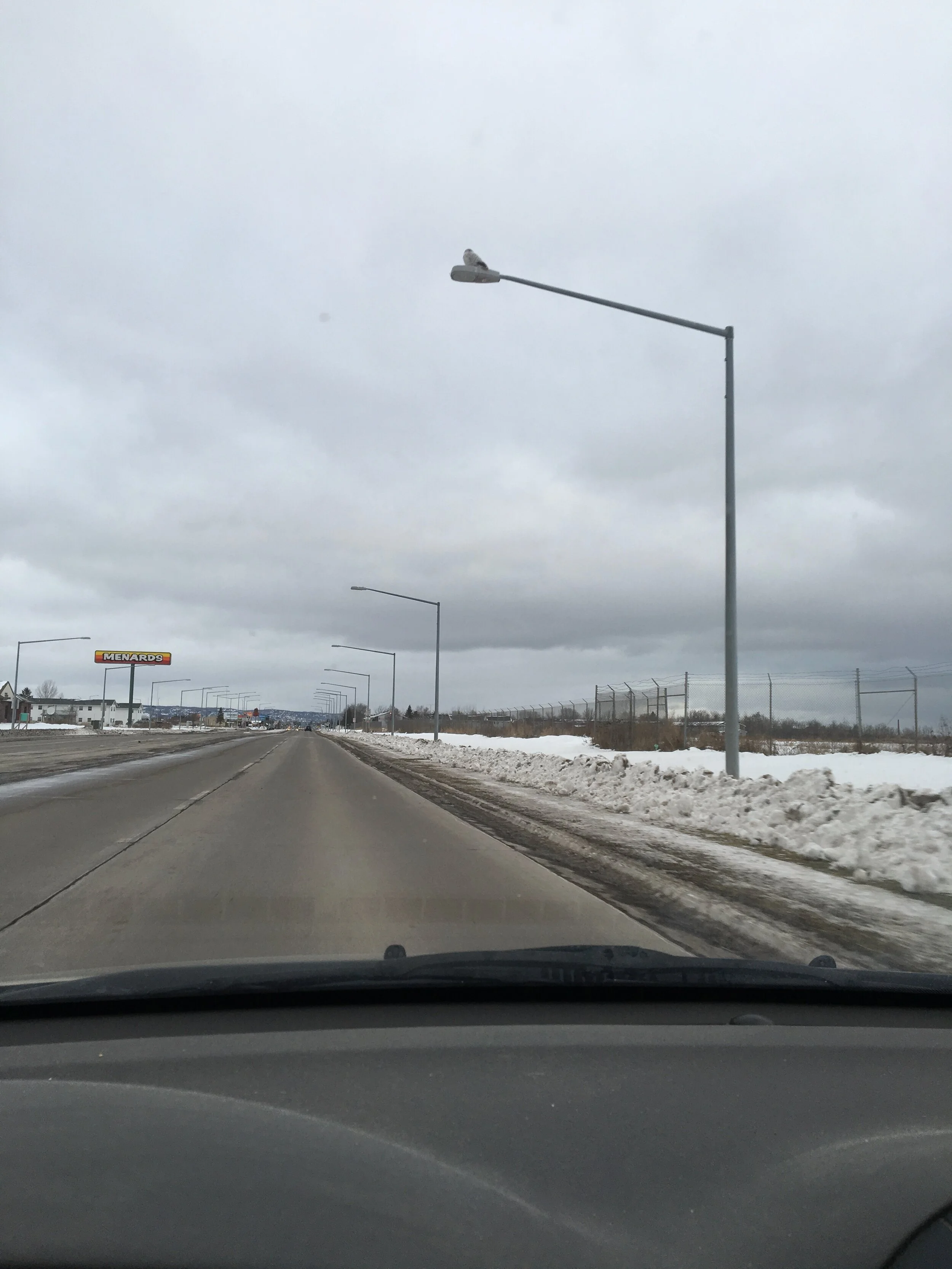
We drove right under this snowy owl on a light post.
Save big money and get a snowy owl at Menards!
We pulled into a parking lot where we could safely get a scope view of the bird. It had already been banded and the person who bands birds up in Duluth likes to tag them with shoe polish. I’d always heard that the reason was to easily mark them so the bander wouldn’t keep chasing the snowy owl all winter. Snowy owls have feathers down to their toes and they way they sit, you rarely see their feet anyway, so it’s not always easy to see a banded foot. I’m not a fan of marking them with shoe polish and this particular bird had it on the head and wing—that seems excessive. I referenced that I wasn’t a fan of this on Facebook and some people came out of the woodwork to ask why I’m “anti-banding” which I found hilarious considering all the banding I’ve done in my past. But I question putting something like shoe polish on a bird that uses its feathers for camouflage, especially in the longterm. I wonder how it affects a bird’s chances of getting a good mate during breeding season. Maybe if I saw some of the research and reasoning behind the shoe polish, rather than news articles that basically say, “oh hey, here’s a guy who bands snowy owls” I might be a better fan of it.
Here’s a closer look at the owl.
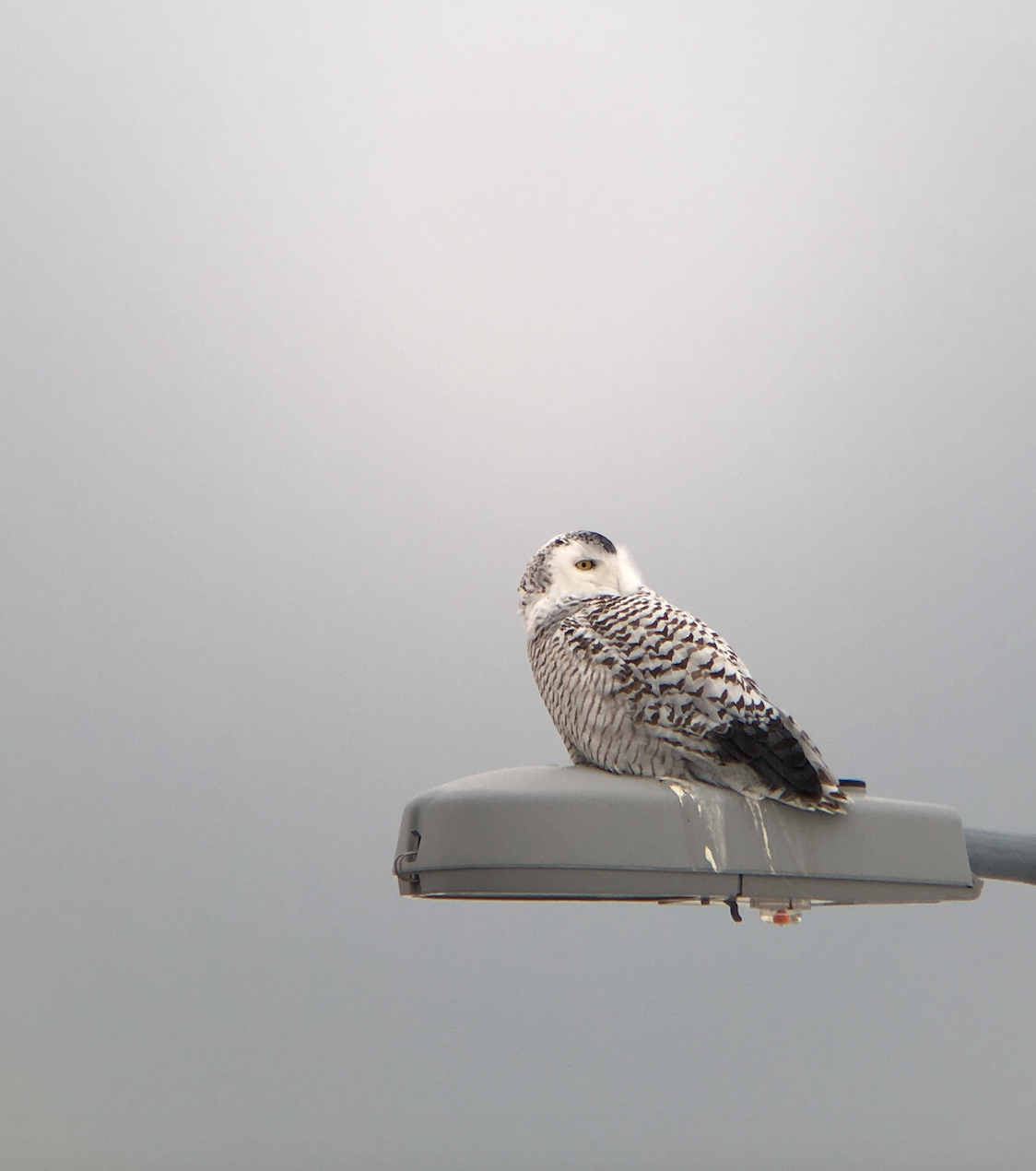
Snowy owl with shoe polish on the head and the primaries. Some say that another reason for the markings is to keep photographers from harassing the owls.
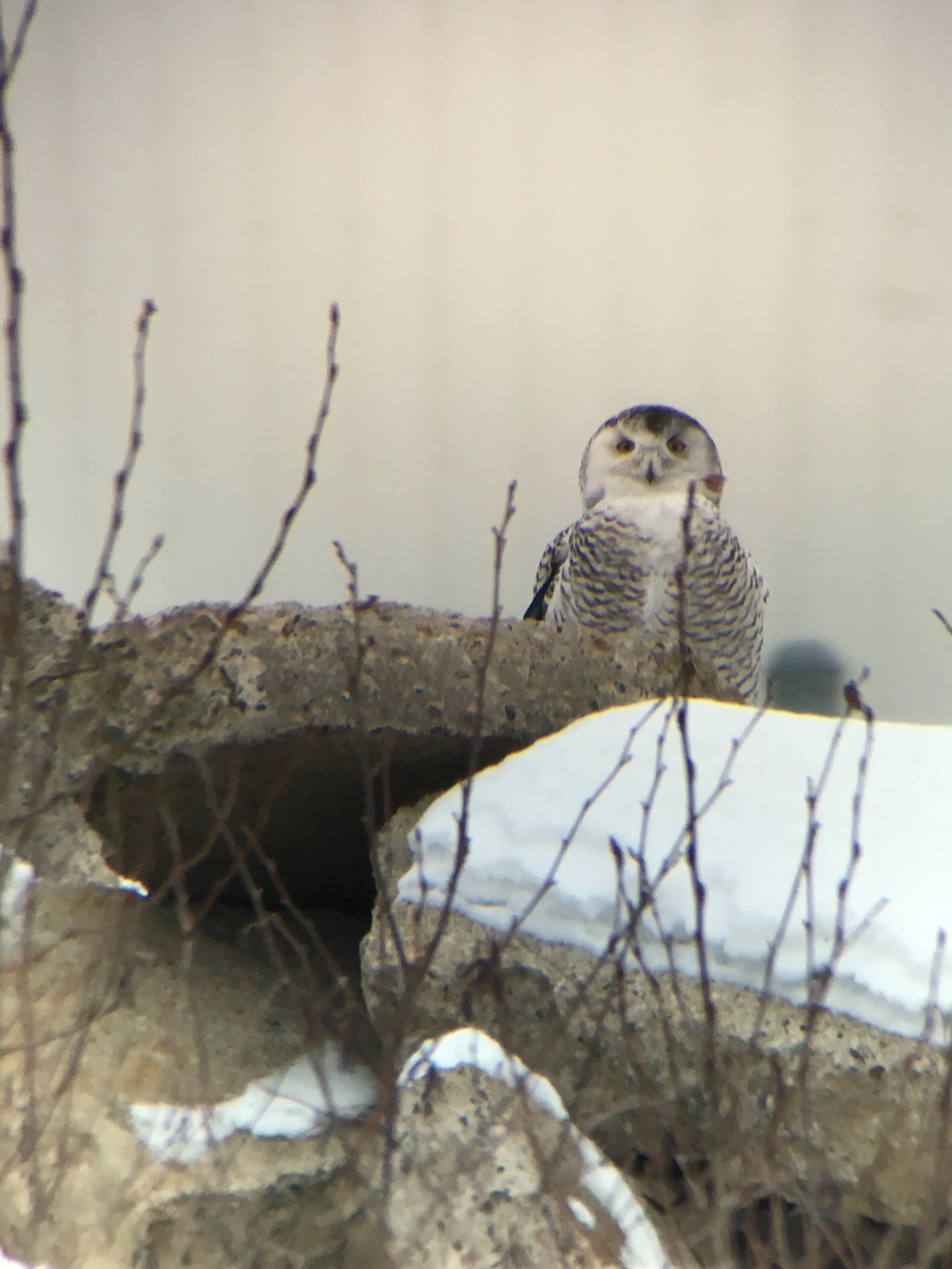
Here’s a second snowy we saw. It was also sporting the shoe polish head look.
Shoe polish birds aside, it was a great day with Wendy. She has since moved to the west coast and I miss her, but will always treasure this fun day trip to Duluth getting her all the lifers.
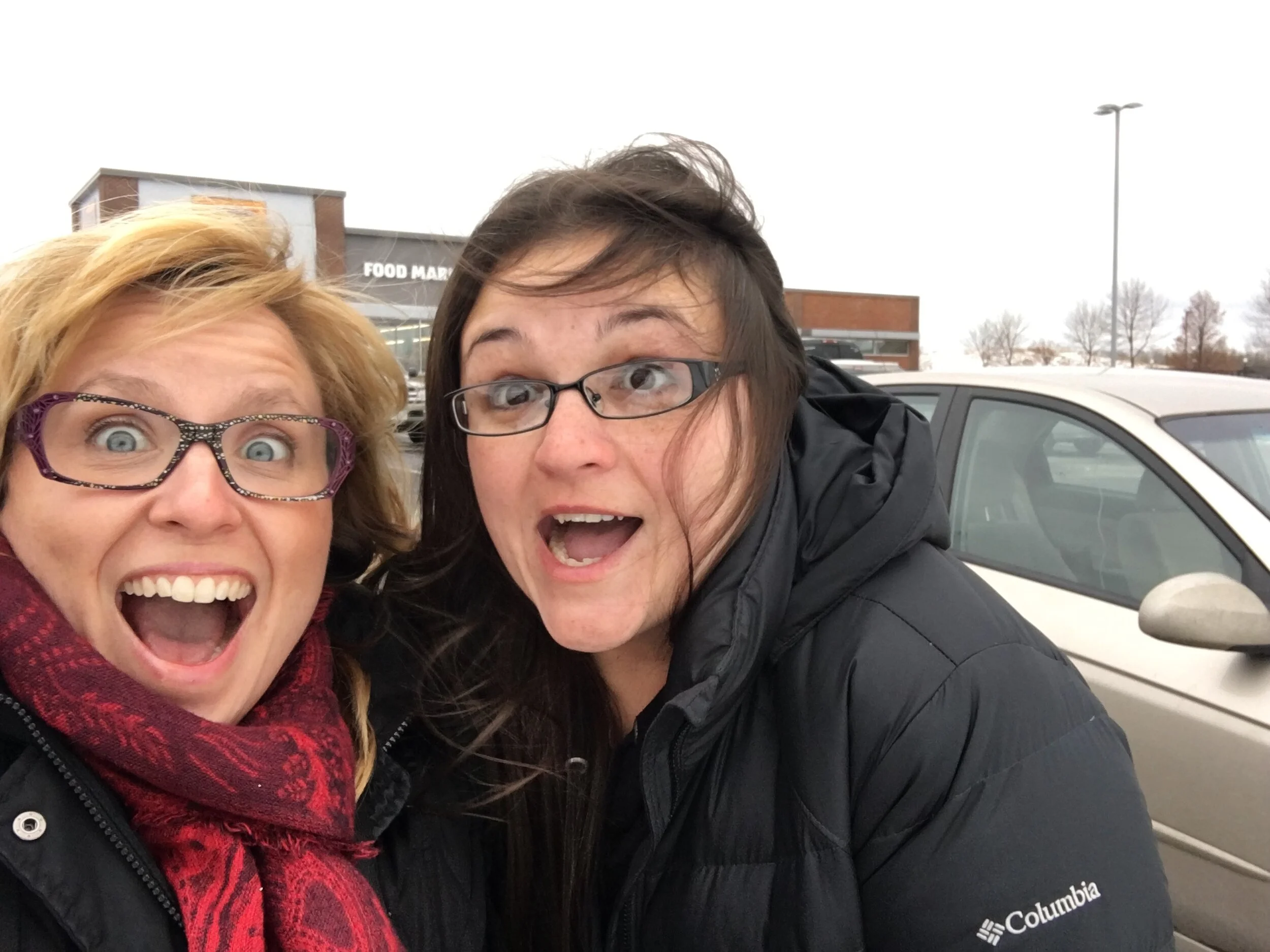
Lifer celebration!!!!

A Legend of Birding is Gone
“My heart has joined the Thousand, for my friend stopped running today.” Richard Adams, Watership Down
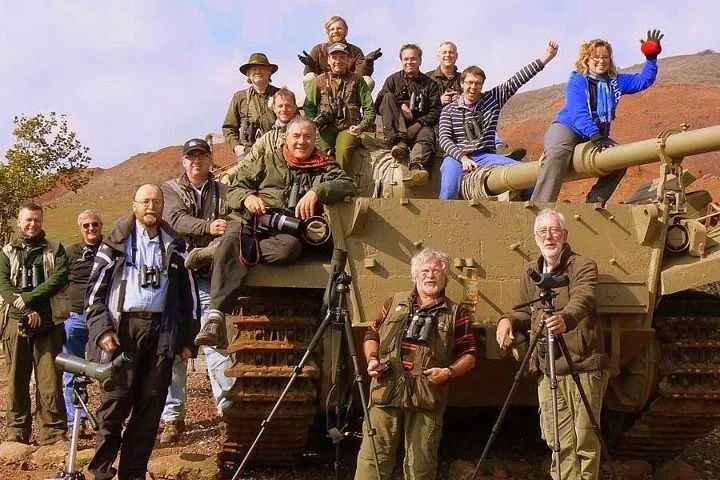
This picture of all of us posing on a tank in Israel sits in my office. When work gets ridiculous, I like to look at it to be reminded of the good times and the many friends, including BT3 that I have on the road.
Bill Thompson III aka BT3 was always someone I was happy to see. Years ago before there was any “Birdchick” and I was trying to get published, I sent bird articles to anyone. The ones from his family’s publication Bird Watcher’s Digest were the nicest, “This is a great article, but isn’t right for our publication.” It was handwritten and everything.
I first met Bill in my days of working for a wild bird feeding store, working birding trade shows called Bird Watch America but really got to know him at Tucson ABA Convention. We had a late night and he introduced me to what is my favorite beer to this day: Fat Tire. I have to admit that as nice as he was, I was really hoping to meet Julie Zickefoose and hoped he’d get me an in.
Not long after that I ran into him in the Rio Grande Valley. I was there on my own for the first time and he was leading a field trip. He dashed over to hug me and say hi and then pointed out my very first great kiskadee and informed me that they don’t say, “kisk-a-dee, kisk-a-dee” what they are really saying in their call is “Fuck the world! Fuck the world!”
Fuck the the world indeed. He’s gone too soon.
I have so many special birding moments or stories that I tell friends that he was part of. He may not even be mentioned in those stories, but he was there experiencing them with me. He was always someone you were happy to see when he walked in a room. He was generous with his time, advice and ear. He was always trying to make birding as approachable and fun as possible. The New Birder’s Guide is still one of the best books out there for someone who wants to make the switch from backyard birding to full on birding.
Here are some of my favorite memories of Bill.
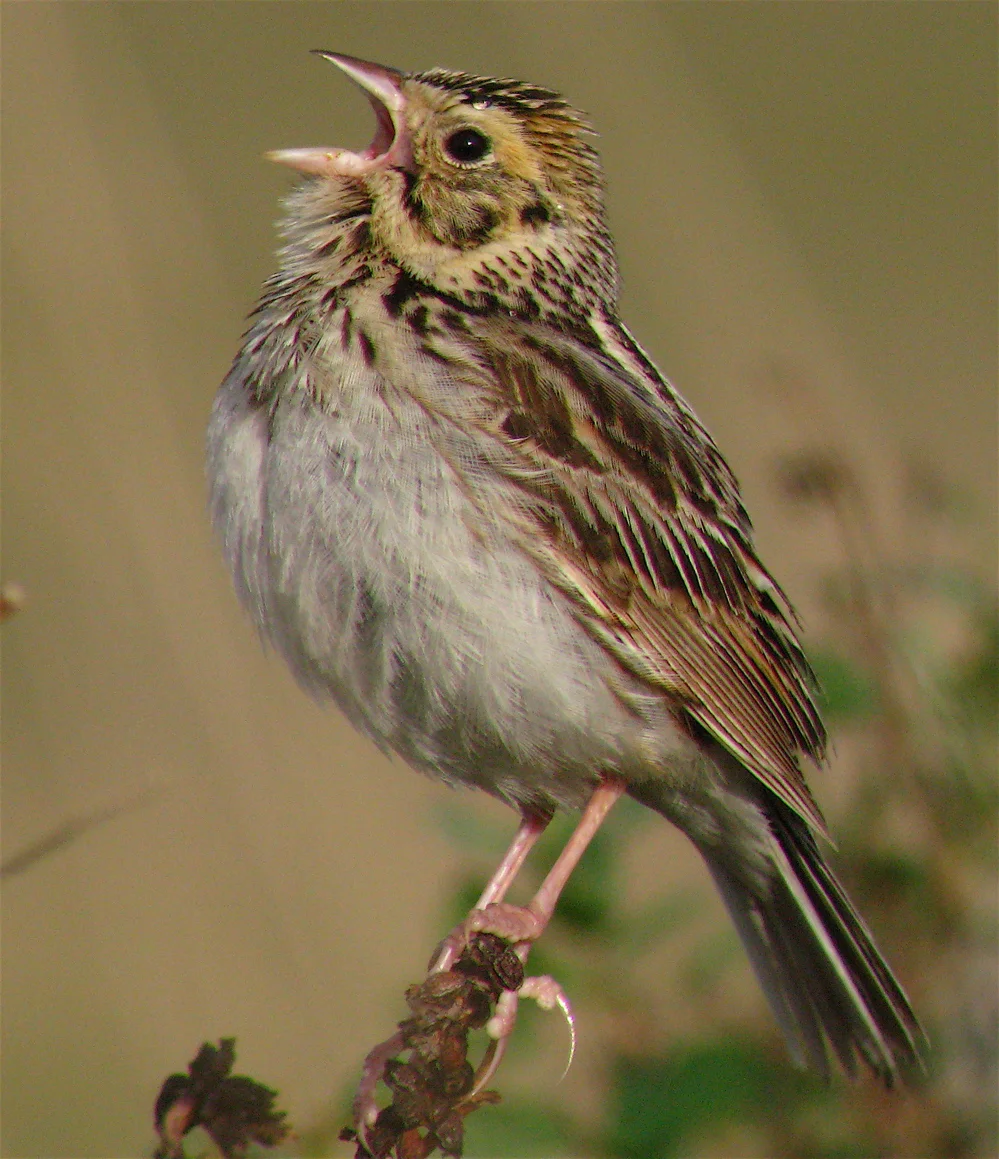
It was a my first time in North Dakota at the Potholes and Prairie Festival. The weather had been challenging and I’d missed the Baird’s Sparrow and Sprague’s pipit. Kim Risen and BT3 had made plans to go birding the day after the festival and were kind enough to let me join them. The weather was perfect, cool and sunny and very little wind. The light made the prairie glow. We got to the spot and a Baird’s sparrow sang within 10 feet of us. A Sprague’s pipit hovered over us and harmonized with the Baird’s. On top of that we had other prairie birds singing like western meadowlark. We sat in silence for well over an hour. BT3 even napped. It was peaceful and everything I loved about birding: sharing their wonder with good people. My sense memory to that perfect moment comes back every time I see this photo.
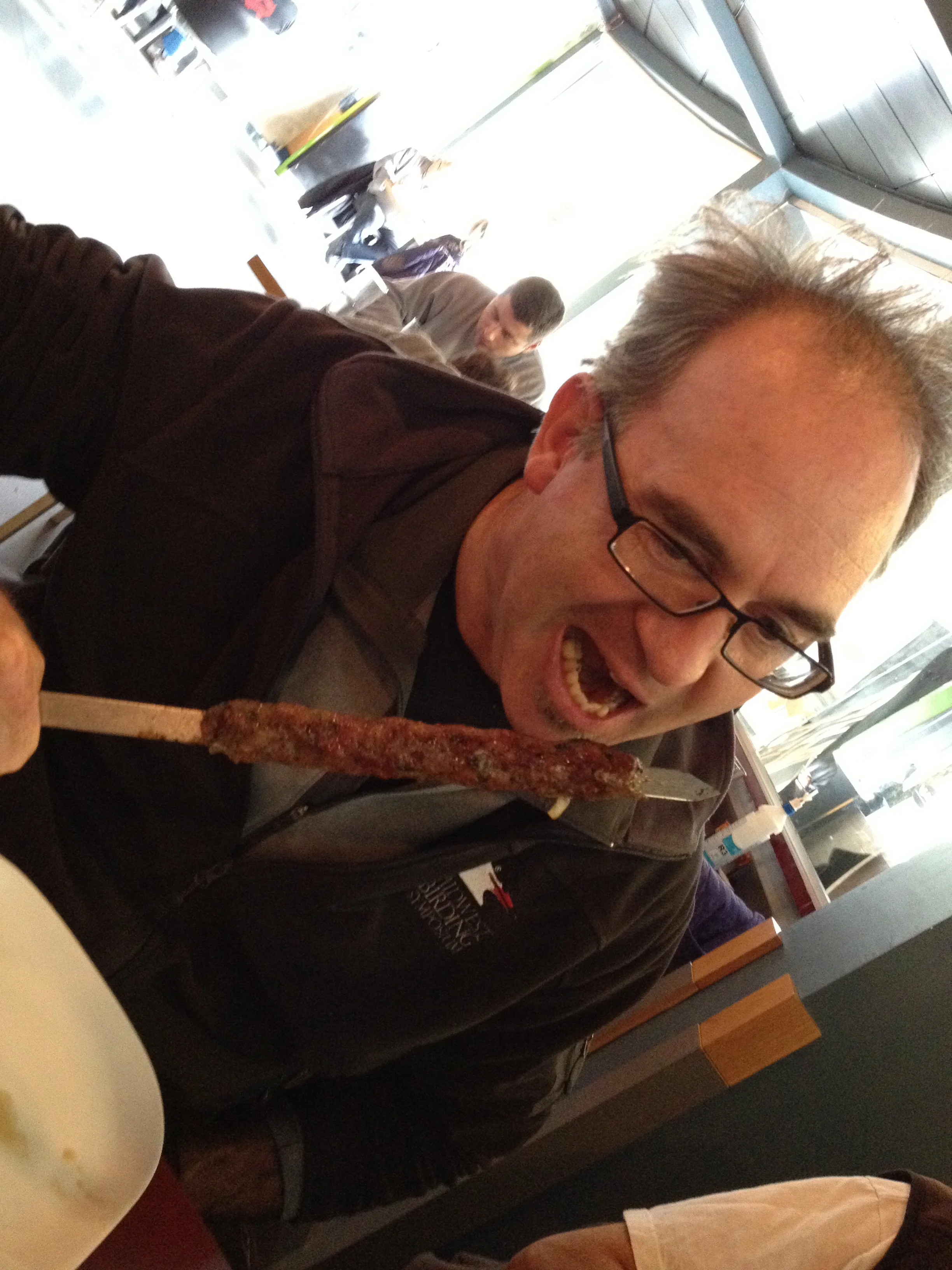
BT3 and I shared a skewer of turkey testicles in Israel.
BT3 and I were part of a fam trip to Israel. We saw so many lifers and that crane migration is something to put on your bucket list. We were also on the trip with Bill Oddie which was a treat for many reasons—one being we are the same height so when all the tall people were zipping up a mountain, I had a fellow shorty to keep me company behind the group. At one point BT3 came over to us and said while laughing, “I’m sorry, but I have to tell you that when I’m around you two, I feel like Gandalf walking through the Shire!”
At the end of our trip BT3, Pete Dunne and I had a long evening before we had to catch our flight. We walked the beach in Tel Aviv to Jaffa and had a beer. When we got back to our hotel, I stood on the balcony and watched the people below. A bunch of young men stripped down to their underwear and began playing volley ball. BT3 caught me using my binoculars to enjoy the show and shouted, “Sharon!!!!”
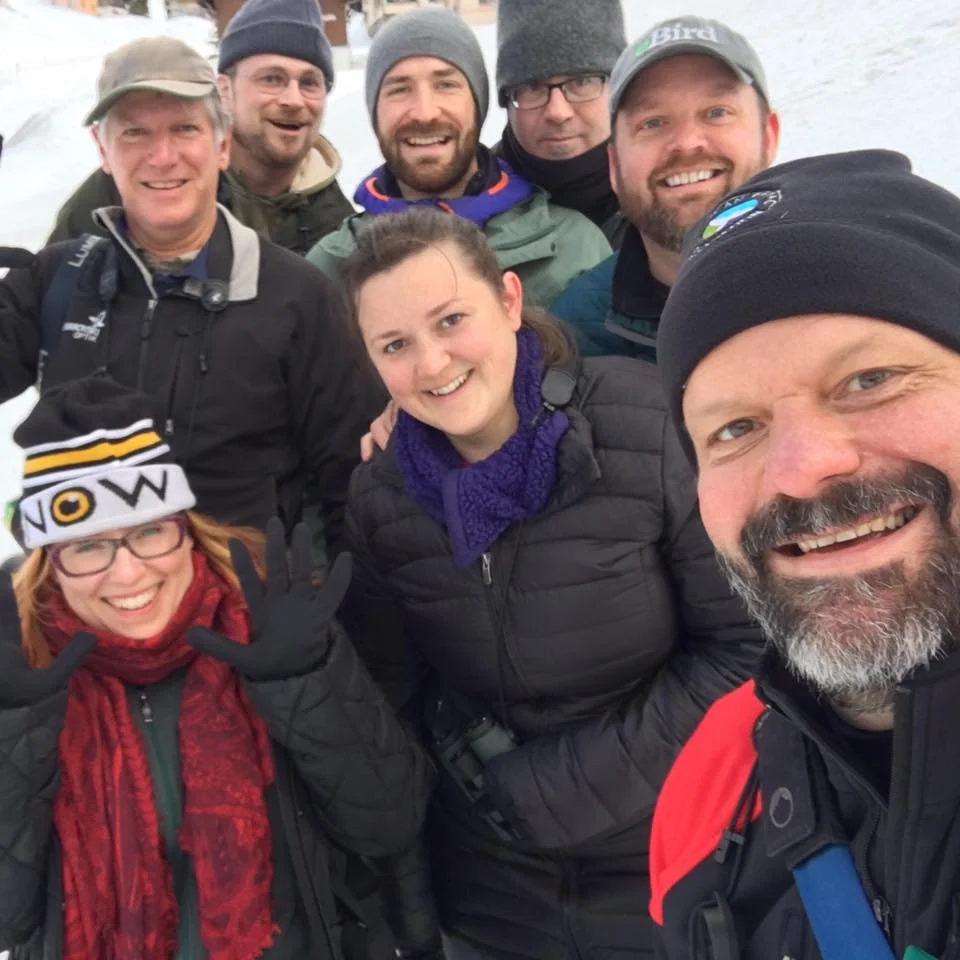
Jeff Gordon grabs a selfie of all of us eBirding the crap out of Liechtenstein with Clay Taylor, Jessie Barry, Chris Wood, Corey Finger and BT3. (and our guide who I only remember as Leander).
So many trips, so many drinks, so many laughs…that time we drunkenly sauntered down the Alps and peed behind a dumpster together. That time we watched a wallcreeper on a castle and then followed Chris Wood’s idea that we go into Liechtenstein so we could be the top eBirders for that principality.
Hundreds of more memories that I just can’t put into words this morning.
He was a great friend on the road and incredibly helpful to my birding career. The birding community is not going to be the same. Oh hell, I suddenly remember he and Julie let Non Birding Bill and I stay at Indigo Hill and we made a video on How To Do A Big Sit.
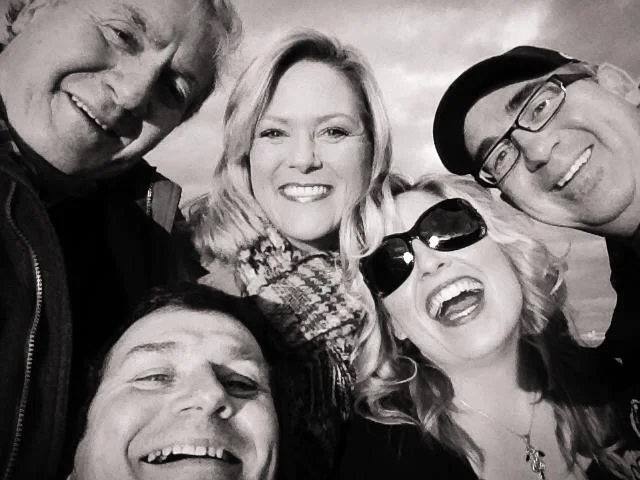
Tim Appleton, Mark Cocker, Wendy Clark, Bill Thompson.
This was one of the Midwest Birding Symposiums and I got to get to know Wendy Clark. This was a gorgeous night on Lake Erie. The sunset was stunning in its colors but we thought the moment should be captured in black and white.
Bill, Julie and Wendy have been brutally honest about what this pancreatic cancer journey has been like for the family. The comment that broke me was a photo on Facebook of BT3 with Michael O’Brien and Zemaitis. They had run into each other in customs in November while returning from different birding trips. It popped up last week and BT3 wrote, “Turns our that was my last birding trip. So glad we crossed paths!!”
I’m not ready to contemplate what is going to be my last birding trip. Do all the things you want to do. Go on that birding trip. Skip the laundry and go look for warblers this spring. Eat all the carbs. Tell those important to you how important they are.
Thank you, BT3, for being such a great companion on the road. Thank you for all that you did to help me get to where I am today. Thank you for all you did to get people to notice birds. Thank you for sharing your music.
Sax Zim Bog and Digiscoping
Hello! If you are here because of the KARE 11 or MPR segment, welcome! If you’re wondering about what the smart phone photography technique I was talking about, it’s known as digiscoping or phone scoping. It’s a way to use your smartphone with a spotting scope to take pictures and videos of birds and wildlife. You can learn more about the technique and the kit I use here. The case for my phone that I’m writing about is from a company called PhoneSkope.
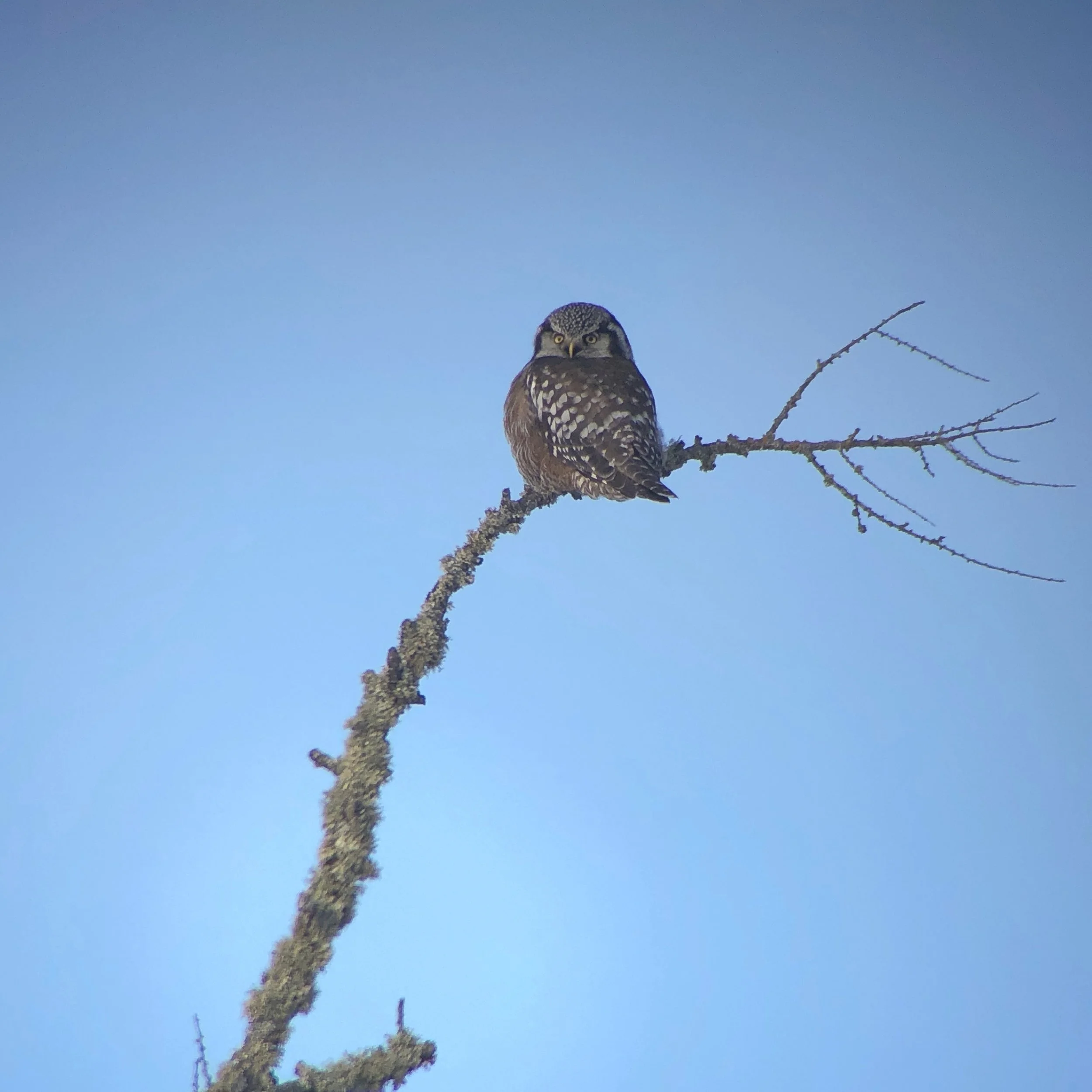
Here’s a video I took of a northern hawk owl at the bog on Monday. This was taken with my iPhone in a PhoneSkope case and my Swarovski ATX spotting scope:
If you’re curious about “the bog” I referenced, that is Sax Zim Bog—a birding hot spot in Minnesota, especially in winter. You can find tons of great information at the Friends of Sax Zim Bog page. If you’ve never been, it’s best to hire a guide or consider going to the festival. The bog is large and without a strategy you can spend a lot of time driving without seeing any birds and wondering where to pee.
The bog is great birding year round, but there some birds that are easier to see in winter or can only be found there in winter. Target species for birders include (but is certainly not limited to) great gray owl, northern hawk owl, Canada jay, pine grosbeak, evening grosbeak, common redpolls, hoary redpolls, snowy owls, black-billed magpie and boreal chickadee. Several areas host bird feeders, some on private land, some on public. Friends of SZ has a great map pointing out the feeding stations. Some of the birds are after seed and others are after meat and fat in the form of chunks of venison.
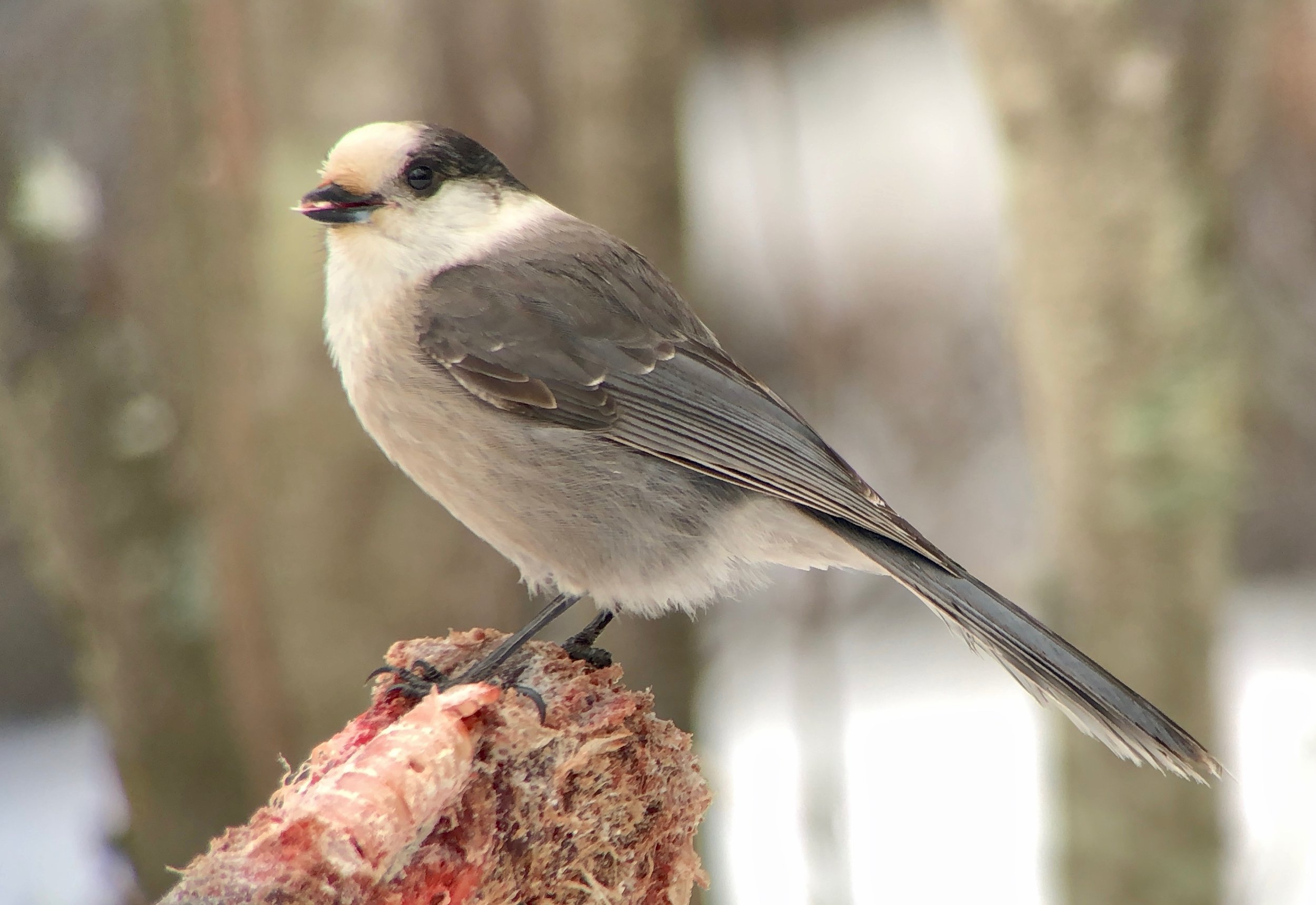
Canada Jay perched on meat mountain (a deer torso) at Sax Zim bog. Dozens of black-capped chickadees will also come in for this. Note video below.
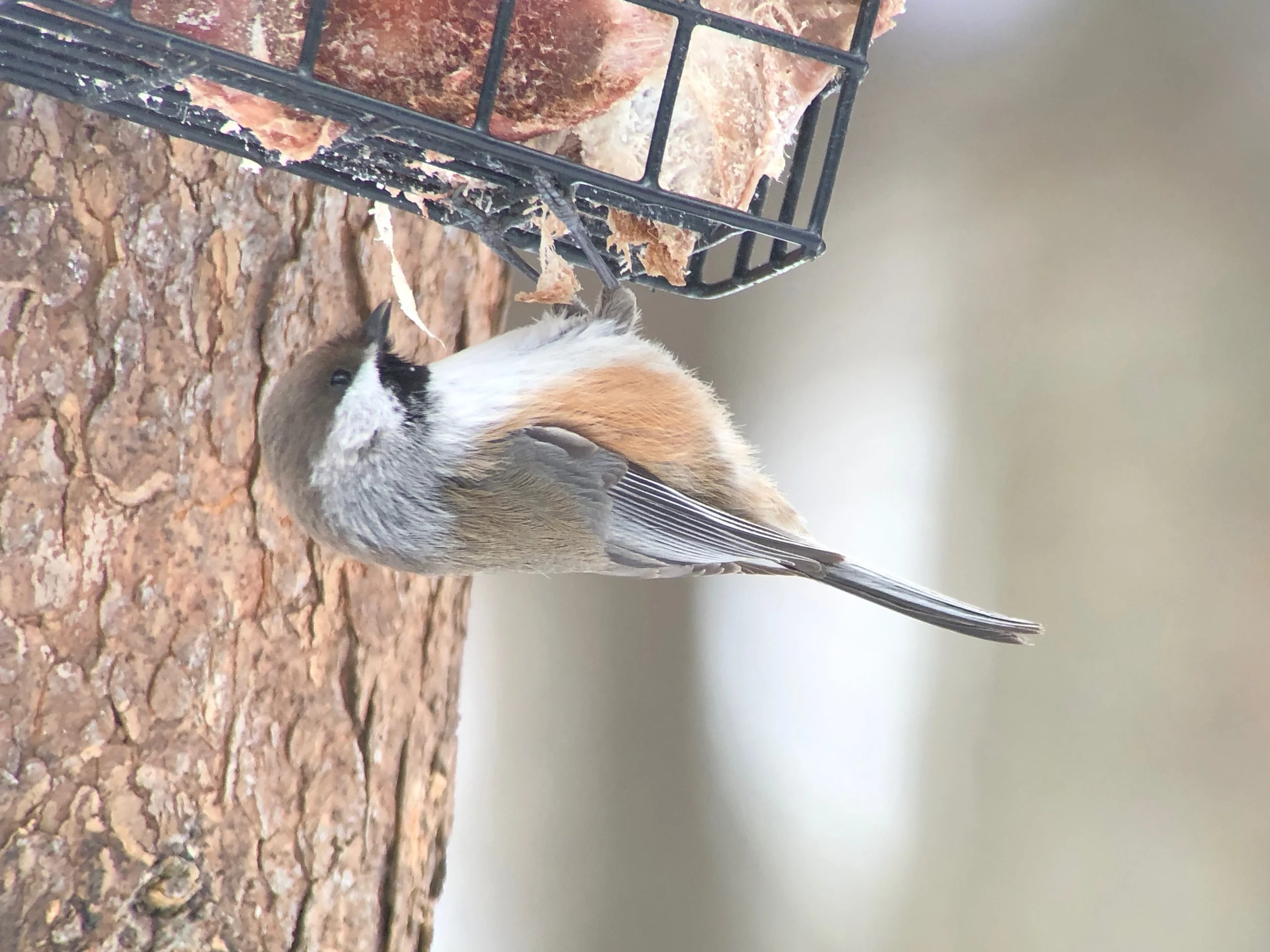
Boreal chickadee on a suet feeder filled with deer chunks.
I told my friends Gayle and Anne who dragged me out of my apartment for this day trip to listen for a “chick-a--shnee” sound instead of a “chick-a-dee-dee-dee” sounds. Among all of the black-capped chickadees in the bog is the browner boreal chickadee. We heard the bird but only caught barely a glimpse. We waited as long as we could but got the point where we needed to take the boardwalk back to the bathrooms. We carefully made our way back, keeping our eyes down to watch for icy patches when we heard a loud “CHICK-A-SHNEE!” There, about three feet from us on a feeder was the boreal chickadee. It was almost as if it was trying to tell us not to miss it.
We got good long looks and I had to back up down the trail so I could get a photo with my scope.
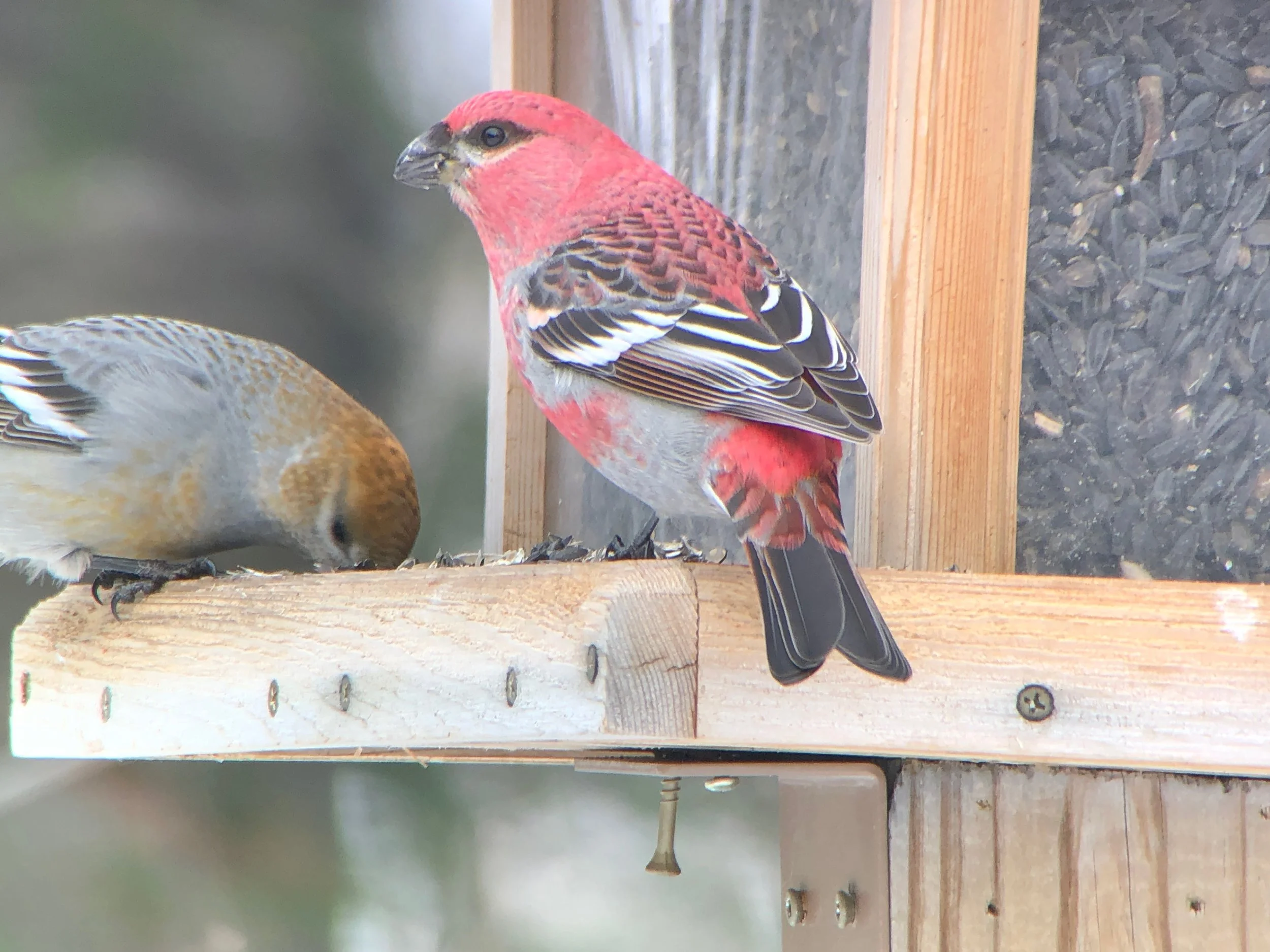
Colorful pine grosbeaks are in big numbers this year and easy to get at the bog.
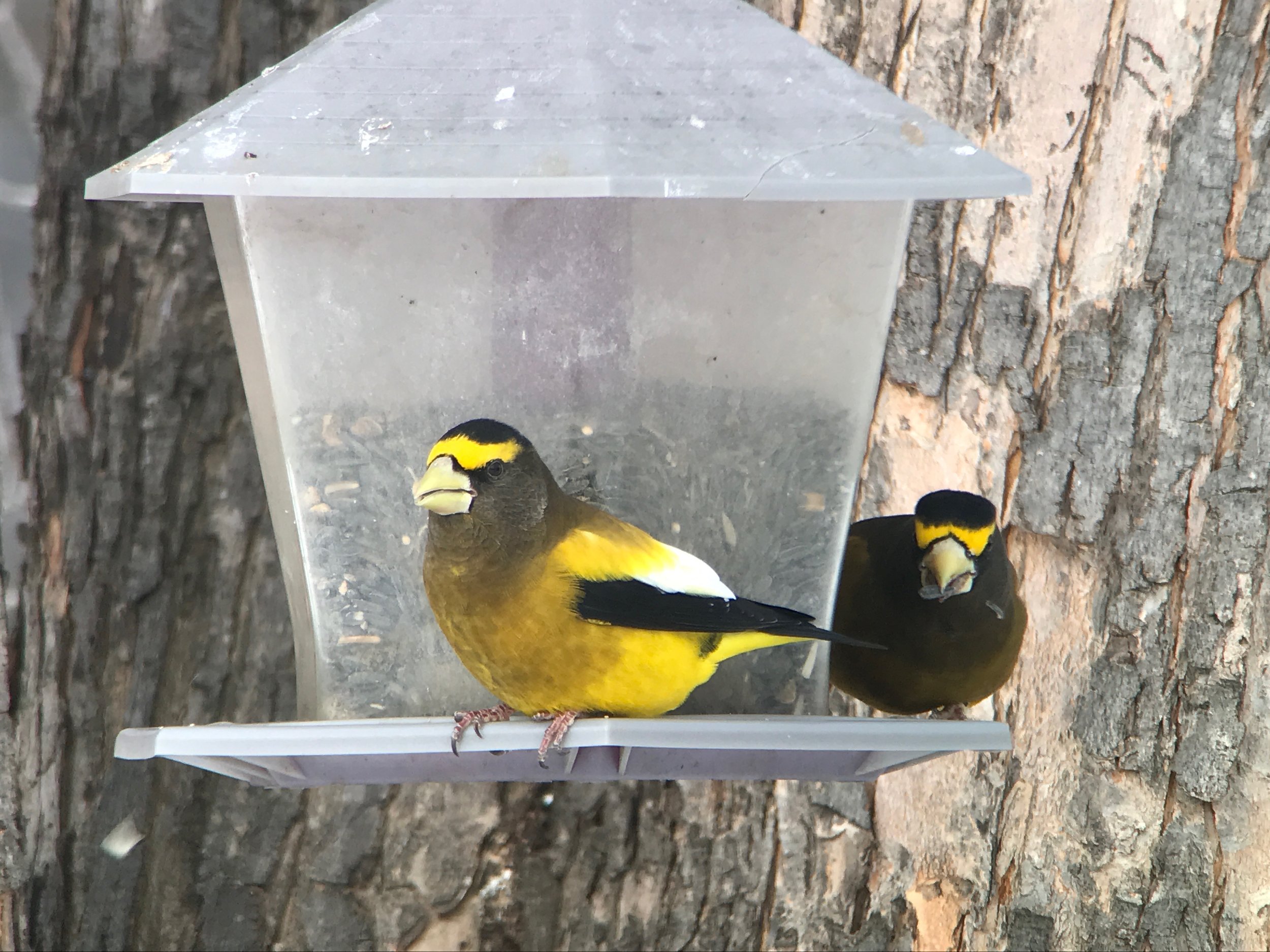
I didn’t manage to get a photo on Monday, but here are evening grosbeaks from last year. They kind of look like a goldfinch on steroids.
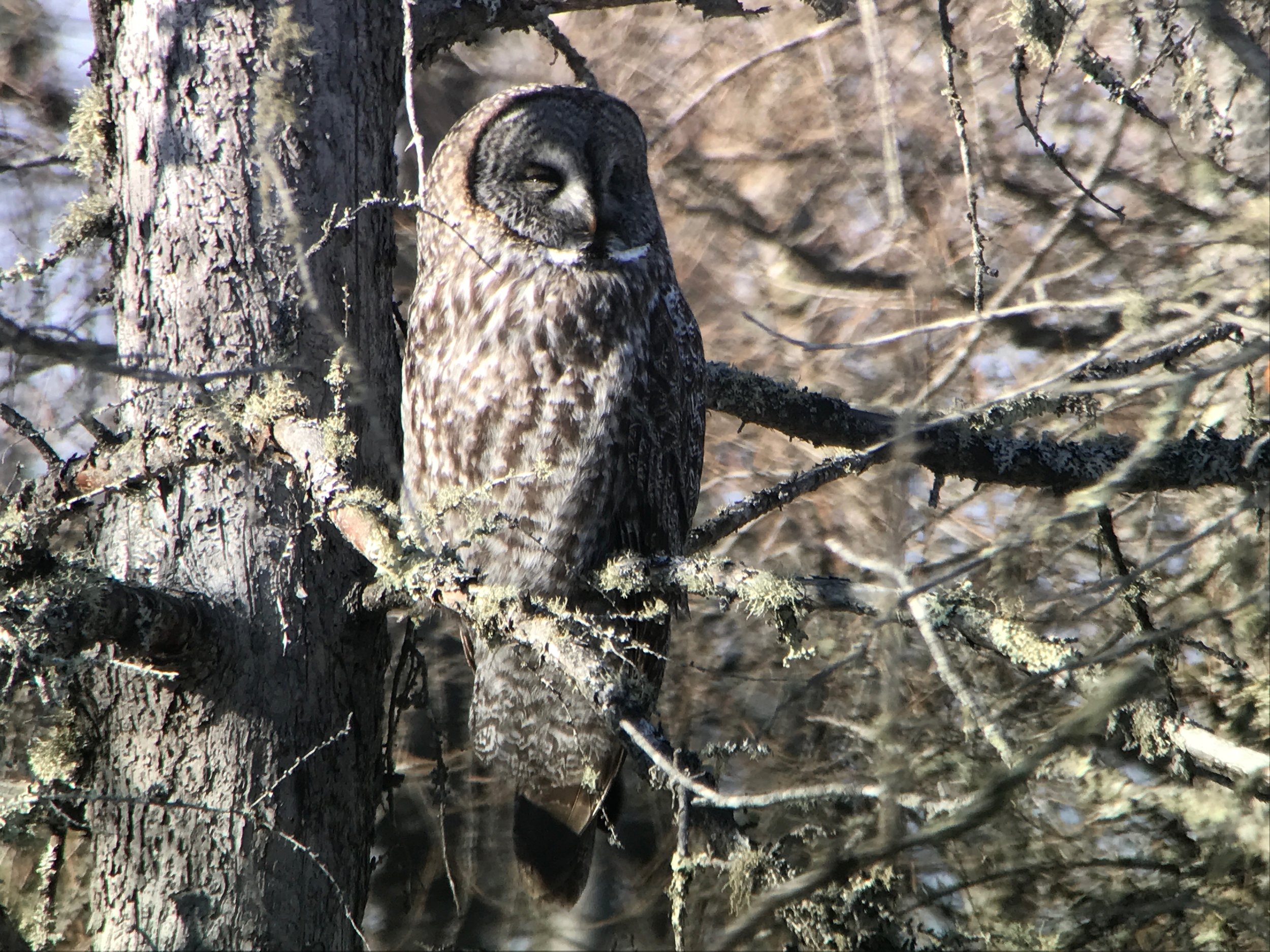
Again not a photo from Monday, it was too dark to get a picture of the great gray we saw. However, I took this picture a year ago in the same spot.
So if you’re looking for a unique way to spend the day, consider visiting Sax Zim Bog. Also, it’s worth it alone to see the face of your coworker when they ask what you did over the weekend and you answer, “I went up to a frozen bog to look for owls. “
Birding Lake Mburo National Park
After we saw the shoebill, I felt a weight come off of me in Uganda. I really, really wanted to see that bird. Of course I wanted to see many things, but that was the number one hope and Bird Uganda Safaris delivered. Even though my first look was at a distance I truly felt that I could really enjoy anything and everything because I saw my most wanted and didn’t have to stress if I would go home without it. It’s weird to pin so much hope on one species.
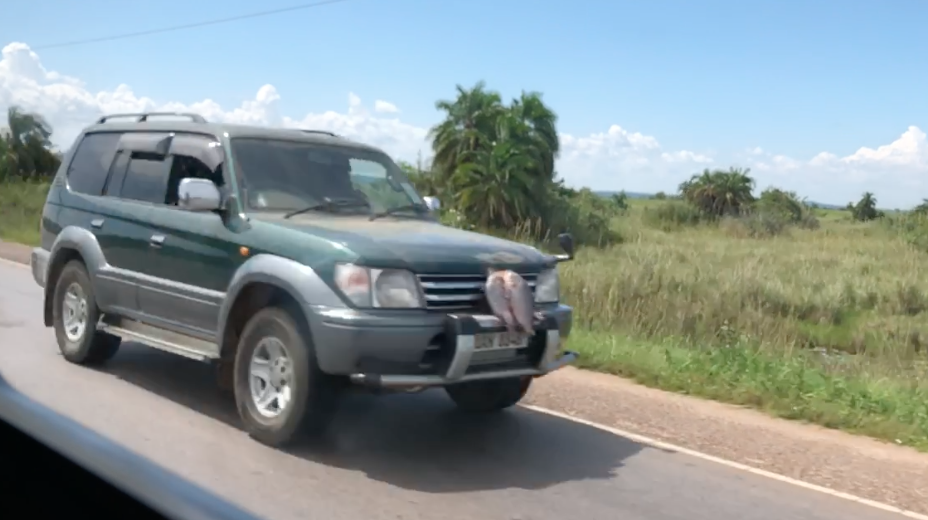
Leaving Mabamba wetlands we saw several trucks with fish attached to the Grill. Herbert told us that people put it there to keep it cool and fresh on the drive home. We asked if it worked and he said, “When I tried it, all I had was fish covered in insects and I never did it again.”
After the shoebill swamp we headed to Lake Mburo National Park where would stay at a Mantana Tented Camp. I wasn’t sure what the meant, but it sounded like an adventure. Along the way we would spot many birds and a few mammals. It was overwhelming because early on a bird trip everything is new and most likely a lifer, you’re not sure which species are going to be the common ones you see everywhere and which ones will be harder and that’s your one chance. Our guides Herbert and Davis from Bird Uganda Safaris also had the challenge of keeping us to schedule, but delighting in all of the things we were enjoying. But when we would stop for bathroom breaks we would always get fun birds.
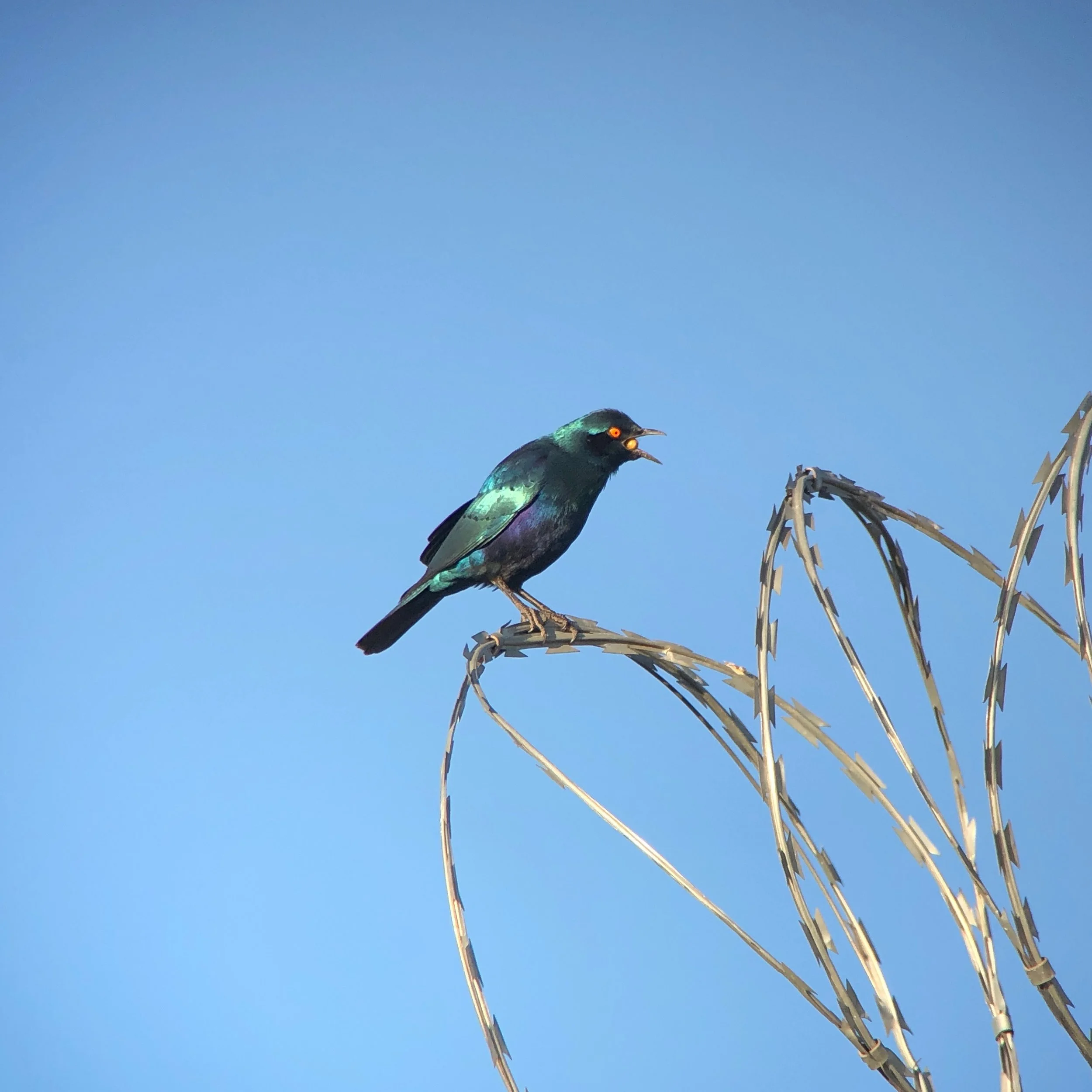
Lesser blue-eared starling coughing up an undigestible seed seen on a bathroom stop.
Darkness descended as we entered Lake Mburo National Park and though we couldn’t see the landscape well we saw some mammals in our headlights. This park was where we got our first iconic African mammals like cape buffalo and zebras. When we arrived at the lodge, travel weary and hungry they gave us our keys and the rules of the tented camp. The biggest rule was that you were not allowed to leave your tent and walk the grounds without an escort. Not because you might be eaten by leopard, but because cape buffalo wander the grounds and if you surprise them you would be trampled. You can schedule staff to pick you up and there’s even a whistle in your tent in case you need help immediately. You blow on that and staff come running.
My porter carried my 50 pound suitcase on his head and with flashlights in hand we took the gravel trail to my tent. He showed me how to use the shower—I would schedule a time with him to fill the bucket with warm water and I’d have about 5 minutes to get clean. He also offered to spray my room with insecticide while I was at dinner for extra mosquito protection. I arranged for him to pick me up in twenty minutes and began to unpack. I suddenly heard a chirping noise and assumed it was a house gecko. Then I heard some fluttering.
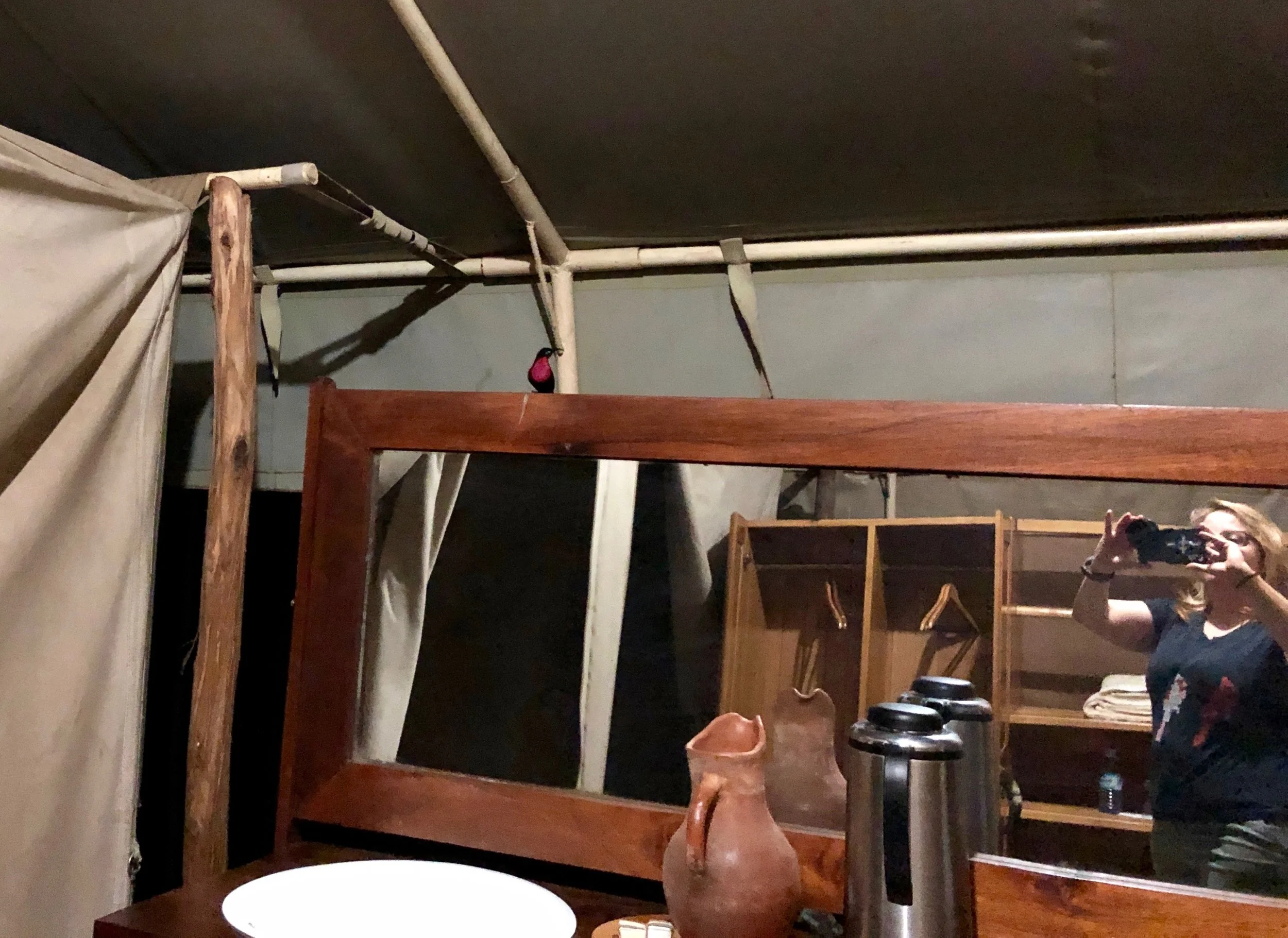
To my surprise and delight, I had a lifer scarlet-chested sunbird in my bathroom. I think the bird had been roosting and my activity in the tent woke it up. It soon found a gap and flew out into the night. There were no outlets in my tent, though there were lights. Anything that I needed to charge, I would only be able to charge in the main lodge. At night I would plug in external batteries at the lodge to use the next day. I’d use my laptop to charge my phone. During the day I’d leave my laptop in the main lodge to charge.
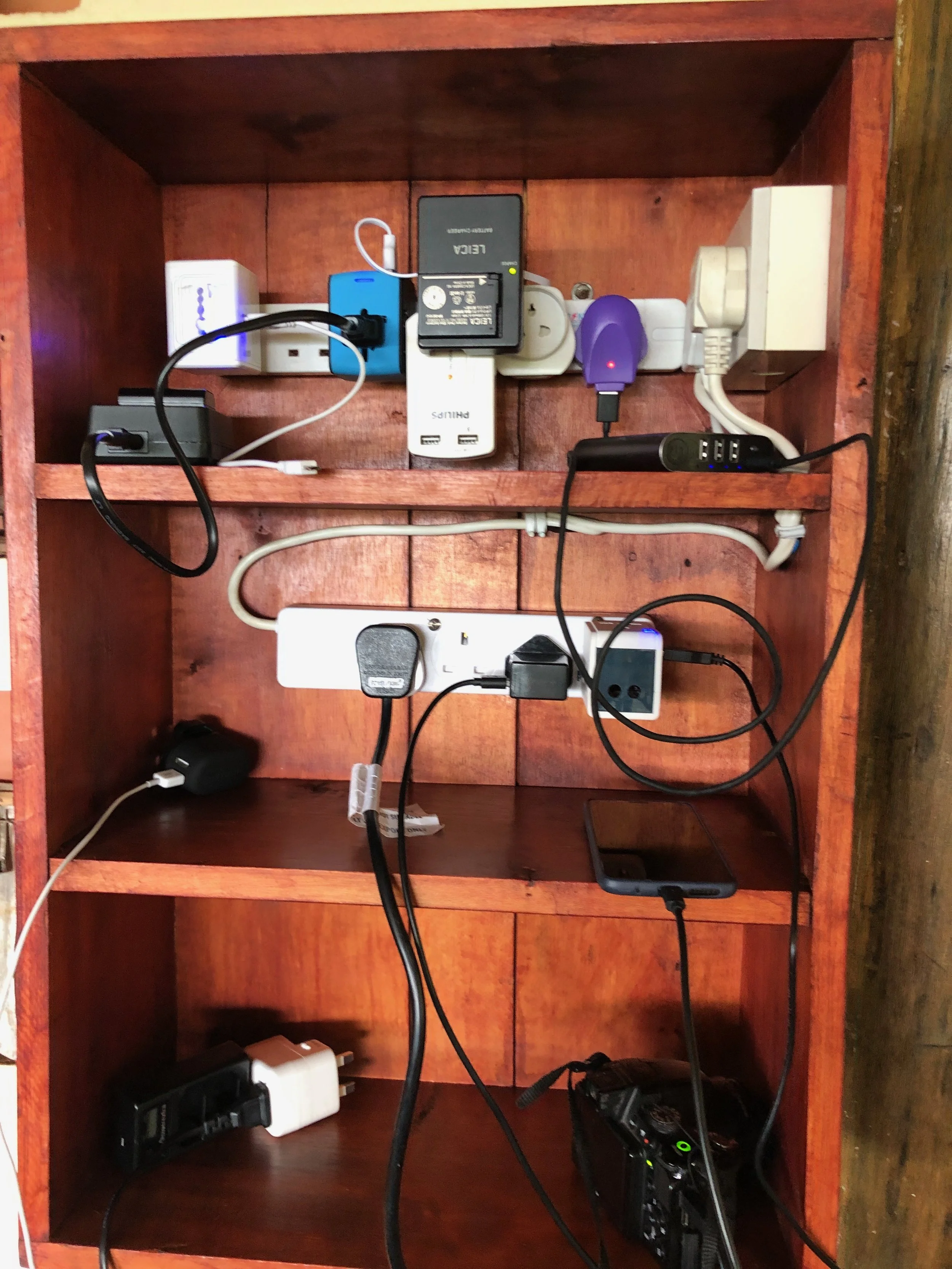
The lodge charging station…at a slow time.
During dinner we could order from the bar and we were served three course meals of soup, a main dish like chicken and rice and a dessert. Bats would zoom in and out of the darkness while we ate and discussed the next day’s itinerary. The hotel manager came by and asked if we would like to arrange a wake up call—if you’re phone was changing, you needed some type of alarm. We also had the option of getting our wake up call with fresh coffee or tea. I arranged for my wake up call with coffee and a fill up of warm water for the shower.
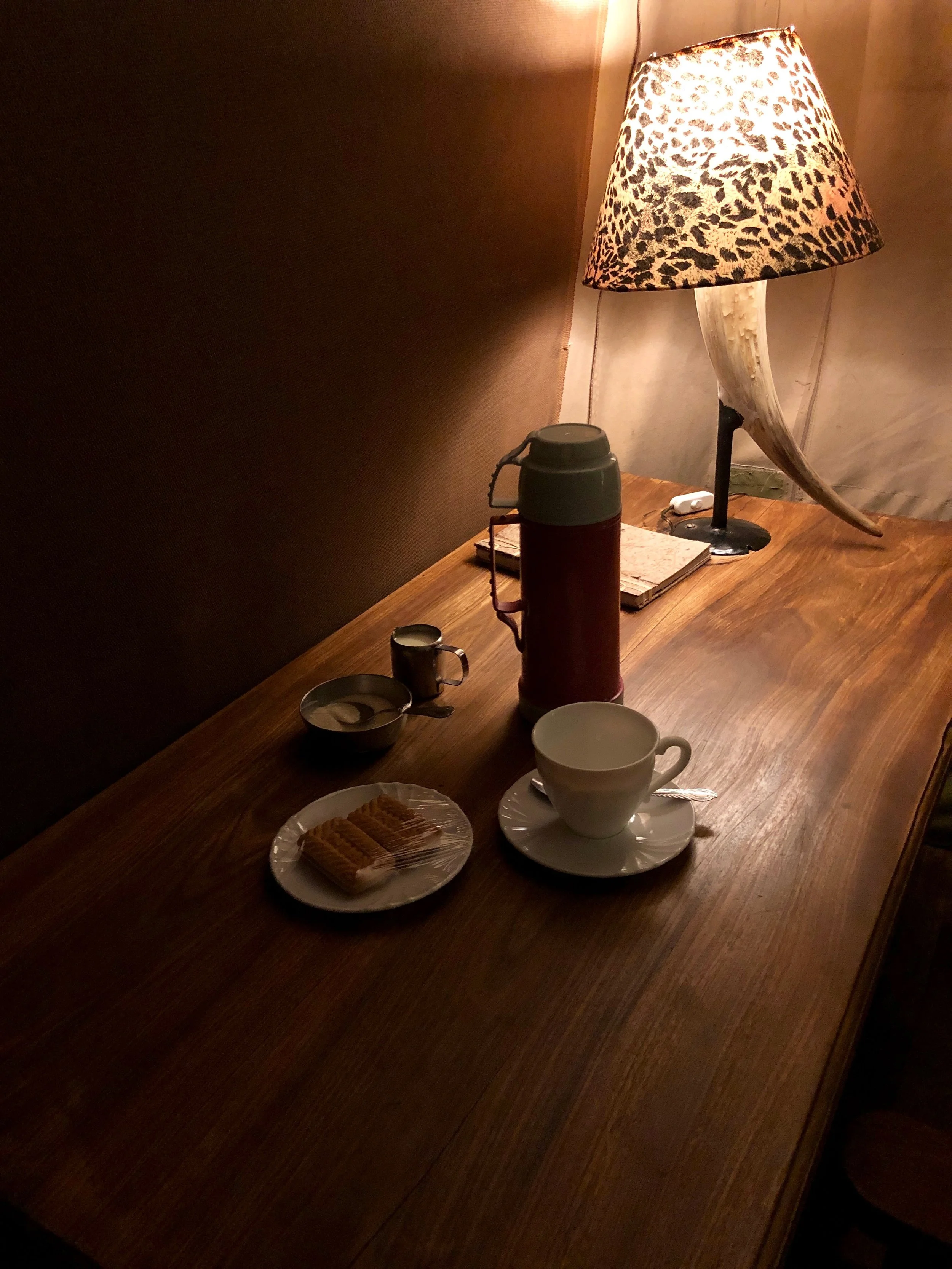
I love an alarm that comes with fresh coffee.
I was so overwhelmed by the beauty and fun of the day that I fell asleep on my very firm mattress as soon as my head hit the pillow while crickets sang around me. At about 4am some snorting outside my tent woke me up. It didn’t sound like angry snorting and I assumed they were some kind of wild boar and fell asleep. Two hours later my wake up call arrived with coffee and biscuits. What a treat! He ten filled my bucket with warm water. I opened the valve to get good and wet before shutting it off, lathered my hair with shampoo and my body with soap. I opened the valve again to rinse and shut it off. I added some conditioner to my hair and opened the valve until the water ran out and I was perfectly rinsed. It was an ideal shower.
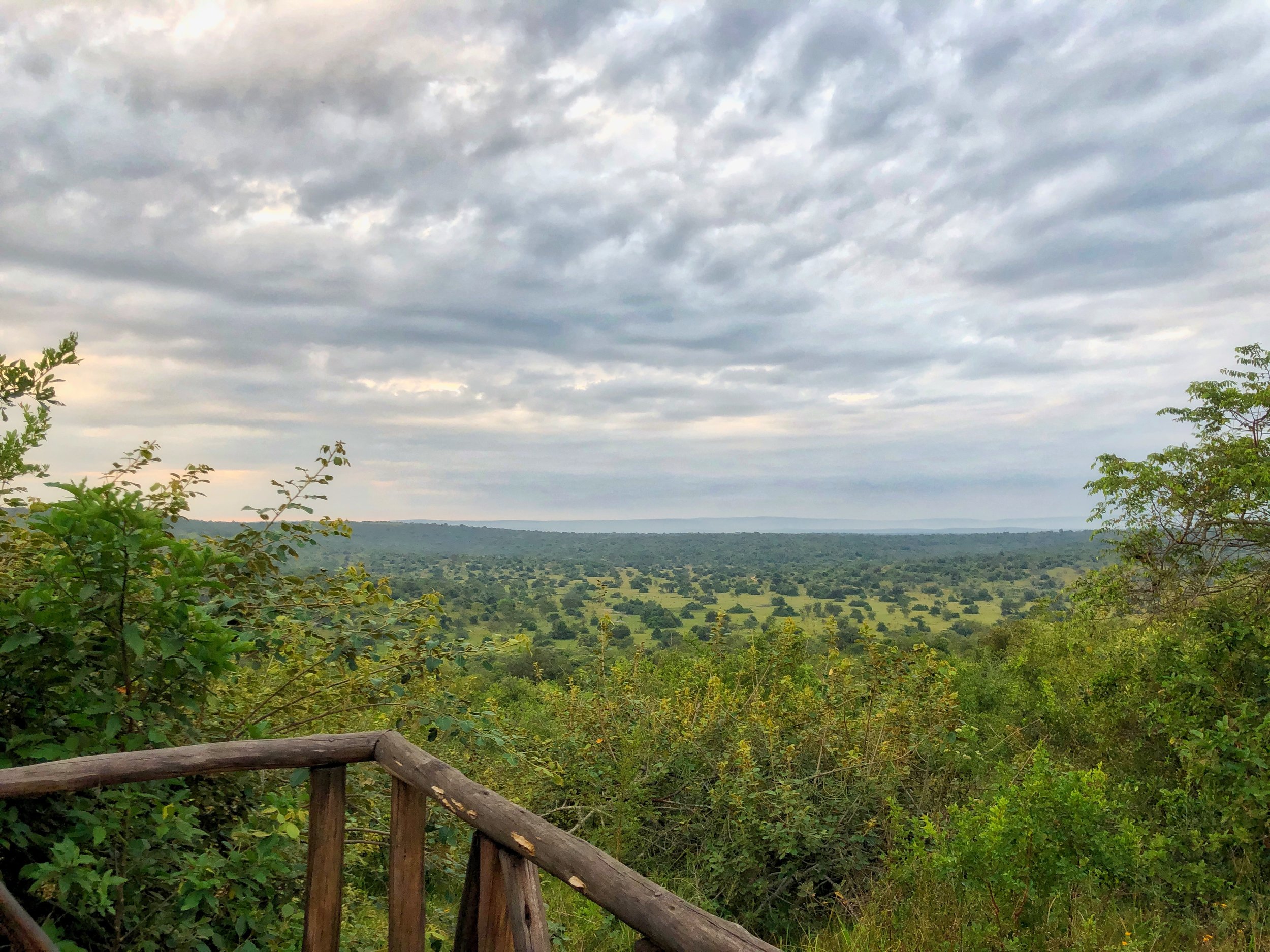
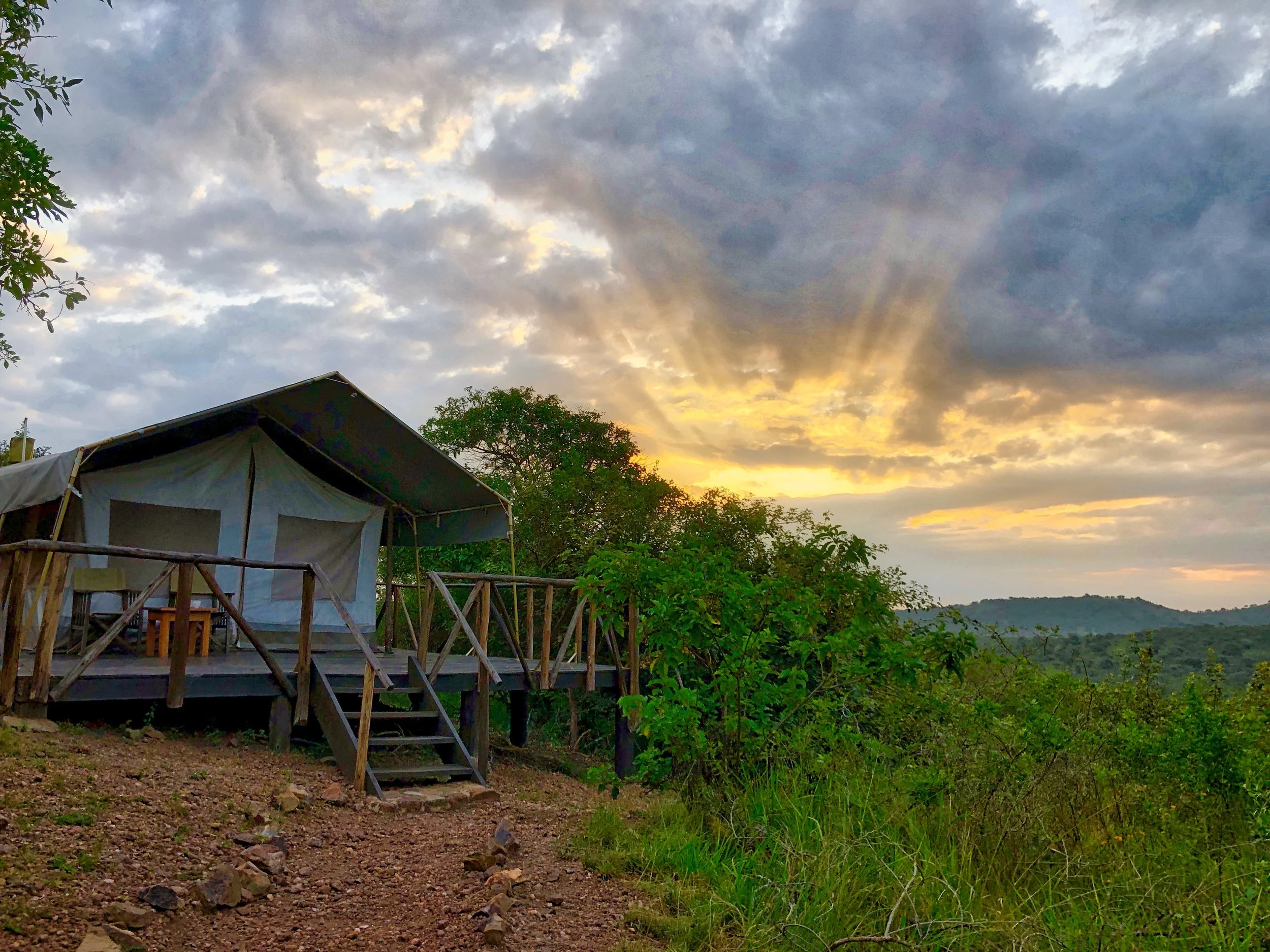
Freshly showered and caffeinated I absorbed my view over dawn.
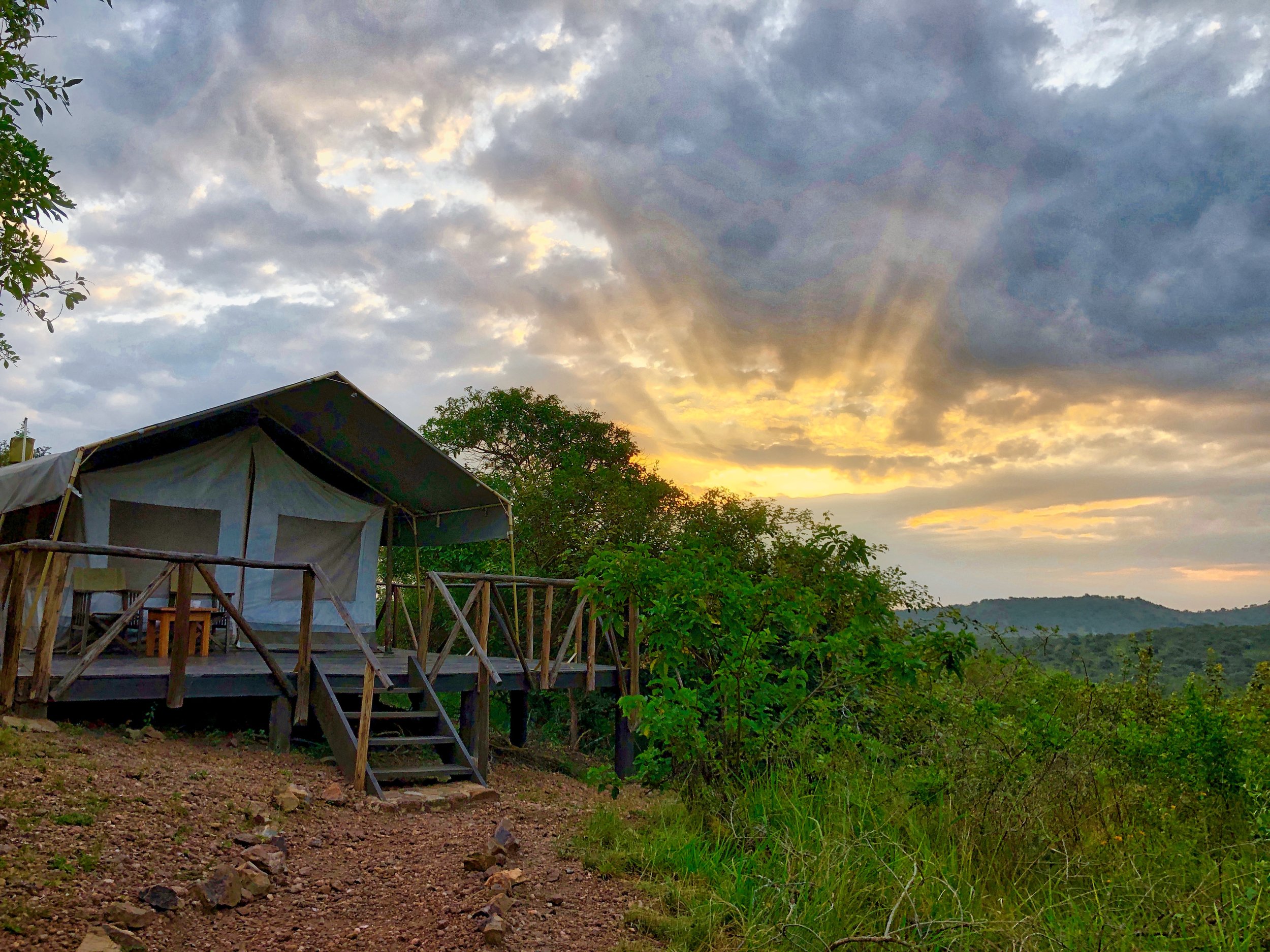
I finally got a look at the outside of my room as I left for breakfast.
I stood on my deck and watched the sun reveal the majestic landscape around me as I sipped rich coffee. All around me birdcalls filled the air. I love being in a country and listening to people speak in languages I’m not familiar with. I don’t enjoy that so much with birds. I want to know who the all are.
I got dressed and packed up my daily birding gear and made my way towards the main lodge. When I arrived a green-headed sunbird was fighting its reflection in one of the mirrors and adorable mousebirds were teed up. The expansive lush landscape was filled with new birds. We wanted to eat breakfast but so many birds were popping up and we had to see them all. It’s one of my favorite feelings, surrounded colorful landscapes and birds and being surrounded by fruit and coffee. Herbert kept us on task because we had a boat to catch, he made us finish our breakfasts and load up in the vehicles.
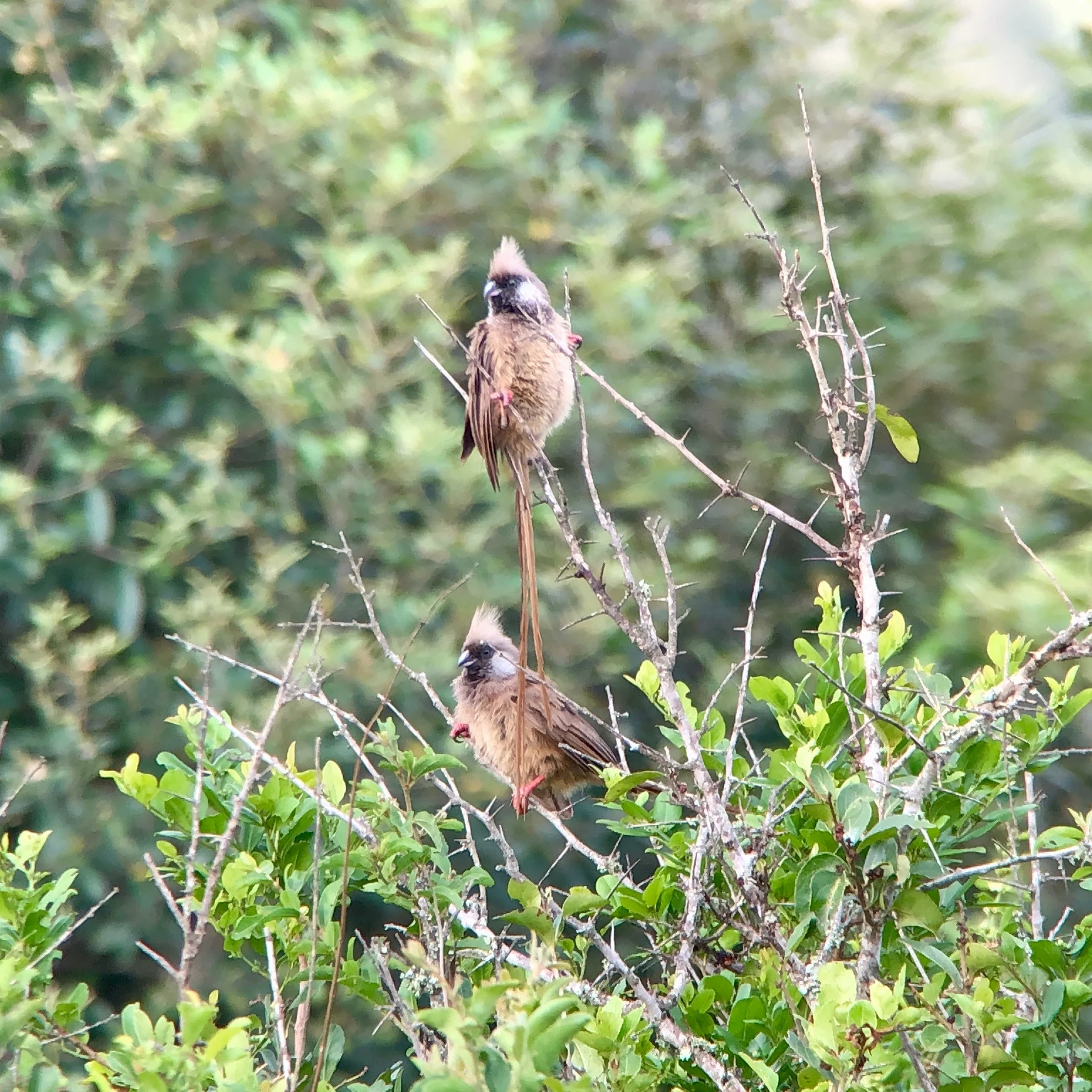
Speckled mousebirds tempting us away from our breakfasts.
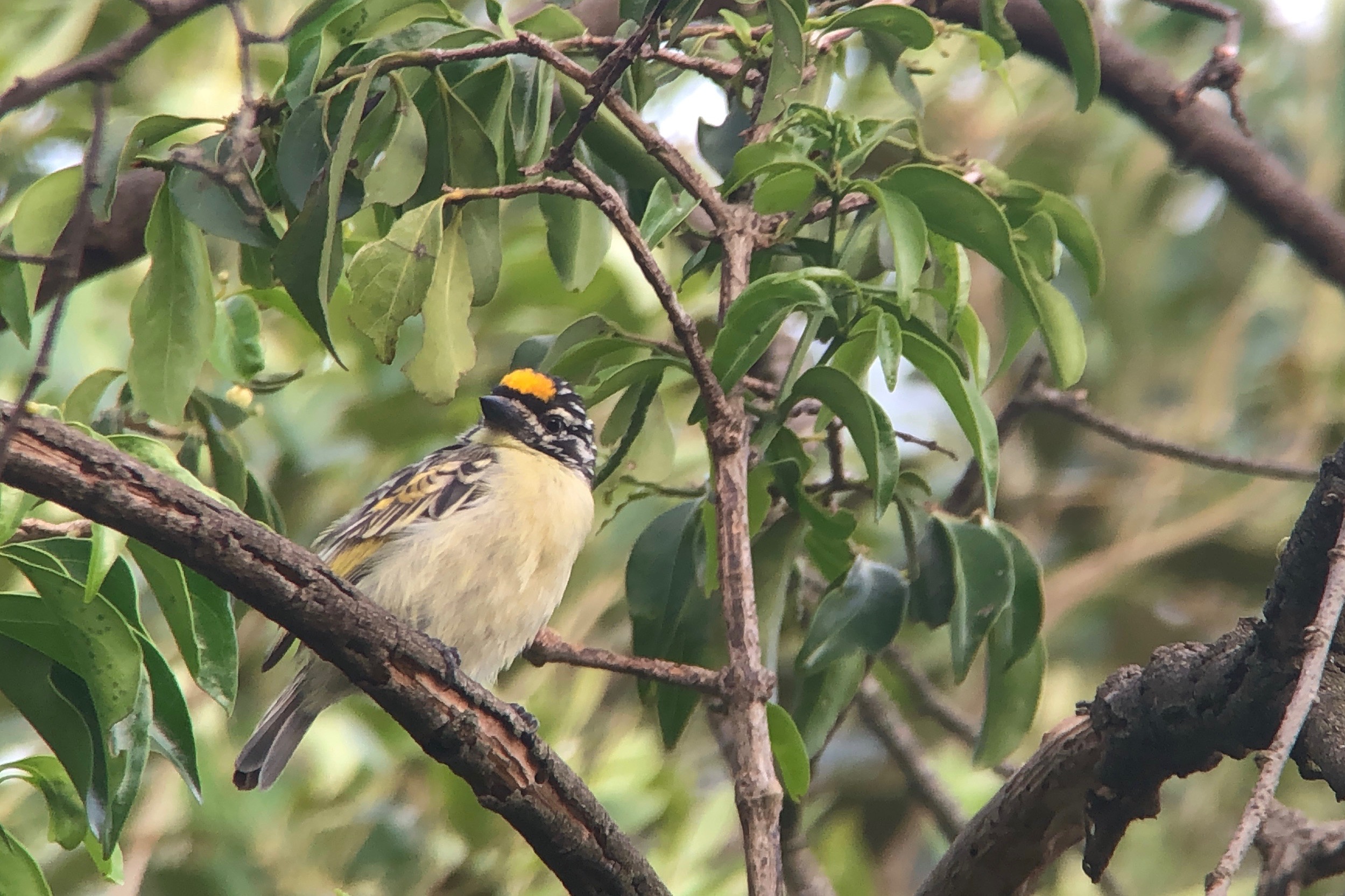
Yellow-fronted tinkerbird outside our vehicles.
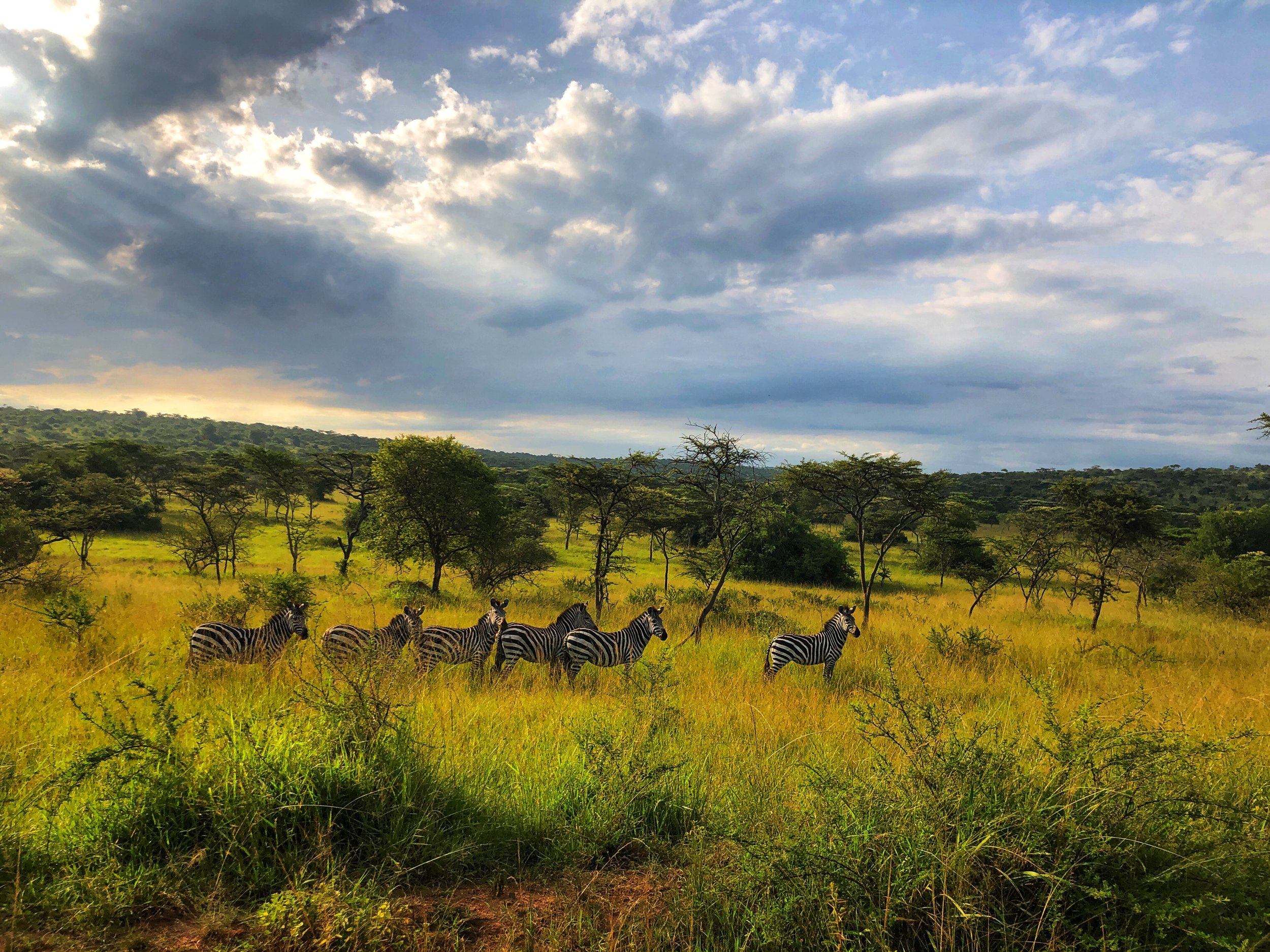
Zebras on our commute.
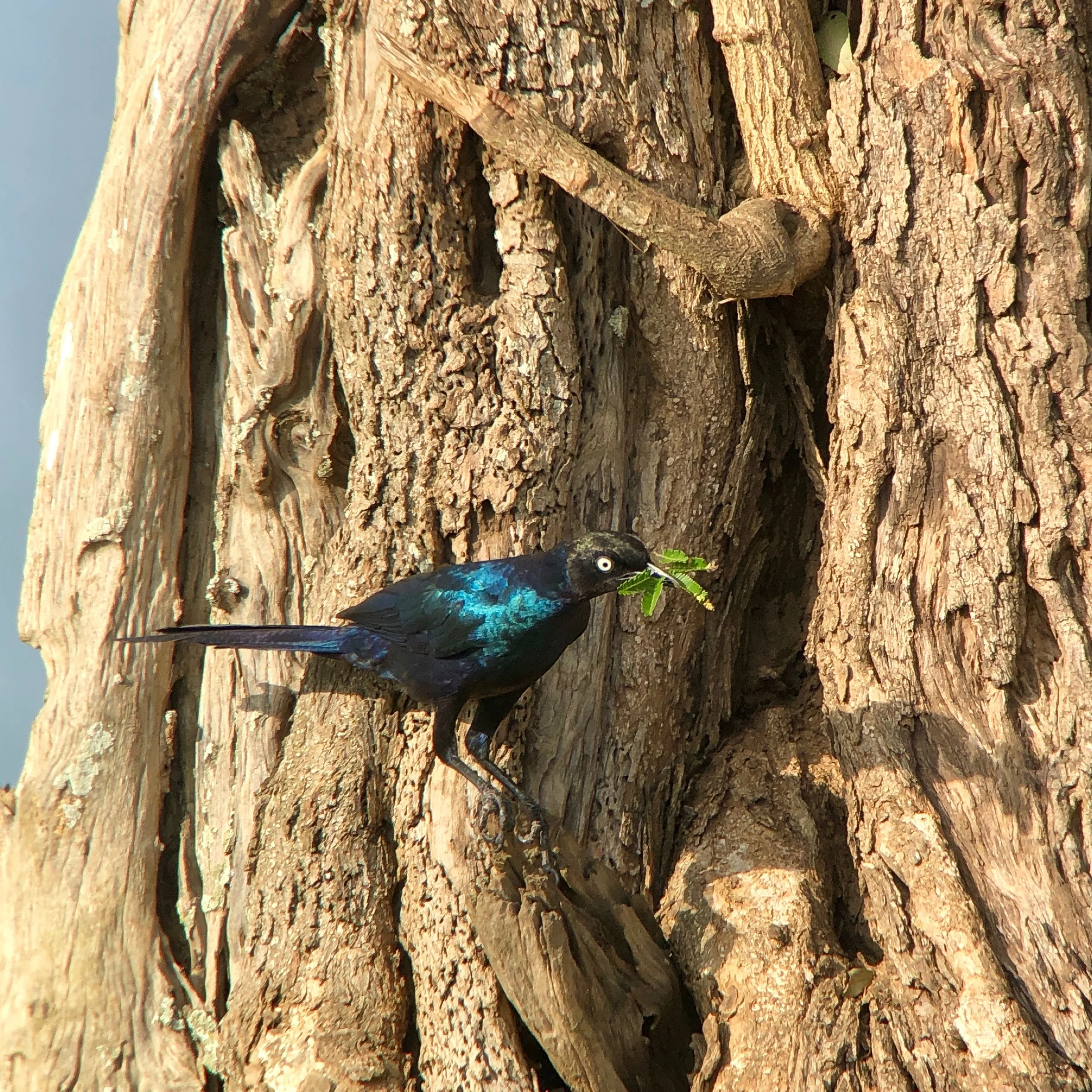
Rüppell's long-tailed starling adding material to a nesting cavity near the boat launch.
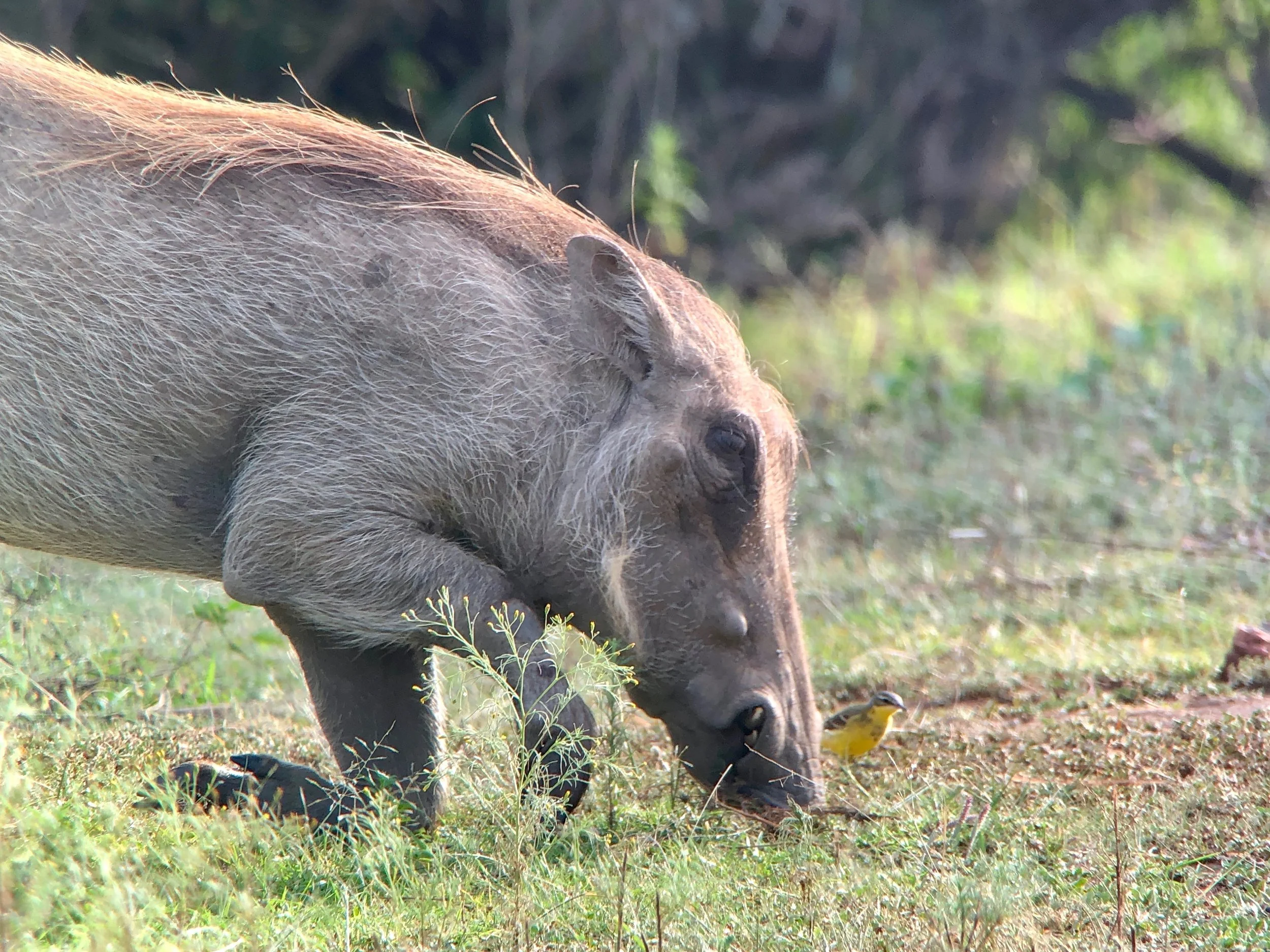
Warthog with a yellow wagtail.
When we arrived at the boat launch, the sun was shining and the air was warming up. We had some time and while I lathered on more sunscreen, we got our fist looks at warthogs. I had no idea they were so cuddly with each other and that hey had to kneel with their front legs to eat vegetation! I made sure to take some video for Non Birding Bill (above). Barbets, starlings and swallows surrounded and delighted us. And then it was time to board.
I give a lot of boat programs in the US and personal floatation devices are mandatory. I have comfortable ones that were made specifically for women (thank you PFDiva). Personal floatation devices weren’t offered at Mabamba wetlands in our canoe but they were given to us for Lake Mburo. The PFDs we were offered the worst kind too—uncomfortable, ill-fitting and bulky. I decided to test the waters to see how hard they would enforce them. If a PFD doesn’t fit you properly they can be more of a hindrance in water than a life saving system. The boat captain strongly urged, but didn’t push it so I kept mine next to me. I was wondering if I should have made room in my suitcase for my personal PFD since we had so many boat trips in Uganda.
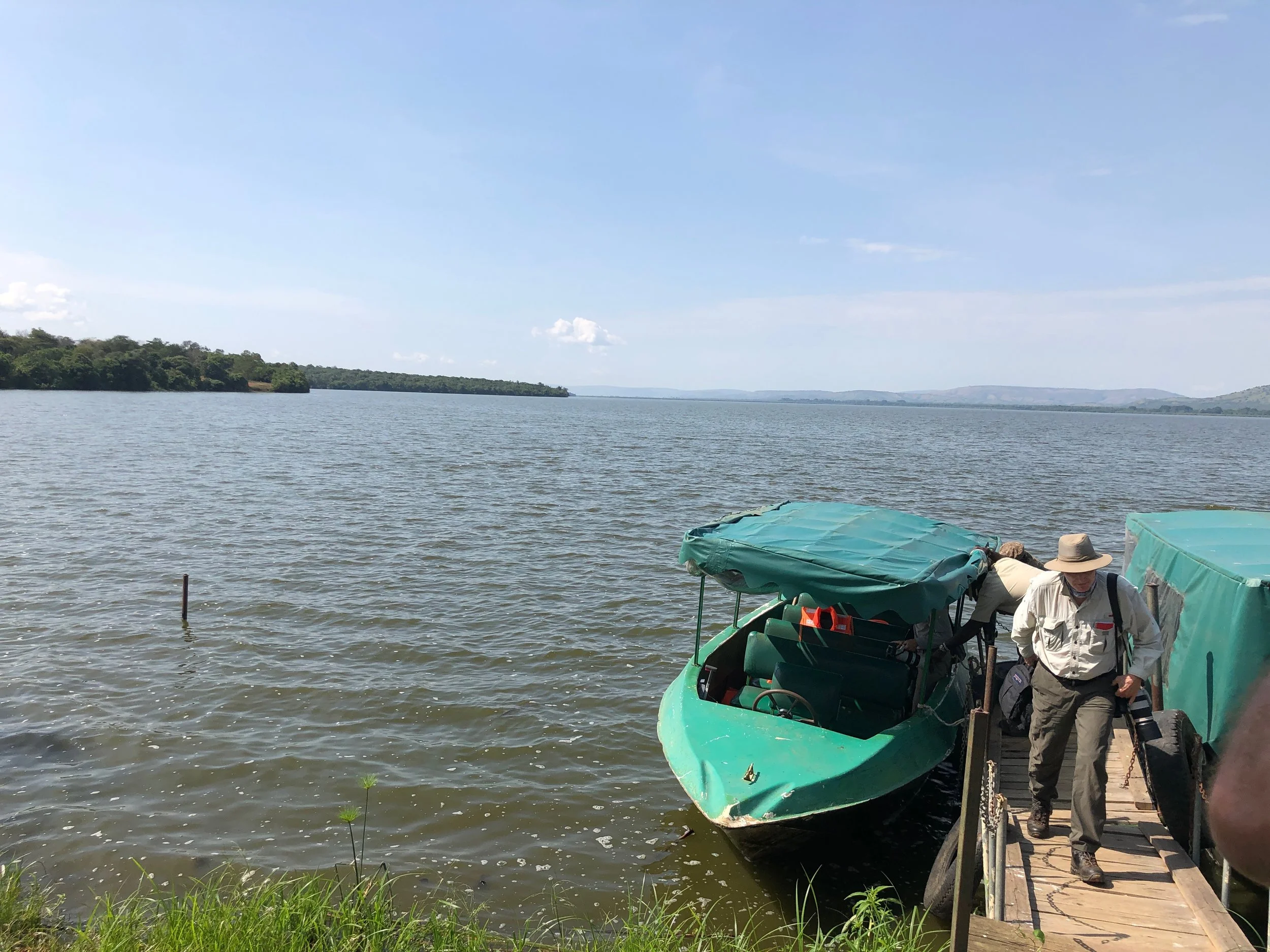
The boats we would take to explore Lake Mburo.
We explored the lake where we were dazzled by African fish eagles, malachite and pied kingfishers and African marsh-harried. Then I spotted my first hippo and forgot about birds. First there was one hippo in the middle of the lake… then they took us to a herd or bloat of hippos (how’s that for a collective noun).
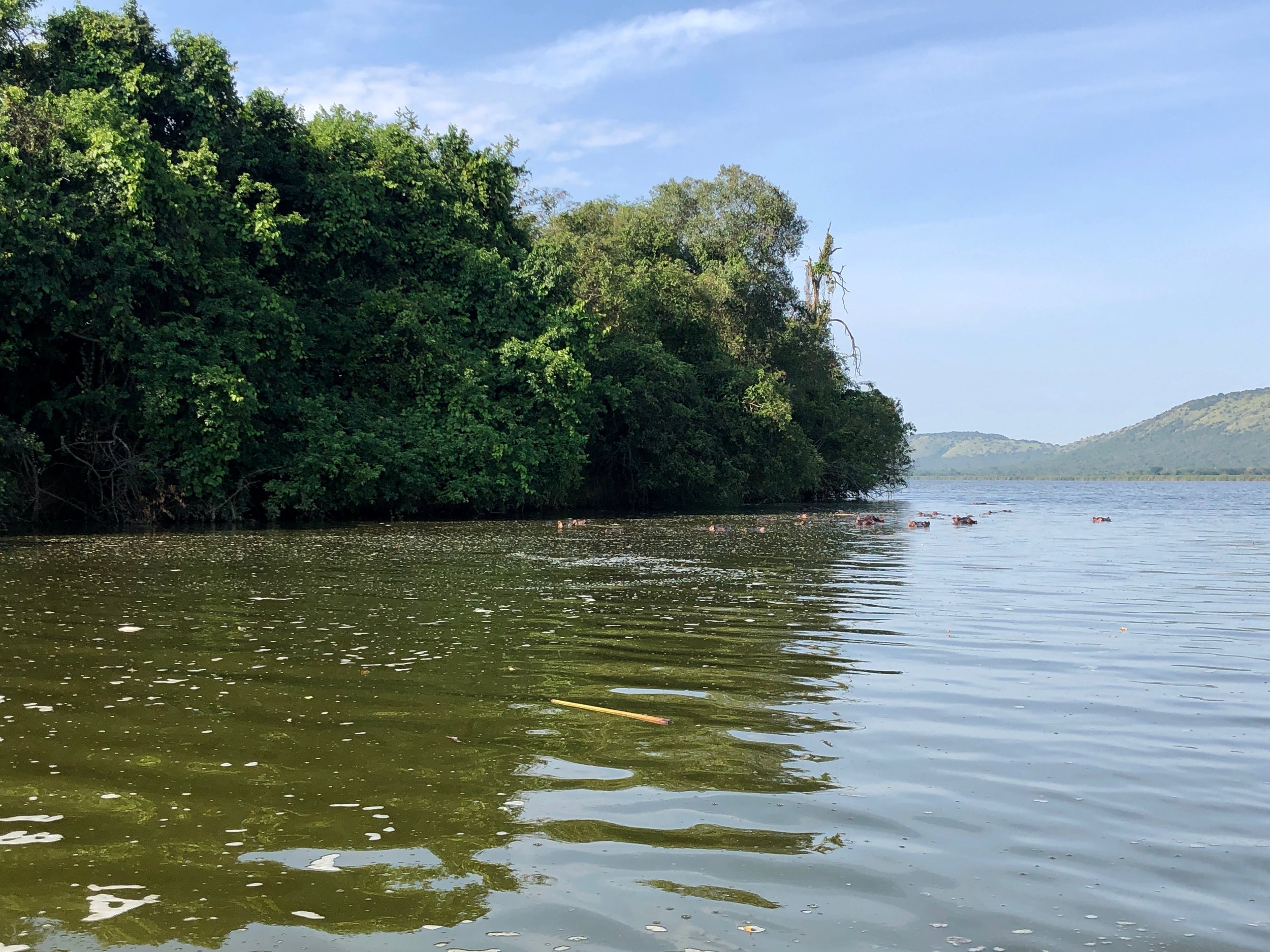
All those lumps are a crash of hippos (another collective noun) on Lake Mburo.
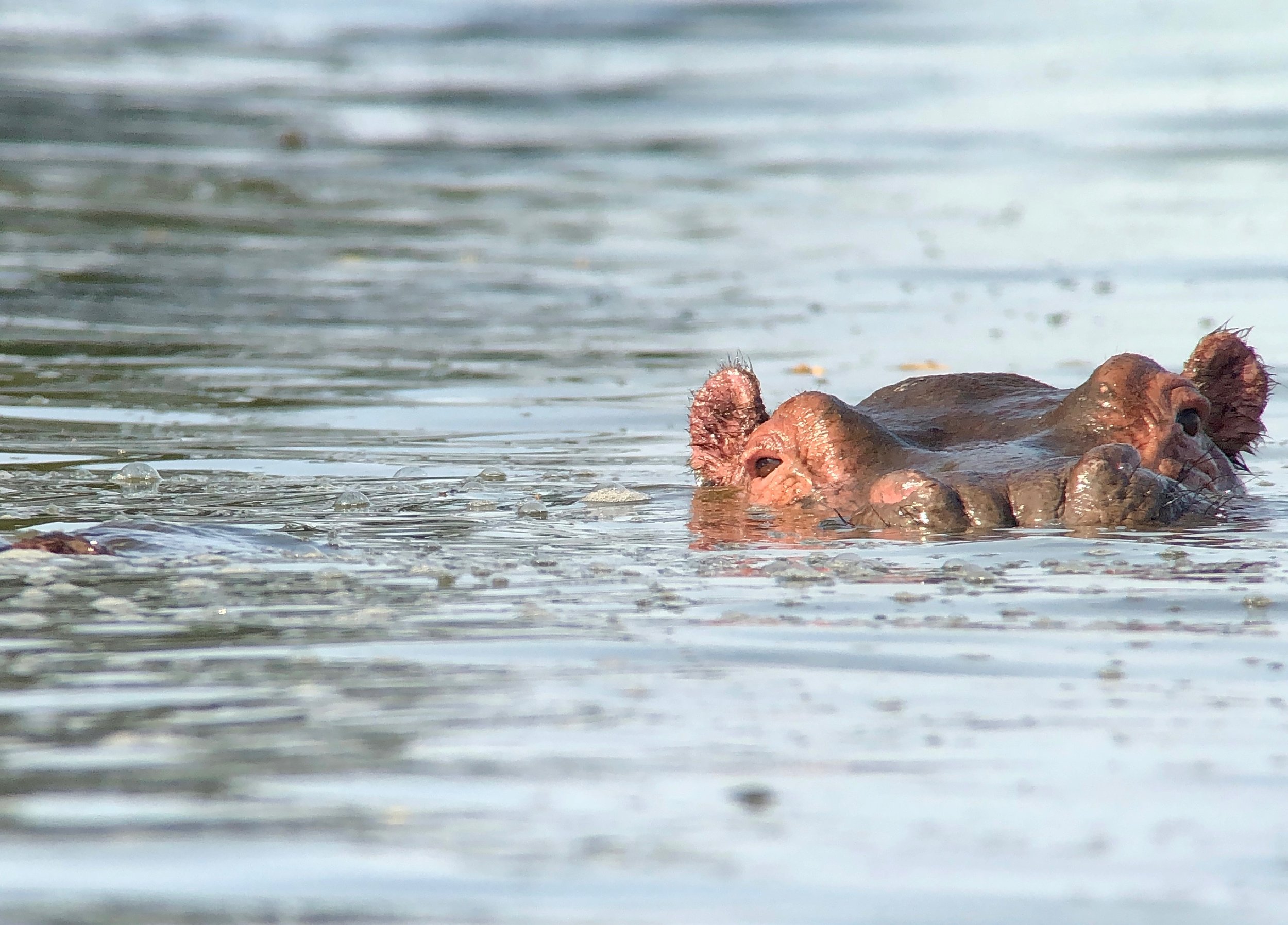
A hippo contemplates if it can kill me as I digiscope it with my Swarovski ATX 65mm scope and iPhone X with a PhoneSkope adapter.
If you watch Fiona videos you get the impression they are delightful creatures who want to splash around with us and get chin scratches. In the wild they are far more menacing and really want to kill anything that gets too close. We watched their faces and backs just break the surface and were surprised at how much they reminded us of whales with air blowing out of the water…from either end of the hippo. I watched people kayak this lake and as much as I love kayaking, I’d never kayak anyplace there were hippos.
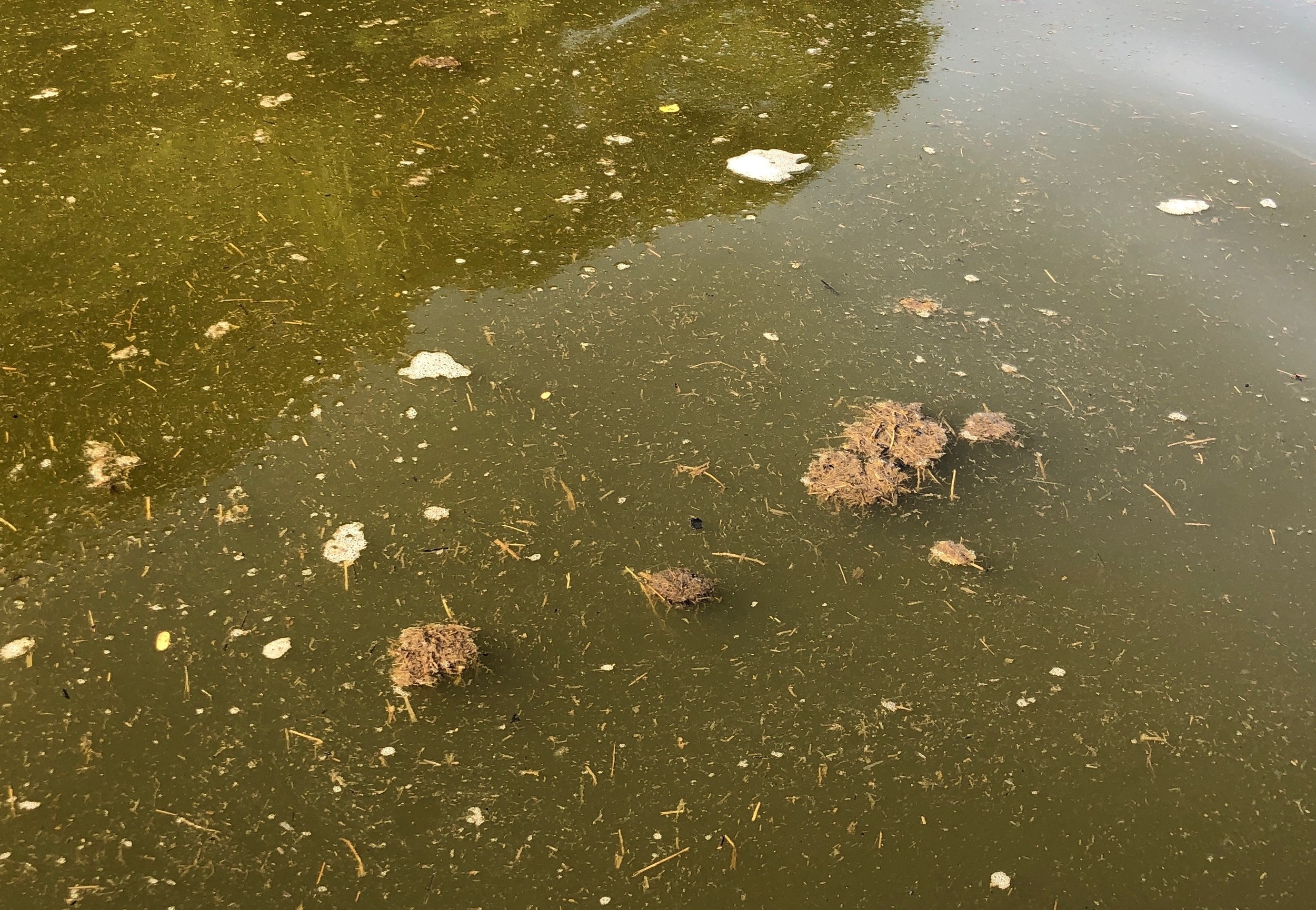
Hippo poop!
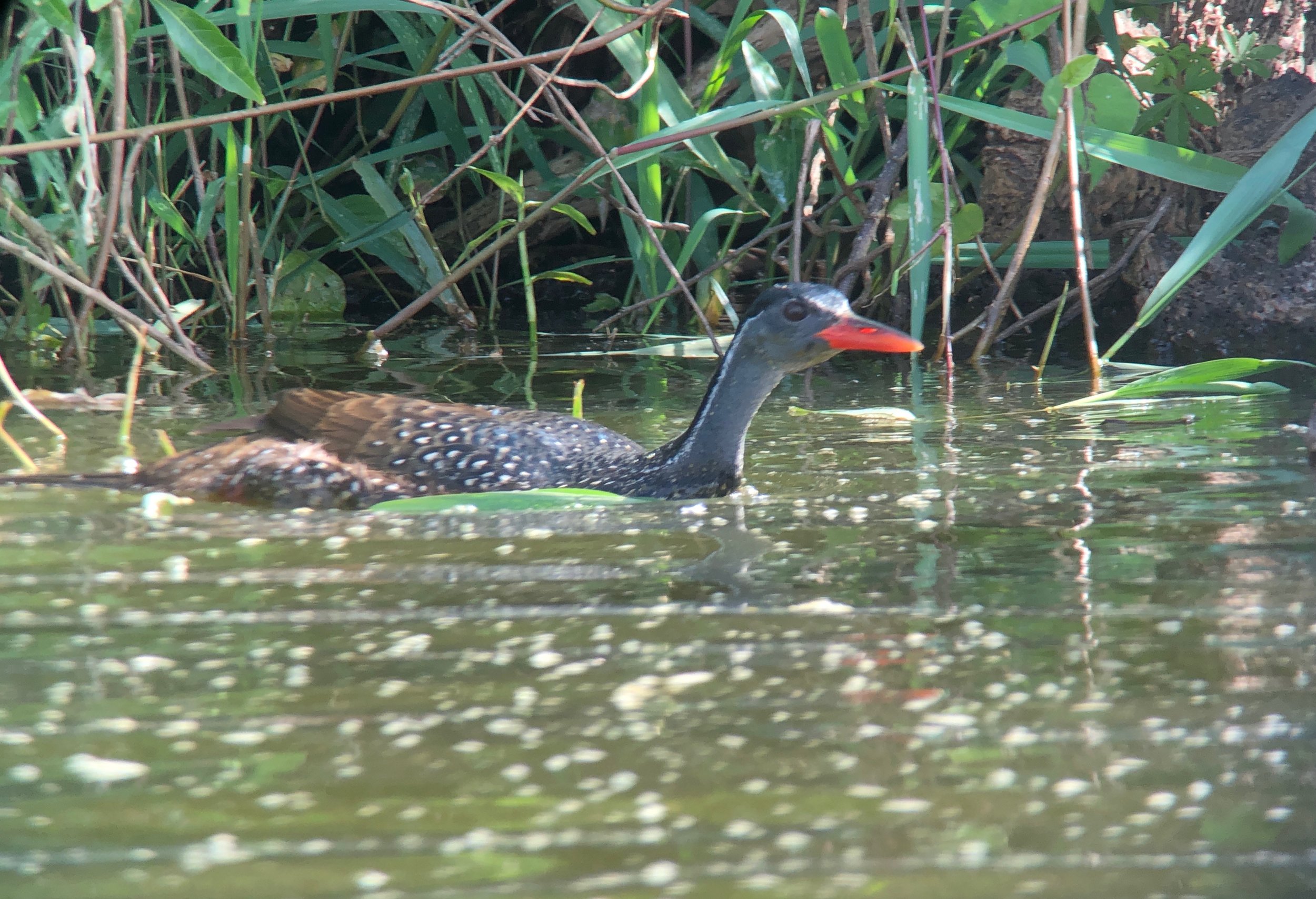
Part rail, part cool with a little bit of duck thrown in. This secretive bird is a finfoot.
As we cruised along the shore we found more secretive birds like white-backed night-heron, finfoot and giant kingfisher--check the eBird list for Michael O’Brien’s photo of the kingfisher. Imagine seeing a kingfisher that is the size of a crow. I almost wet myself.
As we kept near the shore we did find a common sandpiper bobbing on top of a rock near another finfoot. As we approached the finfoot the rock burst out of the water to reveal they were in fact a couple of hippos who were not happy with us. The boat backed up immediately and we survived.
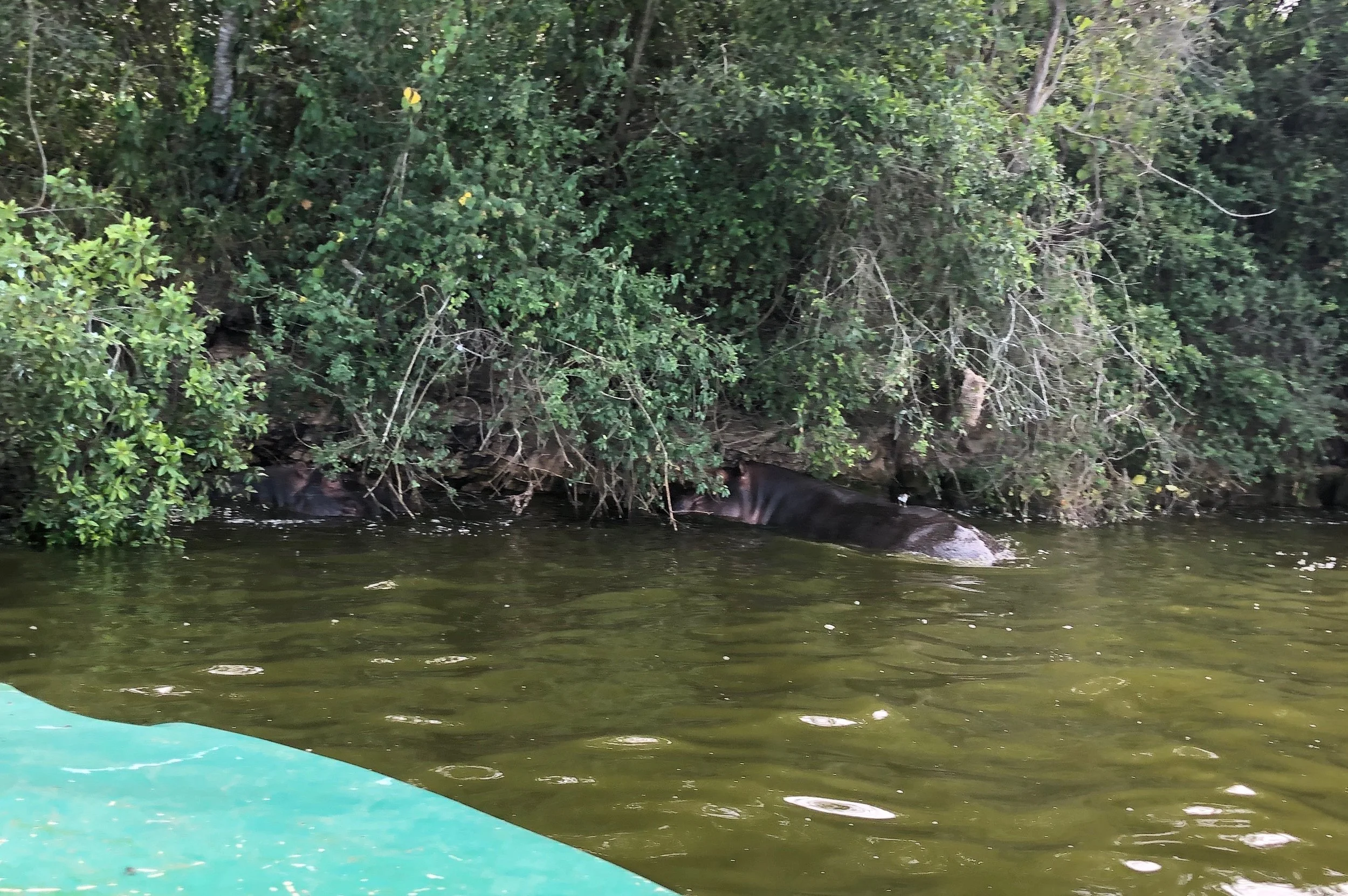
I was taking a picture just as the “rocks” started to move.
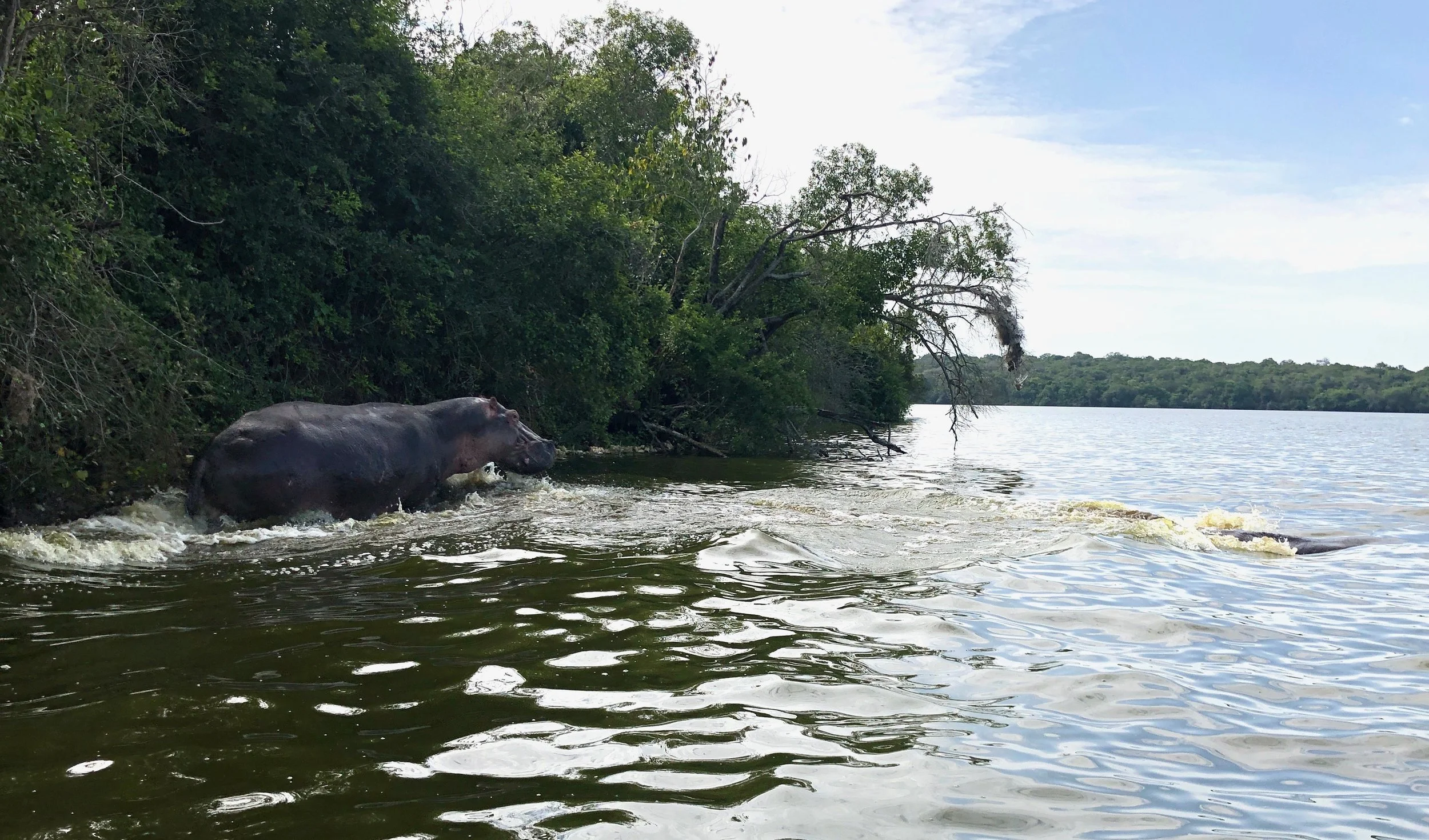
The hippos running amuk when we unknowingly got too close. Not digiscoped. Yikes.
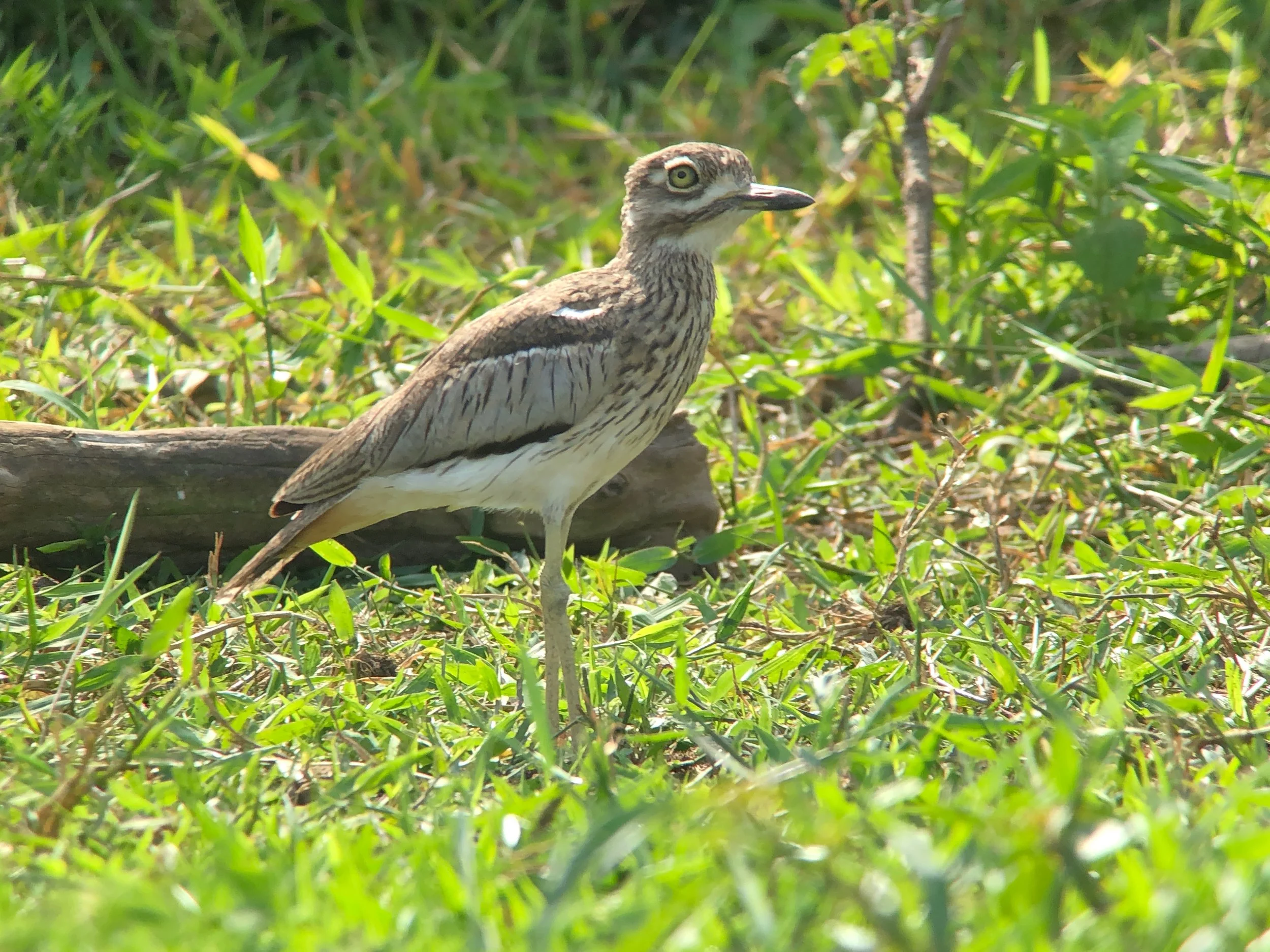
Water thick-knees were all along the shore of the lake.
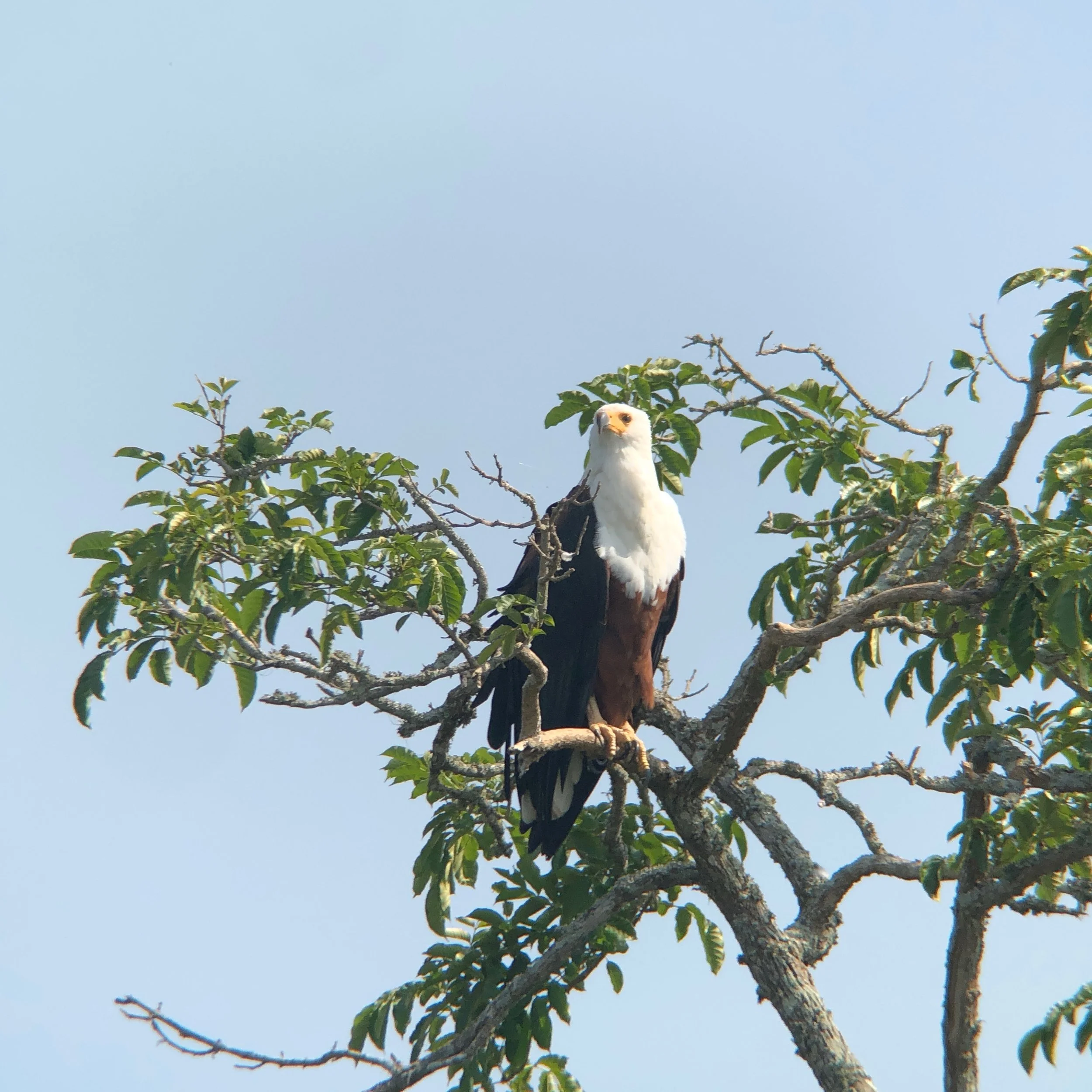
And in case anyone asks, yes I did see the fish eagle.
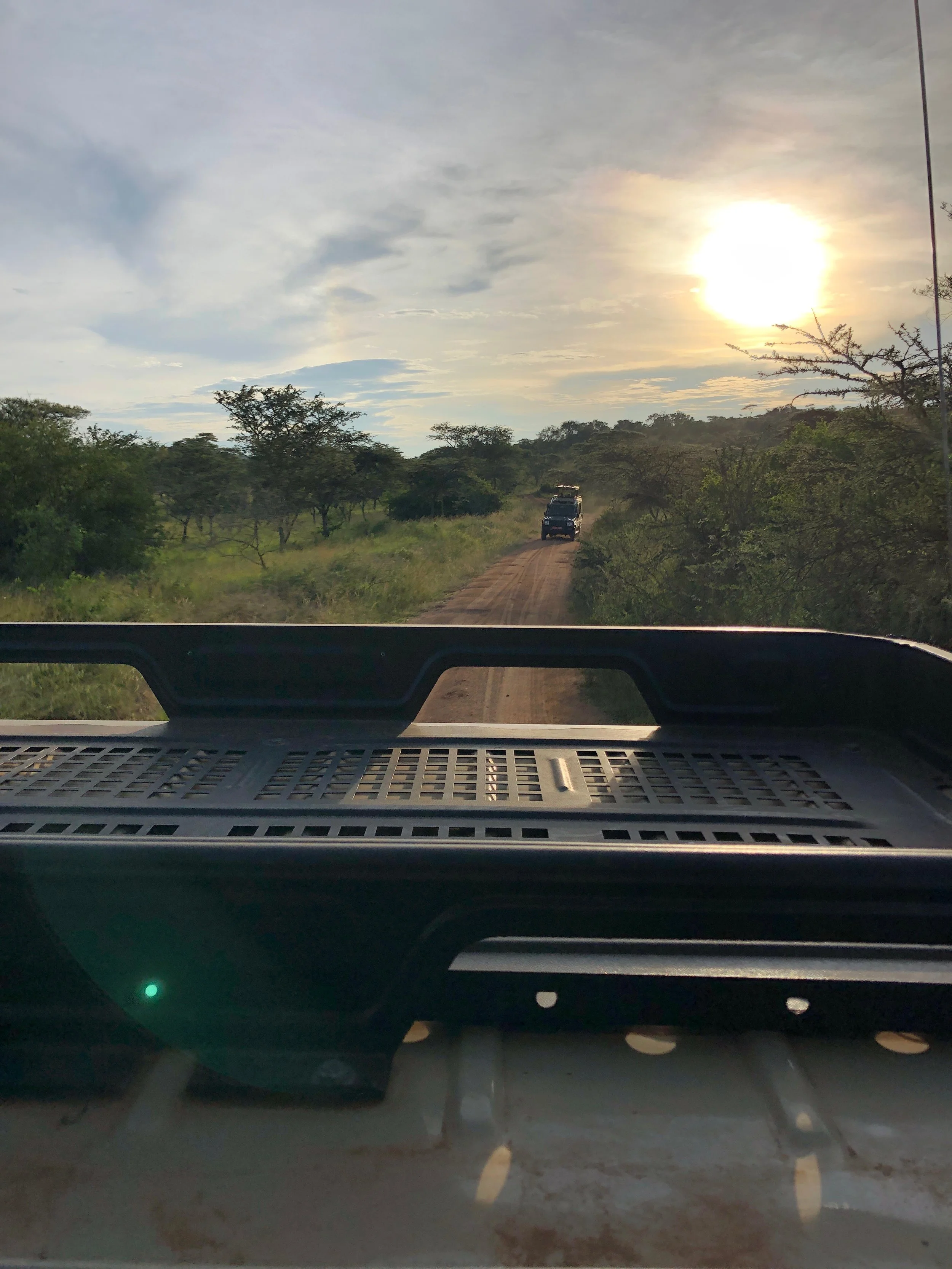
The view from my safari vehicle with another not far behind.
We returned to land and explored more of the park both on foot and in our safari vehicles. Below are more photos of birds and animals we saw during our stay there. You can see our full eBird list an even more photos of Lake Mburo here. Our eBird lists for Mantana Tented Camp are here and here. And the lists from driving around the park are here, here and here.
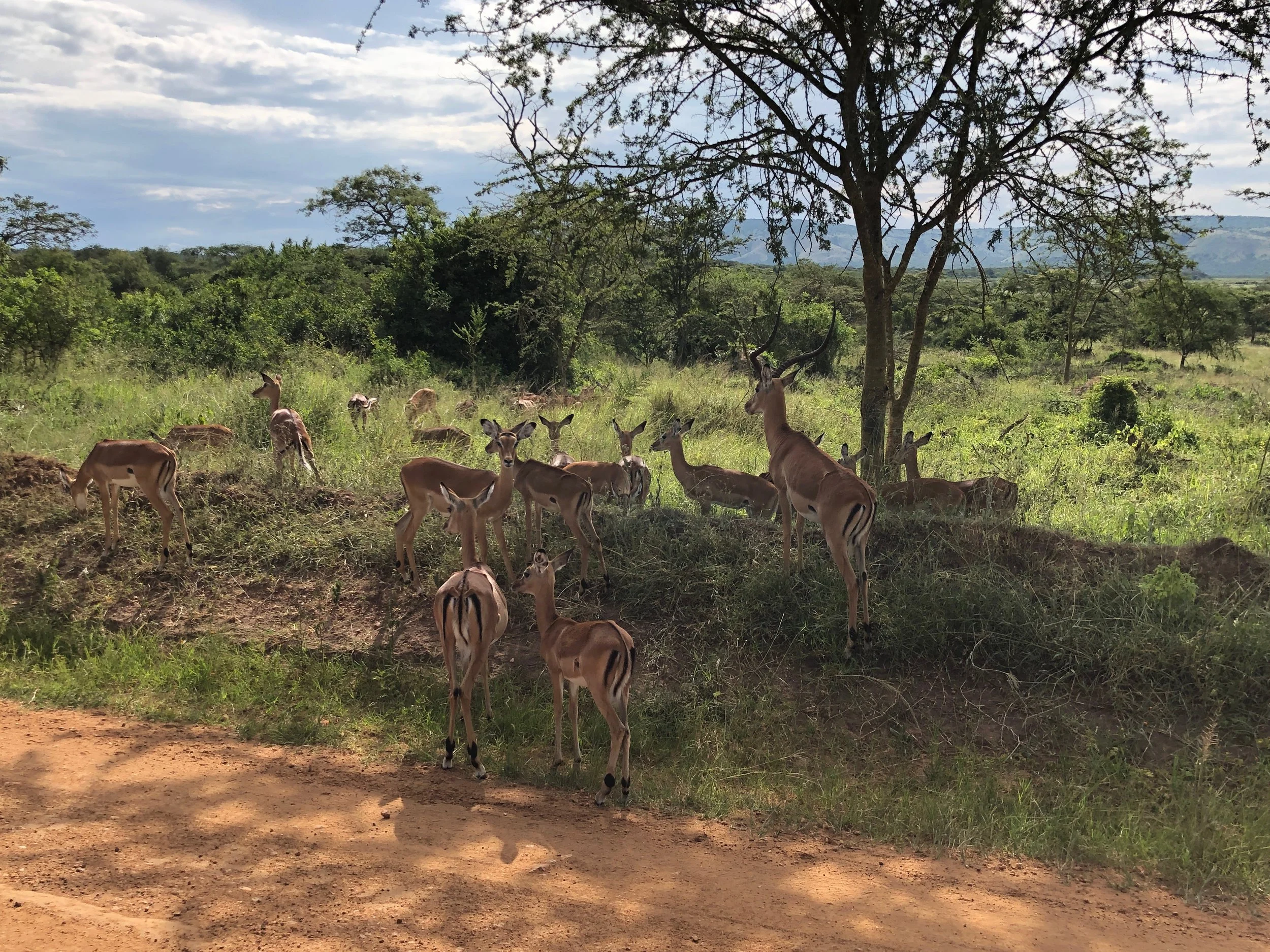
A herd of impala chilling in the shade on the side of the road.
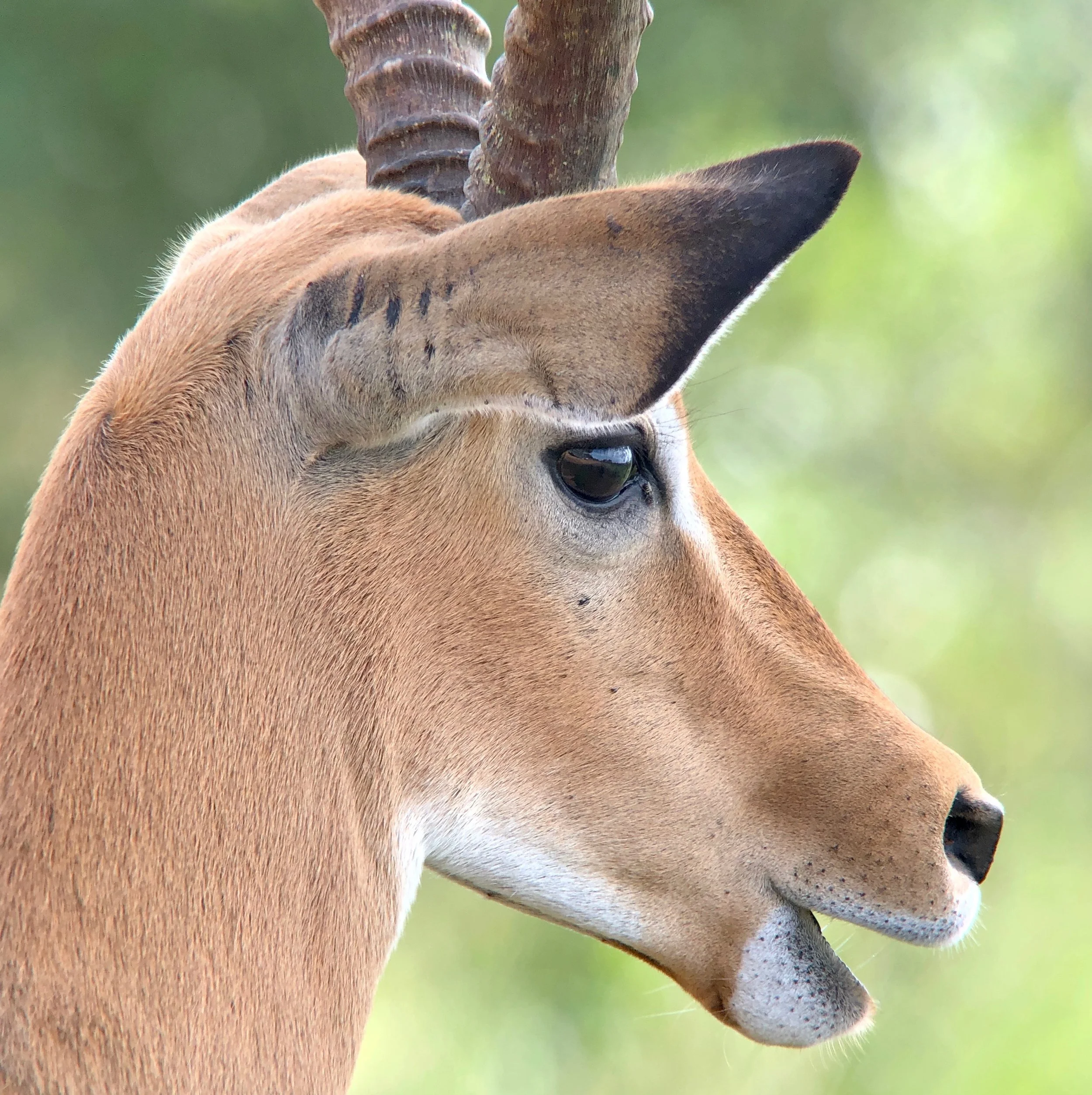
Digiscoped image of the male impala’s head taken from our safari vehicle.
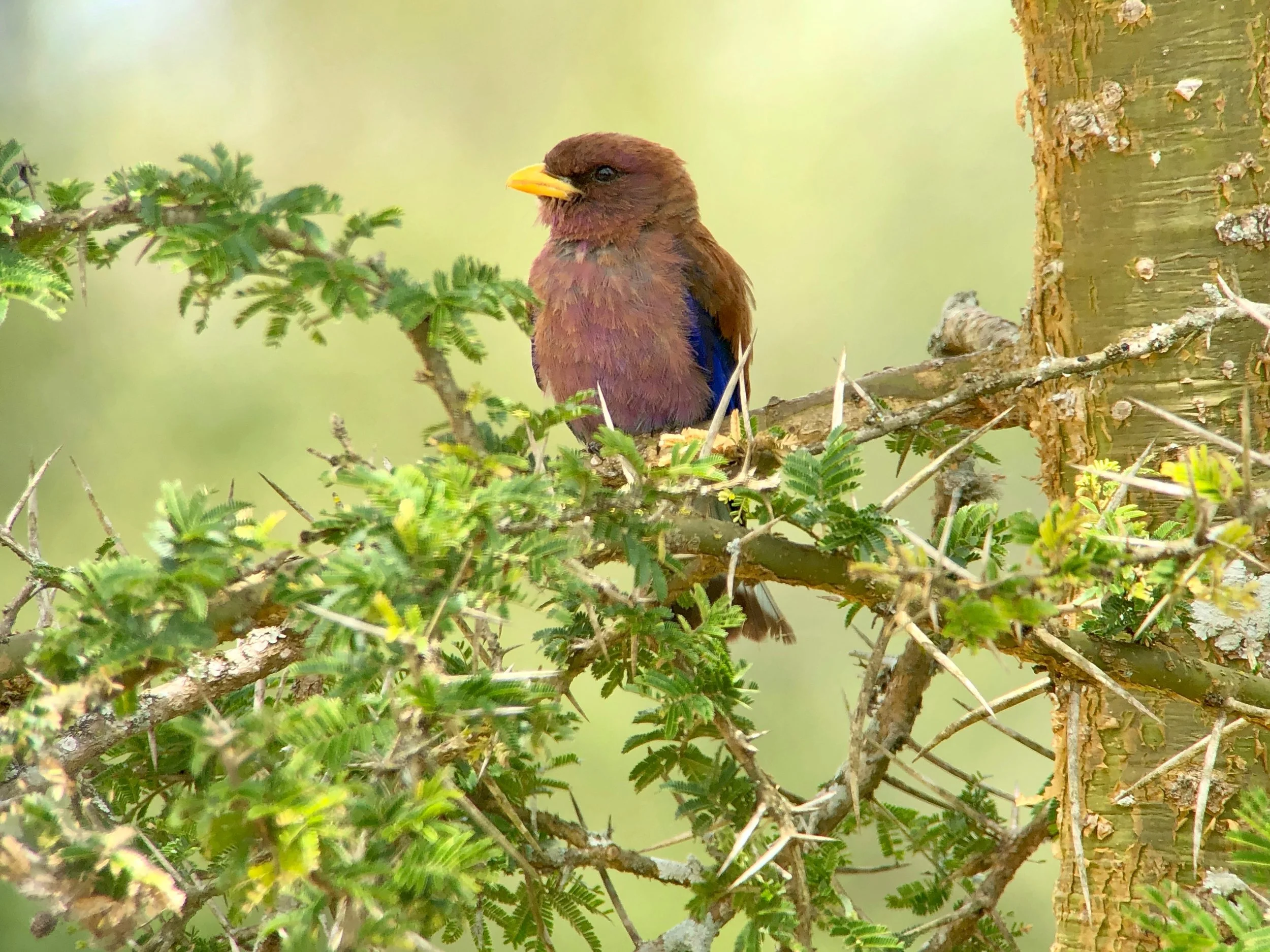
Broad-billed roller digiscoped from the vehicle.
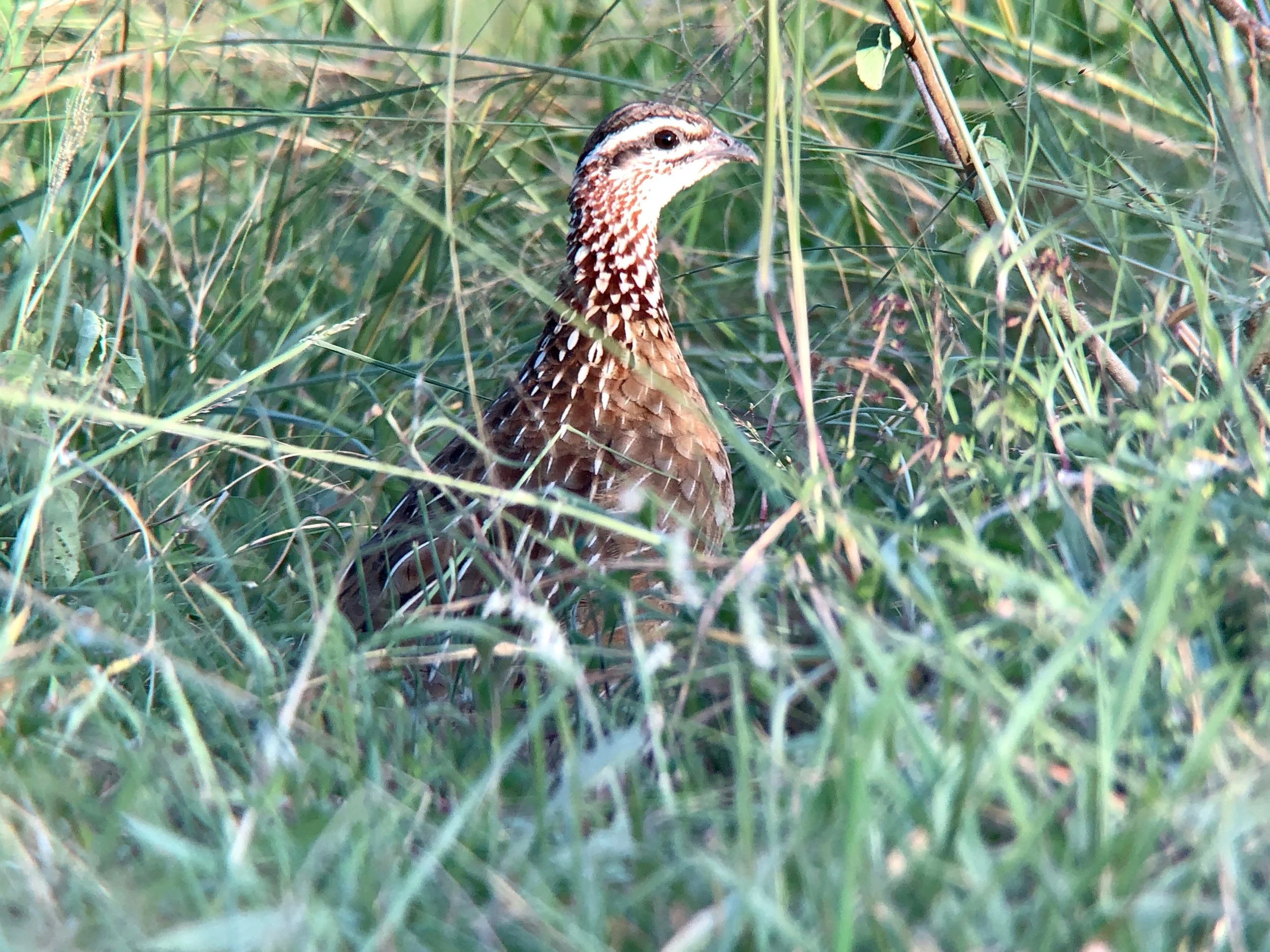
Crested francolin.
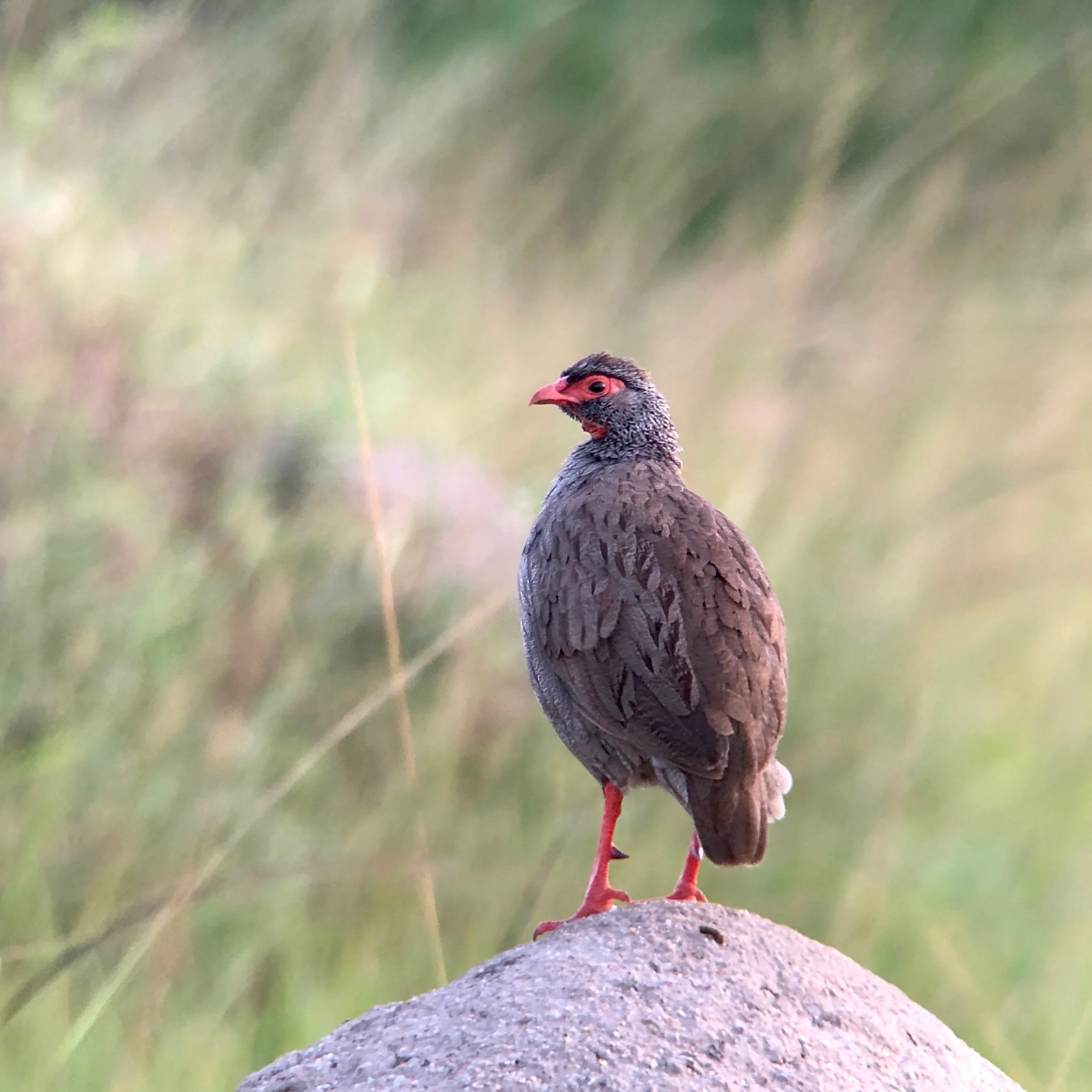
Red-necked francolin
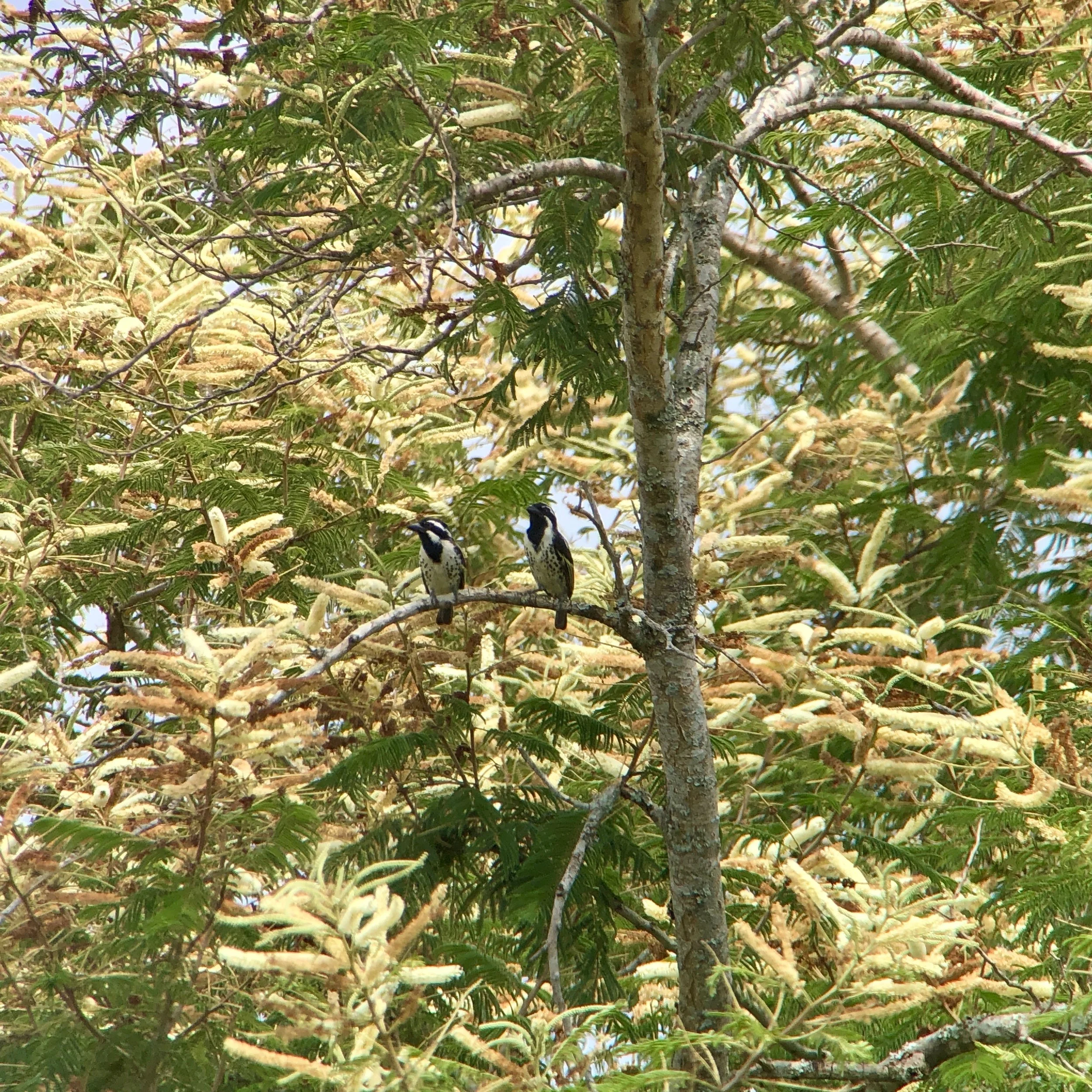
Spot-flanked barbet.
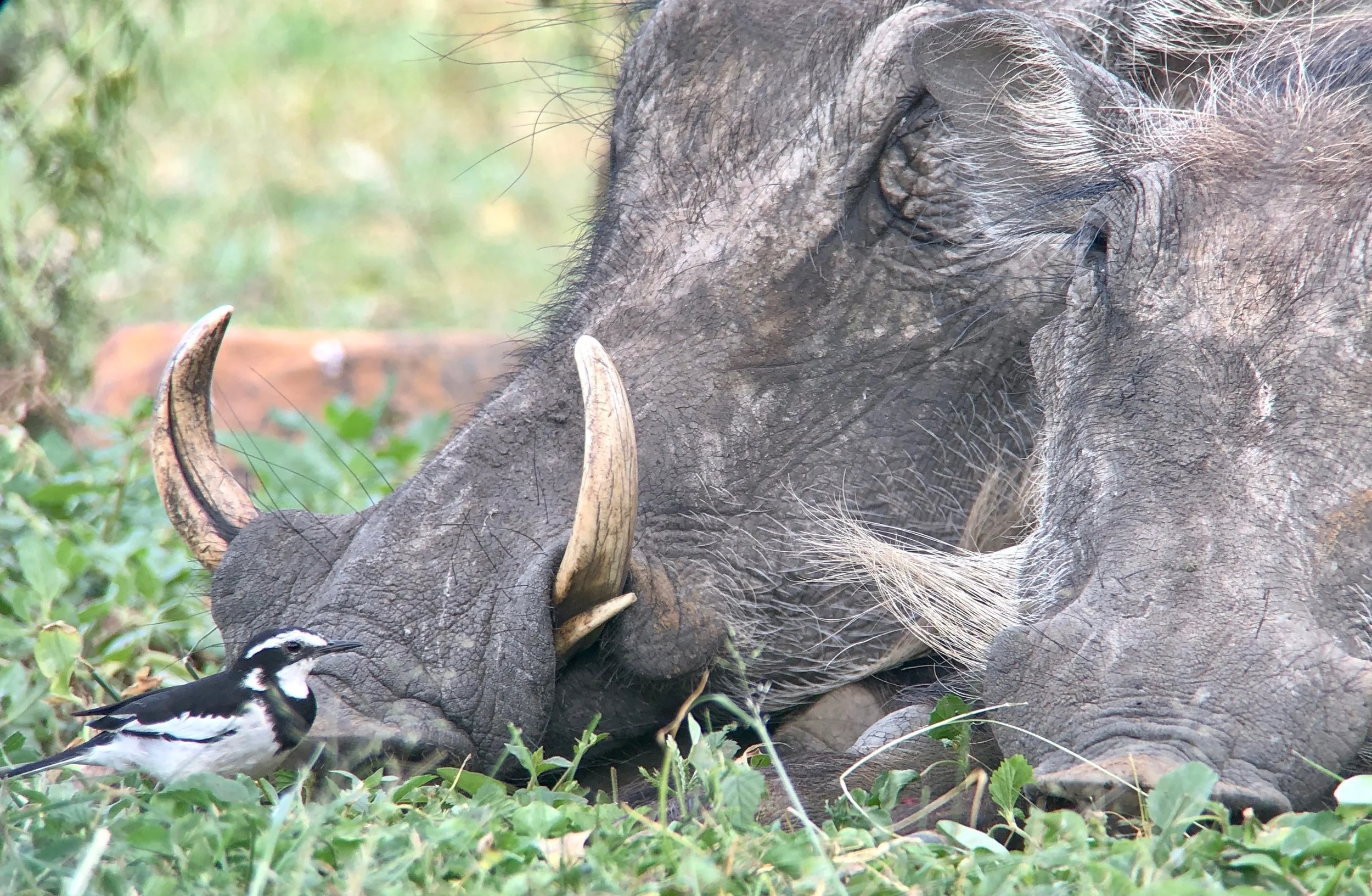
African pied wagtail looking for tasty morsels inside warthog noses. Ew.
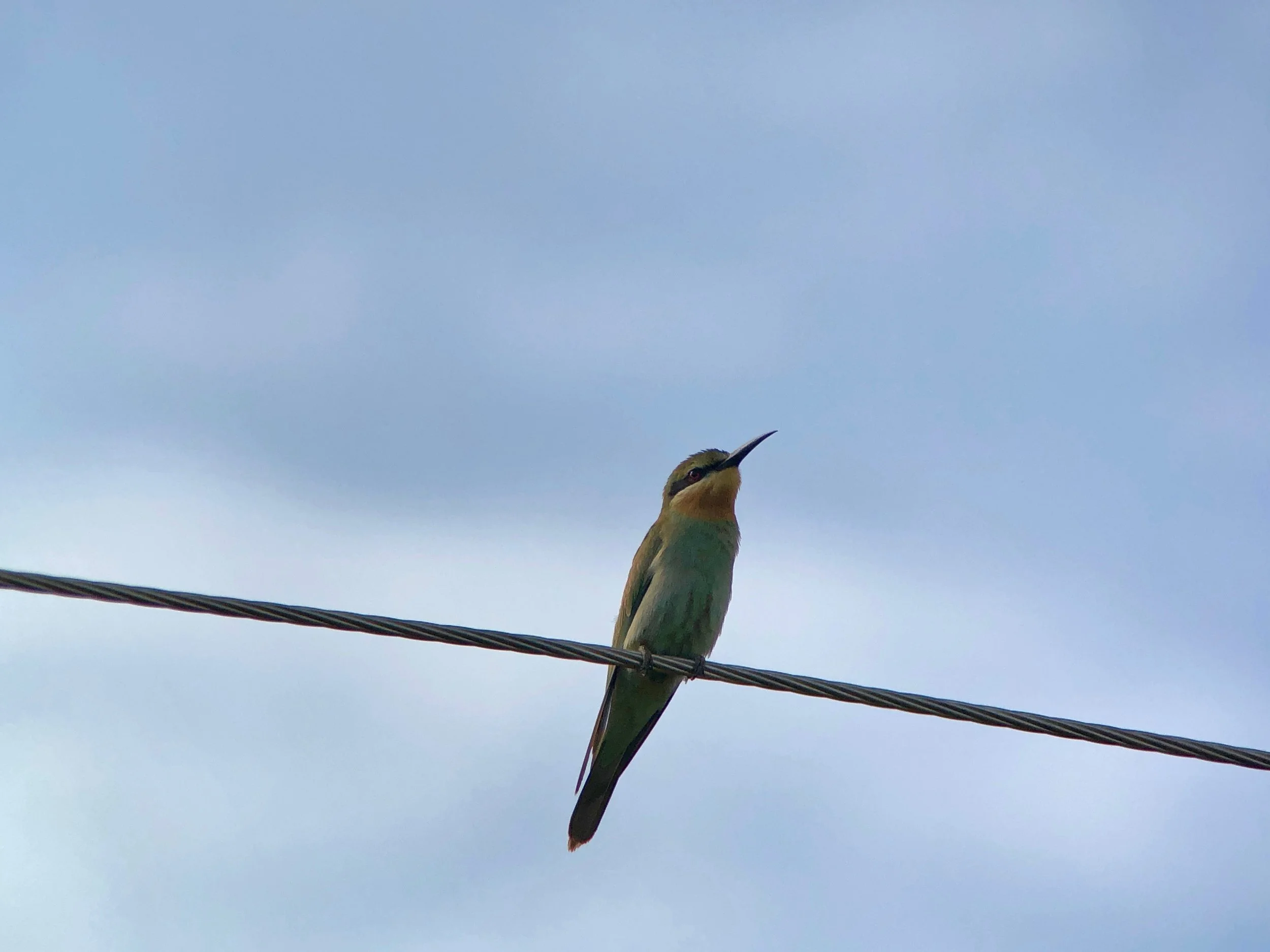
Madagascar bee-eater.
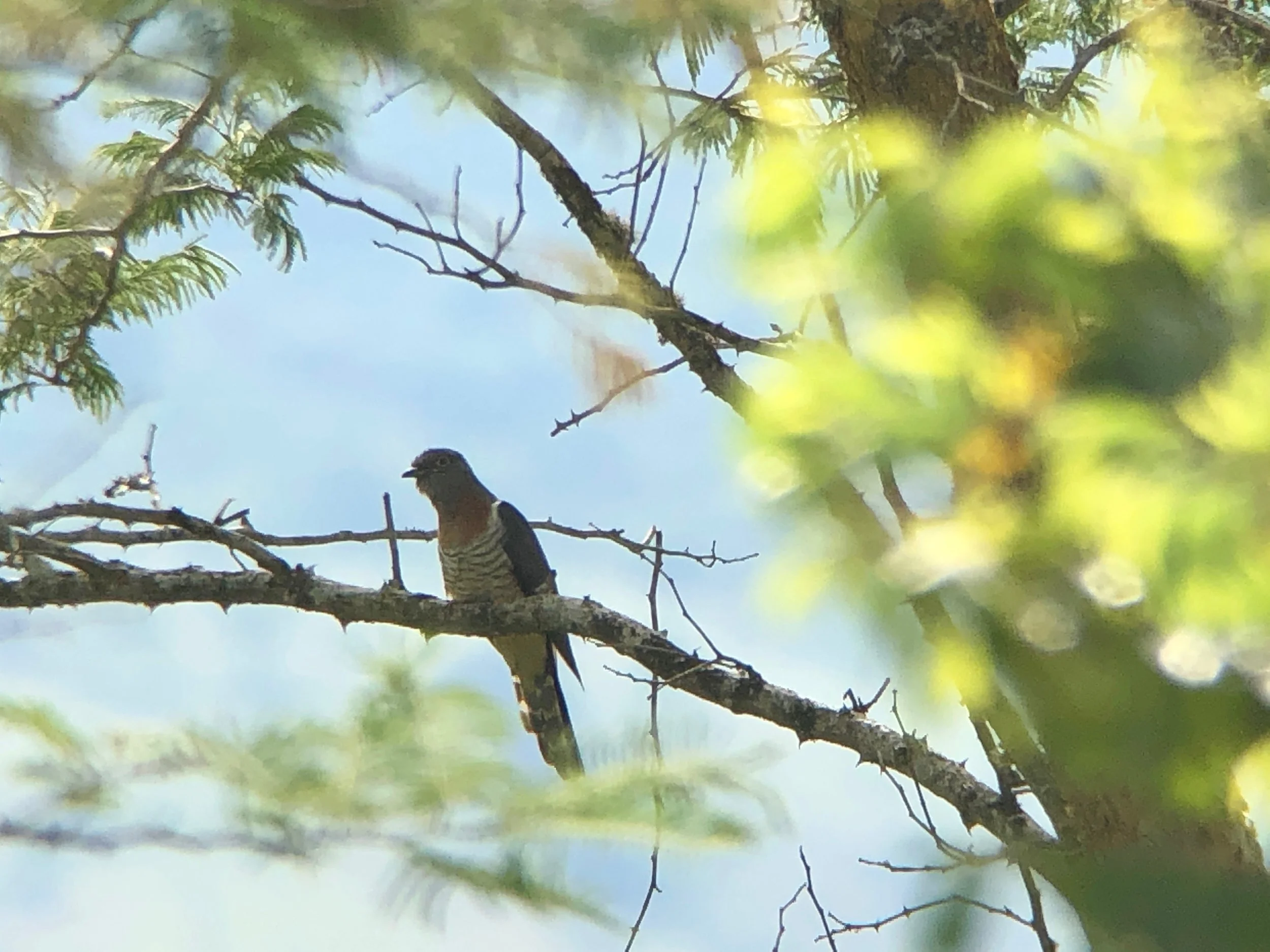
Red-chested cuckoo.
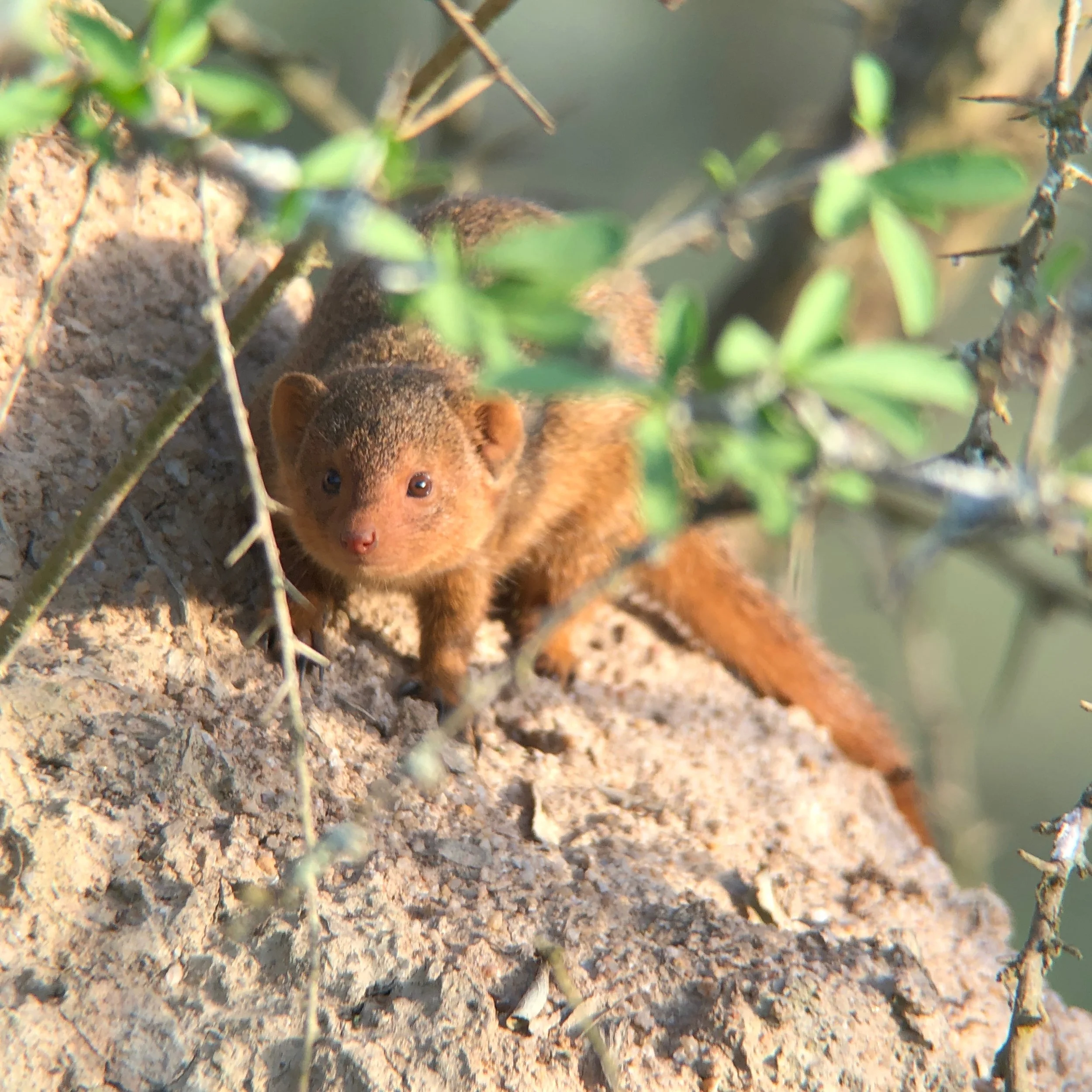
Pygmy mongoose trying to assess if it could kill me and eat me.
Digiscoped Images
Fresh Tweets
Would you like to hire me as a speaker for your event?
Email sharon@birdchick.com