
Birdchick Blog
Redhead Shenanigans
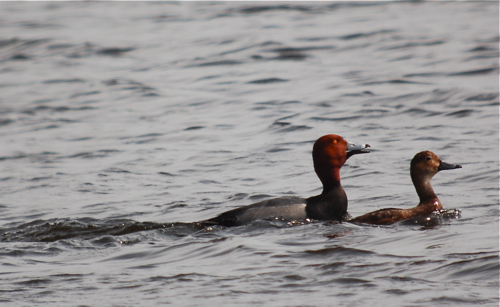 This is a pair of redheads (a type of duck) seen during last weekend's Horicon Marsh Bird Festival. Horicon Marsh is over 33,000 acres in size and at first glance it may appear to be managed for Canada geese and muskrats, but redheads are one of the main targets for optimizing habitat.
If you are not familiar with any other duck but mallards, you should really get to know the redhead. Rather than the usual green head of male mallards, they have a gorgeous rusty red head. And they don't quack...they kind of sound like crows that have swallowed helium--what's not to love?
Check out the above photo, that is some serious redhead flirting going on--that kind of "my head is higher than your head" posture. Don't worry if you are reading this at work, that's not the hardcore flirting. For that they completely throw their heads back.
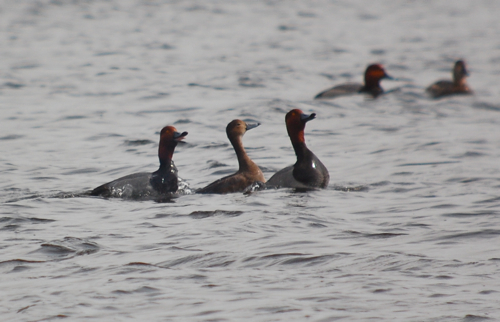
Here's an example of a couple of male redheads competing for the attention of a female. I love this look of who can raise their head the highest in the above photo. For some reason, it reminds me of Kanye West.
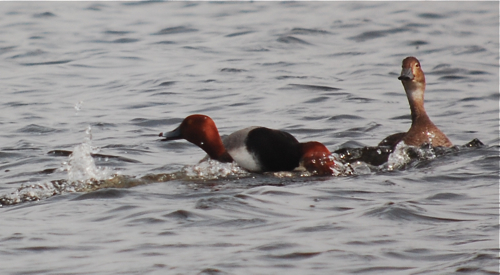
But then things can get heated between 2 males. Note how the female is observing the fight.
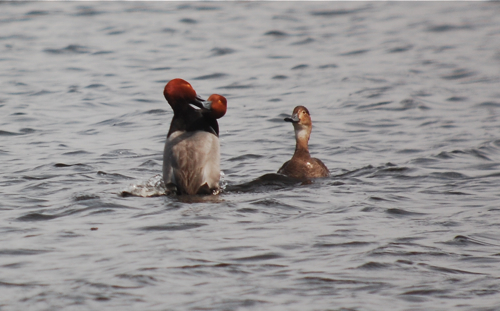
The redhead with 2 backs! (How many times am I going to make that joke this week?). Two males duking it out.
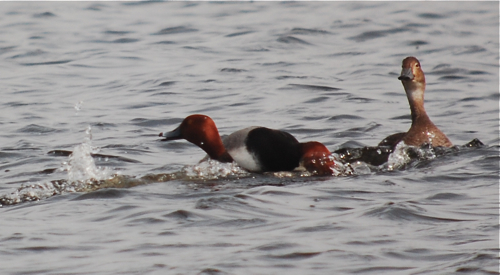
Oh no, redhead body slam! Again, note how the female is watching with a discernible eye.
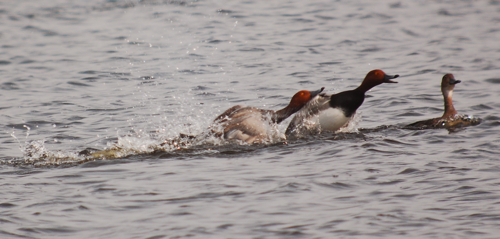
Oh no, redhead chase!
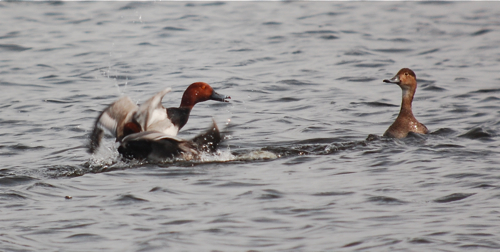
Uh oh, is that a redhead goose? Is that allowed?
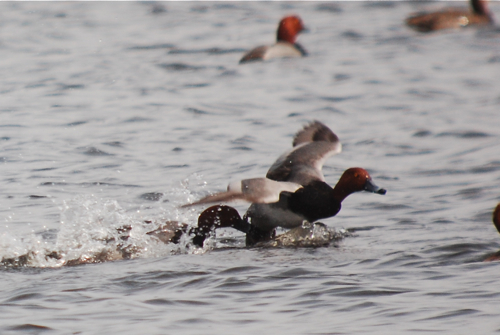
Oh man, that is a total redhead goosing.
All part of the mating shenanigans you can see at Horicon Marsh!
Homemade Heron Rookery
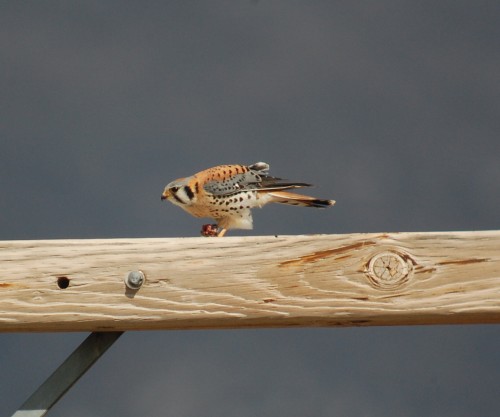
I love this little male kestrel snacking on a small rodent it plucked from a field in Utah. I got its photo at the same place I had my unexpected weasel encounter called Farmington Bay WMA.
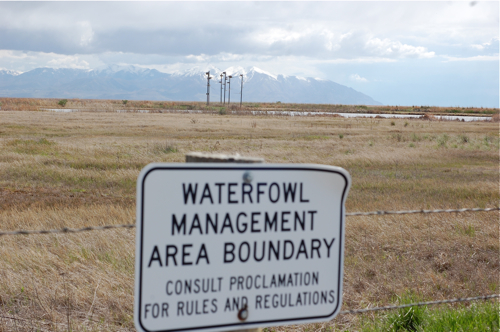
One of the coolest features about this wildlife management area is the homemade great blue heron rookery that is actually being used. I've seen plans for these in books like the fabulous Woodworking For Wildlife and I've seen a few erected, but never have I seen an artificial heron rookery being used by herons.
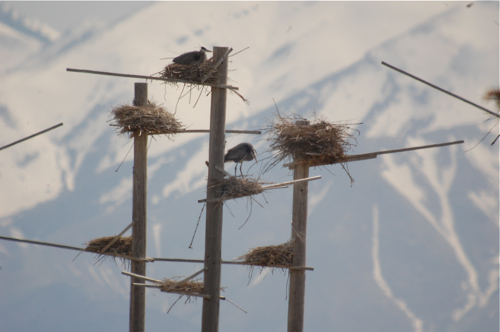 I'm used to seeing great blue heron rookeries on the Mississippi River surrounded by trees, not with a dramatic background full of snow capped mountains--too cool. Apparently, this heron nesting habitat was part of a boy scout project, that is one huge undertaking, but how sweet to see the kids' hard work pay off with actual birds.
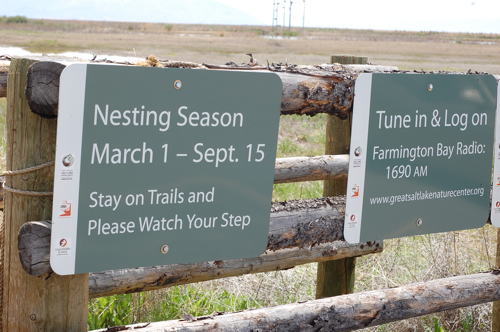 Farmington works hard to keep humans from tramping on ground nesting birds. Trails are blocked from motorized vehicle traffic during nesting season and signs warn you to watch your step.
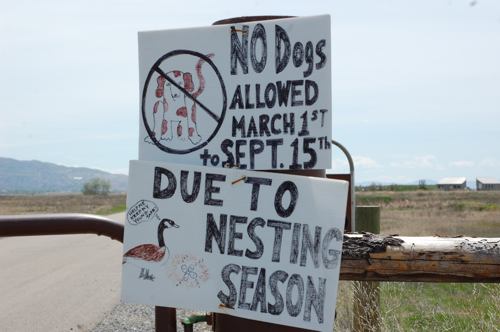
Even dogs are kept away to prevent altercations with waterfowl or to protect wayward chicks from becoming unintentional chew toys.
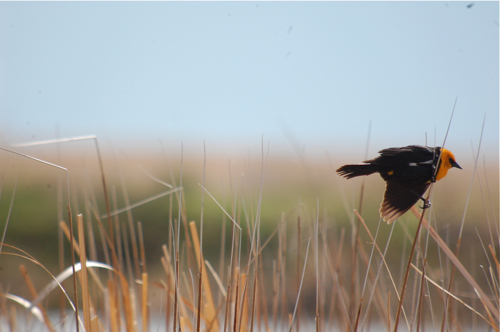
Utah is loaded with yellow-headed blackbirds and they are one of the common nesting birds at this site as are shorebirds. If you have limited time in Utah, this is worth a stop for western US specialties.
Education Magpie Envy
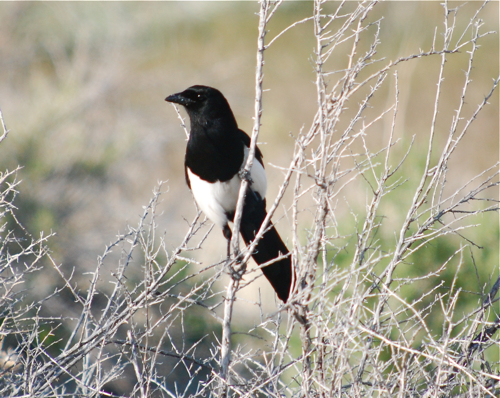 If you live in the eastern portion of the US and have never seen a magpie--Salt Lake City is the place for you. Those birds are all over the place--they're like crows (not just in family but in commonality). We have a remnant population up in northern Minnesota but not the sort of numbers you see out west. Since there are so many magpies around, there's unfortunately an opportunity for education magpies. It's illegal to keep them as pets, but someone always tries and about the time the birds reach sexual maturity, the person doesn't want the imprinted bird any more and they end up in places like Utah's Hogle Zoo.
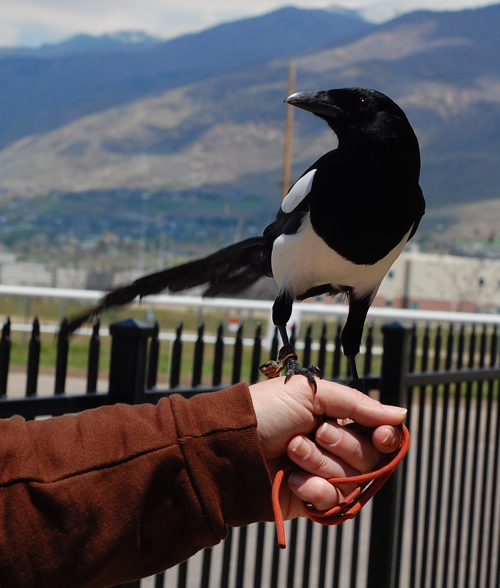
..who happened to be at the Great Salt Lake Bird Festival with an education magpie--so cool! What a nifty looking bird. I've worked with all sorts of raptors and a turkey vulture, but never a corvid. Sigh, I was totally envious. I would imagine a corvid like a magpie is a challenge in captivity--they are smart, they need enrichment to keep those little brains occupied. As I was taking photos of this bird it began to mimic my camera shutter. Here's a video:
[youtube]http://www.youtube.com/watch?v=FAzwMroL6AM[/youtube]
Another group doing live bird presentations called Tracy Aviary was there. When I walked by their display, I did a double take when I saw this bird:
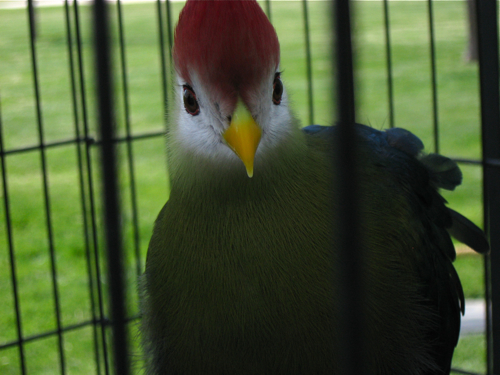
I asked the volunteer what it was for confirmation and she said it was a red-crested turaco. I thought it was a turaco--a bird I've only ever seen in field guides. Apparently this African species does well in captivity and many people keep them. It was such an odd moment for me. I collect international field guides--you never know when you are going to get an unexpected call to go out of the country...it happens a few times a year for me. I've seen this bird in my African guides and have always wondered how cool it would look like in real life. Alas, it was in a cage but still a sweet looking bird. They did use it in a free flight outdoors program so this bird does get around.
Just some cool birds around the fest and I guess I had a little turaco envy as well.
Digiscoping Workshop & Tern Rescue
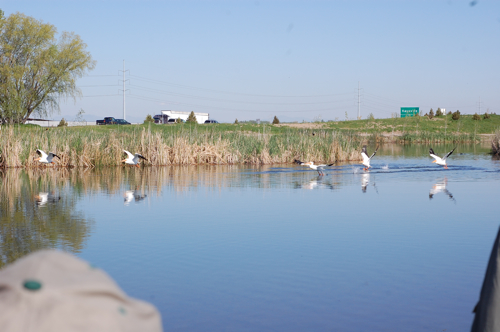 One of the reasons I was at the Great Salt Lake Bird Festival in Utah was to conduct a digiscoping workshop for Swarovski Optik. I really enjoy doing these types of workshops, we start with a basic how to and then we go out someplace birdy and take photos. They are not trips about getting a ton of birds on the list, but more going someplace with a lot of slow moving birds and practice taking photos--you really get to spend some time watching a bird. Sometimes I do this with perched out education birds or at a nature center with bird feeders. In Utah, we went to Kaysville Ponds a small park with lots of cool birds like the above pelicans. It's an urban and well used park. There were several families making use of the ponds' ample fishing resources and walking trails, it was great to see so many kids enjoying the outdoors on a Saturday morning.

A really cool bird for me was the western grebe. We have them in western Minnesota but that's a trek, so it was a treat to see them in this urban pond so close and spend time taking photos of the birds. Although, I generally end up loaning out my scope during these trips. I think many people get a digiscoping set up, take 12 photos that are crap and then are hesitant to use the equipment. When I give someone my scope, I sometimes tell them, "I don't want it back until you take at least 250 photos of that bird." The grebes were so close and so mellow, they were great to practice on. And if you end up with 248 blurry photos, they are easy enough to delete.

There were also a ton of yellow-headed blackbirds perched in the open to photograph. People got to practice with close up birds and birds further away (and learn the heartbreak of what heat shimmer will do on your seemingly in focus photos).

I did use this as an opportunity to practice some Blackberry scoping--holding my Blackberry phone to my scope and taking photos of birds. The photos are not high quality, but they do have use. You could document a rare bird and text the photo to your local state records committee, text the photo of a bird that your friend has not seen, sent it to Twitter or use your camera phone as a back up to document a rare bird if you camera batteries die or you left your camera back in the car. It's not easy because you have to hand hold the phone to the scope's eyepiece but practicing on every day birds will help you be ready should a rare bird show up.

Here's a Blackberry shot of our class, it was a fun group and again, I love being out in Utah where you are surrounded by snow capped mountains on a sunny day. The temps were mild and the wind was low--a perfect day for digiscoping. I brought some different camera adaptors for scopes for folks to try and few people brought their own adaptors andwe had a good compare and contrast of what works easily and what does not.

As we were taking photos, I noticed a Forster's tern frantically calling. I looked over as did friend and fellow field trip participant Suzy and noticed a Forster's tern in the water while another flew and called loudly overhead. Suzy noted that the flighted bird had a fish and attempted to offer it to the bird in the water. Looking through the scope, the bird int he water had its tail at an odd angle and could not pull its wing. The tern tried to flap out of the water but could not flap well at all. "Great," I thought, "a wounded bird at our workshop." Suzy hoped that it was an adult feeding a young, but both were in adult plumage. I wondered if there was any way to reach the wounded tern but it was far out in the water. I continued with the workshop with half an eye on the tern, when I noticed the flighted tern dive bombing a man on shore. I limped over to investigate (I'm still a little unsteady on my knee, but it is healing up a little every day).

I found a man with a fishing pole reeling in the tern from the water while the other tern angrily dove at him while screaming loudly. He took the tern out of the water and had some clippers. He was trying to clip the line around the bird but the tern was snapping its beak at him and he was afraid to touch it. I hobbled over and asked, "Can I give you a hand?"
"Yes, please!"
I picked the water logged tern up out of the water--how strange to put a tern in the bander's grip, they seem more like a piece of origami than bird. He swiftly snipped off the fishing line and fortunately the hook was not in her. I did a quick feel for broken bones but couldn't feel anything amiss. The formerly tangled tern's feathers looked too waterlogged to fly. I made a split second decision to let it go back in the water rather than spend the day looking for a rehab center with might cause more stress, especially if the tern wasn't injured, only wet and tired. I opened my hands for her to fly but the tern couldn't get airborne and went right back in the water. I figured that it would be far better for the tern to swim to a quiet spot, dry off and preen its feathers. The bird was mostly likely exhausted from the struggle to get away from the tangled line.
The man with the pole kept apologizing. He was there with his son to go fishing and when he cast his line, the tern flew into it and got tangled, it was a one in a million shot. He watched the tern swim away slowly, "Oh no, I'm so sorry."
I looked at him and his little boy and said, "You did your best to help the bird, I'm sure it just needs to dry off, it's featers were soaked and it wouldn't be able to fly."
"She's probably exhausted too," he said. I agreed.
"I watched before I cast," he said mornfully, "I always watch for birds. And when I swung, there she was!"
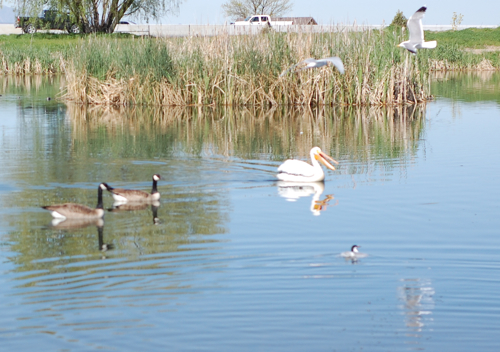 As the bird swam away, some gulls flew over low to investigate (assessing if they could eat it, I'm sure) and then a pelican swam right for it and opened it's mouth. "No," I shouted, "not today pelican!"
And that was enough to distract it and the tern paddled further away. I'm all for watching cool and gross natural history moments, but this man and his son seemed traumatized enough as it was and didn't need to see the pelican eat the tern (that's not a pretty way to go, I think I'd rather be eating by a great horned owl). And if you don't know what I'm talking about--those big birds are opportunists and there are videos of pelicans eating pigeons in parks. A Forster's tern is about pigeon sized.

The tern attempted to fly off the water a few more times and each time it got closer to being airborne. Eventually, it disappeared into some reeds on an island where I'm sure it preened and dried out. The man gave up his fishing for the morning, he genuinely felt bad about what happened even though it was just one of those things. I'm glad he took the time to help the bird and I hope he doesn't give up fishing for good.

When the pelicans weren't trying to eat terns, they made excellent digiscoping subjects! It was interesting to note the various sizes of horns on the upper bill. The above bird has a small one.

Check out this bad boy--his horn is HUGE and looks quite impressive in his full on display! No one knows for sure why males get this epidermal plate on the top mandible, but presumably it has something to do with a mating display to female pelicans. It falls off during the summer after the breeding season. I have a couple from my pelican banding days. They look like nasty toenails.

Since pelicans don't sing to attract a female, the put on these quiet, yet showy displays on the water. It almost looks a little passive aggressive, the male silently lifting his wings, puffing his feathers and crooking his neck while showing his horn and a female or two will quietly swim by and quietly take note of this display...and then keep going. It's very Minnesotan.

We had a few warblers and even an oriole (the above Bullock's oriole) to round out the rest of our field trip. Participants seemed to have a good time and learn a few tricks--like try out video on your little point and shoot cameras. One man even got video of a coot feeding it's baby. All in all it was a beautiful morning and it's always fun when your group can do a good deed while on birding trip--like helping out a tangled tern.
Unexpected Weasel Encounter In Utah
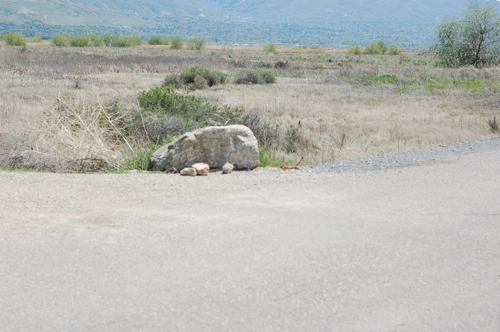 Yesterday I had some time to kill before my flight back to Minneapolis from Utah. I stopped for a wee bit at the Great Salt Lake Nature Center in Farmington to enjoy a final few moments of yellow-headed blackbirds. As I walked down the gravel road, I noticed a mammal hopping across the path. I didn't quite recognize the long shape and assumed it to be some sort of ground squirrel. However, I saw the animal zip across the road again and this time instantly recognized it as a weasel.
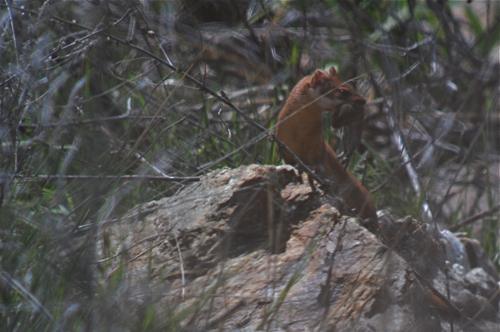
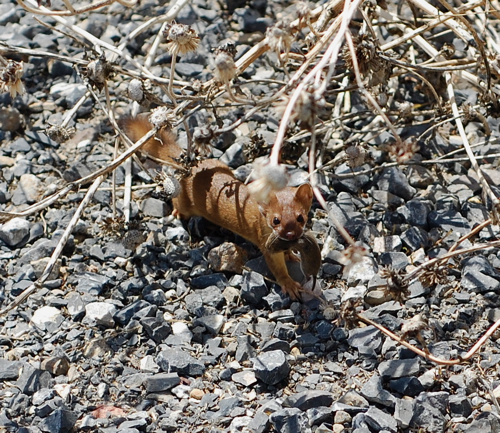
The weasel paused for a moment on a rock through some reeds and got a really craptastic photo but was excited because it looked as though the weasel had some prey in its mouth--how awesome is that? It paused long enough for me to get this shot then disappeared into the vegetation.
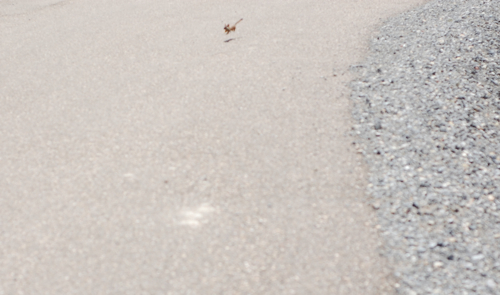
But a few seconds later, I was surprised to see the weasel come out on the road and it started to hop along in my direction. I'm not sure if "hop" is the right word for weasel travel. It looks more like the critter's body is part of a Slinky curving up and down.
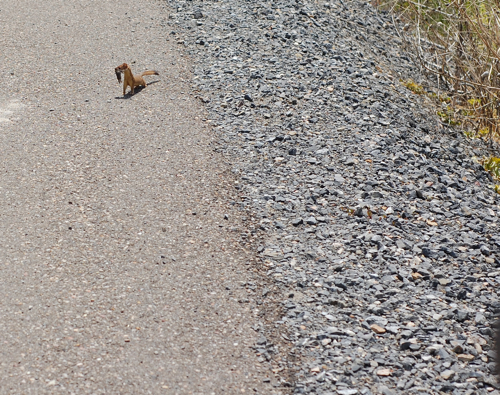
The weasel paused, it was far too close for me to digiscope so I took photos with the camera old school.
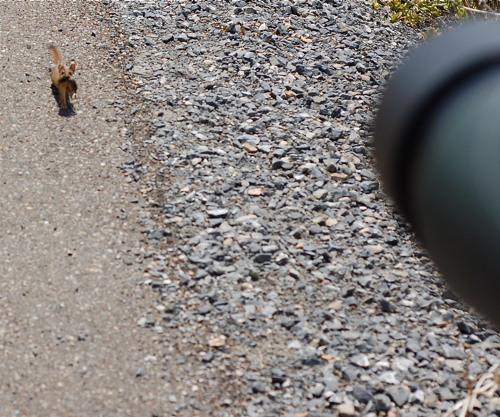
And the weasel just kept coming closer! I tried to get my scope into the shot to show how close the mammal was to me. I was perplexed and mildly concerned that it was coming so close--actually heading right for me. I wasn't flailing my arms, I stood still, but it would have heard my camera clicks and that should have been enough to want to give a human a wide berth. Weasels are carnivores and are known to go for prey larger than they are, but as short as I am, I doubt a weasel would consider me prey worthy (a mountain lion would, but surely not a little weasel).
Then the weasel bounded up next to my right side, it wasn't even a foot away from my shoes and paused. It suddenly dawned on me that I had just seen the weasel moments ago running back and forth on this trek with something in its mouth. I know they are formidable predators and that they have an instinct to kill food when it's abundant and store if for later, but still--getting several small mice at once? Perhaps this weasel was not carrying prey, perhaps this was a female transferring her young from one den to another? I've read that weasels will move their den location and transfer the young if it is disturbed.
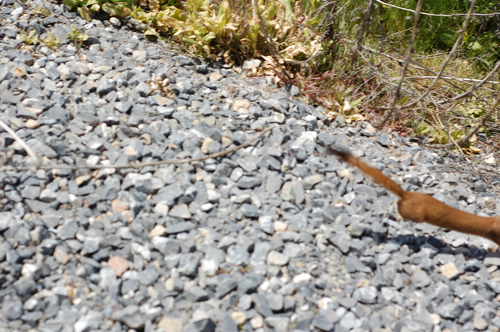
And then she dashed past me. Based on the length of her tail, I wondered if she was a long-tailed weasel or an ermine. Consulting my Peterson Mammals of North America revealed that in Utah, she would be a long-tailed weasel.
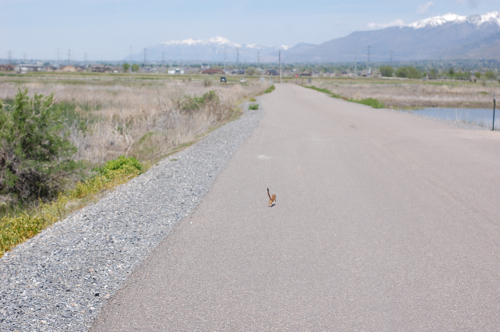
After she made it past me, she booked it to the other side of the road and down into a shrub. After sixty seconds, she reappeared and bounded past me again. She must have had another kit to retrieve from the old den. I tried to set myself up to see if I could get shots of her through my scope on her return.
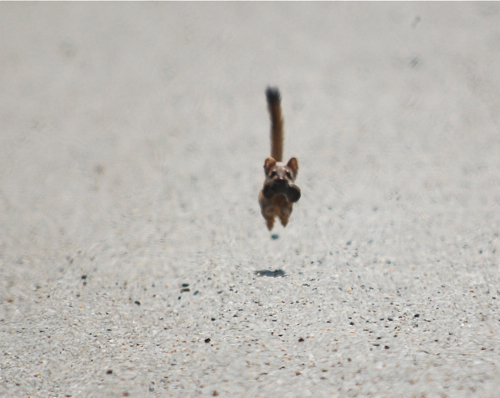
Check it out, it's hover weasel! Sure enough, she returned with another kit in her mouth and bounded right for me. Note how her long tail sticks straight up has she runs.
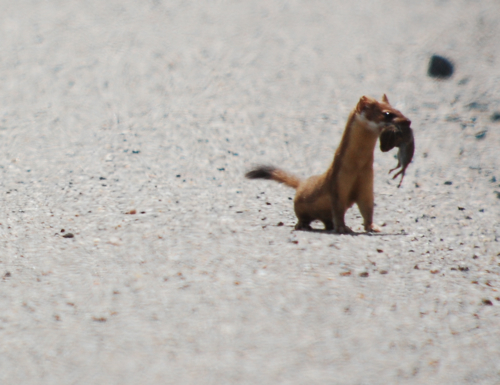
With my scope pointed at her this time, rather than just my camera, she stopped much further away to assess the situation. Since weasels are a top predator (for their size), they know that being stared at is not a good sign. If they stare at something, they are generally trying to determine how they can kill it and eat it. Having an 80mm objective lens pointed right at a her probably made her a bit more hesitant to run past me with one of her young in her mouth.
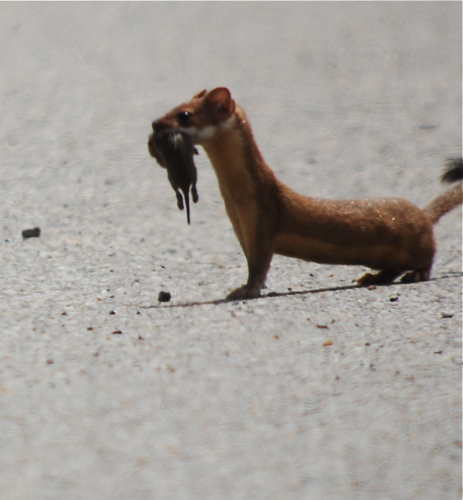
This time, she crossed the street--look at the tiny toes and skinny tail of her offspring--cute!
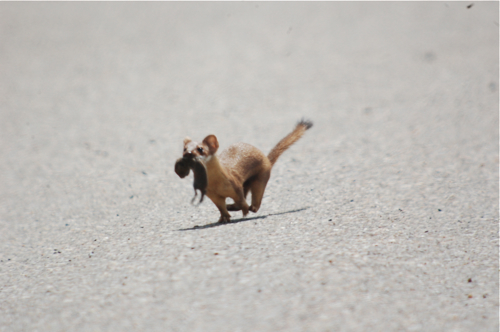
She continued on her journey and I continued down the trail. Who knows how many more young she had to transfer. Weasels can have 4 - 8 kits so if she had a large nest, she had her work cut out for her and didn't need me to distract her from the task at hand (or paw in her case). This was a new mammal for me. I've seen ermine, least weasel and mink, but this is my first long-tailed weasel.
Midwest Birding Symposium Highlights
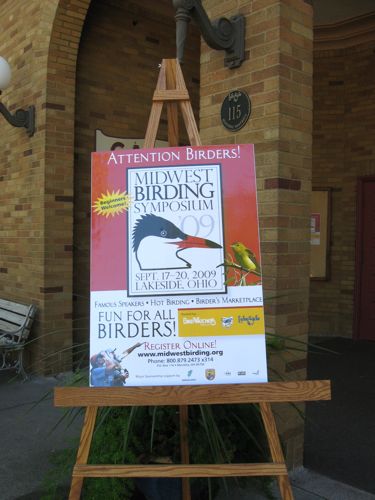 I'm just back from the 2009 Midwest Birding Symposium and this was the most insanely busy birding event I have ever been to. There was so much going on and so many people, my only complaint was that I didn't have the time to have an actual conversation with many people from people I want to meet to old friends I rarely see in person.
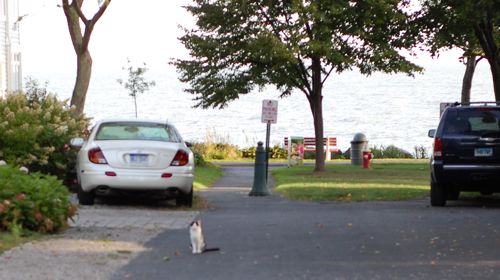
The symposium was held in a gated/resort community in northern Ohio, right on Lake Erie (and had a large feral cat population). It's a small "dry" town with cute houses fitted close together owned by wealthy people--I learned that the cottage I was in is owned by the Windex family so I was blessed with bright shiny windows. But you could walk/bike all over and it was interesting to walk from the cottage I was staying in to the speaker and vendor areas and pass birder after birder--many well known ones. "Oh, hey, there's Kenn Kaufman. And over there is Scott Weidensaul and over there is Sibley." The small community had totally turned into Birderville: population 1000. I have to say, that Minnesota birder and one of the best speakers on the bird festival circuit, Al Batt, brought down the house with his keynote. All the speakers were great, but Al as usual stood out and left people sore with laughter the next day--way to represent the Minnesota team, Al! Speaking of speakers, Jim McCormac has a blog post up and if you scroll down, you can watch a video of Kenn Kaufman behaving like a horny mourning dove (so much for Lakeside being a dry community).
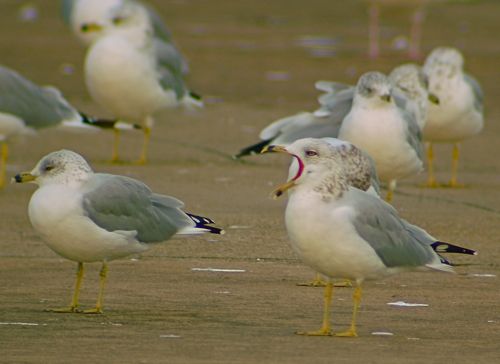
I didn't take the above photo of ring-billed gulls. I lovely woman I met named Marilyn took it with my digiscoping set up. Part of my duties at the symposium was helping out at the Swarovski booth and help people with digiscoping. Even in early morning with low light, she was able to get a great shot with my HD 80 scope, Nikon D40 and DCA digital adaptor. I did enjoy working one on one with people to help them hone their technique...and explaining how to use Twitter.
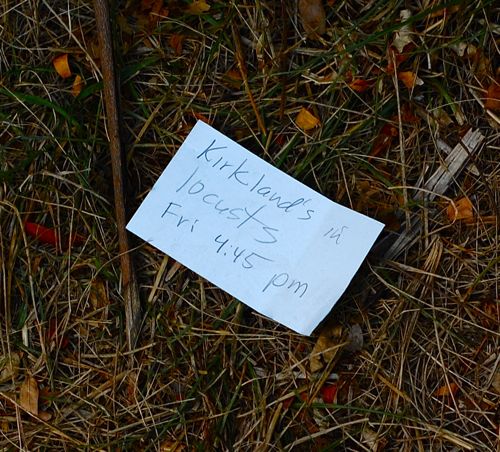
The event was more about information and workshops than it was about birding but there was quite a bit going on. The bird of the festival was a Kirtland's warbler that was spotted five minutes from the event and many were able to go out and get photos of this accommodating life bird. Here's one over at 10,000 Birds. I went to look for it late in the day on Friday and had to chuckle at all the birder litter guiding folks to the spot where it could be seen. I did not see it, but I wasn't trying all that hard either (as can be seen in this blog entry over at Born Again Bird Watcher. Although, while a I was laying on the ground avoiding warbler neck, a Cooper's hawk flew low over the group and I had the best view. I joked that it appeared to have a warbler shaped crop and that was the reason we weren't seeing it. I left early, I think a Kirtland's is one of those rare birds that I know I'll see one day, I'd like to make it to Michigan. I actually spent more time watching shorebirds at the symposium--more on that later.
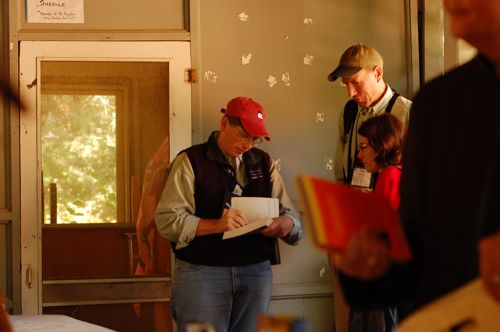
I had a total geek out moment. I was included in the book signing area for City Birds/Country Birds and it was an honor to be surrounded by the likes of Julie Zickefoose and Scott Weidensaul (above), but the real excitement for me was getting to sit next to Lang Elliot! He's written several great books, but many people out there know his voice. If you have any birding cds, chances are good that you have heard his classic, subdued voice narrating the species' names. I listened to these eight hours a day, five days a week when I worked at the bird store (eight years). I have to say, he may sound scientific and stuffy based on the narration, but he's hilarious. I told him that I had heard his voice so long saying bird names, I had always wanted to hear him swear. So, he swore at me. Loved it! Love meeting these hardcore dedicated scientific types and learning that they've got a little freak flag in there and they're not afraid to wave it.
Congratulations to Bird Watcher's Digest and all of their hard working staff who made the event so well attended and so action-packed with great content!
Some Phalarope Fun
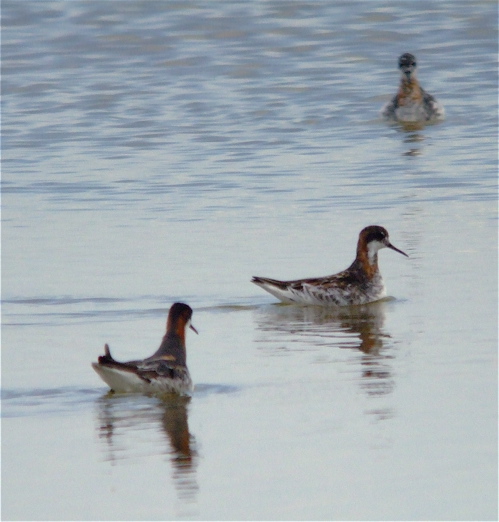
I found some phalarope photos that I had forgotten about. These are some red-necked phalaropes that we saw on the Steppes in Kazakhstan. When you are learning shorebirds, phalaropes are ones that can be easy to distinguish from the others, they have a unique shape, can be quite colorful and they are just plain fun to watch. They spin around in the water kicking up sediment and food below. No matter what country you are in, you can spot that spinning characteristic easily if they are around.
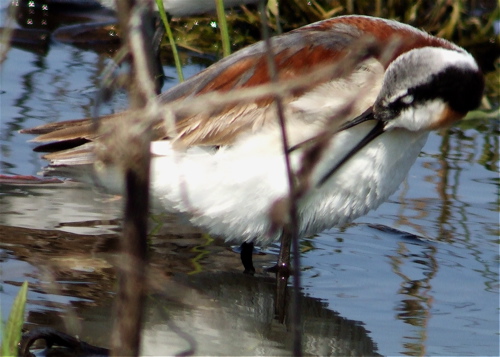
Plus, phalaropes are so pretty, look at that burgundy highlighted with delicate gray and white, touched off with some black. Above is a Wilson's phalarope seen in a pothole just outside of Arrowwood NWR in North Dakota during the Potholes and Prairie Bird Festival. That's a great thing about North Dakota, just driving to your destination will reveal great birds. We couldn't get into the NWR because of the flooding, so we just drove around it and in the puddles were birds. I was with my friend Katie and she would pull the van over while I sat in the back, opened the side door and digiscoped the phalaropes. Birds tend to not mind vehicles, just what comes out of a vehicle.
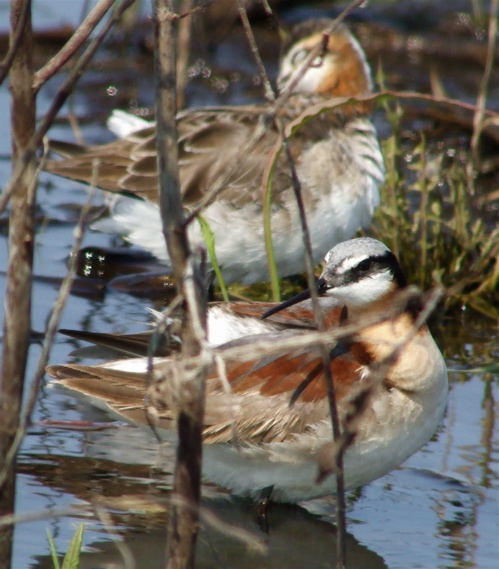
Here's a pair of Wilson's phalaropes preening. If you are not familiar with phalaropes, you might think that is the male in the front of the pair. It's not, that's the female.
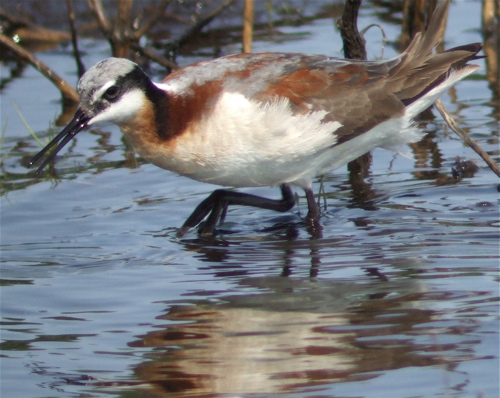
In phalarope world, you have a great term to use that you can impress your friends with at parties: reverse sexual dimorphism. The females are more colorful and they pursue the males. They defend a territory and once they have attracted a male and mated, she lays the eggs and heads south to get a head start on migration while the males stays behind to incubate the eggs and raise the young.
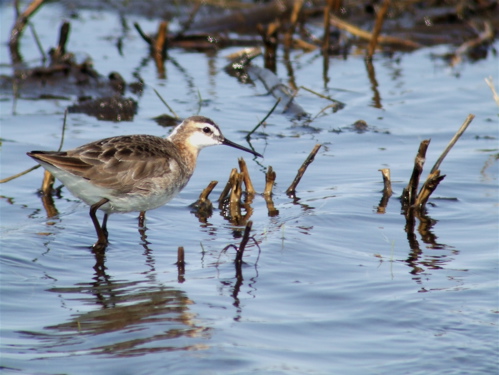
Here's a shot of just the male, he is not colorful since he's going to be the one sitting in one spot to incubate the eggs. It's interesting that the female doesn't partake of any of the chick rearing duties. She doesn't bring food to the male while he incubates, she doesn't give him a break, nothing. It's wham, bam, thank you ma'am, she lays the eggs and then says, "See ya!"
I wonder if female phalaropes ever get guilt for putting their migration before their offspring?
A Piece Of Rail
Warning! The photos in this post might be gross for some for some readers. It's about a piece of bird (most likely a rail) that I found on a barb wire fence. One of the things that really surprised me about this year's Potholes and Prairie Bird Festival was the amount of flooding that occurred around Jamestown and is still causing trouble for the area. All we heard in the news was about the Fargo flooding but there was still much more flooding going on in central North Dakota. It's all the more impressive to me that organizers were able to get the festival going this year despite the flooding making lodging difficult (not to mention what the flooding did to the organizers' personal residences) and the economy causing more people to tighten their belts in regards to travel.
But the flooding made for some great birding. For example, American bitterns were seen all over by many festival participants. Zeiss rep Steve Ingraham got some fun video of an attempted mating ritual between two bitterns (check out the males white shoulder patch action going on).
I went out with my buddy Katie for some birding and I noticed some fluff on a barb wire fence. We pulled over and walked/hopped over the water filled ditch to get a closer look to see what it was. It was a piece of bird.
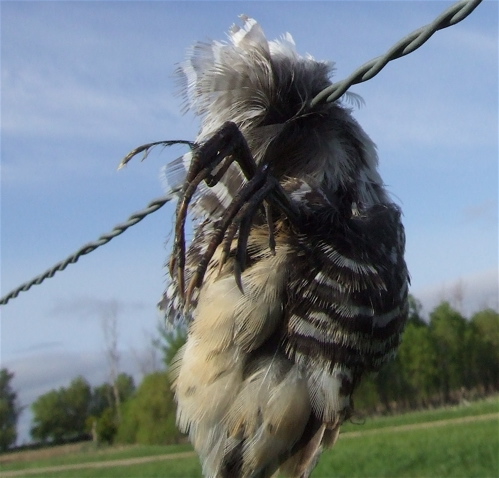
I tried to pull it off to get a bitter look, but it was really hooked into the barb. The general shape and size read "rail" to me. I wondered what happened. There was a marsh across the road, had the rail flown across and hit the top line and got stuck and died? Then perhaps some predator or scavenger came by and ate part of the bird? Barb wires can kill low flying birds as I learned at the Leks, Treks and More festival when we did the marking for the lesser prairie chickens.
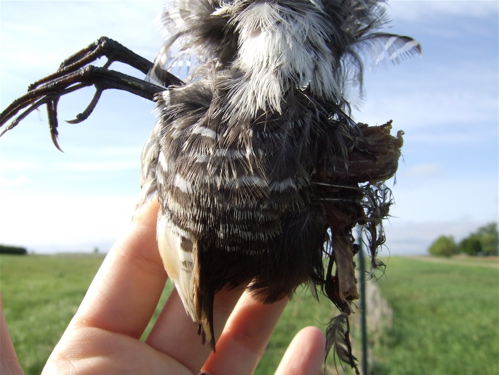
The feet, the tail tip, the brown striping, and the state the bird piece was found in have narrowed it down for me to either Virginia rail or sora. However, I just can't decide on which.
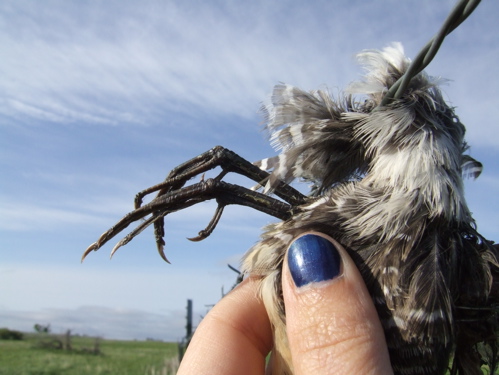
At first, I thought I had it figured out with the feet, I know that sora's have green toes and what was left of this bird had black toes. However, if you check Virginia rail toes, those are pink. The decomposition could have caused the toes to turn black.
I tried to see if I could find any images of rail vents to see if that would help my id, but could not. This one may have end with "back half of rail."
Best Bird Festival Idea Ever
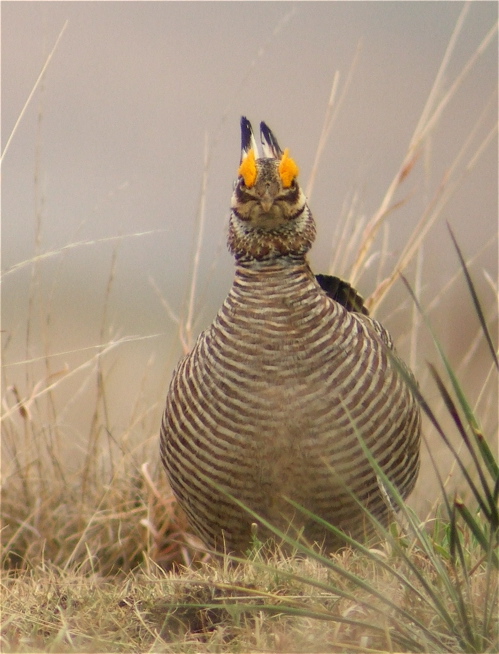
I have to say, that I enjoy attending bird festivals and events in general (I must, I go to more in a year, than most birders will in a lifetime). But, I was really struck by the Lesser Prairie Chicken Festival in Woodward, OK. Because the festival wasn't just about seeing the festival bird, but we actively helped the bird:
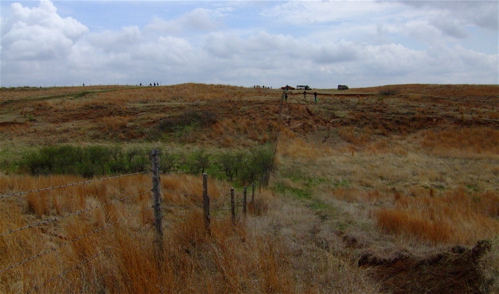
Oklahoma is a beautiful state with vast, sweeping landscapes, but it's also divided by several cattle fences. They are everywhere, dividing property lines. The fences have become a part of the many problems facing the lesser prairie-chicken's precarious future. The bird's natural defensive behavior when fleeing a predator, is to fly low, right above the grasses. If they are fleeing a fast predator like a peregrine falcon, the prairie-chickens may not pay attention in their panic and cannot dart the fences that are taller than the grasses. The chickens fly into the fences and die. Look at the above photo, you can see how the fence blends in to the grassy landscape.
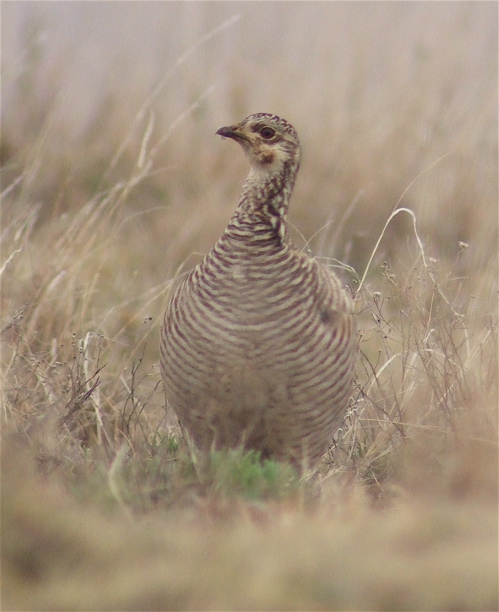
Research about lesser prairie-chicken mortality conducted by The Sutton Center has found that 40% of the mortality in Oklahoma is due to collisions with these fences! If you follow the link to the lesser-prairie chicken ecology, you can read more about the results. It was interesting to note that female prairie-chickens are especially susceptible to fence collisions and that is a huge concern--they lay the eggs. Sure, they need the males for fertilization of the eggs, but beyond that, the , build the nest and raise the young--you need all the females you can get out there to replenish the population. The Sutton Center, however, has come up with a unique plan!
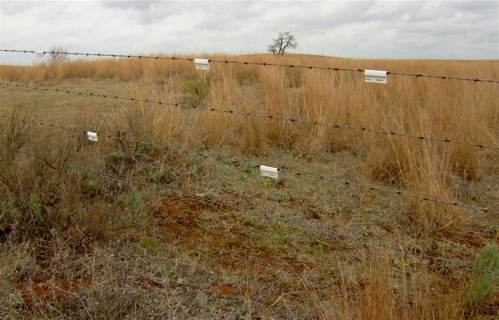
They have come up with a unique fence marking plan to save the lesser prairie-chicken. By using "undersill" strips (trim strips) of vinyl siding available at many big box home stores, fences can be made more visible to the chickens. Eric Beck, the Oklahoma Audubon Council's Important Bird Area Coordinator was a field trip leader for the festival. However, when not leading trips, he was cutting up strips of trim to be placed on fences.
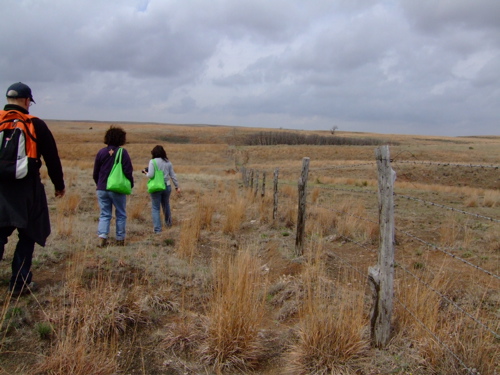
After we watched the lesser prairie-chickens on the lek, we were given a filling ranch breakfast at Selman Ranch, shown how do the fence marking, and set loose with bags of tag to mark fences at a WMA that has prairie-chickens. This was the most proactive bird field trip I have ever been on at a bird festival. What a GREAT idea--show us this cool bird and let's not just lament that it's fate in the wild is uncertain, let's actually have festival participants do something that could actually help the birds. Best idea I've seen at a bird festival in years. I love this as much as I love the Delaware Bird-a-thon that raises money to buy up migratory habitat for the red knot. We need more of this kind of active conservation and birding.

And that's not to say that fences are the only challenge facing the lesser prairie-chicken. Wind farms are popping up all over Oklahoma. Lesser prairie-chickens nest out in the open on the ground, they don't nest next to all trees--red-tailed hawks and Swainson's hawks perch there, watching for some fat tasty prey. Tall windmills look a little too much like tall trees and lesser prairie-chickens will not nest next to the farms, so that fragments their nesting habitat even more.
Still challenges ahead, but still hope too.
Oklahoma Porcupines
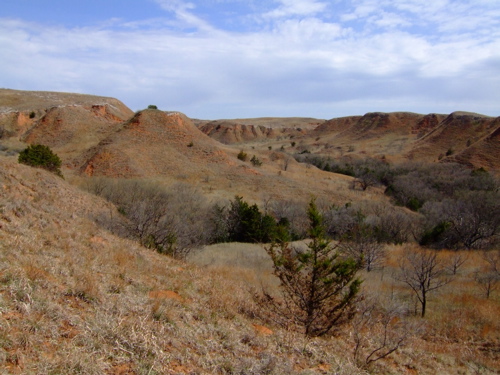
One of the fun things about the Lesser Prairie Chicken Festival that I attended in Oklahoma was the opportunity to see an area owned by The Nature Conservancy normally closed to the public called Four Canyon Preserve. It wasn't very bird--the top of the canyons were so windy, you could barely hear any song, but the views were stunning and a reminder that Oklahoma is not all flat land.
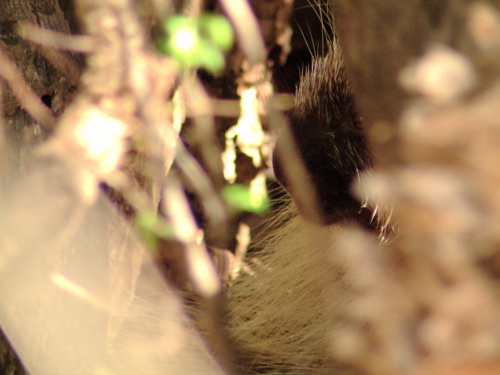
Though we did not see much in the way of birds, we did see some porcupines. I grew up in Indiana and didn't have much experience with porcupines until I moved to Minnesota. I don't have mammals on my radar quite like birds, so I just assumed in my head that porcupines were a northern species. I did not expect to encounter in them in Oklahoma. However, I did notice a couple of dead ones on the road as soon as I arrived.
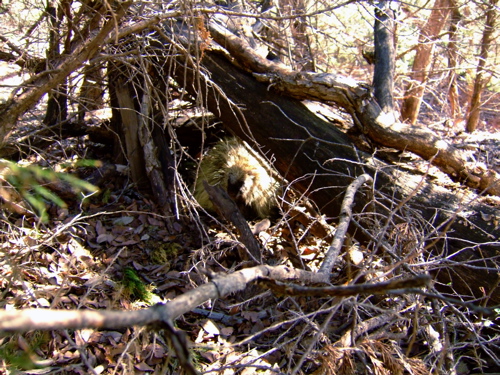
When I came home from the trip, I looked through one of my mammal books and was surprised to find that their range extends all over the western US. One of our birding group noticed this porcupine lurking under some cedars. At first, the porcupine only showed its backside, but I stayed behind while the group continued on the trail. When it was quiet, the porcupine turned around.
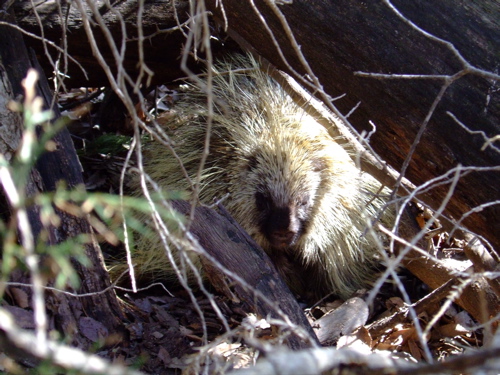
I slowly snuck in for a closer look. Apart from the now famous porcupet that my friend Gail took care of, I've never spent too much time up close with a porcupine. I moved slowly and quietly, the porcupine was sort of cornered in this nook. I'm sure it realized it had the upper hand in the situation. Porcupines cannot shoot their quills out, but if it decided to charge and run past, even brushing my leg would leave me with a few quills. But it seemed chill and I didn't dilly dally with my photos, just a few quick snaps and then I went on my way to catch up with our birding group.
Oh, and for those curious about how female porcupines are able to give birth without getting "quilled," it because the young are born with soft quills that harden within about two hours after coming out.
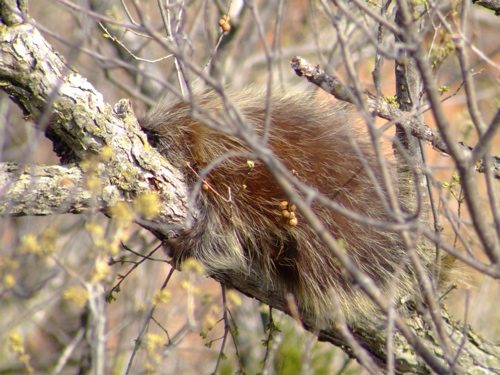


From the top of one of the canyons, we looked down and I spotted another porcupine sleeping in a tree. I read in one of my mammal books, that many porcupine specimins in museums were found to have healed fractures. The speculation was that while porcupines are known as good climbers, they might also be good fallers too. Perhaps they fall out the trees and just learn to deal with the injury?
While we watched this critter, our guide told us that there were many porcupines in Oklahoma and many ranchers shoot them because porcupines chew the bark on trees, making them look bad. It's funny that some ranchers don't like the aesthetics left behind by a porcupine since I have had the same feeling about the aesthetics of some of the overgrazed prairie we passed.
Digiscoped Images
Fresh Tweets
Would you like to hire me as a speaker for your event?
Email sharon@birdchick.com